SmarterEd

Aussie Maths & Science Teachers: Save your time with SmarterEd

  • Login
  • Get Help
  • About

HMS, TIP EQ-Bank 373

Analyse the relationship between psychological factors and athletic performance in different competitive environments.   (8 marks)

--- 24 WORK AREA LINES (style=lined) ---

Show Answers Only

Overview Statement

  • Psychological factors demonstrate complex relationships with athletic performance that vary significantly across different competitive environments.
  • Performance outcomes depend on the interaction between mental preparation, environmental pressures and individual athlete characteristics.

Component Relationship 1

  • Concentration skills interact with competitive environment demands to determine performance quality during crucial moments.
  • High-pressure situations influence attention control as athletes must focus on task execution rather than external distractions.
  • This relationship becomes critical in individual sports where athletes compete without teammate support or coaching guidance.
  • Tennis players demonstrate how concentration training connects to improved performance under crowd pressure and media attention.
  • Therefore, mental focus strategies enable athletes to maintain technical proficiency despite environmental stressors and competitive intensity.

Component Relationship 2

  • Arousal management relates to environmental factors as different competitive settings require varying optimal performance states.
  • Team sports create collective psychological dynamics that influence individual athlete arousal through shared energy and communication patterns.
  • This interacts with performance outcomes as basketball teams benefit from coordinated mental preparation before high-stakes matches.
  • Confidence levels connect to past competitive experiences in similar environments, affecting current performance expectations.
  • Consequently, successful psychological adaptation depends on matching mental strategies to specific competitive contexts and environmental demands.

Implications and Synthesis

  • The relationship between psychological preparation and competitive environment determines optimal performance strategy selection for different athletic contexts.
  • Individual sports require complete mental self-reliance while team environments enable collective psychological support systems.
  • This pattern reveals that effective performance psychology must consider both internal mental factors and external competitive pressures for maximum athletic success.
Show Worked Solution

Overview Statement

  • Psychological factors demonstrate complex relationships with athletic performance that vary significantly across different competitive environments.
  • Performance outcomes depend on the interaction between mental preparation, environmental pressures and individual athlete characteristics.

Component Relationship 1

  • Concentration skills interact with competitive environment demands to determine performance quality during crucial moments.
  • High-pressure situations influence attention control as athletes must focus on task execution rather than external distractions.
  • This relationship becomes critical in individual sports where athletes compete without teammate support or coaching guidance.
  • Tennis players demonstrate how concentration training connects to improved performance under crowd pressure and media attention.
  • Therefore, mental focus strategies enable athletes to maintain technical proficiency despite environmental stressors and competitive intensity.

Component Relationship 2

  • Arousal management relates to environmental factors as different competitive settings require varying optimal performance states.
  • Team sports create collective psychological dynamics that influence individual athlete arousal through shared energy and communication patterns.
  • This interacts with performance outcomes as basketball teams benefit from coordinated mental preparation before high-stakes matches.
  • Confidence levels connect to past competitive experiences in similar environments, affecting current performance expectations.
  • Consequently, successful psychological adaptation depends on matching mental strategies to specific competitive contexts and environmental demands.

Implications and Synthesis

  • The relationship between psychological preparation and competitive environment determines optimal performance strategy selection for different athletic contexts.
  • Individual sports require complete mental self-reliance while team environments enable collective psychological support systems.
  • This pattern reveals that effective performance psychology must consider both internal mental factors and external competitive pressures for maximum athletic success.

Filed Under: Psychological strategies Tagged With: Band 4, Band 5, Band 6, smc-5464-30-Performance psych

HMS, TIP EQ-Bank 372

Evaluate the effectiveness of psychological strategies in improving athletic performance for both individual and group sports.   (6 marks)

--- 18 WORK AREA LINES (style=lined) ---

Show Answers Only

Evaluation Statement

  • Psychological strategies are highly effective in improving athletic performance across both individual and group sports.
  • However implementation methods differ based on sporting context and individual athlete needs.

Mental Preparation Effectiveness

  • Mental rehearsal demonstrates strong effectiveness in building athlete confidence and reducing pre-competition anxiety levels.
  • Research shows athletes using visualisation techniques achieve improved skill execution and better competitive outcomes.
  • Goal setting provides clear performance targets that enhance motivation and focus during training and competition periods.

Application Challenges

  • Individual differences affect strategy effectiveness as some athletes respond better to relaxation techniques while others benefit from arousal-building approaches.
  • Group sports face additional complexity in coordinating individual psychological needs with collective team preparation requirements.
  • Technique effectiveness depends on consistent practice and proper implementation throughout training phases.

Final Evaluation

  • Evidence strongly supports psychological strategy effectiveness for improving athletic performance in both sporting contexts.
  • While implementation challenges exist, properly applied mental training techniques produce significant performance improvements.
  • Success depends on matching appropriate strategies to individual athlete characteristics and sporting demands.
Show Worked Solution

Evaluation Statement

  • Psychological strategies are highly effective in improving athletic performance across both individual and group sports.
  • However implementation methods differ based on sporting context and individual athlete needs.

Mental Preparation Effectiveness

  • Mental rehearsal demonstrates strong effectiveness in building athlete confidence and reducing pre-competition anxiety levels.
  • Research shows athletes using visualisation techniques achieve improved skill execution and better competitive outcomes.
  • Goal setting provides clear performance targets that enhance motivation and focus during training and competition periods.

Application Challenges

  • Individual differences affect strategy effectiveness as some athletes respond better to relaxation techniques while others benefit from arousal-building approaches.
  • Group sports face additional complexity in coordinating individual psychological needs with collective team preparation requirements.
  • Technique effectiveness depends on consistent practice and proper implementation throughout training phases.

Final Evaluation

  • Evidence strongly supports psychological strategy effectiveness for improving athletic performance in both sporting contexts.
  • While implementation challenges exist, properly applied mental training techniques produce significant performance improvements.
  • Success depends on matching appropriate strategies to individual athlete characteristics and sporting demands.

Filed Under: Psychological strategies Tagged With: Band 4, Band 5, smc-5464-30-Performance psych

HMS, TIP EQ-Bank 371 MC

A coach notices that one athlete performs excellently in training but struggles during competitions, while another athlete thrives under competitive pressure. This scenario best demonstrates which psychological concept?

  1. The importance of physical fitness differences between athletes
  2. Individual variations in optimal arousal levels for peak performance
  3. The need for improved technical skill development in training
  4. Equipment and environmental factors affecting performance outcomes
Show Answers Only

\(B\)

Show Worked Solution
  • B is correct: Individual athletes have different optimal arousal requirements, with some performing better under pressure while others prefer calm conditions.

Other Options:

  • A is incorrect: The scenario describes psychological rather than physical fitness differences between the athletes.
  • C is incorrect: Technical skills aren’t the issue since one athlete performs excellently in training conditions.
  • D is incorrect: The performance differences relate to psychological factors rather than external equipment or environmental conditions.

Filed Under: Psychological strategies Tagged With: Band 5, smc-5464-30-Performance psych

HMS, TIP EQ-Bank 370 MC

Which psychological factor has the greatest potential to improve athletic performance according to research findings?

  1. Natural talent and physical ability development
  2. Mental training and goal setting strategies
  3. Equipment quality and technological advances
  4. Financial incentives and external rewards
Show Answers Only

\(B\)

Show Worked Solution
  • B is correct: Research suggests mental training and goal setting have great potential to improve performance outcomes significantly.

Other Options:

  • A is incorrect: While important, natural talent alone doesn’t maximise performance potential without psychological preparation.
  • C is incorrect: Equipment improvements provide minimal performance gains compared to mental training benefits.
  • D is incorrect: External rewards may actually reduce intrinsic motivation and long-term performance improvement.

Filed Under: Psychological strategies Tagged With: Band 4, smc-5464-30-Performance psych

HMS, TIP EQ-Bank 369

To what extent can anxiety management techniques help athletes overcome performance challenges in competitive situations?   (5 marks)

--- 15 WORK AREA LINES (style=lined) ---

Show Answers Only

Judgment Statement

  • Anxiety management techniques can significantly help athletes overcome performance challenges, though effectiveness varies based on individual factors and technique selection.

Evidence Supporting Effectiveness

  • Relaxation techniques demonstrate strong success in controlling physical anxiety symptoms including muscle tension and rapid heart rate. Mental rehearsal shows proven benefits through repeated visualisation of successful competitive outcomes.
  • Athletes using these techniques report improved confidence and reduced performance anxiety during high-pressure situations.

Limitations and Qualifications

  • Individual differences affect technique effectiveness as some athletes respond better to physical relaxation while others benefit from mental approaches. Severe anxiety disorders may require professional intervention beyond basic sport psychology techniques.
  • Technique effectiveness depends on consistent practice and proper implementation during training phases.

Overall Assessment

  • Evidence indicates anxiety management techniques provide considerable benefits for most athletes in overcoming competitive performance challenges.
  • While not universally effective for all individuals or anxiety levels, properly applied techniques significantly improve performance outcomes.
Show Worked Solution

Judgment Statement

  • Anxiety management techniques can significantly help athletes overcome performance challenges, though effectiveness varies based on individual factors and technique selection.

Evidence Supporting Effectiveness

  • Relaxation techniques demonstrate strong success in controlling physical anxiety symptoms including muscle tension and rapid heart rate. Mental rehearsal shows proven benefits through repeated visualisation of successful competitive outcomes.
  • Athletes using these techniques report improved confidence and reduced performance anxiety during high-pressure situations.

Limitations and Qualifications

  • Individual differences affect technique effectiveness as some athletes respond better to physical relaxation while others benefit from mental approaches. Severe anxiety disorders may require professional intervention beyond basic sport psychology techniques.
  • Technique effectiveness depends on consistent practice and proper implementation during training phases.

Overall Assessment

  • Evidence indicates anxiety management techniques provide considerable benefits for most athletes in overcoming competitive performance challenges.
  • While not universally effective for all individuals or anxiety levels, properly applied techniques significantly improve performance outcomes.

Filed Under: Psychological strategies Tagged With: Band 4, Band 5, Band 6, smc-5464-25-Anxiety control

HMS, TIP EQ-Bank 368

Compare how individual and group sport athletes can manage anxiety to improve their performance.   (6 marks)

--- 18 WORK AREA LINES (style=lined) ---

Show Answers Only

Similarities

  • Both individual and group sport athletes benefit from relaxation techniques to control physical anxiety symptoms. Progressive muscle relaxation and controlled breathing help reduce tension and nervousness before competition.
  • Mental rehearsal strategies work effectively for athletes in both sporting contexts. Visualising successful performance outcomes builds confidence and reduces pre-competition anxiety levels.
  • Goal setting provides focus and direction for managing anxiety in individual and group sports equally. SMART goals help athletes concentrate on achievable targets rather than worrying about potential failures.

Differences

  • Individual sport athletes must develop complete self-reliance for anxiety management during competition without external support. Tennis players and swimmers cannot receive coaching guidance during performance requiring independent coping strategies.
  • Group sport athletes can utilise team support systems and shared anxiety management approaches. Basketball teams benefit from group relaxation sessions and collective mental preparation before important matches.
  • Individual athletes personalise anxiety control techniques entirely to their specific needs and competition demands. Group sport athletes must balance personal anxiety management with team dynamics and collective preparation requirements.
Show Worked Solution

Similarities

  • Both individual and group sport athletes benefit from relaxation techniques to control physical anxiety symptoms. Progressive muscle relaxation and controlled breathing help reduce tension and nervousness before competition.
  • Mental rehearsal strategies work effectively for athletes in both sporting contexts. Visualising successful performance outcomes builds confidence and reduces pre-competition anxiety levels.
  • Goal setting provides focus and direction for managing anxiety in individual and group sports equally. SMART goals help athletes concentrate on achievable targets rather than worrying about potential failures.

Differences

  • Individual sport athletes must develop complete self-reliance for anxiety management during competition without external support. Tennis players and swimmers cannot receive coaching guidance during performance requiring independent coping strategies.
  • Group sport athletes can utilise team support systems and shared anxiety management approaches. Basketball teams benefit from group relaxation sessions and collective mental preparation before important matches.
  • Individual athletes personalise anxiety control techniques entirely to their specific needs and competition demands. Group sport athletes must balance personal anxiety management with team dynamics and collective preparation requirements.

Filed Under: Psychological strategies Tagged With: Band 3, Band 4, smc-5464-25-Anxiety control

HMS, TIP EQ-Bank 367 MC

A basketball player experiences physical sickness and mental paralysis before important games, causing them to miss easy shots they normally make in practice. Which anxiety management approach would be most appropriate?

  1. Increasing training intensity to build physical confidence
  2. Using progressive muscle relaxation and mental rehearsal techniques
  3. Avoiding high-pressure games until confidence naturally returns
  4. Focusing solely on technical skill development during practice sessions
Show Answers Only

\(D\)

Show Worked Solution
  • D is correct: Technical skill refinement builds competence and confidence which naturally reduces performance anxiety over time.

Other Options:

  • A is incorrect: Increased training intensity may worsen anxiety symptoms rather than addressing the underlying psychological issues.
  • B is incorrect: While helpful, relaxation techniques alone don’t address the skill confidence issues causing missed shots.
  • C is incorrect: Avoidance prevents exposure therapy and skill development needed to overcome performance anxiety effectively.

Filed Under: Psychological strategies Tagged With: Band 5, smc-5464-25-Anxiety control

HMS, TIP EQ-Bank 366 MC

Which scenario best demonstrates state anxiety rather than trait anxiety in sport?

  1. A footballer who experiences intense worry only during grand final matches but remains calm in regular games
  2. A gymnast who feels nervous before every training session and competition throughout the season
  3. A swimmer who consistently feels anxious about their technique regardless of the competition level
  4. A tennis player who always struggles with pre-match nerves due to their naturally anxious personality
Show Answers Only

\(A\)

Show Worked Solution
  • A is correct: State anxiety depends on the situation and occurs in response to specific high-stress events like grand finals.

Other Options:

  • B is incorrect: Feeling nervous before every session suggests trait anxiety as a consistent personality characteristic.
  • C is incorrect: Consistent anxiety regardless of situation indicates trait anxiety rather than situational state anxiety.
  • D is incorrect: Pre-match nerves due to personality traits demonstrates trait anxiety not situational state responses.

Filed Under: Psychological strategies Tagged With: Band 3, smc-5464-25-Anxiety control

HMS, TIP EQ-Bank 365

Analyse how stress management techniques can be applied effectively in individual and group sports to improve performance.   (8 marks)

--- 24 WORK AREA LINES (style=lined) ---

Show Answers Only

Overview Statement

  • Stress management techniques require different applications in individual and group sports due to varying support systems and performance contexts.
  • Effective implementation depends on understanding sport-specific stressor patterns and athlete needs.

Component Relationship 1

  • Individual sports emphasise personal stress management strategies that athletes can implement independently during competition.
  • Mental rehearsal connects to performance improvement by allowing athletes to practice stress responses in visualised scenarios.
  • This relationship enables tennis players and swimmers to develop personalised coping mechanisms for high-pressure moments.
  • Progressive muscle relaxation interacts with individual preparation routines, helping athletes control physical tension before events. 
  • Therefore, self-directed techniques become essential for managing isolation stress inherent in individual competition formats.

Component Relationship 2

  • Group sports integrate collective stress management approaches with individual athlete needs to create team cohesion.
  • Team meditation sessions influence group arousal levels by synchronising mental preparation across all players.
  • This connects to improved performance through unified focus and reduced collective anxiety during crucial match moments.
  • Goal setting strategies interact with both individual and team objectives, creating shared stress management frameworks.
  • Consequently, basketball and football teams benefit from coordinated approaches that address both personal and collective pressure sources.

Implications and Synthesis

  • The relationship between individual autonomy and team support determines optimal stress management strategy selection in different sporting contexts.
  • Individual sports enable complete personalisation of techniques while group sports require balance between personal needs and collective team dynamics for maximum effectiveness.
Show Worked Solution

Overview Statement

  • Stress management techniques require different applications in individual and group sports due to varying support systems and performance contexts.
  • Effective implementation depends on understanding sport-specific stressor patterns and athlete needs.

Component Relationship 1

  • Individual sports emphasise personal stress management strategies that athletes can implement independently during competition.
  • Mental rehearsal connects to performance improvement by allowing athletes to practice stress responses in visualised scenarios.
  • This relationship enables tennis players and swimmers to develop personalised coping mechanisms for high-pressure moments.
  • Progressive muscle relaxation interacts with individual preparation routines, helping athletes control physical tension before events. 
  • Therefore, self-directed techniques become essential for managing isolation stress inherent in individual competition formats.

Component Relationship 2

  • Group sports integrate collective stress management approaches with individual athlete needs to create team cohesion.
  • Team meditation sessions influence group arousal levels by synchronising mental preparation across all players.
  • This connects to improved performance through unified focus and reduced collective anxiety during crucial match moments.
  • Goal setting strategies interact with both individual and team objectives, creating shared stress management frameworks.
  • Consequently, basketball and football teams benefit from coordinated approaches that address both personal and collective pressure sources.

Implications and Synthesis

  • The relationship between individual autonomy and team support determines optimal stress management strategy selection in different sporting contexts.
  • Individual sports enable complete personalisation of techniques while group sports require balance between personal needs and collective team dynamics for maximum effectiveness.

Filed Under: Psychological strategies Tagged With: Band 5, Band 6, smc-5464-20-Stress management

HMS, TIP EQ-Bank 364

Explain how different types of stressors can affect athletes during competition.   (4 marks)

--- 12 WORK AREA LINES (style=lined) ---

Show Answers Only
  • Personal pressure develops from individual desires to win and achieve goals. This causes athletes to experience internal stress through high expectations. Therefore, fear of failure leads to increased anxiety levels.
  • Competition pressure arises from direct opponents and the competitive environment during performance. This creates tactical challenges and time constraints. As a result, unpredictable contests produce heightened arousal states.
  • Social pressure comes from external sources including coaches, parents, and spectators. Their expectations influence athlete behaviour significantly. Consequently, media attention intensifies pressure for high-profile athletes.
  • Physical pressure results from demanding sport performance requirements under fatigue conditions. Training loads contribute to overall stress levels. This leads to reduced performance capacity during competition.
Show Worked Solution
  • Personal pressure develops from individual desires to win and achieve goals. This causes athletes to experience internal stress through high expectations. Therefore, fear of failure leads to increased anxiety levels.
  • Competition pressure arises from direct opponents and the competitive environment during performance. This creates tactical challenges and time constraints. As a result, unpredictable contests produce heightened arousal states.
  • Social pressure comes from external sources including coaches, parents, and spectators. Their expectations influence athlete behaviour significantly. Consequently, media attention intensifies pressure for high-profile athletes.
  • Physical pressure results from demanding sport performance requirements under fatigue conditions. Training loads contribute to overall stress levels. This leads to reduced performance capacity during competition.

Filed Under: Psychological strategies Tagged With: Band 4, Band 5, smc-5464-20-Stress management

HMS, TIP EQ-Bank 363

Describe the importance of stress management for athletes in both individual and group sports.   (3 marks)

--- 9 WORK AREA LINES (style=lined) ---

Show Answers Only
  • Stress management prevents performance decline by maintaining optimal arousal levels during competition. Athletes demonstrate better skill execution under pressure.
  • Effective stress control maintains confidence and positive thinking patterns throughout challenging situations. This supports consistent decision-making abilities.
  • Managing stress reduces harmful physical symptoms including muscle tension and excessive adrenaline production. Athletes achieve better physiological control.
  • Stress management skills enable athletes to cope with pressure sources from coaches, spectators and personal expectations.
Show Worked Solution
  • Stress management prevents performance decline by maintaining optimal arousal levels during competition. Athletes demonstrate better skill execution under pressure.
  • Effective stress control maintains confidence and positive thinking patterns throughout challenging situations. This supports consistent decision-making abilities.
  • Managing stress reduces harmful physical symptoms including muscle tension and excessive adrenaline production. Athletes achieve better physiological control.
  • Stress management skills enable athletes to cope with pressure sources from coaches, spectators and personal expectations.

Filed Under: Psychological strategies Tagged With: Band 3, smc-5464-20-Stress management

HMS, TIP EQ-Bank 362 MC

An individual tennis player and a group sport athlete both experience high stress levels before competition. Which factor would most likely create different stress management needs between these athletes?

  1. Both require identical stress management as competition pressure affects all athletes equally
  2. Individual athletes face greater isolation while group athletes have teammate support systems
  3. Group sport athletes experience more financial pressure than individual competitors
  4. Individual sports create less media attention compared to team-based competitions
Show Answers Only

\(B\)

Show Worked Solution
  • B is correct: Individual athletes must manage stress independently while group athletes can benefit from team support networks.

Other Options:

  • A is incorrect: Different sporting contexts create varying stress experiences requiring tailored management approaches.
  • C is incorrect: Financial pressures vary by sport level and sponsorship rather than individual versus group format.
  • D is incorrect: Media attention depends on sport popularity and athlete profile rather than competition format.

Filed Under: Psychological strategies Tagged With: Band 5, smc-5464-20-Stress management

HMS, TIP EQ-Bank 361 MC

A dancer in a group routine feels heightened stress because she believes her technique is weaker than her teammates.

This scenario best demonstrates which type of stressor?

  1. Competition pressure from opponents during performance
  2. Physical pressure from the demanding choreography requirements
  3. Personal pressure from individual desire to achieve team standards
  4. Social pressure from coaches and audience expectations
Show Answers Only

\(C\)

Show Worked Solution
  • C is correct: Personal pressure arises from an individual’s own desires and self-imposed standards for achievement.

Other Options:

  • A is incorrect: Competition pressure involves direct opposition from competitors rather than internal self-comparison.
  • B is incorrect: Physical pressure relates to skill demands rather than psychological concerns about ability.
  • D is incorrect: Social pressure comes from external sources while this scenario describes internal self-doubt.

Filed Under: Psychological strategies Tagged With: Band 4, smc-5464-20-Stress management

HMS, TIP EQ-Bank 360 MC

Which physiological response is most commonly associated with stress in athletic performance?

  1. Increased blood supply to skeletal muscles and heightened glucose production
  2. Decreased heart rate and reduced oxygen uptake to conserve energy
  3. Lowered adrenaline levels and relaxed muscle tension throughout the body
  4. Reduced sweat production and decreased alertness before competition
Show Answers Only

\(A\)

Show Worked Solution
  • A is correct: Stress triggers increased blood flow to muscles and glucose production to prepare the body for action.

Other Options:

  • B is incorrect: Stress typically increases heart rate and oxygen demand rather than decreasing these responses.
  • C is incorrect: Stress elevates adrenaline levels and increases muscle tension as part of fight-or-flight response.
  • D is incorrect: Stress increases sweat production and alertness to prepare the body for physical demands.

Filed Under: Psychological strategies Tagged With: Band 3, smc-5464-20-Stress management

HMS, TIP EQ-Bank 359

Discuss the benefits and challenges of optimising arousal levels for athletes in individual and group sports.   (5 marks)

--- 15 WORK AREA LINES (style=lined) ---

Show Answers Only

Benefits

  • [P] Optimal arousal levels enhance athletic performance through improved focus and concentration.
  • [E] Athletes who achieve their ideal arousal zone demonstrate better skill execution and decision-making abilities.
  • [Ev] Tennis players maintaining moderate arousal levels show increased serve accuracy compared to over-aroused competitors.
  • [L] This demonstrates how proper arousal management directly improves competitive outcomes.
      
  • [P] Team arousal strategies help all players reach the same mental readiness level.
  • [E] Group sports work better when players prepare mentally together to match team objectives.
  • [Ev] Basketball teams using shared warm-up routines achieve better on-court communication and tactical execution.
  • [L] Therefore, arousal optimisation enhances both individual and team performance simultaneously.

Challenges

  • [P] Individual differences make arousal optimisation complex to achieve consistently across all athletes.
  • [E] Personal factors like experience, personality and skill level affect optimal arousal requirements significantly.
  • [Ev] Novice athletes often struggle with over-arousal while experienced competitors may need higher stimulation levels.
  • [L] This highlights the difficulty of developing universal arousal management strategies for diverse athletic populations.
Show Worked Solution

Benefits

  • [P] Optimal arousal levels enhance athletic performance through improved focus and concentration.
  • [E] Athletes who achieve their ideal arousal zone demonstrate better skill execution and decision-making abilities.
  • [Ev] Tennis players maintaining moderate arousal levels show increased serve accuracy compared to over-aroused competitors.
  • [L] This demonstrates how proper arousal management directly improves competitive outcomes.
      
  • [P] Team arousal strategies help all players reach the same mental readiness level.
  • [E] Group sports work better when players prepare mentally together to match team objectives.
  • [Ev] Basketball teams using shared warm-up routines achieve better on-court communication and tactical execution.
  • [L] Therefore, arousal optimisation enhances both individual and team performance simultaneously.

Challenges

  • [P] Individual differences make arousal optimisation complex to achieve consistently across all athletes.
  • [E] Personal factors like experience, personality and skill level affect optimal arousal requirements significantly.
  • [Ev] Novice athletes often struggle with over-arousal while experienced competitors may need higher stimulation levels.
  • [L] This highlights the difficulty of developing universal arousal management strategies for diverse athletic populations.

Filed Under: Psychological strategies Tagged With: Band 4, Band 5, Band 6, smc-5464-15-Arousal optimisation

HMS, TIP EQ-Bank 358

Outline the factors that influence optimal arousal levels for different athletes.   (4 marks)

--- 12 WORK AREA LINES (style=lined) ---

Show Answers Only
  • Individual personality characteristics determine how athletes respond to pressure and stress. Some athletes naturally require higher stimulation levels for peak performance.
  • Self-expectations influence arousal needs as athletes with high personal standards may need different preparation approaches. Confidence levels affect how much arousal enhances or hinders performance outcomes.
  • Experience levels impact arousal management as seasoned athletes handle pressure more effectively than novice competitors. Veteran athletes often require less external motivation to reach optimal performance states.
  • Task complexity affects optimal arousal requirements with fine motor skills needing lower arousal than gross movements. Precision activities like archery require different arousal management compared to explosive power sports.
Show Worked Solution
  • Individual personality characteristics determine how athletes respond to pressure and stress. Some athletes naturally require higher stimulation levels for peak performance.
  • Self-expectations influence arousal needs as athletes with high personal standards may need different preparation approaches. Confidence levels affect how much arousal enhances or hinders performance outcomes.
  • Experience levels impact arousal management as seasoned athletes handle pressure more effectively than novice competitors. Veteran athletes often require less external motivation to reach optimal performance states.
  • Task complexity affects optimal arousal requirements with fine motor skills needing lower arousal than gross movements. Precision activities like archery require different arousal management compared to explosive power sports.

Filed Under: Psychological strategies Tagged With: Band 4, smc-5464-15-Arousal optimisation

HMS, TIP EQ-Bank 357 MC

A darts player requires precision for accurate throwing, while a rugby player needs explosive power for tackling. How should their optimal arousal levels differ?

  1. Both athletes require identical high arousal levels for peak performance
  2. Both athletes should maintain low arousal to avoid over-excitement
  3. The rugby player needs higher arousal than the darts player
  4. The darts player requires higher arousal due to greater skill complexity
Show Answers Only

\(D\)

Show Worked Solution
  • D is correct: Fine motor skills requiring precision typically need higher arousal levels than gross motor power activities.

Other Options:

  • A is incorrect: Different tasks require different optimal arousal levels based on skill complexity and muscle involvement.
  • B is incorrect: Low arousal would be sub-optimal for both explosive power movements and precision skill execution.
  • C is incorrect: Gross motor skills like tackling typically require lower arousal than fine precision skills like darts.

Filed Under: Psychological strategies Tagged With: Band 5, smc-5464-15-Arousal optimisation

HMS, TIP EQ-Bank 356 MC

According to the inverted U hypothesis, which scenario demonstrates optimal arousal for performance?

  1. A gymnast feeling completely relaxed with no pre-competition nerves
  2. A weightlifter experiencing moderate arousal before attempting a personal best
  3. A golfer feeling extremely anxious and unable to focus on putting technique
  4. A swimmer with minimal arousal levels during a major championship final
Show Answers Only

\(B\)

Show Worked Solution
  • B is correct: Moderate arousal levels typically produce optimal performance according to the inverted U relationship.

Other Options:

  • A is incorrect: Complete relaxation suggests under-arousal which may reduce performance effectiveness below optimal levels.
  • C is incorrect: Extreme anxiety indicates over-arousal which impairs concentration and skill execution significantly.
  • D is incorrect: Minimal arousal during major competitions usually results in under-performance and reduced focus.

Filed Under: Psychological strategies Tagged With: Band 4, smc-5464-15-Arousal optimisation

HMS, TIP EQ-Bank 355

Analyse how psychological strategies can be applied differently in individual and group sports to improve performance.   (8 marks)

--- 24 WORK AREA LINES (style=lined) ---

Show Answers Only

Overview Statement

  • Individual and group sports require different psychological strategy applications due to different performance environments and athlete responsibilities.
  • Competitive pressures affect mental preparation differently in these sporting contexts.

Component Relationship 1

  • Individual sports emphasise personal mental preparation and complete self-reliance strategies during competition situations.
  • Athletes utilise mental rehearsal for technical skill visualisation and personalised goal setting approaches tailored to their specific needs.
  • This connects to performance improvement through enhanced confidence levels and reduced pre-competition anxiety.
  • Tennis players develop concentration skills to maintain focus during lengthy matches without external coaching support or team encouragement.
  • Marathon runners apply self-hypnosis techniques to manage pain and maintain motivation during challenging race sections when competing alone.

Component Relationship 2

  • Group sports integrate team-based psychological approaches with individual mental preparation needs and collective team goals.
  • Teams apply group relaxation sessions before major competitions to build team unity and shared focus among all players.
  • This interacts with individual strategies as players must balance personal mental state management with team dynamics and communication needs.
  • Basketball teams use group goal setting to align individual objectives with team performance targets.
  • Football teams implement team meditation sessions to coordinate mental preparation and reduce group anxiety levels before important matches.

Implications and Synthesis

  • The relationship between individual focus and team dynamics determines the best strategy selection in different sporting contexts.
  • Individual sports enable complete personalisation of psychological techniques allowing athletes to address specific mental challenges.
  • Group sports require coordination between personal and team mental preparation approaches for optimal team performance outcomes and effective teamwork.
Show Worked Solution

Overview Statement

  • Individual and group sports require different psychological strategy applications due to different performance environments and athlete responsibilities.
  • Competitive pressures affect mental preparation differently in these sporting contexts.

Component Relationship 1

  • Individual sports emphasise personal mental preparation and complete self-reliance strategies during competition situations.
  • Athletes utilise mental rehearsal for technical skill visualisation and personalised goal setting approaches tailored to their specific needs.
  • This connects to performance improvement through enhanced confidence levels and reduced pre-competition anxiety.
  • Tennis players develop concentration skills to maintain focus during lengthy matches without external coaching support or team encouragement.
  • Marathon runners apply self-hypnosis techniques to manage pain and maintain motivation during challenging race sections when competing alone.

Component Relationship 2

  • Group sports integrate team-based psychological approaches with individual mental preparation needs and collective team goals.
  • Teams apply group relaxation sessions before major competitions to build team unity and shared focus among all players.
  • This interacts with individual strategies as players must balance personal mental state management with team dynamics and communication needs.
  • Basketball teams use group goal setting to align individual objectives with team performance targets.
  • Football teams implement team meditation sessions to coordinate mental preparation and reduce group anxiety levels before important matches.

Implications and Synthesis

  • The relationship between individual focus and team dynamics determines the best strategy selection in different sporting contexts.
  • Individual sports enable complete personalisation of psychological techniques allowing athletes to address specific mental challenges.
  • Group sports require coordination between personal and team mental preparation approaches for optimal team performance outcomes and effective teamwork.

Filed Under: Psychological strategies Tagged With: Band 4, Band 5, Band 6, smc-5464-10-Psychological strategies

HMS, TIP EQ-Bank 354

Describe the key psychological strategies available to athletes and how they can be applied in sporting contexts.   (6 marks)

--- 18 WORK AREA LINES (style=lined) ---

Show Answers Only
  • Concentration and attention skills focus on task execution rather than outcome concerns. Athletes develop the ability to maintain focus during performance and eliminate distracting thoughts. This involves distinguishing between doing and thinking about performance.
  • Mental rehearsal involves athletes visualising successful performance scenarios in vivid detail and realistic pacing. This technique builds confidence and reduces anxiety before competition through repeated mental practice. Athletes picture specific skills and successful execution patterns.
  • Relaxation techniques control the body’s response to stress through various physical and mental methods. Progressive muscular relaxation targets physical tension in specific muscle groups using special exercises. Mental relaxation uses controlled breathing and meditation approaches for calming effects.
  • Goal setting provides athletes with specific targets to direct their training efforts toward measurable outcomes. SMART goals ensure objectives are achievable and measurable within defined timeframes. Short-term goals serve as stepping stones toward longer-term aspirations.
  • These strategies can be combined based on individual athlete needs and competition demands effectively. Individual sports may emphasise personal focus techniques while group sports incorporate team-based relaxation sessions.
Show Worked Solution
  • Concentration and attention skills focus on task execution rather than outcome concerns. Athletes develop the ability to maintain focus during performance and eliminate distracting thoughts. This involves distinguishing between doing and thinking about performance.
  • Mental rehearsal involves athletes visualising successful performance scenarios in vivid detail and realistic pacing. This technique builds confidence and reduces anxiety before competition through repeated mental practice. Athletes picture specific skills and successful execution patterns.
  • Relaxation techniques control the body’s response to stress through various physical and mental methods. Progressive muscular relaxation targets physical tension in specific muscle groups using special exercises. Mental relaxation uses controlled breathing and meditation approaches for calming effects.
  • Goal setting provides athletes with specific targets to direct their training efforts toward measurable outcomes. SMART goals ensure objectives are achievable and measurable within defined timeframes. Short-term goals serve as stepping stones toward longer-term aspirations.
  • These strategies can be combined based on individual athlete needs and competition demands effectively. Individual sports may emphasise personal focus techniques while group sports incorporate team-based relaxation sessions.

Filed Under: Psychological strategies Tagged With: Band 4, Band 5, smc-5464-10-Psychological strategies

HMS, TIP EQ-Bank 353

Why do athletes use psychological strategies in both individual and group sports?   (3 marks)

--- 9 WORK AREA LINES (style=lined) ---

Show Answers Only
  • Psychological strategies help athletes manage performance-related stress and anxiety. This results in improved focus and concentration during competition.
  • Mental preparation enables athletes to build confidence through visualisation and goal setting. This leads to enhanced performance outcomes and participation enjoyment.
  • Strategy application allows athletes to control arousal levels for optimal performance states. This causes better execution of skills under competitive pressure.
  • Psychological techniques support athletes in maintaining motivation during challenging training periods. This creates sustained commitment to performance improvement goals.
Show Worked Solution
  • Psychological strategies help athletes manage performance-related stress and anxiety. This results in improved focus and concentration during competition.
  • Mental preparation enables athletes to build confidence through visualisation and goal setting. This leads to enhanced performance outcomes and participation enjoyment.
  • Strategy application allows athletes to control arousal levels for optimal performance states. This causes better execution of skills under competitive pressure.
  • Psychological techniques support athletes in maintaining motivation during challenging training periods. This creates sustained commitment to performance improvement goals.

Filed Under: Psychological strategies Tagged With: Band 3, smc-5464-10-Psychological strategies

HMS, TIP EQ-Bank 352 MC

A tennis player struggles with negative thoughts during match play and frequently focuses on potential mistakes rather than execution. Which psychological approach would best address this issue?

  1. Concentration training emphasising process over outcome
  2. Progressive muscular relaxation to reduce physical tension
  3. Goal setting to establish clear performance targets
  4. Mental rehearsal of successful serving technique
Show Answers Only

\(A\)

Show Worked Solution
  • A is correct: Concentration training helps athletes focus on execution and technique rather than worrying about results.

Other Options:

  • B is incorrect: Physical relaxation doesn’t address the mental focus problem described in the scenario.
  • C is incorrect: Goal setting doesn’t directly change thought patterns during actual performance situations.
  • D is incorrect: Mental rehearsal helps preparation but doesn’t address negative thinking during live play.

Filed Under: Psychological strategies Tagged With: Band 5, smc-5464-10-Psychological strategies

HMS, TIP EQ-Bank 351 MC

Which combination of psychological strategies would be most effective for managing both high arousal and low confidence in athletes?

  1. Goal setting and progressive muscular relaxation
  2. Mental rehearsal and concentration skills
  3. Relaxation techniques and mental rehearsal
  4. Centred breathing and self-hypnosis
Show Answers Only

\(C\)

Show Worked Solution
  • C is correct: Relaxation techniques address high arousal by controlling the body’s stress response, while mental rehearsal builds confidence through visualising successful performance outcomes.

Other Options:

  • A is incorrect: Goal setting doesn’t directly address high arousal states requiring immediate management.
  • B is incorrect: Concentration skills don’t specifically target high arousal reduction like relaxation techniques do.
  • D is incorrect: While both address arousal, neither specifically targets confidence building like mental rehearsal does.

Filed Under: Psychological strategies Tagged With: Band 4, smc-5464-10-Psychological strategies

HMS, TIP 2012 HSC 19 MC

Which psychological performance strategy are athletes using if they are able to perceive themselves winning an event before the event has taken place?

  1. Meditation
  2. Goal-setting
  3. Visualisation
  4. Mental rehearsal
Show Answers Only

\(C\)

Show Worked Solution
  • C is correct: Visualisation involves creating mental images of successful performance outcomes.

Other Options:

  • A is incorrect: Meditation focuses on mindfulness and relaxation, not imagery.
  • B is incorrect: Goal-setting establishes targets, not mental imagery of success.
  • D is incorrect: Mental rehearsal practices technique, not outcome visualisation.

Filed Under: Psychological strategies Tagged With: Band 4, smc-5464-30-Performance psych

HMS, TIP 2013 HSC 28

How can psychological strategies enhance motivation and manage anxiety in athletes? Include examples in your answer.   (8 marks)

--- 24 WORK AREA LINES (style=lined) ---

Show Answers Only
  • Psychological strategies create systematic approaches to optimise mental states, enabling athletes to maintain focus and control emotional responses during competition.
  • Goal setting enhances motivation by providing clear, measurable targets that direct training efforts. A swimmer setting specific time goals for each race develops sustained commitment to training programs. Short-term goals build confidence through achievable milestones, whilst long-term goals maintain motivation over extended periods. Process goals focus attention on technique improvement rather than outcomes, reducing performance pressure and sustaining long-term development.
  • Visualisation manages anxiety by creating mental familiarity with competitive situations. A tennis player visualising successful serves before competition reduces performance anxiety through rehearsed mental imagery. This strategy enables athletes to anticipate challenges and prepare appropriate responses, minimising unexpected stressors during performance. Regular mental rehearsal builds confidence by allowing athletes to experience success before actual competition.
  • Relaxation techniques control physiological arousal levels that interfere with optimal performance. Progressive muscle relaxation helps golfers reduce tension before crucial putts, facilitating precise motor control. Controlled breathing maintains calm focus during high-pressure moments, preventing anxiety from overwhelming concentration. Deep breathing exercises activate the parasympathetic nervous system, producing physiological calmness.
  • Concentration skills enhance performance by directing attention toward relevant cues whilst filtering distractions. A basketball player focusing on shooting technique rather than crowd noise improves accuracy through selective attention. Mental cues and trigger words maintain focus during extended competitions, ensuring consistent performance execution throughout demanding events.
Show Worked Solution
  • Psychological strategies create systematic approaches to optimise mental states, enabling athletes to maintain focus and control emotional responses during competition.
  • Goal setting enhances motivation by providing clear, measurable targets that direct training efforts. A swimmer setting specific time goals for each race develops sustained commitment to training programs. Short-term goals build confidence through achievable milestones, whilst long-term goals maintain motivation over extended periods. Process goals focus attention on technique improvement rather than outcomes, reducing performance pressure and sustaining long-term development.
  • Visualisation manages anxiety by creating mental familiarity with competitive situations. A tennis player visualising successful serves before competition reduces performance anxiety through rehearsed mental imagery. This strategy enables athletes to anticipate challenges and prepare appropriate responses, minimising unexpected stressors during performance. Regular mental rehearsal builds confidence by allowing athletes to experience success before actual competition.
  • Relaxation techniques control physiological arousal levels that interfere with optimal performance. Progressive muscle relaxation helps golfers reduce tension before crucial putts, facilitating precise motor control. Controlled breathing maintains calm focus during high-pressure moments, preventing anxiety from overwhelming concentration. Deep breathing exercises activate the parasympathetic nervous system, producing physiological calmness.
  • Concentration skills enhance performance by directing attention toward relevant cues whilst filtering distractions. A basketball player focusing on shooting technique rather than crowd noise improves accuracy through selective attention. Mental cues and trigger words maintain focus during extended competitions, ensuring consistent performance execution throughout demanding events.

♦♦♦ Mean mark 42%.

Filed Under: Psychological strategies Tagged With: Band 5, smc-5464-10-Psychological strategies, smc-5464-25-Anxiety control

HMS, TIP 2014 HSC 26

How do anxiety and arousal differ in terms of their effect on athletic performance?   (4 marks)

--- 12 WORK AREA LINES (style=lined) ---

Show Answers Only
  • Anxiety is a psychological response involving fear and apprehension which creates negative emotional reactions. These feelings result in worry and distraction that typically impairs performance.
  • Arousal is physiological activation that prepares the body through increased heart rate which can enhance performance when at optimal levels.
  • Anxiety generally hinders performance because it creates tension and disrupts concentration. In contrast, optimal arousal enables peak performance by providing necessary energy.
  • Performance outcomes differ because anxiety decreases effectiveness whilst appropriate arousal facilitates improved execution during competition.
Show Worked Solution
  • Anxiety is a psychological response involving fear and apprehension which creates negative emotional reactions. These feelings result in worry and distraction that typically impairs performance.
  • Arousal is physiological activation that prepares the body through increased heart rate which can enhance performance when at optimal levels.
  • Anxiety generally hinders performance because it creates tension and disrupts concentration. In contrast, optimal arousal enables peak performance by providing necessary energy.
  • Performance outcomes differ because anxiety decreases effectiveness whilst appropriate arousal facilitates improved execution during competition.

Filed Under: Psychological strategies Tagged With: Band 4, smc-5464-15-Arousal optimisation, smc-5464-25-Anxiety control

HMS, TIP 2018 HSC 25

Explain why the optimal level of arousal varies for different sports.   (5 marks)

--- 15 WORK AREA LINES (style=lined) ---

Show Answers Only

  • Optimal arousal levels vary between sports because different activities require different physical and mental demands. This occurs because sports involving gross motor skills need higher arousal for maximum power output. For example, weightlifters and rugby players benefit from high arousal to generate explosive strength and aggressive tackling. This leads to improved performance through increased muscle activation and intensity.
  • In contrast, sports requiring fine motor control need lower arousal levels for precision and accuracy. The reason for this is excessive arousal creates muscle tension that interferes with delicate movements. For instance, archery and golf require calm focus to achieve consistent technique and targeting. This results in better performance when arousal is controlled and moderate.
  • Additionally, the complexity of the sport influences optimal arousal requirements. This happens when simple skills can tolerate higher arousal levels without reducing performance quality. However, complex skills requiring decision-making and coordination suffer under high arousal. Therefore, sports like tennis need moderate arousal to balance power with tactical thinking and shot selection.

Show Worked Solution

  • Optimal arousal levels vary between sports because different activities require different physical and mental demands. This occurs because sports involving gross motor skills need higher arousal for maximum power output. For example, weightlifters and rugby players benefit from high arousal to generate explosive strength and aggressive tackling. This leads to improved performance through increased muscle activation and intensity.
  • In contrast, sports requiring fine motor control need lower arousal levels for precision and accuracy. The reason for this is excessive arousal creates muscle tension that interferes with delicate movements. For instance, archery and golf require calm focus to achieve consistent technique and targeting. This results in better performance when arousal is controlled and moderate.
  • Additionally, the complexity of the sport influences optimal arousal requirements. This happens when simple skills can tolerate higher arousal levels without reducing performance quality. However, complex skills requiring decision-making and coordination suffer under high arousal. Therefore, sports like tennis need moderate arousal to balance power with tactical thinking and shot selection.

♦ Mean mark 54%.

Filed Under: Psychological strategies Tagged With: Band 5, smc-5464-15-Arousal optimisation

HMS, TIP 2019 HSC 7 MC

In an attempt to manage anxiety when taking a penalty shot, an athlete pays particular attention to the opponent's movements.
Which term describes this strategy?

  1. Focusing
  2. Relaxation
  3. Goal setting
  4. Mental rehearsal
Show Answers Only

\(A\)

Show Worked Solution

  • A is correct: Focusing involves directing attention to specific cues like opponent movements.

Other Options:

  • B is incorrect: Relaxation involves reducing tension, not directing attention.
  • C is incorrect: Goal setting involves establishing targets for achievement.
  • D is incorrect: Mental rehearsal involves visualising performance, not observing opponents.

Filed Under: Psychological strategies Tagged With: Band 3, smc-5464-25-Anxiety control

HMS, TIP 2021 HSC 14 MC

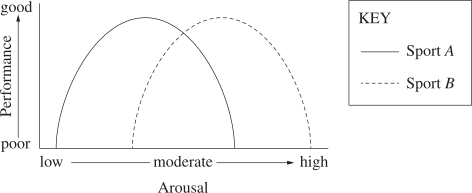
The graphs show the relationship between the levels of arousal and the performance levels of athletes in two different sports, A and B.

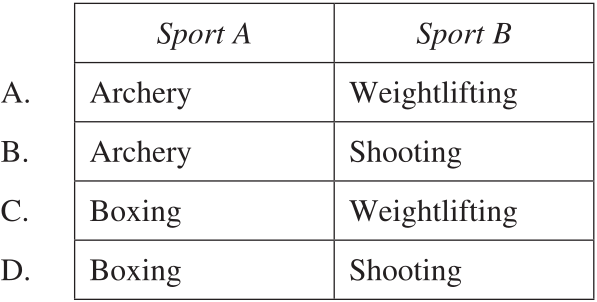
Which row of the table identifies the sports that these graphs most likely represent?

Show Answers Only

\(A\)

Show Worked Solution
  • A is correct: Archery requires low arousal, weightlifting tolerates higher arousal.

Other Options:

  • B is incorrect: Both archery and shooting require similar low arousal.
  • C is incorrect: Boxing needs moderate not low arousal levels.
  • D is incorrect: Boxing requires higher arousal than shooting sports.

Filed Under: Psychological strategies Tagged With: Band 4, smc-5464-15-Arousal optimisation

HMS, TIP 2021 HSC 7 MC

A golfer is extremely nervous and shaking prior to hitting the ball. She closes her eyes and pictures herself making a smooth back swing.

Which psychological strategy is the golfer using?

  1. Focusing
  2. Goal setting
  3. Visualisation
  4. Concentration
Show Answers Only

\(C\)

Show Worked Solution
  • C is correct: Mental imagery of successful performance defines visualisation.

Other Options:

  • A is incorrect: Focusing involves attention on specific cues.
  • B is incorrect: Goal setting establishes specific performance targets.
  • D is incorrect: Concentration maintains attention without mental imagery.

Filed Under: Psychological strategies Tagged With: Band 2, smc-5464-10-Psychological strategies

Copyright © 2014–2025 SmarterEd.com.au · Log in