SmarterEd

Aussie Maths & Science Teachers: Save your time with SmarterEd

  • Login
  • Get Help
  • About

HMS, HAG EQ-Bank 97 MC

The decline in cardiovascular disease mortality rates in Australia is attributed to improvements in both prevention and treatment, including:

  1. Reduction in risk factor levels and improved medical care with better medications
  2. Increased smoking rates and improved surgical techniques only
  3. Focus on treatment rather than prevention strategies
  4. Elimination of all modifiable risk factors from the population
Show Answers Only

\(A\)

Show Worked Solution
  • A is correct: Decline due to reduced risk factors like smoking plus improved medications and surgical interventions.

Other Options:

  • B is incorrect: Smoking rates decreased not increased and improvements include medications not just surgery.
  • C is incorrect: Both prevention and treatment contributed not just treatment focus.
  • D is incorrect: Risk factors reduced but not completely eliminated from the population.

Filed Under: Chronic Conditions, Diseases and Injury Tagged With: Band 4, smc-5477-20-Protective factors

HMS, HAG EQ-Bank 96 MC

Which protective factor is common to both cardiovascular disease and cancer prevention?

  1. Regular screening and check-ups only
  2. Avoiding sun exposure and using sunscreen
  3. Regular physical activity and balanced diet including fruit and vegetables
  4. Family history assessment and genetic counselling
Show Answers Only

\(C\)

Show Worked Solution
  • C is correct: Regular physical activity and balanced diet with fruit and vegetables protect against both CVD and cancer.

Other Options:

  • A is incorrect: Screening important but physical activity and diet are broader protective factors for both.
  • B is incorrect: Sun protection specific to skin cancer not general protective factor for CVD.
  • D is incorrect: Family history is a risk factor not protective factor and doesn’t prevent either condition.

Filed Under: Chronic Conditions, Diseases and Injury Tagged With: Band 3, smc-5477-20-Protective factors

HMS, HAG 2014 HSC 21

Outline TWO groups most at risk of cardiovascular disease in Australia.   (3 marks)

--- 7 WORK AREA LINES (style=lined) ---

Show Answers Only
  • Aboriginal and Torres Strait Islander people experience significantly higher rates of cardiovascular disease compared to non-Indigenous Australians. This increased risk results from higher smoking rates and increased diabetes prevalence. Limited access to healthcare services particularly affects those in remote communities.
  • People from low socioeconomic backgrounds face substantially increased CVD risk due to various interconnected factors. These include limited access to preventive healthcare and regular medical check-ups. Higher stress levels from financial pressures and poor dietary choices also contribute significantly.

Alternative groups at risk: Older people (natural ageing process increases risk), smokers (major modifiable risk factor), people with obesity (contributes to multiple CVD risk factors).

Show Worked Solution
  • Aboriginal and Torres Strait Islander people experience significantly higher rates of cardiovascular disease compared to non-Indigenous Australians. This increased risk results from higher smoking rates and increased diabetes prevalence. Limited access to healthcare services particularly affects those in remote communities.
  • People from low socioeconomic backgrounds face substantially increased CVD risk due to various interconnected factors. These include limited access to preventive healthcare and regular medical check-ups. Higher stress levels from financial pressures and poor dietary choices also contribute significantly.

Alternative groups at risk: Older people (natural ageing process increases risk), smokers (major modifiable risk factor), people with obesity (contributes to multiple CVD risk factors).

Filed Under: Chronic Conditions, Diseases and Injury Tagged With: Band 3, smc-5477-05-Cardiovascular disease, smc-5477-20-Protective factors

HMS, HAG 2014 HSC 5 MC

Which of the following has contributed most to the declining prevalence of cardiovascular disease (CVD) in Australia?

  1. Improved community awareness and treatment of CVD
  2. Improved nutritional quality of food consumed by Australians
  3. Increased levels of organised sport participation and exercise by those at risk of CVD
  4. Increased numbers of alternative health professionals and volunteers working with those at risk of CVD
Show Answers Only

\(A\)

Show Worked Solution
  • A is correct: Community awareness and improved treatment have been primary factors.

Other Options:

  • B is incorrect: Nutrition improvements alone haven’t been the main contributor.
  • C is incorrect: Sport participation increases haven’t been the primary factor.
  • D is incorrect: Alternative health professionals aren’t the main reason for decline.

Filed Under: Chronic Conditions, Diseases and Injury Tagged With: Band 4, smc-5477-05-Cardiovascular disease, smc-5477-20-Protective factors

HMS, HAG 2018 HSC 22

Describe the determinants of health that affect a preventable condition in Australia OTHER THAN cancer or cardiovascular disease. Use examples to support your answer.   (4 marks)

--- 12 WORK AREA LINES (style=lined) ---

Show Answers Only

  • Mental health conditions are affected by multiple determinants of health.
  • Sociocultural determinants include social isolation, stigma surrounding mental illness and cultural attitudes towards help-seeking. For example, rural communities often have limited social support networks.
  • Socioeconomic determinants encompass income levels, employment status and educational attainment. Unemployment and financial stress frequently contribute to anxiety and depression.
  • Environmental determinants involve geographic location and access to services. Remote areas have fewer mental health professionals and support services available.
  • Health behaviour determinants include substance use, physical inactivity and poor sleep patterns. Excessive alcohol consumption often worsens depression and anxiety symptoms.
  • Biomedical determinants comprise genetic predisposition, brain chemistry imbalances and hormonal influences. Family history increases risk for conditions like bipolar disorder and schizophrenia.

Show Worked Solution

  • Mental health conditions are affected by multiple determinants of health.
  • Sociocultural determinants include social isolation, stigma surrounding mental illness and cultural attitudes towards help-seeking. For example, rural communities often have limited social support networks.
  • Socioeconomic determinants encompass income levels, employment status and educational attainment. Unemployment and financial stress frequently contribute to anxiety and depression.
  • Environmental determinants involve geographic location and access to services. Remote areas have fewer mental health professionals and support services available.
  • Health behaviour determinants include substance use, physical inactivity and poor sleep patterns. Excessive alcohol consumption often worsens depression and anxiety symptoms.
  • Biomedical determinants comprise genetic predisposition, brain chemistry imbalances and hormonal influences. Family history increases risk for conditions like bipolar disorder and schizophrenia.

♦♦ Mean mark 52%.

Filed Under: Chronic Conditions, Diseases and Injury Tagged With: Band 5, smc-5477-15-Other conditions, smc-5477-20-Protective factors

HMS, HAG 2021 HSC 19 MC

The graph shows the trends in the incidence of a type of cancer for males and females in Australia from 2004 to 2019.

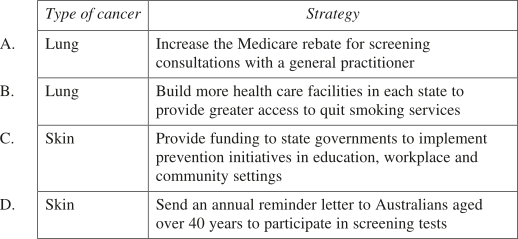
Which row of the table identifies the type of cancer represented in the graph and the most effective strategy for the federal government to implement in order to reduce its overall expenditure on this type of cancer by 2040?

Show Answers Only

\(C\)

Show Worked Solution
  • C is correct: Graph pattern matches skin cancer trends; prevention most cost-effective.

Other Options:

  • A is incorrect: Screening less effective than prevention for skin cancer.
  • B is incorrect: Pattern doesn’t match lung cancer epidemiology trends.
  • D is incorrect: Letters less effective than comprehensive prevention programs.

♦ Mean mark 55%.

Filed Under: Chronic Conditions, Diseases and Injury Tagged With: Band 5, smc-5477-10-Cancer trends, smc-5477-20-Protective factors

HMS, HAG 2021 HSC 21b


Explain how TWO protective factors can reduce the risk of cardiovascular disease.   (4 marks)

--- 12 WORK AREA LINES (style=lined) ---

Show Answers Only

Protective factors: Regular physical activity and Healthy Diet

  • Regular physical activity strengthens the heart muscle and improves cardiovascular efficiency. Exercise works by increasing stroke volume and cardiac output while reducing resting heart rate. As a result, blood pressure decreases and circulation improves. Therefore, arterial walls experience reduced strain and blockage formation decreases.
  • Maintaining a healthy diet prevents the buildup of cholesterol in arteries. When people consume foods low in saturated fats and high in fibre, blood cholesterol levels consequently remain within healthy ranges. This creates reduced plaque formation in coronary arteries, which means blood flow to the heart muscle remains unobstructed.
Show Worked Solution

Protective factors: Regular physical activity and Healthy Diet

  • Regular physical activity strengthens the heart muscle and improves cardiovascular efficiency. Exercise works by increasing stroke volume and cardiac output while reducing resting heart rate. As a result, blood pressure decreases and circulation improves. Therefore, arterial walls experience reduced strain and blockage formation decreases.
  • Maintaining a healthy diet prevents the buildup of cholesterol in arteries. When people consume foods low in saturated fats and high in fibre, blood cholesterol levels consequently remain within healthy ranges. This creates reduced plaque formation in coronary arteries, which means blood flow to the heart muscle remains unobstructed.

Filed Under: Chronic Conditions, Diseases and Injury Tagged With: Band 4, smc-5477-20-Protective factors

Copyright © 2014–2025 SmarterEd.com.au · Log in