Kevlar and polystyrene are two common polymers.
A section of their structures is shown.
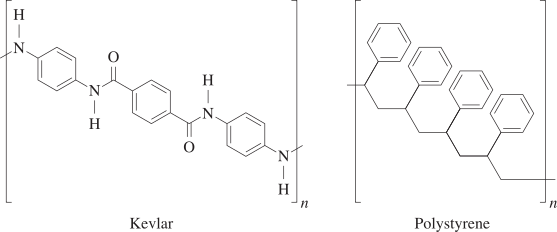
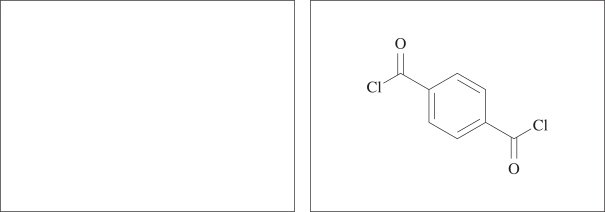
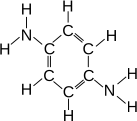
- Kevlar is produced through a reaction of two different monomers, one of which is shown. Draw the missing monomer in the box provided. (1 mark)
--- 0 WORK AREA LINES (style=lined) ---
- Kevlar chains are hard to pull apart, whereas polystyrene chains are not.
- With reference to intermolecular forces, explain the difference in the physical properties of the two polymers. (3 marks)
--- 10 WORK AREA LINES (style=lined) ---
Show Answers Only
a.
b. The physical differences between the two polymers are:
- Kevlar chains are very hard to pull apart because the polymer contains many amide groups that can form strong hydrogen bonds between neighbouring chains. These strong forces hold the chains tightly together, making Kevlar rigid and very strong.
- The close packing of the chains also gives Kevlar a high melting point, because a large amount of energy is required to break the hydrogen bonds.
- Polystyrene, on the other hand, does not contain groups that can form hydrogen bonds. Its polymer chains are mostly non-polar, so the only forces between the chains are weak dispersion forces.
- These weaker attractions mean the chains can slide past each other, making polystyrene much softer, brittle, and it also has a lower melting point than Kevlar. Because the forces between chains are weak, polystyrene is much easier to pull apart compared to Kevlar.
Show Worked Solution
a.
b. The physical differences between the two polymers are:
- Kevlar chains are very hard to pull apart because the polymer contains many amide groups that can form strong hydrogen bonds between neighbouring chains. These strong forces hold the chains tightly together, making Kevlar rigid and very strong.
- The close packing of the chains also gives Kevlar a high melting point, because a large amount of energy is required to break the hydrogen bonds.
- Polystyrene, on the other hand, does not contain groups that can form hydrogen bonds. Its polymer chains are mostly non-polar, so the only forces between the chains are weak dispersion forces.
- These weaker attractions mean the chains can slide past each other, making polystyrene much softer, brittle, and it also has a lower melting point than Kevlar. Because the forces between chains are weak, polystyrene is much easier to pull apart compared to Kevlar.