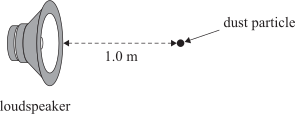
A tuning fork is struck and held close to a candle flame. The flame begins to vibrate back and forth rhythmically. Which statement best explains this observation?
- Transverse sound waves from the fork create vibrations perpendicular to the direction of travel, disturbing the flame.
- Longitudinal sound waves cause alternating compressions and rarefactions in the air, producing pressure variations that move the flame.
- The vibrating fork generates thermal energy that heats the surrounding air and makes the flame oscillate.
- Air molecules emitted by the fork move in a stream toward the flame, transferring momentum and displacing it.