Explain the role of major muscles in performing a deadlift.
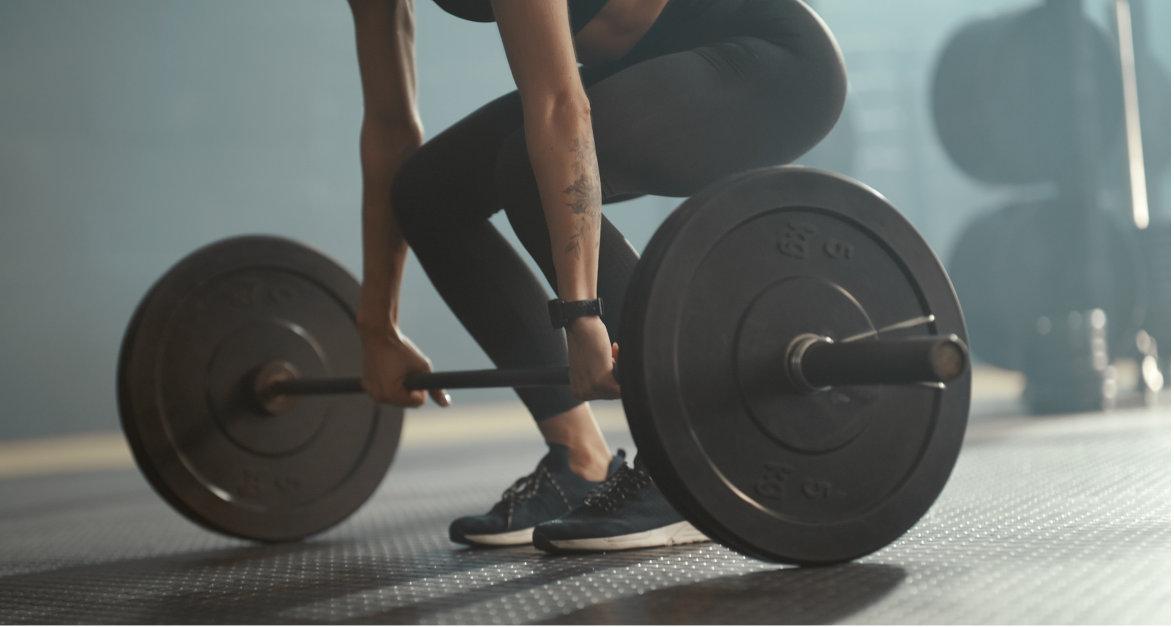
In your response, identify the types of muscle contractions occurring and explain how these muscles work together to execute the movement safely. (5 marks)
--- 18 WORK AREA LINES (style=lined) ---
Show Answers Only
Sample Answer
- During the lifting phase, multiple muscle groups work simultaneously. Erector spinae muscles contract isometrically, maintaining a rigid spine position. This prevents dangerous spinal flexion under load. Meanwhile, gluteus maximus and hamstrings perform concentric contractions to extend the hips. Similarly, quadriceps contract concentrically to extend the knees.
- These coordinated actions create the upward force needed to lift the weight. The reason for simultaneous activation is load distribution – sharing the work prevents any single muscle group from overloading. Additionally, trapezius muscles contract isometrically to stabilise the shoulder girdle and maintain bar position.
- In the lowering phase, the same muscles perform eccentric contractions. This controlled lengthening prevents the weight from dropping suddenly. Hamstrings and glutes gradually lengthen while maintaining tension, which protects the lower back from sudden loading.
- Throughout both phases, core muscles (rectus abdominis, transverse abdominis) maintain isometric contraction. This continuous bracing protects the spine and enables efficient force transfer. Therefore, coordinated muscle contractions ensure both effective lifting and injury prevention.
Show Worked Solution
Sample Answer
- During the lifting phase, multiple muscle groups work simultaneously. Erector spinae muscles contract isometrically, maintaining a rigid spine position. This prevents dangerous spinal flexion under load. Meanwhile, gluteus maximus and hamstrings perform concentric contractions to extend the hips. Similarly, quadriceps contract concentrically to extend the knees.
- These coordinated actions create the upward force needed to lift the weight. The reason for simultaneous activation is load distribution – sharing the work prevents any single muscle group from overloading. Additionally, trapezius muscles contract isometrically to stabilise the shoulder girdle and maintain bar position.
- In the lowering phase, the same muscles perform eccentric contractions. This controlled lengthening prevents the weight from dropping suddenly. Hamstrings and glutes gradually lengthen while maintaining tension, which protects the lower back from sudden loading.
- Throughout both phases, core muscles (rectus abdominis, transverse abdominis) maintain isometric contraction. This continuous bracing protects the spine and enables efficient force transfer. Therefore, coordinated muscle contractions ensure both effective lifting and injury prevention.