Compare and explain the reactivity of Group 1 (alkali metals) and Group 2 (alkaline earth metals) with water. In your answer, link your explanation to electron configuration, atomic radius, and ionisation energy. (6 marks)
--- 15 WORK AREA LINES (style=lined) ---
Show Answers Only
- Group 1 metals (e.g. \(\ce{Li, Na, K}\)) react vigorously with water to form a hydroxide and hydrogen gas.
- Group 2 metals (e.g. \(\ce{Mg, Ca}\)) also react with water but much less vigorously, especially at the top of the group. For example, magnesium reacts only slowly with cold water.
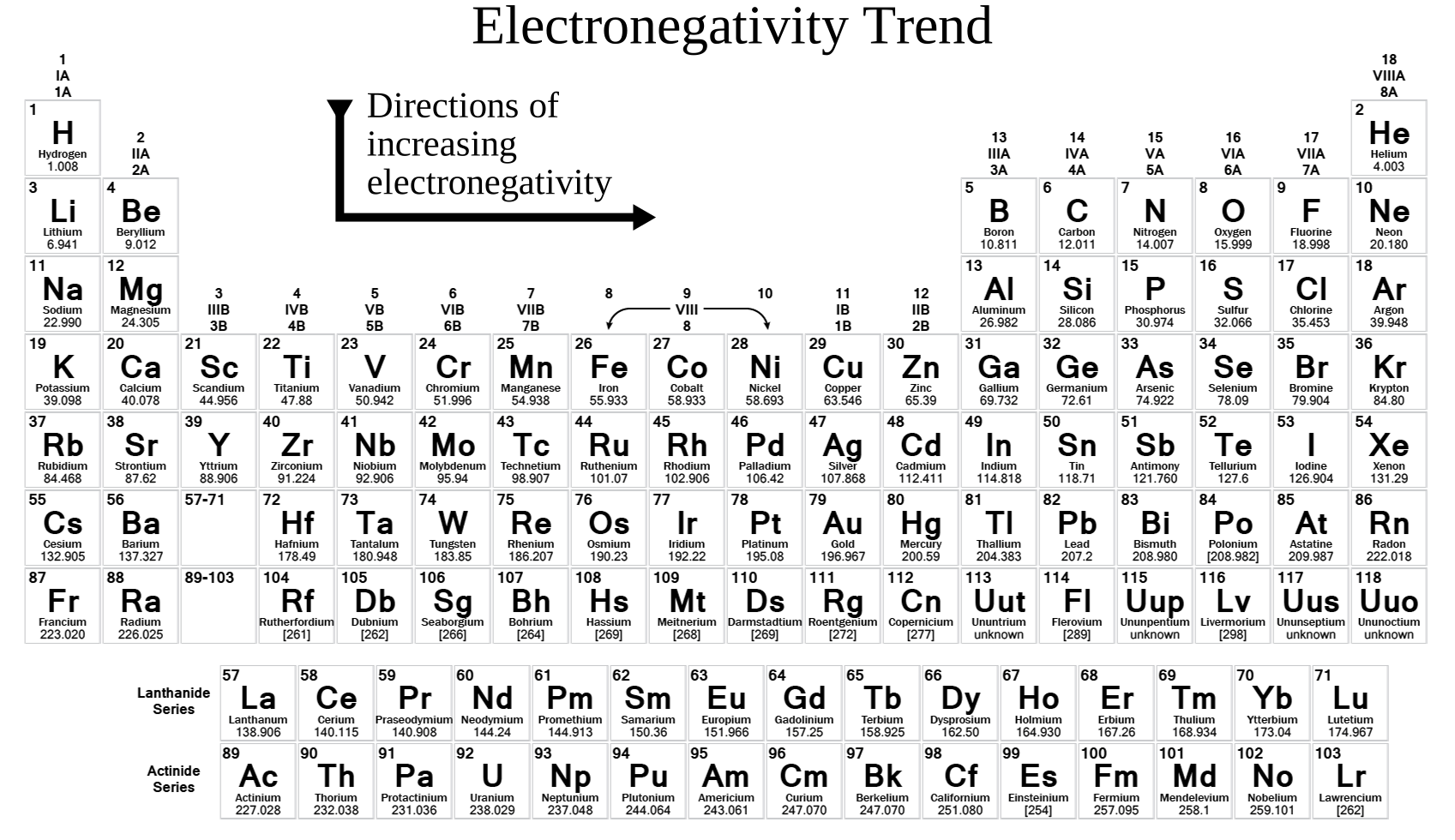
- Electron configuration: Group 1 metals have one valence electron, while Group 2 metals have two valence electrons. Losing one electron requires less energy than losing two, making Group 1 metals more reactive.
- Atomic radius and ionisation energy: Down both groups, the atomic radius increases, shielding increases, and ionisation energy decreases. This means reactivity with water increases down the group.
- Therefore: Reactivity increases down both groups, but Group 1 metals show higher reactivity with water compared with Group 2 metals in the same period.
Show Worked Solution
- Group 1 metals (e.g. \(\ce{Li, Na, K}\)) react vigorously with water to form a hydroxide and hydrogen gas.
- Group 2 metals (e.g. \(\ce{Mg, Ca}\)) also react with water but much less vigorously, especially at the top of the group. For example, magnesium reacts only slowly with cold water.
- Electron configuration: Group 1 metals have one valence electron, while Group 2 metals have two valence electrons. Losing one electron requires less energy than losing two, making Group 1 metals more reactive.
- Atomic radius and ionisation energy: Down both groups, the atomic radius increases, shielding increases, and ionisation energy decreases. This means reactivity with water increases down the group.
- Therefore: Reactivity increases down both groups, but Group 1 metals show higher reactivity with water compared with Group 2 metals in the same period.