SmarterEd

Aussie Maths & Science Teachers: Save your time with SmarterEd

  • Login
  • Get Help
  • About

HMS, HIC 2014 HSC 29a

How does the health status of young people compare with that of other age groups in the Australian population?   (8 marks)

--- 24 WORK AREA LINES (style=lined) ---

Show Answers Only
  • Young people generally have the best health status of all age groups because they experience lower rates of chronic diseases and higher self-reported wellbeing. This occurs when comparing mortality and morbidity data across different age cohorts in Australian health reports.
  • Self-assessed health ratings demonstrate that young people report excellent or very good health more frequently than older populations. These positive perceptions result from fewer chronic conditions and greater physical capabilities. However, mental health issues create concerning trends specifically affecting this demographic.
  • Mortality patterns show injury and poisoning as leading causes of death for young people. This contrasts with older age groups where chronic diseases like cardiovascular disease and cancer predominate. The shift occurs because longer exposure to risk factors accumulates health problems over time.
  • Chronic disease prevalence increases significantly with age as lifestyle behaviours and environmental exposures compound over decades. For example, cardiovascular disease rarely affects young people but becomes the leading cause of death in those aged 45-64 years.
  • Mental health presents a notable exception where young people experience higher rates than some older groups. This trend reflects increased anxiety and depression particularly affecting females aged 16-24. Social media and academic pressures contribute to these concerning patterns.
  • Preventable conditions like dental disease and sexually transmitted infections disproportionately affect young people. These issues occur because risk-taking behaviours and limited health service engagement characterise this age group’s health-seeking patterns.
Show Worked Solution
  • Young people generally have the best health status of all age groups because they experience lower rates of chronic diseases and higher self-reported wellbeing. This occurs when comparing mortality and morbidity data across different age cohorts in Australian health reports.
  • Self-assessed health ratings demonstrate that young people report excellent or very good health more frequently than older populations. These positive perceptions result from fewer chronic conditions and greater physical capabilities. However, mental health issues create concerning trends specifically affecting this demographic.
  • Mortality patterns show injury and poisoning as leading causes of death for young people. This contrasts with older age groups where chronic diseases like cardiovascular disease and cancer predominate. The shift occurs because longer exposure to risk factors accumulates health problems over time.
  • Chronic disease prevalence increases significantly with age as lifestyle behaviours and environmental exposures compound over decades. For example, cardiovascular disease rarely affects young people but becomes the leading cause of death in those aged 45-64 years.
  • Mental health presents a notable exception where young people experience higher rates than some older groups. This trend reflects increased anxiety and depression particularly affecting females aged 16-24. Social media and academic pressures contribute to these concerning patterns.
  • Preventable conditions like dental disease and sexually transmitted infections disproportionately affect young people. These issues occur because risk-taking behaviours and limited health service engagement characterise this age group’s health-seeking patterns.

Filed Under: Health Status of Young People Tagged With: Band 4, Band 5, smc-5509-10-Health trends

HMS, HIC 2020 HSC 28aii

Compare the health status of young people with the health status of individuals in a different age group.   (5 marks)

--- 15 WORK AREA LINES (style=lined) ---

Show Answers Only

Similarities:

  • Both young people (15-24 years) and older adults (65+ years) experience gender differences in health outcomes, with males having higher mortality rates in both age groups.
  • Both groups utilise healthcare services regularly, though for different reasons.

Differences:

  • Young people’s leading mortality causes are preventable injuries and suicide, whilst older adults die primarily from chronic diseases like coronary heart disease and cancer.
  • Mental health conditions dominate young people’s morbidity patterns, including anxiety and depression.
  • Older adults experience chronic conditions such as arthritis, diabetes, and cardiovascular disease.
  • Young people have lower healthcare utilisation rates but higher emergency department presentations for injuries.
  • Older adults have frequent GP visits and higher hospitalisation rates for chronic disease management.
  • Young people’s health risks stem from behavioural factors, whilst older adults face age-related physiological decline and accumulated lifestyle effects.
Show Worked Solution

Similarities:

  • Both young people (15-24 years) and older adults (65+ years) experience gender differences in health outcomes, with males having higher mortality rates in both age groups.
  • Both groups utilise healthcare services regularly, though for different reasons.

Differences:

  • Young people’s leading mortality causes are preventable injuries and suicide, whilst older adults die primarily from chronic diseases like coronary heart disease and cancer.
  • Mental health conditions dominate young people’s morbidity patterns, including anxiety and depression.
  • Older adults experience chronic conditions such as arthritis, diabetes, and cardiovascular disease.
  • Young people have lower healthcare utilisation rates but higher emergency department presentations for injuries.
  • Older adults have frequent GP visits and higher hospitalisation rates for chronic disease management.
  • Young people’s health risks stem from behavioural factors, whilst older adults face age-related physiological decline and accumulated lifestyle effects.

♦♦ Mean mark 45%.

Filed Under: Health Status of Young People Tagged With: Band 5, smc-5509-70-ATSI

HMS, HIC 2020 HSC 28ai

Outline the current patterns of mortality for young people.   (3 marks)

--- 8 WORK AREA LINES (style=lined) ---

Show Answers Only
  • Young males aged 15-24 years experience higher mortality rates than females due to greater risk-taking behaviours.
  • Intentional self-harm (suicide) represents the leading cause of death among young people, with rates increasing over recent years. Males have suicide rates approximately three times higher than females.
  • Land transport accidents constitute the second leading cause of mortality, predominantly affecting males through motor vehicle crashes.
  • Deaths from accidental poisoning, commonly linked to alcohol and drug use, rank third among young people.
  • Overall mortality patterns show preventable causes dominating young people’s deaths, contrasting with chronic disease patterns seen in older populations.
Show Worked Solution
  • Young males aged 15-24 years experience higher mortality rates than females due to greater risk-taking behaviours.
  • Intentional self-harm (suicide) represents the leading cause of death among young people, with rates increasing over recent years. Males have suicide rates approximately three times higher than females.
  • Land transport accidents constitute the second leading cause of mortality, predominantly affecting males through motor vehicle crashes.
  • Deaths from accidental poisoning, commonly linked to alcohol and drug use, rank third among young people.
  • Overall mortality patterns show preventable causes dominating young people’s deaths, contrasting with chronic disease patterns seen in older populations.

♦♦ Mean mark 45%.

Filed Under: Health Status of Young People Tagged With: Band 5, smc-5509-10-Health trends

HMS, HIC 2023 HSC 28ai

Outline ONE strategy that can be used to overcome an individual factor that adversely affects a young person's health.   (3 marks)

--- 7 WORK AREA LINES (style=lined) ---

Show Answers Only

Sample answer

  • A young person with low health literacy regarding sun protection could attend SunSmart education programs delivered in Australian schools.
  • Programs like this provide practical strategies for sun protection including the five S’s of ‘Slip, Slop, Slap, Seek, Slide’ to improve knowledge of UV protection behaviors.
  • These programs address the individual factor of knowledge and attitudes by fostering understanding of the link between sun exposure and skin cancer risk in Australia’s high-UV environment.
Show Worked Solution

Sample answer

  • A young person with low health literacy regarding sun protection could attend SunSmart education programs delivered in Australian schools.
  • Programs like this provide practical strategies for sun protection including the five S’s of ‘Slip, Slop, Slap, Seek, Slide’ to improve knowledge of UV protection behaviors.
  • These programs address the individual factor of knowledge and attitudes by fostering understanding of the link between sun exposure and skin cancer risk in Australia’s high-UV environment.

Filed Under: Health Status of Young People Tagged With: Band 4, smc-5509-20-Causes of health issues, smc-5509-40-Protective factors, smc-5509-50-Determinants

HMS, HIC EQ-Bank 083

Using ONE health-related issue affecting young people, analyse both the causes and protective factors that can protect and enhance young people's health.   (8 marks)

--- 22 WORK AREA LINES (style=lined) ---

Show Answers Only

*PEEL – Solution is structured using an adjusted PEEL method; [P] Identify components and their relationship, [E] explain the interaction/influence between them, [Ev] provide evidence showing the relationship in action, [L] linking sentence back to question.

Sample Answer – Health issue: Sense of body and self 

  • [P] Social media exposure and peer pressure interact to create body image issues.
  • [E] The relationship between online content and social comparison shows how digital platforms amplify appearance concerns.
  • [Ev] Mission Australia’s 2023 report confirms body image ranks in top four youth concerns, with one-third developing disordered eating.
  • [L] This interaction demonstrates how external influences directly shape health outcomes.
     
  • [P] Unrealistic media beauty standards interact with existing psychological vulnerabilities in young people.
  • [E] This combination directly damages self-worth when edited images trigger personal insecurities about appearance.
  • [Ev] Research shows that as a consequence of viewing perfect bodies daily via social media, teens report significantly higher anxiety about appearance.
  • [L] These elements combine to produce body dissatisfaction among young people.
     
  • [P] Health literacy functions as a primary protective mechanism.
  • [E] The dynamic between education and resilience shows critical thinking skills disrupt harmful messages.
  • [Ev] School programs teaching media analysis reduce young people’s body dissatisfaction significantly within six months.
  • [L] This establishes a cause-effect pattern where knowledge directly counters negative influences.
     
  • [P] Family support can help counteract negative peer influences on body image.
  • [E] While peers provide appearance pressure, families contribute acceptance and unconditional support.
  • [Ev] Young people with supportive families show 50% lower rates of eating disorders despite social pressures.
  • [L] Together, these factors determine whether external messages translate into actual harm.
Show Worked Solution

*PEEL – Solution is structured using an adjusted PEEL method; [P] Identify components and their relationship, [E] explain the interaction/influence between them, [Ev] provide evidence showing the relationship in action, [L] linking sentence back to question.

Sample Answer – Health issue: Sense of body and self 

  • [P] Social media exposure and peer pressure interact to create body image issues.
  • [E] The relationship between online content and social comparison shows how digital platforms amplify appearance concerns.
  • [Ev] Mission Australia’s 2023 report confirms body image ranks in top four youth concerns, with one-third developing disordered eating.
  • [L] This interaction demonstrates how external influences directly shape health outcomes.
     
  • [P] Unrealistic media beauty standards interact with existing psychological vulnerabilities in young people.
  • [E] This combination directly damages self-worth when edited images trigger personal insecurities about appearance.
  • [Ev] Research shows that as a consequence of viewing perfect bodies daily via social media, teens report significantly higher anxiety about appearance.
  • [L] These elements combine to produce body dissatisfaction among young people.
     
  • [P] Health literacy functions as a primary protective mechanism.
  • [E] The dynamic between education and resilience shows critical thinking skills disrupt harmful messages.
  • [Ev] School programs teaching media analysis reduce young people’s body dissatisfaction significantly within six months.
  • [L] This establishes a cause-effect pattern where knowledge directly counters negative influences.
     
  • [P] Family support can help counteract negative peer influences on body image.
  • [E] While peers provide appearance pressure, families contribute acceptance and unconditional support.
  • [Ev] Young people with supportive families show 50% lower rates of eating disorders despite social pressures.
  • [L] Together, these factors determine whether external messages translate into actual harm.

Filed Under: Health Status of Young People Tagged With: Band 4, Band 5, smc-5509-20-Causes of health issues, smc-5509-40-Protective factors, smkey-hsc-Analyse

HMS, HIC EQ-Bank 082

Young people from low socioeconomic backgrounds often experience poorer health outcomes compared to their more advantaged peers.

Outline how various stakeholders contribute to addressing health inequities among this population.   (3 marks)

--- 7 WORK AREA LINES (style=lined) ---

Show Answers Only

Answers could include: 

  • Government addresses health inequities through targeted funding of school health programs in disadvantaged areas and subsidised healthcare via Medicare.
  • Communities support through local sporting clubs offering free registration fees and neighbourhood networks providing transportation to health appointments.
  • Non-government organisations conduct health literacy campaigns and provide emergency food relief in underserved communities.
  • Collaborative partnerships between sectors create sustainable programs like mobile health clinics that overcome geographical barriers for disadvantaged youth.
Show Worked Solution

Answers could include: 

  • Government addresses health inequities through targeted funding of school health programs in disadvantaged areas and subsidised healthcare via Medicare.
  • Communities support through local sporting clubs offering free registration fees and neighbourhood networks providing transportation to health appointments.
  • Non-government organisations conduct health literacy campaigns and provide emergency food relief in underserved communities.
  • Collaborative partnerships between sectors create sustainable programs like mobile health clinics that overcome geographical barriers for disadvantaged youth.

Filed Under: Health Status of Young People Tagged With: Band 4, smc-5509-50-Determinants

HMS, HIC EQ-Bank 081

To what extent do the determinants of health influence the health status of young Australians? In your response, consider major determinants that most significantly impact young people's health.   (12 marks)

--- 30 WORK AREA LINES (style=lined) ---

Show Answers Only

Judgment Statement

  • Determinants of health influence young Australians’ health to a significant extent, with socioeconomic, environmental and biomedical factors playing a critical role in shaping health outcomes.

Socioeconomic Determinants

  • Evidence supporting this significant influence includes family income controlling health opportunities.
  • Wealthy families can access private healthcare and afford gym memberships while poor families cannot.
  • Youth from the lowest income areas have double the obesity rates and relatively limited access to mental health services.
  • Education has a huge influence on health literacy with children of university-educated parents much more likely to make informed and better health choices.

Biomedical Determinants

  • Genetic factors significantly shape youth health regardless of personal choices or behaviours.
  • Biomedical determinants like predisposition to diabetes, asthma or mental illness affect young people regardless of status.
  • Hormonal changes during puberty universally impact young people’s mood and risk-taking.
  • These biological factors establish baseline health that other determinants modify.

Environmental Determinants

  • Geographic location profoundly impacts health access.
  • Examples of this include rural youth facing specialist shortages and often many travelling hours for treatment, and urban youth dealing with air pollution and overcrowding.
  • Built environments can have an oversized effect on youth activity levels through bike paths and sports facilities.

Interactions of Determinants

  • Determinants rarely work in isolation.
  • Poor rural youth face triple disadvantage – low income, limited services and environmental hazards compound together.
  • Wealthy urban youth can overcome genetic predispositions through healthcare access.
  • These determinants can interplay to either magnify or mitigate health risks, demonstrating their profound influence on all Australian young people.

Reaffirmation

  • The significant influence of health determinants becomes undeniable when examining health data.
  • Location, income and genetics predict many outcomes, significantly reducing an individual’s control over their own health.
  • Positively addressing these influences demands system-level interventions targeting root causes rather than expecting young people to overcome structural disadvantages alone.
Show Worked Solution

Judgment Statement

  • Determinants of health influence young Australians’ health to a significant extent, with socioeconomic, environmental and biomedical factors playing a critical role in shaping health outcomes.

Socioeconomic Determinants

  • Evidence supporting this significant influence includes family income controlling health opportunities.
  • Wealthy families can access private healthcare and afford gym memberships while poor families cannot.
  • Youth from the lowest income areas have double the obesity rates and relatively limited access to mental health services.
  • Education has a huge influence on health literacy with children of university-educated parents much more likely to make informed and better health choices.

Biomedical Determinants

  • Genetic factors significantly shape youth health regardless of personal choices or behaviours.
  • Biomedical determinants like predisposition to diabetes, asthma or mental illness affect young people regardless of status.
  • Hormonal changes during puberty universally impact young people’s mood and risk-taking.
  • These biological factors establish baseline health that other determinants modify.

Environmental Determinants

  • Geographic location profoundly impacts health access.
  • Examples of this include rural youth facing specialist shortages and often many travelling hours for treatment, and urban youth dealing with air pollution and overcrowding.
  • Built environments can have an oversized effect on youth activity levels through bike paths and sports facilities.

Interactions of Determinants

  • Determinants rarely work in isolation.
  • Poor rural youth face triple disadvantage – low income, limited services and environmental hazards compound together.
  • Wealthy urban youth can overcome genetic predispositions through healthcare access.
  • These determinants can interplay to either magnify or mitigate health risks, demonstrating their profound influence on all Australian young people.

Reaffirmation

  • The significant influence of health determinants becomes undeniable when examining health data.
  • Location, income and genetics predict many outcomes, significantly reducing an individual’s control over their own health.
  • Positively addressing these influences demands system-level interventions targeting root causes rather than expecting young people to overcome structural disadvantages alone.

Filed Under: Health Status of Young People Tagged With: Band 4, Band 5, smc-5509-50-Determinants

HMS, HIC EQ-Bank 066 MC

Which of the following statements accurately reflects the trend in obesity rates among young people in Australia from 1995 to 2017-18?

  1. Rates steadily declined across all age groups of children and young people.
  2. Rates remained stable with minimal fluctuation over the period.
  3. Rates initially increased but more recently show a trend toward fewer young people being overweight.
  4. Rates consistently increased at the same rate for both males and females in the 5-17 age group.
Show Answers Only

\(C\)

Show Worked Solution
  • C is correct as the data shows that although rates of obesity had been rising over time, more recent figures show a slightly declining trend.

Other options:

  • A is incorrect because rates did not steadily decline across the entire period; they initially increased before showing signs of decline more recently.
  • B is incorrect because there were significant fluctuations in the rates over the period rather than stability.
  • D is incorrect because there’s no evidence of this trend.

Filed Under: Health Status of Young People Tagged With: Band 5, smc-5509-10-Health trends

HMS, HIC EQ-Bank 65 MC

Research into youth mental health shows increasing rates of anxiety and depression.

Which of the following most accurately represents the causal factors behind this trend?

  1. Genetic predispositions combined with increased diagnostic awareness in healthcare settings.
  2. Academic pressure, decreased physical activity levels and changing family structures.
  3. Social media influence, performance pressures, reduced community connection and improved diagnostic methods.
  4. Increased screen time, disrupted sleep patterns and changing social interaction styles.
Show Answers Only

\(C\)

Show Worked Solution
  • C is correct as it acknowledges the complex, multifactorial nature of mental health trends, including social, environmental and detection factors.

Other options:

  • A is incorrect because while genetics and increased awareness play roles, this combination doesn’t capture the full complexity of causal factors.
  • B is incorrect because while these are contributing factors, they represent an incomplete view of the multifaceted causes.
  • D is incorrect because while these are relevant factors, they represent a narrower view that doesn’t account for broader social and diagnostic elements.

Filed Under: Health Status of Young People Tagged With: Band 5, smc-5509-20-Causes of health issues

HMS, HIC EQ-Bank 64 MC

The interrelationship between determinants of health for young people is most accurately described by which statement?

  1. Individual health determinants operate independently, with biomedical factors having the strongest influence.
  2. Environmental determinants always override socioeconomic factors in determining health outcomes.
  3. Determinants function in isolation from each other, with each affecting different aspects of health.
  4. Multiple determinants interact, creating compound effects that amplify advantages or disadvantages.
Show Answers Only

\(D\)

Show Worked Solution
  • D is correct as health determinants interact in complex ways, creating compound effect.

Other options:

  • A is incorrect because determinants don’t operate independently.
  • B is incorrect because environmental determinants don’t consistently override socioeconomic factors.
  • C is incorrect because determinants don’t function in isolation.

Filed Under: Health Status of Young People Tagged With: Band 4, smc-5509-40-Protective factors, smc-5509-50-Determinants

HMS, HIC EQ-Bank 63 MC

Which of the following best explains how access to education serves as a protective factor for young people's health?

  1. It ensures young people remain physically active through mandatory physical education classes.
  2. It guarantees access to healthcare services through school-based medical facilities.
  3. It develops critical thinking skills that enable informed health decisions and improved health literacy.
  4. It eliminates all socioeconomic barriers to good health through financial support programs.
Show Answers Only

\(C\)

Show Worked Solution
  • C is correct as education develops critical thinking and health literacy skills that allow young people to make better health decisions.

Other options:

  • A is incorrect because while physical education is important, it is only one aspect of education’s protective effect.
  • B is incorrect because not all schools provide medical facilities.
  • D is incorrect because education alone cannot eliminate all socioeconomic barriers.

Filed Under: Health Status of Young People Tagged With: Band 4, smc-5509-40-Protective factors

HMS, HIC EQ-Bank 080

Explain how community connection and cultural identity serve as protective factors for the health and wellbeing of Aboriginal and Torres Strait Islander young people.   (5 marks)

--- 15 WORK AREA LINES (style=lined) ---

Show Answers Only

*Language highlighting the cause-effect relationship is bolded in the answer below.

  • Strong cultural identity provides ATSI young people with belonging and purpose. This leads to protection from mental health problems because it builds strength and self-worth.
  • Connection to Country creates spiritual wellbeing through traditional practices. This relationship results in improved mental health due to meaningful connections with the land.
  • Cultural ceremonies strengthen intergenerational relationships. This process ensures young people access role models and traditional knowledge. As a result, they learn ancestral wellbeing practices.
  • Community connection provides social support networks. This occurs because trusted relationships reduce isolation. This interaction allows easier help-seeking through familiar community members.
  • Cultural continuity develops strengths through traditional narratives. This demonstrates why cultural pride counters negative stereotypes – it works by emphasising ancestral wisdom.
  • These protective factors mitigate socioeconomic disadvantage impacts. This shows a clear connection between cultural strength and positive health outcomes. To put it simply, culture creates resilience pathways despite structural barriers.
Show Worked Solution

*Language highlighting the cause-effect relationship is bolded in the answer below.

  • Strong cultural identity provides ATSI young people with belonging and purpose. This leads to protection from mental health problems because it builds strength and self-worth.
  • Connection to Country creates spiritual wellbeing through traditional practices. This relationship results in improved mental health due to meaningful connections with the land.
  • Cultural ceremonies strengthen intergenerational relationships. This process ensures young people access role models and traditional knowledge. As a result, they learn ancestral wellbeing practices.
  • Community connection provides social support networks. This occurs because trusted relationships reduce isolation. This interaction allows easier help-seeking through familiar community members.
  • Cultural continuity develops strengths through traditional narratives. This demonstrates why cultural pride counters negative stereotypes – it works by emphasising ancestral wisdom.
  • These protective factors mitigate socioeconomic disadvantage impacts. This shows a clear connection between cultural strength and positive health outcomes. To put it simply, culture creates resilience pathways despite structural barriers.

Filed Under: Health Status of Young People Tagged With: Band 4, smc-5509-40-Protective factors, smc-5509-70-ATSI, smkey-hsc-Explain

HMS, HIC EQ-Bank 79

Statistics reveal emerging patterns in the health of young Australians.

Describe the key health trends for young people over the past decade, highlighting both improvements and areas of decline.   (4 marks)

--- 10 WORK AREA LINES (style=lined) ---

Show Answers Only

Concerning health trends:

  • Mental health issues have significantly increased among young people, with anxiety and depression rates rising, particularly among females aged 16-24.
  • Technology-related health concerns have emerged, including increased screen time associated with poor sleep quality, sedentary behaviour, and the rise of vaping/e-cigarette use replacing traditional tobacco products.
  • Social media influence has contributed to health misinformation, body image concerns and eating disorders.

Improving health trends:

  • Physical health indicators show decreasing rates of risk behaviours such as tobacco smoking and alcohol consumption, with smoking rates declining steadily and fewer young people engaging in risky drinking patterns.
  • Social media offers new platforms for health information and peer support networks. This can positively influence health literacy and help-seeking behaviours.
Show Worked Solution

Concerning health trends:

  • Mental health issues have significantly increased among young people, with anxiety and depression rates rising, particularly among females aged 16-24.
  • Technology-related health concerns have emerged, including increased screen time associated with poor sleep quality, sedentary behaviour, and the rise of vaping/e-cigarette use replacing traditional tobacco products.
  • Social media influence has contributed to health misinformation, body image concerns and eating disorders.

Improving health trends:

  • Physical health indicators show decreasing rates of risk behaviours such as tobacco smoking and alcohol consumption, with smoking rates declining steadily and fewer young people engaging in risky drinking patterns.
  • Social media offers new platforms for health information and peer support networks. This can positively influence health literacy and help-seeking behaviours.

Filed Under: Health Status of Young People Tagged With: Band 3, Band 4, smc-5509-10-Health trends

HMS, HIC EQ-Bank 78

Outline THREE causes of health issues for young people living in rural and remote areas.   (3 marks)

--- 7 WORK AREA LINES (style=lined) ---

Show Answers Only
  • Geographic isolation limits access to healthcare services, leading to delayed treatment and prevention opportunities. This applies particularly for specialised services like mental health support and dental care.
  • Social disconnection from peers and community supports due to distance can contribute to increased rates of mental health issues including depression and anxiety among rural young people.
  • Limited availability of recreational facilities and organised sports programs reduces physical activity opportunities. This contributes to higher rates of sedentary behaviour and associated health concerns like obesity.
Show Worked Solution
  • Geographic isolation limits access to healthcare services, leading to delayed treatment and prevention opportunities. This applies particularly for specialised services like mental health support and dental care.
  • Social disconnection from peers and community supports due to distance can contribute to increased rates of mental health issues including depression and anxiety among rural young people.
  • Limited availability of recreational facilities and organised sports programs reduces physical activity opportunities. This contributes to higher rates of sedentary behaviour and associated health concerns like obesity.

Filed Under: Health Status of Young People Tagged With: Band 4, smc-5509-20-Causes of health issues

HMS, HIC EQ-Bank 77

Outline THREE protective factors that can positively influence the health of young people.   (3 marks)

--- 7 WORK AREA LINES (style=lined) ---

Show Answers Only

Answers could include:

  • Strong social connections and positive peer relationships provide young people with emotional support and a sense of belonging. This helps create better mental health outcomes.
  • Development of resilience skills enables young people to cope with setbacks. Resilience is a key input to making better health decisions and protecting against negative health behaviours like substance misuse.
  • Supportive family environments with open communication about health provide guidance for healthy behaviours. This foundation makes positive health practices more likely, including seeking help when needed.
Show Worked Solution

Answers could include:

  • Strong social connections and positive peer relationships provide young people with emotional support and a sense of belonging. This helps create better mental health outcomes.
  • Development of resilience skills enables young people to cope with setbacks. Resilience is a key input to making better health decisions and protecting against negative health behaviours like substance misuse.
  • Supportive family environments with open communication about health provide guidance for healthy behaviours. This foundation makes positive health practices more likely, including seeking help when needed.

Filed Under: Health Status of Young People Tagged With: Band 4, smc-5509-40-Protective factors

HMS, HIC EQ-Bank 62 MC

The risk factors and protective factors that influence health outcomes primarily vary according to which of the following?

  1. The biological sex and gender identity of an individual.
  2. The specific health issue or condition being examined.
  3. The income level and educational attainment of individuals.
  4. The ethnic heritage and cultural practices of communities.
Show Answers Only

\(B\)

Show Worked Solution
  • B is correct because each health issue has its own unique set of risk and protective factors.

Other options:

  • A is incorrect because biological sex and gender can influence but are not the primary determinant of all risk and protective factors.
  • C is incorrect because socioeconomic status, while important, is not the primary determinant.
  • D is incorrect because while cultural background can influence health behaviours and outcomes, it is not the primary determinant.

Filed Under: Health Status of Young People Tagged With: Band 5, smc-5509-20-Causes of health issues, smc-5509-40-Protective factors

HMS, HIC EQ-Bank 61 MC

Which of the following statements most accurately reflects the current health status of young people as a group in Australia?

  1. Young people primarily suffer from infectious diseases rather than lifestyle-related conditions.
  2. Young people experience the highest rates of chronic disease compared to all other age groups.
  3. Young people generally have positive physical health but increasing prevalence of mental health conditions.
  4. Young people have equal health outcomes regardless of socioeconomic or geographic factors.
Show Answers Only

\(C\)

Show Worked Solution
  • C is correct as data shows young people have relatively good physical health indicators but increasing rates of mental health conditions.

Other options:

  • A is incorrect because while infectious diseases affect young people, lifestyle-related conditions and mental health issues are more prevalent.
  • B is incorrect because chronic disease rates are generally higher in older populations, not young people.
  • D is incorrect because significant health inequities exist among young people based on socioeconomic status and geographic location.

Filed Under: Health Status of Young People Tagged With: Band 3, smc-5509-10-Health trends

HMS, HIC EQ-Bank 76

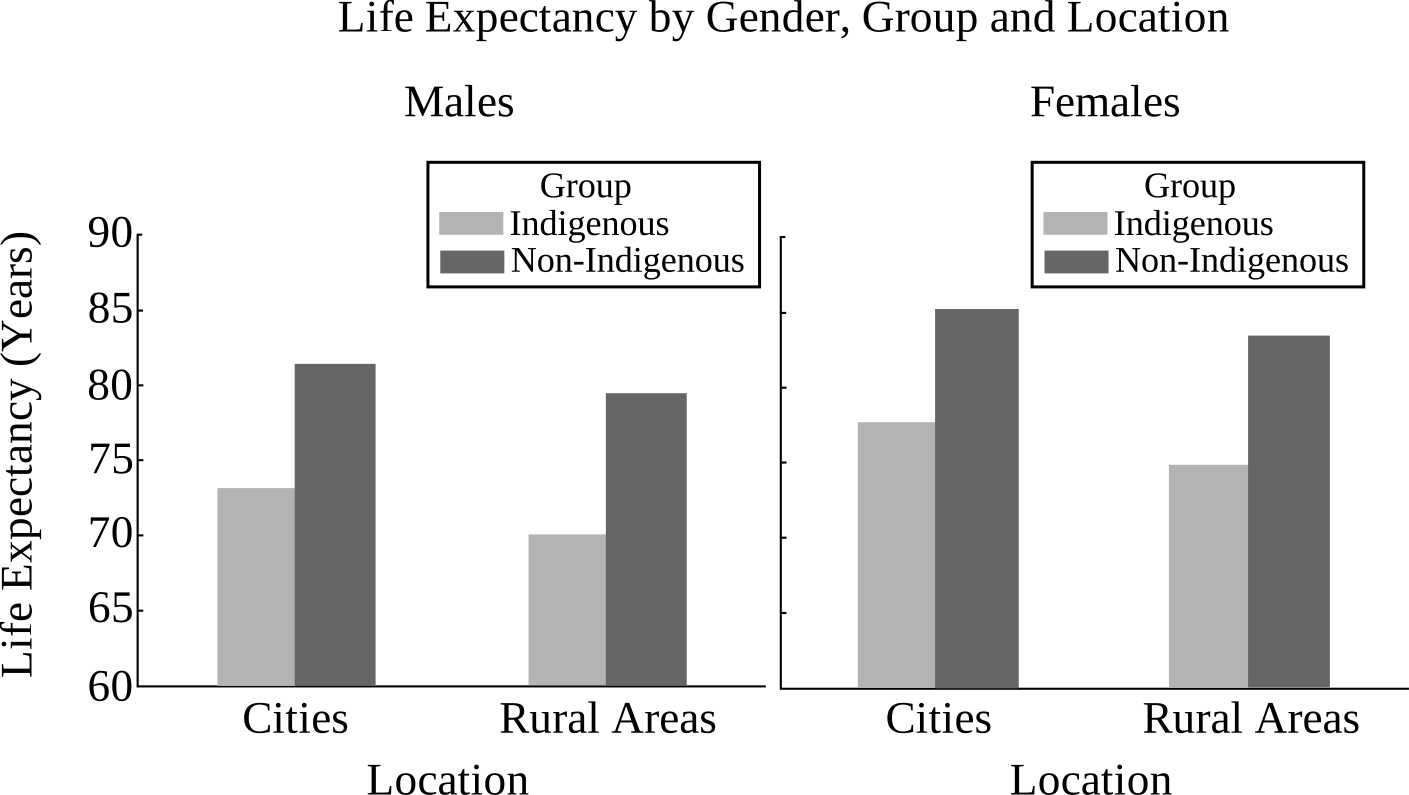
The graph below shows the life expectancy of indigenous vs non-indigenous males and females in city and rural locations.
 

Analyse the key trends in this data.   (8 marks)

--- 22 WORK AREA LINES (style=lined) ---

Show Answers Only

*PEEL – Solution is structured using an adjusted PEEL method; [P] Identify components and their relationship, [E] explain the interaction/influence between them, [Ev] provide evidence showing the relationship in action, [L] linking sentence back to question.

Geographic Disparities Within ATSI Population

  • [P] The data reveals significant geographic disparities in life expectancy within the Aboriginal and Torres Strait Islander (ATSI) population.
  • [E] This pattern demonstrates how location directly influences health outcomes for Indigenous Australians, with rural residence creating additional disadvantage.
  • [Ev] The graph shows rural ATSI people have markedly shorter lives than their urban counterparts, reflecting limited access to healthcare services and preventative programs. For example, city males have a 3-year higher life expectancy than rural males (73 vs 70).
  • [L] This geographic disparity highlights how environmental determinants compound existing health challenges for rural Indigenous communities.

 
ATSI vs Non-Indigenous Life Expectancy Gap

  • [P] A persistent life expectancy gap exists between Indigenous and non-Indigenous populations across all locations.
  • [E] This consistent disparity indicates systemic health inequities affecting ATSI communities regardless of geographic setting.
  • [Ev] The graph demonstrates both urban and rural ATSI populations have lower life expectancies than non-Indigenous Australians in comparable locations. For example, city non-indigenous females have a 7-year higher life expectancy than rural city indigenous females (85 vs 78).
  • [L] These findings suggest addressing Indigenous health requires both location-specific approaches and broader structural reforms.

 
Gender Disparities Within ATSI Population

  • [P] Notable gender differences exist in Indigenous life expectancy patterns.
  • [E] This gender disparity reflects different health challenges and risk factors affecting ATSI males and females.
  • [Ev] The graph shows ATSI women consistently outlive ATSI men in both rural and urban settings.
  • [L] This pattern indicates the need for gender-specific approaches within Indigenous health initiatives.
Show Worked Solution

*PEEL – Solution is structured using an adjusted PEEL method; [P] Identify components and their relationship, [E] explain the interaction/influence between them, [Ev] provide evidence showing the relationship in action, [L] linking sentence back to question.

Geographic Disparities Within ATSI Population

  • [P] The data reveals significant geographic disparities in life expectancy within the Aboriginal and Torres Strait Islander (ATSI) population.
  • [E] This pattern demonstrates how location directly influences health outcomes for Indigenous Australians, with rural residence creating additional disadvantage.
  • [Ev] The graph shows rural ATSI people have markedly shorter lives than their urban counterparts, reflecting limited access to healthcare services and preventative programs. For example, city males have a 3-year higher life expectancy than rural males (73 vs 70).
  • [L] This geographic disparity highlights how environmental determinants compound existing health challenges for rural Indigenous communities.

 
ATSI vs Non-Indigenous Life Expectancy Gap

  • [P] A persistent life expectancy gap exists between Indigenous and non-Indigenous populations across all locations.
  • [E] This consistent disparity indicates systemic health inequities affecting ATSI communities regardless of geographic setting.
  • [Ev] The graph demonstrates both urban and rural ATSI populations have lower life expectancies than non-Indigenous Australians in comparable locations. For example, city non-indigenous females have a 7-year higher life expectancy than rural city indigenous females (85 vs 78).
  • [L] These findings suggest addressing Indigenous health requires both location-specific approaches and broader structural reforms.

 
Gender Disparities Within ATSI Population

  • [P] Notable gender differences exist in Indigenous life expectancy patterns.
  • [E] This gender disparity reflects different health challenges and risk factors affecting ATSI males and females.
  • [Ev] The graph shows ATSI women consistently outlive ATSI men in both rural and urban settings.
  • [L] This pattern indicates the need for gender-specific approaches within Indigenous health initiatives.

Filed Under: Health Status of Young People Tagged With: Band 4, Band 5, smc-5509-70-ATSI

HMS, HIC EQ-Bank 061

Discuss how the relationship between connection to Country and health outcomes can work as a protective factor for Aboriginal and Torres Strait Islander young people.   (5 marks)

--- 15 WORK AREA LINES (style=lined) ---

Show Answers Only

*PEEL – Solution is structured using separate PEEL methods for each side of the argument; [P] Identify the point, [E] expand on the point with a link to question asked, [Ev] apply evidence/examples, [L] linking sentence back to question.

  • [P] On one hand, connection to Country provides holistic health benefits.
  • [E] This approach offers protection across physical, mental, spiritual and social wellbeing simultaneously.
  • [Ev] ABS data shows ATSI youth on traditional Country report better self-rated health outcomes.
  • [L] This demonstrates Country connection as an important protective factor.
     
  • [P] From one perspective, cultural activities on Country strengthen resilience.
  • [E] Young people gain mental health protection through ceremonies, bush tucker gathering and storytelling.
  • [Ev] These practices can reduce psychological distress by providing ATSI youth with identity and belonging.
  • [L] A key advantage is how traditional activities directly support youth wellbeing
     
  • [P] Conversely, barriers to Country such as living in urban areas can create significant negative influences on health.
  • [E] This raises the issue of ATSI youth needing economic necessities such as education and jobs, that are more accessible in cities. This reality separates them from Country.
  • [Ev] Compounding this problem, a majority of ATSI young people now live in cities, limiting their traditional connections.
  • [L] In summary, despite the obvious health benefits of connection to Country, economic realities prevent many ATSI youth from accessing its protective factors.
Show Worked Solution

*PEEL – Solution is structured using separate PEEL methods for each side of the argument; [P] Identify the point, [E] expand on the point with a link to question asked, [Ev] apply evidence/examples, [L] linking sentence back to question.

  • [P] On one hand, connection to Country provides holistic health benefits.
  • [E] This approach offers protection across physical, mental, spiritual and social wellbeing simultaneously.
  • [Ev] ABS data shows ATSI youth on traditional Country report better self-rated health outcomes.
  • [L] This demonstrates Country connection as an important protective factor.
     
  • [P] From one perspective, cultural activities on Country strengthen resilience.
  • [E] Young people gain mental health protection through ceremonies, bush tucker gathering and storytelling.
  • [Ev] These practices can reduce psychological distress by providing ATSI youth with identity and belonging.
  • [L] A key advantage is how traditional activities directly support youth wellbeing
     
  • [P] Conversely, barriers to Country such as living in urban areas can create significant negative influences on health.
  • [E] This raises the issue of ATSI youth needing economic necessities such as education and jobs, that are more accessible in cities. This reality separates them from Country.
  • [Ev] Compounding this problem, a majority of ATSI young people now live in cities, limiting their traditional connections.
  • [L] In summary, despite the obvious health benefits of connection to Country, economic realities prevent many ATSI youth from accessing its protective factors.

Filed Under: Health Status of Young People Tagged With: Band 4, Band 5, smc-5509-40-Protective factors, smc-5509-70-ATSI

HMS, HIC EQ-Bank 060

Explain how Aboriginal Community Controlled Health Organisations (ACCHOs) are addressing barriers to healthcare access for Aboriginal and Torres Strait Islander young people.   (4 marks)

--- 10 WORK AREA LINES (style=lined) ---

Show Answers Only

*PEEL – Solution is structured using an adjusted PEEL method to show cause and effect: [P] State the cause/factor [E] Show how it causes the effect [Ev] Evidence demonstrating why/how [L] Reinforce the causal relationship.

Language highlighting the cause-effect relationship is bolded in the answer below.

  • [P] ACCHOs employ Aboriginal staff who understand cultural needs.
  • [E] This leads to culturally safe healthcare environments.
  • [Ev] As a result, young ATSI people feel comfortable seeking help without fear of judgment or discrimination.
  • [L] This demonstrates why ACCHO’s can utilise cultural alignment to remove access barriers.
     
  • [P] ACCHOs operate in remote communities.
  • [E] This causes reduced travel distances for healthcare.
  • [Ev] This happens when services locate where young people live, eliminating multi-hour trips to cities.
  • [L] In this way, ACCHO’s provide local services that is critical to providing a more equitable access to healthcare.
     
  • [P] Community control creates self-determination..
  • [E] ACCHO’s can effectively promote trust in the healthcare system by taking on the role of health provider.
  • [Ev] In effect, this system allows ATSI communities to make their own health decisions.
  • [L] An important result of this relationship is an increased use of health services by young people.
Show Worked Solution

*PEEL – Solution is structured using an adjusted PEEL method to show cause and effect: [P] State the cause/factor [E] Show how it causes the effect [Ev] Evidence demonstrating why/how [L] Reinforce the causal relationship.

Language highlighting the cause-effect relationship is bolded in the answer below.

  • [P] ACCHOs employ Aboriginal staff who understand cultural needs.
  • [E] This leads to culturally safe healthcare environments.
  • [Ev] As a result, young ATSI people feel comfortable seeking help without fear of judgment or discrimination.
  • [L] This demonstrates why ACCHO’s can utilise cultural alignment to remove access barriers.
     
  • [P] ACCHOs operate in remote communities.
  • [E] This causes reduced travel distances for healthcare.
  • [Ev] This happens when services locate where young people live, eliminating multi-hour trips to cities.
  • [L] In this way, ACCHO’s provide local services that is critical to providing a more equitable access to healthcare.
     
  • [P] Community control creates self-determination..
  • [E] ACCHO’s can effectively promote trust in the healthcare system by taking on the role of health provider.
  • [Ev] In effect, this system allows ATSI communities to make their own health decisions.
  • [L] An important result of this relationship is an increased use of health services by young people.

Filed Under: Health Status of Young People Tagged With: Band 4, Band 5, smc-5509-20-Causes of health issues, smc-5509-40-Protective factors, smc-5509-70-ATSI, smkey-hsc-Explain

HMS, HIC EQ-Bank 050 MC

Which of the following represents the MOST significant protective factor for improving the health of Aboriginal and Torres Strait Islander young people?

  1. Lowering the cost of transport to healthcare facilities.
  2. Connection to Country and participation in cultural activities.
  3. Developing more healthcare facilities in major cities.
  4. Increasing diagnostic testing facilities across all regions.
Show Answers Only

\(B\)

Show Worked Solution
  • B is correct because connection to Country and participation in cultural activities have been identified as significant protective factors that positively influence overall health and wellbeing.

Other options:

  • A is incorrect because while important, transport cost is just one aspect of healthcare access.
  • C is incorrect because most healthcare development is needed in regional and remote areas, not major cities.
  • D is incorrect because merely increasing diagnostic facilities doesn’t address the crucial cultural, social and holistic aspects of health.

Filed Under: Health Status of Young People Tagged With: Band 4, smc-5509-40-Protective factors, smc-5509-70-ATSI

Copyright © 2014–2025 SmarterEd.com.au · Log in