SmarterEd

Aussie Maths & Science Teachers: Save your time with SmarterEd

  • Login
  • Get Help
  • About

HMS, HAG 2013 HSC 7 MC

In which cardiovascular condition is plaque most likely to form on the inner lining of the arteries?

  1. Angina
  2. Heart attack
  3. Atherosclerosis
  4. Peripheral vascular disease
Show Answers Only

\(C\)

Show Worked Solution
  • C is correct: Atherosclerosis is characterised by arterial plaque buildup process.

Other Options:

  • A is incorrect: Angina is chest pain symptom, not plaque condition.
  • B is incorrect: Heart attack results from blocked arteries, not plaque formation.
  • D is incorrect: Peripheral vascular disease affects limb circulation specifically.

♦♦ Mean mark 48%.

Filed Under: Chronic Conditions, Diseases and Injury Tagged With: Band 5, smc-5477-05-Cardiovascular disease

HMS, HAG 2014 HSC 21

Outline TWO groups most at risk of cardiovascular disease in Australia.   (3 marks)

--- 7 WORK AREA LINES (style=lined) ---

Show Answers Only
  • Aboriginal and Torres Strait Islander people experience significantly higher rates of cardiovascular disease compared to non-Indigenous Australians. This increased risk results from higher smoking rates and increased diabetes prevalence. Limited access to healthcare services particularly affects those in remote communities.
  • People from low socioeconomic backgrounds face substantially increased CVD risk due to various interconnected factors. These include limited access to preventive healthcare and regular medical check-ups. Higher stress levels from financial pressures and poor dietary choices also contribute significantly.

Alternative groups at risk: Older people (natural ageing process increases risk), smokers (major modifiable risk factor), people with obesity (contributes to multiple CVD risk factors).

Show Worked Solution
  • Aboriginal and Torres Strait Islander people experience significantly higher rates of cardiovascular disease compared to non-Indigenous Australians. This increased risk results from higher smoking rates and increased diabetes prevalence. Limited access to healthcare services particularly affects those in remote communities.
  • People from low socioeconomic backgrounds face substantially increased CVD risk due to various interconnected factors. These include limited access to preventive healthcare and regular medical check-ups. Higher stress levels from financial pressures and poor dietary choices also contribute significantly.

Alternative groups at risk: Older people (natural ageing process increases risk), smokers (major modifiable risk factor), people with obesity (contributes to multiple CVD risk factors).

Filed Under: Chronic Conditions, Diseases and Injury Tagged With: Band 3, smc-5477-05-Cardiovascular disease, smc-5477-20-Protective factors

HMS, HAG 2014 HSC 5 MC

Which of the following has contributed most to the declining prevalence of cardiovascular disease (CVD) in Australia?

  1. Improved community awareness and treatment of CVD
  2. Improved nutritional quality of food consumed by Australians
  3. Increased levels of organised sport participation and exercise by those at risk of CVD
  4. Increased numbers of alternative health professionals and volunteers working with those at risk of CVD
Show Answers Only

\(A\)

Show Worked Solution
  • A is correct: Community awareness and improved treatment have been primary factors.

Other Options:

  • B is incorrect: Nutrition improvements alone haven’t been the main contributor.
  • C is incorrect: Sport participation increases haven’t been the primary factor.
  • D is incorrect: Alternative health professionals aren’t the main reason for decline.

Filed Under: Chronic Conditions, Diseases and Injury Tagged With: Band 4, smc-5477-05-Cardiovascular disease, smc-5477-20-Protective factors

HMS, HAG 2016 HSC 13 MC

Which of the following lists the most common risk factors associated with both cardiovascular disease (CVD) and breast cancer?

  1. Ethnicity, gender, lack of physical activity
  2. Family history, smoking, low sugar intake
  3. Family history, obesity, lack of physical activity
  4. Ethnicity, high fat diet, early onset of menstruation
Show Answers Only

\(C\)

Show Worked Solution
  • C is correct: All three factors are established risk factors for both conditions.

Other Options:

  • A is incorrect: Gender is not a modifiable risk factor for both.
  • B is incorrect: Low sugar intake is protective, not a risk factor.
  • D is incorrect: Early menstruation affects breast cancer but not CVD specifically.

Filed Under: Chronic Conditions, Diseases and Injury Tagged With: Band 3, smc-5477-05-Cardiovascular disease, smc-5477-10-Cancer trends

HMS, HAG 2017 HSC 22

Explain both the risk factors and the protective factors of cardiovascular disease.   (5 marks)

--- 15 WORK AREA LINES (style=lined) ---

Show Answers Only
  • Cardiovascular disease risk factors include modifiable and non-modifiable elements. This occurs because genetic predisposition and age cannot be changed but create increased susceptibility. For example, family history of heart disease increases individual risk through inherited genetic factors. Additionally, smoking damages arterial walls and reduces oxygen delivery to heart muscle. High blood pressure causes arterial stress and atherosclerosis development. Consequently, obesity leads to increased cardiac workload and metabolic dysfunction.
  • Protective factors help to prevent cardiovascular disease through lifestyle modifications. This happens when regular physical activity strengthens heart muscle and improves circulation efficiency. For instance, aerobic exercise reduces blood pressure and increases HDL cholesterol levels. Healthy diet patterns provide essential nutrients while limiting saturated fats and sodium intake. Therefore, Mediterranean diets rich in omega-3 fatty acids support cardiovascular health. Furthermore, avoiding tobacco use prevents arterial damage and maintains optimal blood flow. The reason for this is protective behaviours counteract the biological processes that lead to cardiovascular disease development.
Show Worked Solution
  • Cardiovascular disease risk factors include modifiable and non-modifiable elements. This occurs because genetic predisposition and age cannot be changed but create increased susceptibility. For example, family history of heart disease increases individual risk through inherited genetic factors. Additionally, smoking damages arterial walls and reduces oxygen delivery to heart muscle. High blood pressure causes arterial stress and atherosclerosis development. Consequently, obesity leads to increased cardiac workload and metabolic dysfunction.
  • Protective factors help to prevent cardiovascular disease through lifestyle modifications. This happens when regular physical activity strengthens heart muscle and improves circulation efficiency. For instance, aerobic exercise reduces blood pressure and increases HDL cholesterol levels. Healthy diet patterns provide essential nutrients while limiting saturated fats and sodium intake. Therefore, Mediterranean diets rich in omega-3 fatty acids support cardiovascular health. Furthermore, avoiding tobacco use prevents arterial damage and maintains optimal blood flow. The reason for this is protective behaviours counteract the biological processes that lead to cardiovascular disease development.

♦♦ Mean mark 55%.

Filed Under: Chronic Conditions, Diseases and Injury Tagged With: Band 4, Band 5, smc-5477-05-Cardiovascular disease

HMS, HAG 2017 HSC 5 MC

What is cerebrovascular disease?

  1. A bacterial infection affecting heart valves
  2. A problem with the circulation of blood to the lungs
  3. A problem where the heart begins to function less effectively in its role of pumping blood
  4. A condition where the arteries supplying oxygen to the brain become impaired in their function
Show Answers Only

\(D\)

Show Worked Solution

  • D is correct: Cerebrovascular disease involves impaired blood circulation to the brain through damaged arteries.

Other Options:

  • A is incorrect: Bacterial infection of heart valves describes endocarditis, not cerebrovascular disease.
  • B is incorrect: Lung circulation problems describe pulmonary vascular disease, not cerebrovascular disease.
  • C is incorrect: Reduced heart pumping describes heart failure, not cerebrovascular disease.

Filed Under: Chronic Conditions, Diseases and Injury Tagged With: Band 4, smc-5477-05-Cardiovascular disease

HMS, HAG 2018 HSC 12 MC

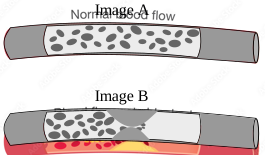
Two images of blood flow are shown.

Image \(A\) represents healthy blood flow.

What condition does Image \(B\) represent?

  1. Arteriosclerosis
  2. Atherosclerosis
  3. Low blood pressure
  4. Low cholesterol levels
Show Answers Only

\(B\)

Show Worked Solution

  • B is correct: Atherosclerosis involves plaque buildup narrowing arteries, contrasting with healthy blood flow.

Other Options:

  • A is incorrect: Arteriosclerosis involves artery hardening, not necessarily visible narrowing.
  • C is incorrect: Low blood pressure is a measurement, not a structural blood vessel condition.
  • D is incorrect: Low cholesterol levels are protective, not a disease condition shown in images.

♦♦ Mean mark 46%.

Filed Under: Chronic Conditions, Diseases and Injury Tagged With: Band 5, smc-5477-05-Cardiovascular disease

HMS, HAG 2019 HSC 8 MC

Which of the following identifies the two types of cardiovascular disease with the highest rates of mortality in Australia?

  1. Stroke and angina
  2. Stroke and coronary heart disease
  3. Peripheral vascular disease and angina
  4. Peripheral vascular disease and coronary heart disease
Show Answers Only

\(B\)

Show Worked Solution

  • B is correct: Stroke and coronary heart disease cause the highest cardiovascular mortality rates.

Other Options:

  • A is incorrect: Angina rarely causes death directly compared to coronary heart disease.
  • C is incorrect: Peripheral vascular disease has lower mortality than stroke/coronary heart disease.
  • D is incorrect: Peripheral vascular disease has lower mortality than stroke.

Filed Under: Chronic Conditions, Diseases and Injury Tagged With: Band 4, smc-5477-05-Cardiovascular disease

HMS, HAG 2020 HSC 7 MC

Which of the following refers to poor blood supply from the heart to the limbs?

  1. Angina
  2. Coronary heart disease
  3. Cerebrovascular disease
  4. Peripheral vascular disease
Show Answers Only

\(D\)

Show Worked Solution
  • D is correct: Peripheral vascular disease affects blood flow to limbs specifically.

Other Options:

  • A is incorrect: Angina is chest pain from reduced heart blood supply.
  • B is incorrect: Coronary heart disease affects heart muscle blood supply.
  • C is incorrect: Cerebrovascular disease affects brain blood supply not limbs.

♦♦ Mean mark 50%.

Filed Under: Chronic Conditions, Diseases and Injury Tagged With: Band 5, smc-5477-05-Cardiovascular disease

HMS, HAG 2021 HSC 21a

Outline TWO types of cardiovascular disease in Australia.   (3 marks)

--- 7 WORK AREA LINES (style=lined) ---

Show Answers Only
  • Coronary heart disease occurs when arteries supplying blood to the heart muscle become narrowed or blocked. This blockage restricts oxygen flow to the heart, potentially causing chest pain or heart attacks.
  • Stroke represents another major cardiovascular disease affecting blood vessels supplying the brain. When these vessels become blocked by clots or burst due to high pressure, brain tissue loses oxygen supply. This damage can result in permanent disability or death.
Show Worked Solution
  • Coronary heart disease occurs when arteries supplying blood to the heart muscle become narrowed or blocked. This blockage restricts oxygen flow to the heart, potentially causing chest pain or heart attacks.
  • Stroke represents another major cardiovascular disease affecting blood vessels supplying the brain. When these vessels become blocked by clots or burst due to high pressure, brain tissue loses oxygen supply. This damage can result in permanent disability or death.

Filed Under: Chronic Conditions, Diseases and Injury, Uncategorized Tagged With: Band 4, smc-5477-05-Cardiovascular disease

HMS, HAG 2024 HSC 16 MC

Which cardiovascular condition results in the blood vessels that carry oxygen away from the heart becoming damaged due to losing their elasticity?

  1. Angina
  2. Arteriosclerosis
  3. Carotid artery disease
  4. Deep vein thrombosis
Show Answers Only

\(B\)

Show Worked Solution
  • B is correct: Arteriosclerosis is the condition where blood vessels lose elasticity and become hardened, affecting oxygen delivery from the heart.

Other Options:

  • A is incorrect: Angina is chest pain from reduced blood flow to the heart muscle.
  • C is incorrect: Specifically affects the carotid arteries in the neck.
  • D is incorrect: DVT refers to a blood clot in deep veins, typically in the legs.

♦♦ Mean mark 50%.

Filed Under: Chronic Conditions, Diseases and Injury Tagged With: Band 5, smc-5477-05-Cardiovascular disease

HMS, HAG 2022 HSC 6 MC

A person started to feel numb on one side of their body. They had blurred vision and difficulty speaking.

Which disease was this person likely to be experiencing?

  1. Coronary heart disease
  2. Cerebrovascular disease
  3. Congenital heart disease
  4. Peripheral vascular disease
Show Answers Only

\( B \)

Show Worked Solution
  • B is correct. One-sided numbness, blurred vision, and difficulty speaking are classic signs of a stroke (cerebrovascular disease).

Other Options:

  • A is incorrect: Coronary heart disease affects the heart muscle, causing chest pain symptoms.
  • C is incorrect: Congenital heart disease is present from birth.
  • D is incorrect: Peripheral vascular disease mainly affects blood vessels in the limbs.

♦♦ Mean mark 49%.

Filed Under: Chronic Conditions, Diseases and Injury Tagged With: Band 5, smc-5477-05-Cardiovascular disease

HMS, HAG 2020 HSC 22

Complete the table for THREE current leading causes of mortality for males and females in Australia.   (4 marks)

--- 0 WORK AREA LINES (style=blank) ---

\begin{array}{|c|c|c|}
\hline
\rule{0pt}{2.5ex}\textit{Current leading} & \textit{Trend in mortality rate for} & \textit{Trend in mortality rate for}\\
\rule[-1ex]{0pt}{0pt}\quad \textit{cause of mortality} \quad & \textit{males over the last 10 years} & \textit{females over the last 10 years}\\
\hline
\quad & \quad &\quad\\
\hline
\quad & \quad &\quad\\
\hline
\quad & \quad &\quad\\
\hline
\end{array}

 
Show Answers Only

\(\text{Any THREE of the following}\)

\begin{array}{|l|c|c|}
\hline
\rule{0pt}{2.5ex}\quad \quad \textit{Current leading} & \textit{Trend in mortality} & \textit{Trend in mortality }\\
\quad \ \  \textit{cause of mortality} \quad & \textit{rates for males over} & \textit{rate for females }\\
\rule[-1ex]{0pt}{0pt}\quad \quad & \textit{the last 10 years} & \textit{over the last 10 years}\\
\hline
\rule{0pt}{2.5ex}\text{Coronary heart disease} \rule[-1ex]{0pt}{0pt}& \text{Decreased} & \text{Decreased} \\
\hline
\rule{0pt}{2.5ex}\text{Dementia and Alzheimer’s } & \text{Increased} & \text{Increased} \\
\rule[-1ex]{0pt}{0pt}\text{disease} & \text{} & \text{} \\
\hline
\rule{0pt}{2.5ex}\text{Cerebrovascular disease} \rule[-1ex]{0pt}{0pt}& \text{Decreased} & \text{Decreased} \\
\hline
\rule{0pt}{2.5ex}\text{Lung cancer} \rule[-1ex]{0pt}{0pt}& \text{Decreased} & \text{Decreased} \\
\hline
\rule{0pt}{2.5ex}\text{Chronic obstructive} & \text{Decreased} & \text{Decreased} \\
\rule[-1ex]{0pt}{0pt}\text{pulmonary disease} & \text{} & \text{} \\
\hline
\rule{0pt}{2.5ex}\text{Diabetes} \rule[-1ex]{0pt}{0pt}& \text{Increased} & \text{Increased} \\
\hline
\rule{0pt}{2.5ex}\text{Cardiovascular disease} \rule[-1ex]{0pt}{0pt}& \text{Decreased} & \text{Decreased} \\
\hline
\rule{0pt}{2.5ex}\text{Mental health (suicide)} \rule[-1ex]{0pt}{0pt}& \text{Increased} & \text{Increased} \\
\hline
\end{array}

Show Worked Solution

\(\text{Any THREE of the following}\)

\begin{array}{|l|c|c|}
\hline
\rule{0pt}{2.5ex}\quad \quad \textit{Current leading} & \textit{Trend in mortality} & \textit{Trend in mortality }\\
\quad \ \  \textit{cause of mortality} \quad & \textit{rates for males over} & \textit{rate for females }\\
\rule[-1ex]{0pt}{0pt}\quad \quad & \textit{the last 10 years} & \textit{over the last 10 years}\\
\hline
\rule{0pt}{2.5ex}\text{Coronary heart disease} \rule[-1ex]{0pt}{0pt}& \text{Decreased} & \text{Decreased} \\
\hline
\rule{0pt}{2.5ex}\text{Dementia and Alzheimer’s } & \text{Increased} & \text{Increased} \\
\rule[-1ex]{0pt}{0pt}\text{disease} & \text{} & \text{} \\
\hline
\rule{0pt}{2.5ex}\text{Cerebrovascular disease} \rule[-1ex]{0pt}{0pt}& \text{Decreased} & \text{Decreased} \\
\hline
\rule{0pt}{2.5ex}\text{Lung cancer} \rule[-1ex]{0pt}{0pt}& \text{Decreased} & \text{Decreased} \\
\hline
\rule{0pt}{2.5ex}\text{Chronic obstructive} & \text{Decreased} & \text{Decreased} \\
\rule[-1ex]{0pt}{0pt}\text{pulmonary disease} & \text{} & \text{} \\
\hline
\rule{0pt}{2.5ex}\text{Diabetes} \rule[-1ex]{0pt}{0pt}& \text{Increased} & \text{Increased} \\
\hline
\rule{0pt}{2.5ex}\text{Cardiovascular disease} \rule[-1ex]{0pt}{0pt}& \text{Decreased} & \text{Decreased} \\
\hline
\rule{0pt}{2.5ex}\text{Mental health (suicide)} \rule[-1ex]{0pt}{0pt}& \text{Increased} & \text{Increased} \\
\hline
\end{array}


♦♦ Mean mark 47%.

Filed Under: Chronic Conditions, Diseases and Injury, Current Health Status Tagged With: Band 5, smc-5474-05-Major causes, smc-5477-05-Cardiovascular disease, smc-5477-10-Cancer trends, smc-5477-15-Other conditions

Copyright © 2014–2025 SmarterEd.com.au · Log in