SmarterEd

Aussie Maths & Science Teachers: Save your time with SmarterEd

  • Login
  • Get Help
  • About

HMS, HAG EQ-Bank 150

Explain how collaboration between government and non-government agencies is essential for effectively addressing Australia's ageing population needs.    (5 marks)

--- 15 WORK AREA LINES (style=lined) ---

Show Answers Only
  • Collaboration is essential because government agencies provide policy frameworks and funding while non-government organisations deliver direct services and community-level support that complement each other effectively.
  • This works by government agencies creating infrastructure, healthcare systems and regulatory frameworks while NGOs provide specialised services, advocacy and innovation that address gaps in government service delivery.
  • For example, government funds aged care facilities and healthcare services while organisations like Red Cross and National Seniors Australia deliver home care, social support and policy advocacy that enhance overall service quality.
  • Partnership approaches ensure that policy development incorporates community needs and frontline service experience that NGOs provide through direct contact with older Australians and their families.
  • Therefore, effective ageing population planning requires coordinated efforts where government provides systemic support and resources. NGOs contribute flexibility, innovation and community-focused services that together create comprehensive care networks.
Show Worked Solution
  • Collaboration is essential because government agencies provide policy frameworks and funding while non-government organisations deliver direct services and community-level support that complement each other effectively.
  • This works by government agencies creating infrastructure, healthcare systems and regulatory frameworks while NGOs provide specialised services, advocacy and innovation that address gaps in government service delivery.
  • For example, government funds aged care facilities and healthcare services while organisations like Red Cross and National Seniors Australia deliver home care, social support and policy advocacy that enhance overall service quality.
  • Partnership approaches ensure that policy development incorporates community needs and frontline service experience that NGOs provide through direct contact with older Australians and their families.
  • Therefore, effective ageing population planning requires coordinated efforts where government provides systemic support and resources. NGOs contribute flexibility, innovation and community-focused services that together create comprehensive care networks.

Filed Under: Impact of an Ageing Population Tagged With: Band 4, smc-5478-25-Govt/non-govt planning

HMS, HAG EQ-Bank 149

Explain how non-government organisations contribute to addressing the needs of Australia's ageing population.    (5 marks)

--- 15 WORK AREA LINES (style=lined) ---

Show Answers Only
  • Non-government organisations provide advocacy and awareness services by raising public understanding about ageing challenges and influencing government policy development on behalf of older Australians.
  • This occurs through organisations like National Seniors Australia and Council on the Ageing that work to shape government policy and promote positive public perceptions of older people in society.
  • NGOs deliver essential community services including home care support, social visits and emergency assistance that help older individuals maintain independence and community connections.
  • For example, the Red Cross offers practical home care services and social support programs that complement government services and fill gaps in community-based aged care.
  • NGOs also contribute through research and innovation by investing in new care models, assistive technologies and evidence-based practices that improve healthy ageing outcomes and inform sector-wide improvements.
Show Worked Solution
  • Non-government organisations provide advocacy and awareness services by raising public understanding about ageing challenges and influencing government policy development on behalf of older Australians.
  • This occurs through organisations like National Seniors Australia and Council on the Ageing that work to shape government policy and promote positive public perceptions of older people in society.
  • NGOs deliver essential community services including home care support, social visits and emergency assistance that help older individuals maintain independence and community connections.
  • For example, the Red Cross offers practical home care services and social support programs that complement government services and fill gaps in community-based aged care.
  • NGOs also contribute through research and innovation by investing in new care models, assistive technologies and evidence-based practices that improve healthy ageing outcomes and inform sector-wide improvements.

Filed Under: Impact of an Ageing Population Tagged With: Band 4, smc-5478-25-Govt/non-govt planning

HMS, HAG EQ-Bank 148

Describe the key areas where government investment is needed to address Australia's ageing population healthcare requirements.    (3 marks)

--- 9 WORK AREA LINES (style=lined) ---

Show Answers Only
  • Healthcare infrastructure investment requires expanding existing hospitals and building new aged care facilities equipped with specialised geriatric services to meet growing demand for age-related medical care.
  • Urban planning initiatives must create age-friendly communities with accessible transportation systems, including low-floor buses and priority seating, plus pedestrian-friendly pathways for older residents.
  • Aged care workforce development programs need government funding to provide scholarships and financial incentives for students pursuing aged care careers, ensuring adequate trained staff availability.
Show Worked Solution
  • Healthcare infrastructure investment requires expanding existing hospitals and building new aged care facilities equipped with specialised geriatric services to meet growing demand for age-related medical care.
  • Urban planning initiatives must create age-friendly communities with accessible transportation systems, including low-floor buses and priority seating, plus pedestrian-friendly pathways for older residents.
  • Aged care workforce development programs need government funding to provide scholarships and financial incentives for students pursuing aged care careers, ensuring adequate trained staff availability.

Filed Under: Impact of an Ageing Population Tagged With: Band 3, smc-5478-25-Govt/non-govt planning

HMS, HAG EQ-Bank 110 MC

Non-government organisations complement government efforts in addressing ageing population needs by:

  1. Taking over all government healthcare responsibilities for older adults
  2. Operating exclusively in rural areas where governments cannot provide services
  3. Competing with government agencies to reduce overall costs of aged care
  4. Providing advocacy, essential services and research while governments focus on policy and infrastructure
Show Answers Only

\(D\)

Show Worked Solution
  • D is correct: NGOs complement government through advocacy essential services and research while governments handle policy and infrastructure.

Other Options:

  • A is incorrect: NGOs complement not replace government healthcare responsibilities for older adults.
  • B is incorrect: NGOs operate in various locations not exclusively rural areas.
  • C is incorrect: NGOs complement rather than compete with government agencies in aged care.

Filed Under: Impact of an Ageing Population Tagged With: Band 5, smc-5478-25-Govt/non-govt planning

HMS, HAG EQ-Bank 109 MC

Governments can address the future needs of an ageing population through urban planning by:

  1. Building more hospitals exclusively for elderly patients in city centres
  2. Creating age-friendly communities with accessible transportation and pedestrian-friendly pathways
  3. Restricting older adults from using public transportation during peak hours
  4. Requiring all new housing developments to include residential aged care facilities
Show Answers Only

\(B\)

Show Worked Solution
  • B is correct: Urban planning should create age-friendly communities with accessible transportation and pedestrian-friendly pathways for older residents.

Other Options:

  • A is incorrect: Age-friendly planning involves community design not just building specialised hospitals.
  • C is incorrect: Restricting access contradicts age-friendly community planning principles.
  • D is incorrect: Mandatory aged care facilities in developments isn’t age-friendly urban planning approach.

Filed Under: Impact of an Ageing Population Tagged With: Band 4, smc-5478-25-Govt/non-govt planning

HMS, HAG 2021 HSC 16 MC

Which strategy is most likely to reduce the current impact of a growing ageing population on Australia's health system and services?

  1. Increasing support services that enable older Australians to keep living in their own home
  2. Providing education programs in secondary school to reduce the risk factors for preventable chronic disease
  3. Introducing an application fee for individuals to register as volunteers with organisations that assist the elderly
  4. Sending annual reminder emails to older Australians encouraging them to register for government support programs
Show Answers Only

\(A\)

Show Worked Solution
  • A is correct: Home support reduces expensive institutional care demands.

Other Options:

  • B is incorrect: Long-term benefit but doesn’t address current impact.
  • C is incorrect: Fees would reduce volunteer participation not increase.
  • D is incorrect: Emails don’t provide actual services or support.

Filed Under: Impact of an Ageing Population Tagged With: Band 4, smc-5478-25-Govt/non-govt planning

HMS, HAG 2023 HSC 13 MC

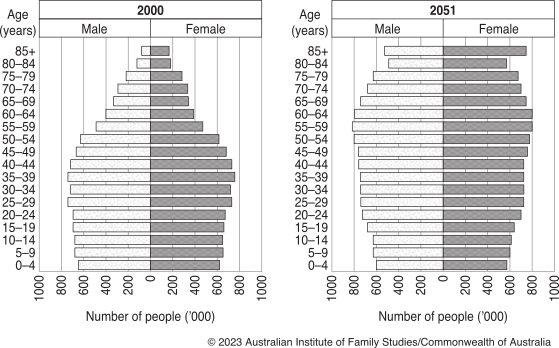
The following graphs represent the age and biological sex of Australia's population in 2000 (observed) and 2051 (projected).

Which action would the Australian Government need to implement in 2023 to best support the health of Australians in 2051?

  1. Increase the number of staff in aged care facilities
  2. Develop legislation to regulate the use of e-cigarettes
  3. Target strategic planning to improve the health of infants
  4. Increase funding and research into Alzheimer's disease and dementia
Show Answers Only

\(D\)

Show Worked Solution
  • D is correct: The population projections show significant growth in older age brackets by 2051, when conditions like Alzheimer’s and dementia become prevalent.

Other Options:

  • A is incorrect: Staffing aged care addresses current not future needs shown in the projections.
  • B is incorrect: E-cigarette regulation impacts younger populations primarily.
  • C is incorrect: Infant health strategies don’t address the aging population challenge shown in the data.

♦♦ Mean mark 39%.

Filed Under: Impact of an Ageing Population Tagged With: Band 5, smc-5478-25-Govt/non-govt planning

Copyright © 2014–2025 SmarterEd.com.au · Log in