SmarterEd

Aussie Maths & Science Teachers: Save your time with SmarterEd

  • Login
  • Get Help
  • About

HMS, BM 2012 HSC 25

Outline the influence of prior experience on skill acquisition.   (3 marks)

--- 9 WORK AREA LINES (style=lined) ---

Show Answers Only
  • Prior experience accelerates skill acquisition through transfer of learning from similar movements. Athletes with related sport backgrounds progress more quickly through cognitive and associative learning stages.
  • For example, hockey players learning cricket benefit from existing hand-eye coordination and striking techniques. Basketball players transitioning to netball utilise established passing and spatial awareness skills.
  • Previous movement patterns provide a foundation for new skill development. Experienced athletes demonstrate better motor control and coordination when learning related skills compared to complete beginners.
Show Worked Solution
  • Prior experience accelerates skill acquisition through transfer of learning from similar movements. Athletes with related sport backgrounds progress more quickly through cognitive and associative learning stages.
  • For example, hockey players learning cricket benefit from existing hand-eye coordination and striking techniques. Basketball players transitioning to netball utilise established passing and spatial awareness skills.
  • Previous movement patterns provide a foundation for new skill development. Experienced athletes demonstrate better motor control and coordination when learning related skills compared to complete beginners.

Filed Under: Characteristics of learners, Characteristics of skills Tagged With: Band 3, smc-5534-25-Prior experience, smc-5921-10-Cognitive, smc-5921-20-Associative

HMS, BM 2012 HSC 11 MC

Which of the following is a feature of the associative stage of skill acquisition?

  1. Focusing on strategic play
  2. Understanding the processes related to the skill
  3. Sequencing and performing the skill instinctively
  4. Experiencing repeated success with a decreasing number of errors
Show Answers Only

\(D\)

Show Worked Solution
  • D is correct: Associative stage features practice refinement with fewer errors.

Other Options:

  • A is incorrect: Strategic focus occurs in autonomous stage.
  • B is incorrect: Understanding processes characterises cognitive stage.
  • C is incorrect: Instinctive performance describes autonomous stage.

Filed Under: Stages of learning Tagged With: Band 4, smc-5921-20-Associative

HMS, BM 2013 HSC 14 MC

During which stage of skill acquisition is anticipation initially learned?

  1. Associative
  2. Autonomous
  3. Cognitive
  4. Developmental
Show Answers Only

\(A\)

Show Worked Solution
  • A is correct: Associative stage develops anticipation skills through practice refinement.

Other Options:

  • B is incorrect: Autonomous stage has automatic anticipation, not initial learning.
  • C is incorrect: Cognitive stage focuses on basic movement understanding.
  • D is incorrect: Developmental is not recognised skill acquisition stage.

♦♦ Mean mark 43%.

Filed Under: Stages of learning Tagged With: Band 5, smc-5921-20-Associative, smc-5921-45-Identify stage

HMS, BM 2016 HSC 24

  1. Outline the stages of skill acquisition.   (3 marks)

    --- 9 WORK AREA LINES (style=lined) ---

  2. Outline, using specific examples, the types of feedback that are appropriate at each stage of skill acquisition.   (4 marks)

    --- 12 WORK AREA LINES (style=lined) ---

Show Answers Only

a.    Stages of skill acquisition

  • Cognitive stage involves beginners learning basic movement patterns with frequent errors and slow performance. Learners require significant mental concentration to understand fundamental skill requirements and movement sequences.
  • Associative stage features improved skill consistency with fewer errors and increased movement fluency. Learners can identify some mistakes and make basic corrections to their technique during practice sessions.
  • Autonomous stage demonstrates automatic skill execution with minimal conscious thought and very few errors. Learners perform skills fluently whilst focusing attention on tactical and strategic performance elements.

b.    Types of feedback

  • Cognitive stage requires external and knowledge of performance feedback to correct major technique errors. For example, a swimming coach provides verbal instructions about arm positioning during freestyle stroke practice sessions.
  • Associative stage benefits from delayed and knowledge of performance feedback allowing self-correction development. For example, a tennis player watches video footage after practice to analyse their serve technique and identify improvement areas.
  • Autonomous stage utilises internal and concurrent feedback for fine-tuning performance during skill execution. For example, an experienced basketball player feels their shooting motion and adjusts follow-through based on immediate sensory information.

Show Worked Solution

a.    Stages of skill acquisition

  • Cognitive stage involves beginners learning basic movement patterns with frequent errors and slow performance. Learners require significant mental concentration to understand fundamental skill requirements and movement sequences.
  • Associative stage features improved skill consistency with fewer errors and increased movement fluency. Learners can identify some mistakes and make basic corrections to their technique during practice sessions.
  • Autonomous stage demonstrates automatic skill execution with minimal conscious thought and very few errors. Learners perform skills fluently whilst focusing attention on tactical and strategic performance elements.

b.    Types of feedback

  • Cognitive stage requires external and knowledge of performance feedback to correct major technique errors. For example, a swimming coach provides verbal instructions about arm positioning during freestyle stroke practice sessions.
  • Associative stage benefits from delayed and knowledge of performance feedback allowing self-correction development. For example, a tennis player watches video footage after practice to analyse their serve technique and identify improvement areas.
  • Autonomous stage utilises internal and concurrent feedback for fine-tuning performance during skill execution. For example, an experienced basketball player feels their shooting motion and adjusts follow-through based on immediate sensory information.

Filed Under: Stages of learning Tagged With: Band 3, Band 4, smc-5921-10-Cognitive, smc-5921-20-Associative, smc-5921-30-Autonomous, smc-5921-90-Identify type of feedback

HMS, BM 2021 HSC 27

Explain why the performance elements of decision-making and strategic and tactical development should be introduced to athletes at the associative stage of skill acquisition. Provide examples to support your answer.   (8 marks)

--- 20 WORK AREA LINES (style=lined) ---

Show Answers Only
  • The associative stage represents the optimal time for introducing complex performance elements because athletes have developed fundamental skill execution during the cognitive stage. Athletes at this stage demonstrate consistent basic technique, allowing them to focus attention on higher-order performance concepts without overwhelming their processing capacity.
  • Decision-making skills develop effectively at the associative stage because athletes possess sufficient motor control to implement choices quickly. For example, a basketball player can now focus on reading defensive formations and selecting appropriate passing options rather than concentrating solely on ball-handling technique. Introducing decision-making earlier would result in information overload and increased errors because athletes lack the automated movement patterns necessary for split-second choices.
  • Strategic and tactical development becomes appropriate when athletes can execute skills with reduced conscious control. Football players at this stage can understand positional play and team formations because their basic skills like passing and receiving are becoming automatic. Early tactical introduction would prove ineffective since cognitive-stage athletes must dedicate full attention to skill execution rather than team strategy.
  • The associative stage enables game-sense development through realistic practice scenarios. Athletes can now participate in small-sided games and decision-making drills because they possess the technical foundation to apply tactical concepts. Consequently, they develop the ability to anticipate opponents’ actions and make strategic adjustments during competition.
  • Performance elements introduced at this stage result in enhanced competitive success because athletes can integrate technical skills with tactical awareness seamlessly.
Show Worked Solution
  • The associative stage represents the optimal time for introducing complex performance elements because athletes have developed fundamental skill execution during the cognitive stage. Athletes at this stage demonstrate consistent basic technique, allowing them to focus attention on higher-order performance concepts without overwhelming their processing capacity.
  • Decision-making skills develop effectively at the associative stage because athletes possess sufficient motor control to implement choices quickly. For example, a basketball player can now focus on reading defensive formations and selecting appropriate passing options rather than concentrating solely on ball-handling technique. Introducing decision-making earlier would result in information overload and increased errors because athletes lack the automated movement patterns necessary for split-second choices.
  • Strategic and tactical development becomes appropriate when athletes can execute skills with reduced conscious control. Football players at this stage can understand positional play and team formations because their basic skills like passing and receiving are becoming automatic. Early tactical introduction would prove ineffective since cognitive-stage athletes must dedicate full attention to skill execution rather than team strategy.
  • The associative stage enables game-sense development through realistic practice scenarios. Athletes can now participate in small-sided games and decision-making drills because they possess the technical foundation to apply tactical concepts. Consequently, they develop the ability to anticipate opponents’ actions and make strategic adjustments during competition.
  • Performance elements introduced at this stage result in enhanced competitive success because athletes can integrate technical skills with tactical awareness seamlessly.

♦ Mean mark 53%.

Filed Under: Stages of learning Tagged With: Band 5, smc-5921-20-Associative, smc-5921-80-Knowledge of results/performance

HMS, BM 2023 HSC 18 MC

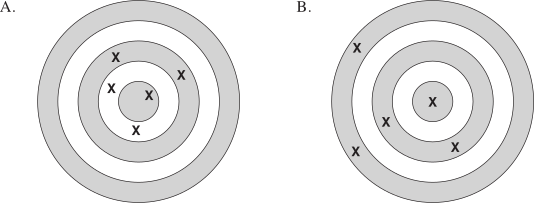
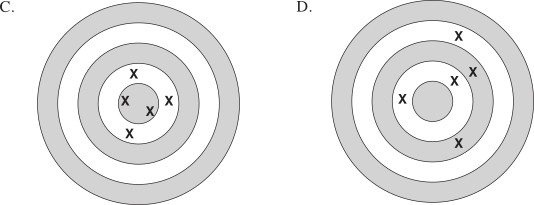
Four Year 7 students on a school camp are participating in archery. Each student had five shots at the target. The centre of the target represents the best possible shot.

The location of each student's five shots are represented by X on the targets shown.

Which student is most likely to be at the associative stage of skill acquisition?


Show Answers Only

\(A\)

Show Worked Solution
  • A is correct: The associative stage shows improved consistency (grouping of shots) but not perfect accuracy, indicating the learner is refining their technique.

Other Options:

  • B is incorrect: Target B shows shots scattered widely across the target (cognitive stage – inconsistent and inaccurate).
  • C is incorrect: Target C shows shots clustered around the centre (late associative/early autonomous).
  • D is incorrect: Target D shows shots widely dispersed (cognitive stage).

♦♦ Mean mark 43%.

Filed Under: Stages of learning Tagged With: Band 5, smc-5921-20-Associative

HMS, BM 2024 HSC 24

How can technique be used to appraise an athlete’s performance? Provide an example to support your answer.   (5 marks)

--- 15 WORK AREA LINES (style=lined) ---

Show Answers Only

Sample Answer

  • A qualified sports biomechanist may appraise an athlete by using technique criteria to assess performance quality through systematic observation.
  • For example, high jumpers’ Fosbury Flop technique is evaluated based on specific elements that include:
    • curved approach speed,
    • appropriate lean on takeoff,
    • extended takeoff leg, horizontal to vertical conversion, and
    • efficient back arch over the bar.
  • These observations help coaches identify technical efficiency in movement. They provide a structured method to appraise the athlete’s performance against established biomechanical principles.
Show Worked Solution

Sample Answer

  • A qualified sports biomechanist can appraise an athlete’s performance quality. They use technique criteria and systematic observation to assess movement patterns.
  • For example, high jumpers’ Fosbury Flop technique is evaluated based on specific elements that include:
    • curved approach speed,
    • appropriate lean on takeoff,
    • extended takeoff leg, horizontal to vertical conversion, and
    • efficient back arch over the bar.
  • These observations help coaches identify technical efficiency in movement. They provide a structured method to appraise the athlete’s performance against established biomechanical principles.

Filed Under: Stages of learning Tagged With: Band 3, Band 4, smc-5921-20-Associative

HMS, BM EQ-Bank 603 MC

An associative stage soccer player feels the impact of their foot against the ball and instantly recognises they've struck it too far to the left. This demonstrates the player's developing:

  1. Knowledge of results
  2. Kinesthetic awareness
  3. Augmented feedback processing
  4. Delayed feedback interpretation
Show Answers Only

\(B\)

Show Worked Solution
  • B is correct: Kinesthetic awareness is the “feel” for movement that develops through proprioception, allowing athletes to detect errors in their movements—exactly what the soccer player demonstrates by sensing the incorrect foot strike.

Other Options:

  • A is incorrect: Knowledge of results relates to outcome information, not the sensory awareness during execution.
  • C is incorrect: Augmented feedback comes from external sources, not internal sensations like feeling the impact.
  • D is incorrect: Delayed feedback occurs after completion, not during the skill as described.

Filed Under: Stages of learning Tagged With: Band 4, smc-5921-20-Associative

HMS, BM EQ-Bank 543 MC

A swimming coach wants to design appropriate practice activities for athletes at different stages of learning the butterfly stroke.

Which practice approach is MOST appropriate for swimmers in the associative stage?

  1. Providing video analysis focusing on temporal patterning of arm and leg coordination
  2. Creating race-simulation drills with competitors in adjacent lanes
  3. Using demonstrations and simple verbal cues to develop basic stroke understanding
  4. Implementing pressure situations that mimic competition stress levels
Show Answers Only

\(A\)

Show Worked Solution
  • A is correct: The associative stage emphasises temporal patterning and refining movement coordination, making video analysis of arm-leg coordination most appropriate.

Other Options:

  • B is incorrect: Race simulations with competitors would be more suitable for the autonomous stage where swimmers can attend to other elements besides technique.
  • C is incorrect: Demonstrations and simple verbal cues target the cognitive stage where basic understanding is being developed.
  • D is incorrect: Pressure situations mimicking competition are most appropriate for the autonomous stage to help adapt skills to competitive environments.

Filed Under: Stages of learning Tagged With: Band 4, smc-5921-20-Associative

Copyright © 2014–2025 SmarterEd.com.au · Log in