SmarterEd

Aussie Maths & Science Teachers: Save your time with SmarterEd

  • Login
  • Get Help
  • About

BIOLOGY, M8 2024 HSC 7 MC

How do stomata maintain water balance in plants?

  1. They close in hot weather to decrease transpiration.
  2. They open in cold weather to decrease transpiration.
  3. They open in hot weather to decrease evaporative cooling.
  4. They close in cold weather to decrease evaporative cooling.
Show Answers Only

\(A\)

Show Worked Solution
  • Stomata close in hot weather to decrease transpiration.
  • This adaptive response helps prevent excessive water loss during high temperatures and maintain proper water balance.

\(\Rightarrow A\)

Filed Under: Homeostasis Tagged With: Band 3, smc-3659-30-Water Balance in Plants

BIOLOGY, M8 2023 HSC 29b

Organisms use various mechanisms to maintain their internal environment within tolerance limits.

Explain TWO adaptations in plants that help to maintain water balance.  (4 marks)

--- 8 WORK AREA LINES (style=lined) ---

Show Answers Only

Answers could include two of the following:

  • Leaves are covered in a waxy cuticle on their surface which reduces water loss. Plants that live in hotter and/or dryer areas will have thicker waxy cuticles.
  • Stomata are holes on the underside of the leaf which allow water to leave the plant via the process of transpiration. Stomata are able to close when the plant is exposed to higher temperatures which reduces transpiration.
  • Many plants also have sunken stomata which reduces transpiration.
  • A plant’s roots are able to absorb water from the ground, however the depths of these roots is dependant on the plant’s environment. Some plants such as cacti will have a shallow root system to absorb overnight condensation, while other plants have deeper root systems which allow them to reach the lower water table.

Show Worked Solution

Answers could include two of the following:

  • Leaves are covered in a waxy cuticle on their surface which reduces water loss. Plants that live in hotter and/or dryer areas will have thicker waxy cuticles.
  • Stomata are holes on the underside of the leaf which allow water to leave the plant via the process of transpiration. Stomata are able to close when the plant is exposed to higher temperatures which reduces transpiration.
  • Many plants also have sunken stomata which reduces transpiration.
  • A plant’s roots are able to absorb water from the ground, however the depths of these roots is dependant on the plant’s environment. Some plants such as cacti will have a shallow root system to absorb overnight condensation, while other plants have deeper root systems which allow them to reach the lower water table.

Filed Under: Homeostasis Tagged With: Band 4, smc-3659-15-Temperature, smc-3659-30-Water Balance in Plants

BIOLOGY, M8 EQ-Bank 3 MC

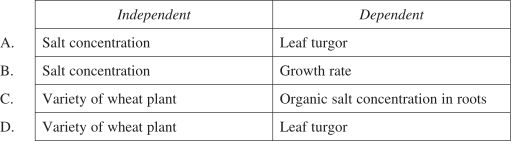
A student wanted to test the claim, made by an agricultural seed company, that their variety of wheat was more salt tolerant than other wheat varieties on the market. The company explained that their variety can better maintain water balance by increasing the organic salt concentration in the roots of the plants which increases osmotic pressure.

Which row of the table shows the independent and dependent variables that the student should use to test the company's claim?
 

Show Answers Only

`D`

Show Worked Solution

By Elimination

  • When testing this aim, the variety of wheat plant should vary and the salt concentration given to each must remain the same. (Eliminate A and B).
  • Each variety’s turgor will give an accurate representation of ability to maintain water balance, the initial claim by the company as to its wheat’s benefit. (Eliminate C).

`=>D`

Filed Under: Homeostasis Tagged With: Band 5, smc-3659-30-Water Balance in Plants

BIOLOGY, M8 2014 HSC 3 MC

Which of the following is a plant adaptation that minimises water loss?

  1. Small leaves
  2. Large flowers
  3. Large fleshy fruit
  4. Deep root systems
Show Answers Only

`A`

Show Worked Solution
  • Smaller leaves results in less stomata, which therefore leads to an overall reduction in water loss via transpiration.

`=>A`

Filed Under: Homeostasis Tagged With: Band 4, smc-3659-30-Water Balance in Plants

BIOLOGY, M8 2016 HSC 12 MC

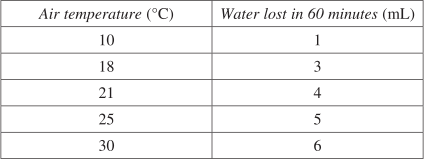
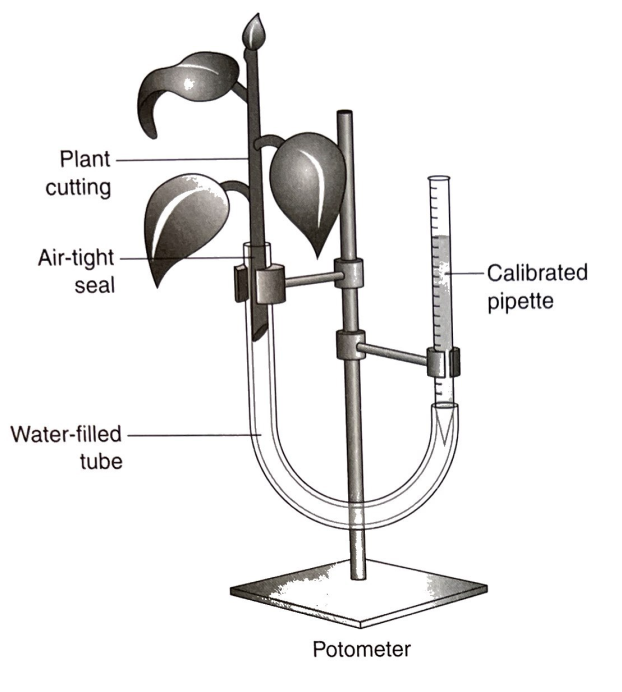
Some students investigated the response of a plant cutting to an increase in ambient air temperature. They used the apparatus shown.

Their data are shown below.
 

The benefit for the plant of this response would be a decrease in the

  1. rate of transpiration.
  2. rate of photosynthesis.
  3. temperature of the plant.
  4. amount of water in the plant.
Show Answers Only

`C`

Show Worked Solution
  • Increased ambient temperature leads to increased water loss.
  • Assists in regulating the temperature of the plant.

`=>C`


♦♦ Mean mark 37%.

Filed Under: Homeostasis Tagged With: Band 5, smc-3659-30-Water Balance in Plants

BIOLOGY, M8 2018 HSC 9 MC

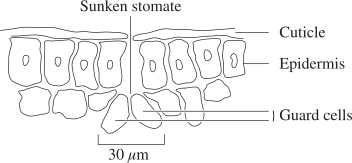
Sunken stomata can be found in the leaves of some Australian plants. A section of such a leaf is shown.
 

How do sunken stomata assist the plant to conserve water in a dry environment?

  1. They trap moist air, reducing humidity.
  2. They prevent entry of gases into the leaf.
  3. They accumulate moist air, reducing transpiration.
  4. They increase the surface area available for transpiration.
Show Answers Only

`C`

Show Worked Solution
  • Sunken stomata reduce air flow around it, which leads to the accumulation of moist air and thus a reduction in transpiration.

`=>C`

Filed Under: Homeostasis Tagged With: Band 4, smc-3659-30-Water Balance in Plants

BIOLOGY, M8 2015 HSC 3 MC

Which adaptation would decrease water loss from a plant in a region with low rainfall?

  1. Broad leaves
  2. Surface roots
  3. Sunken stomates
  4. Loosely packed epidermal cells
Show Answers Only

`C`

Show Worked Solution
  • Sunken stomates would decrease water loss.

`=>C`

Filed Under: Homeostasis Tagged With: Band 3, smc-3659-30-Water Balance in Plants

BIOLOGY, M8 2019 HSC 29

Describe ONE mechanism by which plants maintain internal water homeostasis.   (3 marks)

--- 8 WORK AREA LINES (style=lined) ---

Show Answers Only
  • The widening and reduction of the size of stomata is one mechanism which controls the water movement out of the leaf; the wider the stomata, the more water will leave the plant via transpiration.
  • The width of the stomata is controlled by both environmental conditions and hormones within the plant.
  • When internal water is low, the stress hormone abscisic acid is released, causing the stomata to close.
Show Worked Solution
  • The widening and reduction of the size of stomata is one mechanism which controls the water movement out of the leaf; the wider the stomata, the more water will leave the plant via transpiration.
  • The width of the stomata is controlled by both environmental conditions and hormones within the plant.
  • When internal water is low, the stress hormone abscisic acid is released, causing the stomata to close.

♦♦♦ Mean mark 23%.

Filed Under: Homeostasis Tagged With: Band 6, smc-3659-30-Water Balance in Plants

BIOLOGY, M8 2021 HSC 13 MC

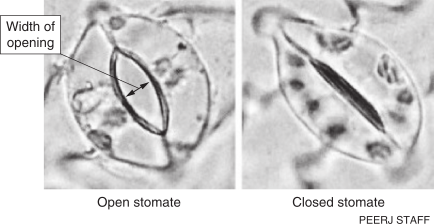
The photographs show an open and a closed stomate on a leaf surface. When open, stomates allow water vapour to pass out of the leaf.
 

Regulating stomates is a mechanism by which plants maintain water balance.

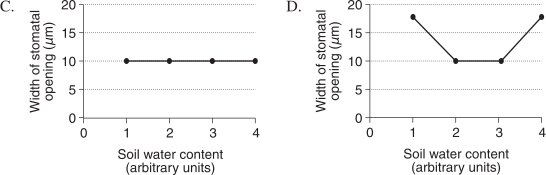
Which of the following graphs best illustrates this homeostatic mechanism?


Show Answers Only

`A`

Show Worked Solution
  • Higher availability of water, stomata can open more to release more water through transpiration.
  • Lower availability of water, stomata will partially close to reduce water loss.

`=>A`

Mean mark 53%.

Filed Under: Homeostasis Tagged With: Band 5, smc-3659-30-Water Balance in Plants

Copyright © 2014–2025 SmarterEd.com.au · Log in