SmarterEd

Aussie Maths & Science Teachers: Save your time with SmarterEd

  • Login
  • Get Help
  • About

BIOLOGY, M8 2014 HSC 31a

The biological structure shown is part of one of the systems in the body.
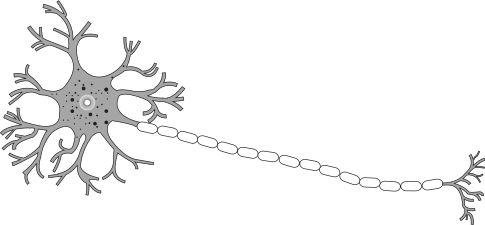
 

  1. Name the biological structure.   (1 mark)

    --- 1 WORK AREA LINES (style=lined) ---

  2. Outline the steps involved in this system's response to a stimulus.   (3 marks)

    --- 6 WORK AREA LINES (style=lined) ---

Show Answers Only

i.   Nerve cell/neuron

ii.   Steps involved in system’s response to a stimulus

  • A stimulus is detected by a receptor nerve cell which convert the stimulus to an electrochemical impulse, which is then carried by sensory cells to the brain.
  • The signal reaches a certain segment on the brain depending on what signal was received, where an action is determined to be carried out.
  • Motor neurons carry the signal to an effector, which carries out the response
Show Worked Solution

i.   Nerve cell/neuron

ii.   Steps involved in system’s response to a stimulus

  • A stimulus is detected by a receptor nerve cell which convert the stimulus to an electrochemical impulse, which is then carried by sensory cells to the brain.
  • The signal reaches a certain segment on the brain depending on what signal was received, where an action is determined to be carried out.
  • Motor neurons carry the signal to an effector, which carries out the response.

♦ Mean mark (ii) 48%.

Filed Under: Homeostasis Tagged With: Band 4, Band 5, smc-3659-60-Nervous System

BIOLOGY, M8 2018 HSC 21

  1. Identify TWO responses of a named endotherm to a decrease in body temperature.  (2 marks)

    --- 2 WORK AREA LINES (style=lined) ---

  2. Outline the role of the nervous system of an endotherm in maintaining homeostasis when its body temperature changes.  (2 marks)

    --- 5 WORK AREA LINES (style=lined) ---

Show Answers Only

a.   Vasoconstriction and shivering.

b.   Body temperature maintenance in endotherms:

  • This is achieved via negative feedback loops.
  • Temperature receptors in the brain and skin detect changes in body temperature.
  • The central nervous system receives a signal via the receptors.
  • Muscles or glands (effectors) then receive nerve signals sent from the central nervous system.
Show Worked Solution

a.   Vasoconstriction and shivering.

b.   Body temperature maintenance in endotherms:

  • This is achieved via negative feedback loops.
  • Temperature receptors in the brain and skin detect changes in body temperature.
  • The central nervous system receives a signal via the receptors.
  • Muscles or glands (effectors) then receive nerve signals sent from the central nervous system.

Filed Under: Homeostasis Tagged With: Band 3, Band 4, smc-3659-15-Temperature, smc-3659-60-Nervous System

BIOLOGY, M8 2017 HSC 2 MC

Which of the following body systems is involved in detecting and responding to environmental changes?

  1. Circulatory
  2. Digestive
  3. Excretory
  4. Nervous
Show Answers Only

`D`

Show Worked Solution
  • The nervous system detects and responds to environmental change using sensory nerves.

`=>D`

Filed Under: Homeostasis Tagged With: Band 2, smc-3659-60-Nervous System

Copyright © 2014–2025 SmarterEd.com.au · Log in