Evaluate the importance of synergists and stabilisers in complex sporting movements, using specific examples to illustrate your answer. (8 marks)
--- 24 WORK AREA LINES (style=lined) ---
Show Answers Only
Sample Answer
Evaluation Statement
- Synergists and stabilisers are highly effective in complex sporting movements.
- They will be evaluated on injury prevention and performance enhancement criteria.
Injury Prevention
- Stabilisers strongly meet this criterion through joint protection mechanisms.
- During overhead throwing, shoulder stabiliser muscles maintain joint position while deltoids generate power.
- Evidence supporting this includes the prevalence of shoulder injuries when stabiliser strength is inadequate.
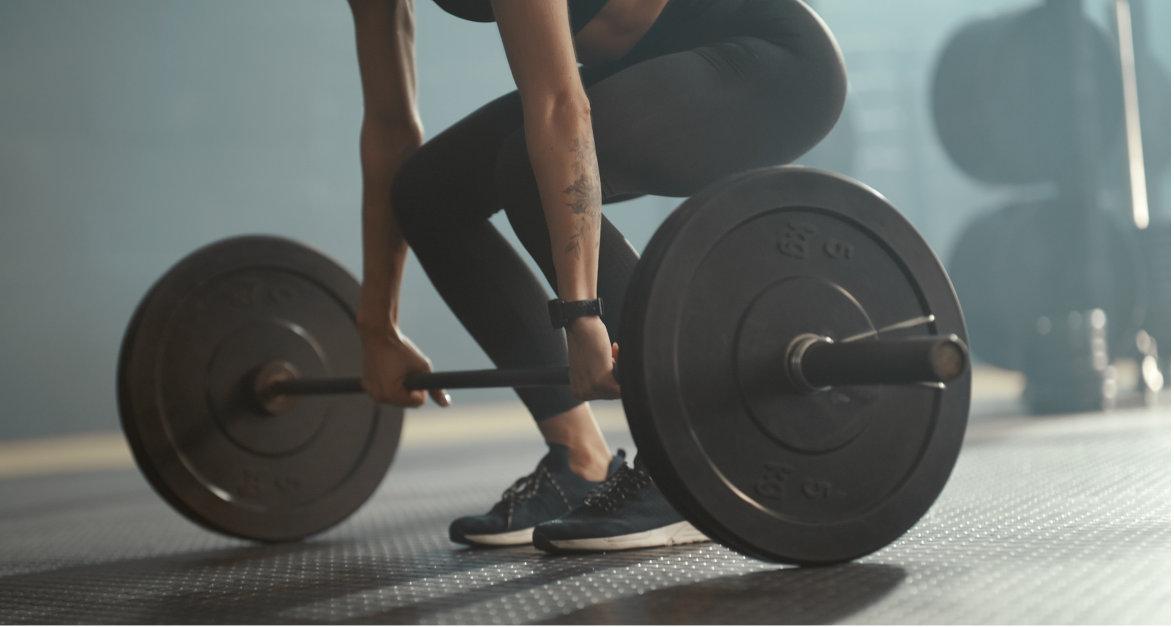
- In weightlifting, core stabilisers including rectus abdominis and erector spinae maintain spinal alignment during heavy lifts.
- Without adequate stabilisation, prime movers cannot function safely.
- Tennis players demonstrate how forearm stabilisers prevent injury during repeated racquet impacts.
- The evidence indicates that stabiliser strength directly prevents injury during dynamic movements.
Performance Enhancement
- Synergists adequately fulfil performance requirements by optimising force production.
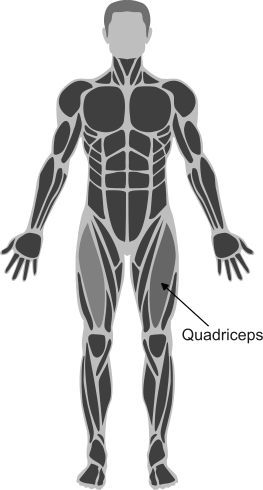
- During running, muscles work as synergists to assist the quadriceps through each stride, enabling sustained performance.
- In swimming, latissimus dorsi works with pectorals as synergists during the pull phase, creating more powerful strokes.
- Basketball players utilise the soleus as a synergist with gastrocnemius for explosive jumping.
- While strong in power contribution, synergists show limitations in isolation – they cannot replace prime movers (agonists).
- The overall evaluation demonstrates synergists significantly enhance complex movement patterns.
Final Evaluation
- Weighing these factors shows synergists and stabilisers are indispensable for athletic performance.
- The strengths outweigh the weaknesses because they provide both safety and performance benefits simultaneously.
- Although effective for injury prevention, their greater value lies in enabling athletes to train harder and perform complex movements impossible without their contribution.
- Overall evaluation: highly effective and essential for all complex sporting movements.
Show Worked Solution
Sample Answer
Evaluation Statement
- Synergists and stabilisers are highly effective in complex sporting movements.
- They will be evaluated on injury prevention and performance enhancement criteria.
Injury Prevention
- Stabilisers strongly meet this criterion through joint protection mechanisms.
- During overhead throwing, shoulder stabiliser muscles maintain joint position while deltoids generate power.
- Evidence supporting this includes the prevalence of shoulder injuries when stabiliser strength is inadequate.
- In weightlifting, core stabilisers including rectus abdominis and erector spinae maintain spinal alignment during heavy lifts.
- Without adequate stabilisation, prime movers cannot function safely.
- Tennis players demonstrate how forearm stabilisers prevent injury during repeated racquet impacts.
- The evidence indicates that stabiliser strength directly prevents injury during dynamic movements.
Performance Enhancement
- Synergists adequately fulfil performance requirements by optimising force production.
- During running, muscles work as synergists to assist the quadriceps through each stride, enabling sustained performance.
- In swimming, latissimus dorsi works with pectorals as synergists during the pull phase, creating more powerful strokes.
- Basketball players utilise the soleus as a synergist with gastrocnemius for explosive jumping.
- While strong in power contribution, synergists show limitations in isolation – they cannot replace prime movers (agonists).
- The overall evaluation demonstrates synergists significantly enhance complex movement patterns.
Final Evaluation
- Weighing these factors shows synergists and stabilisers are indispensable for athletic performance.
- The strengths outweigh the weaknesses because they provide both safety and performance benefits simultaneously.
- Although effective for injury prevention, their greater value lies in enabling athletes to train harder and perform complex movements impossible without their contribution.
- Overall evaluation: highly effective and essential for all complex sporting movements.