SmarterEd

Aussie Maths & Science Teachers: Save your time with SmarterEd

  • Login
  • Get Help
  • About

Algebra, STD1 A2 2025 HSC 16

The mass \((M )\) of a box with a square base, in grams, is directly proportional to the area of its base, in cm².
 

A box with a square base of side length 5 cm has a mass of 500 g.

What is the mass of a similar box with a square base of side length 3 cm?    (3 marks)

--- 8 WORK AREA LINES (style=lined) ---
Show Answers Only

\(M=180\ \text{grams}\)

Show Worked Solution

\(\text{Area of square base }= s^2\)

\(M \propto s^2\ \ \Rightarrow \ \ M=k\times s^2\)

\(\text{Find \(k\) given \(\ s=5\ \) when \(\ M=500\):}\)

\(500\) \(=k\times 5^2\)
\(25k\) \(=500\)
\(k\) \(=\dfrac{500}{25}=20\)

 
\(\text{Find \(M\) when  \(s=3\):}\)

\(M=20\times 3^2=180\ \text{grams}\)

Filed Under: Applications: Currency, Fuel and Other Problems (Std 1), Biomechanical Principles, Direct Variation (Std1-2027) Tagged With: Band 5, smc-1119-50-Proportional, smc-6514-20-Algebraic Solutions

HMS, BM EQ-Bank 983

Describe the factors that determine how much force an athlete can apply to sporting equipment.   (5 marks)

--- 15 WORK AREA LINES (style=lined) ---

Show Answers Only

Sample Answer

  • Body mass and muscle size influence force production capacity. Larger athletes typically possess greater muscle mass and longer limb levers. These physical characteristics provide mechanical advantages when interacting with equipment like bats, racquets or throwing implements.
  • Biomechanical technique determines force transfer efficiency from body to equipment. Optimal technique involves correct joint angles, movement sequencing and contact timing. Poor technique results in force dissipation and reduced equipment velocity regardless of athlete strength.
  • Muscle fibre composition affects instantaneous force generation. Fast-twitch fibres produce higher peak forces than slow-twitch fibres. Athletes with predominantly fast-twitch composition excel in explosive equipment-based activities like shot put or batting.
  • Training-induced adaptations modify force production capabilities. Strength training increases muscle size and improves nerve-muscle communication. Power training improves speed of force production, particularly important for rapid equipment acceleration.
  • Movement coordination involves sequential body segment activation from ground contact through equipment release. Effective patterns include leg drive, hip rotation, trunk flexion and arm extension. Each segment contributes to final force magnitude applied to equipment.
Show Worked Solution

Sample Answer

  • Body mass and muscle size influence force production capacity. Larger athletes typically possess greater muscle mass and longer limb levers. These physical characteristics provide mechanical advantages when interacting with equipment like bats, racquets or throwing implements.
  • Biomechanical technique determines force transfer efficiency from body to equipment. Optimal technique involves correct joint angles, movement sequencing and contact timing. Poor technique results in force dissipation and reduced equipment velocity regardless of athlete strength.
  • Muscle fibre composition affects instantaneous force generation. Fast-twitch fibres produce higher peak forces than slow-twitch fibres. Athletes with predominantly fast-twitch composition excel in explosive equipment-based activities like shot put or batting.
  • Training-induced adaptations modify force production capabilities. Strength training increases muscle size and improves nerve-muscle communication. Power training improves speed of force production, particularly important for rapid equipment acceleration.
  • Movement coordination involves sequential body segment activation from ground contact through equipment release. Effective patterns include leg drive, hip rotation, trunk flexion and arm extension. Each segment contributes to final force magnitude applied to equipment.

Filed Under: Fluid Mechanics and Force Tagged With: Band 4, Band 5, smc-5879-60-Force on an object

HMS, BM EQ-Bank 982

Explain how object characteristics affect the force required for movement.   (5 marks)

--- 17 WORK AREA LINES (style=lined) ---

Show Answers Only

Sample Answer

  • Greater object mass requires more force to achieve the same acceleration. This occurs because of Newton’s Second Law (F=ma), which means that force increases proportionally with mass.
  • Larger objects typically need more force than smaller ones. The reason for this is increased mass combined with greater air resistance from larger surface area, resulting in higher force requirements.
  • Object shape significantly influences aerodynamic properties during movement. As a result, streamlined objects require less force than irregular shapes because they experience reduced air resistance.
  • Surface conditions of objects directly affect force requirements through altered friction. For instance, wet balls become heavier and create different friction characteristics, thereby requiring adjusted force application.
  • Force must overcome both object inertia and environmental resistance. This happens when objects resist motion changes due to their mass, which leads to increased force needs for acceleration.
  • Dense materials require more force than lighter materials of similar size. Consequently, achieving equivalent movement depends on material density, as denser objects have greater mass concentration.
Show Worked Solution
  • Greater object mass requires more force to achieve the same acceleration. This occurs because of Newton’s Second Law (F=ma), which means that force increases proportionally with mass.
  • Larger objects typically need more force than smaller ones. The reason for this is increased mass combined with greater air resistance from larger surface area, resulting in higher force requirements.
  • Object shape significantly influences aerodynamic properties during movement. As a result, streamlined objects require less force than irregular shapes because they experience reduced air resistance.
  • Surface conditions of objects directly affect force requirements through altered friction. For instance, wet balls become heavier and create different friction characteristics, thereby requiring adjusted force application.
  • Force must overcome both object inertia and environmental resistance. This happens when objects resist motion changes due to their mass, which leads to increased force needs for acceleration.
  • Dense materials require more force than lighter materials of similar size. Consequently, achieving equivalent movement depends on material density, as denser objects have greater mass concentration.

Filed Under: Fluid Mechanics and Force Tagged With: Band 3, smc-5879-60-Force on an object

HMS, BM EQ-Bank 981

Outline how the body absorbs forces during landing activities.   (3 marks)

--- 7 WORK AREA LINES (style=lined) ---

Show Answers Only

Answers could include/expand on any of the following points:

  • Forces are absorbed through joint flexion, particularly at knees and hips
  • Muscles lengthen while contracting (eccentric contraction) to control force absorption
  • Joint bending allows gradual release of landing forces rather than sudden impact
  • Multiple joints work together to distribute forces throughout the body
  • Proper absorption technique reduces injury risk to muscles, tendons, and ligaments
Show Worked Solution

Answers could include/expand on any of the following points:

  • Forces are absorbed through joint flexion, particularly at knees and hips.
  • Muscles lengthen while contracting (eccentric contraction) to control force absorption.
  • Joint bending allows gradual release of landing forces rather than sudden impact.
  • Multiple joints work together to distribute forces throughout the body.
  • Proper absorption technique reduces injury risk to muscles, tendons, and ligaments.

Filed Under: Fluid Mechanics and Force Tagged With: Band 3, smc-5879-50-Body absorbing force

HMS, BM EQ-Bank 980

To what extent can biomechanical principles of force application be optimised for different sporting contexts and equipment types?   (8 marks)

--- 26 WORK AREA LINES (style=lined) ---

Show Answers Only

Judgment Statement

  • Force application principles can be significantly optimised across sporting contexts through technique modifications and equipment design, though physical limits exist.

Sport-Specific Optimisation

  • Different sports extensively benefit from tailored force application strategies. Each sport’s unique demands allow specific technique adjustments for maximum effectiveness.
  • Tennis players adjust grip pressure and swing paths for 40% more power on serves versus drops. Golfers modify stance and swing for different clubs, achieving 20-30 metre distance variations.
  • Evidence demonstrates sport-specific training improves force application by 25-35%. This proves principles adapt successfully to varied contexts.

Equipment Enhancement

  • Modern equipment substantially improves force optimisation through better design and materials. Technology enhances how athletes transfer body forces to sporting implements.
  • Carbon fibre racquets increase force transfer by 30% over wood. Specialised running shoes improve ground force application by 15% on different surfaces.
  • Research shows equipment advances contribute 20% performance gains, confirming technology significantly extends optimisation potential.

Physical Limitations

  • However, optimisation faces unchangeable constraints from body size and physics laws. Athletes cannot exceed personal force limits regardless of technique or equipment.
  • Smaller athletes generate 40% less maximum force than larger competitors. Newton’s laws create fixed relationships between force, mass and acceleration.
  • Despite optimisation, these barriers remain absolute. Individual capacity and physics set firm boundaries.

Reaffirmation

  • Biomechanical principles achieve significant optimisation across sports and equipment, with proven 20-35% improvements possible. Main evidence includes technique adaptations and technology advances.
  • While physical limits exist, optimisation within these boundaries remains highly valuable. Therefore, understanding force principles proves essential for maximising individual potential.
Show Worked Solution

Judgment Statement

  • Force application principles can be significantly optimised across sporting contexts through technique modifications and equipment design, though physical limits exist.

Sport-Specific Optimisation

  • Different sports extensively benefit from tailored force application strategies. Each sport’s unique demands allow specific technique adjustments for maximum effectiveness.
  • Tennis players adjust grip pressure and swing paths for 40% more power on serves versus drops. Golfers modify stance and swing for different clubs, achieving 20-30 metre distance variations.
  • Evidence demonstrates sport-specific training improves force application by 25-35%. This proves principles adapt successfully to varied contexts.

Equipment Enhancement

  • Modern equipment substantially improves force optimisation through better design and materials. Technology enhances how athletes transfer body forces to sporting implements.
  • Carbon fibre racquets increase force transfer by 30% over wood. Specialised running shoes improve ground force application by 15% on different surfaces.
  • Research shows equipment advances contribute 20% performance gains, confirming technology significantly extends optimisation potential.

Physical Limitations

  • However, optimisation faces unchangeable constraints from body size and physics laws. Athletes cannot exceed personal force limits regardless of technique or equipment.
  • Smaller athletes generate 40% less maximum force than larger competitors. Newton’s laws create fixed relationships between force, mass and acceleration.
  • Despite optimisation, these barriers remain absolute. Individual capacity and physics set firm boundaries.

Reaffirmation

  • Biomechanical principles achieve significant optimisation across sports and equipment, with proven 20-35% improvements possible. Main evidence includes technique adaptations and technology advances.
  • While physical limits exist, optimisation within these boundaries remains highly valuable. Therefore, understanding force principles proves essential for maximising individual potential.

Filed Under: Fluid Mechanics and Force Tagged With: Band 5, Band 6, smc-5879-60-Force on an object

HMS, BM EQ-Bank 979

To what extent do proper force absorption techniques contribute to both performance enhancement and injury prevention in sport?   (8 marks)

--- 22 WORK AREA LINES (style=lined) ---

Show Answers Only

Sample Answer

Judgment Statement

  • Proper force absorption techniques significantly contribute to both performance and injury prevention, though effectiveness varies with fatigue and competition demands.

Performance Enhancement Evidence

  • Force absorption substantially improves athletic performance by enabling smooth movement transitions. Athletes who absorb forces well maintain control and quickly generate subsequent movements.
  • Basketball players absorbing landing forces correctly transition immediately into explosive rebounds. Gymnasts mastering absorption maintain balance for higher scores.
  • Studies indicate 30% faster movement transitions with proper absorption technique. This proves force absorption directly enhances competitive performance across sports.

Injury Prevention Benefits

  • Absorption techniques greatly reduce injury risk by spreading impact forces throughout the body. Proper joint bending and muscle engagement prevent stress concentration on vulnerable structures.
  • Long jumpers bending knees during landing reduce joint stress by 60%. Martial artists using absorption techniques safely receive impacts without damage.
  • Research demonstrates 45% fewer injuries when athletes apply correct absorption. This confirms the protective value extends across all impact sports.

Contextual Limitations

  • However, effectiveness decreases under fatigue and unexpected situations. Athletes struggle maintaining technique when tired or facing uncontrolled forces.
  • Contact sport players cannot control incoming force directions, limiting optimal absorption. Fatigue reduces muscle control affecting technique quality.
  • Despite these constraints, benefits remain substantial when athletes train absorption under varied conditions.

Reaffirmation

  • Force absorption techniques significantly contribute to performance and safety, with proven benefits outweighing limitations. Evidence supporting this includes transition speed improvements and injury reduction statistics.
  • Although situational factors affect application, proper training maximises benefits. Therefore, force absorption remains essential for athletic success and longevity.
Show Worked Solution

Sample Answer

Judgment Statement

  • Proper force absorption techniques significantly contribute to both performance and injury prevention, though effectiveness varies with fatigue and competition demands.

Performance Enhancement Evidence

  • Force absorption substantially improves athletic performance by enabling smooth movement transitions. Athletes who absorb forces well maintain control and quickly generate subsequent movements.
  • Basketball players absorbing landing forces correctly transition immediately into explosive rebounds. Gymnasts mastering absorption maintain balance for higher scores.
  • Studies indicate 30% faster movement transitions with proper absorption technique. This proves force absorption directly enhances competitive performance across sports.

Injury Prevention Benefits

  • Absorption techniques greatly reduce injury risk by spreading impact forces throughout the body. Proper joint bending and muscle engagement prevent stress concentration on vulnerable structures.
  • Long jumpers bending knees during landing reduce joint stress by 60%. Martial artists using absorption techniques safely receive impacts without damage.
  • Research demonstrates 45% fewer injuries when athletes apply correct absorption. This confirms the protective value extends across all impact sports.

Contextual Limitations

  • However, effectiveness decreases under fatigue and unexpected situations. Athletes struggle maintaining technique when tired or facing uncontrolled forces.
  • Contact sport players cannot control incoming force directions, limiting optimal absorption. Fatigue reduces muscle control affecting technique quality.
  • Despite these constraints, benefits remain substantial when athletes train absorption under varied conditions.

Reaffirmation

  • Force absorption techniques significantly contribute to performance and safety, with proven benefits outweighing limitations. Evidence supporting this includes transition speed improvements and injury reduction statistics.
  • Although situational factors affect application, proper training maximises benefits. Therefore, force absorption remains essential for athletic success and longevity.

Filed Under: Fluid Mechanics and Force Tagged With: Band 5, Band 6, smc-5879-50-Body absorbing force

HMS, BM EQ-Bank 978

To what extent does understanding force application principles improve athletic performance and reduce injury risk?   (8 marks)

--- 24 WORK AREA LINES (style=lined) ---

Show Answers Only

Sample Answer

Judgment Statement

  • Understanding force application principles significantly improves athletic performance and injury prevention, with evidence supporting major benefits when properly implemented.

Performance Enhancement

  • Athletes who understand force principles substantially increase power output through better technique. Knowledge of action-reaction forces enables optimised positioning and timing.
  • Sprinters improve horizontal push by understanding ground forces, achieving 15-20% better acceleration. Weightlifters position correctly to lift 10-15% more safely.
  • Evidence strongly supports that understanding combined with practice creates measurable gains. Elite athletes demonstrate superior force application compared to novices.

Injury Risk Reduction

  • Force knowledge greatly reduces injury likelihood by promoting safer movement patterns. Athletes learn to spread forces across joints rather than concentrating stress.
  • Basketball players understanding landing forces reduce knee injuries by 50% through proper technique. Tennis players prevent shoulder problems by adjusting serve mechanics.
  • Research confirms injury rates drop significantly with biomechanical knowledge application. This demonstrates the protective value of force understanding.

Implementation Limitations

  • However, benefits depend on practical application with expert guidance. Theory alone provides limited improvement without translating into automatic movements.
  • Many athletes know principles but cannot apply under pressure. Individual differences require customised approaches.
  • Despite limitations, overall impact remains highly positive with quality coaching.

Reaffirmation

  • Force principles understanding significantly enhances performance and safety, though application determines benefits. Main supporting factors include proven gains and injury reduction.
  • While challenges exist, advantages outweigh limitations. Therefore, force knowledge proves essential for athletic development.
Show Worked Solution

Judgment Statement

  • Understanding force application principles significantly improves athletic performance and injury prevention, with evidence supporting major benefits when properly implemented.

Performance Enhancement

  • Athletes who understand force principles substantially increase power output through better technique. Knowledge of action-reaction forces enables optimised positioning and timing.
  • Sprinters improve horizontal push by understanding ground forces, achieving 15-20% better acceleration. Weightlifters position correctly to lift 10-15% more safely.
  • Evidence strongly supports that understanding combined with practice creates measurable gains. Elite athletes demonstrate superior force application compared to novices.

Injury Risk Reduction

  • Force knowledge greatly reduces injury likelihood by promoting safer movement patterns. Athletes learn to spread forces across joints rather than concentrating stress.
  • Basketball players understanding landing forces reduce knee injuries by 50% through proper technique. Tennis players prevent shoulder problems by adjusting serve mechanics.
  • Research confirms injury rates drop significantly with biomechanical knowledge application. This demonstrates the protective value of force understanding.

Implementation Limitations

  • However, benefits depend on practical application with expert guidance. Theory alone provides limited improvement without translating into automatic movements.
  • Many athletes know principles but cannot apply under pressure. Individual differences require customised approaches.
  • Despite limitations, overall impact remains highly positive with quality coaching.

Reaffirmation

  • Force principles understanding significantly enhances performance and safety, though application determines benefits. Main supporting factors include proven gains and injury reduction.
  • While challenges exist, advantages outweigh limitations. Therefore, force knowledge proves essential for athletic development.

Filed Under: Fluid Mechanics and Force Tagged With: Band 5, Band 6, smc-5879-40-Body applying force

HMS, BM EQ-Bank 977

Explain the relationship between applied forces and reaction forces in athletic performance.   (5 marks)

--- 15 WORK AREA LINES (style=lined) ---

Show Answers Only

Sample Answer

  • Athletes generate applied forces through muscular contractions directed at external surfaces. This occurs because muscles transfer force through bones to contact points. As a result, sprinters push against the track with considerable force.
  • Newton’s Third Law creates equal and opposite reaction forces instantly. When athletes push down and backward, surfaces generate upward and forward forces of identical magnitude. This relationship ensures balanced force pairs.
  • Athletic movement results from reaction forces propelling bodies opposite to applied forces. The reason is athletes cannot move without external forces acting upon them. Therefore, ground reaction forces enable all running and jumping.
  • Performance directly correlates with force magnitude – stronger applied forces produce larger reaction forces. This leads to faster speeds as acceleration follows F=ma. Evidence shows elite sprinters generate forces exceeding three times bodyweight.
  • Optimal technique maximises useful reaction forces through proper force direction and timing. Consequently, athletes align forces efficiently to reduce energy waste. This explains why training emphasises force vector optimisation for performance gains.
Show Worked Solution

Sample Answer

  • Athletes generate applied forces through muscular contractions directed at external surfaces. This occurs because muscles transfer force through bones to contact points. As a result, sprinters push against the track with considerable force.
  • Newton’s Third Law creates equal and opposite reaction forces instantly. When athletes push down and backward, surfaces generate upward and forward forces of identical magnitude. This relationship ensures balanced force pairs.
  • Athletic movement results from reaction forces propelling bodies opposite to applied forces. The reason is athletes cannot move without external forces acting upon them. Therefore, ground reaction forces enable all running and jumping.
  • Performance directly correlates with force magnitude – stronger applied forces produce larger reaction forces. This leads to faster speeds as acceleration follows F=ma. Evidence shows elite sprinters generate forces exceeding three times bodyweight.
  • Optimal technique maximises useful reaction forces through proper force direction and timing. Consequently, athletes align forces efficiently to reduce energy waste. This explains why training emphasises force vector optimisation for performance gains.

Filed Under: Fluid Mechanics and Force Tagged With: Band 4, Band 5, smc-5879-40-Body applying force

HMS, BM EQ-Bank 976

Describe the biomechanical principles involved in effectively catching fast-moving objects.   (5 marks)

--- 15 WORK AREA LINES (style=lined) ---

Show Answers Only

Sample Answer

  • Impact force absorption involves the relationship between object momentum and catching distance. The formula F = ma/t shows that extended catching distance reduces peak forces. Athletes extend arms fully before contact then draw the object toward the body.
  • Multi-point contact distribution spreads forces across multiple body segments. Both hands create larger contact surface area while engaging multiple joints. Force distribution occurs through fingers, wrists, elbows, and shoulders rather than single-point concentration.
  • Progressive joint movement characterises the kinetic chain during catching. Movement flows from fingers through to trunk segments. Each joint bends in sequence with muscles lengthening under control to absorb energy.
  • Pre-contact positioning requires anticipatory movements before ball arrival. Athletes adopt wide stances with flexed knees for stability. Arms position at appropriate height with slight elbow flexion, ready for extension and subsequent catching motion.
  • Visual tracking and timing coordinates body movements with object trajectory. Eyes maintain focus throughout the flight path. Hand positioning adjusts continuously based on visual information, with grasping timed for optimal catching distance.
Show Worked Solution

Sample Answer

  • Impact force absorption involves the relationship between object momentum and catching distance. The formula F = ma/t shows that extended catching distance reduces peak forces. Athletes extend arms fully before contact then draw the object toward the body.
  • Multi-point contact distribution spreads forces across multiple body segments. Both hands create larger contact surface area while engaging multiple joints. Force distribution occurs through fingers, wrists, elbows, and shoulders rather than single-point concentration.
  • Progressive joint movement characterises the kinetic chain during catching. Movement flows from fingers through to trunk segments. Each joint bends in sequence with muscles lengthening under control to absorb energy.
  • Pre-contact positioning requires anticipatory movements before ball arrival. Athletes adopt wide stances with flexed knees for stability. Arms position at appropriate height with slight elbow flexion, ready for extension and subsequent catching motion.
  • Visual tracking and timing coordinates body movements with object trajectory. Eyes maintain focus throughout the flight path. Hand positioning adjusts continuously based on visual information, with grasping timed for optimal catching distance.

Filed Under: Fluid Mechanics and Force Tagged With: Band 4, Band 5, smc-5879-50-Body absorbing force

HMS, BM EQ-Bank 975

Outline the key differences between internal and external forces in human movement.   (3 marks)

--- 7 WORK AREA LINES (style=lined) ---

Show Answers Only
  • Internal forces develop within the body through muscle contractions
  • External forces come from outside the body and act upon it
  • Internal forces cause joint angle changes, such as quadriceps contracting during kicking
  • External forces include gravity, air resistance, and ground reaction forces
  • Both force types work together to produce effective human movement
Show Worked Solution
  • Internal forces develop within the body through muscle contractions
  • External forces come from outside the body and act upon it
  • Internal forces cause joint angle changes, such as quadriceps contracting during kicking
  • External forces include gravity, air resistance, and ground reaction forces
  • Both force types work together to produce effective human movement

Filed Under: Fluid Mechanics and Force Tagged With: Band 3, smc-5879-40-Body applying force

HMS, BM EQ-Bank 974

Describe how athletes in different sports utilise Magnus force to enhance their performance.   (5 marks)

--- 15 WORK AREA LINES (style=lined) ---

Show Answers Only

Sample Answer

Tennis – Topspin Applications

  • Players create topspin by brushing up the back of the ball during contact.
  • Topspin generates downward Magnus force that curves the ball’s flight path.
  • This allows harder shots to land within court boundaries while creating high, difficult bounces for opponents.

Cricket – Spin Bowling

  • Bowlers impart side-spin through wrist and finger actions during release.
  • The Magnus force creates lateral ball movement in flight, causing the ball to curve away from or towards batsmen.
  • Predicting ball placement becomes much harder for effective batting when spin is applied.

Soccer – Curved Free Kicks

  • Players strike the ball off-centre to create side-spin rotation.
  • Magnus force bends the ball’s path around defensive walls.
  • This enables shots that curve into goal areas that appear blocked from the initial kick angle.

Baseball – Breaking Pitches

  • Pitchers use various grips and release techniques to generate different spin directions.
  • The resulting Magnus force creates curveballs that drop and, sliders that move laterally.
  • Consequently batters have difficulty tracking ball movement and timing their swings.

Golf – Backspin Control

  • Golfers create backspin through downward club strikes that compress the ball.
  • Magnus force provides lift during flight and creates stopping power on landing.
  • This facilitates precise distance control and preventing ball roll on greens.
Show Worked Solution

Sample Answer

Tennis – Topspin Applications

  • Players create topspin by brushing up the back of the ball during contact.
  • Topspin generates downward Magnus force that curves the ball’s flight path.
  • This allows harder shots to land within court boundaries while creating high, difficult bounces for opponents.

Cricket – Spin Bowling

  • Bowlers impart side-spin through wrist and finger actions during release.
  • The Magnus force creates lateral ball movement in flight, causing the ball to curve away from or towards batsmen.
  • Predicting ball placement becomes much harder for effective batting when spin is applied.

Soccer – Curved Free Kicks

  • Players strike the ball off-centre to create side-spin rotation.
  • Magnus force bends the ball’s path around defensive walls.
  • This enables shots that curve into goal areas that appear blocked from the initial kick angle.

Baseball – Breaking Pitches

  • Pitchers use various grips and release techniques to generate different spin directions.
  • The resulting Magnus force creates curveballs that drop and, sliders that move laterally.
  • Consequently batters have difficulty tracking ball movement and timing their swings.

Golf – Backspin Control

  • Golfers create backspin through downward club strikes that compress the ball.
  • Magnus force provides lift during flight and creates stopping power on landing.
  • This facilitates precise distance control and preventing ball roll on greens.

Filed Under: Fluid Mechanics and Force Tagged With: Band 3, Band 4, smc-5879-30-Magnus force

HMS, BM EQ-Bank 973

Describe how Magnus force affects ball flight in racquet sports.   (3 marks)

--- 7 WORK AREA LINES (style=lined) ---

Show Answers Only
  • Magnus force is created when a spinning ball moves through air.
  • The spinning motion creates pressure differences on opposite sides of the ball
  • This pressure differential causes the ball to curve in the direction of lower pressure
  • Topspin creates downward curve while backspin creates upward lift
  • Players use this force strategically to control ball placement and opponent difficulty
Show Worked Solution
  • Magnus force is created when a spinning ball moves through air.
  • The spinning motion creates pressure differences on opposite sides of the ball
  • This pressure differential causes the ball to curve in the direction of lower pressure
  • Topspin creates downward curve while backspin creates upward lift
  • Players use this force strategically to control ball placement and opponent difficulty

Filed Under: Fluid Mechanics and Force Tagged With: Band 3, smc-5879-30-Magnus force

HMS, BM EQ-Bank 972

Analyse the relationship between fluid resistance forces and swimming efficiency in competitive performance.   (8 marks)

--- 22 WORK AREA LINES (style=lined) ---

Show Answers Only

Sample Answer

Overview Statement

  • Fluid resistance forces interact with swimming technique and body position to determine competitive efficiency. Key relationships include drag-speed interactions, technique adaptations, and performance trade-offs that affect energy expenditure and race outcomes.

Drag-Speed Relationship

  • Water resistance increases exponentially as swimming velocity rises, directly affecting energy demands. This force opposes forward motion by acting parallel to water flow against the swimmer.
  • Streamlined positions reduce resistance by up to 40% compared to poor alignment. This pattern shows elite swimmers maintain higher speeds with lower energy costs.
  • Evidence indicates that doubling speed quadruples drag forces. Therefore, small improvements in body position create significant efficiency gains during races.

Technique and Propulsion

  • Skilled swimmers transform resistance forces into forward propulsion through hand and body movements. Proper technique converts water pressure into useful thrust rather than just overcoming drag.
  • High elbow catches and body rotation redirect water flow to create forward push. Elite swimmers achieve 85% stroke efficiency while beginners manage only 60%.
  • This reveals how technical skill determines whether resistance hinders or helps performance. The trend indicates mastery of water manipulation separates elite from average swimmers.

Performance Trade-offs

  • Different events require balancing competing demands between reducing drag and maximising propulsion. Swimmers must choose between streamlining for low resistance or powerful strokes for speed.
  • Sprinters often accept higher resistance to generate maximum power, while distance swimmers prioritise efficiency over force. This demonstrates event-specific approaches to resistance management.
  • These patterns show no single solution exists for all swimming events.

Implications and Synthesis

  • Fluid resistance fundamentally shapes competitive swimming through complex interactions with technique, speed, and event demands. Swimmers who understand these relationships optimise their individual approach.
  • Consequently, training must address both resistance reduction and propulsion enhancement. The significance is that efficiency improvements through resistance management often exceed gains from fitness alone.
Show Worked Solution

Sample Answer

Overview Statement

  • Fluid resistance forces interact with swimming technique and body position to determine competitive efficiency. Key relationships include drag-speed interactions, technique adaptations, and performance trade-offs that affect energy expenditure and race outcomes.

Drag-Speed Relationship

  • Water resistance increases exponentially as swimming velocity rises, directly affecting energy demands. This force opposes forward motion by acting parallel to water flow against the swimmer.
  • Streamlined positions reduce resistance by up to 40% compared to poor alignment. This pattern shows elite swimmers maintain higher speeds with lower energy costs.
  • Evidence indicates that doubling speed quadruples drag forces. Therefore, small improvements in body position create significant efficiency gains during races.

Technique and Propulsion

  • Skilled swimmers transform resistance forces into forward propulsion through hand and body movements. Proper technique converts water pressure into useful thrust rather than just overcoming drag.
  • High elbow catches and body rotation redirect water flow to create forward push. Elite swimmers achieve 85% stroke efficiency while beginners manage only 60%.
  • This reveals how technical skill determines whether resistance hinders or helps performance. The trend indicates mastery of water manipulation separates elite from average swimmers.

Performance Trade-offs

  • Different events require balancing competing demands between reducing drag and maximising propulsion. Swimmers must choose between streamlining for low resistance or powerful strokes for speed.
  • Sprinters often accept higher resistance to generate maximum power, while distance swimmers prioritise efficiency over force. This demonstrates event-specific approaches to resistance management.
  • These patterns show no single solution exists for all swimming events.

Implications and Synthesis

  • Fluid resistance fundamentally shapes competitive swimming through complex interactions with technique, speed, and event demands. Swimmers who understand these relationships optimise their individual approach.
  • Consequently, training must address both resistance reduction and propulsion enhancement. The significance is that efficiency improvements through resistance management often exceed gains from fitness alone.

Filed Under: Fluid Mechanics and Force Tagged With: Band 5, Band 6, smc-5879-20-Fluid resistance

HMS, BM EQ-Bank 971

Explain the techniques swimmers can use to minimise drag and maximise lift forces during competition.   (5 marks)

--- 15 WORK AREA LINES (style=lined) ---

Show Answers Only

Sample Answer

  • Swimmers maintain head-spine alignment with horizontal body position to reduce form drag. This works because streamlined positioning allows water to flow smoothly around body contours, which prevents turbulence formation. As a result, resistance decreases by up to 40% compared to poor alignment.
  • Core muscle engagement keeps hips elevated at the water surface. This technique prevents legs from sinking below the body line, thereby reducing frontal surface area exposed to water. Consequently, form drag decreases significantly while buoyancy enables more efficient stroke mechanics.
  • Tight, ankle-driven kicking with minimal knee flexion creates propulsion without excess drag. The reason for this is that small-amplitude kicks generate thrust while avoiding splash and turbulence. This coordination with arm strokes produces lift forces rather than just maintaining position.
  • Slightly cupped hand position during the catch phase maximises water displacement for propulsion. This occurs because the curved hand shape creates pressure differences between palm and back surfaces, resulting in lift forces. Therefore, swimmers achieve forward thrust more efficiently than with flat hands.
  • Compact limb positioning during gliding phases minimises form drag. By keeping arms and legs close to the centerline, swimmers reduce frontal area and prevent water from catching on extended limbs, which leads to smoother forward movement.
Show Worked Solution

Sample Answer

  • Swimmers maintain head-spine alignment with horizontal body position to reduce form drag. This works because streamlined positioning allows water to flow smoothly around body contours, which prevents turbulence formation. As a result, resistance decreases by up to 40% compared to poor alignment.
  • Core muscle engagement keeps hips elevated at the water surface. This technique prevents legs from sinking below the body line, thereby reducing frontal surface area exposed to water. Consequently, form drag decreases significantly while buoyancy enables more efficient stroke mechanics.
  • Tight, ankle-driven kicking with minimal knee flexion creates propulsion without excess drag. The reason for this is that small-amplitude kicks generate thrust while avoiding splash and turbulence. This coordination with arm strokes produces lift forces rather than just maintaining position.
  • Slightly cupped hand position during the catch phase maximises water displacement for propulsion. This occurs because the curved hand shape creates pressure differences between palm and back surfaces, resulting in lift forces. Therefore, swimmers achieve forward thrust more efficiently than with flat hands.
  • Compact limb positioning during gliding phases minimises form drag. By keeping arms and legs close to the centerline, swimmers reduce frontal area and prevent water from catching on extended limbs, which leads to smoother forward movement.

Filed Under: Fluid Mechanics and Force Tagged With: Band 3, Band 4, smc-5879-20-Fluid resistance

HMS, BM EQ-Bank 970

Outline how drag forces affect swimming performance.   (3 marks)

--- 7 WORK AREA LINES (style=lined) ---

Show Answers Only
  • Drag forces oppose forward motion, reducing swimming speed and velocity.
  • Non-streamlined body positions create considerable drag, making movement more difficult.
  • Drag forces run parallel to water flow direction, exerting resistance against the swimmer.
  • Greater drag forces require more energy expenditure to maintain swimming speed.
  • Streamlined bodies create less drag, allowing more efficient movement through water.
Show Worked Solution
  • Drag forces oppose forward motion, reducing swimming speed and velocity.
  • Non-streamlined body positions create considerable drag, making movement more difficult.
  • Drag forces run parallel to water flow direction, exerting resistance against the swimmer.
  • Greater drag forces require more energy expenditure to maintain swimming speed.
  • Streamlined bodies create less drag, allowing more efficient movement through water.

Filed Under: Fluid Mechanics and Force Tagged With: Band 3, smc-5879-20-Fluid resistance

HMS, BM EQ-Bank 969

Evaluate the biomechanical principles that enable swimmers to maintain effective flotation during competitive performance.   (8 marks)

--- 24 WORK AREA LINES (style=lined) ---

Show Answers Only

Sample Answer

Evaluation Statement

  • Biomechanical principles are highly effective for maintaining competitive flotation. Three criteria determine effectiveness: body alignment, muscular control, and individual adaptability.

Body Alignment

  • Centre of gravity and buoyancy alignment strongly meets flotation requirements. Vertical alignment achieves horizontal positioning with minimal effort.
  • Elite swimmers demonstrate optimal alignment maintaining flat positions throughout races. This reduces drag by 40% compared to misalignment.
  • Evidence proves this principle fundamental – without alignment, other techniques fail. The principle achieves significant performance benefits.

Muscular Control

  • Core engagement adequately fulfils position maintenance needs. Abdominal contraction keeps hips elevated despite fatigue.
  • Demonstrates high effectiveness preventing leg drop that increases drag 25%. Sprinters show superior core strength at race speeds.
  • Conscious control allows adjustment based on conditions, proving highly valuable for success.

Individual Adaptability

  • Principles partially address body composition variations through technique modifications. Dense swimmers adjust kick patterns compensating for reduced buoyancy.
  • While somewhat effective, adaptations require extra energy. Sprinters with 8% body fat work harder than distance swimmers with 15%.
  • Shows limitations – physics cannot be overcome completely. Strategies achieve moderate success managing disadvantages.

Final Evaluation

  • Biomechanical principles prove highly effective when criteria work together. Alignment and control strongly support performance while adaptations adequately manage variations.
  • Strengths outweigh limitations as technique overcomes most disadvantages. Understanding these principles remains essential for competitive success.
Show Worked Solution

Sample Answer

Evaluation Statement

  • Biomechanical principles are highly effective for maintaining competitive flotation. Three criteria determine effectiveness: body alignment, muscular control, and individual adaptability.

Body Alignment

  • Centre of gravity and buoyancy alignment strongly meets flotation requirements. Vertical alignment achieves horizontal positioning with minimal effort.
  • Elite swimmers demonstrate optimal alignment maintaining flat positions throughout races. This reduces drag by 40% compared to misalignment.
  • Evidence proves this principle fundamental – without alignment, other techniques fail. The principle achieves significant performance benefits.

Muscular Control

  • Core engagement adequately fulfils position maintenance needs. Abdominal contraction keeps hips elevated despite fatigue.
  • Demonstrates high effectiveness preventing leg drop that increases drag 25%. Sprinters show superior core strength at race speeds.
  • Conscious control allows adjustment based on conditions, proving highly valuable for success.

Individual Adaptability

  • Principles partially address body composition variations through technique modifications. Dense swimmers adjust kick patterns compensating for reduced buoyancy.
  • While somewhat effective, adaptations require extra energy. Sprinters with 8% body fat work harder than distance swimmers with 15%.
  • Shows limitations – physics cannot be overcome completely. Strategies achieve moderate success managing disadvantages.

Final Evaluation

  • Biomechanical principles prove highly effective when criteria work together. Alignment and control strongly support performance while adaptations adequately manage variations.
  • Strengths outweigh limitations as technique overcomes most disadvantages. Understanding these principles remains essential for competitive success.

Filed Under: Fluid Mechanics and Force Tagged With: Band 5, Band 6, smc-5879-10-Flotation/Centre of Buoyancy

HMS, BM EQ-Bank 968

How does muscle-to-fat ratio affect flotation performance in competitive swimming?   (5 marks)

--- 15 WORK AREA LINES (style=lined) ---

Show Answers Only

Sample Answer

  • Higher muscle mass increases overall body density compared to fat tissue. This occurs because muscle tissue is approximately 18% denser than fat. Consequently swimmers with more muscle sink lower in the water. For example, a swimmer with 15% body fat floats more easily than one with 8% body fat.
  • Lower body fat percentage reduces natural buoyancy during swimming. As a result, swimmers must work harder to maintain horizontal body position, leading to increased energy expenditure. This creates greater drag as the body sits lower in the water.
  • The muscle-to-fat ratio directly affects swimming efficiency across different events. While sprinters benefit from higher muscle mass for power generation, this causes reduced flotation requiring more kick effort. Conversely, distance swimmers maintain higher fat percentages because improved flotation reduces energy costs over longer races.
  • Body position adjustments become necessary with different ratios. When muscle mass is high, swimmers must engage core muscles more actively to prevent leg drop. This compensation mechanism increases fatigue but enables maintenance of streamlined position.
  • Training adaptations can partially offset ratio disadvantages. Through specific technique work, muscular swimmers learn to optimise body position, thereby minimising the negative flotation effects while maintaining power advantages.
Show Worked Solution

Sample Answer

  • Higher muscle mass increases overall body density compared to fat tissue. This occurs because muscle tissue is approximately 18% denser than fat. Consequently swimmers with more muscle sink lower in the water. For example, a swimmer with 15% body fat floats more easily than one with 8% body fat.
  • Lower body fat percentage reduces natural buoyancy during swimming. As a result, swimmers must work harder to maintain horizontal body position, leading to increased energy expenditure. This creates greater drag as the body sits lower in the water.
  • The muscle-to-fat ratio directly affects swimming efficiency across different events. While sprinters benefit from higher muscle mass for power generation, this causes reduced flotation requiring more kick effort. Conversely, distance swimmers maintain higher fat percentages because improved flotation reduces energy costs over longer races.
  • Body position adjustments become necessary with different ratios. When muscle mass is high, swimmers must engage core muscles more actively to prevent leg drop. This compensation mechanism increases fatigue but enables maintenance of streamlined position.
  • Training adaptations can partially offset ratio disadvantages. Through specific technique work, muscular swimmers learn to optimise body position, thereby minimising the negative flotation effects while maintaining power advantages.

Filed Under: Fluid Mechanics and Force Tagged With: Band 3, Band 4, smc-5879-10-Flotation/Centre of Buoyancy

HMS, BM EQ-Bank 967

Outline why some swimmers find it easier to float than others.   (3 marks)

--- 7 WORK AREA LINES (style=lined) ---

Show Answers Only
  • Individual differences in body composition and muscle-to-fat ratio affect average total body density.
  • Higher density bodies sink more easily than water.
  • The relationship between centre of gravity and centre of buoyancy varies between individuals.
  • This occurs due to different body shapes and mass distribution.
  • These variations in density and centre of gravity location directly influence flotation ability.
  • Each person’s natural body position in water is affected differently.
  • For example, a muscular swimmer with low body fat may experience leg sinking during flotation.
  • In contrast, a swimmer with higher body fat percentage maintains horizontal position effortlessly.
Show Worked Solution
  • Individual differences in body composition and muscle-to-fat ratio affect average total body density.
  • Higher density bodies sink more easily than water.
  • The relationship between centre of gravity and centre of buoyancy varies between individuals.
  • This occurs due to different body shapes and mass distribution.
  • These variations in density and centre of gravity location directly influence flotation ability.
  • Each person’s natural body position in water is affected differently.
  • For example, a muscular swimmer with low body fat may experience leg sinking during flotation.
  • In contrast, a swimmer with higher body fat percentage maintains horizontal position effortlessly.

Filed Under: Fluid Mechanics and Force Tagged With: Band 3, smc-5879-10-Flotation/Centre of Buoyancy

HMS, BM EQ-Bank 966 MC

When comparing the force application of a large rugby player versus a smaller player kicking the same ball, which statement is most accurate?

  1. Both players will apply identical force regardless of their size difference
  2. The smaller player will be more effective due to better technique and speed
  3. Player size has no relationship to force application capability
  4. The larger player can potentially apply greater force due to increased mass and muscle capacity
Show Answers Only

\(D\)

Show Worked Solution
  • D is correct: Larger players typically have greater muscle mass and body mass, enabling potentially greater force generation capacity.

Other Options:

  • A is incorrect: Physical differences directly affect force generation capability.
  • B is incorrect: While technique matters, size does influence maximum force potential.
  • C is incorrect: Body size and muscle mass directly relate to force generation capacity.

Filed Under: Fluid Mechanics and Force Tagged With: Band 3, smc-5879-60-Force on an object

HMS, BM EQ-Bank 965 MC

A soccer player kicks a wet ball compared to a dry ball of the same size. According to biomechanical principles, what adjustment must the player make?

  1. Use the same force as the wet ball will travel further due to reduced friction
  2. Apply greater force because the increased mass requires more force for the same acceleration
  3. Reduce the applied force as the wet surface provides better contact with the foot
  4. Change the kicking technique entirely as mass has no effect on force requirements
Show Answers Only

\(B\)

Show Worked Solution
  • B is correct: Increased mass (from water absorption) requires greater force to achieve the same acceleration, following \(F=ma\).

Other Options:

  • A is incorrect: Greater mass actually requires more force; wet surface may increase, not decrease, friction.
  • C is incorrect: Wet surface doesn’t necessarily improve contact, and greater mass still requires more force.
  • D is incorrect: Mass directly affects force requirements according to Newton’s Second Law.

Filed Under: Fluid Mechanics and Force Tagged With: Band 4, smc-5879-60-Force on an object

HMS, BM EQ-Bank 964 MC

When catching a fast-moving cricket ball, a fielder should:

  1. Keep their hands rigid to provide a solid surface for the ball
  2. Catch the ball close to their body to minimise arm movement
  3. Extend their arm and draw it back toward their body during the catch
  4. Use only their fingertips to reduce the contact surface area
Show Answers Only

\(C\)

Show Worked Solution
  • C is correct: Extending the arm and drawing it back increases the distance over which force is absorbed, reducing impact.

Other Options:

  • A is incorrect: Rigid hands don’t absorb force effectively and may cause injury.
  • B is incorrect: Catching close to the body reduces absorption distance and increases impact.
  • D is incorrect: Fingertip catching concentrates force and increases injury risk.

Filed Under: Fluid Mechanics and Force Tagged With: Band 4, smc-5879-50-Body absorbing force

HMS, BM EQ-Bank 963 MC

A long jumper lands in the sand pit after their jump. To minimise injury risk, the most important biomechanical principle they should apply is:

  1. Landing with straight legs to transfer force quickly through the body
  2. Using joint flexion to absorb and dissipate landing forces gradually
  3. Landing on their heels to maximise contact surface area
  4. Keeping their arms rigid to maintain balance during landing
Show Answers Only

\(B\)

Show Worked Solution
  • B is correct: Joint flexion allows gradual force absorption through muscle lengthening, reducing injury risk to joints and surrounding tissues.

Other Options:

  • A is incorrect: Straight leg landing prevents force absorption and increases injury risk.
  • C is incorrect: Heel landing creates impact forces; controlled foot placement is more important.
  • D is incorrect: Rigid arms prevent effective force absorption and balance adjustment.

Filed Under: Fluid Mechanics and Force Tagged With: Band 3, smc-5879-50-Body absorbing force

HMS, BM EQ-Bank 962 MC

A weightlifter needs to develop maximum power for competition. Based on biomechanical principles, they should focus primarily on:

  1. Speed-dominated power to increase lifting velocity
  2. Flexibility training to improve range of motion
  3. Endurance training to sustain effort over time
  4. Strength-dominated power to overcome resistance
Show Answers Only

\(D\)

Show Worked Solution
  • D is correct: Weightlifting requires strength-dominated power to overcome heavy resistance, prioritising force production over speed.

Other Options:

  • A is incorrect: Speed-dominated power is more appropriate for jumping and running activities.
  • B is incorrect: While flexibility helps, power development is the primary requirement.
  • C is incorrect: Weightlifting is primarily anaerobic and power-focused, not endurance-based.

Filed Under: Fluid Mechanics and Force Tagged With: Band 5, smc-5879-40-Body applying force

HMS, BM EQ-Bank 961 MC

When a basketball player jumps to shoot, their legs push down against the court surface. According to biomechanical principles, what enables the player to leave the ground?

  1. Applied forces from the legs create equal and opposite reaction forces from the court
  2. Internal forces generated by muscle contraction overcome gravity
  3. External forces from the court surface exceed the player's body weight
  4. Gravitational forces are temporarily suspended during the jumping motion
Show Answers Only

\(A\)

Show Worked Solution
  • A is correct: Applied forces from leg muscles create equal and opposite reaction forces from the court, following Newton’s Third Law, enabling upward movement.

Other Options:

  • B is incorrect: Internal forces alone cannot create upward movement without external reaction forces.
  • C is incorrect: Court forces are reactions to applied forces, not independent external forces.
  • D is incorrect: Gravity continues to act throughout the movement.

Filed Under: Fluid Mechanics and Force Tagged With: Band 4, smc-5879-40-Body applying force

HMS, BM EQ-Bank 960 MC

A cricket bowler delivers a ball with side-spin that curves away from a right-handed batter. This lateral movement is caused by:

  1. Wind resistance acting on the ball's seam
  2. Magnus force generated by the ball's rotation
  3. Gravitational pull affecting the ball's trajectory
  4. Air pressure changes from the bowler's release technique
Show Answers Only

\(B\)

Show Worked Solution
  • B is correct: Side-spin creates the Magnus force perpendicular to both the spin axis and direction of travel, causing lateral curve.

Other Options:

  • A is incorrect: Seam position affects swing, but the question specifically describes side-spin effects.
  • C is incorrect: Gravity acts vertically and wouldn’t cause lateral movement.
  • D is incorrect: Release technique initiates spin but doesn’t directly create the curving force.

Filed Under: Fluid Mechanics and Force Tagged With: Band 5, smc-5879-30-Magnus force

HMS, BM EQ-Bank 959 MC

In tennis, when a player hits a topspin forehand, the ball curves downward during flight due to:

  1. Increased air density above the ball
  2. Gravitational forces acting more strongly on the spinning ball
  3. Reduced air pressure caused by the racquet's follow-through
  4. Magnus force created by the ball's rotation through air
Show Answers Only

\(D\)

Show Worked Solution
  • D is correct: Magnus force is created when a spinning object moves through fluid (air), causing pressure differences that curve the ball’s path.

Other Options:

  • A is incorrect: Air density remains constant; pressure differences are created by spin.
  • B is incorrect: Gravity acts equally on all objects regardless of spin.
  • C is incorrect: Racquet follow-through doesn’t create lasting pressure changes affecting ball flight.

Filed Under: Fluid Mechanics and Force Tagged With: Band 4, smc-5879-30-Magnus force

HMS, BM EQ-Bank 958 MC

Which technique would be most effective for a swimmer to reduce drag forces during their stroke?

  1. Keeping the body aligned and maintaining a streamlined position
  2. Increasing stroke rate to move through water faster
  3. Using a wider arm stroke to catch more water
  4. Breathing more frequently to maintain oxygen levels
Show Answers Only

\(A\)

Show Worked Solution
  • A is correct: Streamlined body alignment reduces drag by minimising resistance to water flow.

Other Options:

  • B is incorrect: Higher stroke rate doesn’t reduce drag forces, may actually increase them.
  • C is incorrect: Wider arm strokes create more drag, opposing efficient movement.
  • D is incorrect: Breathing frequency affects performance but not drag reduction directly.

Filed Under: Fluid Mechanics and Force Tagged With: Band 4, smc-5879-20-Fluid resistance

HMS, BM EQ-Bank 957 MC

A swimmer pushes off from the pool wall and gradually slows down even without moving their arms or legs. This deceleration is primarily caused by:

  1. Lift forces generated by the body's movement through water
  2. Gravitational forces pulling the swimmer downward
  3. Drag forces opposing the swimmer's forward motion
  4. Buoyancy forces acting on the swimmer's body
Show Answers Only

\(C\)

Show Worked Solution
  • C is correct: Drag forces run parallel to flow direction and oppose forward motion, causing deceleration as described.

Other Options:

  • A is incorrect: Lift forces would assist movement, not cause deceleration.
  • B is incorrect: Gravity acts vertically and wouldn’t cause horizontal deceleration.
  • D is incorrect: Buoyancy forces act vertically to support flotation, not horizontally.

Filed Under: Fluid Mechanics and Force Tagged With: Band 3, smc-5879-20-Fluid resistance

HMS, BM EQ-Bank 956 MC

To maintain optimal buoyancy while floating, a swimmer should focus on which muscular action?

  1. Relaxing all muscles to conserve energy
  2. Contracting leg muscles to keep feet at the surface
  3. Engaging abdominal muscles to maintain core position
  4. Tensing shoulder muscles to keep arms extended
Show Answers Only

\(C\)

Show Worked Solution
  • C is correct: Contracting abdominal muscles keeps the core (naval region) at the surface, maintaining streamlined position and optimal buoyancy.

Other Options:

  • A is incorrect: Complete muscle relaxation often leads to poor flotation position
  • B is incorrect: Leg muscle tension alone doesn’t address core stability needed for flotation.
  • D is incorrect: Shoulder tension doesn’t contribute significantly to maintaining buoyancy.

Filed Under: Fluid Mechanics and Force Tagged With: Band 3, smc-5879-10-Flotation/Centre of Buoyancy

HMS, BM EQ-Bank 955 MC

A swimming coach notices that one athlete consistently floats with their legs sinking below the surface while another maintains a horizontal position easily. Which factor best explains this difference in flotation ability?

  1. The difference in lung capacity between the two swimmers
  2. The relationship between each swimmer's centre of gravity and centre of buoyancy
  3. The variation in water temperature during training sessions
  4. The difference in swimming stroke technique being used
Show Answers Only

\(B\)

Show Worked Solution
  • B is correct: Misaligned centre of gravity and centre of buoyancy causes rotation and leg sinking.

Other Options:

  • A is incorrect: Lung capacity has minimal effect.
  • C is incorrect: Temperature doesn’t affect flotation.
  • D is incorrect: Question describes floating, not swimming.

Filed Under: Fluid Mechanics and Force Tagged With: Band 4, smc-5879-10-Flotation/Centre of Buoyancy

Networks, STD2 N2 SM-Bank 10

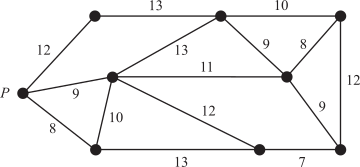
The vertices of the graph below represent cabins in a holiday park, and the water pump \((P)\) that will supply them. The numbers on the edges show the length, in metres, of water pipe required to connect the cabins and the pump.
 

The water pipes will cost $52 per metre. 

Determine the minimum cost to link all the cabins to the water pump \((P)\).   (3 marks)

--- 5 WORK AREA LINES (style=lined) ---

Show Answers Only

\(\text{Minimum cost}\ = 73 \times 52=\$3796\)

Show Worked Solution

Minimum spanning tree:
 

\(\text{MST}\ =8+9+11+8+9+9+7+12=73\)

\(\therefore\ \text{Minimum cost}\ = 73 \times 52=\$3796\)

Filed Under: Fluid Mechanics and Force, Minimum Spanning Trees, Spanning Trees (Std2-2027) Tagged With: Band 4, smc-6320-30-Cost, smc-914-30-Cost

HMS, BM EQ-Bank 954

Evaluate the effectiveness of various hydration strategies for preventing dehydration-related movement inefficiencies across different sporting contexts.   (8 marks)

--- 20 WORK AREA LINES (style=lined) ---

Show Answers Only

Sample Answer

Evaluation Statement

  • Hydration strategies show highly variable effectiveness across different sporting contexts.
    Evaluation criteria include fluid retention, performance maintenance, and practical application.

Pre-Event Hydration

  • Sodium-containing fluids prove highly effective for endurance athletes.
  • Fluid retention improves significantly, delaying dehydration symptoms that compromise movement.
  • Marathon runners using this strategy successfully maintain movement quality longer.
  • Evidence strongly supports pre-event sodium loading for events exceeding 90 minutes.
  • The effectiveness rates as superior for endurance contexts.

Individualised Approaches

  • Personal sweat rate calculations substantially improve hydration outcomes.
  • Athletes lose between 0.5-2.5L per hour, making generic approaches inadequate.
  • Customised plans optimally address individual needs for movement efficiency.
  • Practical implementation remains moderately challenging in team sport environments.

Environmental Adaptations

  • Combined cooling-hydration strategies prove exceptionally effective in hot conditions.
  • Lower body temperature significantly reduces fluid requirements.
  • Cold weather strategies remain insufficiently implemented despite proven needs.
  • Altitude hydration often fails to meet increased physiological demands.

Sport-Specific Timing

  • Soccer’s limited breaks require highly effective pre-game and halftime strategies.
  • Tennis allows superior hydration maintenance through regular changeovers.
  • Continuous sports face considerable challenges in maintaining optimal hydration.
  • Sports drinks containing carbohydrates comprehensively address energy and fluid needs for activities over 60 minutes.

Final Evaluation

  • Pre-event sodium loading and individualised plans prove most effective overall.
  • Environmental conditions strongly influence strategy success rates.
  • While monitoring methods improve outcomes, practical application remains inconsistent.
  • Therefore, context-specific approaches are essential for preventing movement inefficiencies.
Show Worked Solution

Sample Answer 

Evaluation Statement

  • Hydration strategies show highly variable effectiveness across different sporting contexts.
    Evaluation criteria include fluid retention, performance maintenance, and practical application.

Pre-Event Hydration

  • Sodium-containing fluids prove highly effective for endurance athletes.
  • Fluid retention improves significantly, delaying dehydration symptoms that compromise movement.
  • Marathon runners using this strategy successfully maintain movement quality longer.
  • Evidence strongly supports pre-event sodium loading for events exceeding 90 minutes.
  • The effectiveness rates as superior for endurance contexts.

Individualised Approaches

  • Personal sweat rate calculations substantially improve hydration outcomes.
  • Athletes lose between 0.5-2.5L per hour, making generic approaches inadequate.
  • Customised plans optimally address individual needs for movement efficiency.
  • Practical implementation remains moderately challenging in team sport environments.

Environmental Adaptations

  • Combined cooling-hydration strategies prove exceptionally effective in hot conditions.
  • Lower body temperature significantly reduces fluid requirements.
  • Cold weather strategies remain insufficiently implemented despite proven needs.
  • Altitude hydration often fails to meet increased physiological demands.

Sport-Specific Timing

  • Soccer’s limited breaks require highly effective pre-game and halftime strategies.
  • Tennis allows superior hydration maintenance through regular changeovers.
  • Continuous sports face considerable challenges in maintaining optimal hydration.
  • Sports drinks containing carbohydrates comprehensively address energy and fluid needs for activities over 60 minutes.

Final Evaluation

  • Pre-event sodium loading and individualised plans prove most effective overall.
  • Environmental conditions strongly influence strategy success rates.
  • While monitoring methods improve outcomes, practical application remains inconsistent.
  • Therefore, context-specific approaches are essential for preventing movement inefficiencies.

Filed Under: Role of First Aid Tagged With: Band 5, Band 6, smc-5527-20-Dehydration

HMS, BM EQ-Bank 953

Explain the physiological mechanisms by which dehydration affects movement efficiency in athletic performance.   (6 marks)

--- 18 WORK AREA LINES (style=lined) ---

Show Answers Only

Sample Answer

  • Cardiovascular function is compromised because blood volume decreases during dehydration. This leads to increased heart rate but reduced stroke volume per beat. As a result, oxygen delivery to working muscles is limited, causing decreased movement efficiency and earlier fatigue.
  • Body temperature regulation becomes less effective due to reduced fluid availability for sweating. Internal temperature therefore rises rapidly during exercise. Consequently, the central nervous system is affected, which leads to reduced muscle activation and compromised motor control.
  • Muscle function deteriorates as electrolyte imbalances, particularly sodium loss, occur. These imbalances disrupt normal contraction processes in muscle cells. Therefore, movements become less powerful and coordinated, resulting in inefficient biomechanics and wasted energy.
  • Energy production efficiency declines because cellular processes are altered by dehydration. Glycogen stores subsequently deplete faster than normal. Hence, the body must rely on less efficient energy systems, which creates premature fatigue and reduced performance capacity.
  • Movement coordination decreases when nerve signals are affected by dehydration. Poor proprioceptive feedback results in compromised technique execution. Consequently, athletes require more energy to perform the same movements, further reducing efficiency.
  • Perception of effort increases significantly as various physiological stress responses are triggered. Athletes therefore feel movements are more difficult than normal. The outcome is unconsciously reduced intensity, which compounds the negative effects on performance.
Show Worked Solution

Sample Answer

  • Cardiovascular function is compromised because blood volume decreases during dehydration. This leads to increased heart rate but reduced stroke volume per beat. As a result, oxygen delivery to working muscles is limited, causing decreased movement efficiency and earlier fatigue.
  • Body temperature regulation becomes less effective due to reduced fluid availability for sweating. Internal temperature therefore rises rapidly during exercise. Consequently, the central nervous system is affected, which leads to reduced muscle activation and compromised motor control.
  • Muscle function deteriorates as electrolyte imbalances, particularly sodium loss, occur. These imbalances disrupt normal contraction processes in muscle cells. Therefore, movements become less powerful and coordinated, resulting in inefficient biomechanics and wasted energy.
  • Energy production efficiency declines because cellular processes are altered by dehydration. Glycogen stores subsequently deplete faster than normal. Hence, the body must rely on less efficient energy systems, which creates premature fatigue and reduced performance capacity.
  • Movement coordination decreases when nerve signals are affected by dehydration. Poor proprioceptive feedback results in compromised technique execution. Consequently, athletes require more energy to perform the same movements, further reducing efficiency.
  • Perception of effort increases significantly as various physiological stress responses are triggered. Athletes therefore feel movements are more difficult than normal. The outcome is unconsciously reduced intensity, which compounds the negative effects on performance.

Filed Under: Role of First Aid Tagged With: Band 4, Band 5, smc-5527-20-Dehydration

HMS, BM EQ-Bank 952

Discuss the first aid response required for a soccer player showing signs of dehydration during a match in hot conditions.   (5 marks)

--- 15 WORK AREA LINES (style=lined) ---

Show Answers Only

*PEEL – Structure solution using separate PEEL methods for each side of the argument; [P] Identify the point, [E] expand on the point with a link to question asked, [Ev] apply evidence/examples, [L] linking sentence back to question.

Sample Answer

  • [P] Immediate removal from play is essential.
  • E] This prevents further fluid loss through continued exertion in hot conditions.
  • [Ev] Moving the player to a shaded area reduces heat exposure and allows for proper assessment.
  • [L] This initial action protects the player from worsening dehydration.
      
  • [P] Vital signs assessment determines treatment urgency.
  • [E] Checking consciousness level, skin condition and heart rate reveals dehydration severity.
  • [Ev] Severe symptoms like confusion or rapid pulse indicate potential heat illness requiring emergency care.
  • [L] Accurate assessment guides appropriate intervention levels.
      
  • [P] Rehydration requires careful management.
  • [E] Small, frequent sips of electrolyte drinks prevent gastrointestinal distress while replacing lost fluids and salts.
  • [Ev] Sports drinks are preferred over water alone to restore sodium balance.
  • [L] Proper rehydration technique ensures effective recovery.
      
  • [P] Active cooling measures complement rehydration.
  • [E] Cold towels applied to neck, armpits and groin reduce core temperature efficiently.
  • [Ev] Monitoring for symptom improvement like reduced dizziness confirms treatment effectiveness.
  • [L] Combined cooling and hydration optimises recovery.
      
  • [P] Documentation ensures continuity of care.
  • [E] Recording fluid loss estimates, treatments given and player response helps medical decisions.
  • [Ev] This information determines safe return-to-play timing.
  • [L] Thorough documentation prevents premature return and potential relapse.
Show Worked Solution

*PEEL – Structure solution using separate PEEL methods for each side of the argument; [P] Identify the point, [E] expand on the point with a link to question asked, [Ev] apply evidence/examples, [L] linking sentence back to question.

Sample Answer

  • [P] Immediate removal from play is essential.
  • E] This prevents further fluid loss through continued exertion in hot conditions.
  • [Ev] Moving the player to a shaded area reduces heat exposure and allows for proper assessment.
  • [L] This initial action protects the player from worsening dehydration.
      
  • [P] Vital signs assessment determines treatment urgency.
  • [E] Checking consciousness level, skin condition and heart rate reveals dehydration severity.
  • [Ev] Severe symptoms like confusion or rapid pulse indicate potential heat illness requiring emergency care.
  • [L] Accurate assessment guides appropriate intervention levels.
      
  • [P] Rehydration requires careful management.
  • [E] Small, frequent sips of electrolyte drinks prevent gastrointestinal distress while replacing lost fluids and salts.
  • [Ev] Sports drinks are preferred over water alone to restore sodium balance.
  • [L] Proper rehydration technique ensures effective recovery.
      
  • [P] Active cooling measures complement rehydration.
  • [E] Cold towels applied to neck, armpits and groin reduce core temperature efficiently.
  • [Ev] Monitoring for symptom improvement like reduced dizziness confirms treatment effectiveness.
  • [L] Combined cooling and hydration optimises recovery.
      
  • [P] Documentation ensures continuity of care.
  • [E] Recording fluid loss estimates, treatments given and player response helps medical decisions.
  • [Ev] This information determines safe return-to-play timing.
  • [L] Thorough documentation prevents premature return and potential relapse.

Filed Under: Role of First Aid Tagged With: Band 4, Band 5, smc-5527-20-Dehydration

HMS, BM EQ-Bank 951

Explain the relationship between dehydration and hyponatremia in endurance athletes.   (4 marks)

--- 12 WORK AREA LINES (style=lined) ---

Show Answers Only

Sample Answer

  • Dehydration occurs when fluid losses exceed intake, affecting cardiovascular function and thermoregulation, which impairs movement efficiency during prolonged activity.
  • Hyponatremia (dangerously low sodium levels) can paradoxically develop when athletes consume excessive plain water without adequate electrolyte replacement, diluting blood sodium to dangerous levels.
  • During endurance events, athletes lose both fluid and sodium through sweat, creating a delicate balance where improper hydration strategies focusing solely on water intake can exacerbate sodium imbalances.
  • Symptoms of hyponatremia including nausea, headaches, muscle weakness and in severe cases, seizures or coma, can be mistakenly attributed to dehydration, highlighting the importance of proper hydration strategies that include electrolyte replacement.
Show Worked Solution

Sample Answer 

  • Dehydration occurs when fluid losses exceed intake, affecting cardiovascular function and thermoregulation, which impairs movement efficiency during prolonged activity.
  • Hyponatremia (dangerously low sodium levels) can paradoxically develop when athletes consume excessive plain water without adequate electrolyte replacement, diluting blood sodium to dangerous levels.
  • During endurance events, athletes lose both fluid and sodium through sweat, creating a delicate balance where improper hydration strategies focusing solely on water intake can exacerbate sodium imbalances.
  • Symptoms of hyponatremia including nausea, headaches, muscle weakness and in severe cases, seizures or coma, can be mistakenly attributed to dehydration, highlighting the importance of proper hydration strategies that include electrolyte replacement.

Filed Under: Role of First Aid Tagged With: Band 4, smc-5527-20-Dehydration

HMS, BM EQ-Bank 950

Outline how dehydration can affect a basketball player's performance during a tournament.   (3 marks)

--- 8 WORK AREA LINES (style=lined) ---
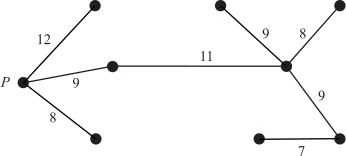
Show Answers Only

Sample Answer 

  • Dehydration reduces blood volume, which decreases oxygen delivery to muscles and impacts explosive movements like jumping and quick directional changes.
  • Cognitive functions become impaired, leading to poor shot selection and reduced tactical awareness during play.
  • Fine motor skills deteriorate, causing shooting accuracy and dribbling precision to suffer, particularly in later game periods when fatigue compounds these effects.
Show Worked Solution

Sample Answer 

  • Dehydration reduces blood volume, which decreases oxygen delivery to muscles and impacts explosive movements like jumping and quick directional changes.
  • Cognitive functions become impaired, leading to poor shot selection and reduced tactical awareness during play.
  • Fine motor skills deteriorate, causing shooting accuracy and dribbling precision to suffer, particularly in later game periods when fatigue compounds these effects.

Filed Under: Role of First Aid Tagged With: Band 3, smc-5527-20-Dehydration

HMS, BM EQ-Bank 949

Identify two signs of dehydration that might affect an athlete's movement during competition.   (2 marks)

--- 5 WORK AREA LINES (style=lined) ---

Show Answers Only

Sample Answer – Any 2 of the following:

  • Decreased coordination – Loss of fine motor control affecting precise movements like shooting or ball handling during critical game moments.
  • Muscle fatigue and cramping – Reduced muscle function causing slower reaction times, impaired power output and painful contractions limiting movement.
  • Dizziness or lightheadedness – Impaired balance and spatial awareness making direction changes difficult and increasing fall risk during play.
  • Increased heart rate – Cardiovascular strain reducing oxygen delivery to muscles, causing earlier fatigue and decreased movement efficiency.
  • Mental confusion – Reduced concentration affecting decision-making, tactical awareness and reaction times during complex game situations.
  • Excessive thirst – Distraction from performance focus and dry mouth affecting breathing patterns during high-intensity movement periods.
Show Worked Solution

Sample Answer - Any 2 of the following:

  • Decreased coordination - Loss of fine motor control affecting precise movements like shooting or ball handling during critical game moments.
  • Muscle fatigue and cramping - Reduced muscle function causing slower reaction times, impaired power output and painful contractions limiting movement.
  • Dizziness or lightheadedness - Impaired balance and spatial awareness making direction changes difficult and increasing fall risk during play.
  • Increased heart rate - Cardiovascular strain reducing oxygen delivery to muscles, causing earlier fatigue and decreased movement efficiency.
  • Mental confusion - Reduced concentration affecting decision-making, tactical awareness and reaction times during complex game situations.
  • Excessive thirst - Distraction from performance focus and dry mouth affecting breathing patterns during high-intensity movement periods.

Filed Under: Role of First Aid Tagged With: Band 2, smc-5527-20-Dehydration

HMS, BM EQ-Bank 948 MC

After a long-distance runner experiences dehydration during an event, which of the following rehydration approaches would be most appropriate?

  1. Consuming large amounts of water rapidly
  2. Drinking sports drinks containing electrolytes
  3. Avoiding fluid intake until thirst sensation returns
  4. Consuming primarily fruit juices
Show Answers Only

\(B\)

Show Worked Solution
  • B is correct: Sports drinks replace both fluids and critical electrolytes like sodium needed for neuromuscular function.

Other Options:

  • A is incorrect: Rapid water consumption without electrolytes can cause hyponatremia after prolonged exercise.
  • C is incorrect: Thirst occurs after significant dehydration – immediate rehydration is necessary.
  • D is incorrect: High sugar content in fruit juice slows absorption and lacks optimal electrolyte balance.

Filed Under: Role of First Aid Tagged With: Band 4, smc-5527-20-Dehydration

HMS, BM EQ-Bank 947 MC

A tennis player is competing in a tournament on a hot day. Which of the following is an early sign of dehydration that might affect their movement efficiency?

  1. Increased heart rate
  2. Muscle cramps
  3. Dizziness
  4. Decreased performance
Show Answers Only

\(D\)

Show Worked Solution
  • D is correct: Decreased performance is the earliest measurable sign as even mild dehydration affects coordination and power output.

Other Options:

  • A is incorrect: Increased heart rate responds to multiple factors including exercise intensity, not specifically early dehydration.
  • B is incorrect: Muscle cramps occur with advanced dehydration and electrolyte imbalances, not early stages.
  • C is incorrect: Dizziness indicates moderate to severe dehydration, not early movement efficiency loss.

Filed Under: Role of First Aid Tagged With: Band 3, smc-5527-20-Dehydration

HMS, BM EQ-Bank 946

How does preventative taping affect movement efficiency for an athlete recovering from an ankle sprain?   (5 marks)

--- 15 WORK AREA LINES (style=lined) ---

Show Answers Only

Sample Answer

  • Preventative taping provides proprioceptive feedback to the athlete, which creates sensory awareness around the ankle joint. This enhances neuromuscular control, leading to more efficient movement patterns during recovery.
  • By restricting excessive inversion and eversion movements, taping maintains optimal joint alignment during dynamic activities. Compensatory movements in other joints are prevented, which eliminates energy leaks and improves efficiency.
  • Psychological confidence from taping allows athletes to move more naturally without fear of re-injury. Reduced hesitation in movement execution enables better biomechanical efficiency during performance.
  • Taping stabilises the ankle joint by supporting ligaments and surrounding structures. Effective force transfer through the kinetic chain becomes possible, resulting in more powerful and controlled movements.
  • However, incorrect application can create unnecessary restriction of normal movement patterns. Athletes then compensate with altered mechanics, potentially developing new inefficiencies.
  • Progressive reduction in taping support encourages proper neuromuscular adaptation. Athletes therefore develop intrinsic stability rather than external dependence, ultimately achieving better long-term movement efficiency.
Show Worked Solution

Sample Answer

  • Preventative taping provides proprioceptive feedback to the athlete, which creates sensory awareness around the ankle joint. This enhances neuromuscular control, leading to more efficient movement patterns during recovery.
  • By restricting excessive inversion and eversion movements, taping maintains optimal joint alignment during dynamic activities. Compensatory movements in other joints are prevented, which eliminates energy leaks and improves efficiency.
  • Psychological confidence from taping allows athletes to move more naturally without fear of re-injury. Reduced hesitation in movement execution enables better biomechanical efficiency during performance.
  • Taping stabilises the ankle joint by supporting ligaments and surrounding structures. Effective force transfer through the kinetic chain becomes possible, resulting in more powerful and controlled movements.
  • However, incorrect application can create unnecessary restriction of normal movement patterns. Athletes then compensate with altered mechanics, potentially developing new inefficiencies.
  • Progressive reduction in taping support encourages proper neuromuscular adaptation. Athletes therefore develop intrinsic stability rather than external dependence, ultimately achieving better long-term movement efficiency.

Filed Under: Role of First Aid Tagged With: Band 5, Band 6, smc-5527-15-Inefficient movement

HMS, BM EQ-Bank 945

Explain how a swimmer could use specific training methods to improve skill and technique for more efficient movement in the water.   (5 marks)

--- 15 WORK AREA LINES (style=lined) ---

Show Answers Only

Sample Answer

  • Drills isolating specific stroke components help to develop proper movement patterns. For instance, catch-pull sequences in freestyle create muscle memory for efficient propulsion because they reinforce correct hand placement repeatedly.
  • Video analysis provides visual feedback on body position and stroke mechanics. This enables swimmers to identify inefficiencies like crossover arm entries, which leads to targeted corrections for improved streamlining.
  • Progressive skill development through part-whole practice allows swimmers to master individual elements first. As a result, proper technique becomes established before integrating components into the complete stroke.
  • Core strength training enhances body rotation and stabilisation in the water. This improvement triggers better power transfer from the torso to extremities, thereby creating more effective propulsion.
  • Consistent technical feedback from coaches reinforces proper movement patterns during training. This prevents swimmers from reverting to inefficient habits when fatigued, ensuring long-term technique improvement.
Show Worked Solution

Sample Answer

  • Drills isolating specific stroke components help to develop proper movement patterns. For instance, catch-pull sequences in freestyle create muscle memory for efficient propulsion because they reinforce correct hand placement repeatedly.
  • Video analysis provides visual feedback on body position and stroke mechanics. This enables swimmers to identify inefficiencies like crossover arm entries, which leads to targeted corrections for improved streamlining.
  • Progressive skill development through part-whole practice allows swimmers to master individual elements first. As a result, proper technique becomes established before integrating components into the complete stroke.
  • Core strength training enhances body rotation and stabilisation in the water. This improvement triggers better power transfer from the torso to extremities, thereby creating more effective propulsion.
  • Consistent technical feedback from coaches reinforces proper movement patterns during training. This prevents swimmers from reverting to inefficient habits when fatigued, ensuring long-term technique improvement.

Filed Under: Role of First Aid Tagged With: Band 3, Band 4, smc-5527-15-Inefficient movement

HMS, BM EQ-Bank 944

Describe how poor posture can lead to inefficient movement in basketball.   (3 marks)

--- 7 WORK AREA LINES (style=lined) ---

Show Answers Only

Sample Answer

  • Poor posture alters the body’s centre of gravity, affecting balance and stability which compromises shooting accuracy and defensive positioning on the court.
  • Inadequate core strength associated with poor posture can lead to compensatory movements when jumping or pivoting, reducing power generation and increasing injury risk.
  • Forward head posture or rounded shoulders can restrict arm movement and reduce the range of motion needed for effective passing and shooting techniques.
Show Worked Solution

Sample Answer

  • Poor posture alters the body’s centre of gravity, affecting balance and stability which compromises shooting accuracy and defensive positioning on the court.
  • Inadequate core strength associated with poor posture can lead to compensatory movements when jumping or pivoting, reducing power generation and increasing injury risk.
  • Forward head posture or rounded shoulders can restrict arm movement and reduce the range of motion needed for effective passing and shooting techniques.

Filed Under: Role of First Aid Tagged With: Band 3, smc-5527-15-Inefficient movement

HMS, BM EQ-Bank 943 MC

During a soccer match, a player consistently kicks the ball with poor accuracy. Which factor would most effectively improve this inefficient movement?

  1. Increasing core strength through Pilates
  2. Improving technique through targeted skill practice
  3. Enhancing cardiovascular endurance
  4. Applying preventative ankle taping
Show Answers Only

\(B\)

Show Worked Solution
  • B is correct: Targeted skill practice directly refines motor patterns and ball contact mechanics needed for accuracy.

Other Options:

  • A is incorrect: Core strength aids stability but has less direct impact on kicking accuracy than technique.
  • C is incorrect: Cardiovascular endurance affects fatigue resistance, not technical kicking accuracy.
  • D is incorrect: Ankle taping provides stability but doesn’t address technical components determining accuracy.

Filed Under: Role of First Aid Tagged With: Band 4, smc-5527-15-Inefficient movement

HMS, BM EQ-Bank 942 MC

A gymnast is experiencing recurring wrist pain during floor routines despite not having any diagnosed injury. What is the most likely cause of this inefficient movement issue?

  1. Inadequate warm-up protocols
  2. Insufficient core strength affecting posture
  3. Poor technique in weight-bearing positions
  4. Lack of preventative taping
Show Answers Only

\(C\)

Show Worked Solution
  • C is correct: Poor technique in weight-bearing positions creates inefficient loading patterns causing recurring wrist pain.

Other Options:

  • A is incorrect: Inadequate warm-up contributes to injury but doesn’t explain recurring pain specific to weight-bearing.
  • B is incorrect: Core strength affects overall performance but wrist pain relates more to technical execution.
  • D is incorrect: Lack of taping isn’t a cause – it’s absence of prevention, not source of pain.

Filed Under: Role of First Aid Tagged With: Band 3, smc-5527-15-Inefficient movement

HMS, BM EQ-Bank 941

Evaluate the short-term and long-term consequences of undue stress on the body for marathon runners, and discuss appropriate management strategies that could be implemented during different phases of training.   (8 marks)

--- 25 WORK AREA LINES (style=lined) ---

Show Answers Only

Sample Answer

Evaluation Statement

  • Undue stress has highly detrimental effects on marathon runners both short and long-term.
  • Evaluation criteria include performance impact and health consequences.

Short-term Impact

  • Immediate fatigue affects technique and running performance.
  • Runners show poor movement patterns when trying to maintain pace, reducing efficiency.
  • Energy stores become depleted and muscles experience damage.
  • Recovery time between training sessions increases, limiting training benefits.
  • These effects clearly show why rest days are important.

Long-term Consequences

  • Overtraining syndrome severely affects athletic performance.
  • Chronic tiredness, stress fractures, and hormonal imbalances damage overall health.
  • Mental burnout reduces motivation and enjoyment of running.
  • Athletes may quit the sport entirely, failing to reach their goals.
  • These consequences strongly support the need for proper management.

Management Strategies

  • Base phase requires gradual increases in running distance with adequate rest days.
  • Main phase benefits from alternating hard and easy training days.
  • Peak phase needs careful monitoring of fatigue with reduced training volume.
  • Recovery phase requires complete rest through alternative activities like swimming.
  • This approach successfully prevents stress from building up.

Final Evaluation

  • Short-term stress causes moderate performance problems but can be reversed.
  • Long-term consequences are extremely harmful to health and running career.
  • While hard training is needed for improvement, poor recovery creates serious risks.
  • Therefore, proper training management is essential for marathon runners.
Show Worked Solution

Sample Answer

Evaluation Statement

  • Undue stress has highly detrimental effects on marathon runners both short and long-term.
  • Evaluation criteria include performance impact and health consequences.

Short-term Impact

  • Immediate fatigue affects technique and running performance.
  • Runners show poor movement patterns when trying to maintain pace, reducing efficiency.
  • Energy stores become depleted and muscles experience damage.
  • Recovery time between training sessions increases, limiting training benefits.
  • These effects clearly show why rest days are important.

Long-term Consequences

  • Overtraining syndrome severely affects athletic performance.
  • Chronic tiredness, stress fractures, and hormonal imbalances damage overall health.
  • Mental burnout reduces motivation and enjoyment of running.
  • Athletes may quit the sport entirely, failing to reach their goals.
  • These consequences strongly support the need for proper management.

Management Strategies

  • Base phase requires gradual increases in running distance with adequate rest days.
  • Main phase benefits from alternating hard and easy training days.
  • Peak phase needs careful monitoring of fatigue with reduced training volume.
  • Recovery phase requires complete rest through alternative activities like swimming.
  • This approach successfully prevents stress from building up.

Final Evaluation

  • Short-term stress causes moderate performance problems but can be reversed.
  • Long-term consequences are extremely harmful to health and running career.
  • While hard training is needed for improvement, poor recovery creates serious risks.
  • Therefore, proper training management is essential for marathon runners.

Filed Under: Role of First Aid Tagged With: Band 5, Band 6, smc-5527-10-Undue stress

HMS, BM EQ-Bank 940

Describe how chronic training stress could lead to a deterioration in performance for an elite netball player, and propose strategies to minimise its effects.   (5 marks)

--- 15 WORK AREA LINES (style=lined) ---

Show Answers Only

Sample Answer

  • Chronic training stress develops from inadequate recovery between high-intensity sessions, resulting in accumulated physiological fatigue that affects neuromuscular coordination essential for accurate passing and shooting in netball.
  • As training stress builds, the player’s movement efficiency deteriorates, with energy systems becoming less effective, leading to decreased court coverage and slower reaction times in defensive plays.
  • Poor recovery compromises cognitive function, affecting decision-making and tactical awareness during complex game situations, particularly in final quarters when fatigue is highest.

Strategies:

  • Incorporate systematic monitoring through wellness questionnaires and performance metrics to identify early signs of overtraining, adjusting training loads before performance deteriorates.
  • Implement strategic recovery sessions between high-intensity training days, focusing on skill development, strategy discussions and active recovery methods rather than physiological overload.
Show Worked Solution

Sample Answer

  • Chronic training stress develops from inadequate recovery between high-intensity sessions, resulting in accumulated physiological fatigue that affects neuromuscular coordination essential for accurate passing and shooting in netball.
  • As training stress builds, the player’s movement efficiency deteriorates, with energy systems becoming less effective, leading to decreased court coverage and slower reaction times in defensive plays.
  • Poor recovery compromises cognitive function, affecting decision-making and tactical awareness during complex game situations, particularly in final quarters when fatigue is highest.

Strategies:

  • Incorporate systematic monitoring through wellness questionnaires and performance metrics to identify early signs of overtraining, adjusting training loads before performance deteriorates.
  • Implement strategic recovery sessions between high-intensity training days, focusing on skill development, strategy discussions and active recovery methods rather than physiological overload.

Filed Under: Role of First Aid Tagged With: Band 4, Band 5, smc-5527-10-Undue stress

HMS, BM EQ-Bank 939

Explain how undue stress on a swimmer's body might affect their performance during competition, and describe two strategies a coach could implement to address this issue.   (4 marks)

--- 10 WORK AREA LINES (style=lined) ---

Show Answers Only

Sample Answer

  • Undue physical stress leads to extreme fatigue causing poor technique and body positioning in the water. As a result, swimmers experience increased drag and slower times.
  • Muscle fatigue from overtraining causes compromised stroke efficiency. This triggers reduced power output and potential injury as swimmers compensate with incorrect mechanics.

Strategy 1:

  • Implement appropriate periodisation in training by varying intensity and volume. This works by incorporating adequate recovery days between high-intensity sessions, which prevents accumulation of fatigue.

Strategy 2:

  • Monitor training loads using metrics like rate of perceived exertion (RPE) or heart rate variability. This enables coaches to adjust workloads accordingly, thereby preventing overtraining syndrome.
Show Worked Solution

Sample Answer

  • Undue physical stress leads to extreme fatigue causing poor technique and body positioning in the water. As a result, swimmers experience increased drag and slower times.
  • Muscle fatigue from overtraining causes compromised stroke efficiency. This triggers reduced power output and potential injury as swimmers compensate with incorrect mechanics.

Strategy 1:

  • Implement appropriate periodisation in training by varying intensity and volume. This works by incorporating adequate recovery days between high-intensity sessions, which prevents accumulation of fatigue.

Strategy 2:

  • Monitor training loads using metrics like rate of perceived exertion (RPE) or heart rate variability. This enables coaches to adjust workloads accordingly, thereby preventing overtraining syndrome.

Filed Under: Role of First Aid Tagged With: Band 3, Band 4, smc-5527-10-Undue stress

HMS, BM EQ-Bank 938

A rugby player has been training intensely for the past 3 weeks without taking adequate rest days. Outline the signs of overtraining that the coach should monitor.   (3 marks)

--- 7 WORK AREA LINES (style=lined) ---

Show Answers Only

Sample Answer

  • Overtraining signs include lethargy characterised by feelings of slowness, tiredness and lack of energy, which can affect performance quality.
  • The player may demonstrate poor movement patterns and compromised skill execution, potentially leading to injuries as technique deteriorates.
  • Psychological indicators include lack of motivation, irritability and reduced concentration during training sessions and games.
Show Worked Solution

Sample Answer

  • Overtraining signs include lethargy characterised by feelings of slowness, tiredness and lack of energy, which can affect performance quality.
  • The player may demonstrate poor movement patterns and compromised skill execution, potentially leading to injuries as technique deteriorates.
  • Psychological indicators include lack of motivation, irritability and reduced concentration during training sessions and games.

Filed Under: Role of First Aid Tagged With: Band 3, smc-5527-10-Undue stress

HMS, BM EQ-Bank 859

Assess how an understanding of biomechanics can be applied to increase movement efficiency and performance in wheelchair racing.   (8 marks)

--- 24 WORK AREA LINES (style=lined) ---

Show Answers Only

Sample Answer

Judgment Statement

  • Biomechanical understanding proves highly effective for enhancing wheelchair racing performance.
  • Assessment based on force application efficiency and equipment optimisation capabilities.

Force Application Efficiency

  • Assessment reveals significant improvements when athletes apply biomechanical principles to pushing technique.
  • Wheelchair racers using tangential rim contact achieve superior force transfer compared to downward pushing.
  • Proper elbow positioning at optimal extension angles demonstrates strong power generation capabilities.
  • Upper body alignment with shoulders over push rim shows excellent mechanical advantage.
  • Results indicate substantial gains in both speed maintenance and endurance capacity.
  • Shoulder and wrist strain reduces considerably with biomechanically correct technique patterns.
  • This demonstrates high effectiveness in maximising propulsion while minimising injury risk.

Equipment Optimisation

  • Considerable improvements occur through biomechanically-informed equipment modifications and adjustments.
  • Lightweight frame materials produce measurable reductions in energy expenditure per stroke.
  • Aerodynamic positioning of athlete and chair achieves substantial drag force reduction.
  • Custom seat angles show optimal force transfer from trunk through arms.
  • Wheel camber adjustments demonstrate excellent stability during high-speed cornering.
  • Glove design modifications indicate strong grip efficiency without compromising release.
  • Equipment adaptations prove highly valuable in maximising individual athletic potential

Overall Assessment

  • On balance, biomechanical principles prove exceptionally valuable for wheelchair racing enhancement.
  • Both force application and equipment criteria show major improvements in performance outcomes.
  • When all factors are considered, athletes gain significant competitive advantages through proper application.
  • Overall assessment confirms biomechanics as essential knowledge for wheelchair racing success.
  • The results indicate continued refinements will yield further performance gains.
Show Worked Solution

Sample Answer

Judgment Statement

  • Biomechanical understanding proves highly effective for enhancing wheelchair racing performance.
  • Assessment based on force application efficiency and equipment optimisation capabilities.

Force Application Efficiency

  • Assessment reveals significant improvements when athletes apply biomechanical principles to pushing technique.
  • Wheelchair racers using tangential rim contact achieve superior force transfer compared to downward pushing.
  • Proper elbow positioning at optimal extension angles demonstrates strong power generation capabilities.
  • Upper body alignment with shoulders over push rim shows excellent mechanical advantage.
  • Results indicate substantial gains in both speed maintenance and endurance capacity.
  • Shoulder and wrist strain reduces considerably with biomechanically correct technique patterns.
  • This demonstrates high effectiveness in maximising propulsion while minimising injury risk.

Equipment Optimisation

  • Considerable improvements occur through biomechanically-informed equipment modifications and adjustments.
  • Lightweight frame materials produce measurable reductions in energy expenditure per stroke.
  • Aerodynamic positioning of athlete and chair achieves substantial drag force reduction.
  • Custom seat angles show optimal force transfer from trunk through arms.
  • Wheel camber adjustments demonstrate excellent stability during high-speed cornering.
  • Glove design modifications indicate strong grip efficiency without compromising release.
  • Equipment adaptations prove highly valuable in maximising individual athletic potential

Overall Assessment

  • On balance, biomechanical principles prove exceptionally valuable for wheelchair racing enhancement.
  • Both force application and equipment criteria show major improvements in performance outcomes.
  • When all factors are considered, athletes gain significant competitive advantages through proper application.
  • Overall assessment confirms biomechanics as essential knowledge for wheelchair racing success.
  • The results indicate continued refinements will yield further performance gains.

Filed Under: Safe and efficient movement Tagged With: Band 4, Band 5, smc-5522-15-Movement efficiency

HMS, BM EQ-Bank 858

Evaluate how biomechanical principles could be applied to improve movement efficiency for athletes with disabilities compared to able-bodied athletes. In your response, refer to specific adaptations and their effects.   (8 marks)

--- 28 WORK AREA LINES (style=lined) ---

Show Answers Only

Sample Answer

Evaluation Statement

  • Biomechanical adaptations prove highly effective for athletes with disabilities, often matching able-bodied performance.
  • Assessment based on force transfer efficiency, movement adaptation success, and performance outcomes.

Force Transfer and Energy Efficiency

  • Modern prosthetics demonstrate excellent energy return capabilities through biomechanical design.
  • Carbon fibre blades store and return substantial impact energy during ground impact.
  • Athletes require minimal additional muscle work to compensate for mechanical differences.
  • Evaluation reveals strong efficiency gains nearly matching able-bodied athlete mechanics.
  • Prosthetic alignment adjustments successfully optimise individual force transfer patterns.
  • Results indicate biomechanical adaptations achieve substantial movement efficiency.

Alternative Movement Patterns

  • Wheelchair propulsion shows remarkable effectiveness despite using different muscle groups.
  • Elite wheelchair racers reach 25 km/h using upper body power versus 21 km/h for marathon runners.
  • Tangential push angles maximise propulsion efficiency per stroke.
  • Assessment confirms alternative patterns rival traditional performance levels.
  • Specialised training effectively develops unique biomechanical advantages.
  • Performance proves adapted techniques compete effectively with able-bodied methods.

Equipment and Technique Integration

  • Racing wheelchair design demonstrates superior aerodynamic efficiency.
  • Three-wheeled configuration provides excellent stability while minimising resistance.
  • Cambered wheels enable optimal force application angles.
  • Evaluation shows equipment adaptations significantly enhance efficiency.
  • Integration proves highly effective maximising athletic potential.

Final Evaluation

  • Overall assessment demonstrates biomechanical principles prove highly valuable for disability sport.
  • Adaptations successfully enable competitive performance across disabilities.
  • While differences exist, optimised techniques effectively minimise performance gaps.
  • Technology and training create efficiency approaching able-bodied standards.
  • Therefore biomechanical knowledge transforms limitations into opportunities.
Show Worked Solution

Sample Answer

Evaluation Statement

  • Biomechanical adaptations prove highly effective for athletes with disabilities, often matching able-bodied performance.
  • Assessment based on force transfer efficiency, movement adaptation success, and performance outcomes.

Force Transfer and Energy Efficiency

  • Modern prosthetics demonstrate excellent energy return capabilities through biomechanical design.
  • Carbon fibre blades store and return substantial impact energy during ground impact.
  • Athletes require minimal additional muscle work to compensate for mechanical differences.
  • Evaluation reveals strong efficiency gains nearly matching able-bodied athlete mechanics.
  • Prosthetic alignment adjustments successfully optimise individual force transfer patterns.
  • Results indicate biomechanical adaptations achieve substantial movement efficiency.

Alternative Movement Patterns

  • Wheelchair propulsion shows remarkable effectiveness despite using different muscle groups.
  • Elite wheelchair racers reach 25 km/h using upper body power versus 21 km/h for marathon runners.
  • Tangential push angles maximise propulsion efficiency per stroke.
  • Assessment confirms alternative patterns rival traditional performance levels.
  • Specialised training effectively develops unique biomechanical advantages.
  • Performance proves adapted techniques compete effectively with able-bodied methods.

Equipment and Technique Integration

  • Racing wheelchair design demonstrates superior aerodynamic efficiency.
  • Three-wheeled configuration provides excellent stability while minimising resistance.
  • Cambered wheels enable optimal force application angles.
  • Evaluation shows equipment adaptations significantly enhance efficiency.
  • Integration proves highly effective maximising athletic potential.

Final Evaluation

  • Overall assessment demonstrates biomechanical principles prove highly valuable for disability sport.
  • Adaptations successfully enable competitive performance across disabilities.
  • While differences exist, optimised techniques effectively minimise performance gaps.
  • Technology and training create efficiency approaching able-bodied standards.
  • Therefore biomechanical knowledge transforms limitations into opportunities.

Filed Under: Safe and efficient movement Tagged With: Band 5, Band 6, smc-5522-15-Movement efficiency

HMS, BM EQ-Bank 857

Analyse how biomechanical principles related to efficient force absorption can be applied to reduce injury risk in sport. Provide specific examples in your response.   (8 marks)

--- 28 WORK AREA LINES (style=lined) ---

Show Answers Only

Sample Answer

Overview Statement

  • Force absorption efficiency depends on contact time, surface area and body positioning working together.
  • These components interact with equipment design and technique to create comprehensive injury prevention systems.

Component Relationship 1: Contact Time and Force Magnitude

  • Extended deceleration time directly reduces peak forces experienced during impact.
  • Basketball players who bend knees deeply when landing experience significantly lower joint forces.
  • Cricket fielders “giving” with catches transforms dangerous ball impacts into manageable forces.
  • The relationship reveals that time extension prevents acute ligament tears and cartilage damage.
  • Gymnasts rolling through landings demonstrates how gradual deceleration protects spine and ankles.
  • Gradual deceleration enables tissues to adapt rather than rupture under sudden loads.

Component Relationship 2: Surface Area and Protective Systems

  • Larger contact areas combine with protective equipment to distribute forces effectively across body.
  • Rugby players adopting wide tackle stances spread impact forces across multiple muscle groups.
  • Hockey shin guards amplify this effect by dramatically increasing the contact surface area.
  • This interaction shows how body positioning works with equipment design for protection.
  • Multiple contact points prevent concentrated stress that causes fractures and severe contusions.
  • Analysis reveals layered protection creates exponentially safer sporting environments than single methods.

Implications and Synthesis

  • Force absorption components form an integrated safety network throughout sporting activities.
  • The synthesis demonstrates combining extended time with increased area produces multiplicative safety benefits.
  • Therefore biomechanical education enables proactive injury prevention rather than reactive treatment.
  • The broader significance is knowledge transforms high-risk sports into controlled athletic performances.
Show Worked Solution

Sample Answer

Overview Statement

  • Force absorption efficiency depends on contact time, surface area and body positioning working together.
  • These components interact with equipment design and technique to create comprehensive injury prevention systems.

Component Relationship 1: Contact Time and Force Magnitude

  • Extended deceleration time directly reduces peak forces experienced during impact.
  • Basketball players who bend knees deeply when landing experience significantly lower joint forces.
  • Cricket fielders “giving” with catches transforms dangerous ball impacts into manageable forces.
  • The relationship reveals that time extension prevents acute ligament tears and cartilage damage.
  • Gymnasts rolling through landings demonstrates how gradual deceleration protects spine and ankles.
  • Gradual deceleration enables tissues to adapt rather than rupture under sudden loads.

Component Relationship 2: Surface Area and Protective Systems

  • Larger contact areas combine with protective equipment to distribute forces effectively across body.
  • Rugby players adopting wide tackle stances spread impact forces across multiple muscle groups.
  • Hockey shin guards amplify this effect by dramatically increasing the contact surface area.
  • This interaction shows how body positioning works with equipment design for protection.
  • Multiple contact points prevent concentrated stress that causes fractures and severe contusions.
  • Analysis reveals layered protection creates exponentially safer sporting environments than single methods.

Implications and Synthesis

  • Force absorption components form an integrated safety network throughout sporting activities.
  • The synthesis demonstrates combining extended time with increased area produces multiplicative safety benefits.
  • Therefore biomechanical education enables proactive injury prevention rather than reactive treatment.
  • The broader significance is knowledge transforms high-risk sports into controlled athletic performances.

Filed Under: Safe and efficient movement Tagged With: Band 4, Band 5, smc-5522-15-Movement efficiency

HMS, BM EQ-Bank 856

Explain how biomechanical principles can be applied to increase movement efficiency and reduce injury risk in athletes with prosthetic limbs.   (6 marks)

--- 18 WORK AREA LINES (style=lined) ---

Show Answers Only

Sample Answer

  • The prosthetic limb acts as a lever for residual muscles. This occurs because remaining muscles pull on the prosthetic attachment to create movement.
  • As a result, proper alignment maximises force transfer efficiency. This reduces energy expenditure during running or walking significantly.
  • Carbon fibre materials store energy during ground contact. This happens when the material compresses and then springs back.
  • Consequently, this elastic energy return reduces muscular effort needed. This enables athletes to maintain speed with less fatigue.
  • Prosthetic design adjusts the athlete’s centre of gravity. This is necessary because missing limb mass alters body balance.
  • Therefore, correct positioning prevents compensatory movements. This protects the spine and opposite limb from overuse injuries.
  • Custom sockets distribute pressure evenly across residual limb. This works by spreading forces over larger surface areas.
  • This prevents pressure sores and tissue breakdown. As a result, athletes can train longer without injury interruptions.
  • Gait analysis identifies movement asymmetries between limbs. This reveals uneven forces that could cause joint damage.
  • Subsequently, prosthetic adjustments normalise stride patterns. This reduces abnormal loading that causes wear injuries over time.
Show Worked Solution

Sample Answer

  • The prosthetic limb acts as a lever for residual muscles. This occurs because remaining muscles pull on the prosthetic attachment to create movement.
  • As a result, proper alignment maximises force transfer efficiency. This reduces energy expenditure during running or walking significantly.
  • Carbon fibre materials store energy during ground contact. This happens when the material compresses and then springs back.
  • Consequently, this elastic energy return reduces muscular effort needed. This enables athletes to maintain speed with less fatigue.
  • Prosthetic design adjusts the athlete’s centre of gravity. This is necessary because missing limb mass alters body balance.
  • Therefore, correct positioning prevents compensatory movements. This protects the spine and opposite limb from overuse injuries.
  • Custom sockets distribute pressure evenly across residual limb. This works by spreading forces over larger surface areas.
  • This prevents pressure sores and tissue breakdown. As a result, athletes can train longer without injury interruptions.
  • Gait analysis identifies movement asymmetries between limbs. This reveals uneven forces that could cause joint damage.
  • Subsequently, prosthetic adjustments normalise stride patterns. This reduces abnormal loading that causes wear injuries over time.

Filed Under: Safe and efficient movement Tagged With: Band 3, Band 4, smc-5522-15-Movement efficiency

HMS, BM EQ-Bank 855

Outline how the biomechanical principle of force application can improve movement efficiency for athletes with disabilities.   (4 marks)

--- 12 WORK AREA LINES (style=lined) ---

Show Answers Only

Sample Answer

  • Wheelchair athletes apply maximum force through arms to wheel rims, generating forward momentum and speed.
  • Athletes with prosthetic limbs develop remaining muscles (quadriceps, hamstrings) to transfer force through prosthetic devices effectively.
  • Force direction understanding helps para-athletes adjust movement patterns, reducing energy waste and maximising propulsion efficiency.
  • Specialised equipment design (custom wheelchairs, prosthetics) incorporates biomechanical principles to enhance force transfer from body to ground.
  • Technical modifications include optimising push angles in wheelchairs and adjusting prosthetic alignment for better force application.
  • Training adaptations focus on strengthening specific muscle groups to compensate for missing limbs or paralysed segments.
Show Worked Solution

Sample Answer

  • Wheelchair athletes apply maximum force through arms to wheel rims, generating forward momentum and speed.
  • Athletes with prosthetic limbs develop remaining muscles (quadriceps, hamstrings) to transfer force through prosthetic devices effectively.
  • Force direction understanding helps para-athletes adjust movement patterns, reducing energy waste and maximising propulsion efficiency.
  • Specialised equipment design (custom wheelchairs, prosthetics) incorporates biomechanical principles to enhance force transfer from body to ground.
  • Technical modifications include optimising push angles in wheelchairs and adjusting prosthetic alignment for better force application.
  • Training adaptations focus on strengthening specific muscle groups to compensate for missing limbs or paralysed segments.

Filed Under: Safe and efficient movement Tagged With: Band 3, smc-5522-15-Movement efficiency

HMS, BM EQ-Bank 854 MC

For a sprinter with a prosthetic lower limb, which biomechanical principle most directly contributes to movement efficiency?

  1. Using upper leg muscles to apply force to the prosthetic limb
  2. Generating rotational force through the prosthetic joint
  3. Decreasing the weight of the prosthetic to reduce momentum
  4. Widening the stance to create a more stable base of support
Show Answers Only

\(A\)

Show Worked Solution
  • A is correct: Upper leg muscles apply force to prosthetic device for forward propulsion.

Other Options:

  • B is incorrect: Prosthetic limbs prioritise linear force transfer, not rotational generation.
  • C is incorrect: Weight reduction alone doesn’t improve efficiency without proper force application.
  • D is incorrect: Wider stance reduces sprinting efficiency by limiting forward momentum.

Filed Under: Safe and efficient movement Tagged With: Band 5, smc-5522-15-Movement efficiency

HMS, BM EQ-Bank 853 MC

Which biomechanical adaptation would most effectively increase movement efficiency for a wheelchair athlete during racing?

  1. Developing lower body strength to increase power
  2. Applying force through the arms to the rim of the wheels
  3. Reducing the weight of the wheelchair to decrease resistance
  4. Using protective gloves to absorb impact from the wheels
Show Answers Only

\(B\)

Show Worked Solution
  • B is correct: Direct arm force application to wheel rims generates maximum propulsion efficiency.

Other Options:

  • A is incorrect: Wheelchair athletes rely on upper body strength, not lower body power.
  • C is incorrect: Weight reduction helps but isn’t a biomechanical principle of force application.
  • D is incorrect: Gloves provide protection, not biomechanical movement efficiency.

Filed Under: Safe and efficient movement Tagged With: Band 4, smc-5522-15-Movement efficiency

HMS, BM EQ-Bank 852

Evaluate how knowledge of biomechanical principles could be applied to develop a safe squatting technique for an elderly individual with reduced mobility. In your answer, refer to balance, stability, force, and movement efficiency.   (12 marks)

--- 28 WORK AREA LINES (style=lined) ---

Show Answers Only

Sample Answer

Evaluation Statement

  • Biomechanical principles prove highly effective for developing safe elderly squatting techniques.
  • Evaluation based on balance enhancement, stability control, force management and movement efficiency adaptations.

Balance Enhancement Through Support

  • Evidence strongly supports using assistive devices to expand base of support during squatting.
  • Chair arms or wall rails increase contact points from two to four, achieving excellent stability improvements.
  • Research shows significant fall reduction when elderly use support aids during squatting movements.
  • Balance modifications demonstrate superior effectiveness as they address the primary injury risk.
  • Support systems successfully compensate for age-related proprioceptive decline.
  • Assessment reveals this criterion fully meets safety requirements for elderly populations.

Force Distribution and Joint Protection

  • Neutral spine alignment proves moderately effective in protecting vulnerable structures.
  • Proper positioning distributes forces evenly along vertebrae rather than concentrating stress points.
  • Studies indicate substantial reduction in compression forces with correct technique.
  • Force management partially fulfils safety needs but shows limitations with severe arthritis.
  • Individual joint conditions affect the degree of protection achieved.
  • Evaluation indicates force principles adequately address most elderly joint concerns.

Movement Efficiency Adaptations

  • Reduced range of motion initially limits functional benefits but strongly enhances safety.
  • Starting with 45-degree knee flexion maintains control while building necessary strength.
  • Progressive depth increases over 8-12 weeks balance safety with functionality.
  • Efficiency modifications demonstrate good long-term outcomes despite slow initial progress.
  • Gradual adaptation satisfies both safety and independence goals.

Final Evaluation

  • Overall evaluation confirms biomechanical principles highly effective for elderly squatting safety.
  • Balance support emerges as the most critical factor, followed by force distribution.
  • While some limitations exist in severely compromised individuals, modifications successfully enable safe squatting for most elderly.
  • The comprehensive approach proves essential for maintaining functional independence with minimal injury risk.
Show Worked Solution

Sample Answer

Evaluation Statement

  • Biomechanical principles prove highly effective for developing safe elderly squatting techniques.
  • Evaluation based on balance enhancement, stability control, force management and movement efficiency adaptations.

Balance Enhancement Through Support

  • Evidence strongly supports using assistive devices to expand base of support during squatting.
  • Chair arms or wall rails increase contact points from two to four, achieving excellent stability improvements.
  • Research shows significant fall reduction when elderly use support aids during squatting movements.
  • Balance modifications demonstrate superior effectiveness as they address the primary injury risk.
  • Support systems successfully compensate for age-related proprioceptive decline.
  • Assessment reveals this criterion fully meets safety requirements for elderly populations.

Force Distribution and Joint Protection

  • Neutral spine alignment proves moderately effective in protecting vulnerable structures.
  • Proper positioning distributes forces evenly along vertebrae rather than concentrating stress points.
  • Studies indicate substantial reduction in compression forces with correct technique.
  • Force management partially fulfils safety needs but shows limitations with severe arthritis.
  • Individual joint conditions affect the degree of protection achieved.
  • Evaluation indicates force principles adequately address most elderly joint concerns.

Movement Efficiency Adaptations

  • Reduced range of motion initially limits functional benefits but strongly enhances safety.
  • Starting with 45-degree knee flexion maintains control while building necessary strength.
  • Progressive depth increases over 8-12 weeks balance safety with functionality.
  • Efficiency modifications demonstrate good long-term outcomes despite slow initial progress.
  • Gradual adaptation satisfies both safety and independence goals.

Final Evaluation

  • Overall evaluation confirms biomechanical principles highly effective for elderly squatting safety.
  • Balance support emerges as the most critical factor, followed by force distribution.
  • While some limitations exist in severely compromised individuals, modifications successfully enable safe squatting for most elderly.
  • The comprehensive approach proves essential for maintaining functional independence with minimal injury risk.

Filed Under: Safe and efficient movement Tagged With: Band 4, Band 5, Band 6, smc-5522-10-Safe movement

HMS, BM EQ-Bank 851

Analyse how an understanding of biomechanical principles related to force absorption can reduce injury risk during movement activities. Provide specific examples.   (8 marks)

--- 22 WORK AREA LINES (style=lined) ---

Show Answers Only

Sample Answer

Overview Statement

  • Force absorption principles interact with movement techniques and equipment design to reduce injury risk.
  • Key components include impact time, force distribution, and protective materials that work together to enhance safety.

Component Relationship 1: Impact Time and Force Magnitude

  • Extended contact time directly influences the peak forces experienced by body tissues.
  • When athletes bend joints during landing, this results in gradual deceleration over longer periods.
  • Basketball players flexing knees during rebounds enables force absorption through multiple joint angles.
  • This pattern shows that controlled movements prevent sudden impact damage to cartilage.
  • Gymnasts rolling through landings demonstrates how extended ground contact reduces stress fractures.
  • The significance is that proper technique transforms dangerous impacts into manageable forces.

Component Relationship 2: Surface Area and Force Distribution

  • Wider contact areas connect to reduced pressure on specific body parts during impact.
  • Force distribution depends on both body positioning and protective equipment design working together.
  • Rugby players adopting wide stances spreads tackle forces across multiple joints and muscles.
  • Protective padding amplifies this effect by increasing contact area significantly
  • Shin guards in soccer reveal how equipment combines with technique to protect vulnerable areas.
  • This relationship indicates multiple safety layers work as an integrated system.

Implications and Synthesis

  • These components form a comprehensive injury prevention approach when applied together.
  • Understanding these relationships enables athletes to modify techniques before injuries occur.
  • Consequently, combining proper biomechanics with equipment creates exponential safety benefits.
  • The broader implication is that biomechanical knowledge transforms high-risk activities into controlled movements.
  • Therefore, education about force absorption leads to long-term athlete health and performance.
Show Worked Solution

Sample Answer

Overview Statement

  • Force absorption principles interact with movement techniques and equipment design to reduce injury risk.
  • Key components include impact time, force distribution, and protective materials that work together to enhance safety.

Component Relationship 1: Impact Time and Force Magnitude

  • Extended contact time directly influences the peak forces experienced by body tissues.
  • When athletes bend joints during landing, this results in gradual deceleration over longer periods.
  • Basketball players flexing knees during rebounds enables force absorption through multiple joint angles.
  • This pattern shows that controlled movements prevent sudden impact damage to cartilage.
  • Gymnasts rolling through landings demonstrates how extended ground contact reduces stress fractures.
  • The significance is that proper technique transforms dangerous impacts into manageable forces.

Component Relationship 2: Surface Area and Force Distribution

  • Wider contact areas connect to reduced pressure on specific body parts during impact.
  • Force distribution depends on both body positioning and protective equipment design working together.
  • Rugby players adopting wide stances spreads tackle forces across multiple joints and muscles.
  • Protective padding amplifies this effect by increasing contact area significantly
  • Shin guards in soccer reveal how equipment combines with technique to protect vulnerable areas.
  • This relationship indicates multiple safety layers work as an integrated system.

Implications and Synthesis

  • These components form a comprehensive injury prevention approach when applied together.
  • Understanding these relationships enables athletes to modify techniques before injuries occur.
  • Consequently, combining proper biomechanics with equipment creates exponential safety benefits.
  • The broader implication is that biomechanical knowledge transforms high-risk activities into controlled movements.
  • Therefore, education about force absorption leads to long-term athlete health and performance.

Filed Under: Safe and efficient movement Tagged With: Band 4, Band 5, smc-5522-10-Safe movement

HMS, BM EQ-Bank 850

Describe how biomechanical principles can be applied to enhance safety when lifting a heavy object from the ground.   (5 marks)

--- 15 WORK AREA LINES (style=lined) ---

Show Answers Only

Sample Answer

  • Base of support – Position feet shoulder-width apart with one foot slightly forward. This wide stance provides stability and allows controlled weight shift during lifting.
  • Centre of gravity – Keep the object close to your body throughout the lift. This reduces the lever arm and minimises strain on the spine.
  • Force distribution – Bend at knees and hips rather than the waist. This engages powerful leg muscles (quadriceps, hamstrings, gluteals) instead of weaker back muscles.
  • Spinal alignment – Maintain a neutral spine by engaging core muscles. Straight back posture distributes forces evenly along vertebrae, preventing disc damage.
  • Movement control – Avoid twisting while lifting by pivoting with feet. Rotational forces combined with compression can damage ligaments and intervertebral discs.
  • Muscle activation – Contract abdominal muscles before lifting. This creates internal pressure that supports the spine like a natural weight belt.
  • Breathing technique – Exhale during the lifting phase. This maintains core stability while preventing dangerous blood pressure spikes.
Show Worked Solution

Sample Answer

  • Base of support – Position feet shoulder-width apart with one foot slightly forward. This wide stance provides stability and allows controlled weight shift during lifting.
  • Centre of gravity – Keep the object close to your body throughout the lift. This reduces the lever arm and minimises strain on the spine.
  • Force distribution – Bend at knees and hips rather than the waist. This engages powerful leg muscles (quadriceps, hamstrings, gluteals) instead of weaker back muscles.
  • Spinal alignment – Maintain a neutral spine by engaging core muscles. Straight back posture distributes forces evenly along vertebrae, preventing disc damage.
  • Movement control – Avoid twisting while lifting by pivoting with feet. Rotational forces combined with compression can damage ligaments and intervertebral discs.
  • Muscle activation – Contract abdominal muscles before lifting. This creates internal pressure that supports the spine like a natural weight belt.
  • Breathing technique – Exhale during the lifting phase. This maintains core stability while preventing dangerous blood pressure spikes.

Filed Under: Safe and efficient movement Tagged With: Band 3, Band 4, smc-5522-10-Safe movement

HMS, BM EQ-Bank 849

Explain how the biomechanical principle of force absorption enhances safety when landing from a jump.   (3 marks)

--- 9 WORK AREA LINES (style=lined) ---

Show Answers Only

Sample Answer

  • Bending knees upon landing increases absorption time. This occurs because joints flex gradually rather than stopping abruptly.
  • As a result, peak impact forces reduce significantly. This protects cartilage and ligaments from sudden damaging stress.
  • Quadriceps muscles lengthen while contracting during descent. This enables controlled deceleration which prevents jarring impacts on joints.
  • Simultaneously, ankles, knees and hips flex together. This distributes forces across multiple segments rather than one joint.
  • Therefore, no single joint bears excessive load. This reduces injury risk to bones, muscles and connective tissues.
Show Worked Solution

Sample Answer

  • Bending knees upon landing increases absorption time. This occurs because joints flex gradually rather than stopping abruptly.
  • As a result, peak impact forces reduce significantly. This protects cartilage and ligaments from sudden damaging stress.
  • Quadriceps muscles lengthen while contracting during descent. This enables controlled deceleration which prevents jarring impacts on joints.
  • Simultaneously, ankles, knees and hips flex together. This distributes forces across multiple segments rather than one joint.
  • Therefore, no single joint bears excessive load. This reduces injury risk to bones, muscles and connective tissues.

Filed Under: Safe and efficient movement Tagged With: Band 3, smc-5522-10-Safe movement

HMS, BM EQ-Bank 848 MC

Which biomechanical principle is demonstrated when a basketball player bends their knees when landing from a rebound?

  1. Increasing the speed of movement to maintain momentum
  2. Absorbing force over a larger distance to reduce impact
  3. Raising the centre of gravity to improve visibility
  4. Concentrating force on a small area to enhance control
Show Answers Only

\(B\)

Show Worked Solution
  • B is correct: Bending knees extends impact time and distance, reducing joint forces.

Other Options:

  • A is incorrect: Increasing speed during landing increases rather than reduces impact forces.
  • C is incorrect: Raising centre of gravity decreases stability during landing.
  • D is incorrect: Concentrating force on small areas increases injury risk.

Filed Under: Safe and efficient movement Tagged With: Band 3, smc-5522-10-Safe movement

  • 1
  • 2
  • Next Page »

Copyright © 2014–2025 SmarterEd.com.au · Log in