SmarterEd

Aussie Maths & Science Teachers: Save your time with SmarterEd

  • Login
  • Get Help
  • About

HMS, BM 2013 HSC 18 MC

What is a common feature of both the alactacid (ATP-PCr) and lactic acid energy systems?

  1. Lactic acid is produced.
  2. ATP is resynthesised anaerobically.
  3. Both systems take the same period of time to recover.
  4. The accumulation of lactic acid in the working muscles causes fatigue.
Show Answers Only

\(B\)

Show Worked Solution

NOTE: This question has been updated to include the HMS system naming of the alactacid system with ATP-PCr.

  • B is correct: Both alactacid (ATP-PCr) and lactic acid systems operate without oxygen.

Other Options:

  • A is incorrect: Only lactic acid system produces lactic acid.
  • C is incorrect: Systems have different recovery time periods significantly.
  • D is incorrect: Only lactic acid system causes fatigue through accumulation.

♦♦ Mean mark 52%.

Filed Under: Energy systems Tagged With: Band 5, smc-5528-25-Interplay of energy systems

HMS, BM 2014 HSC 27

Compare the two anaerobic energy systems.   (5 marks)

--- 15 WORK AREA LINES (style=lined) ---

Show Answers Only

ATP-PCr system and Glycolytic (Lactic Acid) system

Similarities:

  • Both systems operate without oxygen during anaerobic metabolism processes.
  • Both provide energy for high-intensity, short-duration explosive activities.
  • Both systems work together during power-based movements like sprinting.
  • Both use stored energy sources available within muscle tissue.
  • Both produce ATP for immediate muscular contraction requirements.

Differences:

  • ATP-PCr uses stored phosphocreatine whilst glycolytic system uses muscle glycogen and glucose.
  • ATP-PCr operates for 10-15 seconds maximum, glycolytic system functions 15 seconds to 2 minutes.
  • ATP-PCr produces ATP most rapidly but glycolytic system has greater total capacity.
  • ATP-PCr fatigues when phosphocreatine stores deplete, glycolytic fatigues from lactate accumulation.
  • ATP-PCr recovers completely in 2-3 minutes, glycolytic requires longer recovery periods.
  • ATP-PCr produces no fatiguing by-products, glycolytic creates lactate causing muscle burn.

Summary:

  • ATP-PCr provides immediate explosive power whilst glycolytic sustains high-intensity efforts for longer periods.
Show Worked Solution

ATP-PCr system and Glycolytic (Lactic Acid) system

Similarities:

  • Both systems operate without oxygen during anaerobic metabolism processes.
  • Both provide energy for high-intensity, short-duration explosive activities.
  • Both systems work together during power-based movements like sprinting.
  • Both use stored energy sources available within muscle tissue.
  • Both produce ATP for immediate muscular contraction requirements.

Differences:

  • ATP-PCr uses stored phosphocreatine whilst glycolytic system uses muscle glycogen and glucose.
  • ATP-PCr operates for 10-15 seconds maximum, glycolytic system functions 15 seconds to 2 minutes.
  • ATP-PCr produces ATP most rapidly but glycolytic system has greater total capacity.
  • ATP-PCr fatigues when phosphocreatine stores deplete, glycolytic fatigues from lactate accumulation.
  • ATP-PCr recovers completely in 2-3 minutes, glycolytic requires longer recovery periods.
  • ATP-PCr produces no fatiguing by-products, glycolytic creates lactate causing muscle burn.

Summary:

  • ATP-PCr provides immediate explosive power whilst glycolytic sustains high-intensity efforts for longer periods.

♦♦ Mean mark 54%.

Filed Under: Energy systems Tagged With: Band 4, Band 5, smc-5528-20-Duration/intensity/recovery

HMS, BM 2015 HSC 10 MC

What is the cause of fatigue for the alactacid (ATP-PCr) system?

  1. Lack of essential amino acids
  2. Lack of muscle glycogen stores
  3. Inability to re-synthesise phosphate creatine
  4. Inability to convert carbohydrates to glycogen
Show Answers Only

\(C\)

Show Worked Solution
  • C is correct: ATP-PCr system fatigues when PCr stores are depleted.

Note: The 2015 exam used “alactacid system” terminology from the 2012 PDHPE syllabus. In HMS, this is called the “ATP-PCr system.”

Other Options:

  • A is incorrect: Amino acids not used in ATP-PCr system.
  • B is incorrect: Glycogen relates to glycolytic system not ATP-PCr.
  • D is incorrect: Carbohydrate conversion unrelated to ATP-PCr fatigue.

Filed Under: Energy systems Tagged With: Band 4, smc-5528-30-Causes of fatigue

HMS, BM 2016 HSC 2 MC

What is the most likely cause of fatigue in a runner completing a 100 m sprint?

  1. Dehydration
  2. Accumulation of lactic acid
  3. Depletion of muscle glycogen
  4. Depletion of phosphate creatine
Show Answers Only

\(D\)

Show Worked Solution
  • D is correct: 100m sprints primarily use ATP-PCr system which fatigues from phosphocreatine depletion.

Other Options:

  • A is incorrect: Dehydration unlikely in such short duration activity.
  • B is incorrect: Lactic acid builds up but PCr depletion occurs first.
  • C is incorrect: Glycogen depletion occurs in longer duration activities.

Filed Under: Energy systems Tagged With: Band 4, smc-5528-30-Causes of fatigue

HMS, BM 2017 HSC 25

Compare TWO different energy systems by exploring their duration, sources of fuel and causes of fatigue. Use examples to support your answer.   (7 marks)

--- 21 WORK AREA LINES (style=lined) ---

Show Answers Only

Energy Systems Being Compared:

  • ATP-PCr System (Phosphocreatine System)
  • Aerobic System (Oxidative System)

Similarities

  • Both energy systems produce ATP to fuel muscle contractions during exercise activities. They work together seamlessly during most physical activities to meet energy demands.
  • Both systems can operate without requiring external oxygen supply from the respiratory system. This allows immediate energy production when exercise begins before breathing rate increases.

Differences – Duration

  • The ATP-PCr system operates for very short durations of 10-15 seconds maximum. This occurs because stored ATP and creatine phosphate supplies are limited in muscle cells.
  • The aerobic system functions for hours or even days. This happens because oxygen allows continuous fuel breakdown without harmful byproduct accumulation.

Differences – Fuel Sources

  • The ATP-PCr system sources fuel from stored ATP and creatine phosphate already present in muscles. This enables immediate energy release without requiring glucose breakdown.
  • The aerobic system utilises carbohydrates, fats and proteins as fuel sources.  This process requires oxygen to completely break down these substrates.

Differences – Causes of Fatigue

  • Fatigue in the ATP-PCr system results from depletion of stored phosphocreatine reserves. For instance, a weightlifter cannot continue once stores are exhausted.
  • Aerobic system fatigue occurs due to fuel depletion or oxygen limitations. Marathon runners experience this when glycogen stores become depleted.
Show Worked Solution

Energy Systems Being Compared:

  • ATP-PCr System (Phosphocreatine System)
  • Aerobic System (Oxidative System)

Similarities

  • Both energy systems produce ATP to fuel muscle contractions during exercise activities. They work together seamlessly during most physical activities to meet energy demands.
  • Both systems can operate without requiring external oxygen supply from the respiratory system. This allows immediate energy production when exercise begins before breathing rate increases.

Differences – Duration

  • The ATP-PCr system operates for very short durations of 10-15 seconds maximum. This occurs because stored ATP and creatine phosphate supplies are limited in muscle cells.
  • The aerobic system functions for hours or even days. This happens because oxygen allows continuous fuel breakdown without harmful byproduct accumulation.

Differences – Fuel Sources

  • The ATP-PCr system sources fuel from stored ATP and creatine phosphate already present in muscles. This enables immediate energy release without requiring glucose breakdown.
  • The aerobic system utilises carbohydrates, fats and proteins as fuel sources.  This process requires oxygen to completely break down these substrates.

Differences – Causes of Fatigue

  • Fatigue in the ATP-PCr system results from depletion of stored phosphocreatine reserves. For instance, a weightlifter cannot continue once stores are exhausted.
  • Aerobic system fatigue occurs due to fuel depletion or oxygen limitations. Marathon runners experience this when glycogen stores become depleted.

♦♦ Mean mark 55%.

Filed Under: Energy systems Tagged With: Band 4, Band 5, smc-5528-10-Fuel Source, smc-5528-20-Duration/intensity/recovery, smc-5528-30-Causes of fatigue

HMS, BM 2017 HSC 7 MC

What are the waste products of the aerobic energy system?

  1. Lactate, heat, water
  2. Lactate, oxygen, creatine
  3. Carbon dioxide, heat, water
  4. Carbon dioxide, oxygen, creatine
Show Answers Only

\(C\)

Show Worked Solution

  • C is correct: Aerobic system produces carbon dioxide, heat and water as waste products.

Other Options:

  • A is incorrect: Lactate is produced by the lactic acid system, not aerobic system.
  • B is incorrect: Oxygen is consumed by the aerobic system, not produced as waste.
  • D is incorrect: Oxygen and creatine are not waste products of aerobic metabolism.

Filed Under: Energy systems Tagged With: Band 4, smc-5528-15-ATP efficiency

HMS, BM 2018 HSC 18 MC

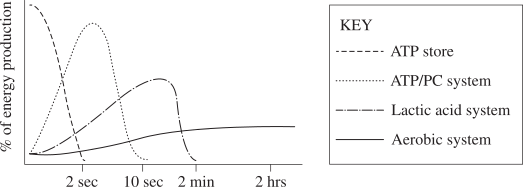
The graph shows the percentage of energy produced in a variety of activities
 

Based on the graph, which of the following statements is the most accurate?

  1. After two seconds no more ATP is created.
  2. Stored energy plays a very small role in a vertical leap test.
  3. The lactic acid system is the major source of energy at the end of a 100-metre sprint.
  4. Aerobic energy is the major source of energy from the 10-second mark in a 400-metre sprint.
Show Answers Only

\(C\)

Show Worked Solution

  • C is correct: 100-metre sprint duration matches timeframe where lactic acid system dominates energy production.

Other Options:

  • A is incorrect: ATP continues to be produced by different systems after two seconds.
  • B is incorrect: Stored ATP plays a major role in explosive movements like vertical leaps.
  • D is incorrect: 400-metre sprint relies heavily on anaerobic systems, not primarily aerobic energy.

♦♦ Mean mark 45%.

Filed Under: Energy systems Tagged With: Band 5, smc-5528-25-Interplay of energy systems

HMS, BM 2019 HSC 17 MC

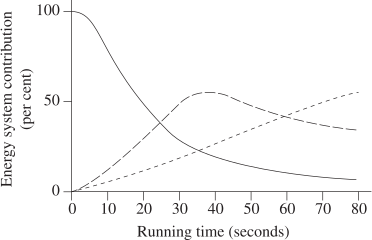
The graph shows the relationship between an athlete’s running time and the contribution of three energy systems.

Which of the following shows the by-product and rate of recovery following exhaustion for the dominant energy system at 50 seconds running time?

  By-product Rate of recovery
A.   Carbon dioxide 30 minutes - 2 hours
B. Carbon dioxide 30 seconds - 5 minutes
C. Lactic acid 5 minutes - 20 minutes
D. Lactic acid 30 minutes - 2 hours


Show Answers Only

\(D\)

Show Worked Solution

  • D is correct: At 50 seconds, lactic acid system dominates producing lactic acid with long recovery.

Other Options:

  • A is incorrect: Carbon dioxide is aerobic system by-product, not dominant at 50 seconds.
  • B is incorrect: Carbon dioxide with short recovery describes ATP-PCr system characteristics.
  • C is incorrect: Lactic acid system recovery takes much longer than 5-20 minutes.

♦♦♦ Mean mark 41%.

Filed Under: Energy systems Tagged With: Band 5, smc-5528-20-Duration/intensity/recovery

HMS, BM 2020 HSC 23

An athlete ran in the 100-metre final at an Olympic Games.

  1. In the table below, identify the predominant energy system used by the athlete,
    and the features of that energy system.   (3 marks)

    --- 0 WORK AREA LINES (style=blank) ---

    Predominant energy system used by this athlete  
    Source of fuel  
    Energy system duration  
    Cause of fatigue  
    Rate of recovery  
  2. Compare how anxiety and arousal may have affected the athlete’s performance
    when competing in this 100-metre final. Provide examples to support your
    answer.   (4 marks)

    --- 12 WORK AREA LINES (style=lined) ---

Show Answers Only
a.   
Predominant energy system used by this athlete ATP-PCr system (Alactacid system)
  Source of fuel Creatine phosphate (CP)
  Energy system duration 6-12 seconds
  Cause of fatigue Depletion of creatine phosphate stores
  Rate of recovery 2-3 minutes for complete recovery

b.    Similarities:

  • Both anxiety and arousal can negatively impact the sprinter’s performance if levels become too high.
  • Both factors influence the athlete’s ability to execute optimal technique and can cause muscle tension that restricts smooth movement patterns during the race.

Differences:

  • Anxiety is a psychological state involving fear and worry about competitive outcome. High anxiety may cause the sprinter to overthink race strategy, leading to delayed reaction time from starting blocks and mental distraction affecting stride mechanics.
  • Arousal refers to physiological activation levels. Optimal arousal enhances alertness and muscle readiness for explosive starts. However, excessive arousal creates physical tension that reduces stride length and power output through restricted movement patterns.
Show Worked Solution
a.   
Predominant energy system used by this athlete ATP-PCr system (Alactacid system)
  Source of fuel Creatine phosphate (CP)
  Energy system duration 6-12 seconds
  Cause of fatigue Depletion of creatine phosphate stores
  Rate of recovery 2-3 minutes for complete recovery

b.    Similarities:

  • Both anxiety and arousal can negatively impact the sprinter’s performance if levels become too high.
  • Both factors influence the athlete’s ability to execute optimal technique and can cause muscle tension that restricts smooth movement patterns during the race.

Differences:

  • Anxiety is a psychological state involving fear and worry about competitive outcome. High anxiety may cause the sprinter to overthink race strategy, leading to delayed reaction time from starting blocks and mental distraction affecting stride mechanics.
  • Arousal refers to physiological activation levels. Optimal arousal enhances alertness and muscle readiness for explosive starts. However, excessive arousal creates physical tension that reduces stride length and power output through restricted movement patterns.

♦♦ Mean mark 49%.

Filed Under: Energy systems, Psych–Movement–Performance interplay Tagged With: Band 4, Band 5, smc-5528-10-Fuel Source, smc-5528-20-Duration/intensity/recovery, smc-5528-30-Causes of fatigue, smc-5536-20-Self-regulation

HMS, BM 2021 HSC 4 MC

What is the predominant energy system used by an athlete in a 400-metre running event?

  1. Aerobic
  2. ATP-PC
  3. Phosphate
  4. Lactic acid
Show Answers Only

\(D\)

Show Worked Solution
  • D is correct: 400m primarily uses lactic acid system for duration.

Other Options:

  • A is incorrect: Too short for predominantly aerobic contribution.
  • B is incorrect: ATP-PC depleted after first 10-15 seconds.
  • C is incorrect: Phosphate system same as ATP-PC system.

Filed Under: Energy systems Tagged With: Band 4, smc-5528-20-Duration/intensity/recovery, smc-5528-30-Causes of fatigue

HMS, BM 2024 HSC 22

Compare the by-products of TWO different energy systems.   (4 marks)

--- 10 WORK AREA LINES (style=lined) ---

Show Answers Only

Sample Answer

Similarities:

  • Both ATP-PCr and glycolytic systems produce by-products during ATP generation.
  • Both by-products must be managed by the body for continued performance.

Differences:

  • ATP-PCr produces creatine and phosphate which cause no muscle fatigue or performance impairment.
  • Glycolytic system generates lactic acid which creates burning sensation and impairs muscle contraction.
  • ATP-PCr by-products remain in muscle cells for immediate reconversion within minutes.
  • Lactic acid must be transported via bloodstream to the liver for removal, taking much longer.
  • Chemical nature determines impact: harmless phosphates versus performance-limiting acid.
Show Worked Solution

Sample Answer

Similarities:

  • Both ATP-PCr and glycolytic systems produce by-products during ATP generation.
  • Both by-products must be managed by the body for continued performance.

Differences:

  • ATP-PCr produces creatine and phosphate which cause no muscle fatigue or performance impairment.
  • Glycolytic system generates lactic acid which creates burning sensation and impairs muscle contraction.
  • ATP-PCr by-products remain in muscle cells for immediate reconversion within minutes.
  • Lactic acid must be transported via bloodstream to the liver for removal, taking much longer.
  • Chemical nature determines impact: harmless phosphates versus performance-limiting acid.

Filed Under: Energy systems Tagged With: Band 3, Band 4, smc-5528-20-Duration/intensity/recovery, smc-5528-30-Causes of fatigue

HMS, BM EQ-Bank 774

An Olympic rower competes in a 2000-metre race lasting approximately 6-7 minutes. Critically analyse how the efficiency of ATP production in different energy systems affects the athlete's pacing strategy and overall performance.   (8 marks)

--- 26 WORK AREA LINES (style=lined) ---

Show Answers Only

Sample Answer

Overview Statement

  • ATP production efficiency directly influences pacing decisions throughout the 2000m race.
  • The relationship between speed and efficiency determines sustainable effort levels at each race stage.

Start Phase and Efficiency Trade-offs

  • Initial acceleration relies on ATP-PCr and glycolytic systems for rapid energy despite poor efficiency.
  • These systems produce ATP quickly but generate limited amounts per fuel molecule used.
  • This inefficiency means the fast start cannot be maintained beyond 30-45 seconds.
  • Therefore, rowers must transition to more efficient systems or face rapid exhaustion.

Middle Race Efficiency Optimisation

  • The aerobic system provides most ATP during the middle race segments.
  • Complete fuel breakdown yields far more ATP per glucose molecule than anaerobic systems.
  • This superior efficiency enables sustained high-intensity effort for several minutes.
  • Pacing depends on maintaining intensity where aerobic metabolism dominates energy production.

Final Sprint Energy Dynamics

  • The last section requires shifting back to less efficient but faster energy systems.
  • Glycolytic system reactivation allows increased speed despite efficiency loss.
  • Lactic acid accumulation results from this deliberate efficiency sacrifice.
  • This trade-off demonstrates how performance goals override efficiency in race-critical moments.

Implications and Synthesis

  • Efficiency differences create distinct pacing phases: explosive start, sustained middle, powerful finish.
  • The aerobic system’s efficiency determines how fast the middle pace can be maintained.
  • Strategic inefficiency at start and finish proves that winning requires more than optimal efficiency.
  • Therefore, successful pacing balances the competing demands of speed and sustainable energy production.
Show Worked Solution

Sample Answer

Overview Statement

  • ATP production efficiency directly influences pacing decisions throughout the 2000m race.
  • The relationship between speed and efficiency determines sustainable effort levels at each race stage.

Start Phase and Efficiency Trade-offs

  • Initial acceleration relies on ATP-PCr and glycolytic systems for rapid energy despite poor efficiency.
  • These systems produce ATP quickly but generate limited amounts per fuel molecule used.
  • This inefficiency means the fast start cannot be maintained beyond 30-45 seconds.
  • Therefore, rowers must transition to more efficient systems or face rapid exhaustion.

Middle Race Efficiency Optimisation

  • The aerobic system provides most ATP during the middle race segments.
  • Complete fuel breakdown yields far more ATP per glucose molecule than anaerobic systems.
  • This superior efficiency enables sustained high-intensity effort for several minutes.
  • Pacing depends on maintaining intensity where aerobic metabolism dominates energy production.

Final Sprint Energy Dynamics

  • The last section requires shifting back to less efficient but faster energy systems.
  • Glycolytic system reactivation allows increased speed despite efficiency loss.
  • Lactic acid accumulation results from this deliberate efficiency sacrifice.
  • This trade-off demonstrates how performance goals override efficiency in race-critical moments.

Implications and Synthesis

  • Efficiency differences create distinct pacing phases: explosive start, sustained middle, powerful finish.
  • The aerobic system’s efficiency determines how fast the middle pace can be maintained.
  • Strategic inefficiency at start and finish proves that winning requires more than optimal efficiency.
  • Therefore, successful pacing balances the competing demands of speed and sustainable energy production.

Filed Under: Energy systems Tagged With: Band 5, Band 6, smc-5528-15-ATP efficiency

HMS, BM EQ-Bank 773

Evaluate how the efficiency of ATP production impacts the performance of a soccer midfielder who must perform repeated high-intensity efforts throughout a 90-minute match.   (8 marks)

--- 28 WORK AREA LINES (style=lined) ---

Show Answers Only

Sample Answer

Evaluation Statement

  • ATP production efficiency greatly affects a midfielder’s match performance.
  • Evaluation based on: energy system capacity, fatigue management, and performance sustainability.

Sprint Performance

  • ATP-PCr system’s rapid production enables explosive movements but depletes within 10-15 seconds.
  • Limited capacity forces reliance on less efficient systems for subsequent efforts.
  • Recovery requires several minutes, creating performance gaps between sprints.
  • Quick energy is essential but proves inadequate for continuous high-intensity demands.

High-Intensity Running

  • Glycolytic system produces ATP quickly but creates lactic acid as a by-product.
  • Lactic acid build-up makes muscles acidic and reduces their ability to contract after 30-90 seconds.
  • Repeated efforts cause increasing fatigue that slows sprint speed noticeably.
  • The trade-off between quick energy and fatigue build-up limits sustained performance.

Match Endurance

  • Aerobic system’s complete fuel breakdown provides the most ATP per glucose molecule.
  • This efficiency enables PCr recovery between efforts and helps clear lactic acid during lower intensity periods.
  • The aerobic system sustains most energy needs throughout the full match.
  • Superior efficiency allows midfielders to maintain work rate despite growing tiredness.

Final Evaluation

  • Aerobic efficiency proves most critical for repeated efforts throughout a match.
  • Midfielders with better aerobic fitness maintain higher work rates and recover faster between sprints.
  • While all systems contribute, aerobic efficiency ultimately determines sustainable performance level over 90 minutes.
Show Worked Solution

Sample Answer

Evaluation Statement

  • ATP production efficiency greatly affects a midfielder’s match performance.
  • Evaluation based on: energy system capacity, fatigue management, and performance sustainability.

Sprint Performance

  • ATP-PCr system’s rapid production enables explosive movements but depletes within 10-15 seconds.
  • Limited capacity forces reliance on less efficient systems for subsequent efforts.
  • Recovery requires several minutes, creating performance gaps between sprints.
  • Quick energy is essential but proves inadequate for continuous high-intensity demands.

High-Intensity Running

  • Glycolytic system produces ATP quickly but creates lactic acid as a by-product.
  • Lactic acid build-up makes muscles acidic and reduces their ability to contract after 30-90 seconds.
  • Repeated efforts cause increasing fatigue that slows sprint speed noticeably.
  • The trade-off between quick energy and fatigue build-up limits sustained performance.

Match Endurance

  • Aerobic system’s complete fuel breakdown provides the most ATP per glucose molecule.
  • This efficiency enables PCr recovery between efforts and helps clear lactic acid during lower intensity periods.
  • The aerobic system sustains most energy needs throughout the full match.
  • Superior efficiency allows midfielders to maintain work rate despite growing tiredness.

Final Evaluation

  • Aerobic efficiency proves most critical for repeated efforts throughout a match.
  • Midfielders with better aerobic fitness maintain higher work rates and recover faster between sprints.
  • While all systems contribute, aerobic efficiency ultimately determines sustainable performance level over 90 minutes.

Filed Under: Energy systems Tagged With: Band 4, Band 5, smc-5528-15-ATP efficiency

HMS, BM EQ-Bank 769 MC

Which energy system produces the MOST ATP molecules per molecule of glucose?

  1. ATP-PCr system
  2. Glycolytic (lactic acid) system
  3. Aerobic energy system
  4. None of these systems produce ATP from glucose
Show Answers Only

\(C\)

Show Worked Solution
  • C is correct: The aerobic system produces 36-38 ATP molecules per molecule of glucose through complete oxidation with oxygen, making it the most efficient system.

Other Options:

  • A is incorrect: The ATP-PCr system doesn’t directly use glucose as a fuel source; it uses phosphocreatine to regenerate ATP.
  • B is incorrect: The glycolytic (lactic acid) system produces only about 2 ATP molecules per glucose molecule through anaerobic glycolysis.
  • D is incorrect: Both the glycolytic and aerobic systems produce ATP from glucose, with different levels of efficiency.

Filed Under: Energy systems Tagged With: Band 5, smc-5528-15-ATP efficiency

HMS, BM EQ-Bank 768

To what extent do the causes of fatigue affect a tennis player's ability to maintain serve speed and accuracy throughout a long match?    (8 marks)

--- 24 WORK AREA LINES (style=lined) ---

Show Answers Only

Sample Answer

Position Statement:

  • Fatigue moderately affects serve performance, with impact increasing as matches extend beyond two hours.
  • Primary factors: phosphocreatine depletion for serves and glycogen reduction affecting overall match play.

ATP-PCr System and Serve Power:

  • Each serve requires maximum explosive power from the ATP-PCr system lasting 1-2 seconds.
  • Brief recovery between points allows substantial PCr replenishment before the next serve.
  • However, accumulated serves throughout a match create incomplete recovery cycles.
  • First serves typically maintain speed early but show slight decreases in later sets.
  • Second serves, requiring precise control, suffer more from fatigue than pure power serves.
  • The system’s quick recovery between points limits severe serve speed reduction.

Glycolytic and Aerobic Demands:

  • Extended rallies between serves engage glycolytic and aerobic systems substantially.
  • Lactic acid from intense rallies can affect serving motion and timing.
  • Long matches gradually deplete glycogen stores, reducing overall movement quality.
  • This indirect fatigue impacts serve preparation, footwork and balance.
  • Players compensate by reducing first-serve percentage to maintain control.

Reaffirmation:

  • Fatigue moderately impacts serving, with noticeable but not dramatic effects.
  • players maintain most serve speed through efficient PCr recovery between points.
  • Accuracy suffers more than raw power as fatigue affects coordination.
  • Match duration and rally intensity determine fatigue’s extent more than serve count alone.
  • Therefore, while fatigue influences serve performance, the impact remains manageable through tactical adjustments.
Show Worked Solution

Sample Answer

Position Statement:

  • Fatigue moderately affects serve performance, with impact increasing as matches extend beyond two hours.
  • Primary factors: phosphocreatine depletion for serves and glycogen reduction affecting overall match play.

ATP-PCr System and Serve Power:

  • Each serve requires maximum explosive power from the ATP-PCr system lasting 1-2 seconds.
  • Brief recovery between points allows substantial PCr replenishment before the next serve.
  • However, accumulated serves throughout a match create incomplete recovery cycles.
  • First serves typically maintain speed early but show slight decreases in later sets.
  • Second serves, requiring precise control, suffer more from fatigue than pure power serves.
  • The system’s quick recovery between points limits severe serve speed reduction.

Glycolytic and Aerobic Demands:

  • Extended rallies between serves engage glycolytic and aerobic systems substantially.
  • Lactic acid from intense rallies can affect serving motion and timing.
  • Long matches gradually deplete glycogen stores, reducing overall movement quality.
  • This indirect fatigue impacts serve preparation, footwork and balance.
  • Players compensate by reducing first-serve percentage to maintain control.

Reaffirmation:

  • Fatigue moderately impacts serving, with noticeable but not dramatic effects.
  • players maintain most serve speed through efficient PCr recovery between points.
  • Accuracy suffers more than raw power as fatigue affects coordination.
  • Match duration and rally intensity determine fatigue’s extent more than serve count alone.
  • Therefore, while fatigue influences serve performance, the impact remains manageable through tactical adjustments.

Filed Under: Energy systems Tagged With: Band 5, Band 6, smc-5528-30-Causes of fatigue

HMS, BM EQ-Bank 767

During a half-marathon (21.1km), many runners experience varying types of fatigue at different stages of the race. Explain the causes of fatigue in the aerobic energy system and how these impact performance.   (6 marks)

--- 18 WORK AREA LINES (style=lined) ---

Show Answers Only

Sample Answer

  • Glycogen depletion gradually affects the aerobic system during a half-marathon race.
  • After 60-90 minutes of running, muscle glycogen stores become partly used up, which forces the body to rely more on fat for fuel.
  • This causes problems as fat needs more oxygen to produce ATP than carbohydrate does.
  • Therefore, runners must slow their pace as energy becomes harder to produce efficiently.
  • Dehydration also impacts the aerobic system by reducing the body’s ability to deliver oxygen to muscles.
  • Sweating during the race decreases blood volume, which means less oxygen reaches working muscles.
  • As a result, the aerobic system cannot work as well despite the runner’s fitness level.
  • Rising body temperature further affects performance because heat makes it harder for muscles to produce energy.
  • This leads to decreased efficiency even when oxygen is available.
  • Mental tiredness develops separately from physical fatigue, causing runners to feel the effort is harder than it actually is.
  • Consequently, motivation drops and perceived effort increases during the race.
  • All these factors combine, making runners progressively slower as the race continues despite trying to maintain pace.
Show Worked Solution

Sample Answer 

  • Glycogen depletion gradually affects the aerobic system during a half-marathon race.
  • After 60-90 minutes of running, muscle glycogen stores become partly used up, which forces the body to rely more on fat for fuel.
  • This causes problems as fat needs more oxygen to produce ATP than carbohydrate does.
  • Therefore, runners must slow their pace as energy becomes harder to produce efficiently.
  • Dehydration also impacts the aerobic system by reducing the body’s ability to deliver oxygen to muscles.
  • Sweating during the race decreases blood volume, which means less oxygen reaches working muscles.
  • As a result, the aerobic system cannot work as well despite the runner’s fitness level.
  • Rising body temperature further affects performance because heat makes it harder for muscles to produce energy.
  • This leads to decreased efficiency even when oxygen is available.
  • Mental tiredness develops separately from physical fatigue, causing runners to feel the effort is harder than it actually is.
  • Consequently, motivation drops and perceived effort increases during the race.
  • All these factors combine, making runners progressively slower as the race continues despite trying to maintain pace.

Filed Under: Energy systems Tagged With: Band 4, Band 5, smc-5528-30-Causes of fatigue

HMS, BM EQ-Bank 765

Explain how causes of fatigue differ between the ATP-PCr system and the glycolytic system during high-intensity exercise.   (4 marks)

--- 10 WORK AREA LINES (style=lined) ---

Show Answers Only

Sample Answer

  • The ATP-PCr system experiences fatigue solely from phosphocreatine depletion after 10-15 seconds of maximal effort.
  • This occurs because stored PCr becomes exhausted without producing any fatiguing by-products.
  • Heat is the only by-product, which enables rapid recovery within 2 minutes.
  • Therefore, ATP-PCr fatigue is temporary and quickly reversible.
  • The glycolytic system fatigues due to lactic acid accumulation in muscle cells.
  • Lactic acid forms when glucose breaks down anaerobically, accumulating faster than removal rates.
  • As a result, the acid interferes with enzyme function and muscle contraction.
  • Consequently, glycolytic fatigue persists longer, requiring 30-60 minutes for complete recovery.
Show Worked Solution

Sample Answer 

  • The ATP-PCr system experiences fatigue solely from phosphocreatine depletion after 10-15 seconds of maximal effort.
  • This occurs because stored PCr becomes exhausted without producing any fatiguing by-products.
  • Heat is the only by-product, which enables rapid recovery within 2 minutes.
  • Therefore, ATP-PCr fatigue is temporary and quickly reversible.
  • The glycolytic system fatigues due to lactic acid accumulation in muscle cells.
  • Lactic acid forms when glucose breaks down anaerobically, accumulating faster than removal rates.
  • As a result, the acid interferes with enzyme function and muscle contraction.
  • Consequently, glycolytic fatigue persists longer, requiring 30-60 minutes for complete recovery.

Filed Under: Energy systems Tagged With: Band 2, Band 3, smc-5528-30-Causes of fatigue

HMS, BM EQ-Bank 763

Analyse how the availability of different fuel sources influences energy system dominance and fatigue during a 1500-metre running race.   (8 marks)

--- 24 WORK AREA LINES (style=lined) ---

Show Answers Only

Sample Answer

Overview Statement

  • Fuel availability determines energy system dominance throughout the 1500m race.
  • Phosphocreatine, glucose and oxygen availability interact to shape pacing and fatigue patterns.

PCr Availability and Sprint Performance

  • Limited phosphocreatine stores enable explosive acceleration for only 10-15 seconds at the start.
  • This leads to rapid PCr depletion, forcing reliance on glycolytic system by the first curve.
  • PCr partially replenishes during the middle laps, allowing a final sprint if managed correctly.
  • Therefore, PCr availability dictates tactical positioning opportunities throughout the race.

Glucose Supply and Sustained Speed

  • Abundant muscle glucose supports high-intensity running through anaerobic glycolysis after PCr depletion.
  • This process generates lactic acid accumulation, which progressively impairs muscle contraction efficiency.
  • The glycolytic system depends on glucose availability but is limited by rising acidity, not fuel depletion.
  • Consequently, glucose availability permits sustained speed while lactic acid constrains maximum effort duration.

Oxygen and Aerobic Contribution

  • Increasing oxygen uptake enables aerobic metabolism to contribute more ATP as the race progresses.
  • The aerobic system utilises glucose more efficiently than glycolysis, producing more ATP per glucose molecule.
  • This efficiency allows sustained pace during middle laps while preserving some glucose for the finish.
  • Thus, oxygen availability determines the balance between efficient and inefficient fuel use.

Implications and Synthesis

  • Fuel availability creates a hierarchy: PCr exhausts first, glucose remains adequate, oxygen increases gradually.
  • This pattern means energy systems shift from ATP-PCr to glycolytic to increasingly aerobic dominance.
  • Fatigue results from PCr depletion initially, then lactic acid accumulation, rather than fuel exhaustion.
  • Therefore, understanding fuel availability reveals why pacing strategies must match energy system capabilities.
Show Worked Solution

Sample Answer

Overview Statement

  • Fuel availability determines energy system dominance throughout the 1500m race.
  • Phosphocreatine, glucose and oxygen availability interact to shape pacing and fatigue patterns.

PCr Availability and Sprint Performance

  • Limited phosphocreatine stores enable explosive acceleration for only 10-15 seconds at the start.
  • This leads to rapid PCr depletion, forcing reliance on glycolytic system by the first curve.
  • PCr partially replenishes during the middle laps, allowing a final sprint if managed correctly.
  • Therefore, PCr availability dictates tactical positioning opportunities throughout the race.

Glucose Supply and Sustained Speed

  • Abundant muscle glucose supports high-intensity running through anaerobic glycolysis after PCr depletion.
  • This process generates lactic acid accumulation, which progressively impairs muscle contraction efficiency.
  • The glycolytic system depends on glucose availability but is limited by rising acidity, not fuel depletion.
  • Consequently, glucose availability permits sustained speed while lactic acid constrains maximum effort duration.

Oxygen and Aerobic Contribution

  • Increasing oxygen uptake enables aerobic metabolism to contribute more ATP as the race progresses.
  • The aerobic system utilises glucose more efficiently than glycolysis, producing more ATP per glucose molecule.
  • This efficiency allows sustained pace during middle laps while preserving some glucose for the finish.
  • Thus, oxygen availability determines the balance between efficient and inefficient fuel use.

Implications and Synthesis

  • Fuel availability creates a hierarchy: PCr exhausts first, glucose remains adequate, oxygen increases gradually.
  • This pattern means energy systems shift from ATP-PCr to glycolytic to increasingly aerobic dominance.
  • Fatigue results from PCr depletion initially, then lactic acid accumulation, rather than fuel exhaustion.
  • Therefore, understanding fuel availability reveals why pacing strategies must match energy system capabilities.

Filed Under: Energy systems Tagged With: Band 5, Band 6, smc-5528-10-Fuel Source

HMS, BM EQ-Bank 762

How does the depletion of fuel sources in the aerobic energy system contribute to an athlete "hitting the wall" during a marathon at around the 32-kilometre mark?   (5 marks)

--- 15 WORK AREA LINES (style=lined) ---

Show Answers Only

Sample Answer

  • Marathon runners begin by using both carbohydrate and fat for fuel, with glycogen providing easy energy at steady pace.
  • After about 2 hours, muscle glycogen stores run very low, which forces the body to use mainly fat for energy.
  • Fat needs more oxygen to make ATP than carbohydrate does, resulting in higher oxygen demands that the body cannot meet at the same running speed.
  • This change causes runners to slow down immediately as their bodies cannot get enough oxygen for the pace.
  • Body temperature goes up because fat burning is less efficient, creating extra heat that makes runners feel hotter.
  • Breathing rate increases to get more oxygen for fat burning, which makes runners feel breathless even though they’ve slowed down.
  • The brain also lacks glucose, causing poor concentration and less motivation to continue.
  • These problems together create the sudden tiredness known as “hitting the wall”.
  • Therefore, glycogen depletion forces the body to use harder-to-burn fat for fuel.
Show Worked Solution

Sample Answer

  • Marathon runners begin by using both carbohydrate and fat for fuel, with glycogen providing easy energy at steady pace.
  • After about 2 hours, muscle glycogen stores run very low, which forces the body to use mainly fat for energy.
  • Fat needs more oxygen to make ATP than carbohydrate does, resulting in higher oxygen demands that the body cannot meet at the same running speed.
  • This change causes runners to slow down immediately as their bodies cannot get enough oxygen for the pace.
  • Body temperature goes up because fat burning is less efficient, creating extra heat that makes runners feel hotter.
  • Breathing rate increases to get more oxygen for fat burning, which makes runners feel breathless even though they’ve slowed down.
  • The brain also lacks glucose, causing poor concentration and less motivation to continue.
  • These problems together create the sudden tiredness known as “hitting the wall”.
  • Therefore, glycogen depletion forces the body to use harder-to-burn fat for fuel.

Filed Under: Energy systems Tagged With: Band 4, Band 5, smc-5528-10-Fuel Source

HMS, BM EQ-Bank 761

Describe how fuel sources contribute to fatigue during the final stretch of a 400-metre race.  (3 marks)

--- 7 WORK AREA LINES (style=lined) ---

Show Answers Only

Sample Answer

  • The 400m relies heavily on the glycolytic system which uses glucose as fuel for the final stretch.
  • This system produces ATP quickly but creates lactic acid as a by-product.
  • Lactic acid builds up rapidly in muscles, making them increasingly acidic and reducing their ability to contract.
  • Additionally, the intense effort uses up muscle glucose stores quickly.
  • These combined effects cause severe fatigue, forcing runners to slow dramatically in the final metres.
Show Worked Solution

Sample Answer

  • The 400m relies heavily on the glycolytic system which uses glucose as fuel for the final stretch.
  • This system produces ATP quickly but creates lactic acid as a by-product.
  • Lactic acid builds up rapidly in muscles, making them increasingly acidic and reducing their ability to contract.
  • Additionally, the intense effort uses up muscle glucose stores quickly.
  • These combined effects cause severe fatigue, forcing runners to slow dramatically in the final metres.

Filed Under: Energy systems Tagged With: Band 2, Band 3, smc-5528-10-Fuel Source

HMS, BM EQ-Bank 760

Evaluate the importance of different fuel sources and their efficiency of ATP production for athletes competing in different duration events.   (8 marks)

--- 21 WORK AREA LINES (style=lined) ---

Show Answers Only

Sample Answer

Evaluation Statement

  • Fuel source selection and ATP production efficiency fundamentally determine athletic performance across different event durations.
  • Evaluation based on: fuel availability, ATP yield efficiency, and event-specific demands.

Short Duration Events (10-15 seconds)

  • Phosphocreatine provides the only fuel source for explosive efforts like shot put or 100m sprint starts.
  • This system produces ATP most rapidly, enabling maximum power output immediately.
  • However, limited PCr stores exhaust within seconds, making it unsuitable for longer efforts.
  • The trade-off between speed and capacity proves ideal for brief maximal performances.

Medium Duration Events (30 seconds – 2 minutes)

  • Glucose becomes the primary fuel through anaerobic breakdown during 400m runs or 100m swims.
  • This produces ATP quickly but inefficiently, with only partial glucose breakdown occurring.
  • Lactic acid accumulation limits duration despite adequate glucose availability.
  • Athletes must balance intensity against rapidly increasing fatigue from metabolic by-products.

Long Duration Events (over 3 minutes)

  • Both carbohydrates and fats fuel aerobic metabolism in marathons and distance cycling.
  • Complete fuel oxidation yields far more ATP per glucose molecule than anaerobic systems.
  • Fat provides virtually unlimited energy but requires more oxygen per ATP produced.
  • Efficiency allows sustained performance though at lower intensities than anaerobic metabolism permits.

Final Evaluation

  • Event duration dictates optimal fuel source selection more than any other factor.
  • ATP production efficiency inversely relates to production speed across all systems.
  • Athletes cannot choose their fuel source; duration and intensity determine it automatically.
  • Understanding these relationships helps athletes pace efforts appropriately for their event.
Show Worked Solution

Sample Answer 

Evaluation Statement

  • Fuel source selection and ATP production efficiency fundamentally determine athletic performance across different event durations.
  • Evaluation based on: fuel availability, ATP yield efficiency, and event-specific demands.

Short Duration Events (10-15 seconds)

  • Phosphocreatine provides the only fuel source for explosive efforts like shot put or 100m sprint starts.
  • This system produces ATP most rapidly, enabling maximum power output immediately.
  • However, limited PCr stores exhaust within seconds, making it unsuitable for longer efforts.
  • The trade-off between speed and capacity proves ideal for brief maximal performances.

Medium Duration Events (30 seconds – 2 minutes)

  • Glucose becomes the primary fuel through anaerobic breakdown during 400m runs or 100m swims.
  • This produces ATP quickly but inefficiently, with only partial glucose breakdown occurring.
  • Lactic acid accumulation limits duration despite adequate glucose availability.
  • Athletes must balance intensity against rapidly increasing fatigue from metabolic by-products.

Long Duration Events (over 3 minutes)

  • Both carbohydrates and fats fuel aerobic metabolism in marathons and distance cycling.
  • Complete fuel oxidation yields far more ATP per glucose molecule than anaerobic systems.
  • Fat provides virtually unlimited energy but requires more oxygen per ATP produced.
  • Efficiency allows sustained performance though at lower intensities than anaerobic metabolism permits.

Final Evaluation

  • Event duration dictates optimal fuel source selection more than any other factor.
  • ATP production efficiency inversely relates to production speed across all systems.
  • Athletes cannot choose their fuel source; duration and intensity determine it automatically.
  • Understanding these relationships helps athletes pace efforts appropriately for their event.

Filed Under: Energy systems Tagged With: Band 5, Band 6, smc-5528-10-Fuel Source, smc-5528-15-ATP efficiency

HMS, BM EQ-Bank 209 MC

Which activity would rely MOST heavily on the ATP-PCr system?

  1. High jump
  2. 800 metre run
  3. Marathon
  4. Tennis match
Show Answers Only

\(A\)

Show Worked Solution
  • A is correct: High jump takes 1-3 seconds of explosive effort, perfectly matching ATP-PCr system duration

Other Options:

  • B is incorrect: 800m run takes 2-3 minutes, primarily using glycolytic and aerobic systems
  • C is incorrect: Marathon relies almost entirely on aerobic system for 2-4 hours
  • D is incorrect: Tennis involves repeated efforts using all three energy systems

Filed Under: Energy systems Tagged With: Band 3, smc-5528-15-ATP efficiency

HMS, BM EQ-Bank 188

Compare the causes of fatigue between a 400 metre sprint and a marathon runner.   (4 marks)

--- 10 WORK AREA LINES (style=lined) ---

Show Answers Only

Sample Answer

Similarities:

  • Both events cause fatigue that limits performance and forces athletes to slow down.
  • Both require recovery time before the athlete can perform at the same level again.

Differences:

  • The 400m sprint causes rapid lactic acid build-up from anaerobic glycolysis, making muscles acidic within 45 seconds.
  • Marathon running depletes glycogen stores after about 2 hours, forcing inefficient fat use.
  • Sprint fatigue includes immediate burning sensations and muscle tightness.
  • Marathon fatigue involves gradual energy loss, dehydration and overheating.
  • Sprint fatigue clears within an hour while marathon recovery takes days.
Show Worked Solution

Sample Answer

Similarities:

  • Both events cause fatigue that limits performance and forces athletes to slow down.
  • Both require recovery time before the athlete can perform at the same level again.

Differences:

  • The 400m sprint causes rapid lactic acid build-up from anaerobic glycolysis, making muscles acidic within 45 seconds.
  • Marathon running depletes glycogen stores after about 2 hours, forcing inefficient fat use.
  • Sprint fatigue includes immediate burning sensations and muscle tightness.
  • Marathon fatigue involves gradual energy loss, dehydration and overheating.
  • Sprint fatigue clears within an hour while marathon recovery takes days.

Filed Under: Energy systems Tagged With: Band 5, smc-5528-30-Causes of fatigue

HMS, BM EQ-Bank 187

Outline TWO causes of fatigue when an athlete performs a 100 metre sprint.   (3 marks)

--- 6 WORK AREA LINES (style=lined) ---

Show Answers Only

Sample Answer

Any 2 of the following

  • Phosphocreatine stores run out within 10 seconds of maximal sprinting. This means the ATP-PCr system cannot make enough ATP for explosive movements, forcing the body to use slower energy systems and causing speed to drop.
  • Neural fatigue happens when fast-twitch muscle fibres work continuously. The brain and nerves cannot keep sending strong signals throughout the sprint, so muscles produce less force even when in the final metres.
  • Lactic acid builds up as the glycolytic system works near the sprint’s end. This makes muscles more acidic and prevents them contracting properly in the final metres, causing runners to slow down at the finish.
Show Worked Solution

Sample Answer

Any 2 of the following

  • Phosphocreatine stores run out within 10 seconds of maximal sprinting. This means the ATP-PCr system cannot make enough ATP for explosive movements, forcing the body to use slower energy systems and causing speed to drop.
  • Neural fatigue happens when fast-twitch muscle fibres work continuously. The brain and nerves cannot keep sending strong signals throughout the sprint, so muscles produce less force even when in the final metres.
  • Lactic acid builds up as the glycolytic system works near the sprint’s end. This makes muscles more acidic and prevents them contracting properly in the final metres, causing runners to slow down at the finish.

Filed Under: Energy systems Tagged With: Band 4, smc-5528-30-Causes of fatigue

HMS, BM EQ-Bank 186 MC

Which row correctly identifies the main cause of fatigue for different duration activities?

\begin{align*}
\begin{array}{l}
\rule{0pt}{2.5ex} \ \rule[-1ex]{0pt}{0pt}& \\
\rule{0pt}{2.5ex}\textbf{A.}\rule[-1ex]{0pt}{0pt}\\
\rule{0pt}{2.5ex}\textbf{B.}\rule[-1ex]{0pt}{0pt}\\
\rule{0pt}{2.5ex}\textbf{C.}\rule[-1ex]{0pt}{0pt}\\
\rule{0pt}{2.5ex}\textbf{D.}\rule[-1ex]{0pt}{0pt}\\
\end{array}
\begin{array}{|l|l|l|}
\hline
\rule{0pt}{2.5ex}\textbf{10 second sprint}\rule[-1ex]{0pt}{0pt}& \textbf{2 minute swim}& \textbf{2 hour run} \\
\hline
\rule{0pt}{2.5ex}\text{ATP depletion}\rule[-1ex]{0pt}{0pt}&\text{Lactic acid}&\text{Glycogen depletion}\\
\hline
\rule{0pt}{2.5ex}\text{Lactic acid}\rule[-1ex]{0pt}{0pt}& \text{Glycogen depletion}&\text{ATP depletion}\\
\hline
\rule{0pt}{2.5ex}\text{Glycogen depletion}\rule[-1ex]{0pt}{0pt}& \text{ATP depletion}&\text{Lactic acid} \\
\hline
\rule{0pt}{2.5ex}\text{Lactic acid}\rule[-1ex]{0pt}{0pt}& \text{ATP depletion}&\text{Glycogen depletion} \\
\hline
\end{array}
\end{align*}

Show Answers Only

\(A\)

Show Worked Solution
  • A is correct: A is correct: ATP depletion occurs <10s, lactic acid peaks at 1-2 min, glycogen depletes after 90+ min

Other Options:

  • B is incorrect: Lactic acid doesn’t cause fatigue at 10s; glycogen doesn’t deplete at 2 min
  • C is incorrect: Completely reverses the correct fatigue mechanisms
  • D is incorrect: Lactic acid doesn’t occur at 10s; ATP doesn’t deplete at 2 min

Filed Under: Energy systems Tagged With: Band 5, smc-5528-30-Causes of fatigue

HMS, BM EQ-Bank 185 MC

A gymnast performing a 90-second floor routine begins to experience muscular fatigue during their final tumbling pass. What is the MOST likely cause?

  1. Accumulation of lactic acid
  2. Depletion of ATP stores
  3. Depletion of muscle glycogen
  4. Insufficient oxygen availability
Show Answers Only

\(A\)

Show Worked Solution
  • A is correct: The glycolytic energy system produces lactic acid during high-intensity activity, which accumulates and interferes with muscle contraction efficiency

Other Options:

  • B is incorrect: ATP depletion occurs in very short efforts (<10 sec)
  • C is incorrect: Glycogen depletion occurs in longer endurance events 
  • D is incorrect: While oxygen debt occurs, lactic acid is the main cause of fatigue at this duration

Filed Under: Energy systems Tagged With: Band 3, smc-5528-30-Causes of fatigue

HMS, BM EQ-Bank 183

Describe the interplay of energy systems during a 90-minute soccer match.   (6 marks)

--- 18 WORK AREA LINES (style=lined) ---

Show Answers Only

Sample Answer

  • The aerobic system provides most of the total energy throughout the match, sustaining jogging, positioning, and recovery between high-intensity efforts.
  • ATP-PCr system activates for explosive movements that occur regularly throughout the game.
  • These include sprints to beat defenders, jumping for headers, and rapid direction changes lasting 5-10 seconds.
  • The glycolytic system engages during extended high-intensity sequences such as overlapping runs, chasing opponents and consecutive sprints lasting 30-60 seconds.
  • This accumulates lactic acid, causing temporary fatigue until recovery occurs.
  • All three systems operate simultaneously with constantly shifting contributions based on immediate demands.
  • A midfielder transitions from aerobic jogging to ATP-PCr sprinting to intense defensive work within seconds.
  • Natural breaks allow partial energy system recovery during throw-ins, free kicks and tactical pauses.
  • These brief rests permit some phosphocreatine replenishment for the next explosive effort.
  • Energy system contributions vary by position, with central midfielders using more aerobic energy while wingers need more ATP-PCr for repeated sprints.
  • Fatigue increasingly affects system interplay as matches continue, with accumulated lactic acid and glycogen use reducing high-intensity actions in final stages.
  • Substitutions strategically introduce fresh energy systems when starters show declining performance.
Show Worked Solution

Sample Answer

  • The aerobic system provides most of the total energy throughout the match, sustaining jogging, positioning, and recovery between high-intensity efforts.
  • ATP-PCr system activates for explosive movements that occur regularly throughout the game.
  • These include sprints to beat defenders, jumping for headers, and rapid direction changes lasting 5-10 seconds.
  • The glycolytic system engages during extended high-intensity sequences such as overlapping runs, chasing opponents and consecutive sprints lasting 30-60 seconds.
  • This accumulates lactic acid, causing temporary fatigue until recovery occurs.
  • All three systems operate simultaneously with constantly shifting contributions based on immediate demands.
  • A midfielder transitions from aerobic jogging to ATP-PCr sprinting to intense defensive work within seconds.
  • Natural breaks allow partial energy system recovery during throw-ins, free kicks and tactical pauses.
  • These brief rests permit some phosphocreatine replenishment for the next explosive effort.
  • Energy system contributions vary by position, with central midfielders using more aerobic energy while wingers need more ATP-PCr for repeated sprints.
  • Fatigue increasingly affects system interplay as matches continue, with accumulated lactic acid and glycogen use reducing high-intensity actions in final stages.
  • Substitutions strategically introduce fresh energy systems when starters show declining performance.

Filed Under: Energy systems Tagged With: Band 5, Band 6, smc-5528-25-Interplay of energy systems, smc-5528-30-Causes of fatigue

HMS, BM EQ-Bank 182

Describe how the three energy systems interact during a 3-minute boxing round.   (5 marks)

--- 15 WORK AREA LINES (style=lined) ---

Show Answers Only

Sample Answer

  • The ATP-PCr system activates instantly for explosive combinations and power punches. It provides maximum force for 10-15 seconds before depletion occurs. 
  • Sustained exchanges beyond 10 seconds shift dominance to the glycolytic system. This maintains high-intensity output for combinations lasting up to 60 seconds.
  • The aerobic system operates continuously throughout the round at varying intensities. It provides baseline energy during footwork and defensive movements.
  • All three systems function simultaneously rather than sequentially during combat. Their relative contributions fluctuate based on fighting intensity and duration.
  • Brief pauses between exchanges allow partial PCr replenishment within 20-30 seconds. This enables repeated explosive efforts throughout the round.
  • Lactic acid progressively accumulates from repeated high-intensity combinations. This causes fatigue and reduced punching power in the round’s final minute.
  • Skilled boxers manage intensity fluctuations to optimise energy system contributions. They alternate between explosive attacks and active recovery movements.
Show Worked Solution

Sample Answer

  • The ATP-PCr system activates instantly for explosive combinations and power punches. It provides maximum force for 10-15 seconds before depletion occurs. 
  • Sustained exchanges beyond 10 seconds shift dominance to the glycolytic system. This maintains high-intensity output for combinations lasting up to 60 seconds.
  • The aerobic system operates continuously throughout the round at varying intensities. It provides baseline energy during footwork and defensive movements.
  • All three systems function simultaneously rather than sequentially during combat. Their relative contributions fluctuate based on fighting intensity and duration.
  • Brief pauses between exchanges allow partial PCr replenishment within 20-30 seconds. This enables repeated explosive efforts throughout the round.
  • Lactic acid progressively accumulates from repeated high-intensity combinations. This causes fatigue and reduced punching power in the round’s final minute.
  • Skilled boxers manage intensity fluctuations to optimise energy system contributions. They alternate between explosive attacks and active recovery movements.

Filed Under: Energy systems Tagged With: Band 4, Band 5, smc-5528-25-Interplay of energy systems

HMS, BM EQ-Bank 180

Outline how the ATP-PCr system provides energy for immediate muscle contraction.   (3 marks)

--- 7 WORK AREA LINES (style=lined) ---

Show Answers Only

Sample Answer

  • Muscle contraction begins when stored ATP splits into ADP and inorganic phosphate, releasing immediate energy for movement.
  • Phosphocreatine (PCr) rapidly breaks down, donating its phosphate group to ADP, regenerating ATP within milliseconds.
  • This phosphate transfer continues without oxygen requirement, sustaining maximal effort for 10-15 seconds until PCr depletes.
  • The system’s speed results from PCr stores being located directly in muscle cells, eliminating transport time and enabling explosive movements.
Show Worked Solution

Sample Answer

  • Muscle contraction begins when stored ATP splits into ADP and inorganic phosphate, releasing immediate energy for movement.
  • Phosphocreatine (PCr) rapidly breaks down, donating its phosphate group to ADP, regenerating ATP within milliseconds.
  • This phosphate transfer continues without oxygen requirement, sustaining maximal effort for 10-15 seconds until PCr depletes.
  • The system’s speed results from PCr stores being located directly in muscle cells, eliminating transport time and enabling explosive movements.

Filed Under: Energy systems Tagged With: Band 4, smc-5528-25-Interplay of energy systems

HMS, BM EQ-Bank 179 MC

During a 400 metre sprint race, an athlete's performance is most dependent on which combination of energy systems?

  1. ATP-PCr and Aerobic
  2. Glycolytic and ATP-PCr
  3. Aerobic and Glycolytic
  4. Equal contribution from all three systems
Show Answers Only

\(B\)

Show Worked Solution
  • B is correct: A 400 m sprint typically takes 45-60 seconds requiring both immediate energy from ATP-PCr for the explosive start and lactic acid system for maintaining the high-intensity effort throughout the race.

Other Options:

  • A is incorrect: Aerobic contribution is minimal during high-intensity 400m sprints
  • C is incorrect: Aerobic system isn’t significantly involved at this intensity/duration
  • D is incorrect: All systems don’t contribute equally in this event

Filed Under: Energy systems Tagged With: Band 4, smc-5528-25-Interplay of energy systems

HMS, BM EQ-Bank 176

Explain how the duration of different sporting activities determines which energy system predominates and the recovery requirements needed.   (6 marks)

--- 18 WORK AREA LINES (style=lined) ---

Show Answers Only

Sample Answer

  • Activities lasting 10-15 seconds rely on the ATP-PCr system because phosphocreatine provides immediate energy without oxygen.
  • This leads to quick exhaustion of PCr stores, requiring several minutes of recovery for phosphate restoration.
  • Activities between 30-90 seconds shift to glycolytic dominance as PCr runs out and glucose breaks down without oxygen.
  • This process creates lactic acid build-up in muscles, which causes fatigue and burning sensations.
  • Consequently, recovery from glycolytic work takes much longer as the body must clear lactic acid through the liver.
  • Activities lasting several minutes or more use predominantly aerobic metabolism because oxygen becomes available for complete fuel breakdown.
  • This enables sustained energy production but requires recovery time based on how much glycogen was used.
  • Short aerobic efforts need minimal recovery whereas prolonged activities depleting glycogen stores need hours or days to fully restore fuel.
  • Therefore, activity duration directly determines the dominant energy system, which in turn dictates specific recovery needs.
  • Understanding these relationships allows athletes to plan appropriate rest between training sessions and competitions.
Show Worked Solution

Sample Answer

  • Activities lasting 10-15 seconds rely on the ATP-PCr system because phosphocreatine provides immediate energy without oxygen.
  • This leads to quick exhaustion of PCr stores, requiring several minutes of recovery for phosphate restoration.
  • Activities between 30-90 seconds shift to glycolytic dominance as PCr runs out and glucose breaks down without oxygen.
  • This process creates lactic acid build-up in muscles, which causes fatigue and burning sensations.
  • Consequently, recovery from glycolytic work takes much longer as the body must clear lactic acid through the liver.
  • Activities lasting several minutes or more use predominantly aerobic metabolism because oxygen becomes available for complete fuel breakdown.
  • This enables sustained energy production but requires recovery time based on how much glycogen was used.
  • Short aerobic efforts need minimal recovery whereas prolonged activities depleting glycogen stores need hours or days to fully restore fuel.
  • Therefore, activity duration directly determines the dominant energy system, which in turn dictates specific recovery needs.
  • Understanding these relationships allows athletes to plan appropriate rest between training sessions and competitions.

Filed Under: Energy systems Tagged With: Band 5, Band 6, smc-5528-20-Duration/intensity/recovery

HMS, BM EQ-Bank 170

How does the rate of recovery between energy systems influence substitution strategies in team sports?   (5 marks)

--- 15 WORK AREA LINES (style=lined) ---

Show Answers Only

Sample Answer

  • The ATP-PCr system recovers rapidly, with phosphocreatine stores replenishing within 2-3 minutes, which allows players to regain explosive power quickly.
  • This fast recovery enables coaches to rotate players for short periods, knowing they can return to perform at maximum intensity.
  • In contrast, the glycolytic system requires much longer recovery as lactic acid must be cleared from muscles.
  • This process takes 30-60 minutes for complete removal, meaning players who have worked at high intensity need extended rest.
  • As a result, substitutions must be timed to prevent lactic acid build-up that would impair performance upon return.
  • The aerobic system recovers based on activity duration, requiring minimal rest for short efforts but longer for extended play.
  • Therefore, coaches use rolling substitutions to maintain fresh ATP-PCr stores for crucial moments.
  • Strategic rest periods ensure key players avoid glycolytic fatigue during important game phases.
  • Consequently, understanding recovery rates helps optimise player rotation and maintain team intensity throughout matches.
Show Worked Solution

Sample Answer

  • The ATP-PCr system recovers rapidly, with phosphocreatine stores replenishing within 2-3 minutes, which allows players to regain explosive power quickly.
  • This fast recovery enables coaches to rotate players for short periods, knowing they can return to perform at maximum intensity.
  • In contrast, the glycolytic system requires much longer recovery as lactic acid must be cleared from muscles.
  • This process takes 30-60 minutes for complete removal, meaning players who have worked at high intensity need extended rest.
  • As a result, substitutions must be timed to prevent lactic acid build-up that would impair performance upon return.
  • The aerobic system recovers based on activity duration, requiring minimal rest for short efforts but longer for extended play.
  • Therefore, coaches use rolling substitutions to maintain fresh ATP-PCr stores for crucial moments.
  • Strategic rest periods ensure key players avoid glycolytic fatigue during important game phases.
  • Consequently, understanding recovery rates helps optimise player rotation and maintain team intensity throughout matches.

Filed Under: Energy systems Tagged With: Band 4, Band 5, smc-5528-20-Duration/intensity/recovery, smc-5528-25-Interplay of energy systems

HMS, BM EQ-Bank 167 MC

A volleyball player performs six 30-second rallies with 2-minute rest periods between each rally. Which system would be LEAST relied upon for energy production?

  1. ATP-PCr
  2. Glycolytic
  3. Aerobic
  4. All three systems equally
Show Answers Only

\(A\)

Show Worked Solution
  • A is correct: ATP-PCr depletes within 10 seconds, contributing minimally to 30-second rallies

Other Options: 

  • B is incorrect: 30s rallies heavily utilise glycolytic system
  • C is incorrect: Aerobic system aids recovery between rallies
  • D is incorrect: Systems contribute unequally – glycolytic dominates rallies, aerobic dominates recovery, ATP-PCr contributes least

Filed Under: Energy systems Tagged With: Band 4, smc-5528-20-Duration/intensity/recovery

HMS, BM EQ-Bank 166 MC

An elite rower completes a 2000 metre race in 7 minutes. Which energy system sequence best represents their event?

  1. ATP-PCr → Aerobic → Glycolytic
  2. Glycolytic → ATP-PCr → Aerobic
  3. ATP-PCr → Glycolytic → Aerobic
  4. Aerobic → Glycolytic → ATP-PCr
Show Answers Only

\(C\)

Show Worked Solution
  • C is correct: ATP-PCr provides immediate energy (0-10s), followed by Glycolytic (10s-2min), then Aerobic system dominates for the remaining 5+ minutes

Other Options: 

  • A is incorrect: Glycolytic precedes Aerobic system
  • B is incorrect: ATP-PCr is always first system used
  • D is incorrect: Sequence is reversed from actual energy system use

Filed Under: Energy systems Tagged With: Band 3, smc-5528-20-Duration/intensity/recovery

HMS, BM EQ-Bank 165

Compare and contrast how the ATP-PCr and Glycolytic energy systems respond to high intensity exercise.   (4 marks)

--- 8 WORK AREA LINES (style=lined) ---

Show Answers Only

Sample Answer

Similarities:

  • Both systems operate anaerobically, providing ATP without oxygen during maximal efforts.
  • Both support high-intensity exercise when oxygen cannot meet demands.

Differences:

  • ATP-PCr activates instantly for 10-15 seconds while glycolytic takes time to reach peak output.
  • ATP-PCr produces harmless creatine whereas glycolytic generates performance-limiting lactic acid.
  • Recovery differs greatly: PCr replenishes rapidly within minutes versus much longer for lactic acid clearance.
  • ATP-PCr suits explosive single efforts like jumps while glycolytic sustains repeated high-intensity work for 30-90 seconds.
  • Training targets different adaptations: PCr storage capacity versus lactate tolerance.
Show Worked Solution

Sample Answer

Similarities:

  • Both systems operate anaerobically, providing ATP without oxygen during maximal efforts.
  • Both support high-intensity exercise when oxygen cannot meet demands.

Differences:

  • ATP-PCr activates instantly for 10-15 seconds while glycolytic takes time to reach peak output.
  • ATP-PCr produces harmless creatine whereas glycolytic generates performance-limiting lactic acid.
  • Recovery differs greatly: PCr replenishes rapidly within minutes versus much longer for lactic acid clearance.
  • ATP-PCr suits explosive single efforts like jumps while glycolytic sustains repeated high-intensity work for 30-90 seconds.
  • Training targets different adaptations: PCr storage capacity versus lactate tolerance.

Filed Under: Energy systems Tagged With: Band 4, smc-5528-20-Duration/intensity/recovery, smc-5528-25-Interplay of energy systems

HMS, BM EQ-Bank 163

Explain how the intensity of exercise influences the predominant energy system used.   (3 marks)

--- 8 WORK AREA LINES (style=lined) ---

Show Answers Only

Sample Answer

  • Exercise intensity determines which energy system predominates based on ATP demand rate.
  • Maximal intensity requires immediate ATP, causing ATP-PCr system dominance for 10-15 seconds, as seen in sprint starts.
  • As intensity decreases, the glycolytic system engages for sustained high-intensity efforts lasting 30-90 seconds.
  • Lower intensities allow oxygen-dependent aerobic metabolism, which enables sustained ATP production from fats and carbohydrates.
  • Therefore, decreased intensity permits longer duration activity, as demonstrated in marathon running.
Show Worked Solution

Sample Answer

  • Exercise intensity determines which energy system predominates based on ATP demand rate.
  • Maximal intensity requires immediate ATP, causing ATP-PCr system dominance for 10-15 seconds, as seen in sprint starts.
  • As intensity decreases, the glycolytic system engages for sustained high-intensity efforts lasting 30-90 seconds.
  • Lower intensities allow oxygen-dependent aerobic metabolism, which enables sustained ATP production from fats and carbohydrates.
  • Therefore, decreased intensity permits longer duration activity, as demonstrated in marathon running.

Filed Under: Energy systems Tagged With: Band 3, smc-5528-20-Duration/intensity/recovery

HMS, BM EQ-Bank 160 MC

A 100 metre sprint athlete is performing at maximal intensity. Which energy system would predominantly be utilised in the first 10 seconds of the race?

  1. ATP-PCr
  2. Glycolytic
  3. Aerobic
  4. ATP-PCr and Aerobic
Show Answers Only

\(A\)

Show Worked Solution

A is correct: ATP-PCr system provides immediate energy for high-intensity activities lasting 0 – 10 seconds.

Other Options:

  • B is incorrect: The Glycolytic system becomes predominant after ~10 seconds
  • C is incorrect: Aerobic system takes several minutes to become predominant
  • D is incorrect: These systems don’t predominantly work together in first 10 seconds

Filed Under: Energy systems Tagged With: Band 3, smc-5528-20-Duration/intensity/recovery

HMS, BM EQ-Bank 158

Explain how the three energy systems provide ATP during a 1500 metre running race.   (6 marks)

--- 18 WORK AREA LINES (style=lined) ---

Show Answers Only

Sample Answer

  • The ATP-PCr system provides immediate energy for the explosive start.
  • Stored phosphocreatine rapidly regenerates ATP without oxygen, enabling acceleration to race pace and tactical positioning for 10-15 seconds.
  • As PCr depletes, the glycolytic system becomes dominant from around 15 seconds onwards.
  • This occurs because glucose breaks down anaerobically, producing ATP quickly for sustained speed.
  • Lactic acid accumulates during this phase, causing progressive fatigue and burning sensations after 30-60 seconds.
  • Consequently, runners must regulate intensity to manage lactate build-up and maintain pace.
  • The aerobic system provides the majority of ATP throughout the race due to oxygen enabling complete glucose breakdown.
  • This sustained energy production allows runners to maintain race pace during middle segments.
  • Therefore, aerobic capacity determines sustainable race pace for most of the event.
  • All systems work simultaneously with varying contributions depending on intensity changes.
  • Tactical moves and pace variations result in shifts between system dominance throughout.
  • The final sprint relies on recovered PCr and increased glycolytic activity despite fatigue.
  • Thus, successful 1500m performance requires managing all three energy systems through tactical pacing.
Show Worked Solution

Sample Answer

  • The ATP-PCr system provides immediate energy for the explosive start.
  • Stored phosphocreatine rapidly regenerates ATP without oxygen, enabling acceleration to race pace and tactical positioning for 10-15 seconds.
  • As PCr depletes, the glycolytic system becomes dominant from around 15 seconds onwards.
  • This occurs because glucose breaks down anaerobically, producing ATP quickly for sustained speed.
  • Lactic acid accumulates during this phase, causing progressive fatigue and burning sensations after 30-60 seconds.
  • Consequently, runners must regulate intensity to manage lactate build-up and maintain pace.
  • The aerobic system provides the majority of ATP throughout the race due to oxygen enabling complete glucose breakdown.
  • This sustained energy production allows runners to maintain race pace during middle segments.
  • Therefore, aerobic capacity determines sustainable race pace for most of the event.
  • All systems work simultaneously with varying contributions depending on intensity changes.
  • Tactical moves and pace variations result in shifts between system dominance throughout.
  • The final sprint relies on recovered PCr and increased glycolytic activity despite fatigue.
  • Thus, successful 1500m performance requires managing all three energy systems through tactical pacing.

Filed Under: Energy systems Tagged With: Band 4, Band 5, smc-5528-15-ATP efficiency

HMS, BM EQ-Bank 157

How does the efficiency of ATP production differ between the glycolytic and aerobic systems?    (5 marks)

--- 15 WORK AREA LINES (style=lined) ---

Show Answers Only

Sample Answer

  • When glucose breaks down without oxygen, the glycolytic system only partly breaks down the fuel, resulting in lactic acid build-up.
  • This happens because glucose cannot be fully broken down, leaving much energy still trapped in lactic acid.
  • As lactic acid increases, it makes muscles more acidic which causes enzymes to work poorly and forces athletes to stop within 30-90 seconds.
  • In contrast, when oxygen is available, the aerobic system completely breaks down glucose in the mitochondria, producing much more ATP per glucose molecule.
  • This creates only carbon dioxide and water as waste products, which leave the body easily without causing tiredness.
  • The aerobic system’s better efficiency allows energy production for hours, though at a slower rate than glycolysis.
  • Therefore, athletes must choose: glycolytic speed for short bursts versus aerobic efficiency for longer efforts.
  • Training improves both systems, but the basic efficiency difference stays the same because oxygen determines whether fuel breaks down completely or partially.
Show Worked Solution

Sample Answer

  • When glucose breaks down without oxygen, the glycolytic system only partly breaks down the fuel, resulting in lactic acid build-up.
  • This happens because glucose cannot be fully broken down, leaving much energy still trapped in lactic acid.
  • As lactic acid increases, it makes muscles more acidic which causes enzymes to work poorly and forces athletes to stop within 30-90 seconds.
  • In contrast, when oxygen is available, the aerobic system completely breaks down glucose in the mitochondria, producing much more ATP per glucose molecule.
  • This creates only carbon dioxide and water as waste products, which leave the body easily without causing tiredness.
  • The aerobic system’s better efficiency allows energy production for hours, though at a slower rate than glycolysis.
  • Therefore, athletes must choose: glycolytic speed for short bursts versus aerobic efficiency for longer efforts.
  • Training improves both systems, but the basic efficiency difference stays the same because oxygen determines whether fuel breaks down completely or partially.

Filed Under: Energy systems Tagged With: Band 3, Band 4, smc-5528-15-ATP efficiency

HMS, BM EQ-Bank 156

Outline the efficiency of ATP production in the ATP-PCr system.   (4 marks)

--- 12 WORK AREA LINES (style=lined) ---

Show Answers Only

Sample Answer

  • The ATP-PCr system produces ATP more rapidly than any other energy system, providing immediate energy for explosive movements without requiring oxygen.
  • Each phosphocreatine molecule yields one ATP molecule through direct phosphate transfer, making it a 1:1 conversion ratio.
  • This system operates at maximum efficiency for 10-15 seconds before PCr stores deplete.
  • Muscles contain limited phosphocreatine reserves that exceed ATP stores but exhaust quickly during maximal effort.
  • The system’s efficiency enables ATP regeneration within milliseconds due to PCr being stored directly in muscle cells.
  • Despite its speed advantage, the system’s efficiency is limited by total capacity, providing only enough energy for brief maximal efforts like jumps or sprint starts.
Show Worked Solution

Sample Answer

  • The ATP-PCr system produces ATP more rapidly than any other energy system, providing immediate energy for explosive movements without requiring oxygen.
  • Each phosphocreatine molecule yields one ATP molecule through direct phosphate transfer, making it a 1:1 conversion ratio.
  • This system operates at maximum efficiency for 10-15 seconds before PCr stores deplete.
  • Muscles contain limited phosphocreatine reserves that exceed ATP stores but exhaust quickly during maximal effort.
  • The system’s efficiency enables ATP regeneration within milliseconds due to PCr being stored directly in muscle cells.
  • Despite its speed advantage, the system’s efficiency is limited by total capacity, providing only enough energy for brief maximal efforts like jumps or sprint starts.

Filed Under: Energy systems Tagged With: Band 3, smc-5528-15-ATP efficiency

HMS, BM EQ-Bank 153 MC

Which energy system produces ATP at the fastest rate?

  1. Glycolytic
  2. Aerobic
  3. ATP-PCr
  4. All systems produce ATP at the same rate
Show Answers Only

\(C\)

Show Worked Solution
  • C is correct: ATP-PCr has fastest production rate but limited stores

Other Options:

  • A is incorrect: Slower than ATP-PCr but faster than aerobic
  • B is incorrect: Slowest but most efficient system
  • D is incorrect: Systems have different production rates

Filed Under: Energy systems Tagged With: Band 2, smc-5528-15-ATP efficiency

HMS, BM EQ-Bank 152

Explain how the interplay of energy systems changes during a 400-metre run.   (4 marks)

--- 12 WORK AREA LINES (style=lined) ---

Show Answers Only

Sample Answer

  • At the start, the ATP-PCr system provides immediate energy for explosive acceleration, lasting only 10-15 seconds.
  • As PCr depletes, the glycolytic system becomes dominant, producing ATP quickly but creating lactic acid build-up.
  • This causes burning sensations and fatigue by 200-300 metres, forcing runners to slow slightly.
  • The aerobic system contributes increasingly throughout, providing baseline energy to support the anaerobic systems.
  • In the final 100 metres, all three systems work together, with glycolytic dominance causing significant fatigue.
  • Therefore, the 400 metre run requires careful pacing to manage the shifting energy system contributions.
Show Worked Solution

Sample Answer

  • At the start, the ATP-PCr system provides immediate energy for explosive acceleration, lasting only 10-15 seconds.
  • As PCr depletes, the glycolytic system becomes dominant, producing ATP quickly but creating lactic acid build-up.
  • This causes burning sensations and fatigue by 200-300 metres, forcing runners to slow slightly.
  • The aerobic system contributes increasingly throughout, providing baseline energy to support the anaerobic systems.
  • In the final 100 metres, all three systems work together, with glycolytic dominance causing significant fatigue.
  • Therefore, the 400 metre run requires careful pacing to manage the shifting energy system contributions.

Filed Under: Energy systems Tagged With: Band 4, Band 5, smc-5528-25-Interplay of energy systems

HMS, BM EQ-Bank 145

How do the by-products and recovery rates differ between the ATP-PCr and Lactic Acid energy systems?    (4 marks)

--- 10 WORK AREA LINES (style=lined) ---

Show Answers Only

Sample Answer

  • When ATP-PCr breaks down, it releases creatine and phosphate which cause no muscle impairment, enabling immediate reuse.
  • This allows rapid recovery because phosphate simply recombines with creatine, restoring 50% of PCr stores within 30 seconds.
  • Full PCr restoration occurs through this simple recombination process, completing within 2 minutes.
  • Conversely, when the glycolytic system operates without oxygen, it produces lactic acid which leads to lowered muscle pH and impaired contraction.
  • Lactic acid removal follows a complex pathway: first diffusing into blood, then transported to the liver for conversion back to glucose.
  • As a result, complete lactic acid clearance requires 30-60 minutes compared to just 2 minutes for full PCr restoration.
Show Worked Solution

Sample Answer

  • When ATP-PCr breaks down, it releases creatine and phosphate which cause no muscle impairment, enabling immediate reuse.
  • This allows rapid recovery because phosphate simply recombines with creatine, restoring 50% of PCr stores within 30 seconds.
  • Full PCr restoration occurs through this simple recombination process, completing within 2 minutes.
  • Conversely, when the glycolytic system operates without oxygen, it produces lactic acid which leads to lowered muscle pH and impaired contraction.
  • Lactic acid removal follows a complex pathway: first diffusing into blood, then transported to the liver for conversion back to glucose.
  • As a result, complete lactic acid clearance requires 30-60 minutes compared to just 2 minutes for full PCr restoration.

Filed Under: Energy systems Tagged With: Band 3, smc-5528-20-Duration/intensity/recovery

HMS, BM EQ-Bank 143 MC

During a 400 metre race, an athlete experiences heavy legs and reduced performance in the final 100 metres. Which statement best explains this occurrence?

  1. Depletion of creatine phosphate stores
  2. Accumulation of lactic acid
  3. Insufficient oxygen supply
  4. Depleted glycogen stores
Show Answers Only

\(B\)

Show Worked Solution
  • B is correct: The glycolytic system produces lactic acid as a by-product causing fatigue

Other Options:

  • A is incorrect: CP stores are depleted in first 10 seconds
  • C is incorrect: Oxygen supply is limited but lactic acid accumulation is the main fatigue factor in 400m events
  • D is incorrect: Glycogen depletion occurs in much longer events

Filed Under: Energy systems Tagged With: Band 4, smc-5528-30-Causes of fatigue

HMS, BM EQ-Bank 5 MC

A marathon runner is competing in a 42.2 kilometre event.

What is the likely duration their body will predominantly use the aerobic energy system?

  1. 90 seconds
  2. 10 minutes
  3. 60 minutes
  4. 180 minutes
Show Answers Only

\(D\)

Show Worked Solution
  • D is correct: Marathon running (2-4 hours) requires sustained aerobic energy production

Other Options:

  • A is incorrect: 90 seconds is glycolytic system duration
  • B is incorrect: 10 minutes is too short for marathon distance
  • C is incorrect: 60 minutes would only cover partial marathon distance

Filed Under: Energy systems Tagged With: Band 4, smc-5528-20-Duration/intensity/recovery

HMS, BM 2022 HSC 1 MC

An athlete's body is using the lactic acid energy system.

What is the likely duration of their performance while using this system?

  1. 6 seconds
  2. 60 seconds
  3. 6 minutes
  4. 60 minutes
Show Answers Only

\(B\)

Show Worked Solution
  • B is correct: 60 seconds falls within the glycolytic/lactic acid system’s typical duration (10 seconds to 2 minutes)

Other Options:

  • A is incorrect: 6 seconds – Too short, this would be ATP-PCr system
  • C is incorrect: 6 minutes – Too long, would have shifted to primarily aerobic system
  • D is incorrect: 60 minutes – Far too long, this is deeply into aerobic system

Filed Under: Energy systems Tagged With: Band 4, smc-5528-20-Duration/intensity/recovery

Copyright © 2014–2025 SmarterEd.com.au · Log in