An elite netball player practises 100 consecutive shots at training.
What practice methods is the athlete using?
- Massed and part
- Massed and whole
- Distributed and part
- Distributed and whole
Aussie Maths & Science Teachers: Save your time with SmarterEd
An elite netball player practises 100 consecutive shots at training.
What practice methods is the athlete using?
Who are part practice methods most appropriate for?
Which group of physical skills is best acquired using massed practice?
A learner is practising a complicated serial skill by breaking down the skill into segments. After developing each part, the learner reassembles the skill to get feedback from the coach during skill execution.
Which row in the table shows the practice methods and types of feedback that are described?
| Practice methods | Types of feedback | |
| A. | Part and whole | Concurrent and external |
| B. | Distributed | Concurrent and external |
| C. | Part and whole | Knowledge of performance and delayed |
| D. | Distributed | Knowledge of performance and delayed |
Which group of skills is best learned using a massed practice approach?
The diagram shows a training drill where an athlete spends 30 seconds at each station and rests between each station.
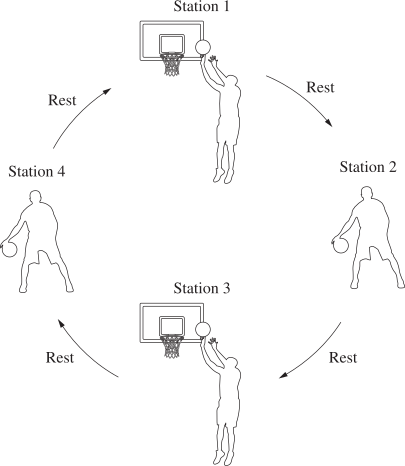
Which practice method is being used by the athlete?
To what extent should practice methods vary according to the ability, confidence and prior experience of learners? Provide examples to support your answer. (8 marks)
--- 26 WORK AREA LINES (style=lined) ---
Analyse how a coach should modify practice methods when transitioning an athlete from the associative to the autonomous stage of learning. Reference at least two practice methods in your response. (8 marks)
--- 22 WORK AREA LINES (style=lined) ---
Explain how the characteristics of a skill influence the choice between massed and distributed practice methods. Use specific examples to support your answer. (4 marks)
--- 12 WORK AREA LINES (style=lined) ---
Discuss the application of blocked and random practice methods for athletes at different stages of learning a team sport like netball. (6 marks)
--- 18 WORK AREA LINES (style=lined) ---
Explain how a basketball coach could use the whole-part-whole method to teach an effective jump shot to high school athletes. (4 marks)
--- 12 WORK AREA LINES (style=lined) ---
Outline the benefits of whole practice for an athlete in the autonomous stage of learning. (3 marks)
--- 7 WORK AREA LINES (style=lined) ---
Describe how a tennis coach could implement distributed practice when teaching the serve to a beginner player. (4 marks)
--- 10 WORK AREA LINES (style=lined) ---
To what extent should practice methods be modified based on the characteristics of the learner and the nature of the skill being taught. In your response, refer to at least two different practice methods. (8 marks)
--- 22 WORK AREA LINES (style=lined) ---
A soccer coach is using two different practice methods for a player transitioning from the associative to autonomous stage:
Discuss the effectiveness of blocked versus random practice for this soccer player transitioning from the associative to autonomous stage of learning. (8 marks)
--- 22 WORK AREA LINES (style=lined) ---
Compare part practice and whole practice methods, and explain which would be most effective for a novice swimmer learning the butterfly stroke. (4 marks)
--- 10 WORK AREA LINES (style=lined) ---
Describe how massed practice can be effective for an athlete in the autonomous stage of learning. (3 marks)
--- 7 WORK AREA LINES (style=lined) ---
A swimming coach is teaching the butterfly stroke using the following approach:
For which stage of learning would this part practice approach be MOST appropriate?
A volleyball coach is implementing a new practice methods as follows:
Which statement BEST explains why this new method (random practice) is more beneficial for elite volleyball players preparing for competition?
A novice gymnast is learning a complex balance beam routine. Her coach breaks down the routine into smaller segments, having her practise the mount first, then the middle section, and finally the dismount, before attempting the entire routine.
This is an example of which practice method?
During basketball training, Coach Liam has his players practise free throws for 20 minutes continuously, followed by layups for 20 minutes, then three-point shots for another 20 minutes.
Which practice method is Coach Liam primarily using?