SmarterEd

Aussie Maths & Science Teachers: Save your time with SmarterEd

  • Login
  • Get Help
  • About

HMS, HAG EQ-Bank 103 MC

Language barriers create health inequities for culturally and linguistically diverse (CALD) populations because they can lead to:

  1. Complete exclusion from all healthcare services in Australia
  2. Higher healthcare costs due to interpreter service fees
  3. Misunderstandings, misdiagnoses and inadequate treatment from poor communication
  4. Automatic referral to specialist services rather than general practitioners
Show Answers Only

\(C\)

Show Worked Solution
  • C is correct: Language differences make effective communication harder leading to misunderstandings, misdiagnoses and inadequate treatment.

Other Options:

  • A is incorrect: Language barriers create difficulties but don’t result in complete exclusion from services.
  • B is incorrect: Interpreter services are provided to address barriers not create cost inequities.
  • D is incorrect: Language barriers don’t lead to automatic specialist referrals they impede communication quality.

Filed Under: Groups Experiencing Inequities Tagged With: Band 5, smc-5475-25-Vulnerable groups

HMS, HAG EQ-Bank 102 MC

Older adults who lack technology skills face health inequities primarily because:

  1. They cannot afford modern healthcare equipment and devices
  2. Healthcare systems increasingly rely on digital platforms for appointments and health management
  3. Traditional medical treatments are no longer available to non-technology users
  4. Younger healthcare providers refuse to treat patients without digital literacy
Show Answers Only

\(B\)

Show Worked Solution
  • B is correct: Healthcare moving online creates barriers for older adults unfamiliar with digital appointment systems and telehealth.

Other Options:

  • A is incorrect: The issue is digital literacy skills not affordability of healthcare equipment.
  • C is incorrect: Traditional treatments remain available the challenge is accessing services through digital systems.
  • D is incorrect: Healthcare providers don’t refuse treatment but systems require digital navigation skills.

Filed Under: Groups Experiencing Inequities Tagged With: Band 4, smc-5475-25-Vulnerable groups

HMS, HAG EQ-Bank 101 MC

The "healthy migrant effect" observed in culturally and linguistically diverse (CALD) populations occurs because:

  1. Traditional diets are always healthier than Australian food choices
  2. Government health screening and selection processes favour healthier migrants
  3. Overseas healthcare systems provide better preventive care than Australia
  4. Cultural practices completely protect against Australian lifestyle diseases
Show Answers Only

\(B\)

Show Worked Solution
  • B is correct: Government selects migrants based on health, education, language and job skills plus health screening requirements.

Other Options:

  • A is incorrect: Traditional diets help initially but healthy migrant effect is due to selection processes.
  • C is incorrect: The effect results from Australian selection criteria not overseas healthcare quality.
  • D is incorrect: Cultural practices help but don’t provide complete protection and effect can disappear over time.

Filed Under: Groups Experiencing Inequities Tagged With: Band 3, smc-5475-25-Vulnerable groups

HMS, HAG EQ-Bank 100 MC

Which factor demonstrates how intersectionality compounds health inequities for vulnerable groups?

  1. People with disability who live in rural areas face greater healthcare access challenges than those in cities
  2. Older people generally have higher rates of chronic disease than younger populations
  3. Aboriginal and Torres Strait Islander Peoples in major cities have identical health outcomes to remote communities
  4. Culturally and linguistically diverse (CALD) populations always maintain better health status regardless of other factors
Show Answers Only

\(A\)

Show Worked Solution
  • A is correct: Intersectionality means people with disability in rural areas experience compounded disadvantages from both factors.

Other Options:

  • B is incorrect: This describes single factor impact not intersectionality of multiple disadvantages.
  • C is incorrect: Location does create different health outcomes even within Indigenous communities.
  • D is incorrect: CALD health status can be affected by other socioeconomic and geographic factors.

Filed Under: Groups Experiencing Inequities Tagged With: Band 4, smc-5475-25-Vulnerable groups

HMS, HAG EQ-Bank 99 MC

The ongoing impact of colonisation on Aboriginal and Torres Strait Islander Peoples' health can be explained through:

  1. Higher rates of chronic diseases in urban compared to remote communities
  2. Reduced access to traditional medicines and healing practices only
  3. Limited government funding for Indigenous-specific health programs
  4. Intergenerational trauma from forced removal of children and cultural suppression continuing to affect mental health and substance abuse rates
Show Answers Only

\(D\)

Show Worked Solution
  • D is correct: Intergenerational trauma from Stolen Generations and cultural suppression continues affecting mental health and substance abuse.

Other Options:

  • A is incorrect: Colonisation impacts affect all Indigenous communities not specifically urban versus remote patterns.
  • B is incorrect: Access to traditional practices is one factor but intergenerational trauma is the primary ongoing impact.
  • C is incorrect: Funding levels are current policy issues not the fundamental ongoing impact of colonisation.

Filed Under: Groups Experiencing Inequities Tagged With: Band 6, smc-5475-15-Inequity causes

HMS, HAG EQ-Bank 98 MC

Which factor primarily underpins health inequities for socioeconomically disadvantaged people living in areas like Walgett and Bourke?

  1. Higher rates of smoking and alcohol consumption in these communities
  2. Limited access to fresh food markets due to high concentration of fast-food outlets
  3. Geographic barriers requiring long-distance travel to access healthcare services and specialists
  4. Cultural norms that discourage help-seeking behaviours in rural communities
Show Answers Only

\(C\)

Show Worked Solution
  • C is correct: Geographic location requires travelling over 100km to reach hospitals creating financial burdens and healthcare access barriers.

Other Options:

  • A is incorrect: Higher smoking and alcohol rates are consequences not primary underlying causes of inequity.
  • B is incorrect: Food desert issues affect some areas but geographic healthcare access is the primary barrier.
  • D is incorrect: Cultural norms are more relevant to general rural populations not specifically socioeconomically disadvantaged areas.

Filed Under: Groups Experiencing Inequities Tagged With: Band 5, smc-5475-15-Inequity causes

HMS, HAG 2012 HSC 24

Explain the roles of individuals, communities and governments in addressing the health inequities experienced by ONE group other than Aboriginal and Torres Strait Islander peoples.   (8 marks)

--- 24 WORK AREA LINES (style=lined) ---

Show Answers Only

Socioeconomically disadvantaged people experience significant health inequities requiring coordinated responses.

  • Individual roles involve pursuing education and employment opportunities, which leads to improved income and health outcomes. Disadvantaged individuals can access community health services, resulting in better preventive care. This occurs when people develop health literacy skills and seek appropriate medical attention early.
  • Community organisations provide essential support services that bridge healthcare gaps. For example, community health centres offer bulk-billing services in low-income areas, ensuring affordable healthcare access. Food banks and community kitchens address nutritional needs, while employment training programs create pathways to economic stability.
  • Government interventions target systemic inequities through policy and funding. Medicare provides universal healthcare coverage, removing financial barriers to medical treatment. Centrelink payments ensure basic income support, enabling disadvantaged families to meet essential needs. Public housing programs address accommodation security, which directly impacts health outcomes.
  • Collaborative approaches prove most effective when all three levels work together. This integration results in comprehensive support addressing multiple determinants of health simultaneously.
Show Worked Solution

Socioeconomically disadvantaged people experience significant health inequities requiring coordinated responses.

  • Individual roles involve pursuing education and employment opportunities, which leads to improved income and health outcomes. Disadvantaged individuals can access community health services, resulting in better preventive care. This occurs when people develop health literacy skills and seek appropriate medical attention early.
  • Community organisations provide essential support services that bridge healthcare gaps. For example, community health centres offer bulk-billing services in low-income areas, ensuring affordable healthcare access. Food banks and community kitchens address nutritional needs, while employment training programs create pathways to economic stability.
  • Government interventions target systemic inequities through policy and funding. Medicare provides universal healthcare coverage, removing financial barriers to medical treatment. Centrelink payments ensure basic income support, enabling disadvantaged families to meet essential needs. Public housing programs address accommodation security, which directly impacts health outcomes.
  • Collaborative approaches prove most effective when all three levels work together. This integration results in comprehensive support addressing multiple determinants of health simultaneously.

♦♦ Mean mark 46%.

Filed Under: Groups Experiencing Inequities Tagged With: Band 4, Band 5, smc-5475-25-Vulnerable groups

HMS, HAG 2013 HSC 33a

Explain TWO factors that contribute to health inequities in different population groups.   (8 marks)

--- 24 WORK AREA LINES (style=lined) ---

Show Answers Only
  • Health inequities arise from complex interactions between social, economic and environmental factors that systematically disadvantage certain population groups through unequal access to health-promoting resources.
  • Socioeconomic disadvantage creates health inequities by limiting access to essential health-promoting resources and opportunities. Low income levels restrict access to nutritious foods, safe housing and quality healthcare services that are necessary for optimal health outcomes. Educational limitations reduce health literacy and decision-making capacity, leading to poor health choices and delayed healthcare seeking. Employment instability generates chronic stress and prevents consistent healthcare access through insurance coverage. This results in higher rates of chronic diseases, mental health issues and premature mortality among disadvantaged populations compared to affluent groups.
  • Geographic isolation contributes to health inequities through reduced access to healthcare services and health-promoting infrastructure. Rural and remote communities experience significant barriers including limited healthcare facilities, specialist shortages and extensive travel requirements for medical care. Distance from services delays emergency treatment and prevents regular preventive healthcare access. Poor infrastructure limits access to clean water, sanitation systems and recreational facilities that support healthy lifestyles. These geographic barriers result in higher injury rates, unmanaged chronic conditions and reduced life expectancy compared to metropolitan populations.
  • Both factors interact to compound disadvantage, as socioeconomically disadvantaged groups are more likely to live in geographically isolated areas where healthcare access remains most limited.
Show Worked Solution
  • Health inequities arise from complex interactions between social, economic and environmental factors that systematically disadvantage certain population groups through unequal access to health-promoting resources.
  • Socioeconomic disadvantage creates health inequities by limiting access to essential health-promoting resources and opportunities. Low income levels restrict access to nutritious foods, safe housing and quality healthcare services that are necessary for optimal health outcomes. Educational limitations reduce health literacy and decision-making capacity, leading to poor health choices and delayed healthcare seeking. Employment instability generates chronic stress and prevents consistent healthcare access through insurance coverage. This results in higher rates of chronic diseases, mental health issues and premature mortality among disadvantaged populations compared to affluent groups.
  • Geographic isolation contributes to health inequities through reduced access to healthcare services and health-promoting infrastructure. Rural and remote communities experience significant barriers including limited healthcare facilities, specialist shortages and extensive travel requirements for medical care. Distance from services delays emergency treatment and prevents regular preventive healthcare access. Poor infrastructure limits access to clean water, sanitation systems and recreational facilities that support healthy lifestyles. These geographic barriers result in higher injury rates, unmanaged chronic conditions and reduced life expectancy compared to metropolitan populations.
  • Both factors interact to compound disadvantage, as socioeconomically disadvantaged groups are more likely to live in geographically isolated areas where healthcare access remains most limited.

♦♦ Mean mark 54%.

Filed Under: Groups Experiencing Inequities Tagged With: Band 4, Band 5, smc-5475-15-Inequity causes

HMS, HAG 2013 HSC 10 MC

In Australia, men have a lower health status than women.

What is the most likely reason for this?

  1. Types of health care services available
  2. Unwillingness to seek medical assistance
  3. Heredity and lifestyle factors experienced in early life
  4. Lack of knowledge and understanding of health care services
Show Answers Only

\(B\)

Show Worked Solution
  • B is correct: Men typically delay seeking medical help for health issues.

Other Options:

  • A is incorrect: Healthcare services available equally to both genders.
  • C is incorrect: Heredity factors similar, lifestyle choices are behavioural responses.
  • D is incorrect: Knowledge access similar, willingness to use differs significantly.

Filed Under: Groups Experiencing Inequities Tagged With: Band 4, smc-5475-10-Determinants interaction

HMS, HAG 2013 HSC 3 MC

What would a comparison of the health status of Indigenous and non­Indigenous Australians show?

  1. Non­-Indigenous Australians have higher infant mortality rates.
  2. Non­-Indigenous Australians have a lower prevalence of acute diseases.
  3. Indigenous Australians have lower hospital admission rates.
  4. Indigenous Australians have a higher prevalence of chronic diseases
Show Answers Only

\(D\)

Show Worked Solution
  • D is correct: Indigenous Australians experience significantly higher chronic disease rates.

Other Options:

  • A is incorrect: Indigenous Australians have higher infant mortality rates.
  • B is incorrect: Non-Indigenous Australians have lower chronic disease prevalence.
  • C is incorrect: Indigenous Australians have higher hospitalisation rates overall.

Filed Under: Groups Experiencing Inequities Tagged With: Band 3, smc-5475-05-Indigenous health

HMS, HAG 2014 HSC 23

Explain the nature and extent of health inequities within Australia for one group OTHER than Aboriginal and Torres Strait Islanders.   (5 marks)

--- 15 WORK AREA LINES (style=lined) ---

Show Answers Only
  • People in rural and remote areas experience significant health inequities because limited healthcare access and higher risk behaviours create poorer health outcomes compared to city residents.
  • Geographic isolation directly affects health service availability and emergency response times. This leads to higher mortality rates for preventable chronic diseases including cardiovascular disease. As a result, life expectancy is lower with increased suicide rates.
  • Limited specialist services occur because fewer medical professionals choose rural practice locations. This creates longer travel distances and delays in receiving appropriate treatment. Consequently, emergency medical situations have poorer outcomes than urban areas.
  • Higher risk behaviours develop due to social isolation and limited recreational opportunities. This results in increased smoking rates and alcohol consumption exceeding guidelines. The combination produces elevated rates of preventable chronic diseases.
  • Socioeconomic disadvantage contributes through lower average incomes and reduced educational opportunities. This interaction with geographic isolation generates compounded effects on mental health and wellbeing.
Show Worked Solution
  • People in rural and remote areas experience significant health inequities because limited healthcare access and higher risk behaviours create poorer health outcomes compared to city residents.
  • Geographic isolation directly affects health service availability and emergency response times. This leads to higher mortality rates for preventable chronic diseases including cardiovascular disease. As a result, life expectancy is lower with increased suicide rates.
  • Limited specialist services occur because fewer medical professionals choose rural practice locations. This creates longer travel distances and delays in receiving appropriate treatment. Consequently, emergency medical situations have poorer outcomes than urban areas.
  • Higher risk behaviours develop due to social isolation and limited recreational opportunities. This results in increased smoking rates and alcohol consumption exceeding guidelines. The combination produces elevated rates of preventable chronic diseases.
  • Socioeconomic disadvantage contributes through lower average incomes and reduced educational opportunities. This interaction with geographic isolation generates compounded effects on mental health and wellbeing.

Filed Under: Groups Experiencing Inequities Tagged With: Band 4, smc-5475-10-Determinants interaction, smc-5475-15-Inequity causes, smc-5475-25-Vulnerable groups

HMS, HAG 2014 HSC 7 MC

Which of the following is an environmental determinant that best explains why Indigenous Australians have a shorter life expectancy than non-Indigenous Australians?

  1. The types of illness Indigenous Australians develop are more likely to result in death.
  2. Traditional forms of medicine are no longer widely used by Indigenous Australians.
  3. Indigenous Australians are less likely to have access to primary health care and adequate treatment.
  4. Indigenous Australians have higher rates of unemployment so they cannot afford to visit the doctor regularly.
Show Answers Only

\(C\)

Show Worked Solution
  • C is correct: Limited healthcare access is an environmental determinant affecting outcomes.

Other Options:

  • A is incorrect: This describes disease outcomes not environmental determinants.
  • B is incorrect: Traditional medicine use is cultural not environmental.
  • D is incorrect: Unemployment is socioeconomic not environmental determinant.

Filed Under: Groups Experiencing Inequities Tagged With: Band 3, smc-5475-05-Indigenous health, smc-5475-10-Determinants interaction, smc-5475-15-Inequity causes

HMS, HAG 2015 HSC 33a

How can generalisations about Australians who experience health inequalities be challenged?   (8 marks)

--- 24 WORK AREA LINES (style=lined) ---

Show Answers Only
  • Generalisations about Australians experiencing health inequities can be challenged by using reliable health information and questioning what people assume about disadvantaged groups. The reason for this is that harmful stereotypes often oversimplify complex health determinants affecting disadvantaged groups.
  • This occurs when people question broad statements by examining reliable health data from sources like Australia’s Health reports. For instance, challenging assumptions about Aboriginal and Torres Strait Islander health requires understanding how colonisation impacts contribute to current health disparities rather than blaming individual lifestyle choices.
  • Consequently, promoting health literacy enables individuals to critically analyse media representations about disadvantaged groups. This leads to better understanding of how social determinants like education, employment and housing influence health outcomes more than personal behaviours.
  • The underlying reason is that involving affected communities in defining their own health challenges prevents others from making assumptions about them. Therefore, direct contact with affected populations helps break down misconceptions because personal experiences contradict stereotypical assumptions.
  • As a result, research methods that include disadvantaged groups in the process ensure they participate in health research rather than being passive subjects.
  • This demonstrates how combining evidence-based information with community involvement creates more accurate understandings of health inequity causes.
Show Worked Solution
  • Generalisations about Australians experiencing health inequities can be challenged by using reliable health information and questioning what people assume about disadvantaged groups. The reason for this is that harmful stereotypes often oversimplify complex health determinants affecting disadvantaged groups.
  • This occurs when people question broad statements by examining reliable health data from sources like Australia’s Health reports. For instance, challenging assumptions about Aboriginal and Torres Strait Islander health requires understanding how colonisation impacts contribute to current health disparities rather than blaming individual lifestyle choices.
  • Consequently, promoting health literacy enables individuals to critically analyse media representations about disadvantaged groups. This leads to better understanding of how social determinants like education, employment and housing influence health outcomes more than personal behaviours.
  • The underlying reason is that involving affected communities in defining their own health challenges prevents others from making assumptions about them. Therefore, direct contact with affected populations helps break down misconceptions because personal experiences contradict stereotypical assumptions.
  • As a result, research methods that include disadvantaged groups in the process ensure they participate in health research rather than being passive subjects.
  • This demonstrates how combining evidence-based information with community involvement creates more accurate understandings of health inequity causes.

♦♦♦♦ Mean mark 36%.

Filed Under: Groups Experiencing Inequities Tagged With: Band 4, Band 5, smc-5475-25-Vulnerable groups

HMS, HAG 2016 HSC 31b

To what extent do different factors contribute to the health inequities experienced by a population group in Australia?   (12 marks)

--- 28 WORK AREA LINES (style=lined) ---

Show Answers Only

Assessment Statement

  • Different factors contribute to a significant extent in creating health inequities experienced by people with disability in Australia.
  • Socioeconomic, environmental and social determinants interact systematically to create compounding disadvantages that limit health outcomes substantially.

Socioeconomic Factors – Major Contribution

  • Employment discrimination creates substantial health inequities for people with disability through reduced income and limited healthcare access.
  • Unemployment rates exceed 50% among people with intellectual disability compared to 5% in the general population.
  • This economic disadvantage leads to reliance on public healthcare systems with extended waiting periods and reduced specialist access.
  • Evidence supporting major impact includes people with disability experiencing twice the rate of unmet healthcare needs due to financial barriers.
  • Private health insurance remains unaffordable, limiting access to allied health services like physiotherapy and psychology that could prevent secondary health complications.

Environmental Factors – Substantial Contribution

  • Physical accessibility barriers significantly restrict healthcare service utilisation among people with mobility impairments and sensory disabilities.
  • Medical facilities often lack appropriate ramps, accessible toilets, and communication aids required for safe healthcare delivery.
  • Transport limitations compound access problems with inadequate accessible public transport preventing routine medical appointments and emergency service access.
  • Geographic isolation particularly affects rural people with disability who face combinations of physical barriers and service shortages creating severe health disadvantages.

Social Factors – Moderate Contribution

  • Healthcare provider attitudes create discrimination and poor-quality care experiences that discourage continued healthcare engagement.
  • Limited disability awareness training results in miscommunication, inappropriate treatment approaches and inadequate accommodation of individual needs.
  • These social barriers lead to delayed diagnosis, inappropriate medication management, and reduced preventative care participation among people with disability.

Final Assessment

  • Evidence demonstrates significant combined impact where multiple factors interact to create systematic exclusion from optimal healthcare.
  • Socioeconomic factors prove most influential through direct financial barriers, while environmental and social factors amplify existing disadvantages substantially.

Show Worked Solution

Assessment Statement

  • Different factors contribute to a significant extent in creating health inequities experienced by people with disability in Australia.
  • Socioeconomic, environmental and social determinants interact systematically to create compounding disadvantages that limit health outcomes substantially.

Socioeconomic Factors – Major Contribution

  • Employment discrimination creates substantial health inequities for people with disability through reduced income and limited healthcare access.
  • Unemployment rates exceed 50% among people with intellectual disability compared to 5% in the general population.
  • This economic disadvantage leads to reliance on public healthcare systems with extended waiting periods and reduced specialist access.
  • Evidence supporting major impact includes people with disability experiencing twice the rate of unmet healthcare needs due to financial barriers.
  • Private health insurance remains unaffordable, limiting access to allied health services like physiotherapy and psychology that could prevent secondary health complications.

Environmental Factors – Substantial Contribution

  • Physical accessibility barriers significantly restrict healthcare service utilisation among people with mobility impairments and sensory disabilities.
  • Medical facilities often lack appropriate ramps, accessible toilets, and communication aids required for safe healthcare delivery.
  • Transport limitations compound access problems with inadequate accessible public transport preventing routine medical appointments and emergency service access.
  • Geographic isolation particularly affects rural people with disability who face combinations of physical barriers and service shortages creating severe health disadvantages.

Social Factors – Moderate Contribution

  • Healthcare provider attitudes create discrimination and poor-quality care experiences that discourage continued healthcare engagement.
  • Limited disability awareness training results in miscommunication, inappropriate treatment approaches and inadequate accommodation of individual needs.
  • These social barriers lead to delayed diagnosis, inappropriate medication management, and reduced preventative care participation among people with disability.

Final Assessment

  • Evidence demonstrates significant combined impact where multiple factors interact to create systematic exclusion from optimal healthcare.
  • Socioeconomic factors prove most influential through direct financial barriers, while environmental and social factors amplify existing disadvantages substantially.

♦♦ Mean mark 47%.

Filed Under: Groups Experiencing Inequities Tagged With: Band 5, smc-5475-10-Determinants interaction

HMS, HAG 2016 HSC 31a

In relation to a group affected by health inequities, explain the role of the media in influencing social attitudes and public policy.   (8 marks)

--- 24 WORK AREA LINES (style=lined) ---

Show Answers Only

Rural and Remote Australians

  • Media representation directly shapes public perceptions about rural communities through stereotypical portrayals that influence funding priorities.
  • This occurs because mainstream media often depicts rural areas as backward or resistant to change rather than highlighting systemic disadvantages.
  • When negative stereotypes dominate coverage of rural health issues, urban audiences develop unsympathetic attitudes toward resource allocation needs.
  • For instance, when television programs portray rural people as self-reliant and independent, public support decreases for government health service funding in remote areas.
      
  • Limited media access creates barriers to health promotion message delivery that compounds existing rural health disadvantages.
  • This happens because rural communities often experience poor internet connectivity and reduced television reception affecting health campaign exposure.
  • Geographic isolation leads to missed opportunities for accessing digital health promotion initiatives and online health resources.
  • Evidence of this includes rural youth missing social media mental health campaigns due to poor digital infrastructure, resulting in delayed help-seeking behaviours during crisis periods.
      
  • Positive media advocacy generates significant policy improvements when rural health stories receive compassionate and accurate representation.
  • This works by humanising rural health challenges and creating emotional connections with urban audiences and politicians.
  • Community-driven media initiatives trigger increased government attention and funding announcements for rural health infrastructure development.
  • A clear example is rural communities using local newspapers and radio stations to document healthcare worker shortages, prompting state government recruitment incentive programs and improved medical training placements.

Show Worked Solution

Rural and Remote Australians

  • Media representation directly shapes public perceptions about rural communities through stereotypical portrayals that influence funding priorities.
  • This occurs because mainstream media often depicts rural areas as backward or resistant to change rather than highlighting systemic disadvantages.
  • When negative stereotypes dominate coverage of rural health issues, urban audiences develop unsympathetic attitudes toward resource allocation needs.
  • For instance, when television programs portray rural people as self-reliant and independent, public support decreases for government health service funding in remote areas.
      
  • Limited media access creates barriers to health promotion message delivery that compounds existing rural health disadvantages.
  • This happens because rural communities often experience poor internet connectivity and reduced television reception affecting health campaign exposure.
  • Geographic isolation leads to missed opportunities for accessing digital health promotion initiatives and online health resources.
  • Evidence of this includes rural youth missing social media mental health campaigns due to poor digital infrastructure, resulting in delayed help-seeking behaviours during crisis periods.
      
  • Positive media advocacy generates significant policy improvements when rural health stories receive compassionate and accurate representation.
  • This works by humanising rural health challenges and creating emotional connections with urban audiences and politicians.
  • Community-driven media initiatives trigger increased government attention and funding announcements for rural health infrastructure development.
  • A clear example is rural communities using local newspapers and radio stations to document healthcare worker shortages, prompting state government recruitment incentive programs and improved medical training placements.

♦♦ Mean mark 50%.

Filed Under: Groups Experiencing Inequities Tagged With: Band 4, Band 5, smc-5475-15-Inequity causes

HMS, HAG 2016 HSC 22

Explain the determinants that contribute to the health inequities experienced by ONE priority population group other than Indigenous Australians. In your answer, provide specific examples.   (7 marks)

--- 21 WORK AREA LINES (style=lined) ---

Show Answers Only

  • Socioeconomic determinants directly contribute to health inequities experienced by people with disability. This occurs because lower employment rates and reduced earning capacity limit access to healthcare services. For instance, when people with intellectual disability experience unemployment rates above 70%, they rely heavily on public healthcare systems. This leads to longer waiting times for specialist services and reduced access to preventative care.
  • Environmental determinants create significant barriers to healthcare access for people with disability. The built environment often lacks appropriate accessibility features in medical facilities and transport systems. Evidence of this includes wheelchair users unable to access upper-floor medical centres without lifts. Consequently, people with mobility impairments experience delayed diagnosis and reduced preventative screening participation.
  • Social determinants generate discrimination and stigma that affect healthcare quality for people with disability. This happens because healthcare providers may lack disability awareness training and communication skills. A clear example is deaf patients receiving inadequate care due to absence of sign language interpreters. This results in miscommunication about symptoms and treatment options, leading to poorer health outcomes.
  • These determinants interact to create compounding disadvantages that systematically exclude people with disability from achieving optimal health status.

Show Worked Solution

  • Socioeconomic determinants directly contribute to health inequities experienced by people with disability. This occurs because lower employment rates and reduced earning capacity limit access to healthcare services. For instance, when people with intellectual disability experience unemployment rates above 70%, they rely heavily on public healthcare systems. This leads to longer waiting times for specialist services and reduced access to preventative care.
  • Environmental determinants create significant barriers to healthcare access for people with disability. The built environment often lacks appropriate accessibility features in medical facilities and transport systems. Evidence of this includes wheelchair users unable to access upper-floor medical centres without lifts. Consequently, people with mobility impairments experience delayed diagnosis and reduced preventative screening participation.
  • Social determinants generate discrimination and stigma that affect healthcare quality for people with disability. This happens because healthcare providers may lack disability awareness training and communication skills. A clear example is deaf patients receiving inadequate care due to absence of sign language interpreters. This results in miscommunication about symptoms and treatment options, leading to poorer health outcomes.
  • These determinants interact to create compounding disadvantages that systematically exclude people with disability from achieving optimal health status.

Filed Under: Groups Experiencing Inequities Tagged With: Band 4, smc-5475-10-Determinants interaction

HMS, HAG 2017 HSC 4 MC

Which set of socioeconomic determinants has the greatest influence on the health inequities experienced by indigenous population groups?

  1. Income and high-density living
  2. Religious and cultural influences
  3. Levels of education and employment
  4. Media access and geographical location
Show Answers Only

\(C\)

Show Worked Solution

  • C is correct: Education and employment levels are key socioeconomic determinants affecting Indigenous health inequities.

Other Options:

  • A is incorrect: High-density living is not a major determinant for Indigenous populations.
  • B is incorrect: Religious influences are not primary socioeconomic determinants of health inequities.
  • D is incorrect: Media access is not a major socioeconomic determinant of health.

Filed Under: Groups Experiencing Inequities Tagged With: Band 3, smc-5475-15-Inequity causes

HMS, HAG 2018 HSC 32b

Population groups experiencing health inequities can often be exposed to multiple risk factors.

Analyse the implications of multiple risk factors in managing health inequities faced by population groups.   (12 marks)

--- 28 WORK AREA LINES (style=lined) ---

Show Answers Only

Overview Statement

  • Multiple risk factors create complex interactions that exacerbate health inequities for vulnerable populations.
  • These interconnected determinants require comprehensive management approaches that address root causes rather than individual symptoms, as single-factor interventions prove inadequate for sustainable change.

Component Relationship 1

  • Socioeconomic and environmental factors interact to reinforce each other to worsen health outcomes for disadvantaged groups through cascading effects.
  • Low income connects to poor housing conditions, which influences exposure to environmental hazards, overcrowding and chronic stress.
    For example, homeless populations experience combined effects of financial insecurity, inadequate shelter, limited healthcare access, and social isolation.
  • This relationship demonstrates how poverty leads to substandard living conditions that can enable infectious disease transmission, respiratory problems and mental health deterioration.
  • Poor nutrition results in part from limited income, which affects immune function and chronic disease development.
  • The significance is that addressing only housing or income provides limited improvement because other interconnected risks continue to undermine overall health status and create ongoing vulnerability.

Component Relationship 2

  • Social and cultural determinants interact with healthcare access barriers to create compounding disadvantages that perpetuate health inequities.
  • Indigenous Australians face multiple interacting challenges including geographic isolation, cultural barriers, historical trauma and systemic discrimination.
  • This pattern shows how racism in healthcare settings connects to reduced help-seeking behaviour, which results in delayed diagnosis, inadequate treatment and preventable complications.
  • Language barriers combine with cultural misunderstanding to create communication breakdowns between patients and providers. The trend indicates that cultural incompetence among healthcare providers affects trust levels, which depends on community experiences of discrimination and historical injustices.
  • Consequently, these interconnected factors create cycles where poor health outcomes reinforce social disadvantage and community mistrust of health services.

Implications and Synthesis

  • Management strategies must address multiple determinants simultaneously because isolated interventions fail to break complex disadvantage cycles that maintain health inequities.
  • The broader implications show that effective programs require coordinated approaches across housing, employment, education and healthcare sectors with sustained funding and community partnership.
  • This means that successful interventions involve community-led solutions that tackle structural inequalities while building cultural competence in service delivery systems and creating supportive policy frameworks.

Show Worked Solution

Overview Statement

  • Multiple risk factors create complex interactions that exacerbate health inequities for vulnerable populations.
  • These interconnected determinants require comprehensive management approaches that address root causes rather than individual symptoms, as single-factor interventions prove inadequate for sustainable change.

Component Relationship 1

  • Socioeconomic and environmental factors interact to reinforce each other to worsen health outcomes for disadvantaged groups through cascading effects.
  • Low income connects to poor housing conditions, which influences exposure to environmental hazards, overcrowding and chronic stress.
  • For example, homeless populations experience combined effects of financial insecurity, inadequate shelter, limited healthcare access, and social isolation.
  • This relationship demonstrates how poverty leads to substandard living conditions that can enable infectious disease transmission, respiratory problems and mental health deterioration.
  • Poor nutrition results in part from limited income, which affects immune function and chronic disease development.
  • The significance is that addressing only housing or income provides limited improvement because other interconnected risks continue to undermine overall health status and create ongoing vulnerability.

Component Relationship 2

  • Social and cultural determinants interact with healthcare access barriers to create compounding disadvantages that perpetuate health inequities.
  • Indigenous Australians face multiple interacting challenges including geographic isolation, cultural barriers, historical trauma and systemic discrimination.
  • This pattern shows how racism in healthcare settings connects to reduced help-seeking behaviour, which results in delayed diagnosis, inadequate treatment and preventable complications.
  • Language barriers combine with cultural misunderstanding to create communication breakdowns between patients and providers. The trend indicates that cultural incompetence among healthcare providers affects trust levels, which depends on community experiences of discrimination and historical injustices.
  • Consequently, these interconnected factors create cycles where poor health outcomes reinforce social disadvantage and community mistrust of health services.

Implications and Synthesis

  • Management strategies must address multiple determinants simultaneously because isolated interventions fail to break complex disadvantage cycles that maintain health inequities.
  • The broader implications show that effective programs require coordinated approaches across housing, employment, education and healthcare sectors with sustained funding and community partnership.
  • This means that successful interventions involve community-led solutions that tackle structural inequalities while building cultural competence in service delivery systems and creating supportive policy frameworks.

♦♦♦♦ Mean mark 40%.

Filed Under: Groups Experiencing Inequities Tagged With: Band 5, smc-5475-10-Determinants interaction

HMS, HAG 2018 HSC 32a

Explain how implementing economic and cultural change supports a population experiencing health inequity.   (8 marks)

--- 24 WORK AREA LINES (style=lined) ---

Show Answers Only

  • Economic changes support populations experiencing health inequity because improved financial resources enable better access to healthcare and healthy lifestyle choices. This occurs because economic disadvantage creates barriers to accessing medical services, nutritious food and safe housing.
    For example, increasing minimum wages and providing employment opportunities enables low-income families to afford preventive healthcare and quality food. This leads to reduced financial stress and improved capacity to make healthy choices.
    Additionally, government investment in affordable housing programs creates stable living environments that support better health outcomes. The reason for this is secure housing reduces exposure to environmental health risks and provides a foundation for accessing education and employment.
  • Cultural changes address health inequities because they challenge discriminatory attitudes and practices that prevent equal access to healthcare. This happens when healthcare providers receive cultural competency training to better understand diverse populations’ needs.
    For instance, implementing culturally appropriate health services for Aboriginal and Torres Strait Islander peoples results in increased trust and participation in health programs.
    Consequently, this produces higher rates of preventive care utilisation and better health outcomes.
    Furthermore, community education campaigns that reduce stigma around mental health facilitate greater help-seeking behaviour among affected populations.
  • Therefore, combined economic and cultural interventions create comprehensive support systems that address both structural barriers and social attitudes. This process ensures sustainable improvements in health equity across different population groups.

Show Worked Solution

  • Economic changes support populations experiencing health inequity because improved financial resources enable better access to healthcare and healthy lifestyle choices. This occurs because economic disadvantage creates barriers to accessing medical services, nutritious food and safe housing.
    For example, increasing minimum wages and providing employment opportunities enables low-income families to afford preventive healthcare and quality food. This leads to reduced financial stress and improved capacity to make healthy choices.
    Additionally, government investment in affordable housing programs creates stable living environments that support better health outcomes. The reason for this is secure housing reduces exposure to environmental health risks and provides a foundation for accessing education and employment.
  • Cultural changes address health inequities because they challenge discriminatory attitudes and practices that prevent equal access to healthcare. This happens when healthcare providers receive cultural competency training to better understand diverse populations’ needs.
    For instance, implementing culturally appropriate health services for Aboriginal and Torres Strait Islander peoples results in increased trust and participation in health programs.
    Consequently, this produces higher rates of preventive care utilisation and better health outcomes.
    Furthermore, community education campaigns that reduce stigma around mental health facilitate greater help-seeking behaviour among affected populations.
  • Therefore, combined economic and cultural interventions create comprehensive support systems that address both structural barriers and social attitudes. This process ensures sustainable improvements in health equity across different population groups.

♦♦ Mean mark 50%.

Filed Under: Groups Experiencing Inequities Tagged With: Band 4, Band 5, smc-5475-15-Inequity causes

HMS, HAG 2018 HSC 24

Explain the roles of individuals, communities and governments in addressing health inequities experienced by Aboriginal and Torres Strait Islander peoples. Use examples to support your answer.   (8 marks)

--- 24 WORK AREA LINES (style=lined) ---

Show Answers Only

Governments

  • Governments play crucial roles in addressing Aboriginal and Torres Strait Islander health inequities. This occurs because governments control funding allocation and policy development. For example, the Close the Gap strategy provides targeted funding for Indigenous health programs and services. This leads to improved access to culturally appropriate healthcare in remote communities. The reason for this is governments have the legislative power to create systemic change. Consequently, initiatives like Aboriginal Community Controlled Health Services receive ongoing support.

Communities

  • Communities are essential in implementing culturally safe health programs. This happens when local Aboriginal communities take ownership of health initiatives. For instance, community elders provide health education using traditional knowledge and storytelling methods. This creates trust between health services and community members. This relationship results in higher participation rates in screening programs and health checks. As a result, communities can address specific local health needs more effectively.

Individuals

  • Individuals contribute by adopting healthier behaviours and advocating for change. This works by personal responsibility combining with community support. For example, Aboriginal health workers serve as role models, encouraging smoking cessation and regular health checks. This demonstrates how individuals can influence family and peer networks. Therefore, personal actions create ripple effects throughout communities, improving overall health outcomes.

Show Worked Solution

Governments

  • Governments play crucial roles in addressing Aboriginal and Torres Strait Islander health inequities. This occurs because governments control funding allocation and policy development. For example, the Close the Gap strategy provides targeted funding for Indigenous health programs and services. This leads to improved access to culturally appropriate healthcare in remote communities. The reason for this is governments have the legislative power to create systemic change. Consequently, initiatives like Aboriginal Community Controlled Health Services receive ongoing support.

Communities

  • Communities are essential in implementing culturally safe health programs. This happens when local Aboriginal communities take ownership of health initiatives. For instance, community elders provide health education using traditional knowledge and storytelling methods. This creates trust between health services and community members. This relationship results in higher participation rates in screening programs and health checks. As a result, communities can address specific local health needs more effectively.

Individuals

  • Individuals contribute by adopting healthier behaviours and advocating for change. This works by personal responsibility combining with community support. For example, Aboriginal health workers serve as role models, encouraging smoking cessation and regular health checks. This demonstrates how individuals can influence family and peer networks. Therefore, personal actions create ripple effects throughout communities, improving overall health outcomes.

Filed Under: Groups Experiencing Inequities Tagged With: Band 4, smc-5475-05-Indigenous health

HMS, HAG 2019 HSC 32b

To what extent has the inequity gap changed for TWO population groups as a result of government interventions?   (12 marks)

--- 28 WORK AREA LINES (style=lined) ---

Show Answers Only

Judgment Statement

  • Government interventions have achieved moderate success in reducing health inequities for rural Australians and older people. Evidence shows significant improvements in access and some health outcomes, though substantial gaps remain.

Rural and Remote Australians

  • Government interventions have moderately reduced health inequities for rural Australians through improved access initiatives. The Royal Flying Doctor Service connects remote communities with emergency and primary healthcare services. Medicare telehealth consultations enable rural patients to access specialists without travelling long distances. The Rural Health Strategy provides additional funding for medical equipment and practitioners in regional areas.
  • These interventions demonstrate measurable improvements in healthcare access rates. Emergency response times have decreased in many remote regions. Specialist consultation rates have increased through digital health platforms. However, significant challenges remain as rural Australians still experience higher mortality rates than metropolitan populations. Chronic disease management continues to lag behind urban standards, indicating partial effectiveness of current interventions.

Older Australians

  • Government interventions show substantial progress in supporting healthy ageing and reducing inequities for older Australians. My Aged Care coordinates support services and helps older people access appropriate care. The National Immunisation Program provides free vaccinations specifically targeting older adults’ health needs. Medicare subsidises preventive health checks for people aged 65 and over.
  • Evidence supports significant positive outcomes from these targeted interventions. Aged care service utilisation rates have increased substantially over recent years. Preventable hospitalisation rates for older people have decreased due to better community support. Life expectancy for older Australians continues to improve, suggesting successful health promotion strategies. These interventions effectively address social isolation and healthcare access barriers that previously created major inequities.

Reaffirmation

  • Government interventions have achieved moderate success in reducing health inequities for both population groups. Rural health initiatives show promise but require sustained investment to achieve equity with urban areas. Older Australian programs demonstrate stronger outcomes, reflecting more comprehensive policy approaches and adequate resource allocation for this growing demographic.

Show Worked Solution

Judgment Statement

  • Government interventions have achieved moderate success in reducing health inequities for rural Australians and older people. Evidence shows significant improvements in access and some health outcomes, though substantial gaps remain.

Rural and Remote Australians

  • Government interventions have moderately reduced health inequities for rural Australians through improved access initiatives. The Royal Flying Doctor Service connects remote communities with emergency and primary healthcare services. Medicare telehealth consultations enable rural patients to access specialists without travelling long distances. The Rural Health Strategy provides additional funding for medical equipment and practitioners in regional areas.
  • These interventions demonstrate measurable improvements in healthcare access rates. Emergency response times have decreased in many remote regions. Specialist consultation rates have increased through digital health platforms. However, significant challenges remain as rural Australians still experience higher mortality rates than metropolitan populations. Chronic disease management continues to lag behind urban standards, indicating partial effectiveness of current interventions.

Older Australians

  • Government interventions show substantial progress in supporting healthy ageing and reducing inequities for older Australians. My Aged Care coordinates support services and helps older people access appropriate care. The National Immunisation Program provides free vaccinations specifically targeting older adults’ health needs. Medicare subsidises preventive health checks for people aged 65 and over.
  • Evidence supports significant positive outcomes from these targeted interventions. Aged care service utilisation rates have increased substantially over recent years. Preventable hospitalisation rates for older people have decreased due to better community support. Life expectancy for older Australians continues to improve, suggesting successful health promotion strategies. These interventions effectively address social isolation and healthcare access barriers that previously created major inequities.

Reaffirmation

  • Government interventions have achieved moderate success in reducing health inequities for both population groups. Rural health initiatives show promise but require sustained investment to achieve equity with urban areas. Older Australian programs demonstrate stronger outcomes, reflecting more comprehensive policy approaches and adequate resource allocation for this growing demographic.

♦♦ Mean mark 45%.

Filed Under: Groups Experiencing Inequities Tagged With: Band 5, smc-5475-10-Determinants interaction, smc-5475-15-Inequity causes

HMS, HAG 2020 HSC 16 MC

Which of the following identifies the health inequities experienced by Aboriginal and Torres Strait Islander peoples when compared to non-Indigenous Australians?

  1. Lower life expectancy, higher mortality rate from diabetes, higher incidence of lung cancer
  2. Lower life expectancy, lower morbidity rate from diabetes, higher incidence of breast cancer
  3. Higher infant mortality rate, lower mortality rate from diabetes, higher incidence of lung cancer
  4. Higher infant mortality rate, higher morbidity rate from diabetes, lower rate of hospitalisation due to injury
Show Answers Only

\(A\)

Show Worked Solution
  • A is correct: Aboriginal peoples have lower life expectancy, higher diabetes mortality, higher lung cancer.

Other Options:

  • B is incorrect: Aboriginal peoples have higher not lower diabetes morbidity.
  • C is incorrect: Aboriginal peoples have higher not lower diabetes mortality.
  • D is incorrect: Aboriginal peoples have higher not lower injury hospitalisation rates.

Filed Under: Groups Experiencing Inequities Tagged With: Band 3, smc-5475-05-Indigenous health, smc-5475-10-Determinants interaction

HMS, HIC 2022 HSC 18 MC

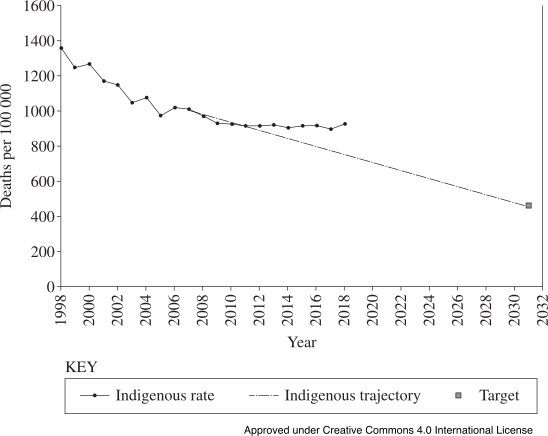
The graph shows the mortality rate and projected trajectory to the year 2031 for Indigenous Australians.

Which of the following was the most significant factor that contributed to the trend in the mortality rate for Indigenous Australians from 1998-2005?

  1. More Indigenous Australian students completed Year 12
  2. The Australian Government's implementation of the Closing the Gap framework
  3. Increased childhood immunisation rates among Indigenous populations in Australia
  4. Improvement in the early detection and management of chronic disease for Indigenous Australians
Show Answers Only

\( D \)

Show Worked Solution
  • D is correct: Early detection and chronic disease management directly reduces mortality rates.

Other Options:

  • A is incorrect: Education improvements have longer-term rather than immediate mortality impact.
  • B is incorrect: Closing the Gap was implemented after 2008, not 1998-2005.
  • C is incorrect: Immunisation affects childhood mortality, not overall population trends.

♦♦ Mean mark 40%.

Filed Under: Groups Experiencing Inequities Tagged With: Band 5, smc-5475-05-Indigenous health

HMS, HAG 2021 HSC 15 MC

Which row in the table shows the trend over the past 10 years for Aboriginal and Torres Strait Islander peoples in relation to the identified health measures?

Show Answers Only

\(B\)

Show Worked Solution
  • B is correct: All three measures show positive improvements over decade.

Other Options:

  • A is incorrect: Life expectancy has been increasing not decreasing.
  • C is incorrect: Infant mortality and cardiovascular mortality have decreased.
  • D is incorrect: Infant mortality has decreased and life expectancy increased.

Filed Under: Groups Experiencing Inequities Tagged With: Band 4, smc-5475-05-Indigenous health

HMS, HAG 2021 HSC 32a

  1. In relation to ONE population group experiencing health inequities, outline the media's role in influencing public policy.   (3 marks)

    --- 6 WORK AREA LINES (style=lined) ---

  2. Explain the effects of a government intervention for ONE population group that experiences health inequities.   (5 marks)

    --- 15 WORK AREA LINES (style=lined) ---

Show Answers Only

i.    Aboriginal and Torres Strait Islander Peoples

  • Media coverage of Aboriginal and Torres Strait Islander health inequities raises public awareness about persistent disparities in life expectancy and chronic disease rates.
  • Investigative journalism highlighting inadequate healthcare access in remote communities creates pressure for government policy responses.
  • Media campaigns featuring Indigenous health advocates amplify community voices and demands for culturally appropriate services.
  • Television documentaries and news reports generate public support for increased health funding and policy reforms addressing systemic barriers to healthcare access.

ii.    Aboriginal and Torres Strait Islander Peoples

  • The Closing the Gap strategy aims to reduce health disparities between Aboriginal and Torres Strait Islander Peoples and non-Indigenous Australians. This intervention works by establishing measurable targets for life expectancy, infant mortality, and chronic disease management.
  • The strategy has resulted in improved access to culturally appropriate healthcare through increased funding for Aboriginal Community Controlled Health Organisations. These services consequently provide more effective primary healthcare because they incorporate traditional healing with Western medicine and employ Indigenous health workers.
  • Educational initiatives have led to enhanced health literacy among Indigenous communities. Programs teaching diabetes management and nutrition have enabled better chronic condition self-management. This approach produces measurable improvements in blood glucose control and medication adherence.
  • However, progress remains limited in remote areas where geographical barriers continue to restrict specialist access. Additionally, social determinants like housing and employment still influence health outcomes despite targeted interventions. Overall effects demonstrate modest improvements in specific indicators while highlighting the need for broader social policy integration to address underlying inequality causes.
Show Worked Solution

i.    Aboriginal and Torres Strait Islander Peoples

  • Media coverage of Aboriginal and Torres Strait Islander health inequities raises public awareness about persistent disparities in life expectancy and chronic disease rates.
  • Investigative journalism highlighting inadequate healthcare access in remote communities creates pressure for government policy responses.
  • Media campaigns featuring Indigenous health advocates amplify community voices and demands for culturally appropriate services.
  • Television documentaries and news reports generate public support for increased health funding and policy reforms addressing systemic barriers to healthcare access.

ii.    Aboriginal and Torres Strait Islander Peoples

  • The Closing the Gap strategy aims to reduce health disparities between Aboriginal and Torres Strait Islander Peoples and non-Indigenous Australians. This intervention works by establishing measurable targets for life expectancy, infant mortality, and chronic disease management.
  • The strategy has resulted in improved access to culturally appropriate healthcare through increased funding for Aboriginal Community Controlled Health Organisations. These services consequently provide more effective primary healthcare because they incorporate traditional healing with Western medicine and employ Indigenous health workers.
  • Educational initiatives have led to enhanced health literacy among Indigenous communities. Programs teaching diabetes management and nutrition have enabled better chronic condition self-management. This approach produces measurable improvements in blood glucose control and medication adherence.
  • However, progress remains limited in remote areas where geographical barriers continue to restrict specialist access. Additionally, social determinants like housing and employment still influence health outcomes despite targeted interventions. Overall effects demonstrate modest improvements in specific indicators while highlighting the need for broader social policy integration to address underlying inequality causes.

♦ Mean mark 50%.

Filed Under: Groups Experiencing Inequities Tagged With: Band 3, Band 5, smc-5475-05-Indigenous health

HMS, HAG 2022 HSC 31b

Analyse how enabling, mediating and advocating processes can lead to sustainable health improvements for disadvantaged groups.   (12 marks)

--- 30 WORK AREA LINES (style=lined) ---

Show Answers Only

Overview Statement

  • Enabling, mediating and advocating processes interact to create comprehensive support systems that address root causes of health disadvantage.
  • Key relationships include skill development empowerment, stakeholder collaboration, and systemic change advocacy.

Enabling and Mediating Relationship

  • Enabling processes directly empower disadvantaged groups by building health literacy and self-management skills for chronic conditions.
  • This aligns with mediating processes which facilitate collaboration between health services, community organisations and disadvantaged populations.
  • For example, diabetes education programs for Aboriginal communities enable individuals to manage blood glucose, while mediating processes bring together traditional healers and medical practitioners.
  • This relationship results in culturally appropriate care that respects traditional knowledge while incorporating medical expertise.
  • The interaction means sustainable improvements occur because communities develop internal capacity while maintaining external professional support.
  • Mediating processes ensure different stakeholders work toward common health goals rather than competing approaches.

Advocating and System Change Relationship

  • Advocating processes influence policy makers and healthcare systems to remove structural barriers that perpetuate health inequities.
  • Advocacy complements enabling processes by creating environments where newly developed skills can be effectively utilised.
  • For instance, advocacy for bulk-billing clinics in disadvantaged areas enables low-income families to use health literacy skills without financial barriers.
  • The significance is that individual empowerment becomes meaningless without systemic change to support improved health behaviours.
  • Advocacy leads to legislative changes like improved disability access requirements that complement individual skill development programs.
  • Thus demonstrating how structural change amplifies the impact of personal empowerment initiatives.

Implications and Synthesis

  • These interconnected processes create sustainable change because they address both individual capacity and environmental barriers simultaneously.
  • The pattern shows that isolated approaches fail while integrated enabling, mediating and advocating strategies produce lasting health improvements.
  • Therefore, sustainable health improvements for disadvantaged groups depend on coordinated processes that empower individuals, facilitate collaboration, and transform systems.
Show Worked Solution

Overview Statement

  • Enabling, mediating and advocating processes interact to create comprehensive support systems that address root causes of health disadvantage.
  • Key relationships include skill development empowerment, stakeholder collaboration, and systemic change advocacy.

Enabling and Mediating Relationship

  • Enabling processes directly empower disadvantaged groups by building health literacy and self-management skills for chronic conditions.
  • This aligns with mediating processes which facilitate collaboration between health services, community organisations and disadvantaged populations.
  • For example, diabetes education programs for Aboriginal communities enable individuals to manage blood glucose, while mediating processes bring together traditional healers and medical practitioners.
  • This relationship results in culturally appropriate care that respects traditional knowledge while incorporating medical expertise.
  • The interaction means sustainable improvements occur because communities develop internal capacity while maintaining external professional support.
  • Mediating processes ensure different stakeholders work toward common health goals rather than competing approaches.

Advocating and System Change Relationship

  • Advocating processes influence policy makers and healthcare systems to remove structural barriers that perpetuate health inequities.
  • Advocacy complements enabling processes by creating environments where newly developed skills can be effectively utilised.
  • For instance, advocacy for bulk-billing clinics in disadvantaged areas enables low-income families to use health literacy skills without financial barriers.
  • The significance is that individual empowerment becomes meaningless without systemic change to support improved health behaviours.
  • Advocacy leads to legislative changes like improved disability access requirements that complement individual skill development programs.
  • Thus demonstrating how structural change amplifies the impact of personal empowerment initiatives.

Implications and Synthesis

  • These interconnected processes create sustainable change because they address both individual capacity and environmental barriers simultaneously.
  • The pattern shows that isolated approaches fail while integrated enabling, mediating and advocating strategies produce lasting health improvements.
  • Therefore, sustainable health improvements for disadvantaged groups depend on coordinated processes that empower individuals, facilitate collaboration, and transform systems.

♦♦ Mean mark 41%.

Filed Under: Groups Experiencing Inequities Tagged With: Band 5, smc-5475-25-Vulnerable groups

HMS, HAG 2022 HSC 31aii

Explain how improving access to services and transport can reduce health inequities for a population group.   (5 marks)

--- 15 WORK AREA LINES (style=lined) ---

Show Answers Only

Rural and Remote Populations

  • Improved transport access directly enables rural and remote populations to reach healthcare facilities for preventive screening and treatment.
  • Such access removes the primary barrier, geographic isolation, preventing rural residents from accessing specialist medical services.
  • For example, shuttle bus services allow elderly rural residents to attend regular GP appointments without relying on family transport.
  • Mobile health services bring essential healthcare directly to remote communities, eliminating the need for long-distance travel.
  • This is facilitated by sending specialist teams and screening equipment to rural towns on scheduled visits.
  • Consequently, rural women can receive mammograms without travelling hundreds of kilometres to major cities.
  • Enhanced telehealth services enable rural patients to consult specialists via video conferencing from local medical centres.
  • Thus creating immediate access to expert medical advice that would otherwise require expensive overnight trips.
  • As a result, chronic conditions like diabetes can be monitored regularly, preventing serious complications.
  • Therefore, systematic access improvements directly address the geographic disadvantage that causes health inequities in rural and remote areas.
Show Worked Solution

Rural and Remote Populations

  • Improved transport access directly enables rural and remote populations to reach healthcare facilities for preventive screening and treatment.
  • Such access removes the primary barrier, geographic isolation, preventing rural residents from accessing specialist medical services.
  • For example, shuttle bus services allow elderly rural residents to attend regular GP appointments without relying on family transport.
  • Mobile health services bring essential healthcare directly to remote communities, eliminating the need for long-distance travel.
  • This is facilitated by sending specialist teams and screening equipment to rural towns on scheduled visits.
  • Consequently, rural women can receive mammograms without travelling hundreds of kilometres to major cities.
  • Enhanced telehealth services enable rural patients to consult specialists via video conferencing from local medical centres.
  • Thus creating immediate access to expert medical advice that would otherwise require expensive overnight trips.
  • As a result, chronic conditions like diabetes can be monitored regularly, preventing serious complications.
  • Therefore, systematic access improvements directly address the geographic disadvantage that causes health inequities in rural and remote areas.

♦ Mean mark 52%.

Filed Under: Groups Experiencing Inequities Tagged With: Band 5, smc-5475-25-Vulnerable groups

HMS, HAG 2022 HSC 31ai

Outline TWO social attributes that have contributed to health inequities experienced by a population group in Australia.   (3 marks)

--- 8 WORK AREA LINES (style=lined) ---

Show Answers Only

Any TWO of the following

Aboriginal and Torres Strait Islander Peoples (social exclusion)

  • Social exclusion affects Aboriginal and Torres Strait Islander peoples through historical disconnection from mainstream services and community networks.
  • This isolation reduces access to healthcare, employment opportunities, and social support systems that promote wellbeing.

Socioeconomically disadvantaged (educational disadvantage)

  • Educational disadvantage creates barriers to health literacy and employment for socioeconomically disadvantaged groups.
  • Lower education levels limit understanding of health information and reduce income potential, affecting ability to access quality healthcare and healthy lifestyle choices.

Culturally and linguistically diverse (cultural discrimination)

  • Cultural discrimination impacts culturally and linguistically diverse populations through language barriers and prejudice in healthcare settings.
  • This discrimination reduces trust in health services and creates reluctance to seek medical help when needed.

Rural and remote (geographic isolation)

  • Geographic isolation affects rural and remote populations through limited access to specialist services and transport difficulties.
  • Distance barriers prevent regular health monitoring and emergency care access, leading to delayed treatment and poorer outcomes.
Show Worked Solution

Any TWO of the following

Aboriginal and Torres Strait Islander Peoples (social exclusion)

  • Social exclusion affects Aboriginal and Torres Strait Islander peoples through historical disconnection from mainstream services and community networks.
  • This isolation reduces access to healthcare, employment opportunities, and social support systems that promote wellbeing.

Socioeconomically disadvantaged (educational disadvantage)

  • Educational disadvantage creates barriers to health literacy and employment for socioeconomically disadvantaged groups.
  • Lower education levels limit understanding of health information and reduce income potential, affecting ability to access quality healthcare and healthy lifestyle choices.

Culturally and linguistically diverse (cultural discrimination)

  • Cultural discrimination impacts culturally and linguistically diverse populations through language barriers and prejudice in healthcare settings.
  • This discrimination reduces trust in health services and creates reluctance to seek medical help when needed.

Rural and remote (geographic isolation)

  • Geographic isolation affects rural and remote populations through limited access to specialist services and transport difficulties.
  • Distance barriers prevent regular health monitoring and emergency care access, leading to delayed treatment and poorer outcomes.

♦ Mean mark 49%.

Filed Under: Groups Experiencing Inequities Tagged With: Band 5, smc-5475-15-Inequity causes

HMS, HAG 2022 HSC 24

Select ONE of the following conditions to answer BOTH parts (a) and (b) of this question.

  • Diabetes
  • Respiratory disease
  • Injury
  • Mental health problems and illnesses
  1. Outline the extent of this condition in Australia.   (3 marks)

    --- 6 WORK AREA LINES (style=lined) ---

  2. Explain how sociocultural determinants affect ONE group at risk of this condition.   (4 marks)

    --- 12 WORK AREA LINES (style=lined) ---

Show Answers Only

a.    Condition selected – Mental health problems and illnesses

  • Mental health conditions affect approximately one in five Australians, making them highly prevalent. Young people aged 16-24 experience the highest rates, with significantly higher prevalence than older age groups. Anxiety disorders are the most common type.
  • The prevalence has increased significantly among young people, particularly females, over the past decade. Mental health conditions represent one of the leading causes of disease burden in Australia, demonstrating a major public health challenge.

b.    Group at risk: Young people aged 16-24

  • Sociocultural determinants significantly influence mental health outcomes for young people. Social media and peer pressure create unrealistic expectations and comparison culture, leading to anxiety and depression. This occurs because young people are particularly vulnerable to social validation.
  • Family dynamics and socioeconomic status affect access to support systems and professional help. Low-income families often cannot afford private mental health services, resulting in delayed treatment. Social isolation and stigma prevent young people from seeking help.
  • Educational pressures and career uncertainty contribute to stress and anxiety. These factors interact to compound mental health risks, particularly for disadvantaged young people who face multiple sociocultural barriers.
Show Worked Solution

a.    Condition selected – Mental health problems and illnesses

  • Mental health conditions affect approximately one in five Australians, making them highly prevalent. Young people aged 16-24 experience the highest rates, with significantly higher prevalence than older age groups. Anxiety disorders are the most common type.
  • The prevalence has increased significantly among young people, particularly females, over the past decade. Mental health conditions represent one of the leading causes of disease burden in Australia, demonstrating a major public health challenge.

b.    Group at risk: Young people aged 16-24

  • Sociocultural determinants significantly influence mental health outcomes for young people. Social media and peer pressure create unrealistic expectations and comparison culture, leading to anxiety and depression. This occurs because young people are particularly vulnerable to social validation.
  • Family dynamics and socioeconomic status affect access to support systems and professional help. Low-income families often cannot afford private mental health services, resulting in delayed treatment. Social isolation and stigma prevent young people from seeking help.
  • Educational pressures and career uncertainty contribute to stress and anxiety. These factors interact to compound mental health risks, particularly for disadvantaged young people who face multiple sociocultural barriers.

♦ Mean mark (b) 55%.

Filed Under: Groups Experiencing Inequities Tagged With: Band 4, Band 5, smc-5475-10-Determinants interaction, smc-5475-25-Vulnerable groups

HMS, HAG 2023 HSC 32aii

Explain how ensuring cultural relevance improves the potential for the success of ONE health promotion strategy.   (5 marks)

--- 15 WORK AREA LINES (style=lined) ---

Show Answers Only

Sample answer

  • Cultural relevance in the Aboriginal and Torres Strait Islander health promotion campaign “Bring the Mob Home Safely” significantly improves success potential through multiple mechanisms.
  • This occurs because acknowledging and respecting cultural values and beliefs ensures that health messages align with cultural worldviews. As a result, community members are more likely to accept and act on safety messages rather than rejecting externally imposed solutions.
  • Using appropriate language, terminology and communication styles leads to better message resonance with target audiences. This creates stronger connections when visual representations reflect community members rather than generic imagery. Therefore, culturally appropriate messaging enables deeper engagement with road safety content.
  • Community involvement in planning and implementation produces genuine ownership of the campaign. This mechanism allows communities to identify locally relevant barriers to safe road practices. Consequently, solutions become more practical and sustainable because they address specific contextual factors affecting each community.
  • The underlying reason is that cultural relevance builds trust with communities historically subjected to inappropriate interventions. This relationship results in improved participation rates and generates lasting behaviour change towards safer road practices.

Show Worked Solution

  • Cultural relevance in the Aboriginal and Torres Strait Islander health promotion campaign “Bring the Mob Home Safely” significantly improves success potential through multiple mechanisms.
  • This occurs because acknowledging and respecting cultural values and beliefs ensures that health messages align with cultural worldviews. As a result, community members are more likely to accept and act on safety messages rather than rejecting externally imposed solutions.
  • Using appropriate language, terminology and communication styles leads to better message resonance with target audiences. This creates stronger connections when visual representations reflect community members rather than generic imagery. Therefore, culturally appropriate messaging enables deeper engagement with road safety content.
  • Community involvement in planning and implementation produces genuine ownership of the campaign. This mechanism allows communities to identify locally relevant barriers to safe road practices. Consequently, solutions become more practical and sustainable because they address specific contextual factors affecting each community.
  • The underlying reason is that cultural relevance builds trust with communities historically subjected to inappropriate interventions. This relationship results in improved participation rates and generates lasting behaviour change towards safer road practices.

♦♦ Mean mark 41%.

Filed Under: Groups Experiencing Inequities Tagged With: Band 5, smc-5475-05-Indigenous health, smc-5475-10-Determinants interaction

HMS, HAG 2023 HSC 12 MC

In 2022, the Australian Institute of Health and Welfare reported that the average life expectancy for Aboriginal and Torres Strait Islander peoples was eight years less than that of non-Indigenous people in Australia.

Which of the following determinants is likely to have the most significant influence on narrowing this gap in the next five years?

  1. Improved access to housing
  2. Better access to culturally responsive health services
  3. Increased participation in outdoor recreational activities
  4. The further development of cultural maintenance programs
Show Answers Only

\(B\)

Show Worked Solution

Consider Option B 

  • B is correct: Culturally responsive health services reduce healthcare barriers affecting Aboriginal and Torres Strait Islander life expectancy.

Other Options:

  • A is incorrect: Housing access is important but has longer-term impact timeframes.
  • C is incorrect: Outdoor activities alone won’t address systemic healthcare barriers.
  • D is incorrect: Cultural maintenance programs are valuable but have indirect health impacts.

Filed Under: Groups Experiencing Inequities Tagged With: Band 3, smc-5475-10-Determinants interaction

HMS HAG 2023 HSC 8 MC

What strategy would be most effective in improving equity of access to health services for Aboriginal and Torres Strait Islander peoples?

  1. Increasing awareness of online health resources
  2. Increasing the funding for child immunisation programs
  3. Providing a telephone or video consultation with a specialist
  4. Implementing training for community members to become health care providers
Show Answers Only

\(D\)

Show Worked Solution
  • D is correct: Training community members addresses cultural barriers and sustainability by building capacity within Aboriginal and Torres Strait Islander communities.

Other Options:

  • A is incorrect: Online resources may not address cultural barriers or internet access issues.
  • B is incorrect: Child immunisation doesn’t address broader healthcare access barriers.
  • C is incorrect: Telehealth helps but doesn’t address cultural barriers comprehensively.

♦♦ Mean mark 39%.

Filed Under: Groups Experiencing Inequities Tagged With: Band 5, smc-5475-05-Indigenous health

HMS, HAG 2024 HSC 27

Select ONE of the following groups that experience health inequities:

  • Socioeconomically disadvantaged people
  • People in rural and remote areas
  • Overseas-born people
  • The elderly
  • People with disabilities

To what extent do socioeconomic factors affect the health of this group?   (8 marks)
  

Group selected:............................................................................................

--- 30 WORK AREA LINES (style=lined) ---

Show Answers Only

Group selected: People with disabilities

Introduction – Overall judgement

  • Socioeconomic factors significantly affect the health of people with disabilities in Australia
  • Create a cycle of disadvantage that severely impacts both physical and mental wellbeing
  • Influence multiple aspects of life including healthcare access, housing, and social participation

Employment barriers – Primary socioeconomic influence

  • Approximately 30% lower employment rates than general population
  • Limited income potential restricts ability to afford:
    • Specialised healthcare services not covered by Medicare
    • Gap payments for NDIS-supported therapies
    • Essential assistive technologies and modifications
  • Directly impacts access to vital treatments, therapies, and medications

Educational disadvantage – Compounding factor

  • Physical access barriers and inadequate support in educational settings
  • Lower completion rates of secondary and tertiary education
  • Results in limited employment options and lower-paying positions
  • Creates cycle of disadvantage affecting ability to afford:
    • Private health insurance
    • Preventative healthcare services
    • Regular health monitoring

Housing challenges – Financial manifestation

  • Limited accessible housing options at premium prices
  • Contributes to housing stress and potential homelessness
  • Associated mental health conditions including anxiety and depression
  • Extended waiting lists for accessible public housing (often several years)
  • Many forced to live in unsuitable accommodation that compromises health and safety

Counter-argument – Other determinants:

  • Environmental barriers exist regardless of socioeconomic status
  • Healthcare system gaps include inaccessible facilities and equipment
  • Societal attitudes and stigma affect quality of care
  • Healthcare professionals’ lack of disability awareness leads to diagnostic overshadowing
  • These factors can affect health independent of financial means

Predominant influence – Financial burden:

  • Gap payments for therapies not fully covered by support systems
  • Specialised equipment costs beyond subsidies
  • Home modifications essential for independence
  • Significant portion of household income consumed by disability-related expenses
  • Disability Support Pension often insufficient, falling below poverty line
  • Forces difficult choices between healthcare needs and other essentials

Conclusion – Final judgment:

  • Socioeconomic factors affect health of people with disabilities to a very large extent
  • While other factors contribute, financial disadvantage creates the most pervasive barriers
  • Long-term cycle of disadvantage significantly impacts:
    • Quality of life
    • Health outcomes
    • Life expectancy for Australians with disabilities
Show Worked Solution

Group selected: People with disabilities

Introduction – Overall judgement

  • Socioeconomic factors significantly affect the health of people with disabilities in Australia
  • Create a cycle of disadvantage that severely impacts both physical and mental wellbeing
  • Influence multiple aspects of life including healthcare access, housing, and social participation

Employment barriers – Primary socioeconomic influence

  • Approximately 30% lower employment rates than general population
  • Limited income potential restricts ability to afford:
    • Specialised healthcare services not covered by Medicare
    • Gap payments for NDIS-supported therapies
    • Essential assistive technologies and modifications
  • Directly impacts access to vital treatments, therapies, and medications

Educational disadvantage – Compounding factor

  • Physical access barriers and inadequate support in educational settings
  • Lower completion rates of secondary and tertiary education
  • Results in limited employment options and lower-paying positions
  • Creates cycle of disadvantage affecting ability to afford:
    • Private health insurance
    • Preventative healthcare services
    • Regular health monitoring

Housing challenges – Financial manifestation

  • Limited accessible housing options at premium prices
  • Contributes to housing stress and potential homelessness
  • Associated mental health conditions including anxiety and depression
  • Extended waiting lists for accessible public housing (often several years)
  • Many forced to live in unsuitable accommodation that compromises health and safety

Counter-argument – Other determinants:

  • Environmental barriers exist regardless of socioeconomic status
  • Healthcare system gaps include inaccessible facilities and equipment
  • Societal attitudes and stigma affect quality of care
  • Healthcare professionals’ lack of disability awareness leads to diagnostic overshadowing
  • These factors can affect health independent of financial means

Predominant influence – Financial burden:

  • Gap payments for therapies not fully covered by support systems
  • Specialised equipment costs beyond subsidies
  • Home modifications essential for independence
  • Significant portion of household income consumed by disability-related expenses
  • Disability Support Pension often insufficient, falling below poverty line
  • Forces difficult choices between healthcare needs and other essentials

Conclusion – Final judgment:

  • Socioeconomic factors affect health of people with disabilities to a very large extent
  • While other factors contribute, financial disadvantage creates the most pervasive barriers
  • Long-term cycle of disadvantage significantly impacts:
    • Quality of life
    • Health outcomes
    • Life expectancy for Australians with disabilities

♦♦ Mean mark 45%.

Filed Under: Groups Experiencing Inequities Tagged With: Band 4, Band 5, smc-5475-10-Determinants interaction, smc-5475-15-Inequity causes, smc-5475-25-Vulnerable groups

HMS, HAG 2024 HSC 19 MC

Improvements in the health of Aboriginal and Torres Strait Islander peoples in relation to which THREE chronic health conditions has resulted in a reduction in mortality rates?

  1. Cancer, diabetes, kidney disease
  2. Cancer, cardiovascular disease, diabetes
  3. Cancer, cardiovascular disease, kidney disease
  4. Cardiovascular disease, diabetes, kidney disease
Show Answers Only

\(D\)

Show Worked Solution
  • D is correct: These three chronic conditions have shown reduced mortality rates in Aboriginal and Torres Strait Islander populations due to targeted interventions.

Other Options:

  • A,B and C are incorrect: Combinations of chronic conditions don’t match the mortality rate improvement patterns.

♦♦♦♦ Mean mark 17%.

Filed Under: Groups Experiencing Inequities Tagged With: Band 6, smc-5475-05-Indigenous health

Copyright © 2014–2025 SmarterEd.com.au · Log in