SmarterEd

Aussie Maths & Science Teachers: Save your time with SmarterEd

  • Login
  • Get Help
  • About

HMS, HAG EQ-Bank 140

Research shows that five-year survival rates for major cancers have improved significantly, with prostate cancer increasing from 89% to 96% and breast cancer from 79% to 92%. However, certain population groups continue to experience poorer cancer outcomes.

Analyse how improvements in cancer detection and treatment interact with health inequities to create different cancer outcomes across Australian populations.   (12 marks)

--- 30 WORK AREA LINES (style=lined) ---

Show Answers Only

Overview Statement

  • Cancer detection and treatment improvements show complex relationships with health inequities across Australian populations.
  • They reveal important connections between healthcare access, early intervention and survival outcomes.

Component Relationship 1

  • Advanced cancer detection methods create substantial survival improvements for populations with good healthcare access, demonstrated through dramatically improved five-year survival rates across major cancer types.
  • Routine screening programs, enhanced imaging techniques and early intervention strategies enable cancers to be detected at treatable stages when outcomes are most favourable.
  • This relationship shows that technological advances and systematic screening approaches directly contribute to better survival rates by identifying cancers before they progress to advanced stages.
  • The significance of this pattern reveals that early detection remains the most critical factor in determining positive cancer outcomes across different cancer types and patient populations.

Component Relationship 2

  • However, health inequities create barriers that prevent certain population groups from accessing these improved detection and treatment services equally.
  • Aboriginal and Torres Strait Islander peoples, socioeconomically disadvantaged communities and those in remote areas experience lower participation in cancer screening programs and face difficulties accessing specialist cancer treatment services.
  • This connection illustrates how healthcare improvements can actually widen health gaps when access remains unequal across different population groups.
  • The implications show that while overall cancer outcomes improve, persistent inequities mean that vulnerable populations continue to experience higher mortality rates and lower survival rates compared to advantaged groups with better healthcare access.

Component Relationship 3

  • Geographic location compounds these inequities by limiting access to both screening services and specialised cancer treatment facilities.
  • People in remote areas have the lowest cancer survival rates despite needing the same detection and treatment services as urban populations.
  • This relationship demonstrates how distance from healthcare centres creates multiple disadvantages including delayed diagnosis, limited treatment options and reduced access to follow-up care.
  • The significance reveals that healthcare improvements must be systematically delivered across all geographic areas to ensure equitable cancer outcomes for Australian populations regardless of location.

Implications and Synthesis

  • These interconnected improvement and inequity patterns demonstrate that cancer outcome improvements require both advanced medical technology and equitable access strategies.
  • Effective cancer policy must address systematic barriers to ensure all Australians benefit from detection and treatment advances.
Show Worked Solution

Overview Statement

  • Cancer detection and treatment improvements show complex relationships with health inequities across Australian populations.
  • They reveal important connections between healthcare access, early intervention and survival outcomes.

Component Relationship 1

  • Advanced cancer detection methods create substantial survival improvements for populations with good healthcare access, demonstrated through dramatically improved five-year survival rates across major cancer types.
  • Routine screening programs, enhanced imaging techniques and early intervention strategies enable cancers to be detected at treatable stages when outcomes are most favourable.
  • This relationship shows that technological advances and systematic screening approaches directly contribute to better survival rates by identifying cancers before they progress to advanced stages.
  • The significance of this pattern reveals that early detection remains the most critical factor in determining positive cancer outcomes across different cancer types and patient populations.

Component Relationship 2

  • However, health inequities create barriers that prevent certain population groups from accessing these improved detection and treatment services equally.
  • Aboriginal and Torres Strait Islander peoples, socioeconomically disadvantaged communities and those in remote areas experience lower participation in cancer screening programs and face difficulties accessing specialist cancer treatment services.
  • This connection illustrates how healthcare improvements can actually widen health gaps when access remains unequal across different population groups.
  • The implications show that while overall cancer outcomes improve, persistent inequities mean that vulnerable populations continue to experience higher mortality rates and lower survival rates compared to advantaged groups with better healthcare access.

Component Relationship 3

  • Geographic location compounds these inequities by limiting access to both screening services and specialised cancer treatment facilities.
  • People in remote areas have the lowest cancer survival rates despite needing the same detection and treatment services as urban populations.
  • This relationship demonstrates how distance from healthcare centres creates multiple disadvantages including delayed diagnosis, limited treatment options and reduced access to follow-up care.
  • The significance reveals that healthcare improvements must be systematically delivered across all geographic areas to ensure equitable cancer outcomes for Australian populations regardless of location.

Implications and Synthesis

  • These interconnected improvement and inequity patterns demonstrate that cancer outcome improvements require both advanced medical technology and equitable access strategies.
  • Effective cancer policy must address systematic barriers to ensure all Australians benefit from detection and treatment advances.

Filed Under: Chronic Conditions, Diseases and Injury Tagged With: Band 6, smc-5477-10-Cancer trends

HMS, HAG EQ-Bank 139

Explain the apparent paradox between increasing cancer incidence rates and decreasing cancer mortality rates in Australia.   (5 marks)

--- 15 WORK AREA LINES (style=lined) ---

Show Answers Only
  • Cancer incidence rates are increasing because Australia has an ageing population, and cancer risk rises significantly with age, resulting in more people reaching ages where cancer commonly develops.
  • This occurs alongside improved detection methods such as routine screening programs, enhanced imaging techniques and better diagnostic technology that identify cancers earlier and more frequently than in previous decades.
  • However, this creates decreasing mortality rates because advances in cancer treatment, surgical techniques and early intervention strategies have dramatically improved survival rates for many cancer types.
  • The relationship demonstrates that while more cancers are being detected, patients are living longer after diagnosis due to better medical care and treatment options compared to previous generations.
  • Therefore, the paradox reflects successful healthcare improvements where enhanced detection capabilities combine with better treatment outcomes to reduce deaths despite increasing the number of diagnosed cases across Australian populations.
Show Worked Solution
  • Cancer incidence rates are increasing because Australia has an ageing population, and cancer risk rises significantly with age, resulting in more people reaching ages where cancer commonly develops.
  • This occurs alongside improved detection methods such as routine screening programs, enhanced imaging techniques and better diagnostic technology that identify cancers earlier and more frequently than in previous decades.
  • However, this creates decreasing mortality rates because advances in cancer treatment, surgical techniques and early intervention strategies have dramatically improved survival rates for many cancer types.
  • The relationship demonstrates that while more cancers are being detected, patients are living longer after diagnosis due to better medical care and treatment options compared to previous generations.
  • Therefore, the paradox reflects successful healthcare improvements where enhanced detection capabilities combine with better treatment outcomes to reduce deaths despite increasing the number of diagnosed cases across Australian populations.

Filed Under: Chronic Conditions, Diseases and Injury Tagged With: Band 4, smc-5477-10-Cancer trends

HMS, HAG EQ-Bank 138

Analyse the relationship between injury patterns and suicide trends in Australia, and their implications for population health outcomes across different age groups.   (8 marks)

--- 24 WORK AREA LINES (style=lined) ---

Show Answers Only

Overview Statement

  • Injury patterns and suicide trends show clear relationships with age-specific mortality causes in Australia.
  • They reveal important connections between life stage challenges and population health outcomes.

Component Relationship 1

  • Injuries serve as the leading cause of death for people aged 1-44, demonstrating how external causes dominate mortality in younger populations rather than chronic diseases.
  • This relationship shows that preventable deaths from accidents, violence and self-harm represent major lost years of life among working-age Australians.
  • The significance of this pattern reveals that injury prevention strategies could have substantial impact on overall population health outcomes by reducing premature mortality.
  • This connection illustrates how younger populations face different health risks compared to older age groups where chronic diseases become more prominent causes of death.

Component Relationship 2

  • Suicide patterns demonstrate complex relationships with gender, age and life stage challenges across Australian populations.
  • Males experience much higher suicide rates than females, particularly middle-aged and older men who face the highest rates.
  • This relationship reveals that suicide affects different population groups in distinct ways, with intentional self-harm hospitalisations being highest among young females while fatal outcomes predominate among older males.
  • The implications of this pattern show that targeted prevention approaches must address different risk factors and intervention points for various demographic groups to effectively reduce both fatal and non-fatal self-harm across the population.

Implications and Synthesis

  • These interconnected injury and suicide patterns demonstrate that effective population health strategies require age-specific and gender-specific approaches.
  • Prevention programs must target different risk factors and intervention methods for various life stages and demographic groups.
Show Worked Solution

Overview Statement

  • Injury patterns and suicide trends show clear relationships with age-specific mortality causes in Australia.
  • They reveal important connections between life stage challenges and population health outcomes.

Component Relationship 1

  • Injuries serve as the leading cause of death for people aged 1-44, demonstrating how external causes dominate mortality in younger populations rather than chronic diseases.
  • This relationship shows that preventable deaths from accidents, violence and self-harm represent major lost years of life among working-age Australians.
  • The significance of this pattern reveals that injury prevention strategies could have substantial impact on overall population health outcomes by reducing premature mortality.
  • This connection illustrates how younger populations face different health risks compared to older age groups where chronic diseases become more prominent causes of death.

Component Relationship 2

  • Suicide patterns demonstrate complex relationships with gender, age and life stage challenges across Australian populations.
  • Males experience much higher suicide rates than females, particularly middle-aged and older men who face the highest rates.
  • This relationship reveals that suicide affects different population groups in distinct ways, with intentional self-harm hospitalisations being highest among young females while fatal outcomes predominate among older males.
  • The implications of this pattern show that targeted prevention approaches must address different risk factors and intervention points for various demographic groups to effectively reduce both fatal and non-fatal self-harm across the population.

Implications and Synthesis

  • These interconnected injury and suicide patterns demonstrate that effective population health strategies require age-specific and gender-specific approaches.
  • Prevention programs must target different risk factors and intervention methods for various life stages and demographic groups.

Filed Under: Chronic Conditions, Diseases and Injury Tagged With: Band 6, smc-5477-15-Other conditions

HMS, HAG EQ-Bank 137

Discuss how diabetes trends in Australia demonstrate both the successes and challenges of chronic disease management in modern healthcare.   (6 marks)

--- 20 WORK AREA LINES (style=lined) ---

Show Answers Only

Successes in diabetes management

  • [P] Australia has achieved significant success in reducing new cases of type 2 diabetes through improved prevention measures.
  • [E] The age-standardised incidence rate for type 2 diabetes has declined substantially over recent decades, demonstrating effective preventive healthcare strategies.
  • [Ev] This decline reflects successful public health campaigns promoting healthy lifestyle choices, early screening programs and increased awareness of diabetes risk factors among healthcare providers and the community.
  • [L] Therefore, prevention-focused approaches have proven effective in reducing the development of new diabetes cases across Australian populations.

Challenges in diabetes management

  • [P] However, the total number of people living with diabetes continues to increase, creating ongoing healthcare system pressures.
  • [E] This occurs because improved medical treatments allow people with diabetes to live longer, increasing the prevalence despite lower incidence rates.
  • [Ev] The healthcare system must now manage growing numbers of people requiring long-term diabetes care, medication management and complication prevention services throughout their extended lifespans.
  • [L] Consequently, while prevention strategies succeed in reducing new cases, the chronic nature of diabetes creates sustained demand for healthcare resources and specialised diabetes management services.
Show Worked Solution

Successes in diabetes management

  • [P] Australia has achieved significant success in reducing new cases of type 2 diabetes through improved prevention measures.
  • [E] The age-standardised incidence rate for type 2 diabetes has declined substantially over recent decades, demonstrating effective preventive healthcare strategies.
  • [Ev] This decline reflects successful public health campaigns promoting healthy lifestyle choices, early screening programs and increased awareness of diabetes risk factors among healthcare providers and the community.
  • [L] Therefore, prevention-focused approaches have proven effective in reducing the development of new diabetes cases across Australian populations.

Challenges in diabetes management

  • [P] However, the total number of people living with diabetes continues to increase, creating ongoing healthcare system pressures.
  • [E] This occurs because improved medical treatments allow people with diabetes to live longer, increasing the prevalence despite lower incidence rates.
  • [Ev] The healthcare system must now manage growing numbers of people requiring long-term diabetes care, medication management and complication prevention services throughout their extended lifespans.
  • [L] Consequently, while prevention strategies succeed in reducing new cases, the chronic nature of diabetes creates sustained demand for healthcare resources and specialised diabetes management services.

Filed Under: Chronic Conditions, Diseases and Injury Tagged With: Band 5, smc-5477-15-Other conditions

HMS, HAG EQ-Bank 136

Explain how dementia trends in Australia reflect the challenges of an ageing population and their implications for healthcare planning.   (5 marks)

--- 15 WORK AREA LINES (style=lined) ---

Show Answers Only
  • Dementia has become the leading cause of death for females and second leading cause overall, demonstrating how population ageing creates new dominant health challenges.
  • This occurs because Australia’s ageing population results in more people reaching ages where dementia risk increases substantially, particularly those aged 65 and over.
  • The number of Australians living with dementia is predicted to more than double in coming decades, reflecting how improved life expectancy leads to increased exposure to age-related neurological conditions.
  • This trend demonstrates that dementia has become the leading cause of disease burden for people aged 65 and over, showing how demographic changes shift the focus from infectious diseases to chronic age-related conditions.
  • Therefore, healthcare planning must adapt to accommodate the increasing demand for specialised dementia care services, aged care facilities and family support programs as the condition becomes more prevalent across Australian communities
Show Worked Solution
  • Dementia has become the leading cause of death for females and second leading cause overall, demonstrating how population ageing creates new dominant health challenges.
  • This occurs because Australia’s ageing population results in more people reaching ages where dementia risk increases substantially, particularly those aged 65 and over.
  • The number of Australians living with dementia is predicted to more than double in coming decades, reflecting how improved life expectancy leads to increased exposure to age-related neurological conditions.
  • This trend demonstrates that dementia has become the leading cause of disease burden for people aged 65 and over, showing how demographic changes shift the focus from infectious diseases to chronic age-related conditions.
  • Therefore, healthcare planning must adapt to accommodate the increasing demand for specialised dementia care services, aged care facilities and family support programs as the condition becomes more prevalent across Australian communities.

Filed Under: Chronic Conditions, Diseases and Injury Tagged With: Band 4, smc-5477-15-Other conditions

HMS, HAG EQ-Bank 135

Describe the key trends in mental health conditions affecting Australian populations, particularly focusing on age and gender differences.   (4 marks)

--- 12 WORK AREA LINES (style=lined) ---

Show Answers Only
  • Mental health conditions and substance use disorders represent the second leading disease group causing burden in Australia, showing significant increases in recent years.
  • Young people aged 16-24 experience the highest rates of mental illness, with substantial increases in prevalence compared to previous decades, particularly among females.
  • Gender differences are significant, with young females showing much higher rates of mental illness compared to males of the same age group, representing a growing health concern.
  • Anxiety disorders are the most common mental health condition affecting millions of Australians, making it a major contributor to overall disease burden across the population.
  • The burden from mental health conditions is predominantly non-fatal, meaning people live with these conditions rather than dying from them, requiring long-term management and support services throughout their lives.
Show Worked Solution
  • Mental health conditions and substance use disorders represent the second leading disease group causing burden in Australia, showing significant increases in recent years.
  • Young people aged 16-24 experience the highest rates of mental illness, with substantial increases in prevalence compared to previous decades, particularly among females.
  • Gender differences are significant, with young females showing much higher rates of mental illness compared to males of the same age group, representing a growing health concern.
  • Anxiety disorders are the most common mental health condition affecting millions of Australians, making it a major contributor to overall disease burden across the population.
  • The burden from mental health conditions is predominantly non-fatal, meaning people live with these conditions rather than dying from them, requiring long-term management and support services throughout their lives.

Filed Under: Chronic Conditions, Diseases and Injury Tagged With: Band 3, smc-5477-15-Other conditions

HMS, HAG EQ-Bank 97 MC

The decline in cardiovascular disease mortality rates in Australia is attributed to improvements in both prevention and treatment, including:

  1. Reduction in risk factor levels and improved medical care with better medications
  2. Increased smoking rates and improved surgical techniques only
  3. Focus on treatment rather than prevention strategies
  4. Elimination of all modifiable risk factors from the population
Show Answers Only

\(A\)

Show Worked Solution
  • A is correct: Decline due to reduced risk factors like smoking plus improved medications and surgical interventions.

Other Options:

  • B is incorrect: Smoking rates decreased not increased and improvements include medications not just surgery.
  • C is incorrect: Both prevention and treatment contributed not just treatment focus.
  • D is incorrect: Risk factors reduced but not completely eliminated from the population.

Filed Under: Chronic Conditions, Diseases and Injury Tagged With: Band 4, smc-5477-20-Protective factors

HMS, HAG EQ-Bank 96 MC

Which protective factor is common to both cardiovascular disease and cancer prevention?

  1. Regular screening and check-ups only
  2. Avoiding sun exposure and using sunscreen
  3. Regular physical activity and balanced diet including fruit and vegetables
  4. Family history assessment and genetic counselling
Show Answers Only

\(C\)

Show Worked Solution
  • C is correct: Regular physical activity and balanced diet with fruit and vegetables protect against both CVD and cancer.

Other Options:

  • A is incorrect: Screening important but physical activity and diet are broader protective factors for both.
  • B is incorrect: Sun protection specific to skin cancer not general protective factor for CVD.
  • D is incorrect: Family history is a risk factor not protective factor and doesn’t prevent either condition.

Filed Under: Chronic Conditions, Diseases and Injury Tagged With: Band 3, smc-5477-20-Protective factors

HMS, HAG EQ-Bank 95 MC

Based on Australia's Health data trends, which pattern is observed for chronic conditions in Australia?

  1. All chronic conditions show decreasing incidence and mortality rates
  2. Mental health conditions and substance use disorders cause greatest burden in ages 5-44
  3. Musculoskeletal conditions are the leading cause of death in older Australians
  4. Chronic conditions contribute to less than 50% of total disease burden
Show Answers Only

\(B\)

Show Worked Solution
  • B is correct: Mental health conditions and substance use disorders cause greatest burden in first half of life ages 5-44.

Other Options:

  • A is incorrect: Different chronic conditions show varying trends some increasing others decreasing.
  • C is incorrect: Neurological conditions like dementia are leading cause in older adults not musculoskeletal.
  • D is incorrect: Chronic conditions account for majority not minority of total disease burden.

Filed Under: Chronic Conditions, Diseases and Injury Tagged With: Band 4, smc-5477-15-Other conditions

HMS, HAG EQ-Bank 94 MC

The difference between benign and malignant tumours is significant because:

  1. Benign tumours grow faster than malignant tumours requiring immediate treatment
  2. Malignant tumours can spread to other parts of the body and invade healthy tissues
  3. Benign tumours are more likely to cause death than malignant tumours
  4. Malignant tumours only affect older adults while benign tumours affect all ages
Show Answers Only

\(B\)

Show Worked Solution
  • B is correct: Malignant tumours can spread to other body parts and invade healthy tissues causing sickness and death.

Other Options:

  • A is incorrect: Benign tumours generally grow slowly while malignant tumours grow uncontrollably.
  • C is incorrect: Malignant tumours are more likely to cause death not benign tumours.
  • D is incorrect: Both tumour types can affect people of various ages not specific age groups.

Filed Under: Chronic Conditions, Diseases and Injury Tagged With: Band 5, smc-5477-10-Cancer trends

HMS, HAG EQ-Bank 93 MC

The phenomenon of increasing total cancer hospitalisations while experiencing declining age-standardised hospitalisation rates can be explained by:

  1. Australia's ageing population and improved early detection leading to more people at risk
  2. Reduced funding for cancer treatment services in public hospitals
  3. Decreased survival rates requiring more frequent hospital admissions
  4. Changes in diagnostic criteria making cancer easier to identify
Show Answers Only

\(A\)

Show Worked Solution
  • A is correct: Ageing population means more at risk and improved screening leads to early detection requiring hospitalisation.

Other Options:

  • B is incorrect: Funding changes don’t explain the specific pattern of total increases with rate decreases.
  • C is incorrect: Survival rates have improved not decreased as shown in treatment advances.
  • D is incorrect: Diagnostic criteria changes don’t fully explain the age-standardised rate decline pattern.

Filed Under: Chronic Conditions, Diseases and Injury Tagged With: Band 3, smc-5477-15-Other conditions

HMS, HAG 2013 HSC 8 MC

Which of the following best explains why breast cancer death rates are decreasing while incidence rates are increasing in Australia?

  1. Enhanced early detection and treatment
  2. Increased use and acceptance of alternative medicines
  3. Improved access to and delivery of immunisation programs
  4. Advances in understanding the role of family history in surviving breast cancer after diagnosis
Show Answers Only

\(A\)

Show Worked Solution
  • A is correct: Early detection and treatment improve survival despite higher incidence.

Other Options:

  • B is incorrect: Alternative medicines not primary factor in survival improvement.
  • C is incorrect: No immunisation exists for breast cancer prevention.
  • D is incorrect: Family history understanding doesn’t explain incidence/mortality trends.

Filed Under: Chronic Conditions, Diseases and Injury Tagged With: Band 2, smc-5477-10-Cancer trends

HMS, HAG 2013 HSC 7 MC

In which cardiovascular condition is plaque most likely to form on the inner lining of the arteries?

  1. Angina
  2. Heart attack
  3. Atherosclerosis
  4. Peripheral vascular disease
Show Answers Only

\(C\)

Show Worked Solution
  • C is correct: Atherosclerosis is characterised by arterial plaque buildup process.

Other Options:

  • A is incorrect: Angina is chest pain symptom, not plaque condition.
  • B is incorrect: Heart attack results from blocked arteries, not plaque formation.
  • D is incorrect: Peripheral vascular disease affects limb circulation specifically.

♦♦ Mean mark 48%.

Filed Under: Chronic Conditions, Diseases and Injury Tagged With: Band 5, smc-5477-05-Cardiovascular disease

HMS, HAG 2014 HSC 21

Outline TWO groups most at risk of cardiovascular disease in Australia.   (3 marks)

--- 7 WORK AREA LINES (style=lined) ---

Show Answers Only
  • Aboriginal and Torres Strait Islander people experience significantly higher rates of cardiovascular disease compared to non-Indigenous Australians. This increased risk results from higher smoking rates and increased diabetes prevalence. Limited access to healthcare services particularly affects those in remote communities.
  • People from low socioeconomic backgrounds face substantially increased CVD risk due to various interconnected factors. These include limited access to preventive healthcare and regular medical check-ups. Higher stress levels from financial pressures and poor dietary choices also contribute significantly.

Alternative groups at risk: Older people (natural ageing process increases risk), smokers (major modifiable risk factor), people with obesity (contributes to multiple CVD risk factors).

Show Worked Solution
  • Aboriginal and Torres Strait Islander people experience significantly higher rates of cardiovascular disease compared to non-Indigenous Australians. This increased risk results from higher smoking rates and increased diabetes prevalence. Limited access to healthcare services particularly affects those in remote communities.
  • People from low socioeconomic backgrounds face substantially increased CVD risk due to various interconnected factors. These include limited access to preventive healthcare and regular medical check-ups. Higher stress levels from financial pressures and poor dietary choices also contribute significantly.

Alternative groups at risk: Older people (natural ageing process increases risk), smokers (major modifiable risk factor), people with obesity (contributes to multiple CVD risk factors).

Filed Under: Chronic Conditions, Diseases and Injury Tagged With: Band 3, smc-5477-05-Cardiovascular disease, smc-5477-20-Protective factors

HMS, HAG 2014 HSC 5 MC

Which of the following has contributed most to the declining prevalence of cardiovascular disease (CVD) in Australia?

  1. Improved community awareness and treatment of CVD
  2. Improved nutritional quality of food consumed by Australians
  3. Increased levels of organised sport participation and exercise by those at risk of CVD
  4. Increased numbers of alternative health professionals and volunteers working with those at risk of CVD
Show Answers Only

\(A\)

Show Worked Solution
  • A is correct: Community awareness and improved treatment have been primary factors.

Other Options:

  • B is incorrect: Nutrition improvements alone haven’t been the main contributor.
  • C is incorrect: Sport participation increases haven’t been the primary factor.
  • D is incorrect: Alternative health professionals aren’t the main reason for decline.

Filed Under: Chronic Conditions, Diseases and Injury Tagged With: Band 4, smc-5477-05-Cardiovascular disease, smc-5477-20-Protective factors

HMS, HAG 2014 HSC 2 MC

Which type of skin cancer is most closely linked to increased mortality?

  1. Solar keratosis
  2. Basal cell carcinoma
  3. Malignant melanoma
  4. Squamous cell carcinoma
Show Answers Only

\(C\)

Show Worked Solution
  • C is correct: Malignant melanoma has the highest mortality rate of skin cancers.

Other Options:

  • A is incorrect: Solar keratosis is pre-cancerous with low mortality risk.
  • B is incorrect: Basal cell carcinoma rarely metastasises or causes death.
  • D is incorrect: Squamous cell carcinoma has lower mortality than melanoma.

Filed Under: Chronic Conditions, Diseases and Injury Tagged With: Band 3, smc-5477-10-Cancer trends

HMS, HAG 2015 HSC 4 MC

Which of the following best defines the process of metastasis?

  1. Scanning to locate a tumour
  2. Cells dividing and multiplying
  3. Malignant cells invading body tissue or organs
  4. Differentiating between different types of cancers
Show Answers Only

\(C\)

Show Worked Solution
  • C is correct: Metastasis is malignant cells spreading to other body parts.

Other Options:

  • A is incorrect: This describes diagnostic imaging procedures, not metastasis.
  • B is incorrect: This describes general cell division, not cancer spread.
  • D is incorrect: This describes cancer classification, not the spreading process.

♦♦ Mean mark 51%.

Filed Under: Chronic Conditions, Diseases and Injury Tagged With: Band 5, smc-5477-10-Cancer trends

HMS, HAG 2016 HSC 13 MC

Which of the following lists the most common risk factors associated with both cardiovascular disease (CVD) and breast cancer?

  1. Ethnicity, gender, lack of physical activity
  2. Family history, smoking, low sugar intake
  3. Family history, obesity, lack of physical activity
  4. Ethnicity, high fat diet, early onset of menstruation
Show Answers Only

\(C\)

Show Worked Solution
  • C is correct: All three factors are established risk factors for both conditions.

Other Options:

  • A is incorrect: Gender is not a modifiable risk factor for both.
  • B is incorrect: Low sugar intake is protective, not a risk factor.
  • D is incorrect: Early menstruation affects breast cancer but not CVD specifically.

Filed Under: Chronic Conditions, Diseases and Injury Tagged With: Band 3, smc-5477-05-Cardiovascular disease, smc-5477-10-Cancer trends

HMS, HAG 2016 HSC 7 MC

Which of the following best describes atherosclerosis?

  1. Dilation of the arterial walls
  2. Increased elasticity of blood vessels
  3. Damage to the blood vessels in the hands and feet
  4. A build-up of plaque on the interior walls of arteries
Show Answers Only

\(D\)

Show Worked Solution
  • D is correct: Atherosclerosis is the accumulation of fatty plaque deposits inside arteries.

Other Options:

  • A is incorrect: Atherosclerosis narrows arteries, doesn’t cause dilation.
  • B is incorrect: Plaque buildup reduces vessel elasticity, doesn’t increase it.
  • C is incorrect: This describes peripheral vascular disease, not atherosclerosis specifically.

Filed Under: Chronic Conditions, Diseases and Injury Tagged With: Band 4, smc-5477-15-Other conditions

HMS, HAG 2017 HSC 22

Explain both the risk factors and the protective factors of cardiovascular disease.   (5 marks)

--- 15 WORK AREA LINES (style=lined) ---

Show Answers Only
  • Cardiovascular disease risk factors include modifiable and non-modifiable elements. This occurs because genetic predisposition and age cannot be changed but create increased susceptibility. For example, family history of heart disease increases individual risk through inherited genetic factors. Additionally, smoking damages arterial walls and reduces oxygen delivery to heart muscle. High blood pressure causes arterial stress and atherosclerosis development. Consequently, obesity leads to increased cardiac workload and metabolic dysfunction.
  • Protective factors help to prevent cardiovascular disease through lifestyle modifications. This happens when regular physical activity strengthens heart muscle and improves circulation efficiency. For instance, aerobic exercise reduces blood pressure and increases HDL cholesterol levels. Healthy diet patterns provide essential nutrients while limiting saturated fats and sodium intake. Therefore, Mediterranean diets rich in omega-3 fatty acids support cardiovascular health. Furthermore, avoiding tobacco use prevents arterial damage and maintains optimal blood flow. The reason for this is protective behaviours counteract the biological processes that lead to cardiovascular disease development.
Show Worked Solution
  • Cardiovascular disease risk factors include modifiable and non-modifiable elements. This occurs because genetic predisposition and age cannot be changed but create increased susceptibility. For example, family history of heart disease increases individual risk through inherited genetic factors. Additionally, smoking damages arterial walls and reduces oxygen delivery to heart muscle. High blood pressure causes arterial stress and atherosclerosis development. Consequently, obesity leads to increased cardiac workload and metabolic dysfunction.
  • Protective factors help to prevent cardiovascular disease through lifestyle modifications. This happens when regular physical activity strengthens heart muscle and improves circulation efficiency. For instance, aerobic exercise reduces blood pressure and increases HDL cholesterol levels. Healthy diet patterns provide essential nutrients while limiting saturated fats and sodium intake. Therefore, Mediterranean diets rich in omega-3 fatty acids support cardiovascular health. Furthermore, avoiding tobacco use prevents arterial damage and maintains optimal blood flow. The reason for this is protective behaviours counteract the biological processes that lead to cardiovascular disease development.

♦♦ Mean mark 55%.

Filed Under: Chronic Conditions, Diseases and Injury Tagged With: Band 4, Band 5, smc-5477-05-Cardiovascular disease

HMS, HAG 2017 HSC 20 MC

Which group is most at risk of developing breast cancer?

  1. Women who take the contraceptive pill and exercise regularly
  2. Women over the age of 50 with high levels of circulating oestrogen
  3. Women who have given birth to multiple children and breastfed them
  4. Women with early onset menopause and using hormone replacement therapies
Show Answers Only

\(B\)

Show Worked Solution

  • B is correct: Age over 50 and high oestrogen levels are major breast cancer risk factors.

Other Options:

  • A is incorrect: Regular exercise is protective against breast cancer, reducing risk.
  • C is incorrect: Multiple births and breastfeeding are protective factors against breast cancer.
  • D is incorrect: Early menopause reduces lifetime oestrogen exposure, lowering breast cancer risk.

Filed Under: Chronic Conditions, Diseases and Injury Tagged With: Band 4, smc-5477-10-Cancer trends

HMS, HAG 2017 HSC 5 MC

What is cerebrovascular disease?

  1. A bacterial infection affecting heart valves
  2. A problem with the circulation of blood to the lungs
  3. A problem where the heart begins to function less effectively in its role of pumping blood
  4. A condition where the arteries supplying oxygen to the brain become impaired in their function
Show Answers Only

\(D\)

Show Worked Solution

  • D is correct: Cerebrovascular disease involves impaired blood circulation to the brain through damaged arteries.

Other Options:

  • A is incorrect: Bacterial infection of heart valves describes endocarditis, not cerebrovascular disease.
  • B is incorrect: Lung circulation problems describe pulmonary vascular disease, not cerebrovascular disease.
  • C is incorrect: Reduced heart pumping describes heart failure, not cerebrovascular disease.

Filed Under: Chronic Conditions, Diseases and Injury Tagged With: Band 4, smc-5477-05-Cardiovascular disease

HMS, HAG 2018 HSC 12 MC

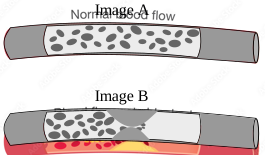
Two images of blood flow are shown.

Image \(A\) represents healthy blood flow.

What condition does Image \(B\) represent?

  1. Arteriosclerosis
  2. Atherosclerosis
  3. Low blood pressure
  4. Low cholesterol levels
Show Answers Only

\(B\)

Show Worked Solution

  • B is correct: Atherosclerosis involves plaque buildup narrowing arteries, contrasting with healthy blood flow.

Other Options:

  • A is incorrect: Arteriosclerosis involves artery hardening, not necessarily visible narrowing.
  • C is incorrect: Low blood pressure is a measurement, not a structural blood vessel condition.
  • D is incorrect: Low cholesterol levels are protective, not a disease condition shown in images.

♦♦ Mean mark 46%.

Filed Under: Chronic Conditions, Diseases and Injury Tagged With: Band 5, smc-5477-05-Cardiovascular disease

HMS, HAG 2018 HSC 22

Describe the determinants of health that affect a preventable condition in Australia OTHER THAN cancer or cardiovascular disease. Use examples to support your answer.   (4 marks)

--- 12 WORK AREA LINES (style=lined) ---

Show Answers Only

  • Mental health conditions are affected by multiple determinants of health.
  • Sociocultural determinants include social isolation, stigma surrounding mental illness and cultural attitudes towards help-seeking. For example, rural communities often have limited social support networks.
  • Socioeconomic determinants encompass income levels, employment status and educational attainment. Unemployment and financial stress frequently contribute to anxiety and depression.
  • Environmental determinants involve geographic location and access to services. Remote areas have fewer mental health professionals and support services available.
  • Health behaviour determinants include substance use, physical inactivity and poor sleep patterns. Excessive alcohol consumption often worsens depression and anxiety symptoms.
  • Biomedical determinants comprise genetic predisposition, brain chemistry imbalances and hormonal influences. Family history increases risk for conditions like bipolar disorder and schizophrenia.

Show Worked Solution

  • Mental health conditions are affected by multiple determinants of health.
  • Sociocultural determinants include social isolation, stigma surrounding mental illness and cultural attitudes towards help-seeking. For example, rural communities often have limited social support networks.
  • Socioeconomic determinants encompass income levels, employment status and educational attainment. Unemployment and financial stress frequently contribute to anxiety and depression.
  • Environmental determinants involve geographic location and access to services. Remote areas have fewer mental health professionals and support services available.
  • Health behaviour determinants include substance use, physical inactivity and poor sleep patterns. Excessive alcohol consumption often worsens depression and anxiety symptoms.
  • Biomedical determinants comprise genetic predisposition, brain chemistry imbalances and hormonal influences. Family history increases risk for conditions like bipolar disorder and schizophrenia.

♦♦ Mean mark 52%.

Filed Under: Chronic Conditions, Diseases and Injury Tagged With: Band 5, smc-5477-15-Other conditions, smc-5477-20-Protective factors

HMS, HAG 2019 HSC 19 MC

Which row of the table shows the risk factors and protective factors for the second-highest leading cause of cancer deaths for females in Australia in 2016?

  Risk factors Protective factors
A.   Constipation, high-fat diet Not smoking, consume foods high in
fibre
B. Alcohol consumption, family history Regular physical activity, avoid
weight gain
C. Excessive exposure to sunlight, fair
skin
Apply sunscreen, wear SPF clothing
D. Smoking, exposure to occupational
radiation
Not smoking, wear personal
protective equipment
Show Answers Only

\(B\)

Show Worked Solution

  • B is correct: Breast cancer is second-highest female cancer death; alcohol and family history are key risks.

Other Options:

  • A is incorrect: These factors relate to colorectal cancer, not second-highest cause.
  • C is incorrect: Skin cancer factors don’t match second-highest female cancer mortality.
  • D is incorrect: Lung cancer factors match highest, not second-highest female cancer deaths.

♦♦ Mean mark 29%.

Filed Under: Chronic Conditions, Diseases and Injury Tagged With: Band 6, smc-5477-10-Cancer trends

HMS, HAG 2019 HSC 8 MC

Which of the following identifies the two types of cardiovascular disease with the highest rates of mortality in Australia?

  1. Stroke and angina
  2. Stroke and coronary heart disease
  3. Peripheral vascular disease and angina
  4. Peripheral vascular disease and coronary heart disease
Show Answers Only

\(B\)

Show Worked Solution

  • B is correct: Stroke and coronary heart disease cause the highest cardiovascular mortality rates.

Other Options:

  • A is incorrect: Angina rarely causes death directly compared to coronary heart disease.
  • C is incorrect: Peripheral vascular disease has lower mortality than stroke/coronary heart disease.
  • D is incorrect: Peripheral vascular disease has lower mortality than stroke.

Filed Under: Chronic Conditions, Diseases and Injury Tagged With: Band 4, smc-5477-05-Cardiovascular disease

HMS, HAG 2019 HSC 1 MC

Which of the following is a non-modifiable risk factor for breast cancer?

  1. Age
  2. Obesity
  3. High-fat diet
  4. Physical inactivity
Show Answers Only

\(A\)

Show Worked Solution

  • A is correct: Age cannot be changed and increases breast cancer risk.

Other Options:

  • B is incorrect: Obesity is modifiable through diet and exercise.
  • C is incorrect: High-fat diet can be changed through nutrition choices.
  • D is incorrect: Physical inactivity is modifiable through lifestyle changes.

Filed Under: Chronic Conditions, Diseases and Injury Tagged With: Band 2, smc-5477-10-Cancer trends

HMS, HAG 2019 HSC 25

Explain why cancer continues to be identified as a priority health issue in Australia. Use examples to support your answer.   (7 marks)

--- 21 WORK AREA LINES (style=lined) ---

Show Answers Only

  • Cancer remains a priority because it causes the highest burden of disease in Australia. This occurs because cancer affects multiple body systems and requires extensive treatment over long periods. Hundreds of thousands of new cases are diagnosed annually, demonstrating its widespread impact.
  • High mortality rates demonstrate cancer’s priority status. Lung cancer represents the leading cause of cancer deaths, while breast and colorectal cancers contribute significantly to overall mortality. This results in substantial years of life lost and profound family impact across communities nationwide.
  • Rising incidence rates necessitate continued priority focus. Skin cancer diagnoses continue increasing due to Australia’s sun exposure patterns and cultural outdoor lifestyle. Consequently, prevention programs require ongoing investment and sustained public health attention.
  • The cost to the economy justifies priority classification. Cancer treatment accounts for a significant proportion of healthcare expenditure through chemotherapy, radiotherapy, surgery and ongoing supportive care. This creates substantial financial pressure on individuals, families and the healthcare system, requiring government intervention.
  • Prevention potential supports priority status. A substantial proportion of cancers are preventable through lifestyle modifications including smoking cessation, sun protection and dietary changes. Therefore, investment in prevention strategies can reduce future incidence rates significantly, providing long-term health and economic benefits for Australia.

Show Worked Solution

  • Cancer remains a priority because it causes the highest burden of disease in Australia. This occurs because cancer affects multiple body systems and requires extensive treatment over long periods. Hundreds of thousands of new cases are diagnosed annually, demonstrating its widespread impact.
  • High mortality rates demonstrate cancer’s priority status. Lung cancer represents the leading cause of cancer deaths, while breast and colorectal cancers contribute significantly to overall mortality. This results in substantial years of life lost and profound family impact across communities nationwide.
  • Rising incidence rates necessitate continued priority focus. Skin cancer diagnoses continue increasing due to Australia’s sun exposure patterns and cultural outdoor lifestyle. Consequently, prevention programs require ongoing investment and sustained public health attention.
  • The cost to the economy justifies priority classification. Cancer treatment accounts for a significant proportion of healthcare expenditure through chemotherapy, radiotherapy, surgery and ongoing supportive care. This creates substantial financial pressure on individuals, families and the healthcare system, requiring government intervention.
  • Prevention potential supports priority status. A substantial proportion of cancers are preventable through lifestyle modifications including smoking cessation, sun protection and dietary changes. Therefore, investment in prevention strategies can reduce future incidence rates significantly, providing long-term health and economic benefits for Australia.

♦♦ Mean mark 52%.

Filed Under: Chronic Conditions, Diseases and Injury Tagged With: Band 5, smc-5477-10-Cancer trends

HMS, HAG 2020 HSC 9 MC

Which risk factor contributes to the leading cause of cancer death in males in Australia?

  1. High-fat diet
  2. Tobacco smoking
  3. Physical inactivity
  4. High blood pressure
Show Answers Only

\(B\)

Show Worked Solution
  • B is correct: Tobacco smoking is the major risk factor for lung cancer.

Other Options:

  • A is incorrect: High-fat diet linked to bowel cancer not lung cancer.
  • C is incorrect: Physical inactivity increases various cancers but not leading cause.
  • D is incorrect: High blood pressure linked to cardiovascular disease not cancer.

Filed Under: Chronic Conditions, Diseases and Injury Tagged With: Band 4, smc-5477-10-Cancer trends

HMS, HAG 2020 HSC 7 MC

Which of the following refers to poor blood supply from the heart to the limbs?

  1. Angina
  2. Coronary heart disease
  3. Cerebrovascular disease
  4. Peripheral vascular disease
Show Answers Only

\(D\)

Show Worked Solution
  • D is correct: Peripheral vascular disease affects blood flow to limbs specifically.

Other Options:

  • A is incorrect: Angina is chest pain from reduced heart blood supply.
  • B is incorrect: Coronary heart disease affects heart muscle blood supply.
  • C is incorrect: Cerebrovascular disease affects brain blood supply not limbs.

♦♦ Mean mark 50%.

Filed Under: Chronic Conditions, Diseases and Injury Tagged With: Band 5, smc-5477-05-Cardiovascular disease

HMS, HAG 2020 HSC 1 MC

Which type of cancer are people who work outdoors most at risk of developing?

  1. Bowel
  2. Breast
  3. Cervical
  4. Skin
Show Answers Only

\(D\)

Show Worked Solution
  • D is correct: UV exposure from sun increases skin cancer risk significantly.

Other Options:

  • A is incorrect: Bowel cancer linked to diet and lifestyle factors.
  • B is incorrect: Breast cancer affects females, not outdoor work-related.
  • C is incorrect: Cervical cancer caused by HPV, not sun exposure.

Filed Under: Chronic Conditions, Diseases and Injury Tagged With: Band 2, smc-5477-10-Cancer trends

HMS, HAG 2021 HSC 19 MC

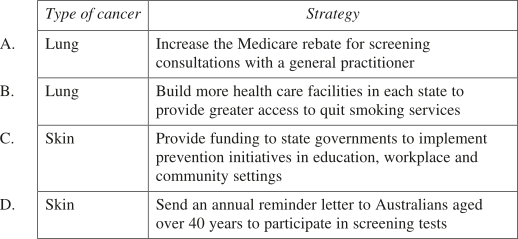
The graph shows the trends in the incidence of a type of cancer for males and females in Australia from 2004 to 2019.

Which row of the table identifies the type of cancer represented in the graph and the most effective strategy for the federal government to implement in order to reduce its overall expenditure on this type of cancer by 2040?

Show Answers Only

\(C\)

Show Worked Solution
  • C is correct: Graph pattern matches skin cancer trends; prevention most cost-effective.

Other Options:

  • A is incorrect: Screening less effective than prevention for skin cancer.
  • B is incorrect: Pattern doesn’t match lung cancer epidemiology trends.
  • D is incorrect: Letters less effective than comprehensive prevention programs.

♦ Mean mark 55%.

Filed Under: Chronic Conditions, Diseases and Injury Tagged With: Band 5, smc-5477-10-Cancer trends, smc-5477-20-Protective factors

HMS, HAG 2021 HSC 13 MC

The chance of being alive for five years after being diagnosed with a condition, compared with the general population, is called the 5-year relative survival rate.

The table shows data for breast cancer and lung cancer in Australia, 2011-2015.

\begin{array} {|l|c|}
\hline
\rule{0pt}{2.5ex}\ \ \textit{Cancer}\ \ \rule[-1ex]{0pt}{0pt} & \textit{5-year relative survival rate}\\
\hline
\rule{0pt}{2.5ex}\text{Breast}\rule[-1ex]{0pt}{0pt} & \text{90.8%}\\
\hline
\rule{0pt}{2.5ex}\text{Lung}\rule[-1ex]{0pt}{0pt} & \text{17.4%}\\
\hline
\end{array}

Which of the following provides the most likely reason for the difference in these 5-year relative survival rates?

  1. Health promotion strategies in schools have been more effective in reducing risk factors for lung cancer compared to breast cancer.
  2. There was a higher hospitalisation rate and greater demand for emerging treatments for lung cancer compared to breast cancer.
  3. There was a higher demand for palliative care services when individuals were diagnosed with breast cancer compared to lung cancer.
  4. Technology advancements have increased early detection and provided more successful treatment options for breast cancer compared to lung cancer.
Show Answers Only

\(D\)

Show Worked Solution
  • D is correct: Early detection technology improves breast cancer survival rates.

Other Options:

  • A is incorrect: School strategies less effective for lung cancer.
  • B is incorrect: Higher demand doesn’t improve survival outcomes.
  • C is incorrect: Breast cancer has better prognosis requiring less palliative care.

Filed Under: Chronic Conditions, Diseases and Injury Tagged With: Band 2, smc-5477-10-Cancer trends

HMS, HAG 2021 HSC 2 MC

What type of cancer currently has the highest mortality rate in Australia?

  1. Breast
  2. Lung
  3. Prostate
  4. Skin
Show Answers Only

\(B\)

Show Worked Solution
  • B is correct: Lung cancer leads mortality rates across both sexes.

Other Options:

  • A is incorrect: High incidence but better survival rates.
  • C is incorrect: High incidence but lower mortality rates.
  • D is incorrect: Lower mortality despite high incidence rates.

Filed Under: Chronic Conditions, Diseases and Injury Tagged With: Band 4, smc-5477-10-Cancer trends

HMS, HAG 2021 HSC 21b


Explain how TWO protective factors can reduce the risk of cardiovascular disease.   (4 marks)

--- 12 WORK AREA LINES (style=lined) ---

Show Answers Only

Protective factors: Regular physical activity and Healthy Diet

  • Regular physical activity strengthens the heart muscle and improves cardiovascular efficiency. Exercise works by increasing stroke volume and cardiac output while reducing resting heart rate. As a result, blood pressure decreases and circulation improves. Therefore, arterial walls experience reduced strain and blockage formation decreases.
  • Maintaining a healthy diet prevents the buildup of cholesterol in arteries. When people consume foods low in saturated fats and high in fibre, blood cholesterol levels consequently remain within healthy ranges. This creates reduced plaque formation in coronary arteries, which means blood flow to the heart muscle remains unobstructed.
Show Worked Solution

Protective factors: Regular physical activity and Healthy Diet

  • Regular physical activity strengthens the heart muscle and improves cardiovascular efficiency. Exercise works by increasing stroke volume and cardiac output while reducing resting heart rate. As a result, blood pressure decreases and circulation improves. Therefore, arterial walls experience reduced strain and blockage formation decreases.
  • Maintaining a healthy diet prevents the buildup of cholesterol in arteries. When people consume foods low in saturated fats and high in fibre, blood cholesterol levels consequently remain within healthy ranges. This creates reduced plaque formation in coronary arteries, which means blood flow to the heart muscle remains unobstructed.

Filed Under: Chronic Conditions, Diseases and Injury Tagged With: Band 4, smc-5477-20-Protective factors

HMS, HAG 2021 HSC 21a

Outline TWO types of cardiovascular disease in Australia.   (3 marks)

--- 7 WORK AREA LINES (style=lined) ---

Show Answers Only
  • Coronary heart disease occurs when arteries supplying blood to the heart muscle become narrowed or blocked. This blockage restricts oxygen flow to the heart, potentially causing chest pain or heart attacks.
  • Stroke represents another major cardiovascular disease affecting blood vessels supplying the brain. When these vessels become blocked by clots or burst due to high pressure, brain tissue loses oxygen supply. This damage can result in permanent disability or death.
Show Worked Solution
  • Coronary heart disease occurs when arteries supplying blood to the heart muscle become narrowed or blocked. This blockage restricts oxygen flow to the heart, potentially causing chest pain or heart attacks.
  • Stroke represents another major cardiovascular disease affecting blood vessels supplying the brain. When these vessels become blocked by clots or burst due to high pressure, brain tissue loses oxygen supply. This damage can result in permanent disability or death.

Filed Under: Chronic Conditions, Diseases and Injury, Uncategorized Tagged With: Band 4, smc-5477-05-Cardiovascular disease

HMS, HAG 2022 HSC 20 MC

The table shows the incidence rate and mortality rate for two types of cancer \((X, Y)\) with the highest mortality rate for females in Australia in 2017.

\begin{array} {|c|c|c|}
\hline
\rule{0pt}{2.5ex}\textit{Type of cancer}\rule[-1ex]{0pt}{0pt} & \textit{Incidence rate} & \textit{Mortality rate} \\ & \textit{per 100 000} & \textit{per 100 000}\\
\hline
\rule{0pt}{2.5ex} X \rule[-1ex]{0pt}{0pt} & 36.2 & 21.8 \\
\hline
\rule{0pt}{2.5ex} Y \rule[-1ex]{0pt}{0pt} & 124.8 & 19.2 \\
\hline
\end{array}

Which statement best explains why cancer Y has a lower mortality rate than cancer X ?

  1. Government funding has increased for research into treatment options for cancer Y.
  2. Health services have been reoriented so that cancer Y is detected and treated earlier.
  3. Individuals have enhanced their personal skills to effectively address the modifiable risk factors for cancer Y.
  4. An increased number of out-patient health services for cancer Y has improved access for the priority population group.
Show Answers Only

\( B \)

Show Worked Solution

  • B is correct: Earlier detection and treatment improves survival rates despite higher incidence.

Other Options:

  • A is incorrect: Research funding doesn’t directly explain current mortality differences.
  • C is incorrect: Personal skills affect incidence, not mortality-to-incidence ratio.
  • D is incorrect: Outpatient services don’t explain lower mortality with higher incidence.

Filed Under: Chronic Conditions, Diseases and Injury Tagged With: Band 4, smc-5477-10-Cancer trends

HMS, HAG 2023 HSC 16 MC

Which row of the table correctly matches the type of cancer?

  Carcinoma Leukaemia
A.   Forms only on the skin Originates in bones and
connective tissues
B. Forms from cells that release
hormones into the blood
Develops in the body’s
infection-fighting organs
C. Forms in epithelial tissue Originates in the blood-forming
tissue of the bone marrow
D. Usually found in the
gastrointestinal system
Originates in plasma cells
Show Answers Only

\(C\)

Show Worked Solution
  • C is correct: Carcinomas develop in epithelial tissue and leukemia originates in blood-forming tissue of bone marrow.

Other Options:

  • A is incorrect: Carcinomas can form in many tissues, not just skin; leukemia doesn’t originate in bones/connective tissues.
  • B is incorrect: Hormone-releasing cells would be neuroendocrine tumors; infection-fighting organs relates to lymphoma.
  • D is incorrect: Gastrointestinal limitation is incorrect; plasma cells relate to multiple myeloma, not leukemia.

♦ Mean mark 54%.

Filed Under: Chronic Conditions, Diseases and Injury Tagged With: Band 5, smc-5477-10-Cancer trends

HMS, HAG 2023 HSC 6 MC

The following table represents the number of deaths per 100000 population in males aged 55-64 years in 1980 and again in 2020 for a range of conditions.

Conditions Male deaths per 100 000 population
aged 55–64
1980 2020
J 14 7
K 100 20
L 173 53
M 600 79

Which condition is represented by the letter \(J\) in the table? 

  1. Skin cancer
  2. Lung cancer
  3. Coronary heart disease
  4. Cerebrovascular disease
Show Answers Only

\(A\)

Show Worked Solution
  • A is correct: Data shows condition J had smallest number of deaths per 100,000 in both 1980 and 2020, consistent with skin cancer mortality patterns.

Other Options:

  • B is incorrect: Would show higher mortality rates than displayed for condition J.
  • C is incorrect: Has significantly higher mortality rates than shown.
  • D is incorrect: Higher mortality rate than condition J.

♦♦ Mean mark 41%.

Filed Under: Chronic Conditions, Diseases and Injury, Current Health Status Tagged With: Band 5, smc-5474-20-Data interpretation, smc-5477-15-Other conditions

HMS, HAG 2024 HSC 14 MC

The graph shows the number of deaths of Australian females over time for TWO cancers, X and Y, that resulted in more deaths than for any other forms of cancer.

Which cancer is represented by cancer Y?

  1. Breast
  2. Cervical
  3. Lung
  4. Skin
Show Answers Only

\(C\)

Show Worked Solution
  • C is correct: Cancer Y represents lung cancer, a leading cause of cancer deaths in Australian females, with numbers declining since 2000.

Other Options:

  • A is incorrect: Breast cancer would likely show as the higher line (X).
  • B is incorrect: Cervical cancer has much lower mortality numbers.
  • D is incorrect: Skin cancer mortality is significantly lower than lung cancer.

♦♦♦ Mean mark 34%.

Filed Under: Chronic Conditions, Diseases and Injury Tagged With: Band 5, smc-5477-10-Cancer trends

HMS, HAG 2024 HSC 16 MC

Which cardiovascular condition results in the blood vessels that carry oxygen away from the heart becoming damaged due to losing their elasticity?

  1. Angina
  2. Arteriosclerosis
  3. Carotid artery disease
  4. Deep vein thrombosis
Show Answers Only

\(B\)

Show Worked Solution
  • B is correct: Arteriosclerosis is the condition where blood vessels lose elasticity and become hardened, affecting oxygen delivery from the heart.

Other Options:

  • A is incorrect: Angina is chest pain from reduced blood flow to the heart muscle.
  • C is incorrect: Specifically affects the carotid arteries in the neck.
  • D is incorrect: DVT refers to a blood clot in deep veins, typically in the legs.

♦♦ Mean mark 50%.

Filed Under: Chronic Conditions, Diseases and Injury Tagged With: Band 5, smc-5477-05-Cardiovascular disease

HMS, HAG 2022 HSC 6 MC

A person started to feel numb on one side of their body. They had blurred vision and difficulty speaking.

Which disease was this person likely to be experiencing?

  1. Coronary heart disease
  2. Cerebrovascular disease
  3. Congenital heart disease
  4. Peripheral vascular disease
Show Answers Only

\( B \)

Show Worked Solution
  • B is correct. One-sided numbness, blurred vision, and difficulty speaking are classic signs of a stroke (cerebrovascular disease).

Other Options:

  • A is incorrect: Coronary heart disease affects the heart muscle, causing chest pain symptoms.
  • C is incorrect: Congenital heart disease is present from birth.
  • D is incorrect: Peripheral vascular disease mainly affects blood vessels in the limbs.

♦♦ Mean mark 49%.

Filed Under: Chronic Conditions, Diseases and Injury Tagged With: Band 5, smc-5477-05-Cardiovascular disease

HMS, HAG 2020 HSC 22

Complete the table for THREE current leading causes of mortality for males and females in Australia.   (4 marks)

--- 0 WORK AREA LINES (style=blank) ---

\begin{array}{|c|c|c|}
\hline
\rule{0pt}{2.5ex}\textit{Current leading} & \textit{Trend in mortality rate for} & \textit{Trend in mortality rate for}\\
\rule[-1ex]{0pt}{0pt}\quad \textit{cause of mortality} \quad & \textit{males over the last 10 years} & \textit{females over the last 10 years}\\
\hline
\quad & \quad &\quad\\
\hline
\quad & \quad &\quad\\
\hline
\quad & \quad &\quad\\
\hline
\end{array}

 
Show Answers Only

\(\text{Any THREE of the following}\)

\begin{array}{|l|c|c|}
\hline
\rule{0pt}{2.5ex}\quad \quad \textit{Current leading} & \textit{Trend in mortality} & \textit{Trend in mortality }\\
\quad \ \  \textit{cause of mortality} \quad & \textit{rates for males over} & \textit{rate for females }\\
\rule[-1ex]{0pt}{0pt}\quad \quad & \textit{the last 10 years} & \textit{over the last 10 years}\\
\hline
\rule{0pt}{2.5ex}\text{Coronary heart disease} \rule[-1ex]{0pt}{0pt}& \text{Decreased} & \text{Decreased} \\
\hline
\rule{0pt}{2.5ex}\text{Dementia and Alzheimer’s } & \text{Increased} & \text{Increased} \\
\rule[-1ex]{0pt}{0pt}\text{disease} & \text{} & \text{} \\
\hline
\rule{0pt}{2.5ex}\text{Cerebrovascular disease} \rule[-1ex]{0pt}{0pt}& \text{Decreased} & \text{Decreased} \\
\hline
\rule{0pt}{2.5ex}\text{Lung cancer} \rule[-1ex]{0pt}{0pt}& \text{Decreased} & \text{Decreased} \\
\hline
\rule{0pt}{2.5ex}\text{Chronic obstructive} & \text{Decreased} & \text{Decreased} \\
\rule[-1ex]{0pt}{0pt}\text{pulmonary disease} & \text{} & \text{} \\
\hline
\rule{0pt}{2.5ex}\text{Diabetes} \rule[-1ex]{0pt}{0pt}& \text{Increased} & \text{Increased} \\
\hline
\rule{0pt}{2.5ex}\text{Cardiovascular disease} \rule[-1ex]{0pt}{0pt}& \text{Decreased} & \text{Decreased} \\
\hline
\rule{0pt}{2.5ex}\text{Mental health (suicide)} \rule[-1ex]{0pt}{0pt}& \text{Increased} & \text{Increased} \\
\hline
\end{array}

Show Worked Solution

\(\text{Any THREE of the following}\)

\begin{array}{|l|c|c|}
\hline
\rule{0pt}{2.5ex}\quad \quad \textit{Current leading} & \textit{Trend in mortality} & \textit{Trend in mortality }\\
\quad \ \  \textit{cause of mortality} \quad & \textit{rates for males over} & \textit{rate for females }\\
\rule[-1ex]{0pt}{0pt}\quad \quad & \textit{the last 10 years} & \textit{over the last 10 years}\\
\hline
\rule{0pt}{2.5ex}\text{Coronary heart disease} \rule[-1ex]{0pt}{0pt}& \text{Decreased} & \text{Decreased} \\
\hline
\rule{0pt}{2.5ex}\text{Dementia and Alzheimer’s } & \text{Increased} & \text{Increased} \\
\rule[-1ex]{0pt}{0pt}\text{disease} & \text{} & \text{} \\
\hline
\rule{0pt}{2.5ex}\text{Cerebrovascular disease} \rule[-1ex]{0pt}{0pt}& \text{Decreased} & \text{Decreased} \\
\hline
\rule{0pt}{2.5ex}\text{Lung cancer} \rule[-1ex]{0pt}{0pt}& \text{Decreased} & \text{Decreased} \\
\hline
\rule{0pt}{2.5ex}\text{Chronic obstructive} & \text{Decreased} & \text{Decreased} \\
\rule[-1ex]{0pt}{0pt}\text{pulmonary disease} & \text{} & \text{} \\
\hline
\rule{0pt}{2.5ex}\text{Diabetes} \rule[-1ex]{0pt}{0pt}& \text{Increased} & \text{Increased} \\
\hline
\rule{0pt}{2.5ex}\text{Cardiovascular disease} \rule[-1ex]{0pt}{0pt}& \text{Decreased} & \text{Decreased} \\
\hline
\rule{0pt}{2.5ex}\text{Mental health (suicide)} \rule[-1ex]{0pt}{0pt}& \text{Increased} & \text{Increased} \\
\hline
\end{array}


♦♦ Mean mark 47%.

Filed Under: Chronic Conditions, Diseases and Injury, Current Health Status Tagged With: Band 5, smc-5474-05-Major causes, smc-5477-05-Cardiovascular disease, smc-5477-10-Cancer trends, smc-5477-15-Other conditions

Copyright © 2014–2025 SmarterEd.com.au · Log in