SmarterEd

Aussie Maths & Science Teachers: Save your time with SmarterEd

  • Login
  • Get Help
  • About

HMS, HAG EQ-Bank 150

Explain how collaboration between government and non-government agencies is essential for effectively addressing Australia's ageing population needs.    (5 marks)

--- 15 WORK AREA LINES (style=lined) ---

Show Answers Only
  • Collaboration is essential because government agencies provide policy frameworks and funding while non-government organisations deliver direct services and community-level support that complement each other effectively.
  • This works by government agencies creating infrastructure, healthcare systems and regulatory frameworks while NGOs provide specialised services, advocacy and innovation that address gaps in government service delivery.
  • For example, government funds aged care facilities and healthcare services while organisations like Red Cross and National Seniors Australia deliver home care, social support and policy advocacy that enhance overall service quality.
  • Partnership approaches ensure that policy development incorporates community needs and frontline service experience that NGOs provide through direct contact with older Australians and their families.
  • Therefore, effective ageing population planning requires coordinated efforts where government provides systemic support and resources. NGOs contribute flexibility, innovation and community-focused services that together create comprehensive care networks.
Show Worked Solution
  • Collaboration is essential because government agencies provide policy frameworks and funding while non-government organisations deliver direct services and community-level support that complement each other effectively.
  • This works by government agencies creating infrastructure, healthcare systems and regulatory frameworks while NGOs provide specialised services, advocacy and innovation that address gaps in government service delivery.
  • For example, government funds aged care facilities and healthcare services while organisations like Red Cross and National Seniors Australia deliver home care, social support and policy advocacy that enhance overall service quality.
  • Partnership approaches ensure that policy development incorporates community needs and frontline service experience that NGOs provide through direct contact with older Australians and their families.
  • Therefore, effective ageing population planning requires coordinated efforts where government provides systemic support and resources. NGOs contribute flexibility, innovation and community-focused services that together create comprehensive care networks.

Filed Under: Impact of an Ageing Population Tagged With: Band 4, smc-5478-25-Govt/non-govt planning

HMS, HAG EQ-Bank 149

Explain how non-government organisations contribute to addressing the needs of Australia's ageing population.    (5 marks)

--- 15 WORK AREA LINES (style=lined) ---

Show Answers Only
  • Non-government organisations provide advocacy and awareness services by raising public understanding about ageing challenges and influencing government policy development on behalf of older Australians.
  • This occurs through organisations like National Seniors Australia and Council on the Ageing that work to shape government policy and promote positive public perceptions of older people in society.
  • NGOs deliver essential community services including home care support, social visits and emergency assistance that help older individuals maintain independence and community connections.
  • For example, the Red Cross offers practical home care services and social support programs that complement government services and fill gaps in community-based aged care.
  • NGOs also contribute through research and innovation by investing in new care models, assistive technologies and evidence-based practices that improve healthy ageing outcomes and inform sector-wide improvements.
Show Worked Solution
  • Non-government organisations provide advocacy and awareness services by raising public understanding about ageing challenges and influencing government policy development on behalf of older Australians.
  • This occurs through organisations like National Seniors Australia and Council on the Ageing that work to shape government policy and promote positive public perceptions of older people in society.
  • NGOs deliver essential community services including home care support, social visits and emergency assistance that help older individuals maintain independence and community connections.
  • For example, the Red Cross offers practical home care services and social support programs that complement government services and fill gaps in community-based aged care.
  • NGOs also contribute through research and innovation by investing in new care models, assistive technologies and evidence-based practices that improve healthy ageing outcomes and inform sector-wide improvements.

Filed Under: Impact of an Ageing Population Tagged With: Band 4, smc-5478-25-Govt/non-govt planning

HMS, HAG EQ-Bank 148

Describe the key areas where government investment is needed to address Australia's ageing population healthcare requirements.    (3 marks)

--- 9 WORK AREA LINES (style=lined) ---

Show Answers Only
  • Healthcare infrastructure investment requires expanding existing hospitals and building new aged care facilities equipped with specialised geriatric services to meet growing demand for age-related medical care.
  • Urban planning initiatives must create age-friendly communities with accessible transportation systems, including low-floor buses and priority seating, plus pedestrian-friendly pathways for older residents.
  • Aged care workforce development programs need government funding to provide scholarships and financial incentives for students pursuing aged care careers, ensuring adequate trained staff availability.
Show Worked Solution
  • Healthcare infrastructure investment requires expanding existing hospitals and building new aged care facilities equipped with specialised geriatric services to meet growing demand for age-related medical care.
  • Urban planning initiatives must create age-friendly communities with accessible transportation systems, including low-floor buses and priority seating, plus pedestrian-friendly pathways for older residents.
  • Aged care workforce development programs need government funding to provide scholarships and financial incentives for students pursuing aged care careers, ensuring adequate trained staff availability.

Filed Under: Impact of an Ageing Population Tagged With: Band 3, smc-5478-25-Govt/non-govt planning

HMS, HAG EQ-Bank 147

Discuss how policy reform and workforce development represent essential strategies for addressing Australia's ageing population challenges.    (6 marks)

--- 18 WORK AREA LINES (style=lined) ---

Show Answers Only

Benefits of policy reform strategies

  • [P] Adjusting retirement ages and pension schemes creates opportunities for older adults to maintain economic productivity while supporting financial sustainability.
  • [E] Policy reforms that allow individuals to continue contributing to the workforce through flexible arrangements promote both financial stability and social engagement for older Australians.
  • [Ev] Tax policy reforms that provide benefits for part-time work can incentivise older adults to remain economically active longer, reducing pension system pressures.
  • [L] Therefore, policy reforms can create sustainable economic environments that benefit both older individuals and broader society.

Challenges of workforce development needs

  • [P] However, workforce shortages in aged care and healthcare sectors create significant challenges that require comprehensive training and recruitment strategies.
  • [E] The growing demand for aged care workers combined with an ageing workforce means Australia faces critical shortages in essential care services.
  • [Ev] Government initiatives to attract, retain and train aged care workers are essential but require substantial investment in education, competitive wages and career development opportunities.
  • [L] Consequently, without adequate workforce development, the increasing aged care demands cannot be met effectively, potentially compromising care quality and accessibility for older Australians.
Show Worked Solution

Benefits of policy reform strategies

  • [P] Adjusting retirement ages and pension schemes creates opportunities for older adults to maintain economic productivity while supporting financial sustainability.
  • [E] Policy reforms that allow individuals to continue contributing to the workforce through flexible arrangements promote both financial stability and social engagement for older Australians.
  • [Ev] Tax policy reforms that provide benefits for part-time work can incentivise older adults to remain economically active longer, reducing pension system pressures.
  • [L] Therefore, policy reforms can create sustainable economic environments that benefit both older individuals and broader society.

Challenges of workforce development needs

  • [P] However, workforce shortages in aged care and healthcare sectors create significant challenges that require comprehensive training and recruitment strategies.
  • [E] The growing demand for aged care workers combined with an ageing workforce means Australia faces critical shortages in essential care services.
  • [Ev] Government initiatives to attract, retain and train aged care workers are essential but require substantial investment in education, competitive wages and career development opportunities.
  • [L] Consequently, without adequate workforce development, the increasing aged care demands cannot be met effectively, potentially compromising care quality and accessibility for older Australians.

Filed Under: Impact of an Ageing Population Tagged With: Band 5, smc-5478-20-Current/future challenges

HMS, HAG EQ-Bank 146

Explain how technology integration represents a key future strategy for supporting Australia's ageing population  (5 marks)

--- 15 WORK AREA LINES (style=lined) ---

Show Answers Only
  • Telehealth services provide older adults with convenient access to healthcare professionals from home, reducing the need for travel and making medical consultations more accessible for mobility-limited individuals.
  • This works by enabling virtual check-ups via video calls that allow healthcare providers to monitor chronic conditions and provide medical advice without requiring elderly patients to visit clinics regularly.
  • Wearable health monitors like smartwatches can track vital signs such as heart rate and activity levels, alerting both users and healthcare providers to concerning health changes before emergencies occur.
  • Smart home devices enhance safety by enabling emergency alert systems that allow older adults to maintain independence while ensuring immediate help is available when needed.
  • Therefore, technology integration addresses key ageing population challenges by improving healthcare access, enhancing safety monitoring and supporting independent living arrangements that reduce pressure on aged care facilities.
Show Worked Solution
  • Telehealth services provide older adults with convenient access to healthcare professionals from home, reducing the need for travel and making medical consultations more accessible for mobility-limited individuals.
  • This works by enabling virtual check-ups via video calls that allow healthcare providers to monitor chronic conditions and provide medical advice without requiring elderly patients to visit clinics regularly.
  • Wearable health monitors like smartwatches can track vital signs such as heart rate and activity levels, alerting both users and healthcare providers to concerning health changes before emergencies occur.
  • Smart home devices enhance safety by enabling emergency alert systems that allow older adults to maintain independence while ensuring immediate help is available when needed.
  • Therefore, technology integration addresses key ageing population challenges by improving healthcare access, enhancing safety monitoring and supporting independent living arrangements that reduce pressure on aged care facilities.

Filed Under: Impact of an Ageing Population Tagged With: Band 4, smc-5478-20-Current/future challenges

HMS, HAG EQ-Bank 145

Describe the key current strategies being used to support healthy ageing in Australia.   (4 marks)

--- 12 WORK AREA LINES (style=lined) ---

Show Answers Only
  • Preventative healthcare strategies include regular health screenings, vaccinations and health education to prevent illness and manage chronic conditions effectively.
  • Active ageing programs through community centres offer physical activity sessions designed for seniors, focusing on strength, balance and mobility maintenance.
  • Home care services enable older people to remain in their homes longer by providing cleaning, meal delivery and personal care assistance.
  • Mental health support addresses depression and dementia through counselling services, memory clinics and community mental health programs for older populations.
  • Government policies like the National Plan to Respond to the Abuse of Older Australians outline strategies to prevent elder abuse and ensure legal protections.
Show Worked Solution
  • Preventative healthcare strategies include regular health screenings, vaccinations and health education to prevent illness and manage chronic conditions effectively.
  • Active ageing programs through community centres offer physical activity sessions designed for seniors, focusing on strength, balance and mobility maintenance.
  • Home care services enable older people to remain in their homes longer by providing cleaning, meal delivery and personal care assistance.
  • Mental health support addresses depression and dementia through counselling services, memory clinics and community mental health programs for older populations.
  • Government policies like the National Plan to Respond to the Abuse of Older Australians outline strategies to prevent elder abuse and ensure legal protections.

Filed Under: Impact of an Ageing Population Tagged With: Band 3, smc-5478-20-Current/future challenges

HMS, HAG EQ-Bank 144

Analyse how Australia's ageing population creates both economic opportunities and healthcare challenges that require coordinated policy responses.   (8 marks)

--- 24 WORK AREA LINES (style=lined) ---

Show Answers Only

Overview Statement

  • Australia’s ageing population creates complex relationships between economic opportunities and healthcare challenges.
  • These reveal important connections between demographic changes and policy planning requirements.

Component Relationship 1

  • Extended work life opportunities demonstrate how healthier older Australians can contribute economically through continued workforce participation and volunteer roles.
  • Older workers bring valuable expertise, mentorship capabilities and institutional knowledge that benefits organisations and younger employees.
  • This relationship shows that demographic ageing can create positive economic outcomes when older people remain healthy and engaged in productive activities.
  • The significance reveals that policies supporting healthy ageing can extend economic productivity while reducing dependency ratios and pension system pressures through delayed retirement.

Component Relationship 2

  • However, increased healthcare demands create substantial challenges that require coordinated responses across multiple service sectors.
  • Growing numbers of people with chronic conditions like dementia, diabetes and cardiovascular disease place unprecedented pressure on hospitals, aged care facilities and community health services.
  • This relationship illustrates how population ageing fundamentally changes healthcare system requirements, demanding specialised services, trained workforces and infrastructure investments.
  • The implications show that without adequate planning, healthcare costs will escalate while service quality may decline due to capacity constraints.

Implications and Synthesis

  • These interconnected demographic patterns demonstrate that maximising ageing population benefits requires comprehensive policies addressing both economic participation and healthcare capacity.
  • Effective responses must coordinate workforce development, healthcare infrastructure and healthy ageing strategies.
Show Worked Solution

Overview Statement

  • Australia’s ageing population creates complex relationships between economic opportunities and healthcare challenges.
  • These reveal important connections between demographic changes and policy planning requirements.

Component Relationship 1

  • Extended work life opportunities demonstrate how healthier older Australians can contribute economically through continued workforce participation and volunteer roles.
  • Older workers bring valuable expertise, mentorship capabilities and institutional knowledge that benefits organisations and younger employees.
  • This relationship shows that demographic ageing can create positive economic outcomes when older people remain healthy and engaged in productive activities.
  • The significance reveals that policies supporting healthy ageing can extend economic productivity while reducing dependency ratios and pension system pressures through delayed retirement.

Component Relationship 2

  • However, increased healthcare demands create substantial challenges that require coordinated responses across multiple service sectors.
  • Growing numbers of people with chronic conditions like dementia, diabetes and cardiovascular disease place unprecedented pressure on hospitals, aged care facilities and community health services.
  • This relationship illustrates how population ageing fundamentally changes healthcare system requirements, demanding specialised services, trained workforces and infrastructure investments.
  • The implications show that without adequate planning, healthcare costs will escalate while service quality may decline due to capacity constraints.

Implications and Synthesis

  • These interconnected demographic patterns demonstrate that maximising ageing population benefits requires comprehensive policies addressing both economic participation and healthcare capacity.
  • Effective responses must coordinate workforce development, healthcare infrastructure and healthy ageing strategies.

Filed Under: Impact of an Ageing Population Tagged With: Band 6, smc-5478-15-Opportunities/challenges

HMS, HAG EQ-Bank 143

Data shows that about one-third of Australians with dementia live in the community rather than in specialist care facilities, while research indicates Australia's aged care system is already experiencing workforce shortages.

Discuss how these trends create both opportunities and challenges for supporting Australia's ageing population.   (6 marks)

--- 18 WORK AREA LINES (style=lined) ---

Show Answers Only

Benefits of community-based care trends

  • [P] Community-based care for people with dementia creates opportunities for maintaining family connections and familiar environments that support wellbeing.
  • [E] Living in the community allows older Australians with dementia to maintain independence for longer periods while receiving family support and home care services.
  • [Ev] This approach can be more cost-effective than residential care and allows people to age in place, which is often preferred by individuals and families.
  • [L] Therefore, community care models can provide person-centred support while reducing pressure on residential aged care facilities.

Challenges of workforce shortages and community care

  • [P] However, workforce shortages combined with increasing community care needs create significant challenges for service delivery and family carers.
  • [E] The shortage of aged care workers means that families often become primary carers without adequate professional support or respite services.
  • [Ev] This places enormous stress on family members who may lack training in dementia care while trying to manage complex health needs at home.
  • [L] Consequently, without sufficient community support services and trained workers, the burden on families increases while people with dementia may not receive appropriate specialist care when needed.
Show Worked Solution

Benefits of community-based care trends

  • [P] Community-based care for people with dementia creates opportunities for maintaining family connections and familiar environments that support wellbeing.
  • [E] Living in the community allows older Australians with dementia to maintain independence for longer periods while receiving family support and home care services.
  • [Ev] This approach can be more cost-effective than residential care and allows people to age in place, which is often preferred by individuals and families.
  • [L] Therefore, community care models can provide person-centred support while reducing pressure on residential aged care facilities.

Challenges of workforce shortages and community care

  • [P] However, workforce shortages combined with increasing community care needs create significant challenges for service delivery and family carers.
  • [E] The shortage of aged care workers means that families often become primary carers without adequate professional support or respite services.
  • [Ev] This places enormous stress on family members who may lack training in dementia care while trying to manage complex health needs at home.
  • [L] Consequently, without sufficient community support services and trained workers, the burden on families increases while people with dementia may not receive appropriate specialist care when needed.

Filed Under: Impact of an Ageing Population Tagged With: Band 5, smc-5478-10-Data interpretation

HMS, HAG EQ-Bank 142

Research shows that dementia rates dramatically increase with age, with fewer than one person per 1000 Australians under 60 having dementia, but this increases to 71 per 1000 for people aged 75-79, and 429 per 1000 for those aged 90 and over.

Explain how these age-related dementia trends will impact Australia's healthcare system as the population ages.   (5 marks)

--- 15 WORK AREA LINES (style=lined) ---

Show Answers Only
  • The dramatic increase in dementia rates with age demonstrates how population ageing will create exponentially growing demand for specialised dementia care services and memory clinics across Australia.
  • This occurs because the data shows dementia risk increases more than six-fold between the 75-79 and 90+ age groups, meaning healthcare systems must prepare for substantial increases in patients requiring complex care.
  • The trend reveals that aged care facilities and hospitals will face increasing pressure to provide specialised dementia units and trained staff as more Australians reach the highest-risk age groups.
  • This pattern demonstrates that healthcare funding and resource allocation must shift towards dementia-specific services, including community support programs and family carer assistance to manage the growing patient numbers.
  • Therefore, the exponential nature of age-related dementia risk requires proactive healthcare planning and workforce development to ensure adequate care capacity for future demographic changes in Australian populations.
Show Worked Solution
  • The dramatic increase in dementia rates with age demonstrates how population ageing will create exponentially growing demand for specialised dementia care services and memory clinics across Australia.
  • This occurs because the data shows dementia risk increases more than six-fold between the 75-79 and 90+ age groups, meaning healthcare systems must prepare for substantial increases in patients requiring complex care.
  • The trend reveals that aged care facilities and hospitals will face increasing pressure to provide specialised dementia units and trained staff as more Australians reach the highest-risk age groups.
  • This pattern demonstrates that healthcare funding and resource allocation must shift towards dementia-specific services, including community support programs and family carer assistance to manage the growing patient numbers.
  • Therefore, the exponential nature of age-related dementia risk requires proactive healthcare planning and workforce development to ensure adequate care capacity for future demographic changes in Australian populations.

Filed Under: Impact of an Ageing Population Tagged With: Band 4, smc-5478-10-Data interpretation

HMS, HAG EQ-Bank 141

Data shows that Australia's population aged 65 and over was approximately 17% in 2024 and is projected to increase to almost 21% by 2066.

Explain what this demographic trend reveals about Australia's population health challenges.   (3 marks)

--- 9 WORK AREA LINES (style=lined) ---

Show Answers Only
  • The increasing proportion of older Australians demonstrates that the population is experiencing longer life expectancy combined with declining fertility rates, creating significant demographic shifts.
  • This trend reveals that Australia will face increased demand for healthcare services, particularly for chronic disease management and aged care facilities, as older populations require more medical support.
  • The significance of this change shows that healthcare planning must adapt to accommodate age-related conditions like dementia, cardiovascular disease and mobility issues that become more prevalent in older populations.
Show Worked Solution
  • The increasing proportion of older Australians demonstrates that the population is experiencing longer life expectancy combined with declining fertility rates, creating significant demographic shifts.
  • This trend reveals that Australia will face increased demand for healthcare services, particularly for chronic disease management and aged care facilities, as older populations require more medical support.
  • The significance of this change shows that healthcare planning must adapt to accommodate age-related conditions like dementia, cardiovascular disease and mobility issues that become more prevalent in older populations.

Filed Under: Impact of an Ageing Population Tagged With: Band 3, smc-5478-10-Data interpretation

HMS, HAG EQ-Bank 110 MC

Non-government organisations complement government efforts in addressing ageing population needs by:

  1. Taking over all government healthcare responsibilities for older adults
  2. Operating exclusively in rural areas where governments cannot provide services
  3. Competing with government agencies to reduce overall costs of aged care
  4. Providing advocacy, essential services and research while governments focus on policy and infrastructure
Show Answers Only

\(D\)

Show Worked Solution
  • D is correct: NGOs complement government through advocacy essential services and research while governments handle policy and infrastructure.

Other Options:

  • A is incorrect: NGOs complement not replace government healthcare responsibilities for older adults.
  • B is incorrect: NGOs operate in various locations not exclusively rural areas.
  • C is incorrect: NGOs complement rather than compete with government agencies in aged care.

Filed Under: Impact of an Ageing Population Tagged With: Band 5, smc-5478-25-Govt/non-govt planning

HMS, HAG EQ-Bank 109 MC

Governments can address the future needs of an ageing population through urban planning by:

  1. Building more hospitals exclusively for elderly patients in city centres
  2. Creating age-friendly communities with accessible transportation and pedestrian-friendly pathways
  3. Restricting older adults from using public transportation during peak hours
  4. Requiring all new housing developments to include residential aged care facilities
Show Answers Only

\(B\)

Show Worked Solution
  • B is correct: Urban planning should create age-friendly communities with accessible transportation and pedestrian-friendly pathways for older residents.

Other Options:

  • A is incorrect: Age-friendly planning involves community design not just building specialised hospitals.
  • C is incorrect: Restricting access contradicts age-friendly community planning principles.
  • D is incorrect: Mandatory aged care facilities in developments isn’t age-friendly urban planning approach.

Filed Under: Impact of an Ageing Population Tagged With: Band 4, smc-5478-25-Govt/non-govt planning

HMS, HAG EQ-Bank 108 MC

The projected shortage of carers compared to the anticipated rise in demand for home-based support suggests that:

  1. Government funding for aged care services will automatically increase
  2. Technology solutions will completely replace human carers by 2066
  3. Alternative care models and workforce development strategies will be essential
  4. Most older Australians will need to relocate to residential aged care facilities
Show Answers Only

\(C\)

Show Worked Solution
  • C is correct: Projected carer shortage requires alternative care models and workforce development strategies to meet demand.

Other Options:

  • A is incorrect: Funding increases don’t solve workforce shortage issues without strategic planning.
  • B is incorrect: Technology assists but cannot completely replace human carers for complex care needs.
  • D is incorrect: Residential care isn’t the preferred solution and doesn’t address carer shortage problem.

Filed Under: Impact of an Ageing Population Tagged With: Band 5, smc-5478-10-Data interpretation

HMS, HAG EQ-Bank 107 MC

The trend showing Australia's population aged 65 and over steadily increasing in both absolute numbers and as a proportion of the total population indicates that:

  1. Immigration policies are successfully attracting younger migrants to Australia
  2. Healthcare spending will decrease as older adults require less medical intervention
  3. Both challenges and opportunities will emerge for Australia's health and welfare sectors
  4. Fertility rates are increasing to match the growing elderly population
Show Answers Only

\(C\)

Show Worked Solution
  • C is correct: The demographic shift presents both challenges and opportunities for health and welfare sectors.

Other Options:

  • A is incorrect: Immigration success doesn’t change the fact that population is proportionally ageing.
  • B is incorrect: Healthcare spending will increase not decrease as older adults need more medical care.
  • D is incorrect: Fertility rates are decreasing not increasing which contributes to population ageing.

Filed Under: Impact of an Ageing Population Tagged With: Band 4, smc-5478-10-Data interpretation

HMS, HAG EQ-Bank 106 MC

The demographic shift showing Australians aged 65 and over increasing from 17% in 2024 to projected 21% by 2066 is primarily caused by:

  1. Significant increases in life expectancy combined with decreased fertility rates
  2. Increased immigration of elderly people to Australia
  3. Government policies encouraging larger family sizes
  4. Reduced healthcare costs making treatment more affordable for seniors
Show Answers Only

\(A\)

Show Worked Solution
  • A is correct: Demographic shift explained by significant life expectancy increases combined with decreased fertility rates.

Other Options:

  • B is incorrect: Immigration patterns don’t primarily drive the overall demographic ageing trend.
  • C is incorrect: Fertility rates have decreased not increased due to government policies.
  • D is incorrect: Healthcare costs don’t drive demographic shifts they respond to population changes.

Filed Under: Impact of an Ageing Population Tagged With: Band 3, smc-5478-10-Data interpretation

HMS, HAG EQ-Bank 105 MC

The government prioritises healthy ageing as a national research priority because:

  1. Older adults require more expensive medical equipment than younger patients
  2. Healthy ageing enables people to contribute economically for longer reducing government burden
  3. All chronic diseases can be prevented through healthy ageing programs
  4. Retirement villages generate significant tax revenue for local governments
Show Answers Only

\(B\)

Show Worked Solution
  • B is correct: Government encourages healthy ageing to enable economic contribution for longer and reduce economic burden.

Other Options:

  • A is incorrect: Priority is about economic contribution not medical equipment costs.
  • C is incorrect: Healthy ageing doesn’t prevent all chronic diseases but improves outcomes.
  • D is incorrect: Tax revenue from retirement villages is not the primary reason for prioritising healthy ageing.

Filed Under: Impact of an Ageing Population Tagged With: Band 4, smc-5478-05-Healthy ageing

HMS, HAG EQ-Bank 104 MC

According to the World Health Organisation, healthy ageing is defined as the process of:

  1. Eliminating all chronic diseases in older adults through medical intervention
  2. Developing and maintaining functioning ability that enables wellbeing in older age
  3. Ensuring all older adults remain in paid employment until age 75
  4. Providing free healthcare services to all people over 65 years of age
Show Answers Only

\(B\)

Show Worked Solution
  • B is correct: WHO defines healthy ageing as developing and maintaining functioning ability that enables wellbeing in older age.

Other Options:

  • A is incorrect: Healthy ageing focuses on maintaining function not eliminating all chronic diseases.
  • C is incorrect: Employment until 75 is not part of WHO healthy ageing definition.
  • D is incorrect: Free healthcare provision is policy issue not the definition of healthy ageing.

Filed Under: Impact of an Ageing Population Tagged With: Band 3, smc-5478-05-Healthy ageing

HMS, HAG 2012 HSC 22

Outline THREE types of carer or volunteer organisations available to help meet the needs of Australia’s ageing population.   (3 marks)

--- 9 WORK AREA LINES (style=lined) ---

Show Answers Only
  • Community health centres provide nursing services, physiotherapy and health monitoring for elderly people remaining in their homes. These centres offer coordinated care and liaison with other health professionals.
  • Meals on Wheels delivers nutritious meals directly to elderly residents who cannot prepare food independently. This service ensures proper nutrition while enabling seniors to maintain independence at home.
  • Home care services provide domestic assistance including cleaning, shopping and personal care such as bathing and dressing. These volunteers help elderly people manage daily activities safely.
Show Worked Solution
  • Community health centres provide nursing services, physiotherapy and health monitoring for elderly people remaining in their homes. These centres offer coordinated care and liaison with other health professionals.
  • Meals on Wheels delivers nutritious meals directly to elderly residents who cannot prepare food independently. This service ensures proper nutrition while enabling seniors to maintain independence at home.
  • Home care services provide domestic assistance including cleaning, shopping and personal care such as bathing and dressing. These volunteers help elderly people manage daily activities safely.

Filed Under: Impact of an Ageing Population Tagged With: Band 4, smc-5478-05-Healthy ageing

HMS, HAG 2012 HSC 9 MC

What action has been taken to reduce the impact of an ageing population on the health care system in Australia?

  1. Increasing the Medicare levy for older people
  2. Reducing funding available to carers of older people
  3. Encouraging older people to remain in the work force
  4. Decreasing access to the health system for older people
Show Answers Only

\(C\)

Show Worked Solution
  • C is correct: Encouraging workforce participation reduces healthcare system burden.

Other Options:

  • A is incorrect: Medicare levy increases would worsen healthcare access.
  • B is incorrect: Reducing carer funding increases healthcare system pressure.
  • D is incorrect: Restricting access contradicts healthcare equity principles.

Filed Under: Impact of an Ageing Population Tagged With: Band 4, smc-5478-15-Opportunities/challenges, smc-5478-20-Current/future challenges

HMS, HAG 2013 HSC 9 MC

To which of the following does the concept of ‘healthy ageing’ refer?

  1. Treating elderly people for commonly reported conditions
  2. The behaviours and activities that contribute to quality of life for elderly people
  3. Providing appropriate facilities and services to accommodate aged and elderly people
  4. Reducing the effects of poor health choices made in early adulthood that create risks to health status in later life
Show Answers Only

\(B\)

Show Worked Solution
  • B is correct: Healthy ageing focuses on maintaining quality of life activities.

Other Options:

  • A is incorrect: Treatment focuses on illness, not healthy ageing concept.
  • C is incorrect: Facilities are support systems, not healthy ageing definition.
  • D is incorrect: Past choices are risk factors, not healthy ageing focus.

♦♦♦♦ Mean mark 36%.

Filed Under: Impact of an Ageing Population Tagged With: Band 5, smc-5478-05-Healthy ageing

HMS, HAG 2014 HSC 9 MC

What is the most likely consequence of a growth in the percentage of aged people in the Australian population?

  1. Higher demand for medical services provided by hospitals
  2. Better research into the effects of medication for aged people
  3. Increased revenue from private patients in Australia’s health care sector
  4. More employment opportunities for aged people in the health care sector
Show Answers Only

\(A\)

Show Worked Solution
  • A is correct: Ageing population increases demand for hospital medical services.

Other Options:

  • B is incorrect: Research improvement isn’t a direct consequence of population ageing.
  • C is incorrect: Revenue increase isn’t the most likely primary consequence.
  • D is incorrect: Employment opportunities for aged people isn’t the main impact.

Filed Under: Impact of an Ageing Population Tagged With: Band 3, smc-5478-20-Current/future challenges

HMS, HAG 2015 HSC 18 MC

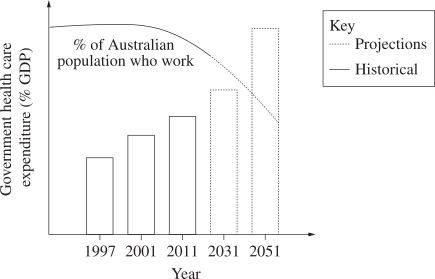
The graph summarises historical and projected data for Australian health care expenditure and the Australian working population.
 

Which major health care issue does the graph predict?

  1. Funding for new and emerging medical technologies required by working Australians
  2. Funding for health care in an increasing ageing population
  3. Increasing demand for health care by the long-term unemployed
  4. Increasing prevalence of non-communicable disease in the Australian working population
Show Answers Only

\(B\)

Show Worked Solution
  • B is correct: Rising health costs with fewer workers indicates ageing population challenges.

Other Options:

  • A is incorrect: Graph shows broader expenditure trends not technology-specific costs.
  • C is incorrect: Focus is on ageing demographics not unemployment issues.
  • D is incorrect: Graph indicates demographic shifts not disease prevalence changes.

Filed Under: Impact of an Ageing Population Tagged With: Band 4, smc-5478-10-Data interpretation

HMS, HAG 2016 HSC 17 MC

Which of the following best describes healthy ageing?

  1. Ageing at a healthy rate and trying to look younger
  2. Increasing the proportion of people who consume healthy foods throughout their life
  3. Reducing the risk of illness and disease when growing older by maintaining physical, dietary and mental health
  4. Reducing the number of people who die at a young age from illnesses related to hereditary and genetic factors
Show Answers Only

\(C\)

Show Worked Solution
  • C is correct: Healthy ageing involves maintaining wellness across all health dimensions.

Other Options:

  • A is incorrect: Focus on appearance rather than genuine health maintenance.
  • B is incorrect: Too narrow, only addresses nutrition not comprehensive health.
  • D is incorrect: Describes preventing premature death, not healthy ageing process.

Filed Under: Impact of an Ageing Population Tagged With: Band 2, smc-5478-05-Healthy ageing

HMS, HAG 2017 HSC 23

To what extent does Australia’s health care system benefit from having a healthy ageing population?   (8 marks)

--- 24 WORK AREA LINES (style=lined) ---

Show Answers Only

Judgment Statement

  • Australia’s healthcare system benefits to a significant extent from healthy ageing populations through reduced service demand and enhanced community contributions.

Healthcare Cost Reduction

  • A healthy ageing population substantially reduces healthcare expenditure and resource demands across multiple service areas.
  • Older Australians who maintain good physical and mental health require fewer hospitalisations, emergency department visits and specialist consultations.
  • For example, seniors who engage in regular physical activity experience lower rates of chronic diseases like diabetes and cardiovascular conditions.
  • This demonstrates strong benefits for healthcare sustainability as prevention reduces costly treatment interventions.
  • Healthy ageing decreases pharmaceutical expenditure and long-term care facility utilisation. 
  • Evidence shows significant advantages through reduced burden on Medicare and public hospital systems.

Community Workforce Contributions

  • Healthy older Australians provide considerable value to healthcare and community sectors through volunteer work and informal caregiving.
  • Many healthy seniors contribute thousands of hours annually to organisations like hospital auxiliaries and community transport services.
  • This demonstrates substantial effectiveness in supplementing formal healthcare workforce capacity.
  • For example, volunteer drivers enable rural patients to access medical appointments, while peer support programs help manage chronic conditions.
  • However, this benefit shows limitations when considering that not all older adults can participate equally due to varying health status.

Reaffirmation

  • Overall assessment confirms significant benefits from healthy ageing populations for Australia’s healthcare system.
  • The evidence overwhelmingly supports major advantages through reduced healthcare costs and valuable community contributions.
  • While some limitations exist in universal participation, the substantial positive impacts clearly demonstrate that investing in healthy ageing strategies provides excellent returns for healthcare system sustainability.

Show Worked Solution

Judgment Statement

  • Australia’s healthcare system benefits to a significant extent from healthy ageing populations through reduced service demand and enhanced community contributions.

Healthcare Cost Reduction

  • A healthy ageing population substantially reduces healthcare expenditure and resource demands across multiple service areas.
  • Older Australians who maintain good physical and mental health require fewer hospitalisations, emergency department visits and specialist consultations.
  • For example, seniors who engage in regular physical activity experience lower rates of chronic diseases like diabetes and cardiovascular conditions.
  • This demonstrates strong benefits for healthcare sustainability as prevention reduces costly treatment interventions.
  • Healthy ageing decreases pharmaceutical expenditure and long-term care facility utilisation. 
  • Evidence shows significant advantages through reduced burden on Medicare and public hospital systems.

Community Workforce Contributions

  • Healthy older Australians provide considerable value to healthcare and community sectors through volunteer work and informal caregiving.
  • Many healthy seniors contribute thousands of hours annually to organisations like hospital auxiliaries and community transport services.
  • This demonstrates substantial effectiveness in supplementing formal healthcare workforce capacity.
  • For example, volunteer drivers enable rural patients to access medical appointments, while peer support programs help manage chronic conditions.
  • However, this benefit shows limitations when considering that not all older adults can participate equally due to varying health status.

Reaffirmation

  • Overall assessment confirms significant benefits from healthy ageing populations for Australia’s healthcare system.
  • The evidence overwhelmingly supports major advantages through reduced healthcare costs and valuable community contributions.
  • While some limitations exist in universal participation, the substantial positive impacts clearly demonstrate that investing in healthy ageing strategies provides excellent returns for healthcare system sustainability.

♦♦ Mean mark 49%.

Filed Under: Impact of an Ageing Population Tagged With: Band 4, Band 5, smc-5478-05-Healthy ageing

HMS, HAG 2018 HSC 19 MC

The graph shows (government) expenditure for patients admitted to hospital in Australia, by age, for 2012–2013.


Which of the following is most likely to be responsible for admitted patient expenditures over $2500 million?

  1. Mental health and injuries
  2. Mental health and respiratory diseases
  3. Cardiovascular diseases and injuries
  4. Cardiovascular diseases and respiratory diseases
Show Answers Only

\(C\)

Show Worked Solution

  • C is correct: Cardiovascular diseases and injuries require expensive treatments and affect older age groups with highest expenditure.

Other Options:

  • A is incorrect: Mental health typically requires less expensive hospital treatment than cardiovascular diseases.
  • B is incorrect: Mental health expenditure is generally lower than cardiovascular disease costs.
  • D is incorrect: Respiratory diseases are less expensive to treat than injuries requiring surgery.

♦♦♦♦♦ Mean mark 36%.

Filed Under: Healthcare expenditure, Impact of an Ageing Population Tagged With: Band 5, smc-5478-20-Current/future challenges, smc-5482-25-Sustainable healthcare

HMS, HAG 2018 HSC 2 MC

Which of the following is an effect of a growing and ageing population?

  1. Decreased demand for carers
  2. Increased access to elective surgery
  3. Increased demand for health services
  4. Decreased number of people living with chronic disease
Show Answers Only

\(C\)

Show Worked Solution

  • C is correct: Growing and ageing population increases demand for health services overall.

Other Options:

  • A is incorrect: Ageing population increases demand for carers, not decreases.
  • B is incorrect: Higher demand typically reduces access due to increased waiting times.
  • D is incorrect: Ageing population increases chronic disease prevalence, not decreases.

Filed Under: Impact of an Ageing Population Tagged With: Band 3, smc-5478-15-Opportunities/challenges

HMS, HAG 2019 HSC 13 MC

Which of the following two strategies aim to reduce the impact of a growing and ageing population on the health care system in Australia?

  1. Introducing the Medicare Safety Net and increasing the number of volunteers
  2. Increasing the retirement age and introducing Lifetime Health Cover loading
  3. Increasing the number of carers and providing greater access to physical activity options to meet specific needs
  4. Increasing the private health insurance rebate and providing access to the Pharmaceutical Benefits Scheme
Show Answers Only

\(C\)

Show Worked Solution

  • C is correct: More carers and age-appropriate physical activity directly address ageing population needs.

Other Options:

  • A is incorrect: Medicare Safety Net provides cost relief but doesn’t address population ageing.
  • B is incorrect: These are economic policies, not health system strategies.
  • D is incorrect: These expand existing services but don’t specifically target ageing challenges.

♦♦ Mean mark 50%.

Filed Under: Impact of an Ageing Population Tagged With: Band 5, smc-5478-20-Current/future challenges

HMS, HAG 2020 HSC 21

Outline how a growing and ageing population can affect volunteer organisations. Provide an example to support your answer.  (3 marks)

--- 7 WORK AREA LINES (style=lined) ---

Show Answers Only
  • A growing and ageing population increases demand for volunteer services. More elderly people require assistance with daily activities, transport, and social support.
  • Simultaneously, the traditional volunteer workforce is also ageing. Many current volunteers are reaching retirement age or developing health issues. This reduces the available volunteer pool when demand is highest.
  • For example, St Vincent de Paul Society faces increased demand for home visits and support services. However, many volunteers are elderly themselves and may no longer manage physical tasks or transport requirements.
Show Worked Solution
  • A growing and ageing population increases demand for volunteer services. More elderly people require assistance with daily activities, transport, and social support.
  • Simultaneously, the traditional volunteer workforce is also ageing. Many current volunteers are reaching retirement age or developing health issues. This reduces the available volunteer pool when demand is highest.
  • For example, St Vincent de Paul Society faces increased demand for home visits and support services. However, many volunteers are elderly themselves and may no longer manage physical tasks or transport requirements.

Filed Under: Impact of an Ageing Population Tagged With: Band 4, smc-5478-15-Opportunities/challenges

HMS, HAG 2021 HSC 16 MC

Which strategy is most likely to reduce the current impact of a growing ageing population on Australia's health system and services?

  1. Increasing support services that enable older Australians to keep living in their own home
  2. Providing education programs in secondary school to reduce the risk factors for preventable chronic disease
  3. Introducing an application fee for individuals to register as volunteers with organisations that assist the elderly
  4. Sending annual reminder emails to older Australians encouraging them to register for government support programs
Show Answers Only

\(A\)

Show Worked Solution
  • A is correct: Home support reduces expensive institutional care demands.

Other Options:

  • B is incorrect: Long-term benefit but doesn’t address current impact.
  • C is incorrect: Fees would reduce volunteer participation not increase.
  • D is incorrect: Emails don’t provide actual services or support.

Filed Under: Impact of an Ageing Population Tagged With: Band 4, smc-5478-25-Govt/non-govt planning

HMS, HAG 2022 HSC 13 MC

The number of palliative care hospital admissions in Australia increased in the period 2013-2018.

Which of the following was the most significant factor that contributed to this increase?

  1. Increased prevalence of dementia and cancer
  2. Longer waiting times for elective surgery in public hospitals
  3. Increased mortality rates from diabetes and mental health illness
  4. A greater number of Australians participating in health screening programs
Show Answers Only

\( A \)

Show Worked Solution
  • A is correct: Ageing population leads to increased dementia and cancer requiring palliative care.

Other Options:

  • B is incorrect: Elective surgery delays don’t directly cause palliative admissions.
  • C is incorrect: Diabetes and mental health don’t typically require palliative care.
  • D is incorrect: Screening programs detect disease early, reducing palliative needs.

♦ Mean mark 53%.

Filed Under: Impact of an Ageing Population Tagged With: Band 5, smc-5478-15-Opportunities/challenges

HMS, HAG 2023 HSC 22

How does a healthy, ageing population affect Australia's health care system?   (4 marks)

--- 12 WORK AREA LINES (style=lined) ---

Show Answers Only

Sample answer

  • A healthy, ageing population reduces institutional care demands as older adults maintain independence longer. This decreases admissions to nursing homes and residential facilities, lowering government expenditure on expensive institutional services.
  • Consequently, hospital utilisation declines through fewer emergency presentations and shorter acute care stays. This creates capacity within existing hospital infrastructure for other patient populations.
  • However, healthcare demand shifts toward community-based services including home modifications, meal preparation and domestic assistance. The health system must reallocate resources from institutional settings to community support programs rather than reducing overall spending.

Show Worked Solution

Sample answer

  • A healthy, ageing population reduces institutional care demands as older adults maintain independence longer. This decreases admissions to nursing homes and residential facilities, lowering government expenditure on expensive institutional services.
  • Consequently, hospital utilisation declines through fewer emergency presentations and shorter acute care stays. This creates capacity within existing hospital infrastructure for other patient populations.
  • However, healthcare demand shifts toward community-based services including home modifications, meal preparation and domestic assistance. The health system must reallocate resources from institutional settings to community support programs rather than reducing overall spending.

Filed Under: Impact of an Ageing Population Tagged With: Band 4, smc-5478-05-Healthy ageing, smc-5478-15-Opportunities/challenges

HMS, HAG 2023 HSC 13 MC

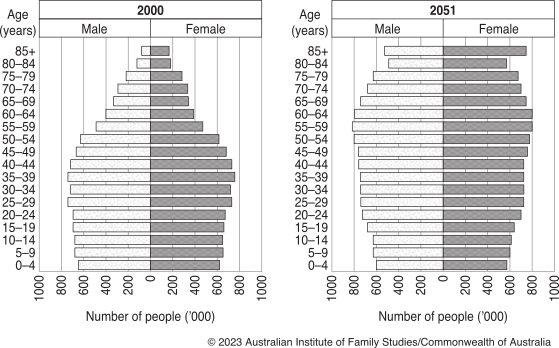
The following graphs represent the age and biological sex of Australia's population in 2000 (observed) and 2051 (projected).

Which action would the Australian Government need to implement in 2023 to best support the health of Australians in 2051?

  1. Increase the number of staff in aged care facilities
  2. Develop legislation to regulate the use of e-cigarettes
  3. Target strategic planning to improve the health of infants
  4. Increase funding and research into Alzheimer's disease and dementia
Show Answers Only

\(D\)

Show Worked Solution
  • D is correct: The population projections show significant growth in older age brackets by 2051, when conditions like Alzheimer’s and dementia become prevalent.

Other Options:

  • A is incorrect: Staffing aged care addresses current not future needs shown in the projections.
  • B is incorrect: E-cigarette regulation impacts younger populations primarily.
  • C is incorrect: Infant health strategies don’t address the aging population challenge shown in the data.

♦♦ Mean mark 39%.

Filed Under: Impact of an Ageing Population Tagged With: Band 5, smc-5478-25-Govt/non-govt planning

HMS, BM 2024 HSC 3 MC

Which of the following is most likely to be contributing to the growing demand for carers and volunteers in Australia?

  1. An increase in life expectancy
  2. A decrease in chronic diseases
  3. An increase in government funding
  4. A decrease in the ageing population
Show Answers Only

\(A\)

Show Worked Solution
  • A is correct: Increased life expectancy directly contributes to the growing demand for carers and volunteers as more people are living longer, often with chronic conditions that require care.

Other Options:

  • B is incorrect: Chronic disease rates are actually increasing.
  • C is incorrect: This would potentially reduce demand by enabling more paid care options.
  • D is incorrect: The ageing population is increasing, not decreasing.

Filed Under: Impact of an Ageing Population Tagged With: Band 3, smc-5478-15-Opportunities/challenges

Copyright © 2014–2025 SmarterEd.com.au · Log in