SmarterEd

Aussie Maths & Science Teachers: Save your time with SmarterEd

  • Login
  • Get Help
  • About

HMS, BM EQ-Bank 847 MC

When lifting a heavy box from the floor, which application of biomechanical principles would MOST effectively reduce the risk of lower back injury?

  1. Keeping the knees straight and bending at the waist
  2. Holding the box far from the body to distribute weight evenly
  3. Positioning the feet close together for better balance
  4. Keeping the weight close to the body and bending at the knees
Show Answers Only

\(D\)

Show Worked Solution
  • D is correct: Close weight reduces lever arm on spine while bent knees engage stronger leg muscles.

Other Options:

  • A is incorrect: Straight knees and bent waist places dangerous stress on lower back.
  • B is incorrect: Far weight position increases lever arm and spinal torque significantly.
  • C is incorrect: Close feet reduce stability and increase risk of falling while lifting.

Filed Under: Safe and efficient movement Tagged With: Band 5, smc-5522-10-Safe movement

HMS, BM EQ-Bank 846 MC

During a walking activity, which biomechanical principle best explains why proper heel-to-toe foot placement reduces the risk of injury?

  1. It minimises the base of support
  2. It distributes force more evenly
  3. It increases the force of impact
  4. It raises the centre of gravity
Show Answers Only

\(B\)

Show Worked Solution
  • B is correct: Heel-to-toe placement distributes impact forces evenly, reducing stress on any single point

Other Options:

  • A is incorrect: Minimising base of support would decrease stability and increase injury risk.
  • C is incorrect: Increasing impact force would heighten rather than reduce injury risk.
  • D is incorrect: Raising centre of gravity decreases stability and increases fall risk.

Filed Under: Safe and efficient movement Tagged With: Band 4, smc-5522-10-Safe movement

HMS, BM EQ-Bank 845 MC

A student is learning to perform a squat correctly in physical education class. Which combination of biomechanical principles would most effectively enhance safety during this movement?

  1. Decreasing the base of support and raising the centre of gravity
  2. Maintaining a straight back and keeping the weight away from the body
  3. Widening the base of support and lowering the centre of gravity
  4. Bending the back and keeping the feet close together
Show Answers Only

\(C\)

Show Worked Solution
  • C is correct: Wider base of support and lower centre of gravity maximise stability and balance during squats.

Other Options:

  • A is incorrect: Decreasing base of support and raising centre of gravity reduces stability dangerously
  • B is incorrect: Keeping weight away from body creates excessive leverage on the lower back.
  • D is incorrect: Bending the back risks spinal injury and close feet reduce stability.

Filed Under: Safe and efficient movement Tagged With: Band 3, smc-5522-10-Safe movement

HMS, BM EQ-Bank 844

Using your knowledge of fluid mechanics, evaluate how a competitive swimmer can apply biomechanical principles to enhance movement efficiency and performance.

In your answer, refer to drag, buoyancy, and the interrelationship between body systems.   (8 marks)

--- 22 WORK AREA LINES (style=lined) ---

Show Answers Only

Sample Answer

Evaluation Statement

  • Biomechanical principles prove highly effective for enhancing swimming efficiency when properly applied.
  • Evaluation criteria include drag reduction effectiveness, buoyancy management success, and body system coordination.

Drag Reduction Effectiveness

  • Streamlined body position strongly meets the criteria for reducing resistance by aligning body segments horizontally.
  • Abdominal muscle engagement effectively maintains hip elevation, preventing legs from dropping and creating drag.
  • The interrelationship between deltoids, latissimus dorsi and core muscles optimally produces a rigid streamlined shape.
  • Sculling hand position with slight finger separation successfully generates lift forces while minimising drag.
  • Evidence shows technique refinement substantially reduces energy expenditure per stroke cycle.
  • However, maintaining optimal position proves challenging as fatigue affects muscular endurance and coordination.

Buoyancy Management and Body Systems

  • Centre of buoyancy control through diaphragm regulation adequately fulfils flotation requirements.
  • The respiratory system partially meets dual demands of oxygen supply and buoyancy control.
  • Coordination between breathing patterns and stroke mechanics effectively preserves body position.
  • Individual variations in muscle-to-fat ratio significantly impact natural buoyancy levels.
  • The skeletal system’s leverage points at shoulders and hips enable efficient rotation without compromising flotation.
  • While generally effective, swimmers with denser muscle mass face considerable buoyancy challenges.

Final Evaluation

  • Biomechanical principles prove highly effective when muscles, bones and joints work synergistically.
  • Drag reduction through body positioning shows strongest performance benefits.
  • Although individual body composition affects buoyancy, proper technique substantially compensates.
  • The interrelationship between body systems demonstrates superior efficiency gains.
  • Therefore, mastering fluid mechanics through coordinated body systems remains essential for competitive excellence.
Show Worked Solution

Sample Answer

Evaluation Statement

  • Biomechanical principles prove highly effective for enhancing swimming efficiency when properly applied.
  • Evaluation criteria include drag reduction effectiveness, buoyancy management success, and body system coordination.

Drag Reduction Effectiveness

  • Streamlined body position strongly meets the criteria for reducing resistance by aligning body segments horizontally.
  • Abdominal muscle engagement effectively maintains hip elevation, preventing legs from dropping and creating drag.
  • The interrelationship between deltoids, latissimus dorsi and core muscles optimally produces a rigid streamlined shape.
  • Sculling hand position with slight finger separation successfully generates lift forces while minimising drag.
  • Evidence shows technique refinement substantially reduces energy expenditure per stroke cycle.
  • However, maintaining optimal position proves challenging as fatigue affects muscular endurance and coordination.

Buoyancy Management and Body Systems

  • Centre of buoyancy control through diaphragm regulation adequately fulfils flotation requirements.
  • The respiratory system partially meets dual demands of oxygen supply and buoyancy control.
  • Coordination between breathing patterns and stroke mechanics effectively preserves body position.
  • Individual variations in muscle-to-fat ratio significantly impact natural buoyancy levels.
  • The skeletal system’s leverage points at shoulders and hips enable efficient rotation without compromising flotation.
  • While generally effective, swimmers with denser muscle mass face considerable buoyancy challenges.

Final Evaluation

  • Biomechanical principles prove highly effective when muscles, bones and joints work synergistically.
  • Drag reduction through body positioning shows strongest performance benefits.
  • Although individual body composition affects buoyancy, proper technique substantially compensates.
  • The interrelationship between body systems demonstrates superior efficiency gains.
  • Therefore, mastering fluid mechanics through coordinated body systems remains essential for competitive excellence.

Filed Under: Fluid Mechanics and Force Tagged With: Band 5, Band 6, smc-5879-10-Flotation/Centre of Buoyancy, smc-5879-20-Fluid resistance

HMS, BM EQ-Bank 843

How do biomechanical principles related to balance and stability enhance safety and movement efficiency in gymnastics floor routines?   (5 marks)

--- 15 WORK AREA LINES (style=lined) ---

Show Answers Only

Sample Answer

Balance Control for Safety:

  • Gymnasts manipulate centre of gravity by shifting body weight relative to base of support. This process maintains balance during skill transitions.
  • By controlling centre position precisely, dangerous falls are prevented. This protection occurs through constant muscular adjustments and body awareness.
  • During handstands, vertical alignment is achieved by engaging shoulder and core muscles. This engagement creates rigid body positioning above hands.
  • Through proper alignment, stable positioning prevents sideways collapse. Improved stability results in reduced risk of wrist or shoulder injuries.

Stability for Movement Efficiency:

  • Gymnasts widen base of support by adjusting limb positions during transitions. Such adjustments create greater stability margins for movement.
  • Through increased stability, smoother connections between elements occur, reducing energy wasted on balance corrections.
  • Centre of gravity lowers by bending joints before difficult moves. This lowering enhances control during rotational elements.
  • Through better control, precise execution becomes possible. This precision minimises unnecessary compensatory movements throughout routine.

Force Absorption in Landings:

  • Joint flexion extends impact time by allowing gradual deceleration. This extension reduces peak forces on body tissues.
  • Through extended deceleration, cartilage remains protected from damage, enabling fluid routine flow without injury interruptions.
Show Worked Solution

Sample Answer

Balance Control for Safety:

  • Gymnasts manipulate centre of gravity by shifting body weight relative to base of support. This process maintains balance during skill transitions.
  • By controlling centre position precisely, dangerous falls are prevented. This protection occurs through constant muscular adjustments and body awareness.
  • During handstands, vertical alignment is achieved by engaging shoulder and core muscles. This engagement creates rigid body positioning above hands.
  • Through proper alignment, stable positioning prevents sideways collapse. Improved stability results in reduced risk of wrist or shoulder injuries.

Stability for Movement Efficiency:

  • Gymnasts widen base of support by adjusting limb positions during transitions. Such adjustments create greater stability margins for movement.
  • Through increased stability, smoother connections between elements occur, reducing energy wasted on balance corrections.
  • Centre of gravity lowers by bending joints before difficult moves. This lowering enhances control during rotational elements.
  • Through better control, precise execution becomes possible. This precision minimises unnecessary compensatory movements throughout routine.

Force Absorption in Landings:

  • Joint flexion extends impact time by allowing gradual deceleration. This extension reduces peak forces on body tissues.
  • Through extended deceleration, cartilage remains protected from damage, enabling fluid routine flow without injury interruptions.

Filed Under: Safe and efficient movement Tagged With: Band 4, Band 5, smc-5522-20-Human movement

HMS, BM EQ-Bank 842

Explain how the biomechanical principle of force is applied in a sprint start, making reference to the interrelationship between muscles, bones, and joints.   (4 marks)

--- 12 WORK AREA LINES (style=lined) ---

Show Answers Only

Sample Answer

  • In a sprint start, quadriceps and hamstrings contract forcefully. This occurs because muscles must overcome inertia.
  • As a result, these muscles pull on femur and tibia bones. This causes powerful extension at hip and knee joints.
  • Simultaneously, calf muscles contract to push through the ankle. This creates additional force against the blocks.
  • Consequently, Newton’s Third Law applies. The blocks exert equal reaction force that propels the athlete forward.
  • Arm muscles work together to drive shoulder rotation. This generates momentum because arms oppose leg movement.
  • Throughout this process, core muscles stabilise the torso. This enables efficient force transfer between body segments.
Show Worked Solution

Sample Answer

  • In a sprint start, quadriceps and hamstrings contract forcefully. This occurs because muscles must overcome inertia.
  • As a result, these muscles pull on femur and tibia bones. This causes powerful extension at hip and knee joints.
  • Simultaneously, calf muscles contract to push through the ankle. This creates additional force against the blocks.
  • Consequently, Newton’s Third Law applies. The blocks exert equal reaction force that propels the athlete forward.
  • Arm muscles work together to drive shoulder rotation. This generates momentum because arms oppose leg movement.
  • Throughout this process, core muscles stabilise the torso. This enables efficient force transfer between body segments.

Filed Under: Safe and efficient movement Tagged With: Band 3, smc-5522-20-Human movement

HMS, BM EQ-Bank 841 MC

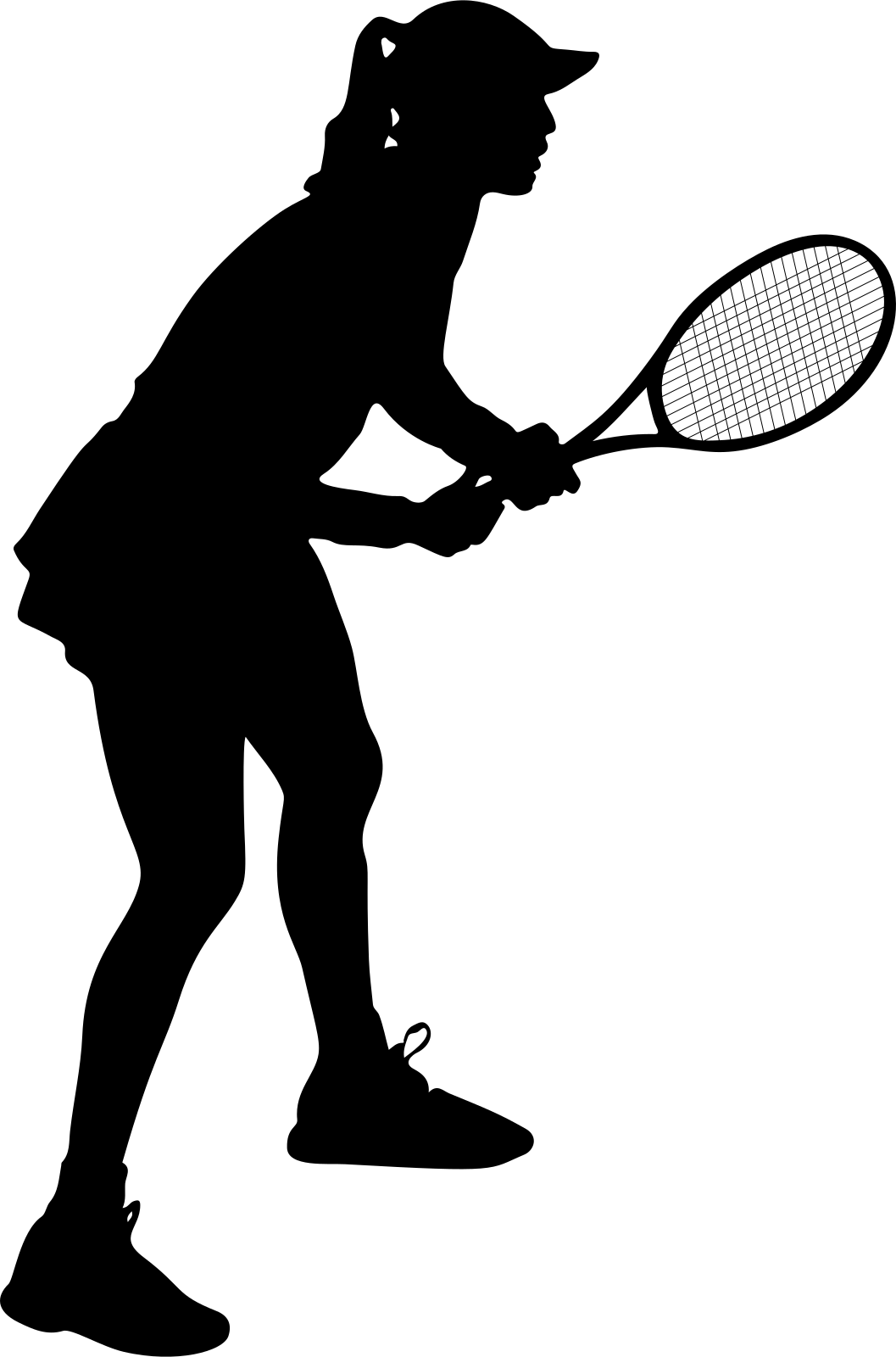
The image below shows a tennis player preparing to return a serve.

Which biomechanical principle is this player primarily using to optimise stability?

  1. Lowering the centre of gravity and widening the base of support
  2. Narrowing the base of support to increase agility
  3. Raising the centre of gravity to improve reaction time
  4. Increasing the line of gravity outside the base of support
Show Answers Only

\(A\)

Show Worked Solution
  • A is correct: Lowered centre of gravity and widened stance maximise stability for receiving serves.

Other Options:

  • B is incorrect: Narrowing base of support decreases stability needed for powerful returns.
  • C is incorrect: Raising centre of gravity reduces stability and balance.
  • D is incorrect: Line of gravity outside base of support causes instability and falling.

Filed Under: Safe and efficient movement Tagged With: Band 5, smc-5522-20-Human movement

HMS, BM EQ-Bank 840 MC

A swimmer is preparing for a new competition season. What would be the most effective technique to reduce drag and improve movement efficiency in freestyle?

  1. Keeping hands in a relaxed, open position during the pull phase
  2. Maintaining a high head position to see competitors during the race
  3. Keeping the body aligned with hips and legs high in the water
  4. Using a wider, more powerful kick to create more propulsion
Show Answers Only

\(C\)

Show Worked Solution
  • C is correct: Body alignment with hips and legs high creates streamlined position reducing drag

Other Options:

  • A is incorrect: Open hands increase resistance; slightly cupped position is more efficient
  • B is incorrect: High head position pushes hips down, increasing drag significantly
  • D is incorrect: Wider kick creates turbulence and drag despite generating more power

Filed Under: Safe and efficient movement Tagged With: Band 4, smc-5522-15-Movement efficiency, smc-5522-20-Human movement

HMS, BM EQ-Bank 141

Analyse the interrelationship between body systems when performing inefficient weightlifting technique and discuss appropriate first aid responses.   (8 marks)

--- 24 WORK AREA LINES (style=lined) ---

Show Answers Only

Sample Answer

Overview Statement

  • Inefficient weightlifting technique creates cascading failures across musculoskeletal, nervous, and circulatory systems.
  • Key relationships include biomechanical stress, pain responses, inflammatory processes requiring systematic first aid intervention.

Musculoskeletal-Nervous System Impact

  • Poor technique forces joints and muscles beyond safe ranges, compromising stability and alignment.
  • Nociceptors immediately trigger pain signals through the nervous system in response.
  • Protective muscle spasms develop as the body attempts to prevent further tissue damage.
  • The interaction reveals how biomechanical errors directly activate protective neural responses.
  • Immediate cessation of activity becomes essential due to these warning signals.

Circulatory-Inflammatory Response

  • Tissue damage initiates increased blood flow to affected areas.
  • Acute inflammatory responses including swelling and heat result from this vascular change.
  • Compression from swelling subsequently affects surrounding nerves and blood vessels.
  • Vascular changes therefore amplify tissue damage through this cascade effect.

First Aid Response Strategy

  • Primary assessment focuses on checking airway, breathing and circulation to secure vital functions.
  • Specific injury assessment determines whether immediate medical attention or RICER protocol is needed.
  • Immobilisation prevents secondary injury while maintaining vital system function.
  • Early ice application reduces inflammatory response by causing vasoconstriction.
  • Compression and elevation work together to limit swelling and fluid accumulation.

Implications and Synthesis

  • These interrelationships demonstrate how poor technique creates multi-system dysfunction.
  • First aid must address both immediate threats and specific tissue damage.
  • Systematic response protocols therefore prevent complications.
  • Early intervention significantly minimises long-term damage and recovery time.
Show Worked Solution

Sample Answer

Overview Statement

  • Inefficient weightlifting technique creates cascading failures across musculoskeletal, nervous, and circulatory systems.
  • Key relationships include biomechanical stress, pain responses, inflammatory processes requiring systematic first aid intervention.

Musculoskeletal-Nervous System Impact

  • Poor technique forces joints and muscles beyond safe ranges, compromising stability and alignment.
  • Nociceptors immediately trigger pain signals through the nervous system in response.
  • Protective muscle spasms develop as the body attempts to prevent further tissue damage.
  • The interaction reveals how biomechanical errors directly activate protective neural responses.
  • Immediate cessation of activity becomes essential due to these warning signals.

Circulatory-Inflammatory Response

  • Tissue damage initiates increased blood flow to affected areas.
  • Acute inflammatory responses including swelling and heat result from this vascular change.
  • Compression from swelling subsequently affects surrounding nerves and blood vessels.
  • Vascular changes therefore amplify tissue damage through this cascade effect.

First Aid Response Strategy

  • Primary assessment focuses on checking airway, breathing and circulation to secure vital functions.
  • Specific injury assessment determines whether immediate medical attention or RICER protocol is needed.
  • Immobilisation prevents secondary injury while maintaining vital system function.
  • Early ice application reduces inflammatory response by causing vasoconstriction.
  • Compression and elevation work together to limit swelling and fluid accumulation.

Implications and Synthesis

  • These interrelationships demonstrate how poor technique creates multi-system dysfunction.
  • First aid must address both immediate threats and specific tissue damage.
  • Systematic response protocols therefore prevent complications.
  • Early intervention significantly minimises long-term damage and recovery time.

Filed Under: Role of First Aid Tagged With: Band 5, Band 6, smc-5527-15-Inefficient movement

HMS, BM EQ-Bank 140

Explain how the muscular and nervous systems are affected when a tennis player repeatedly serves with poor technique, and describe appropriate first aid responses.   (5 marks)

--- 15 WORK AREA LINES (style=lined) ---

Show Answers Only

Sample Answer

  • Rotator cuff muscles strain from repetitive overuse and incorrect loading patterns during the serve action. This occurs because poor technique places excessive stress on shoulder stabilisers, leading to micro-tears in muscle fibres and inflammation.
  • Neural pathways activate continuous pain responses through the peripheral nervous system as protective feedback. This triggers muscle guarding and altered movement patterns, which creates a cycle of compensation and further tissue damage.
  • Localised inflammation in the shoulder region compresses surrounding nerves and blood vessels. Consequently, the player experiences referred pain down the arm and reduced range of motion, preventing normal serving mechanics.
  • First aid requires immediate ice application in 20-minute intervals with compression bandaging. This works by causing vasoconstriction to reduce blood flow and swelling, thereby limiting inflammatory response and pain signals.
  • A 48-72 hour rest period from serving is essential while maintaining gentle mobility exercises. This combination enables tissue repair without complete immobilisation, which prevents adhesions and maintains flexibility for return to play.
Show Worked Solution

Sample Answer

  • Rotator cuff muscles strain from repetitive overuse and incorrect loading patterns during the serve action. This occurs because poor technique places excessive stress on shoulder stabilisers, leading to micro-tears in muscle fibres and inflammation.
  • Neural pathways activate continuous pain responses through the peripheral nervous system as protective feedback. This triggers muscle guarding and altered movement patterns, which creates a cycle of compensation and further tissue damage.
  • Localised inflammation in the shoulder region compresses surrounding nerves and blood vessels. Consequently, the player experiences referred pain down the arm and reduced range of motion, preventing normal serving mechanics.
  • First aid requires immediate ice application in 20-minute intervals with compression bandaging. This works by causing vasoconstriction to reduce blood flow and swelling, thereby limiting inflammatory response and pain signals.
  • A 48-72 hour rest period from serving is essential while maintaining gentle mobility exercises. This combination enables tissue repair without complete immobilisation, which prevents adhesions and maintains flexibility for return to play.

Filed Under: Role of First Aid Tagged With: Band 3, Band 4, smc-5527-15-Inefficient movement

HMS, BM EQ-Bank 139

Analyse how multiple body systems are impacted when a long-distance runner continues competing with inefficient running style, and suggest appropriate first aid responses.   (8 marks)

--- 22 WORK AREA LINES (style=lined) ---

Show Answers Only

Sample Answer

Overview Statement

  • Inefficient running technique creates excessive stress across multiple body systems, directly affecting performance and safety.
  • Key relationships include muscular fatigue, skeletal misalignment, cardiovascular strain, and appropriate first aid interventions.

Muscular-Skeletal Impact

  • Poor biomechanics leads to increased muscular fatigue as muscles work harder than necessary.
  • This results in quadriceps and calf muscles experiencing irregular loading, reducing power output.
  • Simultaneously, misaligned forces travel through incorrectly positioned joints.
  • This causes ankles, knees and hips to absorb uneven stress, increasing stress fracture risks.
  • The relationship shows how inefficient technique compounds damage across connected systems.

Cardiovascular-Respiratory Strain

  • Poor technique requires more oxygen than efficient running, forcing systems to work overtime.
  • This triggers unnecessarily elevated heart rate while breathing becomes laboured.
  • Consequently, earlier fatigue occurs, limiting endurance capacity.
  • This reveals the direct connection between biomechanical inefficiency and physiological stress.

First Aid Response Priorities

  • Immediate intervention focuses on monitoring vital signs to prevent system failure.
  • Checking heart rate, blood pressure and hydration enables early detection of dangerous conditions.
  • Secondary aid addresses specific injuries using RICER protocol for muscular strains.
  • This prevents further damage while managing acute injuries.

Implications and Synthesis

  • These relationships demonstrate how inefficient technique creates cascading system failures.
  • Multiple systems interact, amplifying overall stress and injury risk.
  • Therefore, first aid must address both immediate vital signs and specific injuries.
  • The significance is that proper intervention prevents serious complications from biomechanical inefficiency.
Show Worked Solution

Sample Answer

Overview Statement

  • Inefficient running technique creates excessive stress across multiple body systems, directly affecting performance and safety.
  • Key relationships include muscular fatigue, skeletal misalignment, cardiovascular strain, and appropriate first aid interventions.

Muscular-Skeletal Impact

  • Poor biomechanics leads to increased muscular fatigue as muscles work harder than necessary.
  • This results in quadriceps and calf muscles experiencing irregular loading, reducing power output.
  • Simultaneously, misaligned forces travel through incorrectly positioned joints.
  • This causes ankles, knees and hips to absorb uneven stress, increasing stress fracture risks.
  • The relationship shows how inefficient technique compounds damage across connected systems.

Cardiovascular-Respiratory Strain

  • Poor technique requires more oxygen than efficient running, forcing systems to work overtime.
  • This triggers unnecessarily elevated heart rate while breathing becomes laboured.
  • Consequently, earlier fatigue occurs, limiting endurance capacity.
  • This reveals the direct connection between biomechanical inefficiency and physiological stress.

First Aid Response Priorities

  • Immediate intervention focuses on monitoring vital signs to prevent system failure.
  • Checking heart rate, blood pressure and hydration enables early detection of dangerous conditions.
  • Secondary aid addresses specific injuries using RICER protocol for muscular strains.
  • This prevents further damage while managing acute injuries.

Implications and Synthesis

  • These relationships demonstrate how inefficient technique creates cascading system failures.
  • Multiple systems interact, amplifying overall stress and injury risk.
  • Therefore, first aid must address both immediate vital signs and specific injuries.
  • The significance is that proper intervention prevents serious complications from biomechanical inefficiency.

Filed Under: Role of First Aid Tagged With: Band 4, Band 5, smc-5527-15-Inefficient movement

HMS, BM EQ-Bank 138

Outline how inefficient jumping technique can affect the skeletal system and require first aid intervention.   (3 marks)

--- 7 WORK AREA LINES (style=lined) ---

Show Answers Only

Sample Answer

  • Incorrect landing mechanics – Poor technique causes excessive joint compression in ankles, knees and hips, potentially leading to acute injuries.
  • Abnormal force distribution – Impact forces travel through misaligned bones creating stress fractures, particularly in weight-bearing bones like tibia and metatarsals.
  • First aid requirements – RICER protocol needed for acute injuries, joint stabilisation to prevent further damage, and medical referral for suspected fractures.
Show Worked Solution

Sample Answer

  • Incorrect landing mechanics – Poor technique causes excessive joint compression in ankles, knees and hips, potentially leading to acute injuries.
  • Abnormal force distribution – Impact forces travel through misaligned bones creating stress fractures, particularly in weight-bearing bones like tibia and metatarsals.
  • First aid requirements – RICER protocol needed for acute injuries, joint stabilisation to prevent further damage, and medical referral for suspected fractures.

Filed Under: Role of First Aid Tagged With: Band 2, smc-5527-15-Inefficient movement

HMS, BM EQ-Bank 137 MC

During a sprint race, an athlete's running technique deteriorates, causing them to collapse. Which system response requires IMMEDIATE first aid attention?

  1. Respiratory system failure
  2. Circulatory system overload
  3. Muscular system fatigue
  4. Nervous system shutdown
Show Answers Only

\(B\)

Show Worked Solution
  • B is correct: Circulatory system overload requires immediate attention due to risk of cardiac issues.

Other Options:

  • A is incorrect: While breathing may be laboured, circulation is priority
  • C is incorrect: Muscle fatigue alone wouldn’t cause collapse
  • D is incorrect: Neural fatigue isn’t immediately life-threatening

Filed Under: Role of First Aid Tagged With: Band 5, smc-5527-15-Inefficient movement

HMS, BM EQ-Bank 136 MC

A swimmer presents with shoulder pain after repeatedly performing an inefficient freestyle arm pull. Which combination of systems is MOST likely to require first aid treatment?

  1. Muscular and nervous systems
  2. Circulatory and respiratory systems
  3. Muscular and skeletal systems
  4. Skeletal and nervous systems
Show Answers Only

\(C\)

Show Worked Solution
  • C is correct: Both muscular strain and joint stress occur from repetitive inefficient movement.

Other Options:

  • A is incorrect: While pain is present, muscle damage is primary concern
  • B is incorrect: These systems are not primarily impacted by the movement
  • D is incorrect: Joint stress occurs with muscle not nerve damage

Filed Under: Role of First Aid Tagged With: Band 4, smc-5527-15-Inefficient movement

HMS, BM EQ-Bank 135 MC

During a netball game, a player lands awkwardly causing their knee to buckle inwards. Which system is MOST immediately affected by this inefficient movement?

  1. Skeletal system
  2. Muscular system
  3. Nervous system
  4. Circulatory system
Show Answers Only

\(A\)

Show Worked Solution
  • A is correct: The skeletal system is primarily affected as the joint structure is compromised by the buckling motion.

Other Options:

  • B is incorrect: While muscles support the knee, the immediate impact is on joint alignment
  • C is incorrect: While pain signals are sent, the structural damage occurs first
  • D is incorrect: Blood flow is not immediately impacted by this movement

Filed Under: Role of First Aid Tagged With: Band 3, smc-5527-15-Inefficient movement

HMS, BM EQ-Bank 134

Analyse how multiple body systems are affected by dehydration during endurance events and evaluate appropriate first aid management strategies.   (8 marks)

--- 18 WORK AREA LINES (style=lined) ---

Show Answers Only

Sample Answer

Overview Statement

  • Dehydration affects multiple interconnected body systems during endurance events, creating cascading physiological failures.
  • Key relationships include circulatory compromise, muscular dysfunction, thermoregulatory failure, and nervous system impairment requiring systematic first aid management.

Circulatory-Muscular System Impact

  • Reduced plasma volume leads to increased blood viscosity and compromised cardiac output.
  • This directly affects oxygen delivery to working muscles, causing reduced performance capacity.
  • Simultaneously, electrolyte imbalances develop in muscle tissue, increasing cramping risk.
  • The interaction between these systems reveals how circulatory changes amplify muscular dysfunction.
  • This relationship demonstrates why endurance athletes experience progressive performance decline.

Thermoregulatory-Nervous System Response

  • Decreased sweating efficiency results from reduced fluid availability, compromising cooling capacity.
  • Core temperature elevation subsequently affects the nervous system’s function.
  • This leads to altered coordination, reduced concentration, and potential confusion.
  • The connection shows how thermal stress directly impairs neural control of movement.

First Aid Management Strategy

  • Immediate response requires activity cessation and vital sign assessment to prevent further deterioration.
  • Core temperature monitoring enables identification of heat-related complications.
  • Controlled rehydration with electrolyte replacement addresses both fluid and mineral deficits.
  • Cooling measures complement rehydration by reducing thermal stress.
  • Regular reassessment ensures treatment effectiveness and determines need for emergency services.

Implications and Synthesis

  • These system interactions reveal dehydration’s compound effects during endurance events.
  • Multiple system failures interact to accelerate performance deterioration and health risks.
  • Therefore, first aid must address all affected systems simultaneously.
  • The significance is comprehensive management prevents progression from dehydration to life-threatening conditions.
Show Worked Solution

Sample Answer

Overview Statement

  • Dehydration affects multiple interconnected body systems during endurance events, creating cascading physiological failures.
  • Key relationships include circulatory compromise, muscular dysfunction, thermoregulatory failure, and nervous system impairment requiring systematic first aid management.

Circulatory-Muscular System Impact

  • Reduced plasma volume leads to increased blood viscosity and compromised cardiac output.
  • This directly affects oxygen delivery to working muscles, causing reduced performance capacity.
  • Simultaneously, electrolyte imbalances develop in muscle tissue, increasing cramping risk.
  • The interaction between these systems reveals how circulatory changes amplify muscular dysfunction.
  • This relationship demonstrates why endurance athletes experience progressive performance decline.

Thermoregulatory-Nervous System Response

  • Decreased sweating efficiency results from reduced fluid availability, compromising cooling capacity.
  • Core temperature elevation subsequently affects the nervous system’s function.
  • This leads to altered coordination, reduced concentration, and potential confusion.
  • The connection shows how thermal stress directly impairs neural control of movement.

First Aid Management Strategy

  • Immediate response requires activity cessation and vital sign assessment to prevent further deterioration.
  • Core temperature monitoring enables identification of heat-related complications.
  • Controlled rehydration with electrolyte replacement addresses both fluid and mineral deficits.
  • Cooling measures complement rehydration by reducing thermal stress.
  • Regular reassessment ensures treatment effectiveness and determines need for emergency services.

Implications and Synthesis

  • These system interactions reveal dehydration’s compound effects during endurance events.
  • Multiple system failures interact to accelerate performance deterioration and health risks.
  • Therefore, first aid must address all affected systems simultaneously.
  • The significance is comprehensive management prevents progression from dehydration to life-threatening conditions.

Filed Under: Role of First Aid Tagged With: Band 4, Band 5, smc-5527-20-Dehydration

HMS, BM EQ-Bank 133

Explain how the circulatory and respiratory systems respond to dehydration during movement and outline appropriate first aid interventions.   (5 marks)

--- 15 WORK AREA LINES (style=lined) ---

Show Answers Only

Sample Answer

  • Dehydration affects the circulatory system because fluid loss reduces blood volume. This causes the heart to increase its rate to maintain adequate circulation. As a result, blood becomes thicker and more viscous, making it harder to pump efficiently through vessels.
  • The respiratory system responds to dehydration through increased breathing rates. This occurs due to the body’s attempt to maintain oxygen delivery despite reduced blood efficiency. Consequently, airways become dry and gas exchange becomes less efficient, further compromising oxygen delivery.
  • These system responses create a cycle of increasing stress during movement. This relationship demonstrates why dehydration severely impacts athletic performance. Therefore, recognizing early signs is crucial for intervention.
  • First aid interventions must address both immediate and ongoing needs. This involves ceasing activity immediately and moving to a cool environment. Following this, provide small sips of electrolyte solution rather than plain water.
  • Monitoring remains essential because vital signs indicate recovery progress. This process ensures gradual rehydration prevents shock while heart rate returns to normal. Hence, systematic first aid prevents serious complications.
Show Worked Solution

Sample Answer

  • Dehydration affects the circulatory system because fluid loss reduces blood volume. This causes the heart to increase its rate to maintain adequate circulation. As a result, blood becomes thicker and more viscous, making it harder to pump efficiently through vessels.
  • The respiratory system responds to dehydration through increased breathing rates. This occurs due to the body’s attempt to maintain oxygen delivery despite reduced blood efficiency. Consequently, airways become dry and gas exchange becomes less efficient, further compromising oxygen delivery.
  • These system responses create a cycle of increasing stress during movement. This relationship demonstrates why dehydration severely impacts athletic performance. Therefore, recognizing early signs is crucial for intervention.
  • First aid interventions must address both immediate and ongoing needs. This involves ceasing activity immediately and moving to a cool environment. Following this, provide small sips of electrolyte solution rather than plain water.
  • Monitoring remains essential because vital signs indicate recovery progress. This process ensures gradual rehydration prevents shock while heart rate returns to normal. Hence, systematic first aid prevents serious complications.

Filed Under: Role of First Aid Tagged With: Band 2, Band 3, smc-5527-20-Dehydration

HMS, BM EQ-Bank 132 MC

A tennis player in a five-set match shows signs of severe dehydration. Which combination of symptoms indicates critical nervous system involvement requiring emergency first aid?

  1. Dizziness and disorientation
  2. Headache and nausea
  3. Thirst and dark urine
  4. Muscle cramps and weakness
Show Answers Only

\(A\)

Show Worked Solution
  • A is correct: Dizziness and disorientation indicate severe nervous system compromise from dehydration requiring immediate intervention.

Other Options:

  • B is incorrect: Early dehydration signs
  • C is incorrect: Digestive/renal system signs
  • D is incorrect: Muscular system response

Filed Under: Role of First Aid Tagged With: Band 5, smc-5527-20-Dehydration

HMS, BM EQ-Bank 131 MC

During a 3-hour mountain bike ride in hot conditions, which sign indicates the digestive and endocrine systems require immediate first aid intervention?

  1. Muscle cramping with normal sweating
  2. Decreased urination with confusion
  3. Rapid breathing with thirst
  4. Fatigue with hunger
Show Answers Only

\(B\)

Show Worked Solution
  • B is correct: Decreased urination shows digestive system stress while confusion indicates endocrine system involvement in blood glucose regulation.

Other Options:

  • A is incorrect: Primary muscular system involvement
  • C is incorrect: Respiratory system response
  • D is incorrect: Normal exercise response

Filed Under: Role of First Aid Tagged With: Band 4, smc-5527-20-Dehydration

HMS, BM EQ-Bank 130 MC

A rock climber shows early signs of dehydration during an outdoor session. Which combination of body systems is FIRST affected requiring first aid attention?

  1. Digestive and skeletal systems
  2. Muscular and respiratory systems
  3. Circulatory and integumentary systems
  4. Nervous and endocrine systems
Show Answers Only

\(C\)

Show Worked Solution
  • C is correct: Reduced blood volume affects circulation first, while sweating mechanism (integumentary system) is directly impacted.

Other Options:

  • A is incorrect: Secondary systems affected as dehydration progresses
  • B is incorrect: Affected after circulatory changes occur
  • D is incorrect: Impacted in later stages of severe dehydration

Filed Under: Role of First Aid Tagged With: Band 3, smc-5527-20-Dehydration

HMS, BM EQ-Bank 129

Describe how the digestive system can create undue stress on the body during physical activity and outline appropriate first aid responses.   (5 marks)

--- 15 WORK AREA LINES (style=lined) ---

Show Answers Only

Sample Answer

Digestive System Stress:

  • Exercise redirects blood flow away from digestive organs to working muscles, reducing digestive efficiency and causing painful abdominal cramping.
  • Eating within 2-3 hours of exercise leaves undigested food in stomach, leading to nausea, vomiting and uncomfortable bloating during activity.
  • Dehydration impairs digestive secretions and intestinal function, resulting in severe cramping and potential diarrhea during prolonged exercise.
  • High-intensity movement creates mechanical stress on abdominal organs, causing side stitches and acid reflux that impair performance.

First Aid Responses:

  • Stop activity immediately when severe cramping occurs to prevent further digestive distress and allow blood flow redistribution.
  • Place person in comfortable left side-lying position, which relieves pressure on stomach and reduces reflux symptoms.
  • Provide small sips of room-temperature water every 5-10 minutes if tolerated, avoiding cold fluids that may worsen cramping.
  • Monitor vital signs and observe for deterioration including persistent vomiting, severe dehydration or signs of heat illness.
  • Seek immediate medical attention if symptoms persist beyond 30 minutes or worsen despite first aid measures.
Show Worked Solution

Sample Answer

Digestive System Stress:

  • Exercise redirects blood flow away from digestive organs to working muscles, reducing digestive efficiency and causing painful abdominal cramping.
  • Eating within 2-3 hours of exercise leaves undigested food in stomach, leading to nausea, vomiting and uncomfortable bloating during activity.
  • Dehydration impairs digestive secretions and intestinal function, resulting in severe cramping and potential diarrhea during prolonged exercise.
  • High-intensity movement creates mechanical stress on abdominal organs, causing side stitches and acid reflux that impair performance.

First Aid Responses:

  • Stop activity immediately when severe cramping occurs to prevent further digestive distress and allow blood flow redistribution.
  • Place person in comfortable left side-lying position, which relieves pressure on stomach and reduces reflux symptoms.
  • Provide small sips of room-temperature water every 5-10 minutes if tolerated, avoiding cold fluids that may worsen cramping.
  • Monitor vital signs and observe for deterioration including persistent vomiting, severe dehydration or signs of heat illness.
  • Seek immediate medical attention if symptoms persist beyond 30 minutes or worsen despite first aid measures.

Filed Under: Role of First Aid Tagged With: Band 2, Band 3, smc-5527-10-Undue stress

HMS, BM EQ-Bank 128 MC

During a cross-country run, an athlete experiences severe abdominal cramping. Which first aid response would be most appropriate?

  1. Continue running at race pace
  2. Increase fluid intake rapidly
  3. Start walking immediately
  4. Stop activity and lie in a comfortable position
Show Answers Only

\(D\)

Show Worked Solution
  • D is correct: Stopping activity and finding a comfortable position allows assessment of digestive system stress and prevents further complications.

Other Options:

  • A is incorrect: Would increase digestive system stress
  • B is incorrect: Rapid fluid intake may worsen symptoms
  • C is incorrect: Immediate walking may exacerbate cramping

Filed Under: Role of First Aid Tagged With: Band 2, smc-5527-10-Undue stress

HMS, BM EQ-Bank 127

Evaluate how the digestive and endocrine systems influence movement capacity and analyse first aid responses when these systems create undue stress on the body.   (12 marks)

--- 30 WORK AREA LINES (style=lined) ---

Show Answers Only

Sample Answer

Evaluation Statement

  • The digestive and endocrine systems have significant influence on movement capacity through nutrient processing and hormonal regulation.
  • Evaluation criteria include energy availability, system efficiency, and stress response management.

Digestive System Impact on Movement

  • Nutrient absorption proves highly critical for sustained movement capacity.
  • The system effectively converts food into usable energy for muscle function.
  • During exercise, blood flow redistribution moderately compromises digestive efficiency.
  • Adequate hydration maintenance through fluid absorption strongly supports movement performance.
  • Digestive distress severely impairs movement quality through cramping and discomfort.
  • Overall assessment shows the digestive system’s essential role in fueling movement.

Endocrine System Regulation

  • Hormonal control demonstrates exceptional importance for movement capacity.
  • Insulin and glucagon optimally regulate blood glucose for consistent energy supply.
  • Cortisol release adequately manages stress responses during physical activity.
  • Adrenaline production significantly enhances immediate energy availability for intense movement.
  • Electrolyte balance through hormonal control effectively maintains muscle function.
  • The system proves indispensable for coordinated movement responses.

System Stress Indicators Analysis

  • Digestive stress manifests through cramping, nausea, and potential vomiting.
  • These symptoms directly interfere with movement continuation and performance.
  • Endocrine stress presents as blood glucose irregularities and excessive sweating.
  • Coordination deficits and mood changes clearly indicate hormonal imbalance.
  • The relationship reveals how system stress cascades into movement impairment.

First Aid Response Evaluation

  • Immediate conscious state assessment critically determines intervention urgency.
  • Blood glucose testing accurately identifies endocrine emergencies requiring rapid response.
  • Hydration status evaluation effectively guides fluid replacement strategies.
  • Positioning for comfort successfully reduces digestive distress symptoms.
  • Small electrolyte solution sips appropriately address both systems’ needs.

Intervention Effectiveness

  • Activity cessation proves most effective for preventing further system stress.
  • Glucose administration rapidly corrects hypoglycaemic episodes when needed.
  • Medical referral for severe symptoms ensures appropriate advanced care.
  • Combined strategies comprehensively address multi-system dysfunction.
  • Evidence confirms integrated approaches yield superior outcomes.

Prevention and Management

  • Nutrition timing strategies substantially reduce digestive stress during movement.
  • Appropriate hydration planning effectively prevents system overload.
  • Early warning sign recognition enables timely intervention before crisis.
  • Rest period implementation successfully prevents hormonal exhaustion.
  • Preventive measures prove more effective than reactive treatment.

Final Evaluation

  • Both systems show vital influence on movement capacity through energy and regulatory functions.
  • System stress creates significant movement impairment requiring systematic first aid responses.
  • While each system functions independently, their integration determines overall movement capability.
  • Therefore, understanding these systems is essential for maintaining movement capacity and providing appropriate first aid.
Show Worked Solution

Sample Answer

Evaluation Statement

  • The digestive and endocrine systems have significant influence on movement capacity through nutrient processing and hormonal regulation.
  • Evaluation criteria include energy availability, system efficiency, and stress response management.

Digestive System Impact on Movement

  • Nutrient absorption proves highly critical for sustained movement capacity.
  • The system effectively converts food into usable energy for muscle function.
  • During exercise, blood flow redistribution moderately compromises digestive efficiency.
  • Adequate hydration maintenance through fluid absorption strongly supports movement performance.
  • Digestive distress severely impairs movement quality through cramping and discomfort.
  • Overall assessment shows the digestive system’s essential role in fueling movement.

Endocrine System Regulation

  • Hormonal control demonstrates exceptional importance for movement capacity.
  • Insulin and glucagon optimally regulate blood glucose for consistent energy supply.
  • Cortisol release adequately manages stress responses during physical activity.
  • Adrenaline production significantly enhances immediate energy availability for intense movement.
  • Electrolyte balance through hormonal control effectively maintains muscle function.
  • The system proves indispensable for coordinated movement responses.

System Stress Indicators Analysis

  • Digestive stress manifests through cramping, nausea, and potential vomiting.
  • These symptoms directly interfere with movement continuation and performance.
  • Endocrine stress presents as blood glucose irregularities and excessive sweating.
  • Coordination deficits and mood changes clearly indicate hormonal imbalance.
  • The relationship reveals how system stress cascades into movement impairment.

First Aid Response Evaluation

  • Immediate conscious state assessment critically determines intervention urgency.
  • Blood glucose testing accurately identifies endocrine emergencies requiring rapid response.
  • Hydration status evaluation effectively guides fluid replacement strategies.
  • Positioning for comfort successfully reduces digestive distress symptoms.
  • Small electrolyte solution sips appropriately address both systems’ needs.

Intervention Effectiveness

  • Activity cessation proves most effective for preventing further system stress.
  • Glucose administration rapidly corrects hypoglycaemic episodes when needed.
  • Medical referral for severe symptoms ensures appropriate advanced care.
  • Combined strategies comprehensively address multi-system dysfunction.
  • Evidence confirms integrated approaches yield superior outcomes.

Prevention and Management

  • Nutrition timing strategies substantially reduce digestive stress during movement.
  • Appropriate hydration planning effectively prevents system overload.
  • Early warning sign recognition enables timely intervention before crisis.
  • Rest period implementation successfully prevents hormonal exhaustion.
  • Preventive measures prove more effective than reactive treatment.

Final Evaluation

  • Both systems show vital influence on movement capacity through energy and regulatory functions.
  • System stress creates significant movement impairment requiring systematic first aid responses.
  • While each system functions independently, their integration determines overall movement capability.
  • Therefore, understanding these systems is essential for maintaining movement capacity and providing appropriate first aid.

Filed Under: Role of First Aid Tagged With: Band 4, Band 5, Band 6, smc-5527-10-Undue stress

HMS, BM EQ-Bank 126 MC

During a marathon at the 30 kilometre mark, an athlete shows signs of digestive and endocrine system stress. Which combination of symptoms requires immediate first aid intervention?

  1. Excessive sweating and mild nausea
  2. Severe stomach cramps and confusion
  3. Muscle fatigue and thirst
  4. Light-headedness and hunger
Show Answers Only

\(B\)

Show Worked Solution
  • B is correct: Severe stomach cramps indicate significant digestive distress while confusion suggests hormonal imbalance affecting blood glucose regulation.

Other Options:

  • A is incorrect: Normal physiological response to endurance exercise
  • C is incorrect: Expected symptoms during endurance events
  • D is incorrect: Common symptoms that can be managed through normal race nutrition

Filed Under: Role of First Aid Tagged With: Band 5, smc-5527-10-Undue stress

HMS, BM EQ-Bank 125

Evaluate the interrelationship between body systems during movement and justify when first aid intervention is required.   (12 marks)

--- 30 WORK AREA LINES (style=lined) ---

Show Answers Only

Sample Answer

Evaluation Statement

  • Body systems demonstrate highly effective interrelationships during movement, with clear indicators for first aid intervention.
  • Evaluation criteria include coordination efficiency, system integration, and intervention timing.

Nervous System Control

  • The nervous system shows superior coordination capabilities by initiating all voluntary movement.
  • Motor unit recruitment optimally controls muscle timing and force production.
  • Proprioceptive feedback effectively maintains balance and posture throughout movement.
  • Neural dysfunction such as tingling or loss of coordination strongly indicates immediate first aid need.
  • Assessment reveals the nervous system’s central role in movement control.

Musculoskeletal Partnership

  • Muscular and skeletal systems work exceptionally well together to produce movement.
  • Muscles generate force while bones provide optimal leverage through joint systems.
  • Joint stability successfully enables safe force transfer during dynamic activities.
  • Visible deformity or inability to move clearly justifies RICER protocol application.
  • The partnership proves essential for efficient movement production.

Cardiorespiratory Support

  • Circulatory and respiratory systems show excellent coordination meeting movement demands.
  • Increased blood flow to active muscles adequately supplies oxygen and nutrients.
  • Elevated breathing rates efficiently remove carbon dioxide and metabolic waste.
  • Abnormal vital signs like irregular pulse critically indicate emergency intervention needs.
  • These systems demonstrate vital support for sustained movement.

Compensation Patterns

  • Body systems effectively compensate for each other during minor stress.
  • Secondary muscle activation when primary movers fatigue shows adequate adaptation.
  • However, obvious compensation patterns strongly suggest system overload.
  • Altered breathing or movement patterns justify immediate assessment.
  • Recognition of compensation determines intervention timing.

First Aid Assessment

  • DRSABCD protocol comprehensively evaluates vital system function.
  • Secondary assessment thoroughly examines movement quality and coordination.
  • Range of motion testing accurately identifies musculoskeletal dysfunction.
  • Systematic assessment appropriate interensures vention selection.
  • The process effectively prevents secondary complications.

Integrated Management

  • Holistic first aid approaches prove most effective for system-wide issues.
  • RICER specifically addresses musculoskeletal problems while maintaining system function.
  • Positioning and breathing support cardoptimally maintain iorespiratory efficiency.
  • Combined strategies significantly improve recovery outcomes.
  • Integration demonstrates superior results compared to isolated treatments.

Final Evaluation

  • Body systems show highly sophisticated interrelationships during movement, with each system supporting others.
  • Clear indicators exist for determining when first aid becomes necessary.
  • While systems compensate effectively initially, persistent dysfunction requires immediate intervention.
  • Therefore, understanding system interrelationships is essential for appropriate first aid timing and selection.
Show Worked Solution

Sample Answer

Evaluation Statement

  • Body systems demonstrate highly effective interrelationships during movement, with clear indicators for first aid intervention.
  • Evaluation criteria include coordination efficiency, system integration, and intervention timing.

Nervous System Control

  • The nervous system shows superior coordination capabilities by initiating all voluntary movement.
  • Motor unit recruitment optimally controls muscle timing and force production.
  • Proprioceptive feedback effectively maintains balance and posture throughout movement.
  • Neural dysfunction such as tingling or loss of coordination strongly indicates immediate first aid need.
  • Assessment reveals the nervous system’s central role in movement control.

Musculoskeletal Partnership

  • Muscular and skeletal systems work exceptionally well together to produce movement.
  • Muscles generate force while bones provide optimal leverage through joint systems.
  • Joint stability successfully enables safe force transfer during dynamic activities.
  • Visible deformity or inability to move clearly justifies RICER protocol application.
  • The partnership proves essential for efficient movement production.

Cardiorespiratory Support

  • Circulatory and respiratory systems show excellent coordination meeting movement demands.
  • Increased blood flow to active muscles adequately supplies oxygen and nutrients.
  • Elevated breathing rates efficiently remove carbon dioxide and metabolic waste.
  • Abnormal vital signs like irregular pulse critically indicate emergency intervention needs.
  • These systems demonstrate vital support for sustained movement.

Compensation Patterns

  • Body systems effectively compensate for each other during minor stress.
  • Secondary muscle activation when primary movers fatigue shows adequate adaptation.
  • However, obvious compensation patterns strongly suggest system overload.
  • Altered breathing or movement patterns justify immediate assessment.
  • Recognition of compensation determines intervention timing.

First Aid Assessment

  • DRSABCD protocol comprehensively evaluates vital system function.
  • Secondary assessment thoroughly examines movement quality and coordination.
  • Range of motion testing accurately identifies musculoskeletal dysfunction.
  • Systematic assessment appropriate interensures vention selection.
  • The process effectively prevents secondary complications.

Integrated Management

  • Holistic first aid approaches prove most effective for system-wide issues.
  • RICER specifically addresses musculoskeletal problems while maintaining system function.
  • Positioning and breathing support cardoptimally maintain iorespiratory efficiency.
  • Combined strategies significantly improve recovery outcomes.
  • Integration demonstrates superior results compared to isolated treatments.

Final Evaluation

  • Body systems show highly sophisticated interrelationships during movement, with each system supporting others.
  • Clear indicators exist for determining when first aid becomes necessary.
  • While systems compensate effectively initially, persistent dysfunction requires immediate intervention.
  • Therefore, understanding system interrelationships is essential for appropriate first aid timing and selection.

Filed Under: Role of First Aid Tagged With: Band 4, Band 5, Band 6, smc-5527-10-Undue stress

HMS, BM EQ-Bank 124

Analyse how the nervous system influences movement efficiency and discuss appropriate first aid interventions when neural responses are compromised.   (8 marks)

--- 22 WORK AREA LINES (style=lined) ---

Show Answers Only

Sample Answer

Overview Statement

  • The nervous system controls muscle coordination and sensory feedback, directly affecting movement efficiency. Key relationships include neural-muscle communication, proprioceptive feedback, and compromised function requiring first aid.

Neural-Muscle Coordination

  • The nervous system controls which muscles work together, directly influencing movement efficiency.
  • Neural coordination enables muscles to activate at precise times and use energy effectively.
  • During running, the nervous system activates hip muscles before foot contact while relaxing opposing muscles.
  • This creates 25% more efficient running than uncoordinated muscle contractions.
  • This pattern shows how the nervous system is essential for efficient movement.

Proprioceptive Feedback System

  • Body position sensors provide continuous feedback that connects to balance and coordination.
  • The nervous system processes information from sensors to make instant adjustments.
  • Balance sensors in ears and position sensors in joints help athletes maintain centre of gravity within 2cm of optimal position.
  • This reveals the connection between nervous feedback and precise movement efficiency.

First Aid When Neural Function Compromised

  • When the nervous system is damaged, immediate intervention prevents further injury and enables recovery.
  • Recognising nerve problems  leads to proper emergency response protecting immediate safety.
  • Athletes experiencing tingling, coordination loss, or irregular muscle function require immediate activity cessation.
  • TOTAPS assessment focusing on sensation testing prevents worsening of nerve injuries.

Implications and Synthesis

  • These relationships show the nervous system orchestrates all efficient movement through coordination and feedback.
  • When neural function is compromised, movement efficiency decreases dramatically.
  • Therefore, first aid protocols must prioritise neural assessment and protection.
  • The significance is that proper intervention can prevent permanent damage and preserve movement capacity.
Show Worked Solution

Sample Answer

Overview Statement

  • The nervous system controls muscle coordination and sensory feedback, directly affecting movement efficiency. Key relationships include neural-muscle communication, proprioceptive feedback, and compromised function requiring first aid.

Neural-Muscle Coordination

  • The nervous system controls which muscles work together, directly influencing movement efficiency.
  • Neural coordination enables muscles to activate at precise times and use energy effectively.
  • During running, the nervous system activates hip muscles before foot contact while relaxing opposing muscles.
  • This creates 25% more efficient running than uncoordinated muscle contractions.
  • This pattern shows how the nervous system is essential for efficient movement.

Proprioceptive Feedback System

  • Body position sensors provide continuous feedback that connects to balance and coordination.
  • The nervous system processes information from sensors to make instant adjustments.
  • Balance sensors in ears and position sensors in joints help athletes maintain centre of gravity within 2cm of optimal position.
  • This reveals the connection between nervous feedback and precise movement efficiency.

First Aid When Neural Function Compromised

  • When the nervous system is damaged, immediate intervention prevents further injury and enables recovery.
  • Recognising nerve problems  leads to proper emergency response protecting immediate safety.
  • Athletes experiencing tingling, coordination loss, or irregular muscle function require immediate activity cessation.
  • TOTAPS assessment focusing on sensation testing prevents worsening of nerve injuries.

Implications and Synthesis

  • These relationships show the nervous system orchestrates all efficient movement through coordination and feedback.
  • When neural function is compromised, movement efficiency decreases dramatically.
  • Therefore, first aid protocols must prioritise neural assessment and protection.
  • The significance is that proper intervention can prevent permanent damage and preserve movement capacity.

Filed Under: Role of First Aid Tagged With: Band 3, Band 4, smc-5527-10-Undue stress, smc-5527-15-Inefficient movement

HMS, BM EQ-Bank 123

Explain how the respiratory and circulatory systems respond to movement and describe appropriate first aid responses when these systems show signs of stress.   (5 marks)

--- 15 WORK AREA LINES (style=lined) ---

Show Answers Only

Sample Answer

  • The respiratory system responds to movement through increased oxygen demand. This occurs because working muscles require more oxygen for energy production. As a result, breathing rate and depth increase to supply adequate oxygen and remove carbon dioxide.
  • The circulatory system responds by increasing heart rate and stroke volume. This leads to greater cardiac output, which enables faster oxygen delivery to muscles. Consequently, blood flow is redirected from non-essential organs to working muscles.
  • This demonstrates how both systems work together during movement. The interaction allows efficient oxygen delivery and waste removal. This relationship results in sustained energy production for continued movement.
  • Signs of respiratory stress include abnormal breathing patterns, wheezing or gasping. This happens when oxygen demand exceeds supply. Therefore, first aid requires immediately stopping activity, sitting the person upright, and encouraging controlled breathing.
  • Circulatory stress presents as irregular pulse, chest pain or dizziness. This triggers the need for immediate intervention. The appropriate response involves lying the person down with elevated legs, monitoring vital signs, and implementing the STOP protocol if symptoms persist.
Show Worked Solution

Sample Answer

  • The respiratory system responds to movement through increased oxygen demand. This occurs because working muscles require more oxygen for energy production. As a result, breathing rate and depth increase to supply adequate oxygen and remove carbon dioxide.
  • The circulatory system responds by increasing heart rate and stroke volume. This leads to greater cardiac output, which enables faster oxygen delivery to muscles. Consequently, blood flow is redirected from non-essential organs to working muscles.
  • This demonstrates how both systems work together during movement. The interaction allows efficient oxygen delivery and waste removal. This relationship results in sustained energy production for continued movement.
  • Signs of respiratory stress include abnormal breathing patterns, wheezing or gasping. This happens when oxygen demand exceeds supply. Therefore, first aid requires immediately stopping activity, sitting the person upright, and encouraging controlled breathing.
  • Circulatory stress presents as irregular pulse, chest pain or dizziness. This triggers the need for immediate intervention. The appropriate response involves lying the person down with elevated legs, monitoring vital signs, and implementing the STOP protocol if symptoms persist.

Filed Under: Role of First Aid Tagged With: Band 2, Band 3, smc-5527-10-Undue stress

HMS, BM EQ-Bank 122

Outline how the muscular and skeletal systems work together during movement and identify when first aid intervention is required.   (3 marks)

--- 7 WORK AREA LINES (style=lined) ---

Show Answers Only

Sample Answer

  • The muscular and skeletal systems work together as lever systems. Muscles attach to bones at origin and insertion points, creating movement through contraction and relaxation.
  • First aid intervention is required when movement causes sudden sharp pain or muscle inability to contract. Visible deformity or loss of joint stability indicates possible strain, sprain or fracture.
  • Warning signs include hearing a “pop” sound at time of injury, immediate swelling, or inability to bear weight on the affected area.
Show Worked Solution

Sample Answer

  • The muscular and skeletal systems work together as lever systems. Muscles attach to bones at origin and insertion points, creating movement through contraction and relaxation.
  • First aid intervention is required when movement causes sudden sharp pain or muscle inability to contract. Visible deformity or loss of joint stability indicates possible strain, sprain or fracture.
  • Warning signs include hearing a “pop” sound at time of injury, immediate swelling, or inability to bear weight on the affected area.

Filed Under: Role of First Aid Tagged With: Band 2, smc-5527-10-Undue stress

HMS, BM EQ-Bank 121 MC

A swimmer's circulatory system shows signs of overload during training. Which response would a first aider prioritise?

  1. Monitor respiratory rate
  2. Check pulse and skin colour
  3. Assess muscle strength
  4. Test joint mobility
Show Answers Only

\(B\)

Show Worked Solution
  • B is correct: Pulse and skin colour are primary indicators of circulatory system status.

Other Options:

  • A is incorrect: Secondary indicator only of circulatory function
  • C is incorrect: Not directly related to circulatory system status
  • D is incorrect: Not related to immediate circulatory concerns

Filed Under: Role of First Aid Tagged With: Band 5, smc-5527-10-Undue stress

HMS, BM EQ-Bank 120 MC

Which combination of symptoms indicates the musculoskeletal and nervous systems require immediate first aid intervention during movement?

  1. Muscle spasm with tingling
  2. General fatigue with sweating
  3. Increased heart rate with thirst
  4. Joint stiffness with warmth
Show Answers Only

\(A\)

Show Worked Solution
  • A is correct: Combined muscular and neural symptoms indicate need for immediate assessment of both systems.

Other Options:

  • B is incorrect: Normal physiological response to exercise
  • C is incorrect: Normal cardiovascular response to exercise
  • D is incorrect: Normal musculoskeletal response to movement

Filed Under: Role of First Aid Tagged With: Band 4, smc-5527-10-Undue stress

HMS, BM EQ-Bank 119 MC

During high-intensity exercise, an athlete's respiratory system shows signs of distress. Which first aid response addresses the immediate physiological need?

  1. Increase exercise intensity
  2. Position in recovery position
  3. Seated position with controlled breathing
  4. Continue normal breathing pattern
Show Answers Only

\(C\)

Show Worked Solution
  • C is correct: Controlled breathing in a seated position helps restore respiratory system function.

Other Options:

  • A is incorrect: Increasing intensity would further stress compromised respiratory system
  • B is incorrect: Recovery position not required if conscious and breathing
  • D is incorrect: Normal breathing pattern insufficient to address respiratory distress

Filed Under: Role of First Aid Tagged With: Band 3, smc-5527-10-Undue stress

HMS, BM EQ-Bank 51 MC

A swimmer needs to reduce drag force during freestyle. Which combination of biomechanical applications would be MOST effective for safe and efficient movement through water?

  1. Streamlined body position and high elbow recovery
  2. High head position and wide arm recovery
  3. Crossed leg kick and streamlined body position
  4. Wide arm recovery and crossed leg kick
Show Answers Only

\(A\)

Show Worked Solution
  • A is correct: Streamlined body reduces frontal resistance while high elbow recovery minimises drag.

Other Options:

  • B is incorrect: High head position increases drag and disrupts body alignment.
  • C is incorrect: Crossed legs create turbulence that negates streamlining benefits.
  • D is incorrect: Both wide arm recovery and crossed legs increase water resistance.

Filed Under: Fluid Mechanics and Force, Safe and efficient movement Tagged With: Band 4, smc-5522-20-Human movement, smc-5879-20-Fluid resistance

HMS, BM EQ-Bank 50

Explain how the biomechanical principles of force and fluid mechanics interrelate with the musculoskeletal system to enable safe diving entry into water.   (5 marks)

--- 15 WORK AREA LINES (style=lined) ---

Show Answers Only

Sample Answer

  • The musculoskeletal system generates force through coordinated muscle contractions in legs and core during springboard compression. The reason for this is that muscles work in sequence from larger leg muscles to smaller stabilisers. Such sequencing creates optimal force transfer through aligned joints for maximum upward propulsion.
  • Joint angles at takeoff directly influence force direction and body trajectory. Consequently, properly flexed knees and extended ankles enable force to travel through the skeletal system efficiently. At a deeper level, correct alignment produces the parabolic flight path needed for safe entry angles.
  • During flight, core muscles maintain rigid body alignment to prepare for water entry. More specifically, muscular tension transforms the body into a streamlined projectile. In turn, streamlining reduces surface area contacting water and minimises impact forces through fluid dynamics principles.
  • Arms positioned overhead with biceps covering ears create a wedge shape for initial water penetration. It functions through allowing hands to break water surface tension first. Following this, the wedge generates a cavity for the body to follow, which significantly reduces deceleration forces on spine and joints.
  • The musculoskeletal system absorbs remaining impact forces through controlled muscle tension and joint positioning. Hence, slightly flexed joints and engaged muscles distribute forces throughout the body rather than concentrating them. To put it simply, force distribution prevents injury while maintaining the streamlined position essential for safe entry.
Show Worked Solution

Sample Answer

  • The musculoskeletal system generates force through coordinated muscle contractions in legs and core during springboard compression. The reason for this is that muscles work in sequence from larger leg muscles to smaller stabilisers. Such sequencing creates optimal force transfer through aligned joints for maximum upward propulsion.
  • Joint angles at takeoff directly influence force direction and body trajectory. Consequently, properly flexed knees and extended ankles enable force to travel through the skeletal system efficiently. At a deeper level, correct alignment produces the parabolic flight path needed for safe entry angles.
  • During flight, core muscles maintain rigid body alignment to prepare for water entry. More specifically, muscular tension transforms the body into a streamlined projectile. In turn, streamlining reduces surface area contacting water and minimises impact forces through fluid dynamics principles.
  • Arms positioned overhead with biceps covering ears create a wedge shape for initial water penetration. It functions through allowing hands to break water surface tension first. Following this, the wedge generates a cavity for the body to follow, which significantly reduces deceleration forces on spine and joints.
  • The musculoskeletal system absorbs remaining impact forces through controlled muscle tension and joint positioning. Hence, slightly flexed joints and engaged muscles distribute forces throughout the body rather than concentrating them. To put it simply, force distribution prevents injury while maintaining the streamlined position essential for safe entry.

Filed Under: Fluid Mechanics and Force Tagged With: Band 4, Band 5, smc-5879-20-Fluid resistance, smc-5879-50-Body absorbing force

HMS, BM EQ-Bank 49

Explain how TWO biomechanical principles can be applied to improve movement efficiency for a person using a prosthetic leg.   (4 marks)

--- 10 WORK AREA LINES (style=lined) ---

Show Answers Only

Sample Answer – ANY 2 of the following:

Centre of gravity positioning:

  • Prosthetic alignment adjusts centre of gravity to compensate for missing mass. This occurs because proper positioning balances weight.
  • As a result, less muscular effort maintains balance. Therefore, users walk longer distances without fatigue.

Lever principles:

  • The prosthetic foot acts as a lever during push-off phase.
  • This works by creating mechanical advantage through optimal positioning.
  • Consequently, force transfer efficiency increases through the prosthetic, enabling reduced energy for forward progression.

Force absorption:

  • Carbon fibre springs absorb impact forces during heel strike.
  • This happens when material compresses on ground contact.
  • Following this, energy storage and return minimises jarring so that comfortable movement continues over extended periods.

Momentum conservation:

  • Lightweight prosthetic components maintain momentum between steps more effectively than heavier designs.
  • The reason for this is reduced mass requires less acceleration muscle force.
  • Subsequently, the swing phase uses less muscle effort, resulting in significantly improved walking endurance.
Show Worked Solution

Sample Answer – ANY 2 of the following:

Centre of gravity positioning:

  • Prosthetic alignment adjusts centre of gravity to compensate for missing mass. This occurs because proper positioning balances weight.
  • As a result, less muscular effort maintains balance. Therefore, users walk longer distances without fatigue.

Lever principles:

  • The prosthetic foot acts as a lever during push-off phase.
  • This works by creating mechanical advantage through optimal positioning.
  • Consequently, force transfer efficiency increases through the prosthetic, enabling reduced energy for forward progression.

Force absorption:

  • Carbon fibre springs absorb impact forces during heel strike.
  • This happens when material compresses on ground contact.
  • Following this, energy storage and return minimises jarring so that comfortable movement continues over extended periods.

Momentum conservation:

  • Lightweight prosthetic components maintain momentum between steps more effectively than heavier designs.
  • The reason for this is reduced mass requires less acceleration muscle force.
  • Subsequently, the swing phase uses less muscle effort, resulting in significantly improved walking endurance.

Filed Under: Safe and efficient movement Tagged With: Band 4, smc-5522-15-Movement efficiency

HMS, BM EQ-Bank 48 MC

Which adaptation would BEST improve movement efficiency for a person with limited lower limb mobility using a wheelchair?

  1. Increased arm length
  2. Higher seat position
  3. Forward tilted seat
  4. Lower center of gravity
Show Answers Only

\(D\)

Show Worked Solution
  • D is correct: Lower center of gravity improves stability and reduces energy needed for movement control.

Other Options:

  • A is incorrect: Longer reach doesn’t improve wheelchair propulsion efficiency.
  • B is incorrect: Higher seat position decreases stability and increases effort required.
  • C is incorrect: Forward tilt shifts weight forward, requiring more energy to maintain balance.

Filed Under: Safe and efficient movement Tagged With: Band 4, smc-5522-15-Movement efficiency

HMS, BM EQ-Bank 47 MC

For a person using crutches, which biomechanical principle is MOST important for energy efficient movement?

  1. Angular momentum
  2. Base of support
  3. Projectile motion
  4. Fluid resistance
Show Answers Only

\(B\)

Show Worked Solution
  • B is correct: A stable and appropriate base of support enables efficient force transfer and reduces energy expenditure

Other Options:

  • A is incorrect: Not primary principle in crutch gait efficiency
  • C is incorrect: No projectiles involved in crutch walking
  • D is incorrect: Not relevant to crutch-assisted movement

Filed Under: Safe and efficient movement Tagged With: Band 4, smc-5522-15-Movement efficiency

HMS, BM EQ-Bank 47

Explain how balance and stability principles contribute to safe lifting technique.   (4 marks)

--- 10 WORK AREA LINES (style=lined) ---

Show Answers Only

Sample Answer

  • A wide base of support with feet shoulder-width apart increases lateral stability during lifting.
  • Greater stability prevents sideways tipping when handling uneven loads, reducing the risk of dropping objects or falling.
  • Keeping the centre of gravity low by bending the knees maintains balance throughout the lift.
  • Low positioning allows controlled movement without sudden shifts that could cause back strain or loss of control.
  • Even weight distribution across both feet ensures balanced force transmission through the legs and spine.
  • Balanced distribution prevents asymmetrical loading that leads to muscle strain and joint stress on one side.
  • Engaging core muscles throughout the lift stabilises the spine and pelvis.
  • Strong muscular support creates a rigid trunk that prevents dangerous spinal flexion and maintains safe alignment during load transfer.
Show Worked Solution

Sample Answer

  • A wide base of support with feet shoulder-width apart increases lateral stability during lifting.
  • Greater stability prevents sideways tipping when handling uneven loads, reducing the risk of dropping objects or falling.
  • Keeping the centre of gravity low by bending the knees maintains balance throughout the lift.
  • Low positioning allows controlled movement without sudden shifts that could cause back strain or loss of control.
  • Even weight distribution across both feet ensures balanced force transmission through the legs and spine.
  • Balanced distribution prevents asymmetrical loading that leads to muscle strain and joint stress on one side.
  • Engaging core muscles throughout the lift stabilises the spine and pelvis.
  • Strong muscular support creates a rigid trunk that prevents dangerous spinal flexion and maintains safe alignment during load transfer.

Filed Under: Safe and efficient movement Tagged With: Band 4, smc-5522-10-Safe movement, smc-5522-20-Human movement

HMS, BM EQ-Bank 46

How does correct joint alignment help to prevent injury during weight-bearing activities.   (5 marks)

--- 18 WORK AREA LINES (style=lined) ---

Show Answers Only

Sample Answer

Force Distribution Through Joint Surfaces

  • Correct alignment positions bones so that weight-bearing forces spread evenly across entire joint surface.
  • This even distribution occurs because aligned bones create uniform contact between joint surfaces.
  • As a result, cartilage experiences balanced compression rather than concentrated pressure points, preventing localised wear and degradation of specific cartilage areas.
  • Misalignment creates high-stress zones which leads to damaged cartilage and eventual osteoarthritis.

Ligament and Tendon Protection

  • Proper joint positioning maintains ligaments and tendons within optimal length ranges by keeping anatomical relationships correct.
  • This positioning enables these structures to handle loads at appropriate angles.
  • Consequently, ligaments avoid overstretching which prevents tears and chronic laxity.
  • Correct alignment ensures tendons track smoothly through anatomical pathways by maintaining proper bone positions.
  • This smooth tracking prevents friction and inflammation from abnormal movement patterns.

Muscular Efficiency and Support

  • Joint alignment enables muscles to operate at ideal length-tension relationships through optimal positioning.
  • This positioning allows maximum force production while minimising energy expenditure.
  • As a result, efficient muscle function provides dynamic stabilisation during activities.
  • Well-aligned joints create balanced muscle activation where opposing groups share loads appropriately.
  • This balanced activation prevents single muscles from overworking which reduces strain injury risk.
  • Proper positioning eliminates compensatory movements thereby preventing cascade effects throughout kinetic chain.
Show Worked Solution

Sample Answer

Force Distribution Through Joint Surfaces

  • Correct alignment positions bones so that weight-bearing forces spread evenly across entire joint surface.
  • This even distribution occurs because aligned bones create uniform contact between joint surfaces.
  • As a result, cartilage experiences balanced compression rather than concentrated pressure points, preventing localised wear and degradation of specific cartilage areas.
  • Misalignment creates high-stress zones which leads to damaged cartilage and eventual osteoarthritis.

Ligament and Tendon Protection

  • Proper joint positioning maintains ligaments and tendons within optimal length ranges by keeping anatomical relationships correct.
  • This positioning enables these structures to handle loads at appropriate angles.
  • Consequently, ligaments avoid overstretching which prevents tears and chronic laxity.
  • Correct alignment ensures tendons track smoothly through anatomical pathways by maintaining proper bone positions.
  • This smooth tracking prevents friction and inflammation from abnormal movement patterns.

Muscular Efficiency and Support

  • Joint alignment enables muscles to operate at ideal length-tension relationships through optimal positioning.
  • This positioning allows maximum force production while minimising energy expenditure.
  • As a result, efficient muscle function provides dynamic stabilisation during activities.
  • Well-aligned joints create balanced muscle activation where opposing groups share loads appropriately.
  • This balanced activation prevents single muscles from overworking which reduces strain injury risk.
  • Proper positioning eliminates compensatory movements thereby preventing cascade effects throughout kinetic chain.

Filed Under: Safe and efficient movement Tagged With: Band 5, Band 6, smc-5522-10-Safe movement, smc-5522-20-Human movement

HMS, BM EQ-Bank 45

Compare the biomechanical principles involved in safe pushing versus pulling movements.   (5 marks)

--- 15 WORK AREA LINES (style=lined) ---

Show Answers Only

Sample Answer

Force Direction and Body Position

Similarities

  • Both movements require staggered stances to create stable base of support

Differences

  • Pushing directs force away from body requiring forward lean, while pulling brings force toward body needing backward lean.
  • Foot positioning varies
    • pushing uses rear leg drive with forward stance
    • pulling anchors through front leg in backward stance.

Muscle Activation Patterns

Similarities

  • Both require core muscle engagement for spinal stability and protection.

Differences

  • Pushing engages anterior muscles (pectorals, anterior deltoids, triceps) while pulling activates posterior muscles (latissimus dorsi, rhomboids, biceps).
  • Joint stress varies
    • pushing loads anterior shoulder structures
    • pulling stresses posterior shoulder and elbow differently

Centre of Gravity and Balance Requirements

Similarities

  • Pushing shifts centre of gravity forward beyond base of support, while pulling positions it behind force application point.
  • Fall risks differ
    • pushing risks forward falls if force releases suddenly
    • pulling risks backward falls
  • Spinal protection varies
    • pushing prevents hyperextension
    • pulling guards against excessive flexion
Show Worked Solution

Sample Answer

Force Direction and Body Position

Similarities

  • Both movements require staggered stances to create stable base of support

Differences

  • Pushing directs force away from body requiring forward lean, while pulling brings force toward body needing backward lean.
  • Foot positioning varies
    • pushing uses rear leg drive with forward stance
    • pulling anchors through front leg in backward stance.

Muscle Activation Patterns

Similarities

  • Both require core muscle engagement for spinal stability and protection.

Differences

  • Pushing engages anterior muscles (pectorals, anterior deltoids, triceps) while pulling activates posterior muscles (latissimus dorsi, rhomboids, biceps).
  • Joint stress varies
    • pushing loads anterior shoulder structures
    • pulling stresses posterior shoulder and elbow differently

Centre of Gravity and Balance Requirements

Similarities

  • Pushing shifts centre of gravity forward beyond base of support, while pulling positions it behind force application point.
  • Fall risks differ
    • pushing risks forward falls if force releases suddenly
    • pulling risks backward falls
  • Spinal protection varies
    • pushing prevents hyperextension
    • pulling guards against excessive flexion

Filed Under: Safe and efficient movement Tagged With: Band 4, Band 5, smc-5522-20-Human movement

HMS, BM EQ-Bank 44

Describe TWO ways muscle pairs work together to produce safe movement.   (3 marks)

--- 8 WORK AREA LINES (style=lined) ---

Show Answers Only

Sample Answer – ANY 2 of the following

Agonist/antagonist relationship controls movement speed 

  • When the agonist muscle contracts to create movement, the antagonist muscle relaxes in a controlled manner.
  • Coordinated action as described prevents jerky movements and allows precise control of speed, protecting joints from sudden impacts.

Co-contraction provides joint stability –

  • Both muscles in a pair contract simultaneously to stabilise a joint during movement.
  • Such co-activation creates muscular tension around the joint, preventing excessive movement that could damage ligaments, and maintaining safe joint alignment.

Balanced strength prevents muscle imbalances

  • Equal strength development in muscle pairs ensures forces are distributed evenly across joints.
  • This balance prevents one muscle from overpowering its partner, reducing strain on connective tissues and maintaining proper joint mechanics during movement.

Coordinated action produces smooth movement

  • Muscle pairs work in precise timing sequences, with one gradually activating as the other deactivates.
  • Transitioning smoothly between muscle contractions eliminates abrupt force changes that could tear muscle fibres or strain tendons.
Show Worked Solution

Agonist/antagonist relationship controls movement speed 

  • When the agonist muscle contracts to create movement, the antagonist muscle relaxes in a controlled manner.
  • Coordinated action as described prevents jerky movements and allows precise control of speed, protecting joints from sudden impacts.

Co-contraction provides joint stability –

  • Both muscles in a pair contract simultaneously to stabilise a joint during movement.
  • Such co-activation creates muscular tension around the joint, preventing excessive movement that could damage ligaments, and maintaining safe joint alignment.

Balanced strength prevents muscle imbalances

  • Equal strength development in muscle pairs ensures forces are distributed evenly across joints.
  • This balance prevents one muscle from overpowering its partner, reducing strain on connective tissues and maintaining proper joint mechanics during movement.

Coordinated action produces smooth movement

  • Muscle pairs work in precise timing sequences, with one gradually activating as the other deactivates.
  • Transitioning smoothly between muscle contractions eliminates abrupt force changes that could tear muscle fibres or strain tendons.

Filed Under: Safe and efficient movement, Skeletal and muscular systems Tagged With: Band 4, smc-5521-25-Muscle relationships, smc-5522-15-Movement efficiency, smc-5522-20-Human movement

HMS, BM EQ-Bank 43

Describe how biomechanical principles influence the safe execution of a landing from a jump.   (4 marks)

--- 10 WORK AREA LINES (style=lined) ---

Show Answers Only

Sample Answer

Force absorption 

  • Quadriceps, hamstrings and calf muscles contract eccentrically during landing.
  • This controlled lengthening prevents sudden joint compression and distributes forces.

Joint flexion 

  • Ankles, knees and hips bend simultaneously upon ground contact.
  • This flexion increases absorption time and transforms peak forces into manageable loads.

Base of support

  • Feet positioned shoulder-width apart provide lateral stability during landing.
  • This wider stance prevents sideways falling and enables balanced force distribution through both legs.

Centre of gravity

  • Deep knee bend lowers the body’s centre of gravity toward ground.
  • Athletes maintain better equilibrium when mass is positioned lower.
  • Positioning the body in this way enhances balance control reducing fall risk.
Show Worked Solution

Sample Answer

Force absorption 

  • Quadriceps, hamstrings and calf muscles contract eccentrically during landing.
  • This controlled lengthening prevents sudden joint compression and distributes forces.

Joint flexion 

  • Ankles, knees and hips bend simultaneously upon ground contact.
  • This flexion increases absorption time and transforms peak forces into manageable loads.

Base of support

  • Feet positioned shoulder-width apart provide lateral stability during landing.
  • This wider stance prevents sideways falling and enables balanced force distribution through both legs.

Centre of gravity

  • Deep knee bend lowers the body’s centre of gravity toward ground.
  • Athletes maintain better equilibrium when mass is positioned lower.
  • Positioning the body in this way enhances balance control reducing fall risk.

Filed Under: Safe and efficient movement Tagged With: Band 5, smc-5522-10-Safe movement, smc-5522-15-Movement efficiency, smc-5522-20-Human movement

HMS, BM EQ-Bank 42

Explain the relationship between force and safe movement when performing a pushing action.   (4 marks)

--- 10 WORK AREA LINES (style=lined) ---

Show Answers Only

Sample Answer

  • Applying force in line with the intended movement direction prevents twisting forces on the spine and joints.
  • This alignment reduces shear stress on vertebral discs and ligaments, preventing acute injuries during pushing.
  • A wide, staggered stance creates a stable base of support that allows force to transfer efficiently through the body.
  • Such stability prevents loss of balance and falling, which could cause impact injuries
  • Engaging large muscle groups like pectorals, deltoids and triceps distributes the pushing load across multiple areas.
  • Force distribution prevents any single muscle from overloading, reducing strain injuries.
  • Maintaining neutral spine position while pushing ensures forces travel through the strongest part of the vertebral column.
  • Proper posture prevents disc compression and muscle spasms common with poor technique.
Show Worked Solution

Sample Answer

  • Applying force in line with the intended movement direction prevents twisting forces on the spine and joints.
  • This alignment reduces shear stress on vertebral discs and ligaments, preventing acute injuries during pushing.
  • A wide, staggered stance creates a stable base of support that allows force to transfer efficiently through the body.
  • Such stability prevents loss of balance and falling, which could cause impact injuries
  • Engaging large muscle groups like pectorals, deltoids and triceps distributes the pushing load across multiple areas.
  • Force distribution prevents any single muscle from overloading, reducing strain injuries.
  • Maintaining neutral spine position while pushing ensures forces travel through the strongest part of the vertebral column.
  • Proper posture prevents disc compression and muscle spasms common with poor technique.

Filed Under: Safe and efficient movement Tagged With: Band 4, smc-5522-10-Safe movement, smc-5522-20-Human movement

HMS, BM EQ-Bank 41

Outline how the principle of stability relates to safe movement in a standing position.  (3 marks)

--- 6 WORK AREA LINES (style=lined) ---

Show Answers Only

Sample Answer

  • A wider base of support increases stability by creating a larger area for the body’s weight to be distributed.
  • This extended support base reduces the risk of falling when standing.
  • Keeping the centre of gravity low and within the base of support maintains balance.
  • Proper balance prevents dangerous tilting or loss of equilibrium.
  • Aligning body weight directly over the base ensures forces are distributed evenly through joints.
  • Even force distribution reduces strain on ankles, knees and hips during prolonged standing.
Show Worked Solution

Sample Answer

  • A wider base of support increases stability by creating a larger area for the body’s weight to be distributed.
  • This extended support base reduces the risk of falling when standing.
  • Keeping the centre of gravity low and within the base of support maintains balance.
  • Proper balance prevents dangerous tilting or loss of equilibrium.
  • Aligning body weight directly over the base ensures forces are distributed evenly through joints.
  • Even force distribution reduces strain on ankles, knees and hips during prolonged standing.

Filed Under: Safe and efficient movement Tagged With: Band 3, smc-5522-20-Human movement

HMS, BM EQ-Bank 40 MC

When lifting a heavy box, which force application ensures safest movement?

  1. Unilateral force through spine
  2. Rapid jerking motion
  3. Force directed through legs
  4. Twisted lifting position
Show Answers Only

\(C\)

Show Worked Solution
  • C is correct: Using leg muscles with straight back distributes force safely

Other Options:

  • A is incorrect: Dangerous spinal loading
  • B is incorrect: Unsafe rapid movement
  • D is incorrect: Unsafe spinal position

Filed Under: Safe and efficient movement Tagged With: Band 4, smc-5522-10-Safe movement

HMS, BM EQ-Bank 39 MC

In which movement does balance have the GREATEST impact on safe execution?

  1. Bench press
  2. Bicep curl
  3. Seated row
  4. Handstand
Show Answers Only

\(D\)

Show Worked Solution
  • D is correct: Handstand requires precise balance over center of gravity for safety

Other Options:

  • A is incorrect: Supported by bench, balance less critical
  • B is incorrect: Supported standing/seated position
  • C is incorrect: Fully supported seated position

Filed Under: Safe and efficient movement Tagged With: Band 3, smc-5522-20-Human movement

HMS, BM EQ-Bank 38 MC

During a squat, which biomechanical principle is MOST important for maintaining safety? 

  1. Fluid mechanics
  2. Base of support
  3. Projectile motion
  4. Angular momentum
Show Answers Only

\(B\)

Show Worked Solution
  • B is correct: Wider base of support increases stability and prevents falling during squats.

Other Options:

  • A is incorrect: Fluid mechanics applies to movement through water/air, not squatting
  • C is incorrect: No projectile motion occurs in stationary squats
  • D is incorrect: Angular momentum is not the primary safety principle in squatting

Filed Under: Safe and efficient movement Tagged With: Band 3, smc-5522-15-Movement efficiency

HMS, BM EQ-Bank 6 MC

When performing a heavy deadlift, which biomechanical principle is MOST important for preventing lower back injury?

  1. Maintaining neutral spine alignment
  2. Increasing lifting speed
  3. Narrowing the base of support
  4. Rotating the trunk during lift
Show Answers Only

\(A\)

Show Worked Solution
  • A is correct: Neutral spine distributes forces evenly along vertebrae, preventing injury

Other Options:

  • B is incorrect: Rapid lifting increases injury risk through uncontrolled forces
  • C is incorrect: Narrow base reduces stability and increases fall risk
  • D is incorrect: Trunk rotation during lifting can cause disc herniation

Filed Under: Safe and efficient movement Tagged With: Band 4, smc-5522-10-Safe movement, smc-5522-20-Human movement

  • « Previous Page
  • 1
  • 2

Copyright © 2014–2025 SmarterEd.com.au · Log in