SmarterEd

Aussie Maths & Science Teachers: Save your time with SmarterEd

  • Login
  • Get Help
  • About

HMS, HAG EQ-Bank 021

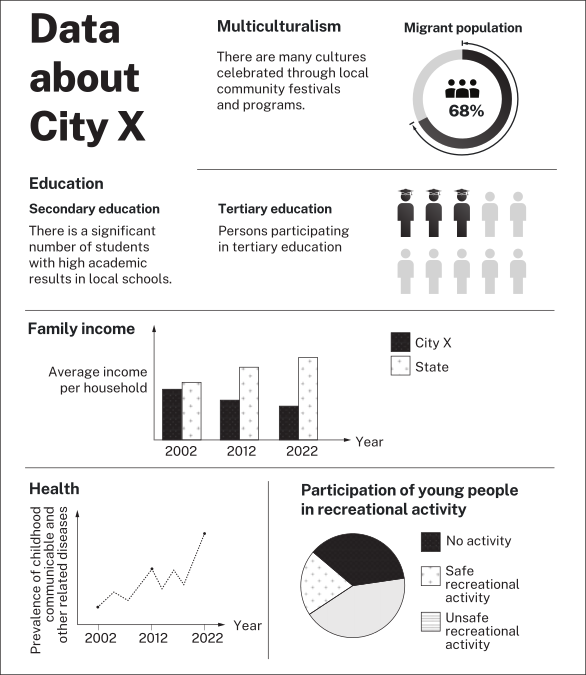
Describe TWO strategies a local council could implement to promote SDG 11 (Sustainable Cities and Communities) for improving youth mental health, including indicators of success.   (4 marks)

--- 12 WORK AREA LINES (style=lined) ---

Show Answers Only

Strategy 1: Create youth-specific public spaces

  • Councils should build infrastructure such as skate parks, basketball courts and quiet zones with free Wi-Fi.
  • These spaces provide safe, accessible environments for social connection, physical activity and stress relief.
  • Success can be measured through electronic usage data, reduced vandalism rates in surrounding areas, youth satisfaction surveys and increased physical activity levels among local young people.

Strategy 2: Develop connected walking and cycling paths

  • These types of initiatives should prioritise linking schools, youth centres and residential areas and have adequate lighting and safety features.
  • This promotes active transport, reduces isolation and creates opportunities for incidental social interactions.
  • Success indicators could include hard data on increased pedestrian/cyclist counts or mental health presentations to emergency departments of young people.
  • Surveys could also be used as evidence of success by showing improved perceptions of neighbourhood safety.
Show Worked Solution

Strategy 1: Create youth-specific public spaces

  • Councils should build infrastructure such as skate parks, basketball courts and quiet zones with free Wi-Fi.
  • These spaces provide safe, accessible environments for social connection, physical activity and stress relief.
  • Success can be measured through electronic usage data, reduced vandalism rates in surrounding areas, youth satisfaction surveys and increased physical activity levels among local young people.

Strategy 2: Develop connected walking and cycling paths

  • These types of initiatives should prioritise linking schools, youth centres and residential areas and have adequate lighting and safety features.
  • This promotes active transport, reduces isolation and creates opportunities for incidental social interactions.
  • Success indicators could include hard data on increased pedestrian/cyclist counts or mental health presentations to emergency departments of young people.
  • Surveys could also be used as evidence of success by showing improved perceptions of neighbourhood safety.

Filed Under: Application of SDGs 3, 4, 10 & 11 Tagged With: Band 4, smc-5492-05-Community applications/lessons, smc-5492-20-Advocacy strategies

HMS, HAG EQ-Bank 020

Outline how a social media campaign could be used to advocate for SDG 3 (Good Health and Wellbeing) in reducing youth vaping rates and how its effectiveness could be measured in the short and longer term.   (3 marks)

--- 8 WORK AREA LINES (style=lined) ---

Show Answers Only
  • A social media campaign could enlist peer influencers who share personal stories about quitting vaping and suggest healthier alternatives.
  • Effectiveness in the short term can be measured through engagement metrics including likes, shares, comments and pre/post campaign surveys on vaping attitudes.
  • Effectiveness in the longer term can look at youth vaping statistics in the local region, school-based data on vaping incidents and health service usage for vaping-related issues as evidence of behaviour change.
Show Worked Solution
  • A social media campaign could enlist peer influencers who share personal stories about quitting vaping and suggest healthier alternatives.
  • Effectiveness in the short term can be measured through engagement metrics including likes, shares, comments and pre/post campaign surveys on vaping attitudes.
  • Effectiveness in the longer term can look at youth vaping statistics in the local region, school-based data on vaping incidents and health service usage for vaping-related issues as evidence of behaviour change.

Filed Under: Application of SDGs 3, 4, 10 & 11 Tagged With: Band 4, smc-5492-20-Advocacy strategies

HMS, HAG EQ-Bank 019

During a school placement at the local hospital, 16-year-old James observes that young people presenting to emergency with mental health crises often wait 8-10 hours before receiving appropriate care.

Describe a multi-level advocacy approach James could develop to address the lack of youth mental health services in his regional community.   (4 marks)

--- 12 WORK AREA LINES (style=lined) ---

Show Answers Only

Individual level:

  • James could collect stories from young people about long wait times, showing the real impact of delayed care on wellbeing and recovery.

Community level:

  • He could partner with local schools, youth groups and parents to raise awareness, organising forums or petitions calling for improved mental health services.

Government level:

  • James could present evidence and community voices to local MPs and health authorities, advocating for funding of initiatives like headspace services and youth-specific crisis teams.

Media level:

  • Using local newspapers and social media campaigns, he could highlight inequities in regional care and build broader public support.
Show Worked Solution

Individual level:

  • James could collect stories from young people about long wait times, showing the real impact of delayed care on wellbeing and recovery.

Community level:

  • He could partner with local schools, youth groups and parents to raise awareness, organising forums or petitions calling for improved mental health services.

Government level:

  • James could present evidence and community voices to local MPs and health authorities, advocating for funding of initiatives like headspace services and youth-specific crisis teams.

Media level:

  • Using local newspapers and social media campaigns, he could highlight inequities in regional care and build broader public support.

Filed Under: Application of SDGs 3, 4, 10 & 11 Tagged With: Band 5, smc-5492-20-Advocacy strategies

HMS, HAG EQ-Bank 018

Sarah, a 17-year-old student from Western Sydney, notices her grandmother frequently misses medical appointments because the closest specialist is two hours away by public transport. After researching, she discovers many elderly residents in her multicultural community face similar barriers, with some avoiding healthcare entirely due to language difficulties and transport costs.

Describe THREE strategies Sarah could implement to advocate for improved healthcare access in her community. Consider both immediate actions and long-term systemic changes.   (5 marks)

--- 15 WORK AREA LINES (style=lined) ---

Show Answers Only

Immediate action:

  • Organise a community transport network.
  • Sarah could coordinate with local churches, community centres and youth groups to establish a volunteer driver program. Volunteers would provide transport to medical appointments for elderly residents.
  • She could create a simple booking system using social media or phone calls to match drivers with those needing assistance.

Medium-term advocacy:

  • Partner with medical students for language support.
  • Sarah could contact Western Sydney University’s medical program to recruit bilingual students as interpreters.
  • These students could accompany elderly patients to appointments, gaining clinical experience while addressing language barriers. This creates a sustainable model benefiting both parties.

Longer-term advocacy:

  • Sarah could document the health impacts of poor specialist access through surveys and case studies and present the data to local government
  • By presenting this evidence at council meetings and to the local MP, she could advocate for mobile specialist clinics or telehealth hubs in community centres.
  • This initiative would permanently improve healthcare accessibility for her community.
Show Worked Solution

Immediate action:

  • Organise a community transport network.
  • Sarah could coordinate with local churches, community centres and youth groups to establish a volunteer driver program. Volunteers would provide transport to medical appointments for elderly residents.
  • She could create a simple booking system using social media or phone calls to match drivers with those needing assistance.

Medium-term advocacy:

  • Partner with medical students for language support.
  • Sarah could contact Western Sydney University’s medical program to recruit bilingual students as interpreters.
  • These students could accompany elderly patients to appointments, gaining clinical experience while addressing language barriers. This creates a sustainable model benefiting both parties.

Longer-term advocacy:

  • Sarah could document the health impacts of poor specialist access through surveys and case studies and present the data to local government
  • By presenting this evidence at council meetings and to the local MP, she could advocate for mobile specialist clinics or telehealth hubs in community centres.
  • This initiative would permanently improve healthcare accessibility for her community.

Filed Under: Application of SDGs 3, 4, 10 & 11 Tagged With: Band 4, Band 5, smc-5492-20-Advocacy strategies

HMS, HAG EQ-Bank 017

Analyse TWO approaches to health used in other OECD countries and describe how they could be used in Australia to improve health outcomes. Provide examples to support your answer.   (8 marks)

--- 22 WORK AREA LINES (style=lined) ---

Show Answers Only

Overview Statement

  • Two OECD approaches – New Zealand’s Maori partnership model and UK’s sugar tax – demonstrate how targeted health interventions connect to improved wider population outcomes. These strategies reveal ways that Australia can address health inequities.

Cultural Partnerships

  • New Zealand’s Maori health model influences health outcomes by embedding indigenous voices in healthcare decisions.
  • This approach enables Maori communities to shape culturally appropriate services that result from genuine partnerships at all governance levels.
  • The model depends on recognising distinct health needs and safeguarding cultural practices. Evidence shows this leads to improved health service utilisation among Maori populations.
  • This pattern shows that empowering communities in healthcare design creates more effective, trusted services. In this way, Australia could strengthen ATSI health services with more meaningful community-control.

Economic Interventions and Behaviour Change

  • The UK sugar tax affects consumption patterns by making unhealthy choices less affordable. This economic lever interacts with public health goals by simultaneously reducing sugar intake and generating revenue.
  • The levy causes manufacturers to reformulate products while funding childhood obesity programs. This reveals how financial disincentives prevent harmful consumption.
  • Consequently, Australia could implement similar taxes on unhealthy products, with revenue directed to health programs. 

Implications and Synthesis

  • These approaches work together as a holistic system – cultural responsiveness enables service access while economic measures prevent disease.
  • The significance is that combining community empowerment with strategic taxation creates sustainable health improvements. In this way, Australia could address both health inequities and chronic disease through integrated policy approaches.
Show Worked Solution

Overview Statement

  • Two OECD approaches – New Zealand’s Maori partnership model and UK’s sugar tax – demonstrate how targeted health interventions connect to improved wider population outcomes. These strategies reveal ways that Australia can address health inequities.

Cultural Partnerships

  • New Zealand’s Maori health model influences health outcomes by embedding indigenous voices in healthcare decisions.
  • This approach enables Maori communities to shape culturally appropriate services that result from genuine partnerships at all governance levels.
  • The model depends on recognising distinct health needs and safeguarding cultural practices. Evidence shows this leads to improved health service utilisation among Maori populations.
  • This pattern shows that empowering communities in healthcare design creates more effective, trusted services. In this way, Australia could strengthen ATSI health services with more meaningful community-control.

Economic Interventions and Behaviour Change

  • The UK sugar tax affects consumption patterns by making unhealthy choices less affordable. This economic lever interacts with public health goals by simultaneously reducing sugar intake and generating revenue.
  • The levy causes manufacturers to reformulate products while funding childhood obesity programs. This reveals how financial disincentives prevent harmful consumption.
  • Consequently, Australia could implement similar taxes on unhealthy products, with revenue directed to health programs. 

Implications and Synthesis

  • These approaches work together as a holistic system – cultural responsiveness enables service access while economic measures prevent disease.
  • The significance is that combining community empowerment with strategic taxation creates sustainable health improvements. In this way, Australia could address both health inequities and chronic disease through integrated policy approaches.

Filed Under: Application of SDGs 3, 4, 10 & 11 Tagged With: Band 5, Band 6, smc-5492-05-Community applications/lessons

HMS, HAG EQ-Bank 014

Discuss two challenges faced by Australian communities in achieving equitable health outcomes in an urban environment and the strategies that could address these disparities.   (6 marks)

--- 18 WORK AREA LINES (style=lined) ---

Show Answers Only

Challenge 1: Socioeconomic disparities

  • [P] Low-income urban residents face significant barriers to accessing quality healthcare.
  • [E] This occurs because private healthcare costs too much for disadvantaged populations while public services experience long wait times.
  • [Ev] Western Sydney residents have lower median incomes and poorer health outcomes than affluent eastern suburbs.
  • [L] This demonstrates how income inequality directly impacts health equity in cities.

Strategy: Implement community health hubs in disadvantaged areas

  • [P] Establishing integrated health centres addresses multiple barriers simultaneously.
  • [E] These hubs combine medical services, mental health support and preventive programs in accessible locations.
  • [Ev] Illawarra’s Healthy Cities initiatives show multi-service approaches improve engagement.
  • [L] This holistic strategy reduces health disparities.

Challenge 2: Cultural barriers limiting healthcare access

  • [P] Culturally diverse urban populations often underutilise mainstream health services.
  • [E] Language barriers and cultural misunderstandings prevent effective healthcare delivery.
  • [Ev] ATSI Peoples report lower satisfaction with healthcare despite availability.
  • [L] Cultural competency gaps create inequitable health outcomes.

Strategy: Develop culturally responsive healthcare services

  • [P] Training healthcare workers in cultural competency improves service delivery.
  • [E] This ensures providers understand diverse health beliefs and communication styles.
  • [Ev] Employing bilingual health workers and interpreters increases service utilisation.
  • [L] In this way, culturally appropriate care reduces barriers and improves health equity.
Show Worked Solution

Challenge 1: Socioeconomic disparities

  • [P] Low-income urban residents face significant barriers to accessing quality healthcare.
  • [E] This occurs because private healthcare costs too much for disadvantaged populations while public services experience long wait times.
  • [Ev] Western Sydney residents have lower median incomes and poorer health outcomes than affluent eastern suburbs.
  • [L] This demonstrates how income inequality directly impacts health equity in cities.

Strategy: Implement community health hubs in disadvantaged areas

  • [P] Establishing integrated health centres addresses multiple barriers simultaneously.
  • [E] These hubs combine medical services, mental health support and preventive programs in accessible locations.
  • [Ev] Illawarra’s Healthy Cities initiatives show multi-service approaches improve engagement.
  • [L] This holistic strategy reduces health disparities.

Challenge 2: Cultural barriers limiting healthcare access

  • [P] Culturally diverse urban populations often underutilise mainstream health services.
  • [E] Language barriers and cultural misunderstandings prevent effective healthcare delivery.
  • [Ev] ATSI Peoples report lower satisfaction with healthcare despite availability.
  • [L] Cultural competency gaps create inequitable health outcomes.

Strategy: Develop culturally responsive healthcare services

  • [P] Training healthcare workers in cultural competency improves service delivery.
  • [E] This ensures providers understand diverse health beliefs and communication styles.
  • [Ev] Employing bilingual health workers and interpreters increases service utilisation.
  • [L] In this way, culturally appropriate care reduces barriers and improves health equity.

Filed Under: Application of SDGs 3, 4, 10 & 11 Tagged With: Band 4, Band 5, smc-5492-20-Advocacy strategies

HMS, HAG EQ-Bank 013

Outline three strategies that could be used to advocate for improved health outcomes in a rural Australian community.   (3 marks)

--- 7 WORK AREA LINES (style=lined) ---

Show Answers Only

Answers could include any three of the following:

  • Establish community health committees that bring together local residents, healthcare workers, and council representatives to identify priority health issues and develop solutions.
  • Organise petition campaigns and meetings with state MPs to secure funding for essential services such as mobile health clinics.
  • Partner with local media to raise awareness about health disparities, sharing community stories that highlight the need for improved healthcare access and infrastructure.
  • Implement school and youth-based advocacy programs that empower young people to promote healthy lifestyles.
Show Worked Solution

Answers could include any three of the following:

  • Establish community health committees that bring together local residents, healthcare workers, and council representatives to identify priority health issues and develop solutions.
  • Organise petition campaigns and meetings with state MPs to secure funding for essential services such as mobile health clinics.
  • Partner with local media to raise awareness about health disparities, sharing community stories that highlight the need for improved healthcare access and infrastructure.
  • Implement school and youth-based advocacy programs that empower young people to promote healthy lifestyles.

Filed Under: Application of SDGs 3, 4, 10 & 11 Tagged With: Band 4, smc-5492-20-Advocacy strategies

HMS, HAG EQ-Bank 012

Explain how two lessons from Healthy Cities Illawarra's community health initiatives could be adapted to improve health outcomes in your local community. Provide specific examples of implementation.    (5 marks)

--- 15 WORK AREA LINES (style=lined) ---

Show Answers Only

Answers could include two of the following:

Lesson – Use holistic approach

  • Integrating multiple SDGs produces synergistic health improvements. This happens when programs simultaneously address health, education, equity and sustainability.
  • For example, Safe Routes to School combines physical activity (SDG 3), road safety education (SDG 4), equal access (SDG 10) and sustainable transport (SDG 11).
  • Therefore, one initiative achieves multiple community benefits efficiently.

Lesson – Target specific age groups

  • Targeting specific age groups with tailored programs creates more effective health interventions. This works by addressing the unique developmental needs of different populations.
  • For instance, when my local community implements an “Active In-betweens” style program for 8-12 year olds, it could focus on “after school” junior sports clubs. By tailoring physical activity to a targeted group of children, they are more inclined to willingly participate during their crucial developmental years.
  • The reason for this is that age-specific programs engage participants more effectively than generic approaches. Consequently, children develop healthy habits early and achieve better long-term health outcomes.

 Lesson – Build collaborative partnerships

  • Building collaborative partnerships enables comprehensive health solutions. This occurs because multiple organisations bring different resources and expertise.
  • There is a direct link between multi-sector collaboration and sustainable program delivery. As a result, initiatives receive broader community support and funding.
  • More specifically, my community could unite schools, local health services and sporting clubs. This process ensures programs address health holistically and benefit from broad community awareness.
Show Worked Solution

Answers could include two of the following:

Lesson – Use holistic approach

  • Integrating multiple SDGs produces synergistic health improvements. This happens when programs simultaneously address health, education, equity and sustainability.
  • For example, Safe Routes to School combines physical activity (SDG 3), road safety education (SDG 4), equal access (SDG 10) and sustainable transport (SDG 11).
  • Therefore, one initiative achieves multiple community benefits efficiently.

Lesson – Target specific age groups

  • Targeting specific age groups with tailored programs creates more effective health interventions. This works by addressing the unique developmental needs of different populations.
  • For instance, when my local community implements an “Active In-betweens” style program for 8-12 year olds, it could focus on “after school” junior sports clubs. By tailoring physical activity to a targeted group of children, they are more inclined to willingly participate during their crucial developmental years.
  • The reason for this is that age-specific programs engage participants more effectively than generic approaches. Consequently, children develop healthy habits early and achieve better long-term health outcomes.

 Lesson – Build collaborative partnerships

  • Building collaborative partnerships enables comprehensive health solutions. This occurs because multiple organisations bring different resources and expertise.
  • There is a direct link between multi-sector collaboration and sustainable program delivery. As a result, initiatives receive broader community support and funding.
  • More specifically, my community could unite schools, local health services and sporting clubs. This process ensures programs address health holistically and benefit from broad community awareness.

Filed Under: Application of SDGs 3, 4, 10 & 11 Tagged With: Band 4, Band 5, smc-5492-05-Community applications/lessons

HMS, HAG EQ-Bank 011

Describe how a community initiative can provide a holistic approach incorporating three Sustainable Development Goals (SDG's) to improve health outcomes.   (5 marks)

--- 15 WORK AREA LINES (style=lined) ---

Show Answers Only
  • The ‘Safe and Active Routes to School’ program addresses SDGs 3, 10 and 11 by creating protected walking and cycling paths to schools.
  • This infrastructure promotes children’s physical activity (SDG 3) while ensuring equal access to safe transport regardless of socioeconomic status (SDG 10).
  • These routes connect to broader community cycling networks, enabling families to adopt active transport for daily activities. This reduces car dependence, lowering emissions and creating more sustainable urban environments (SDG 11).
  • Drug Action Teams complement this by addressing substance misuse through education programs in schools along these safe routes. They target vulnerable populations including culturally diverse communities, reducing health inequalities (SDG 10).
  • The interconnection occurs when safer streets encourage community engagement, reducing social isolation that often contributes to substance misuse. Active transport improves mental and physical health while building stronger community connections (SDG 3, 10).
  • Together, these initiatives holistically create environments where healthy choices become easier, education is more accessible, and all residents can participate equally in community life (SDG 3, 10, 11).
Show Worked Solution
  • The ‘Safe and Active Routes to School’ program addresses SDGs 3, 10 and 11 by creating protected walking and cycling paths to schools.
  • This infrastructure promotes children’s physical activity (SDG 3) while ensuring equal access to safe transport regardless of socioeconomic status (SDG 10).
  • These routes connect to broader community cycling networks, enabling families to adopt active transport for daily activities. This reduces car dependence, lowering emissions and creating more sustainable urban environments (SDG 11).
  • Drug Action Teams complement this by addressing substance misuse through education programs in schools along these safe routes. They target vulnerable populations including culturally diverse communities, reducing health inequalities (SDG 10).
  • The interconnection occurs when safer streets encourage community engagement, reducing social isolation that often contributes to substance misuse. Active transport improves mental and physical health while building stronger community connections (SDG 3, 10).
  • Together, these initiatives holistically create environments where healthy choices become easier, education is more accessible, and all residents can participate equally in community life (SDG 3, 10, 11).

Filed Under: Application of SDGs 3, 4, 10 & 11 Tagged With: Band 4, Band 5, smc-5492-05-Community applications/lessons

HMS, HAG EQ-Bank 010

Outline three major health issues that disproportionately affect Aboriginal and Torres Strait Islander communities in Australia.   (3 marks)

--- 7 WORK AREA LINES (style=lined) ---

Show Answers Only
  • Higher rates of chronic diseases including diabetes and cardiovascular disease.
  • Mental health challenges and psychological distress, often stemming from intergenerational trauma, disruption to culture and discrimination.
  • Lower life expectancy compared to non-Indigenous people, with a gap of approximately 8-10 years, reflecting cumulative health disadvantages and barriers to healthcare access.
Show Worked Solution
  • Higher rates of chronic diseases including diabetes and cardiovascular disease.
  • Mental health challenges and psychological distress, often stemming from intergenerational trauma, disruption to culture and discrimination.
  • Lower life expectancy compared to non-Indigenous people, with a gap of approximately 8-10 years, reflecting cumulative health disadvantages and barriers to healthcare access.

Filed Under: Application of SDGs 3, 4, 10 & 11 Tagged With: Band 4, smc-5492-15-Community health issues

HMS, HAG EQ-Bank 009

Discuss how geographic isolation impacts healthcare delivery in rural and remote Australian communities. In your response, examine both the barriers created and the potential solutions available, explaining how these relate to Sustainable Development Goals.   (6 marks)

--- 18 WORK AREA LINES (style=lined) ---

Show Answers Only

Challenges of geographic isolation on healthcare access:

  • [P] Geographic isolation creates significant barriers to healthcare services (SDG 10).
  • [E] Remote communities often lack basic medical facilities and specialists, forcing residents to travel hundreds of kilometres for treatment.
  • [Ev] Western NSW has only around 400 GPs serving over 400,000 square kilometres, with services concentrated in larger cities (SDG 10).
  • [L] This demonstrates how distance becomes a major obstacle to accessing timely healthcare (SDG 3).
     
  • [P] Workforce shortages worsen healthcare inequities in isolated areas (SDG 10).
  • [E] Healthcare professionals often prefer urban positions, leaving rural communities understaffed.
  • [Ev] Remote areas experience higher preventable hospitalisation rates due to limited preventive care access (SDG 3).
  • [L] This highlights how isolation compounds existing health disparities.

Opportunities to address these inequities:

  • [P] Telehealth technology offers promising solutions (SDG 10).
  • [E] Digital consultations can connect remote patients with specialists without travel.
  • [Ev] Expanding broadband infrastructure (SDG 11) enables diagnosis, treatment and follow-up care remotely.
  • [L] This shows how technology can bridge geographical gaps in healthcare delivery.
     
  • [P] Rural medical training programs (SDG 4) create sustainable workforce solutions.
  • [E] Training healthcare professionals locally increases retention in rural areas.
  • [Ev] Students trained in rural settings are more likely to practice there after graduation.
  • [L] This demonstrates how targeted education initiatives can address long-term workforce needs.
Show Worked Solution

Challenges of geographic isolation on healthcare access:

  • [P] Geographic isolation creates significant barriers to healthcare services (SDG 10).
  • [E] Remote communities often lack basic medical facilities and specialists, forcing residents to travel hundreds of kilometres for treatment.
  • [Ev] Western NSW has only around 400 GPs serving over 400,000 square kilometres, with services concentrated in larger cities (SDG 10).
  • [L] This demonstrates how distance becomes a major obstacle to accessing timely healthcare (SDG 3).
     
  • [P] Workforce shortages worsen healthcare inequities in isolated areas (SDG 10).
  • [E] Healthcare professionals often prefer urban positions, leaving rural communities understaffed.
  • [Ev] Remote areas experience higher preventable hospitalisation rates due to limited preventive care access (SDG 3).
  • [L] This highlights how isolation compounds existing health disparities.

Opportunities to address these inequities:

  • [P] Telehealth technology offers promising solutions (SDG 10).
  • [E] Digital consultations can connect remote patients with specialists without travel.
  • [Ev] Expanding broadband infrastructure (SDG 11) enables diagnosis, treatment and follow-up care remotely.
  • [L] This shows how technology can bridge geographical gaps in healthcare delivery.
     
  • [P] Rural medical training programs (SDG 4) create sustainable workforce solutions.
  • [E] Training healthcare professionals locally increases retention in rural areas.
  • [Ev] Students trained in rural settings are more likely to practice there after graduation.
  • [L] This demonstrates how targeted education initiatives can address long-term workforce needs.

Filed Under: Application of SDGs 3, 4, 10 & 11 Tagged With: Band 4, Band 5, smc-5492-15-Community health issues

HMS, HAG EQ-Bank 008

Describe a mentorship program that connects local professionals with students at risk of leaving school early. Explain how this approach addresses SDG 4 (Quality Education) and SDG 3 (Good Health and Wellbeing) in communities facing educational disadvantage.   (5 marks)

--- 15 WORK AREA LINES (style=lined) ---

Show Answers Only
  • Mentorship programs create regular one-on-one connections between at-risk students and working professionals. This occurs because students receive personalised support and see real-world applications of education. As a result, they develop stronger motivation to continue their schooling.
  • This process ensures students gain both academic guidance and career insights. The reason for this is that mentors share their educational journeys and workplace experiences. Consequently, students understand how education connects to future opportunities.
  • Regular mentor meetings generate improved mental wellbeing among participants. This happens when students build trusting relationships with supportive adults outside their usual circles. Therefore, anxiety about the future decreases while self-confidence grows.
  • This shows a clear connection between educational support (SDG 4) and health outcomes (SDG 3). More specifically, students who feel supported academically experience less stress and depression. This demonstrates why addressing educational disadvantage simultaneously improves psychological health.
  • The underlying reason is that education and wellbeing are interconnected. Hence, programs targeting school completion naturally support both SDG 4 and SDG 3.
Show Worked Solution
  • Mentorship programs create regular one-on-one connections between at-risk students and working professionals. This occurs because students receive personalised support and see real-world applications of education. As a result, they develop stronger motivation to continue their schooling.
  • This process ensures students gain both academic guidance and career insights. The reason for this is that mentors share their educational journeys and workplace experiences. Consequently, students understand how education connects to future opportunities.
  • Regular mentor meetings generate improved mental wellbeing among participants. This happens when students build trusting relationships with supportive adults outside their usual circles. Therefore, anxiety about the future decreases while self-confidence grows.
  • This shows a clear connection between educational support (SDG 4) and health outcomes (SDG 3). More specifically, students who feel supported academically experience less stress and depression. This demonstrates why addressing educational disadvantage simultaneously improves psychological health.
  • The underlying reason is that education and wellbeing are interconnected. Hence, programs targeting school completion naturally support both SDG 4 and SDG 3.

Filed Under: Application of SDGs 3, 4, 10 & 11 Tagged With: Band 4, Band 5

HMS, HAG EQ-Bank 007

Describe how expanding telehealth services addresses both SDG 3 (Good Health and Wellbeing) and SDG 11 (Sustainable Cities and Communities) in remote Australian areas.   (4 marks)

--- 10 WORK AREA LINES (style=lined) ---

Show Answers Only
  • Telehealth services enable remote residents to access specialist consultations and follow-up care without lengthy travel (SDG 3).
  • This occurs because digital technology connects patients with healthcare providers across vast distances (SDG 3).
  • As a result, chronic conditions are better managed and preventable hospitalisations decrease (SDG 3).
  • This creates more sustainable communities by allowing people to remain in rural areas while receiving quality healthcare (SDG 11).
  • Consequently, rural populations become more viable and resilient (SDG 11). 
Show Worked Solution
  • Telehealth services enable remote residents to access specialist consultations and follow-up care without lengthy travel (SDG 3).
  • This occurs because digital technology connects patients with healthcare providers across vast distances (SDG 3).
  • As a result, chronic conditions are better managed and preventable hospitalisations decrease (SDG 3).
  • This creates more sustainable communities by allowing people to remain in rural areas while receiving quality healthcare (SDG 11).
  • Consequently, rural populations become more viable and resilient (SDG 11). 

Filed Under: Application of SDGs 3, 4, 10 & 11 Tagged With: Band 4

HMS, HAG EQ-Bank 015 MC

Why is telehealth infrastructure considered an effective strategy for Western NSW communities?

  1. It trains local doctors to stay in rural areas
  2. It ensures all residents complete Year 12
  3. It reduces long travel distances to access healthcare
  4. It replaces the need for Aboriginal Medical Services
Show Answers Only

\(C\)

Show Worked Solution
  • C is correct. Telehealth reduces long travel distances by allowing residents in rural areas to access healthcare consultations and follow-up care online.

Other options:

  • A is incorrect – Rural training programs are a separate strategy to encourage doctors to remain in rural areas, not a function of telehealth.
  • B is incorrect – Completing Year 12 is linked to education initiatives, not healthcare access through telehealth.
  • D is incorrect – Telehealth complements existing Aboriginal Medical Services rather than replacing them, as culturally appropriate care is still essential.

Filed Under: Application of SDGs 3, 4, 10 & 11 Tagged With: Band 4

HMS, HAG EQ-Bank 014 MC

The Age Friendly Illawarra program contributes to SDG 11 (Sustainable Cities and Communities) because it:

  1. Builds hospitals in rural areas
  2. Creates inclusive public spaces and accessible transport
  3. Provides education programs for school children
  4. Reduces drug-related crime in the region
Show Answers Only

\(B\)

Show Worked Solution
  • B is correct. The program supports SDG 11 by creating inclusive public spaces and improving transport accessibility, ensuring older adults can participate fully in community life.

Other options:

  • A is incorrect – Building hospitals in rural areas addresses healthcare access (SDG 3), not sustainable cities and communities.
  • C is incorrect – Education programs for children align more closely with SDG 4 (Quality Education).
  • D is incorrect – Reducing drug-related crime is the focus of community drug action teams, not the Age Friendly Illawarra program.

Filed Under: Application of SDGs 3, 4, 10 & 11 Tagged With: Band 4, smc-5492-60-Illawarra

HMS, HAG EQ-Bank 013 MC

According to the Western NSW health data, which combination of factors most likely contributes to health inequities in remote areas?

  1. Higher education levels but limited job opportunities
  2. Young population demographics and excess healthcare providers
  3. High employment rates and poor telehealth infrastructure
  4. Concentrated healthcare services in cities and lower median incomes
Show Answers Only

\(D\)

Show Worked Solution
  • D is correct.  The data shows healthcare services are concentrated in larger cities while remote areas have limited access, combined with lower median incomes, creating significant barriers to healthcare access.

Other options:

  • A is incorrect – Education levels are actually lower than state average in Western NSW.
  • B is incorrect – There’s a chronic shortage of healthcare providers, not an excess.
  • C is incorrect – Employment rates decrease with remoteness, and telehealth is proposed as a solution (not a cause) to current inequities.

Filed Under: Application of SDGs 3, 4, 10 & 11 Tagged With: Band 4, smc-5491-60-Identify SDG

HMS, HAG EQ-Bank 012 MC

A rural community implements free driving lessons for Aboriginal youth. This initiative would most directly support which SDG outcomes?

  1. SDG 3 only, by reducing stress-related health issues
  2. SDG 4 and SDG 10, by providing skills and reducing incarceration inequities
  3. SDG 11 only, by improving road safety
  4. SDG 3 and SDG 11, by preventing accidents and building infrastructure
Show Answers Only

\(B\)

Show Worked Solution
  • B is correct.  The initiative addresses high incarceration rates from driving offences, directly supporting education (SDG 4) through skill development and reducing inequalities (SDG 10) in the justice system.

Other options:

  • A is incorrect – While it may reduce stress, the primary purpose is addressing justice inequities, not health.
  • C is incorrect – Road safety is a benefit but not the main goal.
  • D is incorrect – The focus is on reducing incarceration through education, not primarily on health or infrastructure.

Filed Under: Application of SDGs 3, 4, 10 & 11 Tagged With: Band 4, smc-5491-60-Identify SDG

HMS, HAG EQ-Bank 009 MC

Which initiative by Healthy Cities Illawarra specifically targets children aged 8-12 years?

  1. Age Friendly Illawarra
  2. Active In-betweens
  3. Safe and Active Routes to School
  4. Drug Action Teams
Show Answers Only

\(B\)

Show Worked Solution
  • B is correct. Active In-betweens is explicitly designed to engage children aged 8-12 (the ‘in-between’ age group) in physical activities and healthy living.

Other options:

  • A is incorrect – Age Friendly Illawarra targets older adults, not children.

  • C is incorrect – While this involves children, it focuses on school transport safety for all ages, not specifically 8-12 year olds.

  • D is incorrect – Drug Action Teams work with priority populations on substance misuse, not specifically targeting this age group.

Filed Under: Application of SDGs 3, 4, 10 & 11 Tagged With: Band 3, smc-5492-60-Illawarra

HMS, HAG 2023 HSC 32ai

Describe the contribution of intersectoral collaboration to the sustainability of ONE health promotion strategy.   (3 marks)

--- 7 WORK AREA LINES (style=lined) ---

Show Answers Only

Sample answer

Intersectoral collaboration in health promotion occurs when multiple sectors work together toward a common health goal.

  • The Slip, Slop, Slap, Seek, Slide campaign’s sustainability benefits from collaboration between:
    • Government funding ($10 million)
    • Cancer Council Australia’s implementation expertise
    • Schools’ educational outreach
    • Media partners’ promotional support
  • This collaboration ensures program continuity, resource sharing, broader community reach, and consistent messaging across multiple settings.

Show Worked Solution

  • Intersectoral collaboration in health promotion occurs when multiple sectors work together toward a common health goal.
  • The Slip, Slop, Slap, Seek, Slide campaign’s sustainability benefits from collaboration between:
    • Government funding ($10 million)
    • Cancer Council Australia’s implementation expertise
    • Schools’ educational outreach
    • Media partners’ promotional support
  • This collaboration ensures program continuity, resource sharing, broader community reach, and consistent messaging across multiple settings.

♦ Mean mark 52%.

Filed Under: Application of SDGs 3, 4, 10 & 11 Tagged With: Band 5, smc-5492-20-Advocacy strategies

HMS, HAG 2023 HSC 26

Explain how ONE government health promotion initiative addresses social justice by reorienting health services. Provide examples to support your answer.   (8 marks)

--- 30 WORK AREA LINES (style=lined) ---

Show Answers Only
  • The National Immunisation Program demonstrates how government initiatives reorient health services toward prevention while addressing social justice principles. This program works by providing free vaccines to eligible Australians which shifts focus from hospital-centred treatment to community-based prevention approaches.
  • Service reorientation occurs because the NIP establishes multiple community access points including schools, Aboriginal health services, and local GP clinics. This approach creates greater accessibility by bringing prevention services directly to communities rather than requiring hospital visits. The Australian Immunisation Register enables integrated federal tracking which allows healthcare providers across all jurisdictions to access patient histories seamlessly.
  • Social justice principles are addressed through equity-focused strategies that ensure equal access regardless of socioeconomic status. Free HPV vaccines demonstrate this approach because all Australian adolescents receive protection nationwide without financial barriers. Tailored strategies work by providing culturally appropriate services for Aboriginal and Torres Strait Islander communities alongside multilingual resources.
  • These reorientation efforts result in measurable health equity improvements. Childhood immunisation rates have increased substantially nationwide because prevention services became more accessible. Most significantly, the gap between Indigenous and non-Indigenous immunisation rates has narrowed markedly, demonstrating how service reorientation can effectively address historical health inequities through systematic prevention-focused approaches.
Show Worked Solution
  • The National Immunisation Program demonstrates how government initiatives reorient health services toward prevention while addressing social justice principles. This program works by providing free vaccines to eligible Australians which shifts focus from hospital-centred treatment to community-based prevention approaches.
  • Service reorientation occurs because the NIP establishes multiple community access points including schools, Aboriginal health services, and local GP clinics. This approach creates greater accessibility by bringing prevention services directly to communities rather than requiring hospital visits. The Australian Immunisation Register enables integrated federal tracking which allows healthcare providers across all jurisdictions to access patient histories seamlessly.
  • Social justice principles are addressed through equity-focused strategies that ensure equal access regardless of socioeconomic status. Free HPV vaccines demonstrate this approach because all Australian adolescents receive protection nationwide without financial barriers. Tailored strategies work by providing culturally appropriate services for Aboriginal and Torres Strait Islander communities alongside multilingual resources.
  • These reorientation efforts result in measurable health equity improvements. Childhood immunisation rates have increased substantially nationwide because prevention services became more accessible. Most significantly, the gap between Indigenous and non-Indigenous immunisation rates has narrowed markedly, demonstrating how service reorientation can effectively address historical health inequities through systematic prevention-focused approaches.

♦♦♦ Mean mark 33%.

Filed Under: Application of SDGs 3, 4, 10 & 11 Tagged With: Band 5, smc-5492-05-Community applications/lessons, smc-5492-20-Advocacy strategies

Copyright © 2014–2026 SmarterEd.com.au · Log in