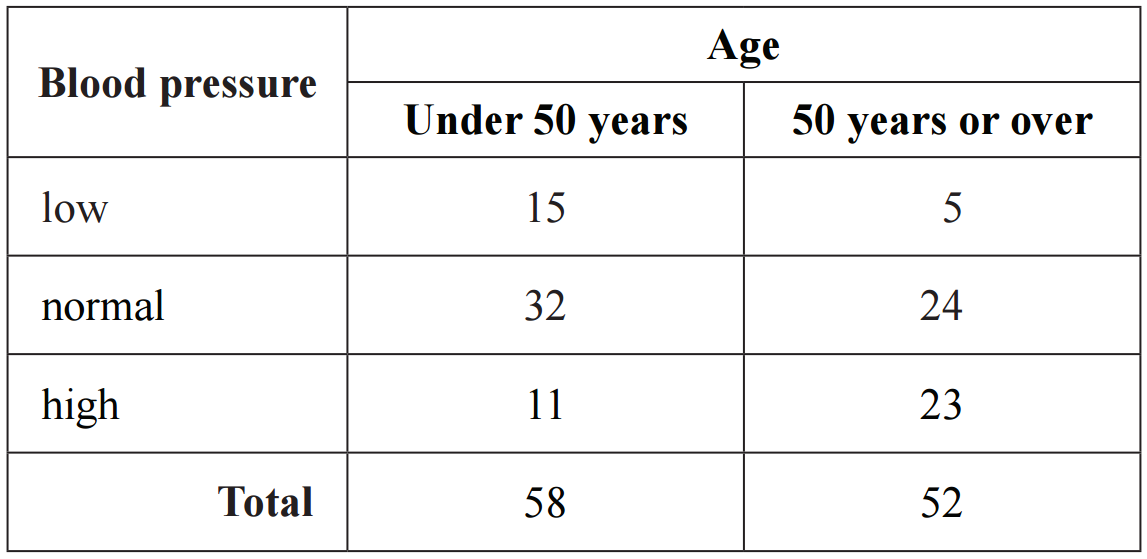
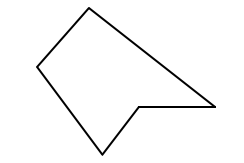
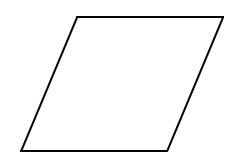
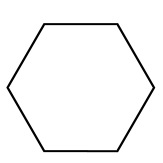
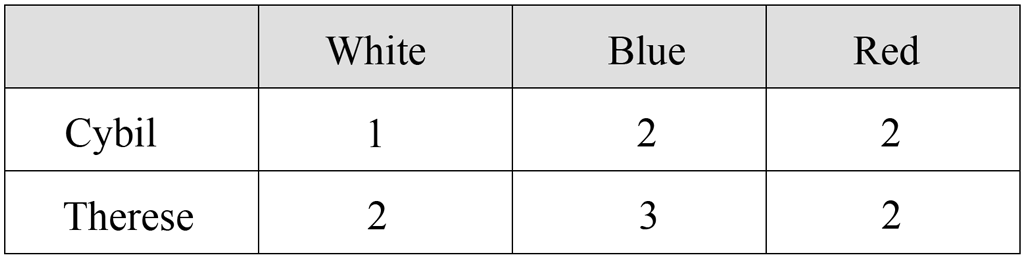
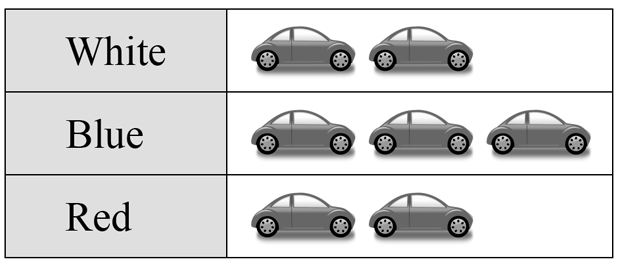
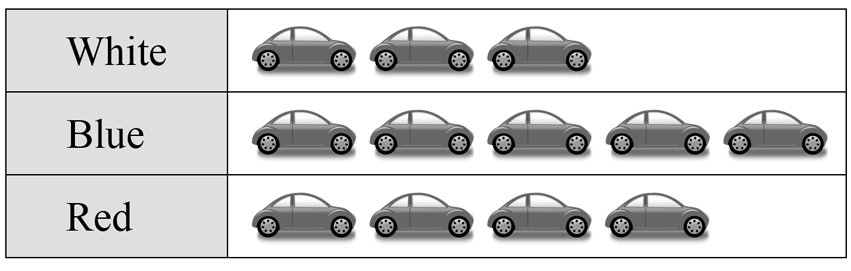
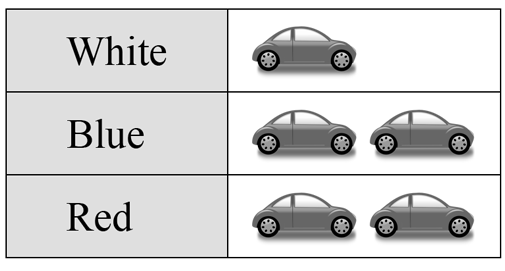
A club purchased new equipment priced at $8360. A 15% deposit was paid. --- 2 WORK AREA LINES (style=lined) --- --- 2 WORK AREA LINES (style=lined) --- --- 3 WORK AREA LINES (style=lined) ---
Aussie Maths & Science Teachers: Save your time with SmarterEd
A club purchased new equipment priced at $8360. A 15% deposit was paid. --- 2 WORK AREA LINES (style=lined) --- --- 2 WORK AREA LINES (style=lined) --- --- 3 WORK AREA LINES (style=lined) ---
`= 7800-7106` `= $694`
a.
`text(Deposit)`
`= 15text(%) xx 8360`
`= $1254`
b.i.
`text(Amount still owed)`
`= 8360-1254`
`= $7106`
b.ii.
`text(Total repayments)`
`= 12 xx 650`
`= $7800`
`:.\ text(Total interest paid)`
A Hamiltonian circuit for the graph above is
A. `K J I H G L F E D K`
B. `D K L I J H G F E D`
C. `D E F G H I J K D`
D. `J I K D L H G F E`
E. `G H I L K J I L D E F G `
`=> A`
`text(The circuit must start and finish at the same vertex)`
`text(and pass through all other vertices once.)`
`=> A`
A connected planar graph has 12 edges.
This graph could have
`C`
`text(Consider option C,)`
| `v + f` | `= e + 2` |
| `6 + 8` | `= 12 + 2` |
| `14` | `= 14` |
`text(i.e. Euler’s formula holds.)`
`=> C`
A store manager is directly in charge of five department managers.
Each department manager is directly in charge of six sales people in their department.
This staffing structure could be represented graphically by
A. a tree.
B. a circuit.
C. an Euler path.
D. a Hamiltonian path.
E. a complete graph.
`A`
`=> A`
Alana, Ben, Ebony, Daniel and Caleb are friends. Each friend has a different age.
The arrows in the graph below show the relative ages of some, but not all, of the friends. For example, the arrow in the graph from Alana to Caleb shows that Alana is older than Caleb.
Using the information in the graph, it can be deduced that the second-oldest person in this group of friends is
A. Alana
B. Ben
C. Caleb
D. Daniel
E. Ebony
`B`
Kate, Lexie, Mei and Nasim enter a competition as a team. In this competition, the team must complete four tasks, `W, X, Y\ text(and)\ Z`, as quickly as possible.
The table shows the time, in minutes, that each person would take to complete each of the four tasks.
If each team member is allocated one task only, the minimum time in which this team would complete the four tasks is
A. `10\ text(minutes)`
B. `12\ text(minutes)`
C. `13\ text(minutes)`
D. `14\ text(minutes)`
E. `15\ text(minutes)`
`D`
The vertices of the graph above represent nine computers in a building. The computers are to be connected with optical fibre cables, which are represented by edges. The numbers on the edges show the costs, in hundreds of dollars, of linking these computers with optical fibre cables.
Based on the same set of vertices and edges, which one of the following graphs shows the cable layout (in bold) that would link all the computers with optical fibre cables for the minimum cost?
`A`
`=> A`
The five musicians, George, Harriet, Ian, Josie and Keith, compete in a music trivia game.
Each musician competes once against every other musician.
In each game there is a winner and a loser.
The results are represented in the dominance matrix, Matrix 1, and also in the incomplete directed graph below.
On the directed graph an arrow from Harriet to George shows that Harriet won against George.
--- 2 WORK AREA LINES (style=lined) ---
One of the edges on the directed graph is missing.
--- 0 WORK AREA LINES (style=lined) ---
The results of each trivia contest (one-step dominances) are summarised as follows.
In order to rank the musicians from first to last in the trivia contest, two-step (two-edge) dominances will be considered.
The following incomplete matrix, Matrix 2, shows two-step dominances.
`{:(qquadqquadqquadtext(Matrix 2)),(qquadqquad{:GquadHquadI\ quadJquad\ K:}),({:(G),(H),(I),(J),(K):}[(0,1,1,2,0),(1,0,1,1,1),(1,0,0,0,0),(0,0,1,0,1),(2,0,1,x,0)]):}`
--- 2 WORK AREA LINES (style=lined) ---
--- 5 WORK AREA LINES (style=lined) ---
a. `text(A musicians does not compete against him/herself.)`
b. `text(Josie won against George.)`
c. `text(Two step dominance occurs because George is dominant)`
`text(over Keith who is in turn dominant over Ian.)`
d. `text(Following the edges on network diagram:)`
`text(Keith over Harriet who beats Josie.)`
`text(Keith over Ian who beats Ian.)`
`:. x = 2`
| e. | `D_1 + D_2 =` | `[(0,1,2,2,1),(2,0,2,2,1),(1,0,0,1,0),(1,0,1,0,1),(2,1,2,3,0)]{:(G – 6),(H – 7),(I – 2),(J – 3),(K – 8):}` |
`text{Summing the rows (above),}`
`:.\ text{First is Keith (8), last is Ian (2).}`
George, Harriet, Ian, Josie and Keith are a group of five musicians.
They are forming a band where each musician will fill one position only.
The following bipartite graph illustrates the positions that each is able to fill.
The estate has large open parklands that contain seven large trees.
The trees are denoted as vertices `A` to `G` on the network diagram below.
Walking paths link the trees as shown.
The numbers on the edges represent the lengths of the paths in metres.
--- 2 WORK AREA LINES (style=lined) ---
One day Jamie decides to go for a walk that will take him along each of the paths between the trees.
He wishes to walk the minimum possible distance.
i. State a vertex at which Jamie could begin his walk? (1 mark)
--- 1 WORK AREA LINES (style=lined) ---
--- 2 WORK AREA LINES (style=lined) ---
Michelle is currently at `F`.
She wishes to follow a route that can be described as the shortest Hamiltonian circuit.
--- 1 WORK AREA LINES (style=lined) ---
`F-G-A-B-C-D-E-F,\ text(or)`
`F-E-D-C-B-A-G-F`
a. `text(Sum of degrees of vertices)`
`= 4 + 2 + 5 + 2 + 4 + 4 + 3`
`= 24`
b.i. `C\ text(or)\ G`
`text(An Euler path is required and)`
`text(therefore the starting point is at)`
`text(a vertex with an odd degree.)`
b.ii. `2800\ text(m)`
c. `F-G-A-B-C-D-E-F,\ text(or)`
`F-E-D-C-B-A-G-F`
A new housing estate is being developed.
There are five houses under construction in one location.
These houses are numbered as points 1 to 5 below.
The builders require the five houses to be connected by electrical cables to enable the workers to have a supply of power on each site.
--- 1 WORK AREA LINES (style=lined) ---
--- 0 WORK AREA LINES (style=lined) ---
The graph below shows the roads connecting four towns: Kelly, Lindon, Milton and Nate.
A bus starts at Kelly, travels through Nate and Lindon, then stops when it reaches Milton.
The mathematical term for this route is
A. a loop.
B. an Eulerian path.
C. an Eulerian circuit.
D. a Hamiltonian path.
E. a Hamiltonian circuit.
`D`
`text(A Hamiltonian path touches every vertex)`
`text(exactly once.)`
`=>D`
Four people, Abe, Bailey, Chris and Donna, are each to be allocated one of four tasks. Each person can complete each of the four tasks in a set time. These times, in minutes, are shown in the table below.
If each person is allocated a different task, the minimum total time for these four people to complete these four tasks is
A. 260 minutes
B. 355 minutes
C. 360 minutes
D. 365 minutes
E. 375 minutes
`B`
`text(Minimum total time)`
`=80 + 90 + 125 + 60`
`= 355\ text(minutes)`
`=> B`
A project will be undertaken in the wildlife park. This project involves the 13 activities shown in the table below. The duration, in hours, and predecessor(s) of each activity are also included in the table.

Activity `G` is missing from the network diagram for this project, which is shown below.
--- 0 WORK AREA LINES (style=lined) ---
--- 1 WORK AREA LINES (style=lined) ---
--- 5 WORK AREA LINES (style=lined) ---
Explain the circumstances under which this statement will be true for this project. (1 mark)
--- 2 WORK AREA LINES (style=lined) ---
What will be the minimum completion time for the project? (1 mark)
--- 3 WORK AREA LINES (style=lined) ---
| a. | ![]() |
| b. | `text(EST of)\ H` | `= 4 + 3` |
| `= 7\ text(hours)` |
c.i. `A-F-I-M`
| c.ii. | ![]() |
`G\ text(precedes)\ I`
`:. text(LST of)\ G = 20-4 = 16\ text(hours)`
`:. text(LST of)\ D = 16-2 = 14\ text(hours)`
d. `text(The statement will only be true if the crashed activity)`
`text(is on the critical path)\ \ A-F-I-M.`
e. `A-F-I-M\ text(is 37 hours.)`
`text(If)\ F\ text(is crashed by 2 hours, the new)`
`text(new critical path is)`
`C-E-H-G-I-M\ text{(36 hours)}`
`:.\ text(Minimum completion time = 36 hours)`
James, Dante, Tahlia and Chanel are four children playing a game.
In this children’s game, seven posts are placed in the ground.
The network below shows distances, in metres, between the seven posts.
The aim of the game is to connect the posts with ribbon using the shortest length of ribbon.
This will be a minimal spanning tree.
--- 0 WORK AREA LINES (style=lined) ---
--- 2 WORK AREA LINES (style=lined) ---
--- 1 WORK AREA LINES (style=lined) ---
The city of Robville contains eight landmarks denoted as vertices `N` to `U` on the network diagram below. The edges on this network represent the roads that link the eight landmarks. --- 1 WORK AREA LINES (style=lined) --- --- 1 WORK AREA LINES (style=lined) --- --- 1 WORK AREA LINES (style=lined) --- --- 2 WORK AREA LINES (style=lined) --- --- 2 WORK AREA LINES (style=lined) ---
`(SR)QPUTNO`
`(SR)QPONTU`
`(SR)TUNOPQ`
`(SR)UTNOPQ`
`text{(only 3 paths required)}`
a. `4` b.i. `P\ text{(the other odd degree vertex)}` b.ii. `5 (N, T, R, P, U)` c.i. `(SR)QPONU(T)` c.ii. `text(Other paths are)` `(SR)QPUTNO` `(SR)QPONTU` `(SR)TUNOPQ` `(SR)UTNOPQ` `text{(only 3 paths required)}`
One of the landmarks in the city is a hedge maze. The maze contains eight statues. The statues are labelled `F` to `M` on the following directed graph. Walkers within the maze are only allowed to move in the directions of the arrows.
--- 1 WORK AREA LINES (style=lined) ---
List the three other ways that statue `H` can be reached from statue `K`. (1 mark)
--- 1 WORK AREA LINES (style=lined) ---
a. `F and K`
b. `KJHqquadKMJHqquadKFJH`
The diagram below shows a network of tracks (represented by edges) between checkpoints (represented by vertices) in a short-distance running course. The numbers on the edges indicate the time, in minutes, a team would take to run along each track.
Another challenge requires teams to run from checkpoint `X` to checkpoint `Y` using these tracks.
--- 1 WORK AREA LINES (style=lined) ---
--- 0 WORK AREA LINES (style=lined) ---
At the Farnham showgrounds, eleven locations require access to water. These locations are represented by vertices on the network diagram shown below. The dashed lines on the network diagram represent possible water pipe connections between adjacent locations. The numbers on the dashed lines show the minimum length of pipe required to connect these locations in metres.
All locations are to be connected using the smallest total length of water pipe possible.
--- 0 WORK AREA LINES (style=lined) ---
--- 3 WORK AREA LINES (style=lined) ---
Aden, Bredon, Carrie, Dunlop, Enwin and Farnham are six towns.
The network shows the road connections and distances between these towns in kilometres.
--- 2 WORK AREA LINES (style=lined) ---
--- 4 WORK AREA LINES (style=lined) ---
An engineer plans to inspect all of the roads in this network.
He will start at Dunlop and inspect each road only once.
--- 1 WORK AREA LINES (style=lined) ---
Another engineer decides to start and finish her road inspection at Dunlop.
If an assistant inspects two of the roads, this engineer can inspect the remaining six roads and visit each of the other five towns only once.
--- 3 WORK AREA LINES (style=lined) ---
a. `text{Farnham to Carrie (shortest)}`
`= 60 + 140`
`= 200\ text(km)`
b. `text(Different paths are)`
`FDC, FEDC, FEBC,`
`FEABC, FDEBC,`
`FDEABC`
`:. 6\ text(different ways)`
c. `text(A possible path is)\ DFEABCDEB\ text(and will finish)`
`text{at Bredon (the other odd-degree vertex).}`
d. `text(If the engineer’s path is)`
`DFEABCD,`
`text(Distance assistant inspects)`
`= 110 + 130`
`= 240\ text(km)`
The vertices in the network diagram below show the entrance to a wildlife park and six picnic areas in the park: `P1`, `P2`, `P3`, `P4`, `P5` and `P6`.
The numbers on the edges represent the lengths, in metres, of the roads joining these locations.
--- 1 WORK AREA LINES (style=lined) ---
--- 3 WORK AREA LINES (style=lined) ---
--- 1 WORK AREA LINES (style=lined) ---
Write down the order in which the park cleaner will visit the six picnic areas. (1 mark)
--- 1 WORK AREA LINES (style=lined) ---
a. `3`
b. `text( Shortest distance)`
`= E-P1-P3`
`= 600 + 400`
`= 1000\ text(m)`
c.i. `text(A route could be)`
`E-P1-P2-P3-P4-P5`
`-E-P6-P1-P3-P6-P4`
`:.\ text(Finish at)\ P4\ \ text{(the other odd degree vertex)}`
c.ii. `text(Euler path)`
d. `E-P5-P4-P6-P3-P2-P1`
The diagram below shows a network of train lines between five towns: Attard, Bower, Clement, Derrin and Eden.
The numbers indicate the distances, in kilometres, that are travelled by train between connected towns.
Charlie followed an Eulerian path through this network of train lines.
--- 1 WORK AREA LINES (style=lined) ---
ii. What distance did he travel? (1 mark)
--- 2 WORK AREA LINES (style=lined) ---
Brianna will follow a Hamiltonian path from Bower to Attard.
--- 2 WORK AREA LINES (style=lined) ---
The train line between Derrin and Eden will be removed. If one other train line is removed from the network, Andrew would be able to follow an Eulerian circuit through the network of train lines.
a.i. `text(Bower, Eden or Eden, Bower)`
a.ii. `text(Distance)\ \ BDABCDEACE`
`= 160 + 130 + 80 + 70 + 60 + 40 + 100 + 150 + 120`
`= 910\ text(km)`
b. `text(Shortest Hamiltonian path is)\ BCDEA`
| `text(Distance)` | `= 70 + 60 + 40 + 100` |
| `= 270\ text(km)` |
c. `text(Remove the line between Bower and Derrin.)`
Planning a train club open day involves four tasks.
Table 1 shows the number of hours that each club member would take to complete these tasks.
The Hungarian algorithm will be used to allocate the tasks to club members so that the total time taken to complete the tasks is minimised.
The first step of the Hungarian algorithm is to subtract the smallest element in each row of Table 1 from each of the elements in that row.
The result of this step is shown in Table 2 below.
--- 0 WORK AREA LINES (style=lined) ---
After completing Table 2, Andrew decided that an allocation of tasks to minimise the total time taken was not yet possible using the Hungarian algorithm.
--- 2 WORK AREA LINES (style=lined) ---
Table 3 shows the final result of all steps of the Hungarian algorithm.
--- 1 WORK AREA LINES (style=lined) ---
--- 2 WORK AREA LINES (style=lined) ---
The factory supplies groceries to stores in five towns, `Q`, `R`, `S`, `T` and `U`, represented by vertices on the graph below.
The edges of the graph represent roads that connect the towns and the factory.
The numbers on the edges indicate the distance, in kilometres, along the roads.
Vehicles may only travel along the road between towns `S` and `Q` in the direction of the arrow due to temporary roadworks.
Each day, a van must deliver groceries from the factory to the five towns.
The first delivery must be to town `T`, after which the van will continue on to the other four towns before returning to the factory.
--- 0 WORK AREA LINES (style=lined) ---
factory – `T` – ___________________________ – factory
--- 1 WORK AREA LINES (style=lined) ---
--- 3 WORK AREA LINES (style=lined) ---
a.i. `text(factory)\-T-S-Q-R-S-U-text(factory)`
aii. `text(The van passes through town)\ S\ text(twice.)`
b. `162\ text(km)`
a.i. `text(factory)\-T-S-Q-R-S-U- text(factory)`
a.ii. `text(The van passes through town)\ S\ text(twice.)`
b. `text(Hamiltonian circuit is)`
`text(factory)\-T-S-R-Q-U-text(factory)`
`= 44 + 38 + 12 + 8 + 38 + 22`
`= 162\ text(km)`
A factory requires seven computer servers to communicate with each other through a connected network of cables.
The servers, `J`, `K`, `L`, `M`, `N`, `O` and `P`, are shown as vertices on the graph below.
The edges on the graph represent the cables that could connect adjacent computer servers.
The numbers on the edges show the cost, in dollars, of installing each cable.
--- 1 WORK AREA LINES (style=lined) ---
--- 3 WORK AREA LINES (style=lined) ---
--- 1 WORK AREA LINES (style=lined) ---
Draw the minimum spanning tree on the plan below? (1 mark)
--- 5 WORK AREA LINES (style=lined) ---
a. `$300`
b. `text(C)text(ost of)\ K\ text(to)\ N`
`= 440 + 480`
`= $920`
c. `N\ text(and)\ P\ text{(or}\ P\ text(and)\ N)`
| d.i. | ![]() |
d.ii. `text(Disconnect)\ J – P\ text(and)\ O – P`
`text(Savings) = 200 + 400 = $600`
`text(Add in)\ M – N`
`text(C)text(ost) = $480`
| `:.\ text(Net savings)` | `= 600 – 480` |
| `= $120` |
A new shopping centre called Shopper Heaven (`S`) is about to open. It will compete for customers with Eastown (`E`) and Noxland (`N`).
Market research suggests that each shopping centre will have a regular customer base but attract and lose customers on a weekly basis as follows.
80% of Shopper Heaven customers will return to Shopper Heaven next week
12% of Shopper Heaven customers will shop at Eastown next week
8% of Shopper Heaven customers will shop at Noxland next week
76% of Eastown customers will return to Eastown next week
9% of Eastown customers will shop at Shopper Heaven next week
15% of Eastown customers will shop at Noxland next week
85% of Noxland customers will return to Noxland next week
10% of Noxland customers will shop at Shopper Heaven next week
5% of Noxland customers will shop at Eastown next week
--- 0 WORK AREA LINES (style=lined) ---
`qquad{:(qquadqquadqquadtext(this week)),((qquadqquadqquad S,qquad E, quad N)),(T = [(qquadqquadqquadqquadqquadqquad),(),()]{:(S),(E),(N):}{:qquadtext(next week):}):}`
During the week that Shopper Heaven opened, it had 300 000 customers.
In the same week, Eastown had 120 000 customers and Noxland had 180 000 customers.
--- 0 WORK AREA LINES (style=lined) ---
`qquadK_0 = [(quadqquadqquadqquadqquad),(),()]{:(S),(E),(N):}`
--- 4 WORK AREA LINES (style=lined) ---
--- 5 WORK AREA LINES (style=lined) ---
| a. | `{:((qquadqquadqquad\ S,qquadE,qquadN)),(T = [(0.8,0.09,0.10),(0.12,0.76,0.05),(0.08,0.15,0.85)]{:(S),(E),(N):}):}` |
| b. | `K_0 = [(300\ 000),(120\ 000),(180\ 000)]{:(S),(E),(N):}` |
c. `text(Customers expected at each centre the next week,)`
| `TK_0` | `= [(0.80,0.09,0.10),(0.12,0.76,0.05),(0.08,0.15,0.85)][(300\ 000),(120\ 000),(180\ 000)]` |
| `= [(268\ 800),(136\ 200),(195\ 000)]` |
d. `text(Consider)\ \ T^nK_0\ \ text(when)\ n\ text(large),`
`text(say)\ n=50, 51`
| `T^50K_0` | `= [(0.8,0.09,0.10),(0.12,0.76,0.05),(0.08,0.15,0.85)]^50[(300\ 000),(120\ 000),(180\ 000)]= [(194\ 983),(150\ 513),(254\ 504)]` |
| `T^51K_0` | `= [(0.8,0.09,0.10),(0.12,0.76,0.05),(0.08,0.15,0.85)]^51[(300\ 000),(120\ 000),(180\ 000)]= [(194\ 983),(150\ 513),(254\ 504)]` |
| ` = T^50K_0` |
A manufacturer sells three products, `A`, `B` and `C`, through outlets at two shopping centres, Eastown (`E`) and Noxland (`N`).
The number of units of each product sold per month through each shop is given by the matrix `Q`, where
`{:((qquadqquadqquad\ A,qquadquadB,qquad\ C)),(Q=[(2500,3400,1890),(1765,4588,2456)]{:(E),(N):}):}`
--- 1 WORK AREA LINES (style=lined) ---
The matrix `P`, shown below, gives the selling price, in dollars, of products `A`, `B`, `C`.
`P = [(14.50),(21.60),(19.20)]{:(A),(B),(C):}`
--- 3 WORK AREA LINES (style=lined) ---
--- 2 WORK AREA LINES (style=lined) ---
a. `2 xx 3`
| b.i. | `M` | `= QP` |
| `= [(2500,3400,1890),(1765,4588,2456)][(14.50),(21.60),(19.20)]` | ||
| `= [(135\ 320.5),(171\ 848.5)]` |
b.ii. `text(The total revenue from selling products)\ A, B,`
`text(and)\ C\ text(at each of Eastown and Noxland.)`
c. `PQ\ text(is not defined because the number of)`
`text(columns in)\ P !=\ text(the number of rows in)\ Q.`
To study the life-and-death cycle of an insect population, a number of insect eggs (`E`), juvenile insects (`J`) and adult insects (`A`) are placed in a closed environment. The initial state of this population can be described by the column matrix `S_0 = [(400),(200),(100),(0)]{:(E),(J),(A),(D):}` A row has been included in the state matrix to allow for insects and eggs that die (`D`). --- 1 WORK AREA LINES (style=lined) --- In this population In this population, the adult insects have been sterilised so that no new eggs are produced. In these circumstances, the life-and-death cycle of the insects can be modelled by the transition matrix `{:(qquadqquadqquadqquadquadtext(this week)),((qquadqquadqquadE,quad\ J,quadA,\ D)),(T = [(0.4,0,0,0),(0.5,0.4,0,0),(0,0.5,0.8,0),(0.1,0.1,0.2,1)]{:(E),(J),(A),(D):}):}` --- 1 WORK AREA LINES (style=lined) --- --- 1 WORK AREA LINES (style=lined) --- --- 3 WORK AREA LINES (style=lined) --- --- 1 WORK AREA LINES (style=lined) --- --- 4 WORK AREA LINES (style=lined) --- --- 3 WORK AREA LINES (style=lined) --- --- 3 WORK AREA LINES (style=lined) --- --- 3 WORK AREA LINES (style=lined) --- a. `400 + 200 + 100 + 0 = 700` b. `50text(%)` c.iv. `text(Each week, only 40% of eggs remain.)` `text(Find)\ \ n\ \ text(such that)` c.v. `text(Consider)\ \ n\ \ text{large (say}\ \ n = 100 text{)},` `[(0.4, 0, 0, 0), (0.5, 0.4, 0, 0), (0, 0.5, 0.8, 0), (0.1, 0.1, 0.2, 1)]^100 [(400), (200), (100), (0)] ~~ [(0), (0), (0), (700)]`
c.i.
`S_1`
` = TS_0`
`= [(0.4,0,0,0),(0.5,0.4,0,0),(0,0.5,0.8,0),(0.1,0.1,0.2,1)][(400),(200),(100),(0)]`
`= [(160),(280),(180),(80)]{:(E),(J),(A),(D):}`
c.ii. `280`
c.iii.
`S_4`
` = T^4S_0`
`= [(10.24),(56.32),(312.96),(320.48)]{:(E),(J),(A),(D):}\ \ \ text{(by graphics calculator)}`
`:. 56\ text(juveniles still alive after 4 weeks.)`
`400 xx 0.4^n`
`< 1`
`0.4^n`
`<1/400`
`n`
`> 6.5`
`:.\ text(After 7 weeks, no live eggs remain.)`
d.i.
`S_1`
`= TS_0 + BS_0`
`= [(160),(280),(180),(80)] + [(0,0,0.3,0),(0,0,0,0),(0,0,0,0),(0,0,0,0)][(400),(200),(100),(0)]= [(190),(280),(180),(80)]`
d.ii.
`S_2`
`= TS_1 + BS_1= [(130), (207), (284), (163)]`
`:.\ text(There are 130 live egss after 2 weeks.)`
The table below displays the energy content and amounts of fat, carbohydrate and protein contained in a serve of four foods: bread, margarine, peanut butter and honey.
--- 2 WORK AREA LINES (style=lined) ---
--- 3 WORK AREA LINES (style=lined) ---
--- 1 WORK AREA LINES (style=lined) ---
Matrix `A` displays the number of servings of the four foods: bread, margarine, peanut butter and honey, needed to make a peanut butter and honey sandwich.
Matrix `B` displays the energy content per serving of the four foods: bread, margarine, peanut butter and honey.
--- 2 WORK AREA LINES (style=lined) ---
--- 4 WORK AREA LINES (style=lined) ---
| a. | `[(1.2,20.1,4.2),(6.7,0.4,0.6)]` |
| b.i. | `AB` | `= [(2, 2, 1, 1)] [(531), (41), (534), (212)]` |
| `= [1890]` |
b.ii. `underset (4 xx 1) B xx underset (1 xx 4) A = underset (4 xx 4) (BA)`
| b.iii. | `BA\ text(provides the total energy content of the)` |
|
`text(servings of these four foods in one sandwich.)` |
| c. | `[(b),(m),(p),(h)]` | `= [(1.2,6.7,10.7,0),(20.1,0.4,3.5,12.5),(4.2,0.6,4.6,0.1),(531,41,534,212)]^(-1)[(53),(101.5),(28.5),(3568)]` |
| `= [(4),(4),(2),(1)]\ \ \ text{(by graphics calculator)}` |
`:. b = 4, m = 4, p = 2\ text(and)\ h = 1.`
The members of one team are Kristy (`K`), Lyn (`L`), Mike (`M`) and Neil (`N`).
In one of the challenges, these four team members are only allowed to communicate directly with each other as indicated by the edges of the following network.
The adjacency matrix below also shows the allowed lines of communication.
`{:(quadKquadLquadMquadN),([(0,1,0,0),(1,0,1,0),(0,f,0,1),(0,g,1,0)]{:(K),(L),(M),(N):}):}`
--- 1 WORK AREA LINES (style=lined) ---
a. `text(No direct communication is allowed.)`
b. `f = 1, g = 0`
In 2009, the school entered a Rock Eisteddfod competition.
When rehearsals commenced in February, all students were asked whether they thought the school would make the state finals. The students’ responses, ‘yes’, ‘no’ or ‘undecided’ are shown in the initial state matrix `S_0`.
`S_0 = [(160),(120),(220)]{:(text(yes)),(text(no)),(text(undecided)):}`
--- 2 WORK AREA LINES (style=lined) ---
Each week some students are expected to change their responses. The changes in their responses from one week to the next are modelled by the transition matrix `T` shown below.
`{:(qquadqquadqquadtext( response this week)),(qquadqquadquadtext( yes no undecided)),(T = [(0.85quad,0.35quad,0.60),(0.10quad,0.40quad,0.30),(0.05quad,0.25quad,0.10)]{:(text(yes)),(text(no)),(text(undecided)):}qquad{:(text(response)),(text(next week)):}):}`
The following diagram can also be used to display the information represented in the transition matrix `T`.
--- 0 WORK AREA LINES (style=lined) ---
--- 1 WORK AREA LINES (style=lined) ---
--- 2 WORK AREA LINES (style=lined) ---
--- 3 WORK AREA LINES (style=lined) ---
a. `text(Total students attending)`
`= 160 + 120 + 220`
`= 500`
b.i. `text(25%)`
b.ii. `text(5%)`
b.iii. `text(Students not expected to change)`
`= 0.85 xx 160 + 0.4 xx 120 + 0.1 xx 220`
`= 206`
| c. | `S_1` | `=TS_0` |
| `= [(0.85,0.35,0.60),(0.10,0.40,0.30),(0.05,0.25,0.10)][(160),(120),(220)]= [(310),(130),(60)]` |
| d. | `S_3` | `= T^3 S_0` |
| `= [(0.85,0.35,0.60),(0.10,0.40,0.30),(0.05,0.25,0.10)]^3[(160),(120),(220)]= [(361),(91.1),(47.9)]` |
`:. 361\ text(students expected to respond “yes” at end of week 3.)`
Tickets for the function are sold at the school office, the function hall and online.
Different prices are charged for students, teachers and parents.
Table 1 shows the number of tickets sold at each place and the total value of sales.
For this function
--- 0 WORK AREA LINES (style=lined) ---
--- 4 WORK AREA LINES (style=lined) ---
a. `text(35 and 2)`
| b. | `[(x),(y),(z)]` | `= [(283,28,5),(35,4,2),(84,3,7)]^(-1)[(8712),(1143),(2609)]` |
| `= [(27),(32),(35)]` |
`:.\ text(C)text(ost of a teacher ticket = $32)`
Three types of cheese, Cheddar (`C`), Gouda (`G`) and Blue (`B`), will be bought for a school function. The cost matrix `P` lists the prices of these cheeses, in dollars, at two stores, Foodway and Safeworth. `P = [(6.80, 5.30, 6.20),(7.30, 4.90, 6.15)]{:(text(Foodway)),(text(Safeworth)):}` --- 1 WORK AREA LINES (style=lined) --- The number of packets of each type of cheese needed is listed in the quantity matrix `Q`. `Q = [(8),(11),(3)]{:(C),(G),(B):}` --- 3 WORK AREA LINES (style=lined) --- --- 1 WORK AREA LINES (style=lined) ---
a. `2 xx 3` b.ii. `text(Safeworth)`
b.i.
`W`
`=PQ`
`= [(6.80,5.30,6.20),(7.30,4.90,6.15)][(8),(11),(3)]`
`= [(131.30),(130.75)]`
The 300 players in Oscar’s league are involved in a training program. In week one, 90 players are doing heavy training (`H`), 150 players are doing moderate training (`M`) and 60 players are doing light training (`L`). The state matrix, `S_1`, shows the number of players who are undertaking each type of training in the first week
`S_1 = [(90),(150),(60)]{:(H),(M),(L):}`
The percentage of players that remain in the same training program, or change their training program from week to week, is shown in the transition diagram below.
--- 2 WORK AREA LINES (style=lined) ---
The information in the transition diagram above can also be written as the transition matrix `T`.
`{:(qquadqquadqquadquad\ text(this week)),((qquadqquadqquadH,quadM,\ L)),(T = [(0.5,0.1,0.1),(0.2,0.6,0.5),(0.3,0.3,0.4)]{:(H),(M),(L):}qquad{:text(next week):}):}`
--- 3 WORK AREA LINES (style=lined) ---
--- 4 WORK AREA LINES (style=lined) ---
`text(week will switch to moderate training the next.)`
a. `text(It means that 20% of the players doing heavy)`
`text(training one week will switch to moderate)`
`text(training the next.)`
| b. | `S_2` | `= TS_1` |
| `= [(0.5,0.1,0.1),(0.2,0.6,0.5),(0.3,0.3,0.4)][(90),(150),(60)]` | ||
| `= [(66),(138),(96)]` |
`:. 66\ text(players will be in hard training)`
`text(in week 2.)`
c. `text(150 in moderate training in week 1.)`
`text(In week 3,)`
| `S_3` | `= T^2S_1` |
| `= [(0.5,0.1,0.1),(0.2,0.6,0.5),(0.3,0.3,0.4)]^2[(90),(150),(60)]` | |
| `= [(56.4),(144),(99.6)]` |
`:.\ text(The reduction in players training moderately)`
`= 150-144`
`= 6`
d. `text(Need to show steady numbers for consecutive)`
`text(weeks 8 and week 9,)`
`S_8 = T^7S_1 = [(50),(150),(100)]`
`S_9 = T^8S_1 = [(50),(150),(100)]`
`:. S_8 = S_9`
`text{(i.e. player numbers don’t change after week 7.)}`
In a game of basketball, a successful shot for goal scores one point, two points, or three points, depending on the position from which the shot is thrown.
`G` is a column matrix that lists the number of points scored for each type of successful shot.
`G = [(1),(2),(3)]`
In one game, Oscar was successful with
--- 1 WORK AREA LINES (style=lined) ---
--- 3 WORK AREA LINES (style=lined) ---
--- 2 WORK AREA LINES (style=lined) ---
a. `N = [(4, 8, 2)]`
| b. | `P` | `= NG` |
| `= [(4, 8, 2)][(1),(2),(3)]` | ||
| `= [26]` |
c. `text(The total points scored by Oscar in the game.)`
Thirteen activities must be completed before the produce grown on a farm can be harvested.
The directed network below shows these activities and their completion times in days.
--- 2 WORK AREA LINES (style=lined) ---
Explain why this dummy activity is used on the network diagram. (1 mark)
--- 4 WORK AREA LINES (style=lined) ---
--- 2 WORK AREA LINES (style=lined) ---
--- 1 WORK AREA LINES (style=lined) ---
--- 4 WORK AREA LINES (style=lined) ---
| a. | `text(EST of)\ E` | `= 10 + 2` |
| `= 12\ text(days)` |
b. `F\ text(has)\ B\ text(as a predecessor while)\ G\ text(and)\ H`
`text(have)\ B\ text(and)\ C\ text(as predecessors.)`
`text(S)text(ince there cannot be 2 activities called)\ B,`
`text{a dummy activity is drawn as an extension of}`
`B\ text(to show that it is also a predecessor of)\ G\ text(and)`
`H\ text{(with zero time).}`
| c. | `text(EST of)\ H` | `= 10 + 5` |
| `= 15\ text(days)` |
d. `text(The critical path is)`
`A-B-H-I-L-M`
e. `text(The shortest time to complete all the activities)`
`= 10 + 5 + 4 + 3 + 4 + 2`
`= 28\ text(days)`
| `:.\ text(LST of)\ J` | `= 28-3` |
| `= 25\ text(days)` |
Water will be pumped from a dam to eight locations on a farm. The pump and the eight locations (including the house) are shown as vertices in the network diagram below. The numbers on the edges joining the vertices give the shortest distances, in metres, between locations. --- 2 WORK AREA LINES (style=lined) --- --- 1 WORK AREA LINES (style=lined) --- --- 5 WORK AREA LINES (style=lined) --- The total length of pipe that supplies water from the pump to the eight locations on the farm is a minimum. This minimum length of pipe is laid along some of the edges in the network. --- 0 WORK AREA LINES (style=lined) --- --- 1 WORK AREA LINES (style=lined) ---
a.i. `text(Shortest distance)` `=70 + 90` `= 160\ text(m)` a.ii. `2\ text{(the house and the top right vertex)}` a.iii. `text{An Eulerian path is possible if it starts at}` `text{the house (odd vertex) and ends at the top}` `text{right vertex (the other odd vertex). However,}` `text{70 metres must be added to return to the}` `text{house.}` b.ii. `text(Minimal spanning tree)`
MARKER’S COMMENT: An Euler circuit is optimal but not possible here because of the two odd degree vertices.
`:.\ text(Total distance)`
`= 1180 + 70`
`= 1250\ text(m)`
b.i.

To reduce the number of insects in a wetland, the wetland is sprayed with an insecticide.
The number of insects (`I`), birds (`B`), lizards (`L`) and frogs (`F`) in the wetland that has been sprayed with insecticide are displayed in the matrix `N` below.
`{:((qquadqquadqquadqquadI,qquadquad B,qquadL,\ qquadF)),(N = [(100\ 000, 400,1000,800)]):}`
Unfortunately, the insecticide, that is used to kill the insects can also kill birds, lizards and frogs. The proportion of insects, birds, lizards and frogs that have been killed by the insecticide are displayed in the matrix `D` below.
`{:(qquadqquadqquadquadquadtext(alive before spraying)),((qquadqquadqquadqquadI,qquad\ B,qquad\ L,qquad\ F)),(D = [(0.995,0,0,0),(0,0.05,0,0),(0,0,0.025,0),(0,0,0,0.30)]{:(I),(B),(L),(F):}{:qquadtext(dead after spraying):}):}`
--- 2 WORK AREA LINES (style=lined) ---
--- 1 WORK AREA LINES (style=lined) ---
--- 3 WORK AREA LINES (style=lined) ---
| a. | `K` | `= ND` |
| `= [(99\ 500,20,25,240)]` |
b. `text(Birds dead after spraying) = 20`
| c. | `M` | `= KF` |
| `= [(99\ 500,20,25,240)][(0),(1),(1),(1)]` | ||
| `= [0 + 20 + 25 + 240]` | ||
| `= [285]` | ||
d. `text(Matrix)\ M\ text(contains the combined number)`
`text(of birds, lizards and frogs that died.)`
The diagram below shows the feeding paths for insects (`I`), birds (`B`) and lizards (`L`). The matrix `E` has been constructed to represent the information in this diagram. In matrix `E`, a 1 is read as "eat" and a 0 is read as "do not eat".
--- 1 WORK AREA LINES (style=lined) ---
The diagram below shows the feeding paths for insects (`I`), birds (`B`), lizards (`L`) and frogs (`F`).
The matrix `Z` has been set up to represent the information in this diagram.
Matrix `Z` has not been completed.
--- 0 WORK AREA LINES (style=lined) ---
a.i. `text(Birds eat lizards)`
a.ii. `text(Insects, birds or lizards do not eat birds)`
b.
`{:((qquadqquadquadI,B,L,F)),(Z = [(0,1,1,1),(0,0,0,0),(0,1,0,0),(0,1,1,0)]{:(I),(B),(L),(F):}):}`
a.i. `text(The 1 represents that birds eat lizards.)`
a.ii. `text(It indicates that insects, birds or lizards DO NOT)`
`text(eat birds.)`
| b. | `{:((qquadqquadquadI,B,L,F)),(Z = [(0,1,1,1),(0,0,0,0),(0,1,0,0),(0,1,1,0)]{:(I),(B),(L),(F):}):}` |
10 000 trout eggs, 1000 baby trout and 800 adult trout are placed in a pond to establish a trout population.
In establishing this population
From year to year, this situation can be represented by the transition matrix `T`, where
`{:(qquadqquadqquadqquadqquadtext(this year)),((qquadqquadqquadE,quad\ B,quad\ A,\ D)),(T = [(0,0,0,0),(0.4,0,0,0),(0,0.25,0.5,0),(0.6,0.75,0.5,1)]):}{:(),(),(E),(B),(A),(D):}{:(),(),(qquadtext(next year)):}`
The initial state matrix for this trout population, `S_0`, can be written as
`S_0 = [(10\ 000),(1000),(800),(0)]{:(E),(B),(A),(D):}`
Let `S_n` represent the state matrix describing the trout population after `n` years.
--- 3 WORK AREA LINES (style=lined) ---
--- 2 WORK AREA LINES (style=lined) ---
--- 3 WORK AREA LINES (style=lined) ---
--- 4 WORK AREA LINES (style=lined) ---
The rule `S_n = T S_(n – 1)` that was used to describe the development of the trout in this pond does not take into account new eggs added to the population when the adult trout begin to breed.
--- 4 WORK AREA LINES (style=lined) ---
--- 6 WORK AREA LINES (style=lined) ---
a.i. `6000`
a.ii. `text(See Worked Solutions)`
b.i. `S_1= [(0),(4000),(650),(7150)]`
b.ii. `S_4= [(0),(0),(331.25),(11\ 468.75)]`
c.i. `text{13 years}`
c.ii. `1325`
d. `text(Add 10 000 eggs, remove 3000 baby trout and add 150)`
`text(150 adult trout to keep the population constant.)`
e.i. `S_1= [(200\ 000),(4000),(650),(7150)]`
e.ii. `text(See Worked Solutions)`
a.i. `text(60% of eggs die in 1st year,)`
`:.\ text(Eggs that die in year 1)`
`= 0.60 xx 10\ 000`
`= 6000`
| a.ii. |
| b.i. | `S_1` | `= TS_0` |
| `= [(0,0,0,0),(0.4,0,0,0),(0,0.25,0.5,0),(0.6,0.75,0.5,1)][(10\ 000),(1000),(800),(0)]= [(0),(4000),(650),(7150)]` |
| b.ii. | `S_4` | `= T^4S_0` |
| `= [(0,0,0,0),(0.4,0,0,0),(0,0.25,0.5,0),(0.6,0.75,0.5,1)]^4[(10\ 000),(1000),(800),(0)]= [(0),(0),(331.25),(11\ 468.75)]` |
`:. 331\ text(trout is the predicted population after 4 years.)`
| c.i. | `S_12 = T^12S_0 = [(0),(0),(1.29),(11\ 791)]` |
`S_13 = T^13S_0 = [(0),(0),(0.65),(11\ 799)]`
`:.\ text{It will take 13 years (when the trout population drops below 1).}`
| c.ii. | `S_1 = TS_0 = [(0),(4000),(650),(7150)]` |
`text(After 1 year, 650 adult trout.)`
`text(Similarly,)`
`S_2 = T^2S_0 = [(0),(0),(1325),(10\ 475)]`
`S_3 = T^3S_0 = [(0),(0),(662.5),(11\ 137.5)]`
`S_4 = T^4S_0 = [(0),(0),(331),(11\ 469)]`
`:.\ text(Largest number of adult trout = 1325.)`
| d. | `S_0-S_1 = [(10\ 000),(1000),(800),(0)]-[(0),(4000),(650),(7150)] = [(10\ 000),(−3000),(150),(−7150)]` |
`:.\ text(Add 10 000 eggs, remove 3000 baby trout and add 150 adult)`
`text(trout to keep the population constant.)`
| e.i. | `S_1` | `= TS_0 + 500MS_0` |
| `= [(0),(4000),(650),(7150)] + 500 xx [(0,0,0.5,0),(0,0,0,0),(0,0,0,0),(0,0,0,0)][(10\ 000),(1000),(800),(0)]` | ||
| `= [(0),(4000),(650),(7150)] + 500[(400),(0),(0),(0)]` | ||
| `= [(200\ 000),(4000),(650),(7150)]` |
| e.ii. | `S_2` | `= TS_1 + 500MS_1` |
|
`= [(0,0,0,0),(0.4,0,0,0),(0,0.25,0.5,0),(0.6,0.75,0.5,1)][(200\ 000),(4000),(650),(7150)]` `+ 500 xx [(0,0,0.5,0),(0,0,0,0),(0,0,0,0),(0,0,0,0)][(200\ 000),(4000),(650),(7150)]` |
||
| `= [(162\ 500),(80\ 000),(1325),(130\ 475)]` |
Five trout-breeding ponds, `P`, `Q`, `R`, `X` and `V`, are connected by pipes, as shown in the diagram below.
The matrix `W` is used to represent the information in this diagram.
`{:({:\ qquadqquadqquadPquadQquad\ Rquad\ Xquad\ V:}),(W = [(0,1,1,1,0), (1,0,0,1,0),(1,0,0,1,0),(1,1,1,0,1),(0,0,0,1,0)]):}{:(),(P),(Q),(R),(X),(V):}`
In matrix `W`
• the 1 in column 1, row 2, for example, indicates that a pipe directly connects pond `P` and pond `Q`
• the 0 in column 1, row 5, for example, indicates that pond `P` and pond `V` are not directly connected by a pipe.
--- 1 WORK AREA LINES (style=lined) ---
--- 2 WORK AREA LINES (style=lined) ---
The pipes connecting pond `P` to pond `R` and pond `P` to pond `X` are removed.
Matrix `N` will be used to show this situation. However, it has missing elements.
a. `1+ 0 + 0 +1+ 0 = 2`
b. `text(The sum means that 2 other ponds)`
`text(connect directly to pond)\ R.`
| c. | `{:({:qquadqquadqquadPquadQquad\ Rquad\ Xquad\ V:}),(N = [(0,1,0,0,0),(1,0,0,1,0),(0,0,0,1,0),(0,1,1,0,1),(0,0,0,1,0)]):}{:(),(P),(Q),(R),(X),(V):}` |
The determinant of `[(3, 2), (6, x)]` is equal to 9.
The value of `x` is
A. `– 7`
B. `– 4.5`
C. `1`
D. `4.5`
E. `7`
`E`
| `text(det) [(3, 2), (6, x)]` | `= 3x – 2 xx 6` |
| `:. 9` | `= 3x – 12` |
| `3x` | `= 21` |
| `x` | `= 7` |
`=> E`
In a country town, people only have the choice of doing their food shopping at a store called Marks (`M`) or at a newly opened store called Foodies (`F`).
In the first week that Foodies opened, only 300 of the town’s 800 shoppers did their food shopping at Marks. The remainder did their food shopping at Foodies.
Part 1
A state matrix `S_1` that can be used to represent this situation is
A. `S_1 = [[300],[800]]{:(M),(F):}`
B. `S_1 = [[500],[300]]{:(M),(F):}`
C. `S_1 = [[800],[300]]{:(M),(F):}`
D. `S_1 = [[300],[500]]{:(M),(F):}`
E. `S_1 = [[800],[500]]{:(M),(F):}`
Part 2
A market researcher predicts that
A transition matrix that can be used to represent this situation is
`text(Part 1:)\ D`
`text(Part 2:)\ B`
`text(Part 1)`
`=> D`
`text(Part 2)`
`text(Columns must add up to 1.0,)`
`:.\ text(Eliminate)\ C\ text(and)\ D.`
`text(The information that 90% of Foodies)`
`text(shoppers stay means that)\ \ e_(FF) = 0.90.`
`:.\ text(Eliminate)\ A\ text(and)\ E.`
`=> B`
`T` is a transition matrix, where
`{:(qquadqquadqquadquadtext(from)),({:qquadqquadqquad\ PqquadQ:}),(T = [(0.6,0.7),(0.4,0.3)]{:(P),(Q):}{:qquadtext(to):}):}`
An equivalent transition diagram, with proportions expressed as percentages, is
`C`
`text(The loop at)\ P\ text(is 60% and)\ Q\ text(is 30%.)`
`=> C`
The matrix equation `[[4,2,8],[2,0,3],[0,3,−1]][[x],[y],[z]]=[[7],[2],[6]]` can be used to solve the system of simultaneous linear equations
| A. | `4x + 2y + 8z = 7` |
| `2x + 3y = 2` | |
| `3x - y = 6` |
| B. | `4x + 2y + 8z = 7` |
| `2x + 3y = 2` | |
| `3y - z = 6` |
| C. | `4x + 2y + 8z = 7` |
| `2y + 3z = 2` | |
| `3x - z = 6` |
| D. | `4x + 2y + 8z = 7` |
| `2x + 3z = 2` | |
| `3y - z = 6` |
| E. | `4x + 2y + 8z = 7` |
| `2x + 3z = 2` | |
| `3x - z = 6` |
`D`
`text(Expanding the matrix equation,)`
`4x + 2y + 8z = 7`
`2x + 3z = 2`
`3y – z = 6`
`=> D`
The matrix `[[12,15,3],[−6,0,24]]` can also be written as
A. `[12,15,3] + [−6,0,24]`
B. `[[12],[−6]] + [[15],[0] ]+ [[3],[24]]`
C. `[[3],[6]] [[4,5,1],[−1,0,4]]`
D. `1/3 × [[4,5,1],[−2,0,8]]`
E. `3 × [[4,5,1],[−2,0,8]]`
`E`
`=> E`
There are two fast-food shops in a country town: Big Burgers (B) and Fast Fries (F).
Every week, each family in the town will purchase takeaway food from one of these shops.
The transition diagram below shows the way families in the town change their preferences for fast food from one week to the next.
A transition matrix that provides the same information as the transition diagram is
`D`
The diagram below shows the tracks directly linking four camping sites `P, Q, R` and `S` in a national park.
The shortest time that it takes to walk between the camping sites (in minutes), along each of these tracks, is also shown.
A matrix that could be used to present the same information is
`E`
`text(Presenting the “same information” involves)`
`text(recording the exact walk times in the matrix.)`
`rArr E`
Five students, Richard (R), Brendon (B), Lee (L), Arif (A) and Karl (K), were asked whether they played each of the following sports, football (F), golf (G), soccer (S) or tennis (T). Their responses are displayed in the table below.
If 1 is used to indicate that the student plays a particular sport and 0 is used to indicate that the student does not play a particular sport, which one of the following matrices could be used to represent the information in the table?
`C`
`rArr C`
Matrix `A` has three rows and two columns.
Matrix `B` has four rows and three columns.
Matrix `C = B × A` has
A. two rows and three columns.
B. three rows and two columns.
C. three rows and three columns.
D. four rows and two columns.
E. four rows and three columns.
`D`
| `B` | `xx` | `A` | `=` | `C` |
| `4 xx 3` | `3 xx 2` | `4 xx 2` |
`rArr D`
Three teams, Blue (`B`), Green (`G`) and Red (`R`), compete for three different sporting competitions.
The table shows the competition winners for the past three years.
A matrix that shows the total number of competitions won by each of the three teams in each of these three years could be
`B`
`rArr B`
Let `A = [(1,0), (0,1)], B = [(2,1), (1,0)]` and `C = [(1,-1), (-1,1)]`
Then `A^3 (B - C)` equals
| A. | `[(1,2),(2,−1)]` | B. | `[(1,0),(0,−1)]` |
| C. | `[(3,6),(6,−3)]` | D. | `[(3,0),(0,−3)]` |
| E. | `[(5,10),(10,−5)]` |
`A`
| `A^3(B – C)` | `= [(1,0),(0,1)]^3([(2,1),(1,0)] – [(1,−1),(−1,1)])` |
| `= [(1,0),(0,1)][(1,2),(2,−1)]` | |
| `= [(1,2),(2,−1)]` |
`rArr A`