SmarterEd

Aussie Maths & Science Teachers: Save your time with SmarterEd

  • Login
  • Get Help
  • About

HMS, HIC 2015 HSC 29b

To what extent can young people enjoy better health by developing their resilience, coping and health literacy skills?   (12 marks)

--- 24 WORK AREA LINES (style=lined) ---

Show Answers Only

Judgment Statement

  • Young people can achieve significantly better health by developing resilience, coping and health literacy skills.
  • Effectiveness will however, depend on individual circumstances and support systems.

Resilience and Coping Benefits

  • Evidence supporting this includes resilience enabling young people to bounce back from setbacks and maintain positive mental health during challenging developmental periods.
  • One major reason why these skills prove effective is their ability to significantly reduce anxiety and depression rates among adolescents facing academic pressure or complex family difficulties.
  • For instance, young people with strong coping strategies use problem-solving techniques and seek appropriate support rather than turning to harmful behaviours like substance use or self-harm.
      
  • Resilience training programs in schools demonstrate measurable improvements in student wellbeing and academic performance across diverse populations.
  • The main factors supporting this include enhanced emotional regulation, improved social connections and increased help-seeking behaviours when problems arise.
  • This demonstrates that coping skills provide practical tools for managing stress before it negatively impacts physical and mental health.

Health Literacy Impact

  • Health literacy significantly enhances young people’s ability to make informed decisions about their wellbeing because it enables critical evaluation of health information from multiple sources including healthcare providers.
  • However, it is important to consider that digital age challenges include distinguishing reliable health websites from misleading social media content and peer influences.
      
  • An alternative perspective is that health literacy alone proves insufficient without supportive family and community environments that encourage healthy choices.
  • Despite this, young people with strong health literacy skills demonstrate better nutrition choices, increased physical activity participation and more responsible sexual health decisions throughout adolescence.

Reaffirmation

  • The evidence indicates that developing these skills creates substantial health improvements for young people.
  • While individual and environmental factors influence effectiveness, the combination of resilience, coping strategies and health literacy provides essential foundations for lifelong health and wellbeing.
Show Worked Solution

Judgment Statement

  • Young people can achieve significantly better health by developing resilience, coping and health literacy skills.
  • Effectiveness will however, depend on individual circumstances and support systems.

Resilience and Coping Benefits

  • Evidence supporting this includes resilience enabling young people to bounce back from setbacks and maintain positive mental health during challenging developmental periods.
  • One major reason why these skills prove effective is their ability to significantly reduce anxiety and depression rates among adolescents facing academic pressure or complex family difficulties.
  • For instance, young people with strong coping strategies use problem-solving techniques and seek appropriate support rather than turning to harmful behaviours like substance use or self-harm.
      
  • Resilience training programs in schools demonstrate measurable improvements in student wellbeing and academic performance across diverse populations.
  • The main factors supporting this include enhanced emotional regulation, improved social connections and increased help-seeking behaviours when problems arise.
  • This demonstrates that coping skills provide practical tools for managing stress before it negatively impacts physical and mental health.

Health Literacy Impact

  • Health literacy significantly enhances young people’s ability to make informed decisions about their wellbeing because it enables critical evaluation of health information from multiple sources including healthcare providers.
  • However, it is important to consider that digital age challenges include distinguishing reliable health websites from misleading social media content and peer influences.
      
  • An alternative perspective is that health literacy alone proves insufficient without supportive family and community environments that encourage healthy choices.
  • Despite this, young people with strong health literacy skills demonstrate better nutrition choices, increased physical activity participation and more responsible sexual health decisions throughout adolescence.

Reaffirmation

  • The evidence indicates that developing these skills creates substantial health improvements for young people.
  • While individual and environmental factors influence effectiveness, the combination of resilience, coping strategies and health literacy provides essential foundations for lifelong health and wellbeing.

♦♦♦♦ Mean mark 39%.
Filed Under: Strengthening, protecting and enhancing health Tagged With: Band 4, Band 5, smc-5511-40-Skills application/impact

HMS, HIC 2015 HSC 29a

How do perceptions of self-identity and self-worth affect the health of young people?   (8 marks)

--- 22 WORK AREA LINES (style=lined) ---

Show Answers Only

Overview Statement

  • Self-identity and self-worth perceptions fundamentally influence young people’s health choices and wellbeing outcomes through their direct impact on mental health stability and health-protective behaviours.

Self-Identity and Health Behaviours

  • Young people’s self-identity formation determines their health-related decision-making patterns because identity shapes personal values and lifestyle choices.
  • This occurs when adolescents who identify as athletes prioritise physical fitness and nutrition to maintain their self-image.
  • Conversely, those experiencing identity confusion may engage in risky behaviours like substance use to fit perceived social expectations or rebel against authority figures.
  • The underlying reason is that self-identity provides the framework through which young people interpret health information and make behavioural choices.

Self-Worth and Mental Health

  • Low self-worth directly contributes to increased rates of anxiety, depression and self-harm among young people because negative self-perception creates ongoing feelings of inadequacy and hopelessness.
  • This results in social withdrawal, poor academic performance and reduced help-seeking behaviours when health problems arise.
  • However, positive self-worth enables resilience against peer pressure and supports healthy coping strategies during stressful periods.

Health Impact Integration

  • Therefore, both self-identity and self-worth work together to shape young people’s health outcomes because they influence daily decisions about exercise, nutrition and risk-taking behaviours.
  • This shows how psychological wellbeing connects directly to physical health through the choices young people make about their lifestyle and relationships.
Show Worked Solution

Overview Statement

  • Self-identity and self-worth perceptions fundamentally influence young people’s health choices and wellbeing outcomes through their direct impact on mental health stability and health-protective behaviours.

Self-Identity and Health Behaviours

  • Young people’s self-identity formation determines their health-related decision-making patterns because identity shapes personal values and lifestyle choices.
  • This occurs when adolescents who identify as athletes prioritise physical fitness and nutrition to maintain their self-image.
  • Conversely, those experiencing identity confusion may engage in risky behaviours like substance use to fit perceived social expectations or rebel against authority figures.
  • The underlying reason is that self-identity provides the framework through which young people interpret health information and make behavioural choices.

Self-Worth and Mental Health

  • Low self-worth directly contributes to increased rates of anxiety, depression and self-harm among young people because negative self-perception creates ongoing feelings of inadequacy and hopelessness.
  • This results in social withdrawal, poor academic performance and reduced help-seeking behaviours when health problems arise.
  • However, positive self-worth enables resilience against peer pressure and supports healthy coping strategies during stressful periods.

Health Impact Integration

  • Therefore, both self-identity and self-worth work together to shape young people’s health outcomes because they influence daily decisions about exercise, nutrition and risk-taking behaviours.
  • This shows how psychological wellbeing connects directly to physical health through the choices young people make about their lifestyle and relationships.

♦♦ Mean mark 51%.

Filed Under: Strengthening, protecting and enhancing health Tagged With: Band 4, Band 5, smc-5511-10-Personal empowerment

HMS, BM 2015 HSC 26

Explain how different types of motivation can affect an athlete's performance.   (4 marks)

--- 12 WORK AREA LINES (style=lined) ---

Show Answers Only
  • Intrinsic motivation creates sustained performance improvements because athletes participate for personal satisfaction and enjoyment of their sport. This leads to higher effort levels during training and competition, as internal drive maintains consistency even during challenging periods.
  • Conversely, extrinsic motivation produces short-term performance gains through external rewards like trophies or recognition. However, this can result in decreased performance when rewards are removed because athletes become dependent on external validation rather than internal satisfaction.
  • The underlying reason is that positive motivation enhances confidence and focus, while negative motivation creates anxiety and fear of failure. Therefore, athletes perform optimally when intrinsic motivation combines with appropriate external support, which enables sustainable performance development over time.
Show Worked Solution
  • Intrinsic motivation creates sustained performance improvements because athletes participate for personal satisfaction and enjoyment of their sport. This leads to higher effort levels during training and competition, as internal drive maintains consistency even during challenging periods.
  • Conversely, extrinsic motivation produces short-term performance gains through external rewards like trophies or recognition. However, this can result in decreased performance when rewards are removed because athletes become dependent on external validation rather than internal satisfaction.
  • The underlying reason is that positive motivation enhances confidence and focus, while negative motivation creates anxiety and fear of failure. Therefore, athletes perform optimally when intrinsic motivation combines with appropriate external support, which enables sustainable performance development over time.

Filed Under: Psych–Movement–Performance interplay Tagged With: Band 4, smc-5536-10-Motivation

HMS, HAG 2015 HSC 23

Why is it important for governments to prioritise health issues?   (5 marks)

--- 5 WORK AREA LINES (style=lined) ---

Show Answers Only
  • Governments prioritise health issues because limited healthcare resources must be allocated effectively to achieve maximum population health benefits. Due to competing demands for funding across multiple health areas and priority populations, strategic decision-making becomes essential.
  • Consequently, prioritisation ensures resources target conditions causing the highest mortality and morbidity rates, such as coronary heart disease, dementia and cancer. This leads to evidence-based decision-making that focuses on preventable diseases where early intervention can reduce long-term healthcare costs.
  • Therefore, priority health issues receive dedicated funding for research, prevention programs and treatment services. The underlying reason is that populations experiencing health inequities, including Aboriginal and Torres Strait Islander peoples and rural communities, obtain targeted support addressing their specific health challenges.
  • This demonstrates why systematic prioritisation maximises health outcomes by directing resources where they can create the greatest positive impact for Australian communities.
Show Worked Solution
  • Governments prioritise health issues because limited healthcare resources must be allocated effectively to achieve maximum population health benefits. Due to competing demands for funding across multiple health areas and priority populations, strategic decision-making becomes essential.
  • Consequently, prioritisation ensures resources target conditions causing the highest mortality and morbidity rates, such as coronary heart disease, dementia and cancer. This leads to evidence-based decision-making that focuses on preventable diseases where early intervention can reduce long-term healthcare costs.
  • Therefore, priority health issues receive dedicated funding for research, prevention programs and treatment services. The underlying reason is that populations experiencing health inequities, including Aboriginal and Torres Strait Islander peoples and rural communities, obtain targeted support addressing their specific health challenges.
  • This demonstrates why systematic prioritisation maximises health outcomes by directing resources where they can create the greatest positive impact for Australian communities.

Filed Under: Govt and Non-Govt responsibilities Tagged With: Band 4, smc-5480-05-Government roles

HMS, HAG 2016 HSC 31a

In relation to a group affected by health inequities, explain the role of the media in influencing social attitudes and public policy.   (8 marks)

--- 24 WORK AREA LINES (style=lined) ---

Show Answers Only

Rural and Remote Australians

  • Media representation directly shapes public perceptions about rural communities through stereotypical portrayals that influence funding priorities.
  • This occurs because mainstream media often depicts rural areas as backward or resistant to change rather than highlighting systemic disadvantages.
  • When negative stereotypes dominate coverage of rural health issues, urban audiences develop unsympathetic attitudes toward resource allocation needs.
  • For instance, when television programs portray rural people as self-reliant and independent, public support decreases for government health service funding in remote areas.
      
  • Limited media access creates barriers to health promotion message delivery that compounds existing rural health disadvantages.
  • This happens because rural communities often experience poor internet connectivity and reduced television reception affecting health campaign exposure.
  • Geographic isolation leads to missed opportunities for accessing digital health promotion initiatives and online health resources.
  • Evidence of this includes rural youth missing social media mental health campaigns due to poor digital infrastructure, resulting in delayed help-seeking behaviours during crisis periods.
      
  • Positive media advocacy generates significant policy improvements when rural health stories receive compassionate and accurate representation.
  • This works by humanising rural health challenges and creating emotional connections with urban audiences and politicians.
  • Community-driven media initiatives trigger increased government attention and funding announcements for rural health infrastructure development.
  • A clear example is rural communities using local newspapers and radio stations to document healthcare worker shortages, prompting state government recruitment incentive programs and improved medical training placements.

Show Worked Solution

Rural and Remote Australians

  • Media representation directly shapes public perceptions about rural communities through stereotypical portrayals that influence funding priorities.
  • This occurs because mainstream media often depicts rural areas as backward or resistant to change rather than highlighting systemic disadvantages.
  • When negative stereotypes dominate coverage of rural health issues, urban audiences develop unsympathetic attitudes toward resource allocation needs.
  • For instance, when television programs portray rural people as self-reliant and independent, public support decreases for government health service funding in remote areas.
      
  • Limited media access creates barriers to health promotion message delivery that compounds existing rural health disadvantages.
  • This happens because rural communities often experience poor internet connectivity and reduced television reception affecting health campaign exposure.
  • Geographic isolation leads to missed opportunities for accessing digital health promotion initiatives and online health resources.
  • Evidence of this includes rural youth missing social media mental health campaigns due to poor digital infrastructure, resulting in delayed help-seeking behaviours during crisis periods.
      
  • Positive media advocacy generates significant policy improvements when rural health stories receive compassionate and accurate representation.
  • This works by humanising rural health challenges and creating emotional connections with urban audiences and politicians.
  • Community-driven media initiatives trigger increased government attention and funding announcements for rural health infrastructure development.
  • A clear example is rural communities using local newspapers and radio stations to document healthcare worker shortages, prompting state government recruitment incentive programs and improved medical training placements.

♦♦ Mean mark 50%.

Filed Under: Groups Experiencing Inequities Tagged With: Band 4, Band 5, smc-5475-15-Inequity causes

HMS, TIP 2016 HSC 30b

A training session is being designed for an activity of your choice.

Justify each element that should be considered for the session.   (12 marks)

--- 28 WORK AREA LINES (style=lined) ---

Show Answers Only

Position Statement

  • Essential training session elements are crucial for maximising performance outcomes and enhancing competitive capabilities.
  • Health screening, warm-up protocols, skill instruction and evaluation components provide systematic frameworks for achieving optimal performance improvements.

Health and Safety Screening

  • Pre-session health screening proves essential for optimising performance capacity by ensuring athletes can train at maximum intensity without physical limitations.
  • Evidence supporting performance benefits includes athletes achieving notably higher training loads when injury-free compared to those with minor restrictions.
  • Identifying fatigue levels enables coaches to adjust session intensity for optimal adaptation responses.
  • For swimming training sessions, screening shoulder mobility ensures full stroke efficiency and power generation throughout the session.
  • This screening maximises training quality by preventing performance decrements from undetected physical limitations.

Warm-up and Preparation

  • Comprehensive warm-up procedures demonstrate critical performance enhancement benefits through improved neuromuscular activation and increased power output capacity.
  • Progressive intensity increases enhance muscle contraction speed whilst optimising oxygen delivery to working muscles.
  • Research confirms that structured warm-ups increase sprint performance by approximately 10% compared to inadequate preparation routines.
  • Dynamic stretching and sport-specific movements prove essential for achieving peak force production and movement efficiency during main training activities.

Skill Instruction and Practice

  • Systematic skill instruction provides fundamental performance improvements through enhanced movement efficiency and reduced energy expenditure during competition.
  • Clear demonstration and corrective feedback enable athletes to achieve optimal technique patterns that maximise force application and speed development.
  • Skill progressions from simple to complex movements ensure progressive performance gains whilst building movement confidence under competitive pressure.

Session Evaluation and Feedback

  • Post-training evaluation proves vital for maximising long-term performance development through identification of training adaptations and performance improvements.
  • Performance data collection enables coaches to quantify session effectiveness and adjust future training for continued performance gains.

Reinforcement

  • Evidence overwhelmingly supports incorporating all elements systematically to create performance-focused training experiences.
  • Such experiences deliver measurable competitive improvements whilst maintaining training consistency.

Show Worked Solution

Position Statement

  • Essential training session elements are crucial for maximising performance outcomes and enhancing competitive capabilities.
  • Health screening, warm-up protocols, skill instruction and evaluation components provide systematic frameworks for achieving optimal performance improvements.

Health and Safety Screening

  • Pre-session health screening proves essential for optimising performance capacity by ensuring athletes can train at maximum intensity without physical limitations.
  • Evidence supporting performance benefits includes athletes achieving notably higher training loads when injury-free compared to those with minor restrictions.
  • Identifying fatigue levels enables coaches to adjust session intensity for optimal adaptation responses.
  • For swimming training sessions, screening shoulder mobility ensures full stroke efficiency and power generation throughout the session.
  • This screening maximises training quality by preventing performance decrements from undetected physical limitations.

Warm-up and Preparation

  • Comprehensive warm-up procedures demonstrate critical performance enhancement benefits through improved neuromuscular activation and increased power output capacity.
  • Progressive intensity increases enhance muscle contraction speed whilst optimising oxygen delivery to working muscles.
  • Research confirms that structured warm-ups increase sprint performance by approximately 10% compared to inadequate preparation routines.
  • Dynamic stretching and sport-specific movements prove essential for achieving peak force production and movement efficiency during main training activities.

Skill Instruction and Practice

  • Systematic skill instruction provides fundamental performance improvements through enhanced movement efficiency and reduced energy expenditure during competition.
  • Clear demonstration and corrective feedback enable athletes to achieve optimal technique patterns that maximise force application and speed development.
  • Skill progressions from simple to complex movements ensure progressive performance gains whilst building movement confidence under competitive pressure.

Session Evaluation and Feedback

  • Post-training evaluation proves vital for maximising long-term performance development through identification of training adaptations and performance improvements.
  • Performance data collection enables coaches to quantify session effectiveness and adjust future training for continued performance gains.

Reinforcement

  • Evidence overwhelmingly supports incorporating all elements systematically to create performance-focused training experiences.
  • Such experiences deliver measurable competitive improvements whilst maintaining training consistency.

Filed Under: Designing training sessions Tagged With: Band 4, Band 5, smc-5462-25-Integrated session design

HMS, TIP 2016 HSC 30a

Explain the advantages and disadvantages related to drug testing elite athletes.   (8 marks)

--- 24 WORK AREA LINES (style=lined) ---

Show Answers Only

  • Drug testing provides significant advantages for maintaining fair competition and protecting athlete health across all sporting competitions.
  • This occurs because systematic testing creates deterrent effects that reduce performance-enhancing drug usage amongst competitive athletes.
  • Testing procedures ensure level playing fields where natural ability and training determine outcomes rather than pharmaceutical enhancement.
  • For instance, when Olympic athletes undergo rigorous testing protocols, spectators can trust that results reflect genuine athletic achievement rather than chemical advantages.
      
  • Health protection represents a crucial advantage of mandatory drug testing programs for elite athlete wellbeing.
  • This happens because many performance-enhancing substances carry serious long-term health risks including cardiovascular damage and hormonal disruption.
  • Testing programs prevent athletes from endangering their future health for short-term competitive gains.
  • Evidence of this includes reduced anabolic steroid usage following implementation of comprehensive testing regimes in professional sports.
      
  • Drug testing creates disadvantages through privacy invasion and potential false positive results that damage athlete reputations unfairly.
  • Testing procedures can be highly intrusive and violate personal privacy rights during sample collection processes.
  • Administrative errors or contaminated samples lead to incorrect positive results that destroy careers and competitive opportunities.
  • A clear example is athletes facing competition bans and public scrutiny despite later proving their innocence through additional testing procedures.

Show Worked Solution

  • Drug testing provides significant advantages for maintaining fair competition and protecting athlete health across all sporting competitions.
  • This occurs because systematic testing creates deterrent effects that reduce performance-enhancing drug usage amongst competitive athletes.
  • Testing procedures ensure level playing fields where natural ability and training determine outcomes rather than pharmaceutical enhancement.
  • For instance, when Olympic athletes undergo rigorous testing protocols, spectators can trust that results reflect genuine athletic achievement rather than chemical advantages.
      
  • Health protection represents a crucial advantage of mandatory drug testing programs for elite athlete wellbeing.
  • This happens because many performance-enhancing substances carry serious long-term health risks including cardiovascular damage and hormonal disruption.
  • Testing programs prevent athletes from endangering their future health for short-term competitive gains.
  • Evidence of this includes reduced anabolic steroid usage following implementation of comprehensive testing regimes in professional sports.
      
  • Drug testing creates disadvantages through privacy invasion and potential false positive results that damage athlete reputations unfairly.
  • Testing procedures can be highly intrusive and violate personal privacy rights during sample collection processes.
  • Administrative errors or contaminated samples lead to incorrect positive results that destroy careers and competitive opportunities.
  • A clear example is athletes facing competition bans and public scrutiny despite later proving their innocence through additional testing procedures.

Filed Under: Impact of drug use Tagged With: Band 4, smc-5473-30-Drug testing

HMS, HIC 2016 HSC 27b

Evaluate government strategies or actions that target major health issues affecting young people.   (12 marks)

--- 28 WORK AREA LINES (style=lined) ---

Show Answers Only

Evaluation Statement

  • Government strategies targeting youth health issues prove moderately effective in addressing mental health and substance abuse concerns.
  • Effectiveness varies significantly based on accessibility, implementation consistency and community engagement levels across different regions.

Mental Health Strategy Effectiveness

  • Youth mental health funding achieves substantial health improvements through Headspace centres providing accessible counselling and psychiatric services for young people aged 12-25 years. These government-funded facilities offer free support with reduced waiting times compared to traditional mental health services.
  • Evidence supporting health impact includes measurable reductions in youth suicide rates and decreased mental health-related emergency department presentations in areas with Headspace coverage. The program demonstrates strong health outcomes through almost three-quarters of clients showing improved mental wellbeing scores and reduced psychological distress following treatment interventions.
  • However, significant health disparities persist in rural and remote areas where youth suicide rates remain elevated due to inadequate service coverage. Geographic inequities create substantial mental health outcome differences between metropolitan and regional young people.
  • School-based programs like KidsMatter show inconsistent health impacts with variable depression and anxiety reduction rates across different educational systems.

Substance Abuse Prevention Effectiveness

  • Drug education programs produce limited health impact with traditional approaches failing to achieve substantial reductions in youth substance use rates. Government initiatives show minimal influence on binge drinking behaviours and cannabis experimentation among target age groups.
  • Conversely, harm reduction strategies demonstrate better health outcomes through reduced drug-related hospitalisations and decreased overdose incidents among program participants.
  • Road safety campaigns prove highly effective for health improvement through graduated licensing systems reducing youth road fatalities by 40% since implementation. These legislative measures significantly decrease serious injury rates and trauma-related disabilities among young drivers through evidence-based policy interventions.

Final Evaluation

  • Overall assessment reveals moderate effectiveness with strongest outcomes in legislative approaches.
  • Weakest results occur in education-based interventions requiring sustained community engagement and consistent implementation.

Show Worked Solution

Evaluation Statement

  • Government strategies targeting youth health issues prove moderately effective in addressing mental health and substance abuse concerns.
  • Effectiveness varies significantly based on accessibility, implementation consistency and community engagement levels across different regions.

Mental Health Strategy Effectiveness

  • Youth mental health funding achieves substantial health improvements through Headspace centres providing accessible counselling and psychiatric services for young people aged 12-25 years. These government-funded facilities offer free support with reduced waiting times compared to traditional mental health services.
  • Evidence supporting health impact includes measurable reductions in youth suicide rates and decreased mental health-related emergency department presentations in areas with Headspace coverage. The program demonstrates strong health outcomes through almost three-quarters of clients showing improved mental wellbeing scores and reduced psychological distress following treatment interventions.
  • However, significant health disparities persist in rural and remote areas where youth suicide rates remain elevated due to inadequate service coverage. Geographic inequities create substantial mental health outcome differences between metropolitan and regional young people.
  • School-based programs like KidsMatter show inconsistent health impacts with variable depression and anxiety reduction rates across different educational systems.

Substance Abuse Prevention Effectiveness

  • Drug education programs produce limited health impact with traditional approaches failing to achieve substantial reductions in youth substance use rates. Government initiatives show minimal influence on binge drinking behaviours and cannabis experimentation among target age groups.
  • Conversely, harm reduction strategies demonstrate better health outcomes through reduced drug-related hospitalisations and decreased overdose incidents among program participants.
  • Road safety campaigns prove highly effective for health improvement through graduated licensing systems reducing youth road fatalities by 40% since implementation. These legislative measures significantly decrease serious injury rates and trauma-related disabilities among young drivers through evidence-based policy interventions.

Final Evaluation

  • Overall assessment reveals moderate effectiveness with strongest outcomes in legislative approaches.
  • Weakest results occur in education-based interventions requiring sustained community engagement and consistent implementation.

♦♦ Mean mark 49%.

Filed Under: Individual, organisational and community advocacy Tagged With: Band 4, Band 5, smc-5512-10-Advocacy over time, smc-5512-20-Government

HMS, HIC 2016 HSC 27a

Explain how individual and sociocultural factors can adversely affect the health of young people.   (8 marks)

--- 24 WORK AREA LINES (style=lined) ---

Show Answers Only

Individual factors

  • Individual factors directly influence young people’s health through personal characteristics and behavioural choices that increase risk-taking behaviours.
  • This occurs because adolescent brain development affects decision-making capacity and impulse control during critical developmental periods.
  • For instance, when young males exhibit higher sensation-seeking tendencies, they engage in dangerous driving behaviours leading to increased motor vehicle accidents.
  • This demonstrates why individual risk-taking attitudes contribute significantly to injury-related hospitalisations among teenagers.

Genetic predisposition

  • Genetic predisposition creates vulnerability to mental health conditions that emerge during adolescence and early adulthood.
  • This happens because family history of depression and anxiety disorders increases likelihood of developing similar conditions.
  • Evidence of this includes young people with family mental health history experiencing onset of depressive symptoms during stressful periods.
  • The result is higher rates of self-harm and suicide attempts among genetically predisposed adolescents.

Sociocultural factors

  • Sociocultural factors generate peer pressure influences that promote unhealthy behaviours and substance experimentation among young people.
  • Social media platforms trigger unrealistic body image expectations and cyberbullying experiences that damage self-esteem.
  • A clear example is teenage girls developing eating disorders after exposure to idealised social media content.
  • Additionally, peer groups normalise binge drinking behaviours during social gatherings, leading to alcohol-related emergency department presentations and risky sexual behaviours among adolescents.
Show Worked Solution

Individual factors

  • Individual factors directly influence young people’s health through personal characteristics and behavioural choices that increase risk-taking behaviours.
  • This occurs because adolescent brain development affects decision-making capacity and impulse control during critical developmental periods.
  • For instance, when young males exhibit higher sensation-seeking tendencies, they engage in dangerous driving behaviours leading to increased motor vehicle accidents.
  • This demonstrates why individual risk-taking attitudes contribute significantly to injury-related hospitalisations among teenagers.

Genetic predisposition

  • Genetic predisposition creates vulnerability to mental health conditions that emerge during adolescence and early adulthood.
  • This happens because family history of depression and anxiety disorders increases likelihood of developing similar conditions.
  • Evidence of this includes young people with family mental health history experiencing onset of depressive symptoms during stressful periods.
  • The result is higher rates of self-harm and suicide attempts among genetically predisposed adolescents.

Sociocultural factors

  • Sociocultural factors generate peer pressure influences that promote unhealthy behaviours and substance experimentation among young people.
  • Social media platforms trigger unrealistic body image expectations and cyberbullying experiences that damage self-esteem.
  • A clear example is teenage girls developing eating disorders after exposure to idealised social media content.
  • Additionally, peer groups normalise binge drinking behaviours during social gatherings, leading to alcohol-related emergency department presentations and risky sexual behaviours among adolescents.

♦ Mean mark 55%.

Filed Under: Broad features of society Tagged With: Band 4, Band 5, smc-5803-55-Identify factor

HMS, BM 2016 HSC 26

Justify the psychological strategies used by athletes to enhance their motivation and to manage anxiety.   (8 marks)

--- 24 WORK AREA LINES (style=lined) ---

Show Answers Only

Position Statement

  • Psychological strategies are essential for athletic success because they directly address mental barriers that limit performance potential.
  • Goal setting, visualisation and relaxation techniques provide proven methods for optimising motivation and anxiety management.

Goal Setting Effectiveness

  • Goal setting demonstrates substantial evidence for enhancing athlete motivation through clear performance targets and achievement pathways. SMART goals provide specific, measurable objectives that maintain focus during training and competition periods.
  • Research confirms that athletes using systematic goal setting show increased training adherence and performance improvements.
  • For example, marathon runners setting progressive time targets maintain motivation throughout lengthy preparation phases.
  • This strategy works because it provides direction and measurable progress indicators that sustain long-term commitment.

Visualisation and Relaxation Benefits

  • Visualisation techniques prove highly effective for managing pre-competition anxiety whilst enhancing performance confidence levels. Mental rehearsal allows athletes to practice skills and scenarios in controlled environments before actual competition.
  • Progressive muscle relaxation reduces physical tension and cognitive anxiety that impair optimal performance execution.
  • Evidence includes tennis players using imagery to practice serve technique, resulting in improved accuracy under pressure.
  • This approach succeeds because it prepares athletes mentally while reducing physiological stress responses that interfere with skill execution.

Reinforcement

  • The evidence strongly supports implementing multiple psychological strategies to address both motivational and anxiety-related performance barriers effectively.

Show Worked Solution

Position Statement

  • Psychological strategies are essential for athletic success because they directly address mental barriers that limit performance potential.
  • Goal setting, visualisation and relaxation techniques provide proven methods for optimising motivation and anxiety management.

Goal Setting Effectiveness

  • Goal setting demonstrates substantial evidence for enhancing athlete motivation through clear performance targets and achievement pathways. SMART goals provide specific, measurable objectives that maintain focus during training and competition periods.
  • Research confirms that athletes using systematic goal setting show increased training adherence and performance improvements.
  • For example, marathon runners setting progressive time targets maintain motivation throughout lengthy preparation phases.
  • This strategy works because it provides direction and measurable progress indicators that sustain long-term commitment.

Visualisation and Relaxation Benefits

  • Visualisation techniques prove highly effective for managing pre-competition anxiety whilst enhancing performance confidence levels. Mental rehearsal allows athletes to practice skills and scenarios in controlled environments before actual competition.
  • Progressive muscle relaxation reduces physical tension and cognitive anxiety that impair optimal performance execution.
  • Evidence includes tennis players using imagery to practice serve technique, resulting in improved accuracy under pressure.
  • This approach succeeds because it prepares athletes mentally while reducing physiological stress responses that interfere with skill execution.

Reinforcement

  • The evidence strongly supports implementing multiple psychological strategies to address both motivational and anxiety-related performance barriers effectively.

Filed Under: Psych–Movement–Performance interplay Tagged With: Band 3, Band 4, smc-5536-10-Motivation

HMS, BM 2016 HSC 24

  1. Outline the stages of skill acquisition.   (3 marks)

    --- 9 WORK AREA LINES (style=lined) ---

  2. Outline, using specific examples, the types of feedback that are appropriate at each stage of skill acquisition.   (4 marks)

    --- 12 WORK AREA LINES (style=lined) ---

Show Answers Only

a.    Stages of skill acquisition

  • Cognitive stage involves beginners learning basic movement patterns with frequent errors and slow performance. Learners require significant mental concentration to understand fundamental skill requirements and movement sequences.
  • Associative stage features improved skill consistency with fewer errors and increased movement fluency. Learners can identify some mistakes and make basic corrections to their technique during practice sessions.
  • Autonomous stage demonstrates automatic skill execution with minimal conscious thought and very few errors. Learners perform skills fluently whilst focusing attention on tactical and strategic performance elements.

b.    Types of feedback

  • Cognitive stage requires external and knowledge of performance feedback to correct major technique errors. For example, a swimming coach provides verbal instructions about arm positioning during freestyle stroke practice sessions.
  • Associative stage benefits from delayed and knowledge of performance feedback allowing self-correction development. For example, a tennis player watches video footage after practice to analyse their serve technique and identify improvement areas.
  • Autonomous stage utilises internal and concurrent feedback for fine-tuning performance during skill execution. For example, an experienced basketball player feels their shooting motion and adjusts follow-through based on immediate sensory information.

Show Worked Solution

a.    Stages of skill acquisition

  • Cognitive stage involves beginners learning basic movement patterns with frequent errors and slow performance. Learners require significant mental concentration to understand fundamental skill requirements and movement sequences.
  • Associative stage features improved skill consistency with fewer errors and increased movement fluency. Learners can identify some mistakes and make basic corrections to their technique during practice sessions.
  • Autonomous stage demonstrates automatic skill execution with minimal conscious thought and very few errors. Learners perform skills fluently whilst focusing attention on tactical and strategic performance elements.

b.    Types of feedback

  • Cognitive stage requires external and knowledge of performance feedback to correct major technique errors. For example, a swimming coach provides verbal instructions about arm positioning during freestyle stroke practice sessions.
  • Associative stage benefits from delayed and knowledge of performance feedback allowing self-correction development. For example, a tennis player watches video footage after practice to analyse their serve technique and identify improvement areas.
  • Autonomous stage utilises internal and concurrent feedback for fine-tuning performance during skill execution. For example, an experienced basketball player feels their shooting motion and adjusts follow-through based on immediate sensory information.

Filed Under: Stages of learning Tagged With: Band 3, Band 4, smc-5921-10-Cognitive, smc-5921-20-Associative, smc-5921-30-Autonomous, smc-5921-90-Identify type of feedback

HMS, HIC 2016 HSC 23

To what extent do action areas of the Ottawa Charter influence health promotion initiatives in Australia? In your answer, provide specific examples of health promotion initiatives.   (8 marks)

--- 24 WORK AREA LINES (style=lined) ---

Show Answers Only

Judgment Statement

  • Action areas of the Ottawa Charter significantly influence Australian health promotion initiatives. These frameworks provide comprehensive guidance for designing effective population health strategies across multiple health issues.

Strongest Evidence – Comprehensive Integration

  • Building healthy public policy demonstrates substantial influence through legislative measures targeting population health improvements. Tobacco control policies exemplify this action area through plain packaging laws, advertising restrictions, and taxation strategies. These policies create supportive environments that make healthy choices easier for all Australians. Additionally, alcohol taxation and licensing restrictions show how policy frameworks directly shape health promotion effectiveness.
  • Developing personal skills shows strong implementation across diverse health promotion programs targeting individual capacity building. The Life! program for diabetes prevention provides education sessions teaching participants about nutrition and physical activity management. This approach empowers individuals with knowledge and skills needed for sustainable behaviour change and chronic disease prevention.

Secondary Evidence – Strategic Coordination

  • Creating supportive environments influences workplace health initiatives and community infrastructure development. Heart Foundation walking groups establish safe community spaces for physical activity participation. However, implementation varies across different geographical areas, with rural communities experiencing reduced access to comprehensive environmental supports compared to metropolitan areas.

Reaffirmation

  • Evidence demonstrates significant influence of Ottawa Charter action areas in shaping Australian health promotion design and implementation. The framework provides essential structure for addressing population health challenges through coordinated multi-strategy approaches.

Show Worked Solution

Judgment Statement

  • Action areas of the Ottawa Charter significantly influence Australian health promotion initiatives. These frameworks provide comprehensive guidance for designing effective population health strategies across multiple health issues.

Strongest Evidence – Comprehensive Integration

  • Building healthy public policy demonstrates substantial influence through legislative measures targeting population health improvements. Tobacco control policies exemplify this action area through plain packaging laws, advertising restrictions, and taxation strategies. These policies create supportive environments that make healthy choices easier for all Australians. Additionally, alcohol taxation and licensing restrictions show how policy frameworks directly shape health promotion effectiveness.
  • Developing personal skills shows strong implementation across diverse health promotion programs targeting individual capacity building. The Life! program for diabetes prevention provides education sessions teaching participants about nutrition and physical activity management. This approach empowers individuals with knowledge and skills needed for sustainable behaviour change and chronic disease prevention.

Secondary Evidence – Strategic Coordination

  • Creating supportive environments influences workplace health initiatives and community infrastructure development. Heart Foundation walking groups establish safe community spaces for physical activity participation. However, implementation varies across different geographical areas, with rural communities experiencing reduced access to comprehensive environmental supports compared to metropolitan areas.

Reaffirmation

  • Evidence demonstrates significant influence of Ottawa Charter action areas in shaping Australian health promotion design and implementation. The framework provides essential structure for addressing population health challenges through coordinated multi-strategy approaches.

Filed Under: Models of health promotion Tagged With: Band 4, smc-5515-10-Ottawa Charter

HMS, HAG 2016 HSC 22

Explain the determinants that contribute to the health inequities experienced by ONE priority population group other than Indigenous Australians. In your answer, provide specific examples.   (7 marks)

--- 21 WORK AREA LINES (style=lined) ---

Show Answers Only

  • Socioeconomic determinants directly contribute to health inequities experienced by people with disability. This occurs because lower employment rates and reduced earning capacity limit access to healthcare services. For instance, when people with intellectual disability experience unemployment rates above 70%, they rely heavily on public healthcare systems. This leads to longer waiting times for specialist services and reduced access to preventative care.
  • Environmental determinants create significant barriers to healthcare access for people with disability. The built environment often lacks appropriate accessibility features in medical facilities and transport systems. Evidence of this includes wheelchair users unable to access upper-floor medical centres without lifts. Consequently, people with mobility impairments experience delayed diagnosis and reduced preventative screening participation.
  • Social determinants generate discrimination and stigma that affect healthcare quality for people with disability. This happens because healthcare providers may lack disability awareness training and communication skills. A clear example is deaf patients receiving inadequate care due to absence of sign language interpreters. This results in miscommunication about symptoms and treatment options, leading to poorer health outcomes.
  • These determinants interact to create compounding disadvantages that systematically exclude people with disability from achieving optimal health status.

Show Worked Solution

  • Socioeconomic determinants directly contribute to health inequities experienced by people with disability. This occurs because lower employment rates and reduced earning capacity limit access to healthcare services. For instance, when people with intellectual disability experience unemployment rates above 70%, they rely heavily on public healthcare systems. This leads to longer waiting times for specialist services and reduced access to preventative care.
  • Environmental determinants create significant barriers to healthcare access for people with disability. The built environment often lacks appropriate accessibility features in medical facilities and transport systems. Evidence of this includes wheelchair users unable to access upper-floor medical centres without lifts. Consequently, people with mobility impairments experience delayed diagnosis and reduced preventative screening participation.
  • Social determinants generate discrimination and stigma that affect healthcare quality for people with disability. This happens because healthcare providers may lack disability awareness training and communication skills. A clear example is deaf patients receiving inadequate care due to absence of sign language interpreters. This results in miscommunication about symptoms and treatment options, leading to poorer health outcomes.
  • These determinants interact to create compounding disadvantages that systematically exclude people with disability from achieving optimal health status.

Filed Under: Groups Experiencing Inequities Tagged With: Band 4, smc-5475-10-Determinants interaction

HMS, TIP 2016 HSC 16 MC

Why would athletes choose to consume caffeine to enhance performance in a high intensity activity of short duration?

  1. To increase water retention
  2. To increase focus and attention
  3. To increase synthesis of stored glycogen
  4. To increase metabolism of essential vitamins and minerals
Show Answers Only

\(B\)

Show Worked Solution
  • B is correct: Caffeine enhances mental focus and concentration during high-intensity activities.

Other Options:

  • A is incorrect: Caffeine is a diuretic that reduces water retention.
  • C is incorrect: Caffeine doesn’t directly increase glycogen synthesis processes.
  • D is incorrect: Caffeine doesn’t enhance vitamin and mineral metabolism significantly.

Filed Under: Supplementation and performance Tagged With: Band 4, smc-5468-20-Caffeine/creatine

HMS, HAG 2016 HSC 15 MC

Which of the following is an example of an indirect cost of chronic disease?

  1. Purchasing medicine
  2. Bulk billing a visit to the doctor
  3. Purchasing a gym or health club membership
  4. Training replacement workers to cover sick days
Show Answers Only

\(D\)

Show Worked Solution
  • D is correct: Training replacements is an indirect cost affecting workplace productivity.

Other Options:

  • A is incorrect: Medicine purchases are direct healthcare costs.
  • B is incorrect: Doctor visits are direct healthcare costs.
  • C is incorrect: Gym memberships are direct personal health expenses.

Filed Under: Healthcare expenditure Tagged With: Band 4, smc-5482-25-Sustainable healthcare

HMS, TIP 2016 HSC 12 MC

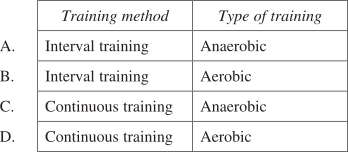
An athlete trains by running 4 km in 20 minutes without stopping. For 30 seconds in each minute the athlete increases the intensity significantly before returning to the normal intensity.

Which row in the table indicates the type of training and the method that is being used?

  Type of training Training method
A.   Aerobic Fartlek
B. Anaerobic Fartlek
C. Aerobic Interval
D.  Anaerobic Interval
Show Answers Only

\(A\)

Show Worked Solution
  • A is correct: 20-minute continuous run with varied intensity describes aerobic fartlek training.

Other Options:

  • B is incorrect: Extended duration indicates aerobic system, not anaerobic.
  • C is incorrect: Fartlek varies intensity randomly, interval training uses set periods.
  • D is incorrect: Both training type and method are incorrectly identified.

Filed Under: Types of training and training methods Tagged With: Band 4, smc-5459-10-Aerobic

HMS, HIC 2016 HSC 11 MC

Members of Aboriginal and Torres Strait Islander communities are trained to deliver Quit Smoking programs.

Which action area of the Ottawa Charter is most likely being addressed?

  1. Developing personal skills
  2. Reorienting health services
  3. Building healthy public policy
  4. Strengthening community action
Show Answers Only

\(D\)

Show Worked Solution
  • D is correct: Training community members to deliver programs strengthens community-led health action.

Other Options:

  • A is incorrect: Focus is on community capacity building, not individual skills.
  • B is incorrect: Services aren’t being reoriented, community action is strengthened.
  • C is incorrect: No policy development is mentioned in this scenario.

Filed Under: Models of health promotion Tagged With: Band 4, smc-5510-70-Ottawa Charter

HMS, HAG 2016 HSC 7 MC

Which of the following best describes atherosclerosis?

  1. Dilation of the arterial walls
  2. Increased elasticity of blood vessels
  3. Damage to the blood vessels in the hands and feet
  4. A build-up of plaque on the interior walls of arteries
Show Answers Only

\(D\)

Show Worked Solution
  • D is correct: Atherosclerosis is the accumulation of fatty plaque deposits inside arteries.

Other Options:

  • A is incorrect: Atherosclerosis narrows arteries, doesn’t cause dilation.
  • B is incorrect: Plaque buildup reduces vessel elasticity, doesn’t increase it.
  • C is incorrect: This describes peripheral vascular disease, not atherosclerosis specifically.

Filed Under: Chronic Conditions, Diseases and Injury Tagged With: Band 4, smc-5477-15-Other conditions

HMS, TIP 2016 HSC 6 MC

An athlete sustains tissue damage during a game.

Which recovery strategy should the athlete undertake to prepare for another game in two days time?

  1. Cryotherapy
  2. Hydrotherapy
  3. Sports massage
  4. Dynamic stretching
Show Answers Only

\(A\)

Show Worked Solution
  • A is correct: Cryotherapy reduces inflammation and promotes healing for tissue damage.

Other Options:

  • B is incorrect: Less effective than cold therapy for acute tissue damage.
  • C is incorrect: May aggravate fresh tissue damage in early stages.
  • D is incorrect: Inappropriate for damaged tissue requiring rest and healing.

Filed Under: Recovery strategies Tagged With: Band 4, smc-5470-20-Thermal

HMS, HAG 2016 HSC 5 MC

Which of the following is a health benefit of using emerging technologies for health care in Australia?

  1. Reduced expenditure in medical research
  2. Reduced costs of medical treatment for individuals
  3. Faster recovery of patients from less-invasive procedures
  4. Increased availability of medical services in regional and remote areas
Show Answers Only

\(D\)

Show Worked Solution

Note: The solution to this question in 2016 was C but since the advent of online services such as telehealth, the impact of the technological benefits has changed.

  • D is correct: Technologies like telehealth increase medical service access in remote areas.

Other Options:

  • A is incorrect: Technology typically increases research costs, not reduces them.
  • B is incorrect: New technologies often increase individual treatment costs initially.
  • C is incorrect: While true, this isn’t the primary benefit highlighted.

Filed Under: Impact of digital health Tagged With: Band 4, smc-5486-10-Access equity

HMS, TIP 2016 HSC 4 MC

What is the likely effect of a heavy and low-repetition strength training program using free weights?

  1. Muscle atrophy
  2. Muscle hypertrophy
  3. Increased muscular endurance
  4. Increased slow-twitch muscle fibre concentration
Show Answers Only

\(B\)

Show Worked Solution
  • B is correct: Heavy, low-repetition training causes muscle fibres to increase in size.

Other Options:

  • A is incorrect: This would cause muscle growth, not muscle wasting.
  • C is incorrect: High repetitions develop endurance, not heavy low reps.
  • D is incorrect: Heavy training develops fast-twitch fibres, not slow-twitch.

Filed Under: Physiological adaptations and improved performance Tagged With: Band 4, smc-5461-30-Muscular adaptations

HMS, HIC 2016 HSC 3 MC

Which of the following is an example of a socioeconomic determinant that influences the health of Aboriginal and Torres Strait Islander peoples?

  1. Racism from peers and the community
  2. Remoteness of some of their communities
  3. Lower completion rate of Year 12 education
  4. Lack of access to appropriate health services
Show Answers Only

\(C\)

Show Worked Solution
  • C is correct: Education completion rates are a socioeconomic characteristic affecting health outcomes.

Other Options:

  • A is incorrect: This is a sociocultural determinant, not socioeconomic.
  • B is incorrect: This is an environmental/geographical determinant.
  • D is incorrect: This is an environmental/access determinant.

Filed Under: Socioeconomic Tagged With: Band 4, smc-5805-10-Education

HMS, BM 2016 HSC 2 MC

What is the most likely cause of fatigue in a runner completing a 100 m sprint?

  1. Dehydration
  2. Accumulation of lactic acid
  3. Depletion of muscle glycogen
  4. Depletion of phosphate creatine
Show Answers Only

\(D\)

Show Worked Solution
  • D is correct: 100m sprints primarily use ATP-PCr system which fatigues from phosphocreatine depletion.

Other Options:

  • A is incorrect: Dehydration unlikely in such short duration activity.
  • B is incorrect: Lactic acid builds up but PCr depletion occurs first.
  • C is incorrect: Glycogen depletion occurs in longer duration activities.

Filed Under: Energy systems Tagged With: Band 4, smc-5528-30-Causes of fatigue

HMS, HIC 2017 HSC 31a

Explain how enabling, mediating and advocating actions can make sustainable improvements for disadvantaged groups.   (8 marks)

--- 24 WORK AREA LINES (style=lined) ---

Show Answers Only
  • Enabling actions directly empower disadvantaged groups to take control over factors affecting their health outcomes. These approaches work by building community capacity and addressing equity principles of participation and access. Empowerment becomes essential because disadvantaged groups often lack decision-making power in traditional healthcare models. For instance, when Aboriginal health workers deliver culturally appropriate health education within their communities, participation rates increase significantly. This demonstrates why community-led initiatives create sustainable change by ensuring equal access to health information and respecting cultural rights.
  • Mediating actions create collaborative partnerships that address power imbalances between different sectors. The process involves bringing together government agencies, healthcare providers, and community organisations to ensure disadvantaged voices are heard in decision-making. Empowerment occurs through shared responsibility and resource allocation. Evidence of this includes the Close the Gap campaign which provides Indigenous communities with equal participation in policy development. Such collaboration leads to more effective resource allocation because disadvantaged groups help identify their specific needs and priorities.
  • Advocating actions generate systemic policy changes that challenge structural inequities and redistribute power. Advocacy works by amplifying disadvantaged voices to demand equal rights and access to healthcare services. Empowerment becomes sustainable when advocacy creates lasting policy frameworks that protect vulnerable populations. A clear example is disability advocacy organisations successfully campaigning for legislative changes in healthcare accessibility. These efforts result in permanent improvements to equity because they address root causes of disadvantage rather than temporary symptom management.
Show Worked Solution
  • Enabling actions directly empower disadvantaged groups to take control over factors affecting their health outcomes. These approaches work by building community capacity and addressing equity principles of participation and access. Empowerment becomes essential because disadvantaged groups often lack decision-making power in traditional healthcare models. For instance, when Aboriginal health workers deliver culturally appropriate health education within their communities, participation rates increase significantly. This demonstrates why community-led initiatives create sustainable change by ensuring equal access to health information and respecting cultural rights.
  • Mediating actions create collaborative partnerships that address power imbalances between different sectors. The process involves bringing together government agencies, healthcare providers, and community organisations to ensure disadvantaged voices are heard in decision-making. Empowerment occurs through shared responsibility and resource allocation. Evidence of this includes the Close the Gap campaign which provides Indigenous communities with equal participation in policy development. Such collaboration leads to more effective resource allocation because disadvantaged groups help identify their specific needs and priorities.
  • Advocating actions generate systemic policy changes that challenge structural inequities and redistribute power. Advocacy works by amplifying disadvantaged voices to demand equal rights and access to healthcare services. Empowerment becomes sustainable when advocacy creates lasting policy frameworks that protect vulnerable populations. A clear example is disability advocacy organisations successfully campaigning for legislative changes in healthcare accessibility. These efforts result in permanent improvements to equity because they address root causes of disadvantage rather than temporary symptom management.

♦♦ Mean mark 50%.

Filed Under: Individual, organisational and community advocacy Tagged With: Band 4, Band 5, smc-5505-50-Multiple principles, smc-5512-10-Advocacy over time

HMS, TIP 2017 HSC 29b

To what extent do the specific needs of children and young athletes have to be considered for them to participate safely in sport?   (12 marks)

--- 28 WORK AREA LINES (style=lined) ---

Show Answers Only

Judgment Statement

  • The specific needs of children and young athletes must be considered to a significant extent for safe sporting participation. Their unique developmental characteristics create substantial safety requirements that differ markedly from adult athletes.

Physical Development Considerations

  • Skeletal immaturity creates substantial injury risks requiring careful management in youth sport. Growth plates remain open until late adolescence, making young athletes vulnerable to permanent damage from excessive loading or impact. Evidence supporting this includes higher rates of growth plate fractures in contact sports and overuse injuries in repetitive activities like gymnastics. Cricket bowling restrictions exemplify necessary precautions, with strict over limits preventing stress fractures in young fast bowlers.
  • Thermoregulation differences significantly impact safety during training and competition. Children have less efficient sweating mechanisms and greater surface area relative to body mass, increasing heat illness risk. This necessitates modified training schedules, frequent hydration breaks and careful monitoring during hot weather. Swimming programs demonstrate effective adaptation by scheduling sessions during cooler periods and implementing mandatory rest intervals.

Psychological and Social Considerations

  • Cognitive development stages influence young athletes’ ability to understand complex tactical instructions and risk assessment. Children may lack the maturity to recognise dangerous situations or communicate injuries effectively. Youth-specific coaching approaches prove essential, emphasising fun over winning and using age-appropriate skill progressions. However, some sports successfully adapt by simplifying rules, reducing playing areas and implementing modified equipment like lighter balls or smaller goals.

Reaffirmation

  • The evidence overwhelmingly demonstrates significant consideration is essential for youth sport safety. While adaptations require substantial planning and resources, they successfully enable safe participation when properly implemented across different sporting contexts.

Show Worked Solution

Judgment Statement

  • The specific needs of children and young athletes must be considered to a significant extent for safe sporting participation. Their unique developmental characteristics create substantial safety requirements that differ markedly from adult athletes.

Physical Development Considerations

  • Skeletal immaturity creates substantial injury risks requiring careful management in youth sport. Growth plates remain open until late adolescence, making young athletes vulnerable to permanent damage from excessive loading or impact. Evidence supporting this includes higher rates of growth plate fractures in contact sports and overuse injuries in repetitive activities like gymnastics. Cricket bowling restrictions exemplify necessary precautions, with strict over limits preventing stress fractures in young fast bowlers.
  • Thermoregulation differences significantly impact safety during training and competition. Children have less efficient sweating mechanisms and greater surface area relative to body mass, increasing heat illness risk. This necessitates modified training schedules, frequent hydration breaks and careful monitoring during hot weather. Swimming programs demonstrate effective adaptation by scheduling sessions during cooler periods and implementing mandatory rest intervals.

Psychological and Social Considerations

  • Cognitive development stages influence young athletes’ ability to understand complex tactical instructions and risk assessment. Children may lack the maturity to recognise dangerous situations or communicate injuries effectively. Youth-specific coaching approaches prove essential, emphasising fun over winning and using age-appropriate skill progressions. However, some sports successfully adapt by simplifying rules, reducing playing areas and implementing modified equipment like lighter balls or smaller goals.

Reaffirmation

  • The evidence overwhelmingly demonstrates significant consideration is essential for youth sport safety. While adaptations require substantial planning and resources, they successfully enable safe participation when properly implemented across different sporting contexts.

Filed Under: Management/prevention of injuries Tagged With: Band 4, smc-5472-01-Prevention-physical, smc-5472-04-Prevention-environment

HMS, TIP 2017 HSC 29a

Explain how athletes in a range of different sports physically prepare to prevent injury.   (8 marks)

--- 24 WORK AREA LINES (style=lined) ---

Show Answers Only

  • Proper warm-up procedures directly reduce injury risk across all sporting activities. This occurs because gradual temperature elevation increases muscle elasticity and joint mobility. The warming process triggers enhanced blood flow to working muscles and improved neural activation. For instance, when basketball players perform dynamic stretching before games, they significantly decrease ankle sprain occurrence. This demonstrates why sport-specific warm-up movements prepare the body for competition demands.
  • Strength training generates muscular protection around vulnerable joint structures in different sports. This happens because stronger muscles provide better joint stability and shock absorption during impact. Progressive resistance work leads to improved bone density and connective tissue resilience. A clear example is rugby players developing neck and shoulder strength to withstand tackles safely. This explains why targeted strengthening reduces catastrophic injury rates in contact sports.
  • Flexibility training produces improved range of motion and reduced muscle tension. This works by maintaining optimal muscle length-tension relationships and joint mobility. Regular stretching prevents muscle imbalances that contribute to overuse injuries. Evidence of this includes swimmers performing shoulder mobility exercises to prevent impingement syndrome. Additionally, gymnasts use static and dynamic flexibility work to safely achieve extreme movement ranges.
  • Sport-specific conditioning ensures athletes develop fitness qualities matching their competitive demands. This preparation reduces fatigue-related injuries that occur when athletes cannot maintain proper technique under stress.

Show Worked Solution

  • Proper warm-up procedures directly reduce injury risk across all sporting activities. This occurs because gradual temperature elevation increases muscle elasticity and joint mobility. The warming process triggers enhanced blood flow to working muscles and improved neural activation. For instance, when basketball players perform dynamic stretching before games, they significantly decrease ankle sprain occurrence. This demonstrates why sport-specific warm-up movements prepare the body for competition demands.
  • Strength training generates muscular protection around vulnerable joint structures in different sports. This happens because stronger muscles provide better joint stability and shock absorption during impact. Progressive resistance work leads to improved bone density and connective tissue resilience. A clear example is rugby players developing neck and shoulder strength to withstand tackles safely. This explains why targeted strengthening reduces catastrophic injury rates in contact sports.
  • Flexibility training produces improved range of motion and reduced muscle tension. This works by maintaining optimal muscle length-tension relationships and joint mobility. Regular stretching prevents muscle imbalances that contribute to overuse injuries. Evidence of this includes swimmers performing shoulder mobility exercises to prevent impingement syndrome. Additionally, gymnasts use static and dynamic flexibility work to safely achieve extreme movement ranges.
  • Sport-specific conditioning ensures athletes develop fitness qualities matching their competitive demands. This preparation reduces fatigue-related injuries that occur when athletes cannot maintain proper technique under stress.

♦♦ Mean mark 52%.

Filed Under: Management/prevention of injuries Tagged With: Band 4, Band 5, smc-5472-01-Prevention-physical, smc-5472-02-Prevention-technique

HMS, HIC 2017 HSC 27b

To what extent have government and non-government strategies targeting young people been effective in addressing major health issues?   (12 marks)

--- 28 WORK AREA LINES (style=lined) ---

Show Answers Only

Judgment Statement

  • Government and non-government strategies have achieved moderate effectiveness in addressing major youth health issues. Success varies significantly across different health areas, with stronger outcomes in road safety than mental health and substance abuse.

Mental Health Strategy Effectiveness

  • Government Headspace centres demonstrate substantial success in providing accessible mental health services for young Australians aged 12-25. These federally-funded centres offer free counselling and psychiatric services with over 150 centres nationwide. However, limitations include long waiting lists and inadequate rural coverage creating geographical inequities.
  • Non-government R U OK? Day campaigns effectively raise awareness about mental health conversations and suicide prevention. This initiative successfully normalises mental health discussions across schools and communities. Yet sustainability challenges arise from volunteer dependency and inconsistent funding streams.

Road Safety Strategy Effectiveness

  • Government P-plate restrictions prove highly effective in reducing youth road fatalities through passenger limits, speed restrictions and zero BAC requirements. These legislative measures have significantly decreased young driver death rates since implementation. Additional government initiatives like Plan B campaigns provide clear messaging about drink-driving consequences.
  • Non-government programs like RYDA demonstrate strong effectiveness in rural areas where road fatalities are highest. These Rotary-funded programs increase education about issues including fatigue and risk-taking behaviours. Community-based approaches also successfully target local issues with culturally relevant messaging.

Substance Abuse Strategy Effectiveness

  • Government school-based drug education shows mixed results due to inconsistent implementation across different educational settings. On the other hand, non-government community-based education programs often achieve better youth engagement through peer-to-peer approaches and locally relevant messaging.

Reaffirmation

  • Overall assessment reveals moderate effectiveness with government strategies stronger in legislative areas like road safety, while non-government initiatives excel in community engagement and awareness-raising across multiple health issues.

Show Worked Solution

Judgment Statement

  • Government and non-government strategies have achieved moderate effectiveness in addressing major youth health issues. Success varies significantly across different health areas, with stronger outcomes in road safety than mental health and substance abuse.

Mental Health Strategy Effectiveness

  • Government Headspace centres demonstrate substantial success in providing accessible mental health services for young Australians aged 12-25. These federally-funded centres offer free counselling and psychiatric services with over 150 centres nationwide. However, limitations include long waiting lists and inadequate rural coverage creating geographical inequities.
  • Non-government R U OK? Day campaigns effectively raise awareness about mental health conversations and suicide prevention. This initiative successfully normalises mental health discussions across schools and communities. Yet sustainability challenges arise from volunteer dependency and inconsistent funding streams.

Road Safety Strategy Effectiveness

  • Government P-plate restrictions prove highly effective in reducing youth road fatalities through passenger limits, speed restrictions and zero BAC requirements. These legislative measures have significantly decreased young driver death rates since implementation. Additional government initiatives like Plan B campaigns provide clear messaging about drink-driving consequences.
  • Non-government programs like RYDA demonstrate strong effectiveness in rural areas where road fatalities are highest. These Rotary-funded programs increase education about issues including fatigue and risk-taking behaviours. Community-based approaches also successfully target local issues with culturally relevant messaging.

Substance Abuse Strategy Effectiveness

  • Government school-based drug education shows mixed results due to inconsistent implementation across different educational settings. On the other hand, non-government community-based education programs often achieve better youth engagement through peer-to-peer approaches and locally relevant messaging.

Reaffirmation

  • Overall assessment reveals moderate effectiveness with government strategies stronger in legislative areas like road safety, while non-government initiatives excel in community engagement and awareness-raising across multiple health issues.

♦♦ Mean mark 50%.

Filed Under: Individual, organisational and community advocacy Tagged With: Band 4, Band 5, smc-5512-20-Government, smc-5512-40-NGOs, smc-5512-50-Other organisations

HMS, HIC 2017 HSC 27a

Explain the determinants of ONE major health issue that affects young people.   (8 marks)

--- 24 WORK AREA LINES (style=lined) ---

Show Answers Only

Health Issue: Mental Health Issues in Young People

  • Socioeconomic determinants directly influence mental health outcomes amongst young Australians. This occurs because family income affects access to mental health services and educational opportunities. Low socioeconomic status leads to increased stress, housing instability, and reduced healthcare access. For instance, when families cannot afford private psychology sessions, young people rely on overstretched public services. This demonstrates why disadvantaged youth experience higher rates of anxiety and depression than their affluent peers.
  • Social media and technology create significant environmental pressures on young people’s mental wellbeing. This happens because constant online comparison and cyberbullying increase psychological distress. These platforms trigger feelings of inadequacy and social isolation amongst adolescents. Evidence of this includes research showing increased depression rates correlating with social media usage time. The result is young people experiencing body image issues and reduced self-esteem from unrealistic online portrayals.
  • Academic pressure generates substantial stress-related mental health problems in students. This works by creating intense competition for university places and career opportunities. Consequently, many young people develop anxiety disorders and burnout symptoms. A clear example is HSC students experiencing panic attacks during examination periods. This explains why perfectionist tendencies and fear of failure contribute significantly to youth mental health crises in Australia.

Show Worked Solution

Health Issue: Mental Health Issues in Young People

  • Socioeconomic determinants directly influence mental health outcomes amongst young Australians. This occurs because family income affects access to mental health services and educational opportunities. Low socioeconomic status leads to increased stress, housing instability, and reduced healthcare access. For instance, when families cannot afford private psychology sessions, young people rely on overstretched public services. This demonstrates why disadvantaged youth experience higher rates of anxiety and depression than their affluent peers.
  • Social media and technology create significant environmental pressures on young people’s mental wellbeing. This happens because constant online comparison and cyberbullying increase psychological distress. These platforms trigger feelings of inadequacy and social isolation amongst adolescents. Evidence of this includes research showing increased depression rates correlating with social media usage time. The result is young people experiencing body image issues and reduced self-esteem from unrealistic online portrayals.
  • Academic pressure generates substantial stress-related mental health problems in students. This works by creating intense competition for university places and career opportunities. Consequently, many young people develop anxiety disorders and burnout symptoms. A clear example is HSC students experiencing panic attacks during examination periods. This explains why perfectionist tendencies and fear of failure contribute significantly to youth mental health crises in Australia.

♦♦ Mean mark 54%.

Filed Under: Environmental, Research and Health Related Issues, Socioeconomic Tagged With: Band 4, Band 5, smc-5800-10-Youth health issue, smc-5804-10-Geographic location, smc-5805-30-Income

HMS, BM 2017 HSC 25

Compare TWO different energy systems by exploring their duration, sources of fuel and causes of fatigue. Use examples to support your answer.   (7 marks)

--- 21 WORK AREA LINES (style=lined) ---

Show Answers Only

Energy Systems Being Compared:

  • ATP-PCr System (Phosphocreatine System)
  • Aerobic System (Oxidative System)

Similarities

  • Both energy systems produce ATP to fuel muscle contractions during exercise activities. They work together seamlessly during most physical activities to meet energy demands.
  • Both systems can operate without requiring external oxygen supply from the respiratory system. This allows immediate energy production when exercise begins before breathing rate increases.

Differences – Duration

  • The ATP-PCr system operates for very short durations of 10-15 seconds maximum. This occurs because stored ATP and creatine phosphate supplies are limited in muscle cells.
  • The aerobic system functions for hours or even days. This happens because oxygen allows continuous fuel breakdown without harmful byproduct accumulation.

Differences – Fuel Sources

  • The ATP-PCr system sources fuel from stored ATP and creatine phosphate already present in muscles. This enables immediate energy release without requiring glucose breakdown.
  • The aerobic system utilises carbohydrates, fats and proteins as fuel sources.  This process requires oxygen to completely break down these substrates.

Differences – Causes of Fatigue

  • Fatigue in the ATP-PCr system results from depletion of stored phosphocreatine reserves. For instance, a weightlifter cannot continue once stores are exhausted.
  • Aerobic system fatigue occurs due to fuel depletion or oxygen limitations. Marathon runners experience this when glycogen stores become depleted.
Show Worked Solution

Energy Systems Being Compared:

  • ATP-PCr System (Phosphocreatine System)
  • Aerobic System (Oxidative System)

Similarities

  • Both energy systems produce ATP to fuel muscle contractions during exercise activities. They work together seamlessly during most physical activities to meet energy demands.
  • Both systems can operate without requiring external oxygen supply from the respiratory system. This allows immediate energy production when exercise begins before breathing rate increases.

Differences – Duration

  • The ATP-PCr system operates for very short durations of 10-15 seconds maximum. This occurs because stored ATP and creatine phosphate supplies are limited in muscle cells.
  • The aerobic system functions for hours or even days. This happens because oxygen allows continuous fuel breakdown without harmful byproduct accumulation.

Differences – Fuel Sources

  • The ATP-PCr system sources fuel from stored ATP and creatine phosphate already present in muscles. This enables immediate energy release without requiring glucose breakdown.
  • The aerobic system utilises carbohydrates, fats and proteins as fuel sources.  This process requires oxygen to completely break down these substrates.

Differences – Causes of Fatigue

  • Fatigue in the ATP-PCr system results from depletion of stored phosphocreatine reserves. For instance, a weightlifter cannot continue once stores are exhausted.
  • Aerobic system fatigue occurs due to fuel depletion or oxygen limitations. Marathon runners experience this when glycogen stores become depleted.

♦♦ Mean mark 55%.

Filed Under: Energy systems Tagged With: Band 4, Band 5, smc-5528-10-Fuel Source, smc-5528-20-Duration/intensity/recovery, smc-5528-30-Causes of fatigue

HMS, HAG 2017 HSC 23

To what extent does Australia’s health care system benefit from having a healthy ageing population?   (8 marks)

--- 24 WORK AREA LINES (style=lined) ---

Show Answers Only

Judgment Statement

  • Australia’s healthcare system benefits to a significant extent from healthy ageing populations through reduced service demand and enhanced community contributions.

Healthcare Cost Reduction

  • A healthy ageing population substantially reduces healthcare expenditure and resource demands across multiple service areas.
  • Older Australians who maintain good physical and mental health require fewer hospitalisations, emergency department visits and specialist consultations.
  • For example, seniors who engage in regular physical activity experience lower rates of chronic diseases like diabetes and cardiovascular conditions.
  • This demonstrates strong benefits for healthcare sustainability as prevention reduces costly treatment interventions.
  • Healthy ageing decreases pharmaceutical expenditure and long-term care facility utilisation. 
  • Evidence shows significant advantages through reduced burden on Medicare and public hospital systems.

Community Workforce Contributions

  • Healthy older Australians provide considerable value to healthcare and community sectors through volunteer work and informal caregiving.
  • Many healthy seniors contribute thousands of hours annually to organisations like hospital auxiliaries and community transport services.
  • This demonstrates substantial effectiveness in supplementing formal healthcare workforce capacity.
  • For example, volunteer drivers enable rural patients to access medical appointments, while peer support programs help manage chronic conditions.
  • However, this benefit shows limitations when considering that not all older adults can participate equally due to varying health status.

Reaffirmation

  • Overall assessment confirms significant benefits from healthy ageing populations for Australia’s healthcare system.
  • The evidence overwhelmingly supports major advantages through reduced healthcare costs and valuable community contributions.
  • While some limitations exist in universal participation, the substantial positive impacts clearly demonstrate that investing in healthy ageing strategies provides excellent returns for healthcare system sustainability.

Show Worked Solution

Judgment Statement

  • Australia’s healthcare system benefits to a significant extent from healthy ageing populations through reduced service demand and enhanced community contributions.

Healthcare Cost Reduction

  • A healthy ageing population substantially reduces healthcare expenditure and resource demands across multiple service areas.
  • Older Australians who maintain good physical and mental health require fewer hospitalisations, emergency department visits and specialist consultations.
  • For example, seniors who engage in regular physical activity experience lower rates of chronic diseases like diabetes and cardiovascular conditions.
  • This demonstrates strong benefits for healthcare sustainability as prevention reduces costly treatment interventions.
  • Healthy ageing decreases pharmaceutical expenditure and long-term care facility utilisation. 
  • Evidence shows significant advantages through reduced burden on Medicare and public hospital systems.

Community Workforce Contributions

  • Healthy older Australians provide considerable value to healthcare and community sectors through volunteer work and informal caregiving.
  • Many healthy seniors contribute thousands of hours annually to organisations like hospital auxiliaries and community transport services.
  • This demonstrates substantial effectiveness in supplementing formal healthcare workforce capacity.
  • For example, volunteer drivers enable rural patients to access medical appointments, while peer support programs help manage chronic conditions.
  • However, this benefit shows limitations when considering that not all older adults can participate equally due to varying health status.

Reaffirmation

  • Overall assessment confirms significant benefits from healthy ageing populations for Australia’s healthcare system.
  • The evidence overwhelmingly supports major advantages through reduced healthcare costs and valuable community contributions.
  • While some limitations exist in universal participation, the substantial positive impacts clearly demonstrate that investing in healthy ageing strategies provides excellent returns for healthcare system sustainability.

♦♦ Mean mark 49%.

Filed Under: Impact of an Ageing Population Tagged With: Band 4, Band 5, smc-5478-05-Healthy ageing

HMS, HAG 2017 HSC 22

Explain both the risk factors and the protective factors of cardiovascular disease.   (5 marks)

--- 15 WORK AREA LINES (style=lined) ---

Show Answers Only
  • Cardiovascular disease risk factors include modifiable and non-modifiable elements. This occurs because genetic predisposition and age cannot be changed but create increased susceptibility. For example, family history of heart disease increases individual risk through inherited genetic factors. Additionally, smoking damages arterial walls and reduces oxygen delivery to heart muscle. High blood pressure causes arterial stress and atherosclerosis development. Consequently, obesity leads to increased cardiac workload and metabolic dysfunction.
  • Protective factors help to prevent cardiovascular disease through lifestyle modifications. This happens when regular physical activity strengthens heart muscle and improves circulation efficiency. For instance, aerobic exercise reduces blood pressure and increases HDL cholesterol levels. Healthy diet patterns provide essential nutrients while limiting saturated fats and sodium intake. Therefore, Mediterranean diets rich in omega-3 fatty acids support cardiovascular health. Furthermore, avoiding tobacco use prevents arterial damage and maintains optimal blood flow. The reason for this is protective behaviours counteract the biological processes that lead to cardiovascular disease development.
Show Worked Solution
  • Cardiovascular disease risk factors include modifiable and non-modifiable elements. This occurs because genetic predisposition and age cannot be changed but create increased susceptibility. For example, family history of heart disease increases individual risk through inherited genetic factors. Additionally, smoking damages arterial walls and reduces oxygen delivery to heart muscle. High blood pressure causes arterial stress and atherosclerosis development. Consequently, obesity leads to increased cardiac workload and metabolic dysfunction.
  • Protective factors help to prevent cardiovascular disease through lifestyle modifications. This happens when regular physical activity strengthens heart muscle and improves circulation efficiency. For instance, aerobic exercise reduces blood pressure and increases HDL cholesterol levels. Healthy diet patterns provide essential nutrients while limiting saturated fats and sodium intake. Therefore, Mediterranean diets rich in omega-3 fatty acids support cardiovascular health. Furthermore, avoiding tobacco use prevents arterial damage and maintains optimal blood flow. The reason for this is protective behaviours counteract the biological processes that lead to cardiovascular disease development.

♦♦ Mean mark 55%.

Filed Under: Chronic Conditions, Diseases and Injury Tagged With: Band 4, Band 5, smc-5477-05-Cardiovascular disease

HMS, HIC 2017 HSC 21

  1. Outline the measures of epidemiology.   (3 marks)

    --- 8 WORK AREA LINES (style=lined) ---

  2. Describe the limitations of epidemiology.   (4 marks)

    --- 10 WORK AREA LINES (style=lined) ---

Show Answers Only

a.   Measures of epidemiology

  • Mortality measures death rates within populations over specific time periods.
  • Morbidity measures illness and disease rates, including incidence and prevalence.
  • Infant mortality measures deaths of children under one year per 1,000 live births.
  • Life expectancy measures average expected lifespan based on current death rates.
  • Incidence measures new cases of disease occurring during specific time periods.
  • Prevalence measures total cases of disease existing at particular points in time.

b.    Epidemiology limitations

  • Epidemiology provides statistical patterns but cannot explain underlying causes of health behaviours.
  • Data collection may be incomplete or inaccurate, particularly in remote communities.
  • Emergency situations can prevent adequate data gathering and timely analysis.
  • Epidemiology focuses on population trends rather than individual health experiences.
  • Rapid health changes may make data outdated before analysis is completed.
  • Cultural and social factors influencing health are not captured by statistical measures.
  • Epidemiology cannot account for quality of life or subjective wellbeing indicators.
Show Worked Solution

a.   Measures of epidemiology

  • Mortality measures death rates within populations over specific time periods.
  • Morbidity measures illness and disease rates, including incidence and prevalence.
  • Infant mortality measures deaths of children under one year per 1,000 live births.
  • Life expectancy measures average expected lifespan based on current death rates.
  • Incidence measures new cases of disease occurring during specific time periods.
  • Prevalence measures total cases of disease existing at particular points in time.

b.    Epidemiology limitations

  • Epidemiology provides statistical patterns but cannot explain underlying causes of health behaviours.
  • Data collection may be incomplete or inaccurate, particularly in remote communities.
  • Emergency situations can prevent adequate data gathering and timely analysis.
  • Epidemiology focuses on population trends rather than individual health experiences.
  • Rapid health changes may make data outdated before analysis is completed.
  • Cultural and social factors influencing health are not captured by statistical measures.
  • Epidemiology cannot account for quality of life or subjective wellbeing indicators.

♦♦ Mean mark 53%.

Filed Under: Health status of Australians Tagged With: Band 4, Band 5, smc-5504-05-Epidemiology

HMS, HAG 2017 HSC 20 MC

Which group is most at risk of developing breast cancer?

  1. Women who take the contraceptive pill and exercise regularly
  2. Women over the age of 50 with high levels of circulating oestrogen
  3. Women who have given birth to multiple children and breastfed them
  4. Women with early onset menopause and using hormone replacement therapies
Show Answers Only

\(B\)

Show Worked Solution

  • B is correct: Age over 50 and high oestrogen levels are major breast cancer risk factors.

Other Options:

  • A is incorrect: Regular exercise is protective against breast cancer, reducing risk.
  • C is incorrect: Multiple births and breastfeeding are protective factors against breast cancer.
  • D is incorrect: Early menopause reduces lifetime oestrogen exposure, lowering breast cancer risk.

Filed Under: Chronic Conditions, Diseases and Injury Tagged With: Band 4, smc-5477-10-Cancer trends

HMS, TIP 2017 HSC 15 MC

After sustaining an injury, an athlete applies ice and a compression bandage.

This is an example of which recovery strategies?

  1. Neural and cryotherapy
  2. Neural and hydrotherapy
  3. Tissue damage and cryotherapy
  4. Tissue damage and hydrotherapy
Show Answers Only

\(C\)

Show Worked Solution

  • C is correct: Ice and compression address tissue damage through cryotherapy methods.

Other Options:

  • A is incorrect: These are physiological strategies, not neural recovery methods.
  • B is incorrect: Ice application is cryotherapy, not hydrotherapy treatment.
  • D is incorrect: Ice application represents cryotherapy, not hydrotherapy techniques.

Filed Under: Recovery strategies Tagged With: Band 4, smc-5470-20-Thermal

HMS, HAG 2017 HSC 14 MC

How does Medicare reflect the principles of social justice?

  1. It provides resources only to those most in need of health services and treatment.
  2. It is funded by the Australian government to supply equality in health care services to all Australians.
  3. It allocates resources according to the needs of the population in order to promote equity of health outcomes.
  4. It empowers individuals and communities to be involved in planning and decision making to achieve good health.
Show Answers Only

\(B\)

Show Worked Solution

  • B is correct: Medicare is government-funded to provide equal healthcare access to all Australians.

Other Options:

  • A is incorrect: Medicare provides universal access, not just for those most in need.
  • C is incorrect: Medicare provides equal access rather than resource allocation based on need.
  • D is incorrect: Medicare is a funding system, not a community empowerment program.

Filed Under: Healthcare expenditure Tagged With: Band 4, smc-5482-15-Medicare

HMS, BM 2017 HSC 7 MC

What are the waste products of the aerobic energy system?

  1. Lactate, heat, water
  2. Lactate, oxygen, creatine
  3. Carbon dioxide, heat, water
  4. Carbon dioxide, oxygen, creatine
Show Answers Only

\(C\)

Show Worked Solution

  • C is correct: Aerobic system produces carbon dioxide, heat and water as waste products.

Other Options:

  • A is incorrect: Lactate is produced by the lactic acid system, not aerobic system.
  • B is incorrect: Oxygen is consumed by the aerobic system, not produced as waste.
  • D is incorrect: Oxygen and creatine are not waste products of aerobic metabolism.

Filed Under: Energy systems Tagged With: Band 4, smc-5528-15-ATP efficiency

HMS, HAG 2017 HSC 5 MC

What is cerebrovascular disease?

  1. A bacterial infection affecting heart valves
  2. A problem with the circulation of blood to the lungs
  3. A problem where the heart begins to function less effectively in its role of pumping blood
  4. A condition where the arteries supplying oxygen to the brain become impaired in their function
Show Answers Only

\(D\)

Show Worked Solution

  • D is correct: Cerebrovascular disease involves impaired blood circulation to the brain through damaged arteries.

Other Options:

  • A is incorrect: Bacterial infection of heart valves describes endocarditis, not cerebrovascular disease.
  • B is incorrect: Lung circulation problems describe pulmonary vascular disease, not cerebrovascular disease.
  • C is incorrect: Reduced heart pumping describes heart failure, not cerebrovascular disease.

Filed Under: Chronic Conditions, Diseases and Injury Tagged With: Band 4, smc-5477-05-Cardiovascular disease

HMS, HAG 2018 HSC 32a

Explain how implementing economic and cultural change supports a population experiencing health inequity.   (8 marks)

--- 24 WORK AREA LINES (style=lined) ---

Show Answers Only

  • Economic changes support populations experiencing health inequity because improved financial resources enable better access to healthcare and healthy lifestyle choices. This occurs because economic disadvantage creates barriers to accessing medical services, nutritious food and safe housing.
    For example, increasing minimum wages and providing employment opportunities enables low-income families to afford preventive healthcare and quality food. This leads to reduced financial stress and improved capacity to make healthy choices.
    Additionally, government investment in affordable housing programs creates stable living environments that support better health outcomes. The reason for this is secure housing reduces exposure to environmental health risks and provides a foundation for accessing education and employment.
  • Cultural changes address health inequities because they challenge discriminatory attitudes and practices that prevent equal access to healthcare. This happens when healthcare providers receive cultural competency training to better understand diverse populations’ needs.
    For instance, implementing culturally appropriate health services for Aboriginal and Torres Strait Islander peoples results in increased trust and participation in health programs.
    Consequently, this produces higher rates of preventive care utilisation and better health outcomes.
    Furthermore, community education campaigns that reduce stigma around mental health facilitate greater help-seeking behaviour among affected populations.
  • Therefore, combined economic and cultural interventions create comprehensive support systems that address both structural barriers and social attitudes. This process ensures sustainable improvements in health equity across different population groups.

Show Worked Solution

  • Economic changes support populations experiencing health inequity because improved financial resources enable better access to healthcare and healthy lifestyle choices. This occurs because economic disadvantage creates barriers to accessing medical services, nutritious food and safe housing.
    For example, increasing minimum wages and providing employment opportunities enables low-income families to afford preventive healthcare and quality food. This leads to reduced financial stress and improved capacity to make healthy choices.
    Additionally, government investment in affordable housing programs creates stable living environments that support better health outcomes. The reason for this is secure housing reduces exposure to environmental health risks and provides a foundation for accessing education and employment.
  • Cultural changes address health inequities because they challenge discriminatory attitudes and practices that prevent equal access to healthcare. This happens when healthcare providers receive cultural competency training to better understand diverse populations’ needs.
    For instance, implementing culturally appropriate health services for Aboriginal and Torres Strait Islander peoples results in increased trust and participation in health programs.
    Consequently, this produces higher rates of preventive care utilisation and better health outcomes.
    Furthermore, community education campaigns that reduce stigma around mental health facilitate greater help-seeking behaviour among affected populations.
  • Therefore, combined economic and cultural interventions create comprehensive support systems that address both structural barriers and social attitudes. This process ensures sustainable improvements in health equity across different population groups.

♦♦ Mean mark 50%.

Filed Under: Groups Experiencing Inequities Tagged With: Band 4, Band 5, smc-5475-15-Inequity causes

HMS, TIP 2018 HSC 31b

Evaluate the use of performance-enhancing drugs by elite athletes.   (12 marks)

--- 28 WORK AREA LINES (style=lined) ---

Show Answers Only

Evaluation Statement:

  • The use of performance-enhancing drugs by elite athletes proves highly problematic, with severe health risks and significant ethical violations outweighing any temporary performance benefits.

Health Implications

  • Performance-enhancing drug use demonstrates devastating effectiveness in causing serious health complications for elite athletes.
  • Anabolic steroids create substantial health risks including liver damage, cardiovascular disease and hormonal disruption that can last long after using.
  • For example, prolonged steroid use can cause heart attacks, liver tumours, testicular atrophy and psychological disorders like aggression and depression.
  • EPO increases red blood cell production but creates dangerous blood thickening that can lead to strokes, pulmonary embolism and heart failure.
  • Growth hormone abuse causes joint damage, diabetes and abnormal bone growth.
  • The health system bears significant costs treating athletes suffering from drug-related complications, including expensive cardiac procedures and psychiatric treatment.
  • Evidence strongly indicates that these substances cause irreversible damage to organs and psychological wellbeing, making their use medically dangerous for any performance benefits.

Ethical Considerations and Drug Testing

  • Drug use in elite sport violates fundamental principles of fair competition and athlete integrity, creating systemic corruption within sporting organisations.
  • Performance-enhancing substances provide unfair advantages that undermine the essence of sporting achievement based on natural talent, dedication and training.
  • For example, when athletes like Lance Armstrong used EPO, they cheated competitors who competed cleanly and deceived millions of fans who believed in their achievements.
  • Drug testing programs demonstrate partial effectiveness in detecting violations, with anti-doping authorities catching many offenders through advanced testing methods. However, testing shows significant limitations as new substances constantly emerge and sophisticated doping programs can evade detection through micro-dosing and designer drugs.
  • The ethical damage extends beyond individual cheating to include exploitation of young athletes, corruption of sporting institutions and erosion of public trust in competitive sport.

Final Evaluation

  • Overall assessment reveals performance-enhancing drugs are highly detrimental to elite sport and athlete welfare.
  • The evidence overwhelmingly shows that health risks, ethical violations and competitive integrity damage far outweigh any performance gains.
  • While detection systems show some effectiveness, the fundamental problem remains that drug use contradicts the core values of sport and athlete safety.

Show Worked Solution

Evaluation Statement:

  • The use of performance-enhancing drugs by elite athletes proves highly problematic, with severe health risks and significant ethical violations outweighing any temporary performance benefits.

Health Implications

  • Performance-enhancing drug use demonstrates devastating effectiveness in causing serious health complications for elite athletes.
  • Anabolic steroids create substantial health risks including liver damage, cardiovascular disease and hormonal disruption that can last long after using.
  • For example, prolonged steroid use can cause heart attacks, liver tumours, testicular atrophy and psychological disorders like aggression and depression.
  • EPO increases red blood cell production but creates dangerous blood thickening that can lead to strokes, pulmonary embolism and heart failure.
  • Growth hormone abuse causes joint damage, diabetes and abnormal bone growth.
  • The health system bears significant costs treating athletes suffering from drug-related complications, including expensive cardiac procedures and psychiatric treatment.
  • Evidence strongly indicates that these substances cause irreversible damage to organs and psychological wellbeing, making their use medically dangerous for any performance benefits.

Ethical Considerations and Drug Testing

  • Drug use in elite sport violates fundamental principles of fair competition and athlete integrity, creating systemic corruption within sporting organisations.
  • Performance-enhancing substances provide unfair advantages that undermine the essence of sporting achievement based on natural talent, dedication and training.
  • For example, when athletes like Lance Armstrong used EPO, they cheated competitors who competed cleanly and deceived millions of fans who believed in their achievements.
  • Drug testing programs demonstrate partial effectiveness in detecting violations, with anti-doping authorities catching many offenders through advanced testing methods. However, testing shows significant limitations as new substances constantly emerge and sophisticated doping programs can evade detection through micro-dosing and designer drugs.
  • The ethical damage extends beyond individual cheating to include exploitation of young athletes, corruption of sporting institutions and erosion of public trust in competitive sport.

Final Evaluation

  • Overall assessment reveals performance-enhancing drugs are highly detrimental to elite sport and athlete welfare.
  • The evidence overwhelmingly shows that health risks, ethical violations and competitive integrity damage far outweigh any performance gains.
  • While detection systems show some effectiveness, the fundamental problem remains that drug use contradicts the core values of sport and athlete safety.

Filed Under: Impact of drug use Tagged With: Band 4, smc-5473-10-Health implications, smc-5473-20-Ethical considerations

HMS,TIP 2018 HSC 30a

An athlete running a 400-metre race experiences a hamstring strain in the sprint towards the finish line.

Explain the classification and management of the athlete’s injury.   (8 marks)

--- 24 WORK AREA LINES (style=lined) ---

Show Answers Only

  • The hamstring strain is classified as an indirect, soft tissue, acute injury because the damage occurs from internal forces within the athlete’s body. This occurs because the hamstring muscle experiences excessive tension during the high-intensity sprint phase. The reason for this is the muscle cannot cope with the explosive demands, resulting in muscle fibres tearing. This demonstrates an indirect injury pattern where no external contact causes the damage.
  • Immediate management follows the RICER protocol because this approach minimises secondary tissue damage and inflammation. For example, rest involves immediately stopping activity to prevent further muscle tearing. Ice application for 15-20 minutes every hour helps to reduce pain, swelling and metabolic demands of damaged tissues. This leads to vasoconstriction that limits bleeding within the muscle. Compression using elastic bandaging creates external pressure that supports damaged tissues and reduces swelling. Consequently, elevation of the injured leg above heart level facilitates venous return and reduces fluid accumulation.
  • Referral to medical professionals is essential because accurate diagnosis determines appropriate treatment progression. This process ensures that the severity of the strain is properly assessed using clinical tests or imaging. For instance, a physiotherapist can determine if the injury is Grade 1 (mild), Grade 2 (moderate) or Grade 3 (severe) which then guides rehabilitation timeframes and return-to-play decisions. Therefore, proper medical assessment prevents complications and ensures safe recovery.

Show Worked Solution

  • The hamstring strain is classified as an indirect, soft tissue, acute injury because the damage occurs from internal forces within the athlete’s body. This occurs because the hamstring muscle experiences excessive tension during the high-intensity sprint phase. The reason for this is the muscle cannot cope with the explosive demands, resulting in muscle fibres tearing. This demonstrates an indirect injury pattern where no external contact causes the damage.
  • Immediate management follows the RICER protocol because this approach minimises secondary tissue damage and inflammation. For example, rest involves immediately stopping activity to prevent further muscle tearing. Ice application for 15-20 minutes every hour helps to reduce pain, swelling and metabolic demands of damaged tissues. This leads to vasoconstriction that limits bleeding within the muscle. Compression using elastic bandaging creates external pressure that supports damaged tissues and reduces swelling. Consequently, elevation of the injured leg above heart level facilitates venous return and reduces fluid accumulation.
  • Referral to medical professionals is essential because accurate diagnosis determines appropriate treatment progression. This process ensures that the severity of the strain is properly assessed using clinical tests or imaging. For instance, a physiotherapist can determine if the injury is Grade 1 (mild), Grade 2 (moderate) or Grade 3 (severe) which then guides rehabilitation timeframes and return-to-play decisions. Therefore, proper medical assessment prevents complications and ensures safe recovery.

♦♦ Mean mark 55%.

Filed Under: Management/prevention of injuries Tagged With: Band 4, Band 5, smc-5472-05-Management classification, smc-5472-15-Management treatment

HMS, HAG 2018 HSC 24

Explain the roles of individuals, communities and governments in addressing health inequities experienced by Aboriginal and Torres Strait Islander peoples. Use examples to support your answer.   (8 marks)

--- 24 WORK AREA LINES (style=lined) ---

Show Answers Only

Governments

  • Governments play crucial roles in addressing Aboriginal and Torres Strait Islander health inequities. This occurs because governments control funding allocation and policy development. For example, the Close the Gap strategy provides targeted funding for Indigenous health programs and services. This leads to improved access to culturally appropriate healthcare in remote communities. The reason for this is governments have the legislative power to create systemic change. Consequently, initiatives like Aboriginal Community Controlled Health Services receive ongoing support.

Communities

  • Communities are essential in implementing culturally safe health programs. This happens when local Aboriginal communities take ownership of health initiatives. For instance, community elders provide health education using traditional knowledge and storytelling methods. This creates trust between health services and community members. This relationship results in higher participation rates in screening programs and health checks. As a result, communities can address specific local health needs more effectively.

Individuals

  • Individuals contribute by adopting healthier behaviours and advocating for change. This works by personal responsibility combining with community support. For example, Aboriginal health workers serve as role models, encouraging smoking cessation and regular health checks. This demonstrates how individuals can influence family and peer networks. Therefore, personal actions create ripple effects throughout communities, improving overall health outcomes.

Show Worked Solution

Governments

  • Governments play crucial roles in addressing Aboriginal and Torres Strait Islander health inequities. This occurs because governments control funding allocation and policy development. For example, the Close the Gap strategy provides targeted funding for Indigenous health programs and services. This leads to improved access to culturally appropriate healthcare in remote communities. The reason for this is governments have the legislative power to create systemic change. Consequently, initiatives like Aboriginal Community Controlled Health Services receive ongoing support.

Communities

  • Communities are essential in implementing culturally safe health programs. This happens when local Aboriginal communities take ownership of health initiatives. For instance, community elders provide health education using traditional knowledge and storytelling methods. This creates trust between health services and community members. This relationship results in higher participation rates in screening programs and health checks. As a result, communities can address specific local health needs more effectively.

Individuals

  • Individuals contribute by adopting healthier behaviours and advocating for change. This works by personal responsibility combining with community support. For example, Aboriginal health workers serve as role models, encouraging smoking cessation and regular health checks. This demonstrates how individuals can influence family and peer networks. Therefore, personal actions create ripple effects throughout communities, improving overall health outcomes.

Filed Under: Groups Experiencing Inequities Tagged With: Band 4, smc-5475-05-Indigenous health

HMS, HAG 2018 HSC 23

Discuss the impact of emerging new treatments and technologies in relation to health care in Australia. Use examples to support your answer.   (5 marks)

--- 15 WORK AREA LINES (style=lined) ---

Show Answers Only

  • [P] Positive Impact: Emerging technologies improve patient outcomes and healthcare efficiency.
  • [E] New treatments provide better therapeutic options and reduce recovery times.
  • [Ev] For example, keyhole surgery allows minimally invasive procedures with shorter hospital stays and faster healing. Telemedicine enables rural patients to access specialist consultations without travelling long distances. Artificial intelligence assists doctors in diagnostic accuracy and treatment planning.
  • [L] These advances enhance healthcare quality and accessibility across Australia.
      
  • [P] Negative Impact: However, new technologies create challenges for healthcare equity and sustainability.
  • [E] High costs and limited availability can worsen health disparities between different population groups.
  • [Ev] For example, expensive robotic surgery equipment is typically only available in major metropolitan hospitals, disadvantaging rural patients. Training healthcare professionals to use new technologies requires significant time and financial investment, straining healthcare budgets.
  • [L] These factors can create unequal access to advanced treatments and increase overall healthcare costs.

Show Worked Solution

  • [P] Positive Impact: Emerging technologies improve patient outcomes and healthcare efficiency.
  • [E] New treatments provide better therapeutic options and reduce recovery times.
  • [Ev] For example, keyhole surgery allows minimally invasive procedures with shorter hospital stays and faster healing. Telemedicine enables rural patients to access specialist consultations without travelling long distances. Artificial intelligence assists doctors in diagnostic accuracy and treatment planning.
  • [L] These advances enhance healthcare quality and accessibility across Australia.
      
  • [P] Negative Impact: However, new technologies create challenges for healthcare equity and sustainability.
  • [E] High costs and limited availability can worsen health disparities between different population groups.
  • [Ev] For example, expensive robotic surgery equipment is typically only available in major metropolitan hospitals, disadvantaging rural patients. Training healthcare professionals to use new technologies requires significant time and financial investment, straining healthcare budgets.
  • [L] These factors can create unequal access to advanced treatments and increase overall healthcare costs.

Filed Under: New technologies and treatments Tagged With: Band 4, smc-5485-40-Innovation challenges

HMS, TIP 2018 HSC 14 MC

Athletes are training for a 14 -kilometre fun run.

Which combination of physiological adaptations are they aiming to achieve?

  1. Increased stroke volume, reduced resting heart rate, increased lactate tolerance
  2. Reduced stroke volume, reduced resting heart rate, increased haemoglobin levels
  3. Increased stroke volume, increased muscle hypertrophy, reduced lactate tolerance
  4. Reduced stroke volume, reduced muscle hypertrophy, increased haemoglobin levels
Show Answers Only

\(A\)

Show Worked Solution

  • A is correct: Endurance training increases stroke volume, reduces resting heart rate, and improves lactate tolerance.

Other Options:

  • B is incorrect: Endurance training increases stroke volume, not reduces it.
  • C is incorrect: Endurance training doesn’t focus on muscle hypertrophy or reduce lactate tolerance.
  • D is incorrect: Endurance training increases stroke volume and doesn’t reduce muscle mass significantly.

Filed Under: Physiological adaptations and improved performance Tagged With: Band 4, smc-5461-10-Cardio adaptations, smc-5461-20-Energy responses

HMS, BM 2018 HSC 9 MC

The diagram shows a training drill where an athlete spends 30 seconds at each station and rests between each station.
 

Which practice method is being used by the athlete?

  1. Distributed
  2. Massed
  3. Part
  4. Whole
Show Answers Only

\(A\)

Show Worked Solution

  • A is correct: Distributed practice includes rest periods between training sessions or activities.

Other Options:

  • B is incorrect: Massed practice involves continuous training without rest breaks.
  • C is incorrect: Part practice refers to breaking skills into components, not rest patterns.
  • D is incorrect: Whole practice refers to practicing complete skills, not rest patterns.

Filed Under: Practice methods Tagged With: Band 4, smc-5924-50-Identify method

HMS, HIC 2018 HSC 7 MC

A limitation of epidemiology as a measure of health status is that it

  1. is rarely used by health professionals and policymakers.
  2. only produces information on the mortality of a population.
  3. does not explain the sociocultural risk factors that contribute to negative health behaviours.
  4. identifies broad trends only, without reference to accurate data regarding illness and disease.
Show Answers Only

\(C\)

Show Worked Solution

  • C is correct: Epidemiology shows patterns but doesn’t explain underlying sociocultural causes of behaviours.

Other Options:

  • A is incorrect: Epidemiology is widely used by health professionals for policy decisions.
  • B is incorrect: Epidemiology covers morbidity, incidence, and prevalence, not just mortality.
  • D is incorrect: Epidemiology provides accurate statistical data on illness and disease patterns.

Filed Under: Health status of Australians Tagged With: Band 4, smc-5504-05-Epidemiology

HMS, BM 2019 HSC 11 MC

A volleyball coach analyses video footage of previous matches to determine where to best direct the serve in various situations during a match.

Which of the following identifies two performance elements that the coach is trying to improve in the athletes?

  1. Technique and tactical development
  2. Technique and strategic development
  3. Decision making and delayed feedback
  4. Decision making and tactical development
Show Answers Only

\(D\)

Show Worked Solution

  • D is correct: Coach develops decision-making skills and tactical awareness for serve placement.

Other Options:

  • A is incorrect: Focus is on where to serve, not technique improvement.
  • B is incorrect: Strategic development involves long-term planning, not immediate serve decisions.
  • C is incorrect: Delayed feedback is a feedback type, not a performance element.

Filed Under: Performance elements Tagged With: Band 4, smc-5925-10-Decision making, smc-5925-20-Strategy/Tactics

HMS, HAG 2019 HSC 8 MC

Which of the following identifies the two types of cardiovascular disease with the highest rates of mortality in Australia?

  1. Stroke and angina
  2. Stroke and coronary heart disease
  3. Peripheral vascular disease and angina
  4. Peripheral vascular disease and coronary heart disease
Show Answers Only

\(B\)

Show Worked Solution

  • B is correct: Stroke and coronary heart disease cause the highest cardiovascular mortality rates.

Other Options:

  • A is incorrect: Angina rarely causes death directly compared to coronary heart disease.
  • C is incorrect: Peripheral vascular disease has lower mortality than stroke/coronary heart disease.
  • D is incorrect: Peripheral vascular disease has lower mortality than stroke.

Filed Under: Chronic Conditions, Diseases and Injury Tagged With: Band 4, smc-5477-05-Cardiovascular disease

HMS, HAG 2019 HSC 5 MC

What is a potential benefit for individuals of emerging new surgical treatments in health care?

  1. Higher Medicare rebate
  2. Reduced waiting times for surgery
  3. Greater accessibility to treatments in rural areas
  4. Faster recovery time from less invasive treatments
Show Answers Only

\(D\)

Show Worked Solution

  • D is correct: New surgical treatments often use minimally invasive techniques reducing recovery time.

Other Options:

  • A is incorrect: Medicare rebates are policy decisions, not treatment benefits.
  • B is incorrect: New treatments may initially increase waiting times due to limited availability.
  • C is incorrect: New treatments typically debut in major centres, not rural areas.

Filed Under: Current and emerging changes/challenges Tagged With: Band 4, smc-5484-20-Emerging technologies

HMS, HIC 2019 HSC 32a

  1. Why are health promotion strategies more effective when they focus on skills, education and prevention?   (4 marks)

    --- 12 WORK AREA LINES (style=lined) ---

  2. Explain how intersectoral collaboration has increased the potential for success of ONE health promotion strategy for a population group experiencing inequity.   (4 marks)

    --- 12 WORK AREA LINES (style=lined) ---

Show Answers Only

i.    Sample Answer

  • Skills development enables individuals to make informed health decisions throughout their lives. This occurs because teaching practical skills like reading food labels empowers people to choose healthier options independently. For example, cooking skills help young people prepare nutritious meals rather than relying on processed foods.
  • Education increases health literacy and understanding of risk factors affecting wellbeing. This leads to better decision-making about lifestyle choices. Health education programs in schools teach students about the effects of substance use, enabling them to make informed choices about alcohol, smoking and drugs.
  • Prevention strategies are more cost-effective than treating diseases after they develop. This happens because preventing chronic conditions like diabetes costs less than ongoing medical treatment. Prevention programs focus on addressing risk factors early, reducing the burden on healthcare systems and improving quality of life.

ii.   Sample Answer

  • The National Tobacco Strategy demonstrates effective intersectoral collaboration for Aboriginal and Torres Strait Islander peoples. Commonwealth, state and territory governments work together with Aboriginal Community Controlled Health Organisations to reduce smoking rates.
  • Government legislation creates supportive policy environments through plain packaging laws and increased tobacco taxation. This combines with community-based smoking cessation programs delivered by Aboriginal health workers in local communities using culturally appropriate approachess.
  • This collaboration increases success potential because it addresses multiple levels simultaneously. Policy changes reduce tobacco appeal while community programs provide culturally safe support and education. The combined approach leads to greater smoking reduction than individual strategies working alone.

Show Worked Solution

i.    Sample Answer

  • Skills development enables individuals to make informed health decisions throughout their lives. This occurs because teaching practical skills like reading food labels empowers people to choose healthier options independently. For example, cooking skills help young people prepare nutritious meals rather than relying on processed foods.
  • Education increases health literacy and understanding of risk factors affecting wellbeing. This leads to better decision-making about lifestyle choices. Health education programs in schools teach students about the effects of substance use, enabling them to make informed choices about alcohol, smoking and drugs.
  • Prevention strategies are more cost-effective than treating diseases after they develop. This happens because preventing chronic conditions like diabetes costs less than ongoing medical treatment. Prevention programs focus on addressing risk factors early, reducing the burden on healthcare systems and improving quality of life.

ii.   Sample Answer

  • The National Tobacco Strategy demonstrates effective intersectoral collaboration for Aboriginal and Torres Strait Islander peoples. Commonwealth, state and territory governments work together with Aboriginal Community Controlled Health Organisations to reduce smoking rates.
  • Government legislation creates supportive policy environments through plain packaging laws and increased tobacco taxation. This combines with community-based smoking cessation programs delivered by Aboriginal health workers in local communities using culturally appropriate approachess.
  • This collaboration increases success potential because it addresses multiple levels simultaneously. Policy changes reduce tobacco appeal while community programs provide culturally safe support and education. The combined approach leads to greater smoking reduction than individual strategies working alone.

♦♦♦ Mean mark 42%.

Filed Under: Individual, organisational and community advocacy, Models of health promotion, Strengthening, protecting and enhancing health Tagged With: Band 4, Band 5, smc-5510-10-ATSI model, smc-5512-10-Advocacy over time

HMS, TIP 2019 HSC 30a

An athlete dives towards the ground in an attempt to score a try in a game of touch football. The athlete hears a loud crack and remains on the ground, clutching the injured shoulder.

  1. Explain the assessment procedures that should be used to determine the nature and extent of this injury.   (4 marks)

    --- 12 WORK AREA LINES (style=lined) ---

  2. Describe the management of fractures and dislocations.   (4 marks)

    --- 12 WORK AREA LINES (style=lined) ---

Show Answers Only

i.    TOTAPS assessment

  • TOTAPS assessment provides systematic evaluation of the shoulder injury. Talk involves questioning the athlete about pain location, intensity, and mechanism of injury. This determines initial severity and helps identify potential fracture or dislocation.
  • Observe compares the injured shoulder to the uninjured side for deformity, swelling, or abnormal positioning. This reveals obvious structural damage or displacement indicating serious injury requiring immediate medical attention.
  • Touch assesses tenderness, heat, and structural abnormalities through gentle palpation. This identifies specific injury location and severity. However, if significant deformity or severe pain exists, assessment should stop immediately.
  • Active and passive movement testing would not proceed due to suspected hard tissue injury. This occurs because movement attempts could worsen fracture displacement or joint damage, requiring immediate medical intervention instead.

ii.   Management of fractures and dislocations

  • Fractures require immediate immobilisation to prevent further tissue damage and reduce pain.
  • Support the injured area using splints, slings or bandages without attempting realignment.
  • Monitor for shock symptoms including pale skin, rapid pulse and decreased consciousness.
  • Transport to medical facilities immediately for professional treatment including X-rays and surgical intervention if required.
  • Dislocations involve joint displacement requiring professional medical reduction.
  • Never attempt to relocate the joint as this may cause additional nerve or blood vessel damage.
  • Immobilise the joint in the position found using appropriate supports.
  • Apply ice to reduce swelling and pain while monitoring circulation below the injury site.
  • Arrange immediate medical evacuation for proper diagnosis and professional joint reduction procedures.

Show Worked Solution

i.    TOTAPS assessment

  • TOTAPS assessment provides systematic evaluation of the shoulder injury. Talk involves questioning the athlete about pain location, intensity, and mechanism of injury. This determines initial severity and helps identify potential fracture or dislocation.
  • Observe compares the injured shoulder to the uninjured side for deformity, swelling, or abnormal positioning. This reveals obvious structural damage or displacement indicating serious injury requiring immediate medical attention.
  • Touch assesses tenderness, heat, and structural abnormalities through gentle palpation. This identifies specific injury location and severity. However, if significant deformity or severe pain exists, assessment should stop immediately.
  • Active and passive movement testing would not proceed due to suspected hard tissue injury. This occurs because movement attempts could worsen fracture displacement or joint damage, requiring immediate medical intervention instead.

ii.   Management of fractures and dislocations

  • Fractures require immediate immobilisation to prevent further tissue damage and reduce pain.
  • Support the injured area using splints, slings or bandages without attempting realignment.
  • Monitor for shock symptoms including pale skin, rapid pulse and decreased consciousness.
  • Transport to medical facilities immediately for professional treatment including X-rays and surgical intervention if required.
  • Dislocations involve joint displacement requiring professional medical reduction.
  • Never attempt to relocate the joint as this may cause additional nerve or blood vessel damage.
  • Immobilise the joint in the position found using appropriate supports.
  • Apply ice to reduce swelling and pain while monitoring circulation below the injury site.
  • Arrange immediate medical evacuation for proper diagnosis and professional joint reduction procedures.

♦♦♦ Mean mark (ii) 48%.

Filed Under: Management/prevention of injuries Tagged With: Band 4, Band 5, smc-5472-10-Management assessment, smc-5472-15-Management treatment

HMS, HIC 2019 HSC 28a

  1. Describe the nature and extent of ONE major health issue that affects young people.  (4 marks)

    --- 12 WORK AREA LINES (style=lined) ---

  2. Explain risk factors and protective factors related to the major health issue identified in part (i).  (4 marks)

    --- 12 WORK AREA LINES (style=lined) ---

Show Answers Only

i.    Health issue – Mental health

  • Mental health conditions represent a significant health issue affecting young Australians aged 12-25 years.
  • The nature of mental health issues includes anxiety disorders, depression and stress-related conditions that impact psychological and emotional wellbeing.
  • These conditions affect daily functioning, academic performance and social relationships among young people.
  • The extent of the issue demonstrates widespread impact across Australian youth populations.
  • Nearly two in five young people aged 16-24 experience mental health conditions within a 12-month period.
  • Females experience higher rates than males, with anxiety disorders being most prevalent.
  • Mental health issues represent the leading cause of disease burden for young Australians, indicating substantial impact on quality of life and long-term health outcomes.

ii.   Health issue – Mental health

  • Risk factors increase vulnerability to mental health conditions among young people. Academic pressure and social media exposure contribute to anxiety development. This occurs because unrealistic expectations create stress and comparison behaviours. Family breakdown and substance abuse lead to emotional instability and poor coping mechanisms.
  • Protective factors reduce mental health risks through supportive environments. Strong family relationships and peer support networks provide emotional stability during challenging periods. This helps because social connections offer resilience and coping strategies. Regular physical activity and adequate sleep patterns strengthen mental wellbeing by improving mood regulation and stress management.


Show Worked Solution

i.    Health issue – Mental health

  • Mental health conditions represent a significant health issue affecting young Australians aged 12-25 years.
  • The nature of mental health issues includes anxiety disorders, depression and stress-related conditions that impact psychological and emotional wellbeing.
  • These conditions affect daily functioning, academic performance and social relationships among young people.
  • The extent of the issue demonstrates widespread impact across Australian youth populations.
  • Nearly two in five young people aged 16-24 experience mental health conditions within a 12-month period.
  • Females experience higher rates than males, with anxiety disorders being most prevalent.
  • Mental health issues represent the leading cause of disease burden for young Australians, indicating substantial impact on quality of life and long-term health outcomes.

ii.   Health issue – Mental health

  • Risk factors increase vulnerability to mental health conditions among young people. Academic pressure and social media exposure contribute to anxiety development. This occurs because unrealistic expectations create stress and comparison behaviours. Family breakdown and substance abuse lead to emotional instability and poor coping mechanisms.
  • Protective factors reduce mental health risks through supportive environments. Strong family relationships and peer support networks provide emotional stability during challenging periods. This helps because social connections offer resilience and coping strategies. Regular physical activity and adequate sleep patterns strengthen mental wellbeing by improving mood regulation and stress management.

Filed Under: Research and Health Related Issues Tagged With: Band 4, smc-5509-10-Health trends, smc-5509-50-Determinants, smc-5800-10-Youth health issue, smc-5800-15-Protective/risk factors

HMS, BM 2019 HSC 21

Outline how goal setting can influence an athlete's motivation level. Use examples to support your answer.   (3 marks)

--- 7 WORK AREA LINES (style=lined) ---

Show Answers Only

  • Goal setting provides direction and focus for athletes by creating clear pathways towards achievement.
  • Specific goals increase intrinsic motivation through ownership. For example, a basketball player targeting 80% free throw accuracy develops personal investment.
  • Short-term goals maintain motivation through regular achievements. A swimmer reducing 50m freestyle time weekly experiences frequent success.
  • Long-term goals sustain motivation over extended periods. Athletes targeting state representation maintain commitment through challenging phases.
  • Goal achievement triggers positive reinforcement, leading to increased confidence and motivation.

Show Worked Solution

  • Goal setting provides direction and focus for athletes by creating clear pathways towards achievement.
  • Specific goals increase intrinsic motivation through ownership. For example, a basketball player targeting 80% free throw accuracy develops personal investment.
  • Short-term goals maintain motivation through regular achievements. A swimmer reducing 50m freestyle time weekly experiences frequent success.
  • Long-term goals sustain motivation over extended periods. Athletes targeting state representation maintain commitment through challenging phases.
  • Goal achievement triggers positive reinforcement, leading to increased confidence and motivation.

Filed Under: Psych–Movement–Performance interplay Tagged With: Band 4, smc-5536-10-Motivation

HMS, TIP 2020 HSC 18 MC

The following table shows features of the strength training programs that Athlete \(A\) and Athlete \(B\) completed over an 8 -week period.

\begin{array} {|c|c|c|}
\hline Athlete & Weight & Sets &Repetitions & Exercise Speed \\
\hline A & \text{Very heavy}\ & 5-6 & 2-5 & \text{Slow}\ \\
\hline B & \text{Light/medium}\ & 3-6 & 15-20 & \text{Moderate}\ \\
\hline
\end{array}

Which row in the table identifies what has most likely increased as a result of the training program for each athlete?

\begin{align*}
\begin{array}{c|c}
\text{ } \\
\text{ A.   } \\
\text{ B.   } \\
\text{ C.   } \\
\text{ D.   } \\
\end{array}
\begin{array}{|l|l|}
\hline
\ \ \ \ \ \ Athlete A   & \ \ \ \ \ \ \ Athlete B \\
\hline
\text{Absolute strength}\ & \text{Muscular endurance} \\
\hline
\text{Power}\ & \text{Lean body mass}\\
\hline
\text{Muscular endurance}\ & \text{Power} \\
\hline
\text{Lean body mass}\ & \text{Absolute strength} \\
\hline
\end{array}
\end{align*}

Show Answers Only

\(A\)

Show Worked Solution
  • A is correct: Heavy weight/low reps develops absolute strength, light weight/high reps develops endurance.

Other Options:

  • B is incorrect: Slow speed doesn’t develop power, light weight doesn’t optimise mass.
  • C is incorrect: Heavy weight/low reps develops strength not endurance.
  • D is incorrect: Light weight/high reps develops endurance not absolute strength.

Filed Under: Types of training and training methods Tagged With: Band 4, smc-5459-20-Strength

HMS, TIP 2020 HSC 15 MC

Which group of physiological adaptations is likely to occur in athletes who have participated in an aerobic training program at sub-maximal levels for 8 weeks?

  1. Increased cardiac output, decreased stroke volume, muscle atrophy
  2. Increased cardiac output, increased lung capacity, muscle hypertrophy
  3. Decreased resting heart rate, increased stroke volume, increased haemoglobin level
  4. Decreased resting heart rate, increased oxygen uptake, decreased haemoglobin level
Show Answers Only

\(C\)

Show Worked Solution
  • C is correct: Aerobic training decreases resting heart rate, increases stroke volume and haemoglobin.

Other Options:

  • A is incorrect: Stroke volume increases not decreases with aerobic training.
  • B is incorrect: Aerobic training causes muscle endurance not hypertrophy adaptations.
  • D is incorrect: Haemoglobin level increases not decreases with aerobic training.

Filed Under: Physiological adaptations and improved performance Tagged With: Band 4, smc-5461-10-Cardio adaptations, smc-5461-30-Muscular adaptations

HMS, HAG 2020 HSC 14 MC

Which of the following statements is correct in relation to General Practitioner medical services in Australia?

  1. Medicare covers the entire cost for all General Practitioner consultations.
  2. The number of General Practitioner consultations has increased steadily over the past 10 years.
  3. People living in rural locations have greater access to a General Practitioner than those living in urban areas.
  4. The number of people attending after-hours General Practitioner services has decreased over the past 10 years.
Show Answers Only

\(B\)

Show Worked Solution
  • B is correct: GP consultation numbers have shown steady increase over decade.

Other Options:

  • A is incorrect: Medicare covers schedule fee not total cost.
  • C is incorrect: Rural areas have less GP access than urban.
  • D is incorrect: After-hours GP services have increased not decreased.

Filed Under: Healthcare System effectiveness Tagged With: Band 4, smc-5479-10-Access equity

HMS, HIC 2020 HSC 12 MC

The Australian Men's Shed Association was established in 2007 to provide men with health information and opportunities for increased social interaction within their local community.

Which two priority action areas of the Ottawa Charter are best reflected in this initiative?

  1. Developing personal skills and reorientating health services
  2. Building healthy public policy and reorientating health services
  3. Developing personal skills and creating supportive environments
  4. Building healthy public policy and creating supportive environments
Show Answers Only

\(C\)

Show Worked Solution
  • C is correct: Provides health information (personal skills) and community interaction (supportive environments).

Other Options:

  • A is incorrect: Not reorientating health services, focuses on community support.
  • B is incorrect: Not building policy, focuses on individual skill development.
  • D is incorrect: Not building policy, focuses on individual skill development.

Filed Under: Models of health promotion Tagged With: Band 4, smc-5510-70-Ottawa Charter

HMS, TIP 2020 HSC 10 MC

Which row in the table identifies the training method and type of training that is most appropriate for improving the performance of an elite 50-metre swimmer?

Show Answers Only

\(A\)

Show Worked Solution
  • A is correct: 50m swimming requires high-intensity anaerobic power with interval training.

Other Options:

  • B is incorrect: 50m swimming is anaerobic not aerobic event.
  • C is incorrect: Cannot do continuous training at anaerobic intensity.
  • D is incorrect: 50m swimming requires anaerobic not aerobic training.

Filed Under: Types of training and training methods Tagged With: Band 4, smc-5459-05-Anaerobic

HMS, HAG 2020 HSC 9 MC

Which risk factor contributes to the leading cause of cancer death in males in Australia?

  1. High-fat diet
  2. Tobacco smoking
  3. Physical inactivity
  4. High blood pressure
Show Answers Only

\(B\)

Show Worked Solution
  • B is correct: Tobacco smoking is the major risk factor for lung cancer.

Other Options:

  • A is incorrect: High-fat diet linked to bowel cancer not lung cancer.
  • C is incorrect: Physical inactivity increases various cancers but not leading cause.
  • D is incorrect: High blood pressure linked to cardiovascular disease not cancer.

Filed Under: Chronic Conditions, Diseases and Injury Tagged With: Band 4, smc-5477-10-Cancer trends

HMS, TIP 2020 HSC 31ai

Outline how equipment advances have been used to improve performance.   (3 marks)

--- 7 WORK AREA LINES (style=lined) ---

Show Answers Only
  • Equipment advances utilise improved materials and design to enhance athletic performance.
  • Swimming suits made from low-drag materials reduce water resistance, enabling faster times.
  • Athletic footwear incorporates lightweight materials and energy-return technology to improve running efficiency.
  • Sports equipment like tennis racquets use carbon fibre construction for increased power and control.
  • Golf clubs feature titanium heads with larger sweet spots for greater accuracy and distance.
  • These technological improvements allow athletes to perform closer to their physiological limits while maintaining safety and technique standards.
Show Worked Solution
  • Equipment advances utilise improved materials and design to enhance athletic performance.
  • Swimming suits made from low-drag materials reduce water resistance, enabling faster times.
  • Athletic footwear incorporates lightweight materials and energy-return technology to improve running efficiency.
  • Sports equipment like tennis racquets use carbon fibre construction for increased power and control.
  • Golf clubs feature titanium heads with larger sweet spots for greater accuracy and distance.
  • These technological improvements allow athletes to perform closer to their physiological limits while maintaining safety and technique standards.

Filed Under: Technology and performance Tagged With: Band 4, smc-5471-10-Equipment advances

HMS, TIP 2020 HSC 30ai

Outline how the indicators of readiness to return to play are used following an ankle injury.   (3 marks)

--- 7 WORK AREA LINES (style=lined) ---

Show Answers Only
  • Return-to-play indicators ensure safe progression following ankle injury rehabilitation.
  • Athletes must demonstrate pain-free movement during sport-specific activities like running, jumping and directional changes.
  • Range of motion must equal or exceed pre-injury levels, assessed through ankle flexibility tests.
  • Functional strength testing compares injured ankle performance to the uninjured side.
  • Athletes complete balance and proprioception assessments to ensure joint stability during dynamic movements.
  • Medical clearance confirms tissue healing and structural integrity.
  • These indicators prevent re-injury and ensure athletes can perform at competitive levels without compromising long-term ankle health.
Show Worked Solution
  • Return-to-play indicators ensure safe progression following ankle injury rehabilitation.
  • Athletes must demonstrate pain-free movement during sport-specific activities like running, jumping and directional changes.
  • Range of motion must equal or exceed pre-injury levels, assessed through ankle flexibility tests.
  • Functional strength testing compares injured ankle performance to the uninjured side.
  • Athletes complete balance and proprioception assessments to ensure joint stability during dynamic movements.
  • Medical clearance confirms tissue healing and structural integrity.
  • These indicators prevent re-injury and ensure athletes can perform at competitive levels without compromising long-term ankle health.

Filed Under: Management/prevention of injuries Tagged With: Band 4, smc-5472-15-Management treatment, smc-5472-25-Rehab/return-to-play

  • « Previous Page
  • 1
  • …
  • 9
  • 10
  • 11
  • 12
  • 13
  • …
  • 114
  • Next Page »

Copyright © 2014–2025 SmarterEd.com.au · Log in