SmarterEd

Aussie Maths & Science Teachers: Save your time with SmarterEd

  • Login
  • Get Help
  • About

HMS, BM 2025 HSC 25a

How can goal setting be used by an athlete to enhance motivation?   (3 marks)

--- 6 WORK AREA LINES (style=lined) ---

Show Answers Only
  • Goal setting creates clear targets for achievement. This increases motivation because athletes gain sense of purpose and direction in their training efforts.
  • Measurable goals allow athletes to track progress consistently. For example, a cyclist aiming to improve 5km time trial by 30 seconds experiences increased motivation through visible improvements.
  • Achievable goals generate confidence through successful completion. As a result, athletes remain motivated to pursue increasingly challenging objectives in their sport.
Show Worked Solution
  • Goal setting creates clear targets for achievement. This increases motivation because athletes gain sense of purpose and direction in their training efforts.
  • Measurable goals allow athletes to track progress consistently. For example, a cyclist aiming to improve 5km time trial by 30 seconds experiences increased motivation through visible improvements.
  • Achievable goals generate confidence through successful completion. As a result, athletes remain motivated to pursue increasingly challenging objectives in their sport.

Filed Under: Psych–Movement–Performance interplay Tagged With: Band 4, smc-5536-10-Motivation, smc-5536-20-Self-regulation

HMS, BM 2025 HSC 19 MC

During a training session, a runner completes 40 m high intensity sprints with a 2 minute recovery period between each.

Which of the following explains the runner's rate of recovery and the efficiency of ATP production during the recovery periods between sprints?

  1. The lactic acid system is responsible for recovery, leading to the production of lactate and slower resynthesis of ATP.
  2. The ATP-PCr system is quickly replenishing phosphocreatine stores, allowing for a fast recovery and efficient ATP production.
  3. The lactic acid system is primarily used during recovery, allowing for efficient ATP production, but it takes several minutes to recover.
  4. The ATP-PCr system is slower to replenish phosphocreatine stores, leading to inefficient ATP production and more time is needed to recover.
Show Answers Only

\(B\)

Show Worked Solution

  • B is correct: Alactacid system rapidly restores phosphocreatine stores within 2-3 minutes, enabling quick ATP resynthesis between sprints

Other Options:

  • A is incorrect: Lactic acid system produces lactate during work, not recovery; recovery removes lactate, doesn’t produce it
  • C is incorrect: Lactic acid system creates ATP during exercise, not recovery; recovery period removes accumulated lactate
  • D is incorrect: Alactacid system replenishes quickly (50% in 30 seconds, 100% in 2-3 minutes), not slowly

Filed Under: Energy systems Tagged With: Band 4, smc-5528-20-Duration/intensity/recovery

HMS, BM 2025 HSC 13 MC

Which of the following best demonstrates how the characteristics of the learner can influence their progression through to the associative stage of skill acquisition?

  1. A swimmer relies on their heredity traits and confidence to improve their freestyle technique.
  2. A gymnast performs a routine, relying on additional practice and feedback from their coach.
  3. A basketball player learns the technique of shooting by relying on demonstrations but gives up easily.
  4. A tennis player is struggling to return serves, due to limited confidence and inconsistent attention.
Show Answers Only

\(A\)

Show Worked Solution
  • A is correct: Heredity traits and confidence are learner characteristics enabling progression from cognitive to associative stage

Other Options:

  • B is incorrect: Practice and feedback are teaching methods, not learner characteristics influencing progression
  • C is incorrect: Giving up easily indicates failure to progress beyond cognitive stage, not advancement
  • D is incorrect: Struggling with limited confidence shows barriers preventing progression, not successful advancement

♦♦♦ Mean mark 36%.

Filed Under: Characteristics of learners, Stages of learning Tagged With: Band 5, smc-5534-60-Identify characteristics, smc-5921-20-Associative

HMS, BM 2025 HSC 7 MC

An elite netball player practises 100 consecutive shots at training.

What practice methods is the athlete using?

  1. Massed and part
  2. Massed and whole
  3. Distributed and part
  4. Distributed and whole
Show Answers Only

\(B\)

Show Worked Solution
  • B is correct: Consecutive shots without rest intervals (massed); complete shooting action performed each time (whole)

Other Options:

  • A is incorrect: Part practice isolates skill components; shooting involves complete integrated movement
  • C is incorrect: Distributed practice includes rest breaks; 100 consecutive shots indicates continuous practice
  • D is incorrect: Combines two incorrect elements; practice is massed (continuous) not distributed

Filed Under: Practice methods Tagged With: Band 4, smc-5924-10-Massed/Distributed, smc-5924-20-Whole/part

HMS, BM 2025 HSC 6 MC

A golfer is practising hitting the ball.

Which of the following best describes the nature of the skill?

  1. Fine, discrete and self-paced
  2. Gross, discrete and self-paced
  3. Fine, serial and externally paced
  4. Gross, serial and externally paced
Show Answers Only

\(B\)

Show Worked Solution
  • B is correct: A golf swing uses large muscle groups, has clear beginning/end, controlled by performer’s timing.

Other Options:

  • A is incorrect: Fine motor skills involve small muscles; golf requires large muscle coordination.
  • C is incorrect: Serial skills link multiple actions; golf swing is single distinct movement.
  • D is incorrect: Externally paced means environment controls timing; golfer controls swing initiation.

♦♦ Mean mark 44%.

Filed Under: Characteristics of skills Tagged With: Band 5, smc-5922-20-Gross/Fine, smc-5922-30-Discrete/Serial/Continuous, smc-5922-40-Self and externally paced

HMS, BM 2012 HSC 26

Describe TWO different types of motivation that can affect performance. Provide examples.   (3 marks)

--- 7 WORK AREA LINES (style=lined) ---

Show Answers Only

Any 2 of the following:

  • Intrinsic motivation involves engaging in activities for personal satisfaction and enjoyment. Athletes participate because they find the sport fulfilling and rewarding. For example, a swimmer training because they love moving through water.
  • Extrinsic motivation involves external rewards or consequences driving participation. Athletes perform to gain prizes, recognition or avoid punishment. For example, a footballer training intensively to earn team selection.
  • Positive motivation drives athletes toward desired outcomes and rewards. Athletes work to achieve success, recognition or personal goals. For example, a tennis player practising serves to win upcoming tournaments and improve rankings.
  • Negative motivation involves avoiding undesirable consequences or failure. Athletes train to prevent disappointing coaches, teammates or losing selection. For example, a cyclist training harder to avoid being dropped from the racing team.
Show Worked Solution

Any 2 of the following:

  • Intrinsic motivation involves engaging in activities for personal satisfaction and enjoyment. Athletes participate because they find the sport fulfilling and rewarding. For example, a swimmer training because they love moving through water.
  • Extrinsic motivation involves external rewards or consequences driving participation. Athletes perform to gain prizes, recognition or avoid punishment. For example, a footballer training intensively to earn team selection.
  • Positive motivation drives athletes toward desired outcomes and rewards. Athletes work to achieve success, recognition or personal goals. For example, a tennis player practising serves to win upcoming tournaments and improve rankings.
  • Negative motivation involves avoiding undesirable consequences or failure. Athletes train to prevent disappointing coaches, teammates or losing selection. For example, a cyclist training harder to avoid being dropped from the racing team.

Filed Under: Psych–Movement–Performance interplay Tagged With: Band 3, smc-5536-10-Motivation

HMS, BM 2012 HSC 25

Outline the influence of prior experience on skill acquisition.   (3 marks)

--- 9 WORK AREA LINES (style=lined) ---

Show Answers Only
  • Prior experience accelerates skill acquisition through transfer of learning from similar movements. Athletes with related sport backgrounds progress more quickly through cognitive and associative learning stages.
  • For example, hockey players learning cricket benefit from existing hand-eye coordination and striking techniques. Basketball players transitioning to netball utilise established passing and spatial awareness skills.
  • Previous movement patterns provide a foundation for new skill development. Experienced athletes demonstrate better motor control and coordination when learning related skills compared to complete beginners.
Show Worked Solution
  • Prior experience accelerates skill acquisition through transfer of learning from similar movements. Athletes with related sport backgrounds progress more quickly through cognitive and associative learning stages.
  • For example, hockey players learning cricket benefit from existing hand-eye coordination and striking techniques. Basketball players transitioning to netball utilise established passing and spatial awareness skills.
  • Previous movement patterns provide a foundation for new skill development. Experienced athletes demonstrate better motor control and coordination when learning related skills compared to complete beginners.

Filed Under: Characteristics of learners, Characteristics of skills Tagged With: Band 3, smc-5534-25-Prior experience, smc-5921-10-Cognitive, smc-5921-20-Associative

HMS, BM 2012 HSC 18 MC

A timed 100-metre sprint trial to measure speed and power is conducted using several athletes. The same test procedure and conditions are followed for each of these athletes three times.

Which statement is true about the results?

  1. They are valid and reliable.
  2. They are valid but not reliable.
  3. They are reliable but not valid.
  4. They are neither valid nor reliable.
Show Answers Only

\(C\)

Show Worked Solution
  • C is correct: Consistent procedures ensure reliability, but 100m sprint doesn’t measure power.

Other Options:

  • A is incorrect: Test doesn’t validly measure power, only speed.
  • B is incorrect: Consistent repeated procedures make the test reliable.
  • D is incorrect: The test is reliable due to consistent methodology.

♦♦♦♦♦♦ Mean mark 16%.

Filed Under: Investigate aerobic training Tagged With: Band 6, smc-5533-25-Validity/Reliability/Credibility

HMS, BM 2012 HSC 17 MC

Athletes are filmed executing a skill. They then watch the film and correct their techniques based upon what they observed.

What type of feedback is this?

  1. Internal and concurrent
  2. External and concurrent
  3. Internal and delayed
  4. External and delayed
Show Answers Only

\(D\)

Show Worked Solution
  • D is correct: Video feedback is external (from outside source) and delayed (after performance).

Other Options:

  • A is incorrect: Video feedback comes from external source, not internal feelings.
  • B is incorrect: Watching film occurs after performance, not concurrently.
  • C is incorrect: Video feedback is external, not internal sensory information.

Filed Under: Stages of learning Tagged With: Band 4, smc-5921-70-Concurrent/delayed, smc-5921-90-Identify type of feedback

HMS, BM 2012 HSC 14 MC

What type of skill is a defensive player performing when executing a tackle during a game?

  1. Closed and self-paced
  2. Closed and externally paced
  3. Open and externally paced
  4. Open and self-paced
Show Answers Only

\(C\)

Show Worked Solution
  • C is correct: Tackling is open (unpredictable environment) and externally paced (opponent timing).

Other Options:

  • A is incorrect: Tackling involves unpredictable opponents, not closed predictable environment.
  • B is incorrect: Tackling is open skill due to changing game conditions.
  • D is incorrect: Tackle timing depends on opponent movements, not self-pacing.

Filed Under: Characteristics of skills Tagged With: Band 4, smc-5922-10-Open/Closed, smc-5922-40-Self and externally paced

HMS, BM 2012 HSC 12 MC

During a grand final match, an athlete becomes negatively affected by the pressure and significance of the occasion.

Which of the following is the athlete experiencing?

  1. High self-esteem
  2. High concentration
  3. Trait anxiety
  4. State anxiety
Show Answers Only

\(D\)

Show Worked Solution
  • D is correct: State anxiety is situational stress response to specific events.

Other Options:

  • A is incorrect: High self-esteem would help cope with pressure.
  • B is incorrect: High concentration would improve performance under pressure.
  • C is incorrect: Trait anxiety is general personality characteristic, not situational.

Filed Under: Psych–Movement–Performance interplay Tagged With: Band 3, smc-5536-20-Self-regulation

HMS, BM 2012 HSC 11 MC

Which of the following is a feature of the associative stage of skill acquisition?

  1. Focusing on strategic play
  2. Understanding the processes related to the skill
  3. Sequencing and performing the skill instinctively
  4. Experiencing repeated success with a decreasing number of errors
Show Answers Only

\(D\)

Show Worked Solution
  • D is correct: Associative stage features practice refinement with fewer errors.

Other Options:

  • A is incorrect: Strategic focus occurs in autonomous stage.
  • B is incorrect: Understanding processes characterises cognitive stage.
  • C is incorrect: Instinctive performance describes autonomous stage.

Filed Under: Stages of learning Tagged With: Band 4, smc-5921-20-Associative

HMS, BM 2013 HSC 26

Describe THREE characteristics of a learner that can influence his/her ability to learn a new skill.   (4 marks)

--- 12 WORK AREA LINES (style=lined) ---

Show Answers Only

Any THREE of the following:

  • Confidence refers to a learner’s belief in their ability to successfully perform a skill. High confidence encourages risk-taking and persistent practice, whilst low confidence may limit skill attempts and slow progression through learning stages.
  • Heredity involves inherited physical characteristics that influence performance potential. Factors like muscle fibre composition, somatotype, height and gender determine natural advantages for specific sports and create unchangeable performance ceilings that cannot be exceeded through training.
  • Ability encompasses how easily an individual learns, processes and implements new skills. This includes sense acuity, perception, reaction time and intelligence, which combine to enable rapid skill acquisition and successful refinement of movement patterns.
  • Personality develops from social interactions and learning experiences throughout life. Positive traits like motivation, dedication, cooperativeness and receptiveness to instruction create favourable learning environments that accelerate skill development and performance improvement in chosen activities.
  • Prior experience involves previous exposure to similar movement patterns or sports participation. Athletes with related experience can transfer existing skills to new situations, accelerating learning through familiar movement foundations and reducing time required for skill acquisition.
Show Worked Solution

Any THREE of the following:

  • Confidence refers to a learner’s belief in their ability to successfully perform a skill. High confidence encourages risk-taking and persistent practice, whilst low confidence may limit skill attempts and slow progression through learning stages.
  • Heredity involves inherited physical characteristics that influence performance potential. Factors like muscle fibre composition, somatotype, height and gender determine natural advantages for specific sports and create unchangeable performance ceilings that cannot be exceeded through training.
  • Ability encompasses how easily an individual learns, processes and implements new skills. This includes sense acuity, perception, reaction time and intelligence, which combine to enable rapid skill acquisition and successful refinement of movement patterns.
  • Personality develops from social interactions and learning experiences throughout life. Positive traits like motivation, dedication, cooperativeness and receptiveness to instruction create favourable learning environments that accelerate skill development and performance improvement in chosen activities.
  • Prior experience involves previous exposure to similar movement patterns or sports participation. Athletes with related experience can transfer existing skills to new situations, accelerating learning through familiar movement foundations and reducing time required for skill acquisition.

Filed Under: Characteristics of learners Tagged With: Band 4, smc-5534-05-Confidence, smc-5534-10-Heredity, smc-5534-15-Ability, smc-5534-20-Personality, smc-5534-25-Prior experience

HMS, BM 2013 HSC 19 MC

Who are part practice methods most appropriate for?

  1. Beginner athletes learning a new skill
  2. Beginner athletes applying a learned skill
  3. Experienced athletes solving a tactical problem
  4. Experienced athletes refining their kinaesthetic awareness
Show Answers Only

\(A\)

Show Worked Solution
  • A is correct: Part practice breaks complex skills into manageable components for beginners.

Other Options:

  • B is incorrect: Applying learned skills requires whole practice in context.
  • C is incorrect: Tactical problems need whole practice for decision-making integration.
  • D is incorrect: Kinaesthetic refinement requires whole movement patterns, not parts.

Filed Under: Practice methods Tagged With: Band 4, smc-5924-20-Whole/part

HMS, BM 2013 HSC 18 MC

What is a common feature of both the alactacid (ATP-PCr) and lactic acid energy systems?

  1. Lactic acid is produced.
  2. ATP is resynthesised anaerobically.
  3. Both systems take the same period of time to recover.
  4. The accumulation of lactic acid in the working muscles causes fatigue.
Show Answers Only

\(B\)

Show Worked Solution

NOTE: This question has been updated to include the HMS system naming of the alactacid system with ATP-PCr.

  • B is correct: Both alactacid (ATP-PCr) and lactic acid systems operate without oxygen.

Other Options:

  • A is incorrect: Only lactic acid system produces lactic acid.
  • C is incorrect: Systems have different recovery time periods significantly.
  • D is incorrect: Only lactic acid system causes fatigue through accumulation.

♦♦ Mean mark 52%.

Filed Under: Energy systems Tagged With: Band 5, smc-5528-25-Interplay of energy systems

HMS, BM 2013 HSC 14 MC

During which stage of skill acquisition is anticipation initially learned?

  1. Associative
  2. Autonomous
  3. Cognitive
  4. Developmental
Show Answers Only

\(A\)

Show Worked Solution
  • A is correct: Associative stage develops anticipation skills through practice refinement.

Other Options:

  • B is incorrect: Autonomous stage has automatic anticipation, not initial learning.
  • C is incorrect: Cognitive stage focuses on basic movement understanding.
  • D is incorrect: Developmental is not recognised skill acquisition stage.

♦♦ Mean mark 43%.

Filed Under: Stages of learning Tagged With: Band 5, smc-5921-20-Associative, smc-5921-45-Identify stage

HMS, BM 2013 HSC 12 MC

Which types of feedback are received by a runner who checks her time after crossing the finish line?

  1. Concurrent and knowledge of performance
  2. Concurrent and knowledge of results
  3. Delayed and knowledge of performance
  4. Delayed and knowledge of results
Show Answers Only

\(D\)

Show Worked Solution
  • D is correct: Time checking occurs after completion (delayed) showing outcome (results).

Other Options:

  • A is incorrect: Performance feedback relates to technique, not time outcome.
  • B is incorrect: Concurrent feedback occurs during performance, not after.
  • C is incorrect: Performance feedback concerns technique quality, not finishing time.

Filed Under: Stages of learning Tagged With: Band 4, smc-5921-90-Identify type of feedback

HMS, BM 2014 HSC 27

Compare the two anaerobic energy systems.   (5 marks)

--- 15 WORK AREA LINES (style=lined) ---

Show Answers Only

ATP-PCr system and Glycolytic (Lactic Acid) system

Similarities:

  • Both systems operate without oxygen during anaerobic metabolism processes.
  • Both provide energy for high-intensity, short-duration explosive activities.
  • Both systems work together during power-based movements like sprinting.
  • Both use stored energy sources available within muscle tissue.
  • Both produce ATP for immediate muscular contraction requirements.

Differences:

  • ATP-PCr uses stored phosphocreatine whilst glycolytic system uses muscle glycogen and glucose.
  • ATP-PCr operates for 10-15 seconds maximum, glycolytic system functions 15 seconds to 2 minutes.
  • ATP-PCr produces ATP most rapidly but glycolytic system has greater total capacity.
  • ATP-PCr fatigues when phosphocreatine stores deplete, glycolytic fatigues from lactate accumulation.
  • ATP-PCr recovers completely in 2-3 minutes, glycolytic requires longer recovery periods.
  • ATP-PCr produces no fatiguing by-products, glycolytic creates lactate causing muscle burn.

Summary:

  • ATP-PCr provides immediate explosive power whilst glycolytic sustains high-intensity efforts for longer periods.
Show Worked Solution

ATP-PCr system and Glycolytic (Lactic Acid) system

Similarities:

  • Both systems operate without oxygen during anaerobic metabolism processes.
  • Both provide energy for high-intensity, short-duration explosive activities.
  • Both systems work together during power-based movements like sprinting.
  • Both use stored energy sources available within muscle tissue.
  • Both produce ATP for immediate muscular contraction requirements.

Differences:

  • ATP-PCr uses stored phosphocreatine whilst glycolytic system uses muscle glycogen and glucose.
  • ATP-PCr operates for 10-15 seconds maximum, glycolytic system functions 15 seconds to 2 minutes.
  • ATP-PCr produces ATP most rapidly but glycolytic system has greater total capacity.
  • ATP-PCr fatigues when phosphocreatine stores deplete, glycolytic fatigues from lactate accumulation.
  • ATP-PCr recovers completely in 2-3 minutes, glycolytic requires longer recovery periods.
  • ATP-PCr produces no fatiguing by-products, glycolytic creates lactate causing muscle burn.

Summary:

  • ATP-PCr provides immediate explosive power whilst glycolytic sustains high-intensity efforts for longer periods.

♦♦ Mean mark 54%.

Filed Under: Energy systems Tagged With: Band 4, Band 5, smc-5528-20-Duration/intensity/recovery

HMS, BM 2014 HSC 16 MC

Which of the following will occur when an endurance athlete competes in an event lasting two and a half hours?

  1. The metabolism of fat will decrease.
  2. Fat will be the only fuel source metabolised.
  3. The metabolism of protein will remain constant during the event.
  4. The metabolism of glycogen will decrease towards the end of the event.
Show Answers Only

\(D\)

Show Worked Solution
  • D is correct: Glycogen stores deplete during prolonged exercise reducing glycogen metabolism.

Other Options:

  • A is incorrect: Fat metabolism increases as glycogen stores become depleted.
  • B is incorrect: Multiple fuel sources are used not fat exclusively.
  • C is incorrect: Protein metabolism increases towards end of prolonged exercise.

Filed Under: Nutrition and energy systems Tagged With: Band 4, smc-5529-15-Anaerobic v aerobic, smc-5529-20-Micro/macro nutrients

HMS, BM 2014 HSC 15 MC

Which of the following would be suitable for enhancing the performance of an autonomous athlete?

  1. Self-paced and distributed practice
  2. Closed skills and delayed feedback
  3. Distributed practice and delayed feedback
  4. Concurrent feedback and tactical development
Show Answers Only

\(D\)

Show Worked Solution
  • D is correct: Autonomous athletes benefit from concurrent feedback for tactical adjustments.

Other Options:

  • A is incorrect: Doesn’t address the tactical needs of autonomous athletes.
  • B is incorrect: Delayed feedback timing isn’t optimal for tactical development.
  • C is incorrect: Delayed feedback less useful for real-time tactical enhancement.

Filed Under: Stages of learning Tagged With: Band 4, smc-5921-90-Identify type of feedback

HMS, BM 2014 HSC 14 MC

Which group of physical skills is best acquired using massed practice?

  1. Skills learnt in an open environment
  2. Skills that require extensive external feedback
  3. Skills that require a high degree of coordination
  4. Skills that have a distinctive beginning and end
Show Answers Only

\(D\)

Show Worked Solution
  • D is correct: Discrete skills with clear start/finish benefit from massed practice.

Other Options:

  • A is incorrect: Open skills need distributed practice for environmental adaptation.
  • B is incorrect: Skills needing feedback require distributed practice for processing.
  • C is incorrect: Complex coordination skills need distributed practice for learning.

♦♦♦ Mean mark 39%.

Filed Under: Characteristics of skills, Practice methods Tagged With: Band 5, smc-5922-30-Discrete/Serial/Continuous, smc-5924-10-Massed/Distributed

HMS, BM 2014 HSC 13 MC

In basketball, players can be awarded a ‘free throw’ whereby they are allowed to attempt a shot without any defenders.

Which set of motor skills is used in a basketball free throw?

  1. Closed and fine
  2. Closed and gross
  3. Open and fine
  4. Open and gross
Show Answers Only

\(B\)

Show Worked Solution
  • B is correct: Free throw is closed skill in controlled environment using gross motor skills.

Other Options:

  • A is incorrect: Basketball shooting uses gross not fine motor skills.
  • C is incorrect: Free throw is closed skill not open skill.
  • D is incorrect: Free throw environment is predictable making it closed skill.

♦♦ Mean mark 46%.

Filed Under: Characteristics of skills Tagged With: Band 5, smc-5922-10-Open/Closed, smc-5922-20-Gross/Fine

HMS, BM 2014 HSC 11 MC

A coach tells the squad that a strong performance in its next match will result in individuals being selected for a representative team.

What type of motivation is this?

  1. Positive and intrinsic
  2. Positive and extrinsic
  3. Negative and intrinsic
  4. Negative and extrinsic
Show Answers Only

\(B\)

Show Worked Solution
  • B is correct: Representative selection is external reward making it positive and extrinsic.

Other Options:

  • A is incorrect: Selection reward comes from outside so not intrinsic.
  • C is incorrect: Opportunity for selection is positive not negative motivation.
  • D is incorrect: This offers reward not punishment so positive not negative.

Filed Under: Psych–Movement–Performance interplay Tagged With: Band 3, smc-5536-10-Motivation

HMS, BM 2015 HSC 20 MC

The table shows scores achieved by an athlete undertaking a series of tests to assess the same performance outcome. Each test was administered five times under the same conditions.

\begin{array}{|l|c|c|c|c|}
\hline & \textit{Test 1} & \textit{Test 2} & \textit{Test 3} & \textit{Test 4} \\
\hline \text{Scores} \quad & 10,10,6,4,0 & 8,8,4,4,2 & 10,8,6,4,4 & 6,6,6,6,4 \\
\hline \text{Total} & 30 & 26 & 32 & 28 \\
\hline
\end{array}

Which test is likely to have been the most reliable?

  1. Test 1
  2. Test 2
  3. Test 3
  4. Test 4
Show Answers Only

\(D\)

Show Worked Solution
  • D is correct: Test 4 shows most consistent scores with least variation.

Other Options:

  • A is incorrect: Test 1 has high variation from 0 to 10.
  • B is incorrect: Test 2 shows inconsistent results across trials.
  • C is incorrect: Test 3 has more variation than Test 4.

Filed Under: Fitness testing Tagged With: Band 3, smc-5637-70-Reliability and validity

HMS, BM 2015 HSC 10 MC

What is the cause of fatigue for the alactacid (ATP-PCr) system?

  1. Lack of essential amino acids
  2. Lack of muscle glycogen stores
  3. Inability to re-synthesise phosphate creatine
  4. Inability to convert carbohydrates to glycogen
Show Answers Only

\(C\)

Show Worked Solution
  • C is correct: ATP-PCr system fatigues when PCr stores are depleted.

Note: The 2015 exam used “alactacid system” terminology from the 2012 PDHPE syllabus. In HMS, this is called the “ATP-PCr system.”

Other Options:

  • A is incorrect: Amino acids not used in ATP-PCr system.
  • B is incorrect: Glycogen relates to glycolytic system not ATP-PCr.
  • D is incorrect: Carbohydrate conversion unrelated to ATP-PCr fatigue.

Filed Under: Energy systems Tagged With: Band 4, smc-5528-30-Causes of fatigue

HMS, BM 2015 HSC 6 MC

What type of feedback occurs when an athlete receives a score at the conclusion of a gymnastics routine?

  1. Intrinsic
  2. Concurrent
  3. Knowledge of results
  4. Knowledge of performance
Show Answers Only

\(C\)

Show Worked Solution
  • C is correct: Score feedback represents knowledge of results about outcome.

Other Options:

  • A is incorrect: Intrinsic feedback comes from within the performer.
  • B is incorrect: Concurrent feedback occurs during the performance, not after.
  • D is incorrect: Knowledge of performance relates to technique, not scores.

Filed Under: Stages of learning Tagged With: Band 4, smc-5921-80-Knowledge of results/performance

HMS, BM 2015 HSC 2 MC

An individual is required to perform a discrete, open and externally paced skill.

Which of the following would meet this description?

  1. Putting in golf
  2. Running 800 m
  3. Throwing a discus
  4. Returning a tennis serve
Show Answers Only

\(D\)

Show Worked Solution
  • D is correct: Tennis serve return is discrete, open and externally paced.

Other Options:

  • A is incorrect: Golf putting is closed and self-paced skill.
  • B is incorrect: Running 800m is continuous rather than discrete.
  • C is incorrect: Discus throwing is closed and self-paced skill.

Filed Under: Characteristics of skills Tagged With: Band 4, smc-5922-10-Open/Closed, smc-5922-30-Discrete/Serial/Continuous, smc-5922-40-Self and externally paced

HMS, BM 2015 HSC 28

Why is it important for an athlete to develop the elements of performance?   (8 marks)

--- 24 WORK AREA LINES (style=lined) ---

Show Answers Only

Overview Statement

  • Developing performance elements enables athletes to maximise their competitive potential through enhanced decision-making capabilities and strategic awareness that directly influence sporting success.

Decision-Making Development

  • Athletes must develop sophisticated decision-making skills because modern sports require split-second choices under intense competitive pressure.
  • This leads to improved game awareness where players can quickly assess complex situations and select the best possible responses from multiple available options.
  • For instance, a basketball player develops the ability to choose between shooting, passing or driving based on defensive positioning and teammate movement patterns.
  • Consequently, enhanced decision-making results in more effective performance during critical moments when automatic responses prove insufficient for competitive success.

Strategic and Tactical Excellence

  • The underlying reason is that strategic and tactical development allows athletes to understand their specific role within team systems and systematically exploit opponent weaknesses.
  • This occurs because athletes learn to adapt their approach based on constantly changing game conditions and evolving opponent strategies throughout competition.
  • Therefore, tactical awareness enables athletes to anticipate play patterns and position themselves advantageously before situations develop.
  • As a result, this comprehensive understanding creates significant competitive advantages that separate elite performers from recreational participants through superior game intelligence and situational awareness.

Performance Integration

  • This demonstrates why combining decision-making with tactical knowledge produces well-rounded athletes capable of sustained excellence across varying competitive situations.
Show Worked Solution

Overview Statement

  • Developing performance elements enables athletes to maximise their competitive potential through enhanced decision-making capabilities and strategic awareness that directly influence sporting success.

Decision-Making Development

  • Athletes must develop sophisticated decision-making skills because modern sports require split-second choices under intense competitive pressure.
  • This leads to improved game awareness where players can quickly assess complex situations and select the best possible responses from multiple available options.
  • For instance, a basketball player develops the ability to choose between shooting, passing or driving based on defensive positioning and teammate movement patterns.
  • Consequently, enhanced decision-making results in more effective performance during critical moments when automatic responses prove insufficient for competitive success.

Strategic and Tactical Excellence

  • The underlying reason is that strategic and tactical development allows athletes to understand their specific role within team systems and systematically exploit opponent weaknesses.
  • This occurs because athletes learn to adapt their approach based on constantly changing game conditions and evolving opponent strategies throughout competition.
  • Therefore, tactical awareness enables athletes to anticipate play patterns and position themselves advantageously before situations develop.
  • As a result, this comprehensive understanding creates significant competitive advantages that separate elite performers from recreational participants through superior game intelligence and situational awareness.

Performance Integration

  • This demonstrates why combining decision-making with tactical knowledge produces well-rounded athletes capable of sustained excellence across varying competitive situations.

♦♦♦♦ Mean mark 28%.

Filed Under: Performance elements Tagged With: Band 6, smc-5925-10-Decision making, smc-5925-20-Strategy/Tactics

HMS, BM 2015 HSC 26

Explain how different types of motivation can affect an athlete's performance.   (4 marks)

--- 12 WORK AREA LINES (style=lined) ---

Show Answers Only
  • Intrinsic motivation creates sustained performance improvements because athletes participate for personal satisfaction and enjoyment of their sport. This leads to higher effort levels during training and competition, as internal drive maintains consistency even during challenging periods.
  • Conversely, extrinsic motivation produces short-term performance gains through external rewards like trophies or recognition. However, this can result in decreased performance when rewards are removed because athletes become dependent on external validation rather than internal satisfaction.
  • The underlying reason is that positive motivation enhances confidence and focus, while negative motivation creates anxiety and fear of failure. Therefore, athletes perform optimally when intrinsic motivation combines with appropriate external support, which enables sustainable performance development over time.
Show Worked Solution
  • Intrinsic motivation creates sustained performance improvements because athletes participate for personal satisfaction and enjoyment of their sport. This leads to higher effort levels during training and competition, as internal drive maintains consistency even during challenging periods.
  • Conversely, extrinsic motivation produces short-term performance gains through external rewards like trophies or recognition. However, this can result in decreased performance when rewards are removed because athletes become dependent on external validation rather than internal satisfaction.
  • The underlying reason is that positive motivation enhances confidence and focus, while negative motivation creates anxiety and fear of failure. Therefore, athletes perform optimally when intrinsic motivation combines with appropriate external support, which enables sustainable performance development over time.

Filed Under: Psych–Movement–Performance interplay Tagged With: Band 4, smc-5536-10-Motivation

HMS, BM 2016 HSC 26

Justify the psychological strategies used by athletes to enhance their motivation and to manage anxiety.   (8 marks)

--- 24 WORK AREA LINES (style=lined) ---

Show Answers Only

Position Statement

  • Psychological strategies are essential for athletic success because they directly address mental barriers that limit performance potential.
  • Goal setting, visualisation and relaxation techniques provide proven methods for optimising motivation and anxiety management.

Goal Setting Effectiveness

  • Goal setting demonstrates substantial evidence for enhancing athlete motivation through clear performance targets and achievement pathways. SMART goals provide specific, measurable objectives that maintain focus during training and competition periods.
  • Research confirms that athletes using systematic goal setting show increased training adherence and performance improvements.
  • For example, marathon runners setting progressive time targets maintain motivation throughout lengthy preparation phases.
  • This strategy works because it provides direction and measurable progress indicators that sustain long-term commitment.

Visualisation and Relaxation Benefits

  • Visualisation techniques prove highly effective for managing pre-competition anxiety whilst enhancing performance confidence levels. Mental rehearsal allows athletes to practice skills and scenarios in controlled environments before actual competition.
  • Progressive muscle relaxation reduces physical tension and cognitive anxiety that impair optimal performance execution.
  • Evidence includes tennis players using imagery to practice serve technique, resulting in improved accuracy under pressure.
  • This approach succeeds because it prepares athletes mentally while reducing physiological stress responses that interfere with skill execution.

Reinforcement

  • The evidence strongly supports implementing multiple psychological strategies to address both motivational and anxiety-related performance barriers effectively.

Show Worked Solution

Position Statement

  • Psychological strategies are essential for athletic success because they directly address mental barriers that limit performance potential.
  • Goal setting, visualisation and relaxation techniques provide proven methods for optimising motivation and anxiety management.

Goal Setting Effectiveness

  • Goal setting demonstrates substantial evidence for enhancing athlete motivation through clear performance targets and achievement pathways. SMART goals provide specific, measurable objectives that maintain focus during training and competition periods.
  • Research confirms that athletes using systematic goal setting show increased training adherence and performance improvements.
  • For example, marathon runners setting progressive time targets maintain motivation throughout lengthy preparation phases.
  • This strategy works because it provides direction and measurable progress indicators that sustain long-term commitment.

Visualisation and Relaxation Benefits

  • Visualisation techniques prove highly effective for managing pre-competition anxiety whilst enhancing performance confidence levels. Mental rehearsal allows athletes to practice skills and scenarios in controlled environments before actual competition.
  • Progressive muscle relaxation reduces physical tension and cognitive anxiety that impair optimal performance execution.
  • Evidence includes tennis players using imagery to practice serve technique, resulting in improved accuracy under pressure.
  • This approach succeeds because it prepares athletes mentally while reducing physiological stress responses that interfere with skill execution.

Reinforcement

  • The evidence strongly supports implementing multiple psychological strategies to address both motivational and anxiety-related performance barriers effectively.

Filed Under: Psych–Movement–Performance interplay Tagged With: Band 3, Band 4, smc-5536-10-Motivation

HMS, BM 2016 HSC 24

  1. Outline the stages of skill acquisition.   (3 marks)

    --- 9 WORK AREA LINES (style=lined) ---

  2. Outline, using specific examples, the types of feedback that are appropriate at each stage of skill acquisition.   (4 marks)

    --- 12 WORK AREA LINES (style=lined) ---

Show Answers Only

a.    Stages of skill acquisition

  • Cognitive stage involves beginners learning basic movement patterns with frequent errors and slow performance. Learners require significant mental concentration to understand fundamental skill requirements and movement sequences.
  • Associative stage features improved skill consistency with fewer errors and increased movement fluency. Learners can identify some mistakes and make basic corrections to their technique during practice sessions.
  • Autonomous stage demonstrates automatic skill execution with minimal conscious thought and very few errors. Learners perform skills fluently whilst focusing attention on tactical and strategic performance elements.

b.    Types of feedback

  • Cognitive stage requires external and knowledge of performance feedback to correct major technique errors. For example, a swimming coach provides verbal instructions about arm positioning during freestyle stroke practice sessions.
  • Associative stage benefits from delayed and knowledge of performance feedback allowing self-correction development. For example, a tennis player watches video footage after practice to analyse their serve technique and identify improvement areas.
  • Autonomous stage utilises internal and concurrent feedback for fine-tuning performance during skill execution. For example, an experienced basketball player feels their shooting motion and adjusts follow-through based on immediate sensory information.

Show Worked Solution

a.    Stages of skill acquisition

  • Cognitive stage involves beginners learning basic movement patterns with frequent errors and slow performance. Learners require significant mental concentration to understand fundamental skill requirements and movement sequences.
  • Associative stage features improved skill consistency with fewer errors and increased movement fluency. Learners can identify some mistakes and make basic corrections to their technique during practice sessions.
  • Autonomous stage demonstrates automatic skill execution with minimal conscious thought and very few errors. Learners perform skills fluently whilst focusing attention on tactical and strategic performance elements.

b.    Types of feedback

  • Cognitive stage requires external and knowledge of performance feedback to correct major technique errors. For example, a swimming coach provides verbal instructions about arm positioning during freestyle stroke practice sessions.
  • Associative stage benefits from delayed and knowledge of performance feedback allowing self-correction development. For example, a tennis player watches video footage after practice to analyse their serve technique and identify improvement areas.
  • Autonomous stage utilises internal and concurrent feedback for fine-tuning performance during skill execution. For example, an experienced basketball player feels their shooting motion and adjusts follow-through based on immediate sensory information.

Filed Under: Stages of learning Tagged With: Band 3, Band 4, smc-5921-10-Cognitive, smc-5921-20-Associative, smc-5921-30-Autonomous, smc-5921-90-Identify type of feedback

HMS, BM 2016 HSC 18 MC

A learner is practising a complicated serial skill by breaking down the skill into segments. After developing each part, the learner reassembles the skill to get feedback from the coach during skill execution.

Which row in the table shows the practice methods and types of feedback that are described?
 

  Practice methods Types of feedback
A.  Part and whole Concurrent and external
B. Distributed Concurrent and external
C. Part and whole Knowledge of performance and delayed
D. Distributed Knowledge of performance and delayed


Show Answers Only

\(A\)

Show Worked Solution
  • A is correct: Breaking down then reassembling is part-whole practice with concurrent external feedback.

Other Options:

  • B is incorrect: Distributed refers to rest periods, not skill breakdown.
  • C is incorrect: Feedback during execution is concurrent, not delayed.
  • D is incorrect: Both practice method and feedback timing are incorrect.

♦♦ Mean mark 53%.

Filed Under: Practice methods, Stages of learning Tagged With: Band 5, smc-5921-85-Feedback comparisons, smc-5924-50-Identify method

HMS, BM 2016 HSC 2 MC

What is the most likely cause of fatigue in a runner completing a 100 m sprint?

  1. Dehydration
  2. Accumulation of lactic acid
  3. Depletion of muscle glycogen
  4. Depletion of phosphate creatine
Show Answers Only

\(D\)

Show Worked Solution
  • D is correct: 100m sprints primarily use ATP-PCr system which fatigues from phosphocreatine depletion.

Other Options:

  • A is incorrect: Dehydration unlikely in such short duration activity.
  • B is incorrect: Lactic acid builds up but PCr depletion occurs first.
  • C is incorrect: Glycogen depletion occurs in longer duration activities.

Filed Under: Energy systems Tagged With: Band 4, smc-5528-30-Causes of fatigue

HMS, BM 2017 HSC 25

Compare TWO different energy systems by exploring their duration, sources of fuel and causes of fatigue. Use examples to support your answer.   (7 marks)

--- 21 WORK AREA LINES (style=lined) ---

Show Answers Only

Energy Systems Being Compared:

  • ATP-PCr System (Phosphocreatine System)
  • Aerobic System (Oxidative System)

Similarities

  • Both energy systems produce ATP to fuel muscle contractions during exercise activities. They work together seamlessly during most physical activities to meet energy demands.
  • Both systems can operate without requiring external oxygen supply from the respiratory system. This allows immediate energy production when exercise begins before breathing rate increases.

Differences – Duration

  • The ATP-PCr system operates for very short durations of 10-15 seconds maximum. This occurs because stored ATP and creatine phosphate supplies are limited in muscle cells.
  • The aerobic system functions for hours or even days. This happens because oxygen allows continuous fuel breakdown without harmful byproduct accumulation.

Differences – Fuel Sources

  • The ATP-PCr system sources fuel from stored ATP and creatine phosphate already present in muscles. This enables immediate energy release without requiring glucose breakdown.
  • The aerobic system utilises carbohydrates, fats and proteins as fuel sources.  This process requires oxygen to completely break down these substrates.

Differences – Causes of Fatigue

  • Fatigue in the ATP-PCr system results from depletion of stored phosphocreatine reserves. For instance, a weightlifter cannot continue once stores are exhausted.
  • Aerobic system fatigue occurs due to fuel depletion or oxygen limitations. Marathon runners experience this when glycogen stores become depleted.
Show Worked Solution

Energy Systems Being Compared:

  • ATP-PCr System (Phosphocreatine System)
  • Aerobic System (Oxidative System)

Similarities

  • Both energy systems produce ATP to fuel muscle contractions during exercise activities. They work together seamlessly during most physical activities to meet energy demands.
  • Both systems can operate without requiring external oxygen supply from the respiratory system. This allows immediate energy production when exercise begins before breathing rate increases.

Differences – Duration

  • The ATP-PCr system operates for very short durations of 10-15 seconds maximum. This occurs because stored ATP and creatine phosphate supplies are limited in muscle cells.
  • The aerobic system functions for hours or even days. This happens because oxygen allows continuous fuel breakdown without harmful byproduct accumulation.

Differences – Fuel Sources

  • The ATP-PCr system sources fuel from stored ATP and creatine phosphate already present in muscles. This enables immediate energy release without requiring glucose breakdown.
  • The aerobic system utilises carbohydrates, fats and proteins as fuel sources.  This process requires oxygen to completely break down these substrates.

Differences – Causes of Fatigue

  • Fatigue in the ATP-PCr system results from depletion of stored phosphocreatine reserves. For instance, a weightlifter cannot continue once stores are exhausted.
  • Aerobic system fatigue occurs due to fuel depletion or oxygen limitations. Marathon runners experience this when glycogen stores become depleted.

♦♦ Mean mark 55%.

Filed Under: Energy systems Tagged With: Band 4, Band 5, smc-5528-10-Fuel Source, smc-5528-20-Duration/intensity/recovery, smc-5528-30-Causes of fatigue

HMS, BM 2017 HSC 17 MC

Which group of skills is best learned using a massed practice approach?

  1. Skills learned in an open environment
  2. Skills with a distinct beginning and end in the learning routine
  3. Skills requiring extensive external feedback during each learning phase
  4. Skills requiring a high degree of coordination in order to be learned effectively
Show Answers Only

\(B\)

Show Worked Solution

  • B is correct: Discrete skills with clear beginning and end benefit from massed practice.

Other Options:

  • A is incorrect: Open environment skills benefit more from distributed practice for adaptation.
  • C is incorrect: Skills needing extensive feedback require distributed practice for processing time.
  • D is incorrect: Complex coordination skills benefit from distributed practice to avoid fatigue

♦♦ Mean mark 47%.

Filed Under: Practice methods Tagged With: Band 5, smc-5924-10-Massed/Distributed

HMS, BM 2017 HSC 9 MC

What is the nature of the skill required by a dart thrower?

  1. Open, self-paced
  2. Open, externally paced
  3. Closed, externally paced
  4. Closed, self-paced
Show Answers Only

\(D\)

Show Worked Solution
  • D is correct: Dart throwing is closed (predictable environment) and self-paced (performer controls timing).

Other Options:

  • A is incorrect: Dart throwing occurs in a predictable environment, making it closed.
  • B is incorrect: Environment is predictable (closed) and performer controls timing (self-paced).
  • C is incorrect: Dart thrower controls when to throw, making it self-paced.

Filed Under: Characteristics of skills Tagged With: Band 3, smc-5922-10-Open/Closed, smc-5922-40-Self and externally paced

HMS, BM 2017 HSC 7 MC

What are the waste products of the aerobic energy system?

  1. Lactate, heat, water
  2. Lactate, oxygen, creatine
  3. Carbon dioxide, heat, water
  4. Carbon dioxide, oxygen, creatine
Show Answers Only

\(C\)

Show Worked Solution

  • C is correct: Aerobic system produces carbon dioxide, heat and water as waste products.

Other Options:

  • A is incorrect: Lactate is produced by the lactic acid system, not aerobic system.
  • B is incorrect: Oxygen is consumed by the aerobic system, not produced as waste.
  • D is incorrect: Oxygen and creatine are not waste products of aerobic metabolism.

Filed Under: Energy systems Tagged With: Band 4, smc-5528-15-ATP efficiency

HMS, BM 2017 HSC 6 MC

A coach tells her squad that a poor performance in the next match will result in individuals not being considered for a representative team.

What type of motivation is this?

  1. Positive and intrinsic
  2. Positive and extrinsic
  3. Negative and intrinsic
  4. Negative and extrinsic
Show Answers Only

\(D\)

Show Worked Solution

  • D is correct: Negative extrinsic motivation uses external punishment threat to motivate behaviour.

Other Options:

  • A is incorrect: Positive intrinsic motivation involves internal satisfaction from participation itself.
  • B is incorrect: Positive extrinsic motivation uses rewards, not punishment threats.
  • C is incorrect: Negative intrinsic motivation involves internal fear, not external consequences.

Filed Under: Psych–Movement–Performance interplay Tagged With: Band 3, smc-5536-10-Motivation

HMS, BM 2018 HSC 20 MC

A coach uses strategic development to enhance a team’s performance.

Strategic development focuses on

  1. encouraging players to be creative.
  2. adopting the opponent's game plan.
  3. allowing players to make spontaneous decisions.
  4. utilising strengths and targeting the opponent's weaknesses.
Show Answers Only

\(D\)

Show Worked Solution

  • D is correct: Strategic development involves analysing team strengths and opponent weaknesses to create game plans.

Other Options:

  • A is incorrect: Creativity is tactical flexibility, not strategic development focus.
  • B is incorrect: Strategic development creates own plans rather than copying opponents.
  • C is incorrect: Strategic development provides structure rather than encouraging spontaneous decisions.

Filed Under: Performance elements Tagged With: Band 3, smc-5925-20-Strategy/Tactics

HMS, BM 2018 HSC 18 MC

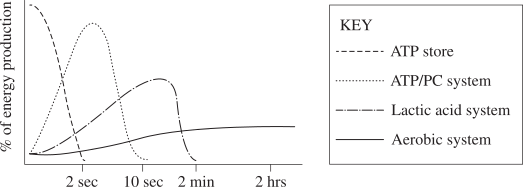
The graph shows the percentage of energy produced in a variety of activities
 

Based on the graph, which of the following statements is the most accurate?

  1. After two seconds no more ATP is created.
  2. Stored energy plays a very small role in a vertical leap test.
  3. The lactic acid system is the major source of energy at the end of a 100-metre sprint.
  4. Aerobic energy is the major source of energy from the 10-second mark in a 400-metre sprint.
Show Answers Only

\(C\)

Show Worked Solution

  • C is correct: 100-metre sprint duration matches timeframe where lactic acid system dominates energy production.

Other Options:

  • A is incorrect: ATP continues to be produced by different systems after two seconds.
  • B is incorrect: Stored ATP plays a major role in explosive movements like vertical leaps.
  • D is incorrect: 400-metre sprint relies heavily on anaerobic systems, not primarily aerobic energy.

♦♦ Mean mark 45%.

Filed Under: Energy systems Tagged With: Band 5, smc-5528-25-Interplay of energy systems

HMS, BM 2018 HSC 11 MC

A softball coach asks a player to throw 20 pitches over the plate. At the end of the session, the coach tells the player how many of the 20 pitches went over the plate.

The coach is providing

  1. subjective appraisal.
  2. concurrent feedback.
  3. knowledge of results.
  4. knowledge of performance.
Show Answers Only

\(C\)

Show Worked Solution

  • C is correct: Knowledge of results provides information about the outcome achieved (successful pitches).

Other Options:

  • A is incorrect: This is objective measurement data, not subjective opinion.
  • B is incorrect: Concurrent feedback occurs during performance, not after completion.
  • D is incorrect: Knowledge of performance relates to technique quality, not outcome success.

Filed Under: Stages of learning Tagged With: Band 3, smc-5921-90-Identify type of feedback

HMS, BM 2018 HSC 9 MC

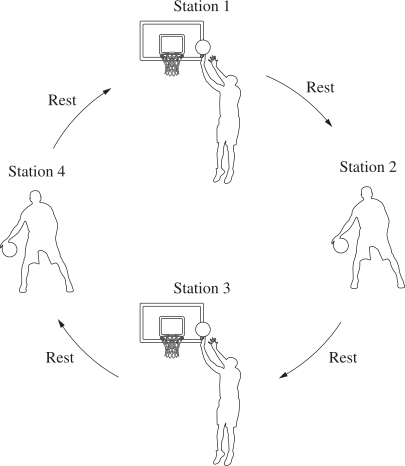
The diagram shows a training drill where an athlete spends 30 seconds at each station and rests between each station.
 

Which practice method is being used by the athlete?

  1. Distributed
  2. Massed
  3. Part
  4. Whole
Show Answers Only

\(A\)

Show Worked Solution

  • A is correct: Distributed practice includes rest periods between training sessions or activities.

Other Options:

  • B is incorrect: Massed practice involves continuous training without rest breaks.
  • C is incorrect: Part practice refers to breaking skills into components, not rest patterns.
  • D is incorrect: Whole practice refers to practicing complete skills, not rest patterns.

Filed Under: Practice methods Tagged With: Band 4, smc-5924-50-Identify method

HMS, BM 2018 HSC 3 MC

Which of the following best demonstrates extrinsic motivation?

  1. A swimmer trying to improve his 100-metre freestyle personal best time
  2. A netballer practising goal shooting to win the 'highest goal scorer' trophy
  3. A tennis player working on her serve to achieve a higher percentage of aces
  4. A baseball player focusing on hitting the ball to increase technical efficiency
Show Answers Only

\(B\)

Show Worked Solution

  • B is correct: Practising to win a trophy represents external reward-based extrinsic motivation.

Other Options:

  • A is incorrect: Improving personal best demonstrates internal satisfaction and intrinsic motivation.
  • C is incorrect: Achieving higher percentage shows internal skill improvement and intrinsic motivation.
  • D is incorrect: Technical efficiency improvement represents internal mastery and intrinsic motivation.

Filed Under: Psych–Movement–Performance interplay Tagged With: Band 3, smc-5536-10-Motivation

HMS, BM 2019 HSC 17 MC

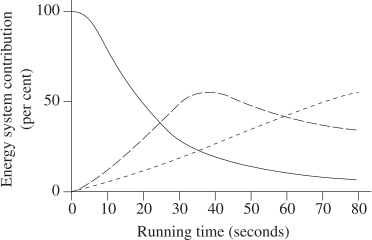
The graph shows the relationship between an athlete’s running time and the contribution of three energy systems.

Which of the following shows the by-product and rate of recovery following exhaustion for the dominant energy system at 50 seconds running time?

  By-product Rate of recovery
A.   Carbon dioxide 30 minutes - 2 hours
B. Carbon dioxide 30 seconds - 5 minutes
C. Lactic acid 5 minutes - 20 minutes
D. Lactic acid 30 minutes - 2 hours


Show Answers Only

\(D\)

Show Worked Solution

  • D is correct: At 50 seconds, lactic acid system dominates producing lactic acid with long recovery.

Other Options:

  • A is incorrect: Carbon dioxide is aerobic system by-product, not dominant at 50 seconds.
  • B is incorrect: Carbon dioxide with short recovery describes ATP-PCr system characteristics.
  • C is incorrect: Lactic acid system recovery takes much longer than 5-20 minutes.

♦♦♦ Mean mark 41%.

Filed Under: Energy systems Tagged With: Band 5, smc-5528-20-Duration/intensity/recovery

HMS, BM 2019 HSC 11 MC

A volleyball coach analyses video footage of previous matches to determine where to best direct the serve in various situations during a match.

Which of the following identifies two performance elements that the coach is trying to improve in the athletes?

  1. Technique and tactical development
  2. Technique and strategic development
  3. Decision making and delayed feedback
  4. Decision making and tactical development
Show Answers Only

\(D\)

Show Worked Solution

  • D is correct: Coach develops decision-making skills and tactical awareness for serve placement.

Other Options:

  • A is incorrect: Focus is on where to serve, not technique improvement.
  • B is incorrect: Strategic development involves long-term planning, not immediate serve decisions.
  • C is incorrect: Delayed feedback is a feedback type, not a performance element.

Filed Under: Performance elements Tagged With: Band 4, smc-5925-10-Decision making, smc-5925-20-Strategy/Tactics

HMS, BM 2019 HSC 10 MC

Immediately after taking a kick at goal, the player turns to the team confident of having made a successful kick.

What type of feedback is the player experiencing?

  1. Knowledge of results, internal feedback
  2. Knowledge of results, external feedback
  3. Knowledge of performance, internal feedback
  4. Knowledge of performance, external feedback
Show Answers Only

\(C\)

Show Worked Solution

  • C is correct: Player’s confidence about technique quality represents internal knowledge of performance.

Other Options:

  • A is incorrect: Player doesn’t know actual result yet, only feels performance quality.
  • B is incorrect: Feedback comes from internal sensations, not external sources.
  • D is incorrect: External feedback would come from coaches or spectators.

♦♦ Mean mark 49%.

Filed Under: Stages of learning Tagged With: Band 5, smc-5921-80-Knowledge of results/performance

HMS, BM 2019 HSC 6 MC

Which of the following could be classified as a discrete, closed and self-paced skill?

  1. Running 800 m
  2. Batting in cricket
  3. Pitching in softball
  4. Defending a penalty shot in hockey
Show Answers Only

\(C\)

Show Worked Solution
  • C is correct: Pitching is discrete (clear beginning/end), closed (predictable environment), self-paced (pitcher controls timing).

Other Options:

  • A is incorrect: Running 800m is continuous, not discrete.
  • B is incorrect: Batting is open (unpredictable bowler) and externally paced.
  • D is incorrect: Defending is open (unpredictable shooter) and externally paced.

♦ Mean mark 55%.

Filed Under: Characteristics of skills Tagged With: Band 5, smc-5922-10-Open/Closed, smc-5922-30-Discrete/Serial/Continuous, smc-5922-40-Self and externally paced

HMS, BM 2019 HSC 24

How can characteristics of the learner influence skill acquisition? Use examples to support your answer.   (5 marks)

--- 15 WORK AREA LINES (style=lined) ---

Show Answers Only

  • Prior experience accelerates skill acquisition through transfer of existing movement patterns. This occurs because familiar skills provide a foundation for learning new movements. For example, a netball player learning basketball benefits from existing passing and catching abilities.
  • Confidence levels determine learning progression rates. When athletes have high self-confidence, they attempt new skills more readily. This leads to faster movement through cognitive and associative learning stages. Conversely, low confidence results in hesitation and slower skill development.
  • Physical characteristics influence learning capacity and skill execution. For instance, height advantages in basketball enable easier shot blocking and rebounding acquisition. Natural flexibility allows gymnasts to master complex movements more rapidly than less flexible athletes.
  • Motivation drives practice intensity and persistence during challenging learning phases. Highly motivated learners maintain effort when facing difficulties. This creates more practice opportunities, resulting in accelerated skill development and technique refinement.
  • Age affects learning speed and retention capacity. Younger learners typically acquire motor skills faster due to neuroplasticity. However, older athletes compensate through experience and tactical understanding.

Show Worked Solution

  • Prior experience accelerates skill acquisition through transfer of existing movement patterns. This occurs because familiar skills provide a foundation for learning new movements. For example, a netball player learning basketball benefits from existing passing and catching abilities.
  • Confidence levels determine learning progression rates. When athletes have high self-confidence, they attempt new skills more readily. This leads to faster movement through cognitive and associative learning stages. Conversely, low confidence results in hesitation and slower skill development.
  • Physical characteristics influence learning capacity and skill execution. For instance, height advantages in basketball enable easier shot blocking and rebounding acquisition. Natural flexibility allows gymnasts to master complex movements more rapidly than less flexible athletes.
  • Motivation drives practice intensity and persistence during challenging learning phases. Highly motivated learners maintain effort when facing difficulties. This creates more practice opportunities, resulting in accelerated skill development and technique refinement.
  • Age affects learning speed and retention capacity. Younger learners typically acquire motor skills faster due to neuroplasticity. However, older athletes compensate through experience and tactical understanding.

♦♦ Mean mark 50%.

Filed Under: Characteristics of learners Tagged With: Band 5, smc-5534-05-Confidence, smc-5534-10-Heredity, smc-5534-20-Personality, smc-5534-25-Prior experience

HMS, BM 2019 HSC 22

Justify whether carbohydrate loading could improve performance for an athlete competing in a 100-metre running race.   (4 marks)

--- 12 WORK AREA LINES (style=lined) ---

Show Answers Only

Position Statement

  • Carbohydrate loading would not improve 100-metre sprint performance.

Primary Evidence

  • 100-metre races use the ATP-PCr system, which relies on creatine phosphate, not carbohydrates.
  • This system provides energy for activities lasting 10-15 seconds without requiring glycogen.
  • The race intensity and duration mean carbohydrate stores remain unused.

Secondary Evidence

  • Carbohydrate loading benefits endurance events exceeding 90 minutes where glycogen depletion occurs.
  • Sprint events do not deplete muscle glycogen stores, making carbohydrate loading irrelevant for performance enhancement.

Reinforcement

  • Evidence confirms carbohydrate loading offers no benefit since sprinting operates independently of carbohydrate metabolism.

Show Worked Solution

Position Statement

  • Carbohydrate loading would not improve 100-metre sprint performance.

Primary Evidence

  • 100-metre races use the ATP-PCr system, which relies on creatine phosphate, not carbohydrates.
  • This system provides energy for activities lasting 10-15 seconds without requiring glycogen.
  • The race intensity and duration mean carbohydrate stores remain unused.

Secondary Evidence

  • Carbohydrate loading benefits endurance events exceeding 90 minutes where glycogen depletion occurs.
  • Sprint events do not deplete muscle glycogen stores, making carbohydrate loading irrelevant for performance enhancement.

Reinforcement

  • Evidence confirms carbohydrate loading offers no benefit since sprinting operates independently of carbohydrate metabolism.

♦♦ Mean mark 51%.

Filed Under: Nutrition and energy systems Tagged With: Band 5, smc-5529-20-Micro/macro nutrients

HMS, BM 2019 HSC 21

Outline how goal setting can influence an athlete's motivation level. Use examples to support your answer.   (3 marks)

--- 7 WORK AREA LINES (style=lined) ---

Show Answers Only

  • Goal setting provides direction and focus for athletes by creating clear pathways towards achievement.
  • Specific goals increase intrinsic motivation through ownership. For example, a basketball player targeting 80% free throw accuracy develops personal investment.
  • Short-term goals maintain motivation through regular achievements. A swimmer reducing 50m freestyle time weekly experiences frequent success.
  • Long-term goals sustain motivation over extended periods. Athletes targeting state representation maintain commitment through challenging phases.
  • Goal achievement triggers positive reinforcement, leading to increased confidence and motivation.

Show Worked Solution

  • Goal setting provides direction and focus for athletes by creating clear pathways towards achievement.
  • Specific goals increase intrinsic motivation through ownership. For example, a basketball player targeting 80% free throw accuracy develops personal investment.
  • Short-term goals maintain motivation through regular achievements. A swimmer reducing 50m freestyle time weekly experiences frequent success.
  • Long-term goals sustain motivation over extended periods. Athletes targeting state representation maintain commitment through challenging phases.
  • Goal achievement triggers positive reinforcement, leading to increased confidence and motivation.

Filed Under: Psych–Movement–Performance interplay Tagged With: Band 4, smc-5536-10-Motivation

HMS, BM 2020 HSC 8 MC

An athlete has an awareness of where her body is in space and can perform a range of skills successfully on repeated occasions.

Which pair of characteristics of a skilled performer does this athlete best demonstrate?

  1. Anticipation and ability
  2. Anticipation and consistency
  3. Kinaesthetic sense and ability
  4. Kinaesthetic sense and consistency
Show Answers Only

\(D\)

Show Worked Solution
  • D is correct: Body awareness shows kinaesthetic sense, repeated success shows consistency.

Other Options:

  • A is incorrect: Body awareness is kinaesthetic sense not anticipation.
  • B is incorrect: Body awareness is kinaesthetic sense not anticipation.
  • C is incorrect: Repeated success indicates consistency not just ability.

Filed Under: Skill learning and performance - Research Tagged With: Band 3, smc-5921-60-Task Intrinsic/Augmented

HMS, BM 2020 HSC 6 MC

Which of the following best describes the nature of the skill when an athlete performs a long jump?

  1. Open, self-paced, gross
  2. Open, externally paced, continuous
  3. Closed, self-paced, gross
  4. Closed, externally paced, continuous
Show Answers Only

\(C\)

Show Worked Solution
  • C is correct: Predictable environment, athlete controls timing, uses large muscle groups.

Other Options:

  • A is incorrect: Long jump occurs in predictable not unpredictable environment.
  • B is incorrect: Athlete controls timing and skill is discrete not continuous.
  • D is incorrect: Athlete controls timing and skill is discrete not continuous.

♦♦ Mean mark 44%.

Filed Under: Characteristics of skills Tagged With: Band 5, smc-5922-10-Open/Closed, smc-5922-20-Gross/Fine, smc-5922-40-Self and externally paced

HMS, BM 2020 HSC 3 MC

A player is motivated when, following a pre-season tournament, he is presented with a trophy for being the highest goal scorer and receives cheers and encouragement from the crowd.

Which of the following identifies both the source and type of motivation for this player?

  1. Extrinsic and positive
  2. Extrinsic and negative
  3. Intrinsic and positive
  4. Intrinsic and negative
Show Answers Only

\(A\)

Show Worked Solution
  • A is correct: External reward (trophy/cheers) creates positive motivational experience.

Other Options:

  • B is incorrect: Reward and praise create positive not negative motivation.
  • C is incorrect: Trophy and cheers are external not internal motivation.
  • D is incorrect: External source and positive not negative experience.

Filed Under: Psych–Movement–Performance interplay Tagged With: Band 2, smc-5536-10-Motivation

HMS, BM 2020 HSC 27

Analyse how different types of feedback affect a learner’s progress through the stages of skill acquisition. Provide examples to support your answer.  (8 marks)

--- 24 WORK AREA LINES (style=lined) ---

Show Answers Only

Overview Statement:

  • Different feedback types interact with learner characteristics at each skill acquisition stage.
  • Beginners require external coaching feedback, while skilled performers rely on internal feel, and timing determines learning effectiveness.

Component Relationship 1:

  • External delayed feedback strongly supports cognitive stage learners acquiring basketball dribbling skills. This leads to coaches providing knowledge of results after practice attempts, informing beginners about successful repetitions. The delayed timing enables learners to process technical corrections without overwhelming their limited attention capacity. This relationship shows that external guidance prevents error reinforcement and promotes correct technique development. Therefore, cognitive stage learners depend on external feedback sources to understand skill requirements and progress towards the associative stage more efficiently.

Component Relationship 2:

Internal concurrent feedback becomes increasingly important as learners advance through associative to autonomous stages. This occurs because experienced performers develop kinaesthetic awareness during skill execution. A tennis player relies on feel and proprioception during stroke production, enabling immediate self-correction. This interaction allows autonomous performers to maintain consistency without external intervention. Consequently, over-reliance on external feedback at advanced stages can disrupt automatic movement patterns and hinder performance refinement.

Implications and Synthesis:

These relationships demonstrate that feedback effectiveness depends on matching type and timing to learner developmental stage. The significance is that inappropriate feedback can impede skill acquisition progress, while optimal feedback combinations accelerate learning transitions between stages.

Show Worked Solution

Overview Statement:

  • Different feedback types interact with learner characteristics at each skill acquisition stage.
  • Beginners require external coaching feedback, while skilled performers rely on internal feel, and timing determines learning effectiveness.

Component Relationship 1:

  • External delayed feedback strongly supports cognitive stage learners acquiring basketball dribbling skills. This leads to coaches providing knowledge of results after practice attempts, informing beginners about successful repetitions.
  • The delayed timing enables learners to process technical corrections without overwhelming their limited attention capacity. This relationship shows that external guidance prevents error reinforcement and promotes correct technique development.
  • Therefore, cognitive stage learners depend on external feedback sources to understand skill requirements and progress towards the associative stage more efficiently.

Component Relationship 2:

  • Internal concurrent feedback becomes increasingly important as learners advance through associative to autonomous stages. This occurs because experienced performers develop kinaesthetic awareness during skill execution.
  • A tennis player relies on feel and proprioception during stroke production, enabling immediate self-correction. This interaction allows autonomous performers to maintain consistency without external intervention.
  • Consequently, over-reliance on external feedback at advanced stages can disrupt automatic movement patterns and hinder performance refinement.

Implications and Synthesis:

  • These relationships demonstrate that feedback effectiveness depends on matching type and timing to learner developmental stage.
  • The significance is that inappropriate feedback can impede skill acquisition progress, while optimal feedback combinations accelerate learning transitions between stages.

♦♦ Mean mark 42%.

Filed Under: Stages of learning Tagged With: Band 5, smc-5921-85-Feedback comparisons

HMS, BM 2020 HSC 23

An athlete ran in the 100-metre final at an Olympic Games.

  1. In the table below, identify the predominant energy system used by the athlete,
    and the features of that energy system.   (3 marks)

    --- 0 WORK AREA LINES (style=blank) ---

    Predominant energy system used by this athlete  
    Source of fuel  
    Energy system duration  
    Cause of fatigue  
    Rate of recovery  
  2. Compare how anxiety and arousal may have affected the athlete’s performance
    when competing in this 100-metre final. Provide examples to support your
    answer.   (4 marks)

    --- 12 WORK AREA LINES (style=lined) ---

Show Answers Only
a.   
Predominant energy system used by this athlete ATP-PCr system (Alactacid system)
  Source of fuel Creatine phosphate (CP)
  Energy system duration 6-12 seconds
  Cause of fatigue Depletion of creatine phosphate stores
  Rate of recovery 2-3 minutes for complete recovery

b.    Similarities:

  • Both anxiety and arousal can negatively impact the sprinter’s performance if levels become too high.
  • Both factors influence the athlete’s ability to execute optimal technique and can cause muscle tension that restricts smooth movement patterns during the race.

Differences:

  • Anxiety is a psychological state involving fear and worry about competitive outcome. High anxiety may cause the sprinter to overthink race strategy, leading to delayed reaction time from starting blocks and mental distraction affecting stride mechanics.
  • Arousal refers to physiological activation levels. Optimal arousal enhances alertness and muscle readiness for explosive starts. However, excessive arousal creates physical tension that reduces stride length and power output through restricted movement patterns.
Show Worked Solution
a.   
Predominant energy system used by this athlete ATP-PCr system (Alactacid system)
  Source of fuel Creatine phosphate (CP)
  Energy system duration 6-12 seconds
  Cause of fatigue Depletion of creatine phosphate stores
  Rate of recovery 2-3 minutes for complete recovery

b.    Similarities:

  • Both anxiety and arousal can negatively impact the sprinter’s performance if levels become too high.
  • Both factors influence the athlete’s ability to execute optimal technique and can cause muscle tension that restricts smooth movement patterns during the race.

Differences:

  • Anxiety is a psychological state involving fear and worry about competitive outcome. High anxiety may cause the sprinter to overthink race strategy, leading to delayed reaction time from starting blocks and mental distraction affecting stride mechanics.
  • Arousal refers to physiological activation levels. Optimal arousal enhances alertness and muscle readiness for explosive starts. However, excessive arousal creates physical tension that reduces stride length and power output through restricted movement patterns.

♦♦ Mean mark 49%.

Filed Under: Energy systems, Psych–Movement–Performance interplay Tagged With: Band 4, Band 5, smc-5528-10-Fuel Source, smc-5528-20-Duration/intensity/recovery, smc-5528-30-Causes of fatigue, smc-5536-20-Self-regulation

HMS, BM 2021 HSC 10 MC

At the end of a game, a netball coach gives the goal shooter the following feedback.

'You made a lot of technical errors when shooting today. Next time remember to relax and focus on your wrist action when shooting for goal.'

What type of feedback is being given?

  1. Internal
  2. Concurrent
  3. Knowledge of results
  4. Knowledge of performance
Show Answers Only

\(D\)

Show Worked Solution
  • D is correct: Feedback focuses on technique and movement quality → performance.

Other Options:

  • A is incorrect: Internal feedback comes from within the performer.
  • B is incorrect: Concurrent feedback occurs during skill execution.
  • C is incorrect: Knowledge of results relates to outcome success.

Filed Under: Stages of learning Tagged With: Band 3, smc-5921-80-Knowledge of results/performance

HMS, BM 2021 HSC 9 MC

An athlete consistently and accurately passes and controls the ball when under pressure during games. He communicates and interacts positively with his teammates.

Which two characteristics of the learner are being demonstrated by this athlete?

  1. Ability and personality
  2. Heredity and confidence
  3. Ability and prior experience
  4. Personality and prior experience
Show Answers Only

\(A\)

Show Worked Solution
  • A is correct: Technical skill shows ability, teamwork shows personality traits.

Other Options:

  • B is incorrect: Heredity not demonstrated through learned skills.
  • C is incorrect: Prior experience not evidenced in description.
  • D is incorrect: Technical consistency demonstrates ability not experience.

Filed Under: Characteristics of learners Tagged With: Band 4, smc-5534-15-Ability, smc-5534-20-Personality

HMS, BM 2021 HSC 4 MC

What is the predominant energy system used by an athlete in a 400-metre running event?

  1. Aerobic
  2. ATP-PC
  3. Phosphate
  4. Lactic acid
Show Answers Only

\(D\)

Show Worked Solution
  • D is correct: 400m primarily uses lactic acid system for duration.

Other Options:

  • A is incorrect: Too short for predominantly aerobic contribution.
  • B is incorrect: ATP-PC depleted after first 10-15 seconds.
  • C is incorrect: Phosphate system same as ATP-PC system.

Filed Under: Energy systems Tagged With: Band 4, smc-5528-20-Duration/intensity/recovery, smc-5528-30-Causes of fatigue

HMS, BM 2021 HSC 27

Explain why the performance elements of decision-making and strategic and tactical development should be introduced to athletes at the associative stage of skill acquisition. Provide examples to support your answer.   (8 marks)

--- 20 WORK AREA LINES (style=lined) ---

Show Answers Only
  • The associative stage represents the optimal time for introducing complex performance elements because athletes have developed fundamental skill execution during the cognitive stage. Athletes at this stage demonstrate consistent basic technique, allowing them to focus attention on higher-order performance concepts without overwhelming their processing capacity.
  • Decision-making skills develop effectively at the associative stage because athletes possess sufficient motor control to implement choices quickly. For example, a basketball player can now focus on reading defensive formations and selecting appropriate passing options rather than concentrating solely on ball-handling technique. Introducing decision-making earlier would result in information overload and increased errors because athletes lack the automated movement patterns necessary for split-second choices.
  • Strategic and tactical development becomes appropriate when athletes can execute skills with reduced conscious control. Football players at this stage can understand positional play and team formations because their basic skills like passing and receiving are becoming automatic. Early tactical introduction would prove ineffective since cognitive-stage athletes must dedicate full attention to skill execution rather than team strategy.
  • The associative stage enables game-sense development through realistic practice scenarios. Athletes can now participate in small-sided games and decision-making drills because they possess the technical foundation to apply tactical concepts. Consequently, they develop the ability to anticipate opponents’ actions and make strategic adjustments during competition.
  • Performance elements introduced at this stage result in enhanced competitive success because athletes can integrate technical skills with tactical awareness seamlessly.
Show Worked Solution
  • The associative stage represents the optimal time for introducing complex performance elements because athletes have developed fundamental skill execution during the cognitive stage. Athletes at this stage demonstrate consistent basic technique, allowing them to focus attention on higher-order performance concepts without overwhelming their processing capacity.
  • Decision-making skills develop effectively at the associative stage because athletes possess sufficient motor control to implement choices quickly. For example, a basketball player can now focus on reading defensive formations and selecting appropriate passing options rather than concentrating solely on ball-handling technique. Introducing decision-making earlier would result in information overload and increased errors because athletes lack the automated movement patterns necessary for split-second choices.
  • Strategic and tactical development becomes appropriate when athletes can execute skills with reduced conscious control. Football players at this stage can understand positional play and team formations because their basic skills like passing and receiving are becoming automatic. Early tactical introduction would prove ineffective since cognitive-stage athletes must dedicate full attention to skill execution rather than team strategy.
  • The associative stage enables game-sense development through realistic practice scenarios. Athletes can now participate in small-sided games and decision-making drills because they possess the technical foundation to apply tactical concepts. Consequently, they develop the ability to anticipate opponents’ actions and make strategic adjustments during competition.
  • Performance elements introduced at this stage result in enhanced competitive success because athletes can integrate technical skills with tactical awareness seamlessly.

♦ Mean mark 53%.

Filed Under: Stages of learning Tagged With: Band 5, smc-5921-20-Associative, smc-5921-80-Knowledge of results/performance

HMS, BM 2021 HSC 23

Describe TWO ways in which extrinsic motivation can affect an athlete's performance. Provide examples to support your answer.   (4 marks)

--- 12 WORK AREA LINES (style=lined) ---

Show Answers Only
  • Positive extrinsic motivation through rewards can enhance performance by increasing effort and focus. Athletes may train harder when pursuing tangible goals like prize money or selection for representative teams. For example, a swimmer aiming for Olympic selection might increase training intensity and technical refinement to achieve qualifying times.
  • However, excessive external pressure can create anxiety and reduce performance quality. When athletes become overly focused on external rewards, they may experience heightened stress levels during competition. For instance, a tennis player competing for a major sponsorship deal might become tense during crucial points, leading to increased unforced errors and poor decision-making under pressure.
Show Worked Solution
  • Positive extrinsic motivation through rewards can enhance performance by increasing effort and focus. Athletes may train harder when pursuing tangible goals like prize money or selection for representative teams. For example, a swimmer aiming for Olympic selection might increase training intensity and technical refinement to achieve qualifying times.
  • However, excessive external pressure can create anxiety and reduce performance quality. When athletes become overly focused on external rewards, they may experience heightened stress levels during competition. For instance, a tennis player competing for a major sponsorship deal might become tense during crucial points, leading to increased unforced errors and poor decision-making under pressure.

Filed Under: Psych–Movement–Performance interplay Tagged With: Band 4, smc-5536-10-Motivation

  • 1
  • 2
  • 3
  • …
  • 14
  • Next Page »

Copyright © 2014–2026 SmarterEd.com.au · Log in