SmarterEd

Aussie Maths & Science Teachers: Save your time with SmarterEd

  • Login
  • Get Help
  • About

HMS, TIP EQ-Bank 946

How does preventative taping affect movement efficiency for an athlete recovering from an ankle sprain?   (5 marks)

--- 15 WORK AREA LINES (style=lined) ---

Show Answers Only
  • Preventative taping provides proprioceptive feedback to the athlete, which creates sensory awareness around the ankle joint. This enhances neuromuscular control, leading to more efficient movement patterns during recovery.
  • By restricting excessive inversion and eversion movements, taping maintains optimal joint alignment during dynamic activities. Compensatory movements in other joints are prevented, which eliminates energy leaks and improves efficiency.
  • Psychological confidence from taping allows athletes to move more naturally without fear of re-injury. Reduced hesitation in movement execution enables better biomechanical efficiency during performance.
  • Taping stabilises the ankle joint by supporting ligaments and surrounding structures. Effective force transfer through the kinetic chain becomes possible, resulting in more powerful and controlled movements.
  • However, incorrect application can create unnecessary restriction of normal movement patterns. Athletes then compensate with altered mechanics, potentially developing new inefficiencies.
  • Progressive reduction in taping support encourages proper neuromuscular adaptation. Athletes therefore develop intrinsic stability rather than external dependence, ultimately achieving better long-term movement efficiency.
Show Worked Solution
  • Preventative taping provides proprioceptive feedback to the athlete, which creates sensory awareness around the ankle joint. This enhances neuromuscular control, leading to more efficient movement patterns during recovery.
  • By restricting excessive inversion and eversion movements, taping maintains optimal joint alignment during dynamic activities. Compensatory movements in other joints are prevented, which eliminates energy leaks and improves efficiency.
  • Psychological confidence from taping allows athletes to move more naturally without fear of re-injury. Reduced hesitation in movement execution enables better biomechanical efficiency during performance.
  • Taping stabilises the ankle joint by supporting ligaments and surrounding structures. Effective force transfer through the kinetic chain becomes possible, resulting in more powerful and controlled movements.
  • However, incorrect application can create unnecessary restriction of normal movement patterns. Athletes then compensate with altered mechanics, potentially developing new inefficiencies.
  • Progressive reduction in taping support encourages proper neuromuscular adaptation. Athletes therefore develop intrinsic stability rather than external dependence, ultimately achieving better long-term movement efficiency.

Filed Under: Management/prevention of injuries Tagged With: Band 5, Band 6, smc-5472-50-Return to play

HMS, TIP EQ-Bank 941

Evaluate the short-term and long-term consequences of undue stress on the body for marathon runners, and discuss appropriate management strategies that could be implemented during different phases of training.   (8 marks)

--- 25 WORK AREA LINES (style=lined) ---

Show Answers Only

Evaluation Statement

  • Undue stress has highly detrimental effects on marathon runners both short and long-term.
  • Evaluation criteria include performance impact and health consequences.

Short-term Impact

  • Immediate fatigue affects technique and running performance.
  • Runners show poor movement patterns when trying to maintain pace, reducing efficiency.
  • Energy stores become depleted and muscles experience damage.
  • Recovery time between training sessions increases, limiting training benefits.
  • These effects clearly show why rest days are important.

Long-term Consequences

  • Overtraining syndrome severely affects athletic performance.
  • Chronic tiredness, stress fractures, and hormonal imbalances damage overall health.
  • Mental burnout reduces motivation and enjoyment of running.
  • Athletes may quit the sport entirely, failing to reach their goals.
  • These consequences strongly support the need for proper management.

Management Strategies

  • Base phase requires gradual increases in running distance with adequate rest days.
  • Main phase benefits from alternating hard and easy training days.
  • Peak phase needs careful monitoring of fatigue with reduced training volume.
  • Recovery phase requires complete rest through alternative activities like swimming.
  • This approach successfully prevents stress from building up.

Final Evaluation

  • Short-term stress causes moderate performance problems but can be reversed.
  • Long-term consequences are extremely harmful to health and running career.
  • While hard training is needed for improvement, poor recovery creates serious risks.
  • Therefore, proper training management is essential for marathon runners.
Show Worked Solution

Evaluation Statement

  • Undue stress has highly detrimental effects on marathon runners both short and long-term.
  • Evaluation criteria include performance impact and health consequences.

Short-term Impact

  • Immediate fatigue affects technique and running performance.
  • Runners show poor movement patterns when trying to maintain pace, reducing efficiency.
  • Energy stores become depleted and muscles experience damage.
  • Recovery time between training sessions increases, limiting training benefits.
  • These effects clearly show why rest days are important.

Long-term Consequences

  • Overtraining syndrome severely affects athletic performance.
  • Chronic tiredness, stress fractures, and hormonal imbalances damage overall health.
  • Mental burnout reduces motivation and enjoyment of running.
  • Athletes may quit the sport entirely, failing to reach their goals.
  • These consequences strongly support the need for proper management.

Management Strategies

  • Base phase requires gradual increases in running distance with adequate rest days.
  • Main phase benefits from alternating hard and easy training days.
  • Peak phase needs careful monitoring of fatigue with reduced training volume.
  • Recovery phase requires complete rest through alternative activities like swimming.
  • This approach successfully prevents stress from building up.

Final Evaluation

  • Short-term stress causes moderate performance problems but can be reversed.
  • Long-term consequences are extremely harmful to health and running career.
  • While hard training is needed for improvement, poor recovery creates serious risks.
  • Therefore, proper training management is essential for marathon runners.

Filed Under: Individual vs group programs Tagged With: Band 5, Band 6, smc-5463-20-Sub-phases

HMS, BM EQ-Bank 940

Describe how chronic training stress could lead to a deterioration in performance for an elite netball player, and propose strategies to minimise its effects.   (5 marks)

--- 15 WORK AREA LINES (style=lined) ---

Show Answers Only

Sample Answer

  • Chronic training stress develops from inadequate recovery between high-intensity sessions, resulting in accumulated physiological fatigue that affects neuromuscular coordination essential for accurate passing and shooting in netball.
  • As training stress builds, the player’s movement efficiency deteriorates, with energy systems becoming less effective, leading to decreased court coverage and slower reaction times in defensive plays.
  • Poor recovery compromises cognitive function, affecting decision-making and tactical awareness during complex game situations, particularly in final quarters when fatigue is highest.

Strategies:

  • Incorporate systematic monitoring through wellness questionnaires and performance metrics to identify early signs of overtraining, adjusting training loads before performance deteriorates.
  • Implement strategic recovery sessions between high-intensity training days, focusing on skill development, strategy discussions and active recovery methods rather than physiological overload.
Show Worked Solution

Sample Answer

  • Chronic training stress develops from inadequate recovery between high-intensity sessions, resulting in accumulated physiological fatigue that affects neuromuscular coordination essential for accurate passing and shooting in netball.
  • As training stress builds, the player’s movement efficiency deteriorates, with energy systems becoming less effective, leading to decreased court coverage and slower reaction times in defensive plays.
  • Poor recovery compromises cognitive function, affecting decision-making and tactical awareness during complex game situations, particularly in final quarters when fatigue is highest.

Strategies:

  • Incorporate systematic monitoring through wellness questionnaires and performance metrics to identify early signs of overtraining, adjusting training loads before performance deteriorates.
  • Implement strategic recovery sessions between high-intensity training days, focusing on skill development, strategy discussions and active recovery methods rather than physiological overload.

Filed Under: Role of First Aid Tagged With: Band 4, Band 5, smc-5527-30-Undue stress, smc-5527-40-Overtraining

Financial Maths, STD2 F1 2016 HSC 27a (Adapted)

Alice is researching insurance options before purchasing a car.

Explain what is covered under each of the following types of car insurance:

    • Compulsory third-party insurance (CTP)

    • Optional third-party property insurance.   (2 marks)

--- 6 WORK AREA LINES (style=lined) ---

Show Answers Only

`text(CTP Insurance:)`

`text(This insures a driver against liability)`

`text(if their car injures or kills a person)`

`text(in an accident.)`

`text(Non-compulsory TP Insurance:)`

`text(This insurance covers damage to)`

`text(other people’s property in an accident,)`

`text(but does not cover the driver’s own vehicle.)`

Show Worked Solution

`text(CTP Insurance:)`

♦♦♦ Mean mark 13%.
MARKER’S COMMENT: Again, car insurance causes major issues for students.

`text(This insures a driver against liability)`

`text(if their car injures or kills a person)`

`text(in an accident.)`

`text(Non-compulsory TP Insurance:)`

`text(This insurance covers damage to)`

`text(other people’s property in an accident,)`

`text(but does not cover the driver’s own vehicle.)`

Filed Under: Earning Money and Budgeting (Std 2-X), Purchasing Goods (Y11-X) Tagged With: adapted, Band 5, smc-7724-30-Stamp Duty/Insurance

HMS, BM EQ-Bank 937

Explain how damage to different components of the peripheral nervous system would affect an athlete's performance in basketball.   (5 marks)

--- 15 WORK AREA LINES (style=lined) ---

Show Answers Only

Sample Answer

  • Damage to sensory neurons would impair feedback about body position.
  • This prevents accurate sensing of hand position and ball contact.
  • Players couldn’t judge shooting force or dribbling pressure without looking, which shows how sensory damage disrupts movement precision.
      
  • Motor neuron damage would cause muscle weakness or paralysis because signals from brain to muscles become blocked or reduced.
  • Affected players lose jumping ability or shooting arm strength, demonstrating how motor damage prevents movement execution.
      
  • Proprioceptor damage would eliminate spatial awareness.
  • Athletes consequently lose unconscious knowledge of limb positions.
  • Players must visually track their arms when shooting or passing, illustrating how proprioceptive loss affects coordination.
      
  • Autonomic nervous system damage would impair exercise responses.
  • Heart rate and breathing fail to increase with exercise demands, resulting in rapid fatigue.
  • Players cannot sustain game intensity, thus showing how autonomic damage limits physical performance capacity.
Show Worked Solution

Sample Answer

  • Damage to sensory neurons would impair feedback about body position.
  • This prevents accurate sensing of hand position and ball contact.
  • Players couldn’t judge shooting force or dribbling pressure without looking, which shows how sensory damage disrupts movement precision.
      
  • Motor neuron damage would cause muscle weakness or paralysis because signals from brain to muscles become blocked or reduced.
  • Affected players lose jumping ability or shooting arm strength, demonstrating how motor damage prevents movement execution.
      
  • Proprioceptor damage would eliminate spatial awareness.
  • Athletes consequently lose unconscious knowledge of limb positions.
  • Players must visually track their arms when shooting or passing, illustrating how proprioceptive loss affects coordination.
      
  • Autonomic nervous system damage would impair exercise responses.
  • Heart rate and breathing fail to increase with exercise demands, resulting in rapid fatigue.
  • Players cannot sustain game intensity, thus showing how autonomic damage limits physical performance capacity.

Filed Under: Nervous System Tagged With: Band 4, Band 5, smc-5525-20-Peripheral nervous system

HMS, BM EQ-Bank 936

Explain how the peripheral nervous system controls both voluntary and involuntary responses during a 400 metre sprint race.   (5 marks)

--- 15 WORK AREA LINES (style=lined) ---

Show Answers Only

Sample Answer

  • The somatic nervous system controls voluntary skeletal muscle movements.
  • Motor neurons transmit signals to leg and arm muscles causing running technique execution.
  • Sprinters consciously drive knees high and pump arms for maximum speed, which shows how voluntary control enables purposeful movement.
      
  • Sensory neurons provide continuous feedback about body position and track surface.
  • This information allows real-time adjustments to stride and posture.
  • Runners adjust foot placement on curves and maintain lane position, demonstrating how sensory input guides voluntary responses.
      
  • The autonomic nervous system controls involuntary cardiovascular responses.
  • Sympathetic activation increases heart rate and dilates airways automatically.
  • Heart rate rises to 180+ bpm without conscious control during sprinting, illustrating how involuntary responses support intense exercise.
      
  • Temperature regulation occurs through involuntary sweating and vasodilation.
  • The body automatically cools itself as core temperature rises.
  • Blood vessels dilate and sweat glands activate without conscious thought, showing how involuntary mechanisms maintain homeostasis during exercise
Show Worked Solution

Sample Answer

  • The somatic nervous system controls voluntary skeletal muscle movements.
  • Motor neurons transmit signals to leg and arm muscles causing running technique execution.
  • Sprinters consciously drive knees high and pump arms for maximum speed, which shows how voluntary control enables purposeful movement.
      
  • Sensory neurons provide continuous feedback about body position and track surface.
  • This information allows real-time adjustments to stride and posture.
  • Runners adjust foot placement on curves and maintain lane position, demonstrating how sensory input guides voluntary responses.
      
  • The autonomic nervous system controls involuntary cardiovascular responses.
  • Sympathetic activation increases heart rate and dilates airways automatically.
  • Heart rate rises to 180+ bpm without conscious control during sprinting, illustrating how involuntary responses support intense exercise.
      
  • Temperature regulation occurs through involuntary sweating and vasodilation.
  • The body automatically cools itself as core temperature rises.
  • Blood vessels dilate and sweat glands activate without conscious thought, showing how involuntary mechanisms maintain homeostasis during exercise.

Filed Under: Nervous System Tagged With: Band 4, Band 5, smc-5525-20-Peripheral nervous system

HMS, BM EQ-Bank 933

Evaluate the interrelationship between the peripheral nervous system and other body systems in enabling efficient movement during an endurance cycling event.   (8 marks)

--- 28 WORK AREA LINES (style=lined) ---

Show Answers Only

Sample Answer

Judgment Statement

  • The PNS interrelationships prove highly effective for endurance cycling performance.
  • They strongly meet the criteria for movement coordination and adequately meet energy efficiency requirements.

Movement Coordination

  • The PNS-muscular system connection strongly meets coordination needs by sending signals to leg muscles continuously.
  • Feedback about muscle position helps cyclists keep a smooth pedalling rhythm and adjust their power.
  • The PNS-skeletal system partnership works excellently by telling the brain where joints are positioned, helping riders maintain good cycling posture.
  • These relationships work so well that cyclists can pedal efficiently for hours without conscious thought.
  • However, coordination begins to deteriorate when riders become fatigued because nerve signals don’t travel efficiently during ultra-long rides.

Energy Efficiency

  • The PNS-heart and blood vessel connection adequately supports energy use by controlling heart rate and adjusting blood vessel dilation.
  • Oxygen delivery improves but cannot fully prevent fatigue over very long distances.
  • The PNS-respiratory connection partly meets efficiency needs by changing breathing rate, though riders sometimes need to control their breathing manually on steep hills. 
  • Temperature control through the PNS-skin connection works well to prevent overheating by starting sweating and changing blood flow to the skin.
  • The PNS correctly slows down digestion to send more blood to leg muscles, though this can cause stomach upset in very long events.

Final Evaluation

  • The PNS interrelationships highly effectively enable endurance cycling through excellent movement coordination and adequate energy management.
  • While coordination aspects strongly support performance, energy efficiency shows some limitations during extreme efforts.
  • Overall, these integrated systems successfully maintain cycling efficiency because the PNS coordinates multiple body responses simultaneously.
  • Cyclists must supplement these automatic responses with proper nutrition and pacing strategies for optimal performance.
Show Worked Solution

Sample Answer

Judgment Statement

  • The PNS interrelationships prove highly effective for endurance cycling performance.
  • They strongly meet the criteria for movement coordination and adequately meet energy efficiency requirements.

Movement Coordination

  • The PNS-muscular system connection strongly meets coordination needs by sending signals to leg muscles continuously.
  • Feedback about muscle position helps cyclists keep a smooth pedalling rhythm and adjust their power.
  • The PNS-skeletal system partnership works excellently by telling the brain where joints are positioned, helping riders maintain good cycling posture.
  • These relationships work so well that cyclists can pedal efficiently for hours without conscious thought.
  • However, coordination begins to deteriorate when riders become fatigued because nerve signals don’t travel efficiently during ultra-long rides.

Energy Efficiency

  • The PNS-heart and blood vessel connection adequately supports energy use by controlling heart rate and adjusting blood vessel dilation.
  • Oxygen delivery improves but cannot fully prevent fatigue over very long distances.
  • The PNS-respiratory connection partly meets efficiency needs by changing breathing rate, though riders sometimes need to control their breathing manually on steep hills. 
  • Temperature control through the PNS-skin connection works well to prevent overheating by starting sweating and changing blood flow to the skin.
  • The PNS correctly slows down digestion to send more blood to leg muscles, though this can cause stomach upset in very long events.

Final Evaluation

  • The PNS interrelationships highly effectively enable endurance cycling through excellent movement coordination and adequate energy management.
  • While coordination aspects strongly support performance, energy efficiency shows some limitations during extreme efforts.
  • Overall, these integrated systems successfully maintain cycling efficiency because the PNS coordinates multiple body responses simultaneously.
  • Cyclists must supplement these automatic responses with proper nutrition and pacing strategies for optimal performance.

Filed Under: Body systems working together Tagged With: Band 5, Band 6, smc-5526-10-Skeletal/Muscular, smc-5526-20-Respiratory/Circulatory, smc-5526-40-Nervous

HMS, BM EQ-Bank 931

Compare and contrast the roles of sensory and motor neurons in the peripheral nervous system during a cricket bowling action.   (5 marks)

--- 15 WORK AREA LINES (style=lined) ---

Show Answers Only

Sample Answer

Similarities:

  • Both sensory and motor neurons are essential components of the peripheral nervous system.
  • Both transmit electrical signals rapidly through myelinated axons during the bowling action.
  • Both work together in a continuous feedback loop throughout the bowling sequence.
  • Both are activated simultaneously to coordinate the complex bowling movement.

Differences:

  • Sensory neurons detect stimuli (grip feel, body position, visual cues) while motor neurons cause muscle contractions.
  • Sensory neurons transmit signals from receptors to the CNS; motor neurons transmit from CNS to muscles.
  • Sensory neuron cell bodies are located in dorsal root ganglia; motor neuron cell bodies are within the CNS.
  • Sensory neurons enable proprioception for body awareness; motor neurons enable precise sequential muscle contractions.
  • Sensory neurons provide feedback about execution; motor neurons execute the planned bowling action.
Show Worked Solution

Sample Answer

Similarities:

  • Both sensory and motor neurons are essential components of the peripheral nervous system.
  • Both transmit electrical signals rapidly through myelinated axons during the bowling action.
  • Both work together in a continuous feedback loop throughout the bowling sequence.
  • Both are activated simultaneously to coordinate the complex bowling movement.

Differences:

  • Sensory neurons detect stimuli (grip feel, body position, visual cues) while motor neurons cause muscle contractions.
  • Sensory neurons transmit signals from receptors to the CNS; motor neurons transmit from CNS to muscles.
  • Sensory neuron cell bodies are located in dorsal root ganglia; motor neuron cell bodies are within the CNS.
  • Sensory neurons enable proprioception for body awareness; motor neurons enable precise sequential muscle contractions.
  • Sensory neurons provide feedback about execution; motor neurons execute the planned bowling action.

Filed Under: Nervous System Tagged With: Band 4, Band 5, smc-5525-20-Peripheral nervous system

HMS, BM EQ-Bank 928 MC

A swimmer completes several fast laps in a pool. During this activity, the peripheral nervous system is involved in:

  1. Only voluntary muscle contractions for swimming movements
  2. Only involuntary functions like heart rate regulation
  3. Both voluntary swimming movements and involuntary physiological adjustments
  4. Neither swimming movements nor physiological adjustments
Show Answers Only

\(C\)

Show Worked Solution
  • C is correct: The PNS controls both voluntary muscle movements and involuntary functions during exercise.

Other Options:

  • A is incorrect: The PNS also controls involuntary functions.
  • B is incorrect: The PNS also controls voluntary movements.
  • D is incorrect: The PNS is involved in both aspects.

Filed Under: Nervous System Tagged With: Band 5, smc-5525-20-Peripheral nervous system

Financial Maths, STD2 F1 2004 HSC 27b (Adapted)

Jack is paid at these rates:

\begin{array}{|l|} \hline \text{Weekday rate} & \text{\(\$\)15 per hour}\\ \text{Saturday rate} & \text{Time-and-a-half}\\ \text{Sunday rate} & \text{Double time}\\ \hline \end{array}

His time sheet for last week is:

\begin{array}{|l|l|l|l|} \hline & \textit{Start} & \textit{Finish} & \textit{Unpaid break}\\ \hline \text{Friday} & \text{9.00 am} & \text{4.00 pm} & \text{1 hour} \\ \text{Saturday} & \text{9.00 am} & \text{4.00 pm} & \text{1 hour} \\ \text{Sunday} & \text{9.00 am} & \text{1.00 pm} & \text{30 minutes} \\ \hline \end{array}

  1. Calculate Jack's gross pay for last week.   (3 marks)

    --- 6 WORK AREA LINES (style=lined) ---

  2. Jack decides not to work on Sundays. He wants to keep his weekly gross pay the same. How many extra hours at the weekday rate must he work?   (1 mark)

    --- 2 WORK AREA LINES (style=lined) ---

Show Answers Only

a.    \(\$330\)

b.    \(\text{7 extra hours}\)

Show Worked Solution
a.     \(\text{Pay(Fri)}\) \(=6 \ \text {hours } \times 15.00\)
    \(=\$90.00\)
  \(\text{Pay(Sat)}\) \(=6 \ \text {hours } \times 1.5 \times 15.00\)
    \(=\$135.00\)
  \(\text{Pay(Sun)}\) \(=3.5 \ \text {hours } \times 2 \times 15.00 \)
    \(=\$105.00\)

\(\therefore \text{Gross pay }\) \(=90+135+105\)
  \(=\$330\)


b.     \(\text{Pay on Sun}=\$105\)

\(\text{Weekly equivalent hours}\) \(=\dfrac{105}{15}\)
  \(=7 \ \text{hours}\)


\(\therefore \ \text{He will have to work 7 extra hours on a weekday}\)

Filed Under: Earning Money and Budgeting (Std 2-X), Ways of Earning (Y11-X) Tagged With: adapted, Band 4, Band 5, num-title-ct-corea, num-title-qs-hsc, smc-1126-10-Wages, smc-4331-10-Wages, smc-7722-10-Wages/Salaries, smc-810-10-Wages

HMS, BM EQ-Bank 925

Analyse how the central nervous system adapts to improve performance during the various stages of learning a complex skill such as an Olympic weightlifting movement.   (8 marks)

--- 28 WORK AREA LINES (style=lined) ---

Show Answers Only

Sample Answer

Overview Statement

  • The CNS undergoes progressive changes as learners advance from cognitive to automatic stages of skill acquisition.
  • These neural transformations work together to alter conscious, effortful movements into smooth, automatic performance.

Component Relationship 1: Conscious Control to Automation

  • The prefrontal cortex initially dominates processing as beginners think through each movement component.
  • High conscious demands result in learners mentally processing grip width, foot position and lifting sequence separately.
  • As practice continues, the basal ganglia develops automated motor programs that enable movement execution without conscious thought.
  • Elite lifters focus on explosive power because technique runs automatically.
  • This shift reveals how thinking parts of the brain gradually hand over control to automatic movement centres.

Component Relationship 2: Neural Efficiency and Structural Changes

  • Neural pathways strengthen through repeated practice, with myelination increasing signal speed between connections.
  • The snatch movement becomes smoother as pathways between motor regions strengthen.
  • Meanwhile, the cerebellum refines movement timing by comparing intended movements with actual performance.
  • Bar path becomes consistent through cerebellar error correction.
  • Additionally, overall neural activation decreases for the same movement, demonstrating increased efficiency.
  • Brain scans show less activation in skilled lifters compared to beginners.

Implications and Synthesis

  • These adaptations work together to create skilled performance.
  • Structural changes combine with functional shifts to produce neural efficiency.
  • Therefore, complex skill learning depends on multiple CNS adaptations occurring simultaneously, transforming high-effort conscious control into efficient automatic execution.
Show Worked Solution

Sample Answer

Overview Statement

  • The CNS undergoes progressive changes as learners advance from cognitive to automatic stages of skill acquisition.
  • These neural transformations work together to alter conscious, effortful movements into smooth, automatic performance.

Component Relationship 1: Conscious Control to Automation

  • The prefrontal cortex initially dominates processing as beginners think through each movement component.
  • High conscious demands result in learners mentally processing grip width, foot position and lifting sequence separately.
  • As practice continues, the basal ganglia develops automated motor programs that enable movement execution without conscious thought.
  • Elite lifters focus on explosive power because technique runs automatically.
  • This shift reveals how thinking parts of the brain gradually hand over control to automatic movement centres.

Component Relationship 2: Neural Efficiency and Structural Changes

  • Neural pathways strengthen through repeated practice, with myelination increasing signal speed between connections.
  • The snatch movement becomes smoother as pathways between motor regions strengthen.
  • Meanwhile, the cerebellum refines movement timing by comparing intended movements with actual performance.
  • Bar path becomes consistent through cerebellar error correction.
  • Additionally, overall neural activation decreases for the same movement, demonstrating increased efficiency.
  • Brain scans show less activation in skilled lifters compared to beginners.

Implications and Synthesis

  • These adaptations work together to create skilled performance.
  • Structural changes combine with functional shifts to produce neural efficiency.
  • Therefore, complex skill learning depends on multiple CNS adaptations occurring simultaneously, transforming high-effort conscious control into efficient automatic execution.

Filed Under: Stages of learning Tagged With: Band 5, Band 6, smc-5921-40-Comparing stages

HMS, BM EQ-Bank 924

Explain how different regions of the brain cooperate during the learning and execution of a new gymnastics routine on a balance beam.   (5 marks)

--- 15 WORK AREA LINES (style=lined) ---

Show Answers Only

Sample Answer

  • The frontal lobe engages in planning and decision-making during initial learning. This helps break down the routine into manageable components and maintain technique focus.
  • Motor cortex regions generate specific neural commands for each movement. This causes dedicated areas to control different body parts needed for the routine. These signals enable precise voluntary control.
  • Proprioceptive information about body position is processed by the parietal lobe. This results in maintained balance on the narrow beam surface. This occurs because spatial awareness is crucial for stability.
  • Timing and precision of movements are coordinated by the cerebellum, which compares intended actions with actual performance. This leads to micro-adjustments during execution for improved accuracy.
  • Auditory cues and coaching instructions are processed by the temporal lobe, contributing to memory formation of the routine sequence. Meanwhile, the basal ganglia facilitate transition from conscious execution to automatic performance as practice continues, thus allocating attention resources more efficiently.
Show Worked Solution

Sample Answer

  • The frontal lobe engages in planning and decision-making during initial learning. This helps break down the routine into manageable components and maintain technique focus.
  • Motor cortex regions generate specific neural commands for each movement. This causes dedicated areas to control different body parts needed for the routine. These signals enable precise voluntary control.
  • Proprioceptive information about body position is processed by the parietal lobe. This results in maintained balance on the narrow beam surface. This occurs because spatial awareness is crucial for stability.
  • Timing and precision of movements are coordinated by the cerebellum, which compares intended actions with actual performance. This leads to micro-adjustments during execution for improved accuracy.
  • Auditory cues and coaching instructions are processed by the temporal lobe, contributing to memory formation of the routine sequence. Meanwhile, the basal ganglia facilitate transition from conscious execution to automatic performance as practice continues, thus allocating attention resources more efficiently.

Filed Under: Nervous System Tagged With: Band 4, Band 5, smc-5525-30-Whole-system control

HMS, BM EQ-Bank 921

Evaluate the importance of the central nervous system in both voluntary and involuntary aspects of movement during a marathon race.   (8 marks)

--- 28 WORK AREA LINES (style=lined) ---

Show Answers Only

Sample Answer

Judgement Statement:

  • The central nervous system proves highly important for marathon performance.
  • It strongly meets criteria for voluntary movement control and adequately fulfils involuntary regulation requirements.

Voluntary Movement Control:

  • The motor cortex strongly meets voluntary control requirements through continuous pacing decisions throughout the race.
  • Frontal lobe planning enables runners to adjust pace based on energy levels and race conditions.
  • Conscious changes to stride length and running rhythm help maintain efficiency over long distances.
  • The brain processes environmental factors like hills, wind and temperature to adapt technique accordingly.
  • Voluntary CNS control proves essential for maintaining good running form over 42.2 kilometres.
  • Mental strategies and motivation also depend on higher brain centres.

Involuntary Regulation:

  • The brain stem adequately fulfils automatic breathing and heart rate control without conscious effort.
  • Temperature regulation through the hypothalamus prevents overheating by triggering sweating and blood vessel changes.
  • Involuntary postural adjustments maintain balance and stability despite increasing fatigue.
  • However, CNS involuntary control shows limitations when energy stores run low in later stages.
  • Automatic functions can struggle during extreme exhaustion, requiring conscious effort to override natural stopping signals.
  • The “wall” at 30-35km partly results from CNS protective mechanisms.

Final Evaluation:

  • The CNS demonstrates high importance for marathon success, with voluntary control being more critical than involuntary regulation.
  • While involuntary functions adequately maintain basic body needs, voluntary decision-making and movement control determine race outcomes.
  • The CNS’s dual role proves essential for marathon completion, managing both conscious strategies and automatic responses.
  • Voluntary control matters more because runners who pace poorly or lose form will struggle regardless of how well their automatic functions work.
Show Worked Solution

Sample Answer

Judgement Statement:

  • The central nervous system proves highly important for marathon performance.
  • It strongly meets criteria for voluntary movement control and adequately fulfils involuntary regulation requirements.

Voluntary Movement Control:

  • The motor cortex strongly meets voluntary control requirements through continuous pacing decisions throughout the race.
  • Frontal lobe planning enables runners to adjust pace based on energy levels and race conditions.
  • Conscious changes to stride length and running rhythm help maintain efficiency over long distances.
  • The brain processes environmental factors like hills, wind and temperature to adapt technique accordingly.
  • Voluntary CNS control proves essential for maintaining good running form over 42.2 kilometres.
  • Mental strategies and motivation also depend on higher brain centres.

Involuntary Regulation:

  • The brain stem adequately fulfils automatic breathing and heart rate control without conscious effort.
  • Temperature regulation through the hypothalamus prevents overheating by triggering sweating and blood vessel changes.
  • Involuntary postural adjustments maintain balance and stability despite increasing fatigue.
  • However, CNS involuntary control shows limitations when energy stores run low in later stages.
  • Automatic functions can struggle during extreme exhaustion, requiring conscious effort to override natural stopping signals.
  • The “wall” at 30-35km partly results from CNS protective mechanisms.

Final Evaluation:

  • The CNS demonstrates high importance for marathon success, with voluntary control being more critical than involuntary regulation.
  • While involuntary functions adequately maintain basic body needs, voluntary decision-making and movement control determine race outcomes.
  • The CNS’s dual role proves essential for marathon completion, managing both conscious strategies and automatic responses.
  • Voluntary control matters more because runners who pace poorly or lose form will struggle regardless of how well their automatic functions work.

Filed Under: Nervous System Tagged With: Band 5, Band 6, smc-5525-15-Central nervous system

HMS, BM EQ-Bank 920

Explain how damage to different regions of the brain would affect an athlete's movement capabilities.   (6 marks)

--- 18 WORK AREA LINES (style=lined) ---

Show Answers Only

Sample Answer

  • Cerebellum damage directly impairs coordination and balance control.
  • This causes athletes to struggle with fine movements and postural adjustments during sport.
  • Basketball players cannot shoot accurately because the cerebellum normally refines these precise movements.
  • As a result, they lose the smooth, coordinated actions essential for performance.
      
  • Motor cortex damage leads to weakness or paralysis in specific body regions.
  • This occurs because the motor cortex has a mapped organisation controlling different body parts.
  • Damage to leg regions prevents running while arm regions result in lost throwing abilities.
  • Therefore, the location of motor cortex damage determines which movements are affected.
      
  • Parietal lobe damage affects spatial awareness and body positioning.
  • This impairs the brain’s ability to integrate sensory information with movement planning.
  • Athletes cannot judge distances accurately which means they struggle to navigate playing fields effectively.
  • Consequently, sports requiring spatial judgment become extremely difficult.
      
  • Brain regions normally work together through neural networks.
  • When damage occurs to one area, it disrupts communication with other regions.
  • Combined deficits appear worse than individual impairments because the integrated brain function is compromised.
  • Thus, athletic performance depends on all movement-related brain regions working together.
Show Worked Solution

Sample Answer

  • Cerebellum damage directly impairs coordination and balance control.
  • This causes athletes to struggle with fine movements and postural adjustments during sport.
  • Basketball players cannot shoot accurately because the cerebellum normally refines these precise movements.
  • As a result, they lose the smooth, coordinated actions essential for performance.
      
  • Motor cortex damage leads to weakness or paralysis in specific body regions.
  • This occurs because the motor cortex has a mapped organisation controlling different body parts.
  • Damage to leg regions prevents running while arm regions result in lost throwing abilities.
  • Therefore, the location of motor cortex damage determines which movements are affected.
      
  • Parietal lobe damage affects spatial awareness and body positioning.
  • This impairs the brain’s ability to integrate sensory information with movement planning.
  • Athletes cannot judge distances accurately which means they struggle to navigate playing fields effectively.
  • Consequently, sports requiring spatial judgment become extremely difficult.
      
  • Brain regions normally work together through neural networks.
  • When damage occurs to one area, it disrupts communication with other regions.
  • Combined deficits appear worse than individual impairments because the integrated brain function is compromised.
  • Thus, athletic performance depends on all movement-related brain regions working together.

Filed Under: Nervous System Tagged With: Band 5, Band 6, smc-5525-15-Central nervous system

HMS, BM EQ-Bank 919

Explain how different areas of the brain interrelate to coordinate a complex gymnastic routine performed on a balance beam.   (5 marks)

--- 16 WORK AREA LINES (style=lined) ---

Show Answers Only
  • The cerebellum coordinates balance and precise timing throughout the routine.
  • It processes proprioceptive feedback and adjusts body position to maintain stability.
  • During spins or jumps, the cerebellum makes micro-adjustments to prevent falling, which enables continuous balance control.
      
  • The motor cortex plans and executes voluntary movements for each skill.
  • This causes specific signals to travel to muscles for planned elements like leaps and turns.
  • Different cortex regions control arms for balance while legs perform movements, demonstrating how motor cortex coordinates complex voluntary actions.
      
  • The parietal lobe processes spatial awareness and body position.
  • This creates a mental map of body location relative to the beam.
  • Gymnasts know their position without looking down during blind landings because spatial processing guides movement accuracy.
      
  • All brain areas work simultaneously through neural connections.
  • Information flows constantly between regions to coordinate the routine.
  • Visual, spatial and motor information combine resulting in seamless performance.
  • Brain integration thus produces coordinated movement.
Show Worked Solution
  • The cerebellum coordinates balance and precise timing throughout the routine.
  • It processes proprioceptive feedback and adjusts body position to maintain stability.
  • During spins or jumps, the cerebellum makes micro-adjustments to prevent falling, which enables continuous balance control.
      
  • The motor cortex plans and executes voluntary movements for each skill.
  • This causes specific signals to travel to muscles for planned elements like leaps and turns.
  • Different cortex regions control arms for balance while legs perform movements, demonstrating how motor cortex coordinates complex voluntary actions.
      
  • The parietal lobe processes spatial awareness and body position.
  • This creates a mental map of body location relative to the beam.
  • Gymnasts know their position without looking down during blind landings because spatial processing guides movement accuracy.
      
  • All brain areas work simultaneously through neural connections.
  • Information flows constantly between regions to coordinate the routine.
  • Visual, spatial and motor information combine resulting in seamless performance.
  • Brain integration thus produces coordinated movement.

Filed Under: Nervous System Tagged With: Band 4, Band 5, smc-5525-15-Central nervous system

HMS, BM EQ-Bank 916 MC

When a tennis player returns a fast serve, several parts of the brain work together. Which function would the parietal lobe of the brain contribute to this action?

  1. Visual perception of the ball's approach
  2. Planning the sequence of movements
  3. Coordination of the muscles used
  4. Spatial awareness and sensing body position
Show Answers Only

\(D\)

Show Worked Solution
  • D is correct: The parietal lobe processes sensory information such as touch and body position. This gives the player awareness of where their racquet and body are in space.

Other Options:

  • A is incorrect: Visual perception is primarily the function of the occipital lobe.
  • B is incorrect: Planning movement sequences is primarily a function of the frontal lobe.
  • C is incorrect: Coordination of muscles is primarily a function of the cerebellum.

Filed Under: Nervous System Tagged With: Band 5, smc-5525-15-Central nervous system

HMS, BM EQ-Bank 913

Analyse how the structure and function of the digestive and endocrine systems affect energy production for an athlete during both anaerobic sprint training and an endurance event.   (8 marks)

--- 25 WORK AREA LINES (style=lined) ---

Show Answers Only

Sample Answer

Overview Statement:

  • The digestive and endocrine systems work together to provide energy for both sprint training and endurance events.
  • Key relationships involve hormone release, nutrient absorption, and blood flow changes that adapt to different exercise demands.

Component Relationship 1:

  • During sprint training, the endocrine system rapidly releases adrenaline and glucagon.
  • Adrenaline increases heart rate for quick oxygen delivery while glucagon mobilises stored glucose from the liver.
  • Blood flow diverts away from digestive organs to working muscles.
  • The pattern shows immediate energy provision for short, intense efforts.
  • Sprint athletes rely on pre-stored energy because digestion stops during high-intensity work.
  • Therefore, quick hormone responses prove essential for explosive movements.

Component Relationship 2:

  • Endurance events require continuous nutrient processing by the digestive system.
  • The small intestine’s long length and villi enable maximum nutrient absorption during exercise.
  • Cortisol helps the liver produce glucose throughout long activities.
  • This interaction allows steady energy supply over extended periods.
  • Athletes can absorb nutrients while exercising at moderate intensity.
  • Consequently, digestive function remains partially active during endurance events.

Implications and Synthesis:

  • Both systems demonstrate flexible responses based on exercise type.
  • Sprint training depends on stored energy and rapid hormone action.
  • Endurance events utilise ongoing digestion and sustained hormone release.
  • The significance is that understanding these differences helps athletes fuel appropriately for their sport.
Show Worked Solution

Sample Answer

Overview Statement:

  • The digestive and endocrine systems work together to provide energy for both sprint training and endurance events.
  • Key relationships involve hormone release, nutrient absorption, and blood flow changes that adapt to different exercise demands.

Component Relationship 1:

  • During sprint training, the endocrine system rapidly releases adrenaline and glucagon.
  • Adrenaline increases heart rate for quick oxygen delivery while glucagon mobilises stored glucose from the liver.
  • Blood flow diverts away from digestive organs to working muscles.
  • The pattern shows immediate energy provision for short, intense efforts.
  • Sprint athletes rely on pre-stored energy because digestion stops during high-intensity work.
  • Therefore, quick hormone responses prove essential for explosive movements.

Component Relationship 2:

  • Endurance events require continuous nutrient processing by the digestive system.
  • The small intestine’s long length and villi enable maximum nutrient absorption during exercise.
  • Cortisol helps the liver produce glucose throughout long activities.
  • This interaction allows steady energy supply over extended periods.
  • Athletes can absorb nutrients while exercising at moderate intensity.
  • Consequently, digestive function remains partially active during endurance events.

Implications and Synthesis:

  • Both systems demonstrate flexible responses based on exercise type.
  • Sprint training depends on stored energy and rapid hormone action.
  • Endurance events utilise ongoing digestion and sustained hormone release.
  • The significance is that understanding these differences helps athletes fuel appropriately for their sport.

Filed Under: Digestive and endocrine systems Tagged With: Band 5, Band 6, smc-5524-10-Structure and function

HMS, BM EQ-Bank 912

Explain how the hormones produced by the adrenal glands influence movement efficiency.   (5 marks)

--- 15 WORK AREA LINES (style=lined) ---

Show Answers Only
  • The adrenal glands produce adrenaline during physical activity or stress.
  • This hormone increases heart rate and blood pressure to deliver more oxygen to muscles.
  • As a result, athletes experience improved reaction times and explosive power within seconds.
  • Therefore, adrenaline directly enhances movement capacity.
      
  • The adrenal glands also release cortisol during exercise.
  • Cortisol increases blood glucose by stimulating the liver to make glucose from non-carbohydrate sources.
  • Because cortisol acts slowly, this effect builds over longer sessions, helping maintain fuel supply as glycogen stores fall.
  • This demonstrates how cortisol supports movement by ensuring energy availability.
      
  • Both hormones work together but can conflict during extended exercise.
  • While they support initial performance, excessive cortisol breaks down muscle protein.
  • Long training sessions with high stress can reduce movement efficiency through muscle damage.
  • The significance is that balanced hormone levels prove crucial.
      
  • Timing and amount of these hormones affects overall movement quality.
  • Optimal levels enhance performance, but excess or deficiency impairs efficiency.
  • Well-trained athletes show better hormone regulation, maintaining performance longer.
  • Evidence shows that proper adrenal function proves essential for sustained movement efficiency.
Show Worked Solution
  • The adrenal glands produce adrenaline during physical activity or stress.
  • This hormone increases heart rate and blood pressure to deliver more oxygen to muscles.
  • As a result, athletes experience improved reaction times and explosive power within seconds.
  • Therefore, adrenaline directly enhances movement capacity.
      
  • The adrenal glands also release cortisol during exercise.
  • Cortisol increases blood glucose by stimulating the liver to make glucose from non-carbohydrate sources.
  • Because cortisol acts slowly, this effect builds over longer sessions, helping maintain fuel supply as glycogen stores fall.
  • This demonstrates how cortisol supports movement by ensuring energy availability.
      
  • Both hormones work together but can conflict during extended exercise.
  • While they support initial performance, excessive cortisol breaks down muscle protein.
  • Long training sessions with high stress can reduce movement efficiency through muscle damage.
  • The significance is that balanced hormone levels prove crucial.
      
  • Timing and amount of these hormones affects overall movement quality.
  • Optimal levels enhance performance, but excess or deficiency impairs efficiency.
  • Well-trained athletes show better hormone regulation, maintaining performance longer.
  • Evidence shows that proper adrenal function proves essential for sustained movement efficiency.

Filed Under: Digestive and endocrine systems Tagged With: Band 5, Band 6, smc-5524-10-Structure and function

HMS, BM EQ-Bank 911

Describe the structure and function of the small intestine in relation to absorption of nutrients for energy during movement.   (5 marks)

--- 15 WORK AREA LINES (style=lined) ---

Show Answers Only

Sample Answer

  • Structure: The small intestine is a narrow tube about 6-7 metres long. 
  • It consists of the duodenum, jejunum, and ileum working together to absorb nutrients.
  • Surface area features: The inner surface has tiny finger-like projections called villi.
  • These greatly increase the surface area for nutrient absorption.
  • Each villus has even smaller projections that help capture nutrients.
  • Carbohydrate absorption: The digestive system breaks carbohydrates into simple sugars in the small intestine.
  • These sugars pass through the intestinal wall into blood vessels.
  • The absorbed glucose travels to muscles, providing the main energy source for movement during exercise.
  • Protein absorption: Proteins break down into amino acids.
  • These absorb through the intestinal walls for muscle repair after exercise.
  • Fat absorption: Fats break down into smaller molecules that enter special vessels before reaching the bloodstream.
  • During long exercise sessions, these absorbed fats provide backup energy when carbohydrate stores run low.
  • Overall function: The small intestine’s structure perfectly supports its role in fuelling movement.
  • Without proper absorption here, muscles cannot get the energy they need.
Show Worked Solution

Sample Answer

  • Structure: The small intestine is a narrow tube about 6-7 metres long. 
  • It consists of the duodenum, jejunum, and ileum working together to absorb nutrients.
  • Surface area features: The inner surface has tiny finger-like projections called villi.
  • These greatly increase the surface area for nutrient absorption.
  • Each villus has even smaller projections that help capture nutrients.
  • Carbohydrate absorption: The digestive system breaks carbohydrates into simple sugars in the small intestine.
  • These sugars pass through the intestinal wall into blood vessels.
  • The absorbed glucose travels to muscles, providing the main energy source for movement during exercise.
  • Protein absorption: Proteins break down into amino acids.
  • These absorb through the intestinal walls for muscle repair after exercise.
  • Fat absorption: Fats break down into smaller molecules that enter special vessels before reaching the bloodstream.
  • During long exercise sessions, these absorbed fats provide backup energy when carbohydrate stores run low.
  • Overall function: The small intestine’s structure perfectly supports its role in fuelling movement.
  • Without proper absorption here, muscles cannot get the energy they need.

Filed Under: Digestive and endocrine systems Tagged With: Band 4, Band 5, smc-5524-10-Structure and function

HMS, BM EQ-Bank 908

Evaluate the importance of calcium and iron in supporting efficient movement and how deficiencies in these micronutrients could impact athletic performance.   (8 marks)

--- 30 WORK AREA LINES (style=lined) ---

Show Answers Only

Sample Answer

Evaluation Statement:

  • Calcium and iron prove highly important for efficient movement.
  • This evaluation examines their movement support roles and deficiency impacts.

Movement Support Functions:

  • Calcium enables muscle contraction by allowing muscle proteins to interact.
  • Every movement from precise skills to powerful jumps requires calcium.
  • Iron forms part of haemoglobin, carrying oxygen to working muscles.
  • It also helps store oxygen in muscle tissue for immediate use.
  • Athletes with optimal levels show 20-30% better endurance capacity.
  • Both minerals strongly meet criteria for essential movement support.

Deficiency Impacts:

  • Calcium deficiency increases stress fracture risk by 40% in athletes.
  • Low calcium causes muscle cramps and reduced contraction strength.
  • Iron deficiency progresses from low stores to serious anaemia.
  • Early stages reduce endurance before obvious symptoms appear.
  • Advanced deficiency cuts oxygen delivery, causing severe fatigue.
  • These deficiencies substantially fail to support athletic performance needs.

Final Evaluation:

  • Both minerals demonstrate critical importance for movement efficiency.
  • Their roles in muscle function and oxygen transport prove irreplaceable.
  • Female athletes face higher deficiency risks due to menstruation and dietary restrictions.
  • The evaluation confirms that maintaining adequate calcium and iron levels is essential, as deficiencies create compounding problems affecting multiple performance aspects.
  • Athletes must prioritise these minerals through diet or supplementation.
Show Worked Solution

Sample Answer

Evaluation Statement:

  • Calcium and iron prove highly important for efficient movement.
  • This evaluation examines their movement support roles and deficiency impacts.

Movement Support Functions:

  • Calcium enables muscle contraction by allowing muscle proteins to interact.
  • Every movement from precise skills to powerful jumps requires calcium.
  • Iron forms part of haemoglobin, carrying oxygen to working muscles.
  • It also helps store oxygen in muscle tissue for immediate use.
  • Athletes with optimal levels show 20-30% better endurance capacity.
  • Both minerals strongly meet criteria for essential movement support.

Deficiency Impacts:

  • Calcium deficiency increases stress fracture risk by 40% in athletes.
  • Low calcium causes muscle cramps and reduced contraction strength.
  • Iron deficiency progresses from low stores to serious anaemia.
  • Early stages reduce endurance before obvious symptoms appear.
  • Advanced deficiency cuts oxygen delivery, causing severe fatigue.
  • These deficiencies substantially fail to support athletic performance needs.

Final Evaluation:

  • Both minerals demonstrate critical importance for movement efficiency.
  • Their roles in muscle function and oxygen transport prove irreplaceable.
  • Female athletes face higher deficiency risks due to menstruation and dietary restrictions.
  • The evaluation confirms that maintaining adequate calcium and iron levels is essential, as deficiencies create compounding problems affecting multiple performance aspects.
  • Athletes must prioritise these minerals through diet or supplementation.

Filed Under: Nutrition and energy systems (EO-X) Tagged With: Band 5, Band 6

HMS, BM EQ-Bank 907

Compare and contrast the functions of fat-soluble and water-soluble vitamins in supporting movement and recovery from exercise.   (6 marks)

--- 18 WORK AREA LINES (style=lined) ---

Show Answers Only

Similarities:

  • Both types of vitamins are essential micronutrients that support cellular functions during movement.
  • Neither type provides direct energy but both enable energy production processes.
  • Both groups contain antioxidants that protect against exercise-induced damage.
  • Both must be obtained through diet as the body cannot produce adequate amounts.

Differences:

Storage and availability:

  • Fat-soluble vitamins (A, D, E, K) are stored in body fat for weeks or months.
  • Water-soluble vitamins (B complex, C) are not stored and need daily replacement.

Absorption requirements:

  • Fat-soluble vitamins require dietary fats for absorption in the digestive system.
  • Water-soluble vitamins absorb directly through the intestinal wall without needing fats.

Exercise-specific functions:

  • Fat-soluble vitamin D supports bone strength and muscle contraction for sustained performance.
  • Water-soluble B vitamins directly assist in converting food to energy during exercise.

Recovery roles:

  • Fat-soluble vitamin E provides long-term antioxidant protection for muscle cell membranes.
  • Water-soluble vitamin C supports immediate tissue repair and immune function after exercise.

Risk factors:

  • Fat-soluble vitamins can accumulate to toxic levels with excessive supplementation.
  • Water-soluble vitamins are expelled in urine, requiring consistent intake but posing minimal toxicity risk.
Show Worked Solution

Similarities:

  • Both types of vitamins are essential micronutrients that support cellular functions during movement.
  • Neither type provides direct energy but both enable energy production processes.
  • Both groups contain antioxidants that protect against exercise-induced damage.
  • Both must be obtained through diet as the body cannot produce adequate amounts.

Differences:

Storage and availability:

  • Fat-soluble vitamins (A, D, E, K) are stored in body fat for weeks or months.
  • Water-soluble vitamins (B complex, C) are not stored and need daily replacement.

Absorption requirements:

  • Fat-soluble vitamins require dietary fats for absorption in the digestive system.
  • Water-soluble vitamins absorb directly through the intestinal wall without needing fats.

Exercise-specific functions:

  • Fat-soluble vitamin D supports bone strength and muscle contraction for sustained performance.
  • Water-soluble B vitamins directly assist in converting food to energy during exercise.

Recovery roles:

  • Fat-soluble vitamin E provides long-term antioxidant protection for muscle cell membranes.
  • Water-soluble vitamin C supports immediate tissue repair and immune function after exercise.

Risk factors:

  • Fat-soluble vitamins can accumulate to toxic levels with excessive supplementation.
  • Water-soluble vitamins are expelled in urine, requiring consistent intake but posing minimal toxicity risk.

Filed Under: Nutrition and energy systems (EO-X) Tagged With: Band 4, Band 5

HMS, BM EQ-Bank 906

Explain the role of B vitamins in the body's ability to extract energy from macronutrients during physical activity.   (5 marks)

--- 18 WORK AREA LINES (style=lined) ---

Show Answers Only
  • B vitamins act as essential helpers in converting food into usable energy (ATP).
  • This occurs because they enable chemical reactions that break down carbohydrates, fats and proteins.
  • Without B vitamins, these reactions cannot happen properly, resulting in poor energy production.
      
  • Different B vitamins have specific roles in energy pathways.
  • B1 helps convert carbohydrates to energy, while B2 and B3 assist in breaking down fats and proteins.
  • As a result, the body can extract energy from all types of food during exercise.
      
  • B vitamin deficiency causes early fatigue in athletes.
  • The reason for this is their muscles cannot efficiently produce ATP from food.
  • For instance, B6 helps use stored glycogen while B12 supports oxygen transport for aerobic energy.
  • Therefore, low B vitamin levels directly reduce exercise performance.
      
  • All B vitamins work together to support continuous energy supply.
  • This interaction ensures smooth energy production from various food sources throughout physical activity.
  • Consequently, adequate B vitamin intake proves crucial for sustained athletic performance.
Show Worked Solution
  • B vitamins act as essential helpers in converting food into usable energy (ATP).
  • This occurs because they enable chemical reactions that break down carbohydrates, fats and proteins.
  • Without B vitamins, these reactions cannot happen properly, resulting in poor energy production.
      
  • Different B vitamins have specific roles in energy pathways.
  • B1 helps convert carbohydrates to energy, while B2 and B3 assist in breaking down fats and proteins.
  • As a result, the body can extract energy from all types of food during exercise.
      
  • B vitamin deficiency causes early fatigue in athletes.
  • The reason for this is their muscles cannot efficiently produce ATP from food.
  • For instance, B6 helps use stored glycogen while B12 supports oxygen transport for aerobic energy.
  • Therefore, low B vitamin levels directly reduce exercise performance.
      
  • All B vitamins work together to support continuous energy supply.
  • This interaction ensures smooth energy production from various food sources throughout physical activity.
  • Consequently, adequate B vitamin intake proves crucial for sustained athletic performance.

Filed Under: Nutrition and energy systems (EO-X) Tagged With: Band 4, Band 5, smc-5529-10-Macronutrients

Financial Maths, STD2 F1 2018 HSC 15 MC (Adapted)

Adam was involved in a car accident, and after the investigation, he was found to be the driver at fault.

Which of the following is covered by Adam's compulsory third-party (CTP) insurance?

  1. Cost of repairing a building damaged in the accident
  2. Repairs to Adam's car
  3. Injury to the other driver
  4. Repair cost of the other driver's car
Show Answers Only

`C`

Show Worked Solution

`text(CTP insurance covers liability for death or injury)`

♦♦ Mean mark 34%.

`text(to other people, but does not cover property damage.)`

`=>C`

Filed Under: Earning Money and Budgeting (Std 2-X), Purchasing Goods (Y11-X) Tagged With: adapted, Band 5, smc-7724-30-Stamp Duty/Insurance

Financial Maths, STD2 F1 2018 HSC 8 MC (Adapted)

A gardener charges $12 per hour, or part thereof, for doing yard work.

What does the gardener charge for working from 8 am until 4.20 pm on a particular day?

  1. $105
  2. $108
  3. $110
  4. $120
Show Answers Only

`text(B)`

Show Worked Solution
`text(8 am – 3:20 pm)` `= 8\ text(hrs 20 mins)`


`text(S)text(ince part of an hour is charged as a full hour,)`

`:.\ text(Charge)` `= 9 xx 12`
  `= $108`

 
`=>\ text(B)`

Filed Under: Earning Money and Budgeting (Std 2-X), Ways of Earning (Y11-X) Tagged With: adapted, Band 5, smc-1126-10-Wages, smc-7722-10-Wages/Salaries, smc-810-10-Wages

Financial Maths, STD2 F1 2013 HSC 11 MC (Adapted)

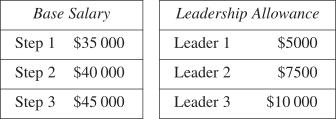
An enterprise agreement has the following annual salary arrangements:
 

Rowan's employer pays 5% more than the enterprise agreement. He is on Step 2 and receives an allowance for Leader 1.

What is Rowan's gross monthly pay?

  1. $3575.50
  2. $3730.00
  3. $3937.50
  4. $4150.00
Show Answers Only

`C`

Show Worked Solution
♦ Mean mark 46%
`text(Gross annual pay)` `=(40\ 000+5000)xx1.05`
  `=$47\ 250`


`:.\ text(Gross monthly pay)` `=(47\ 250)/12`
  `=$3937.50`

 
`=>\ C`

Filed Under: Earning Money and Budgeting (Std 2-X), Ways of Earning (Y11-X) Tagged With: adapted, Band 5, num-title-ct-corea, num-title-qs-hsc, smc-1126-10-Wages, smc-4331-10-Wages, smc-4331-70-% increase/decrease, smc-7722-10-Wages/Salaries, smc-810-10-Wages

HMS, HIC EQ-Bank 059

Evaluate the extent to which global sporting events influence the physical activity levels and health of young Australians.   (8 marks)

--- 22 WORK AREA LINES (style=lined) ---

Show Answers Only

Evaluation Statement

  • Global sporting events prove partially effective in increasing young Australians’ physical activity levels.
  • This evaluation examines immediate participation impacts and long-term behaviour change sustainability.

Immediate Participation Impact

  • Major sporting events adequately fulfil short-term motivation needs for youth activity.
  • Evidence supporting this includes 30% increases in junior sport registrations following Olympics and World Cups.
  • A critical strength is diverse sport exposure – young people discover activities like archery or skateboarding through global competitions.
  • Community sporting clubs report membership surges lasting 3-6 months post-events.
  • While strong in generating initial enthusiasm, it shows limitations in converting interest to lasting habits as most new participants drop out within one year.

Long-Term Behaviour Change

  • International competitions fail to achieve sustained physical activity improvements among youth.
  • The evidence indicates that inspiration from events rarely translates to permanent lifestyle changes.
  • Although effective for creating temporary motivation, it proves insufficient for addressing underlying barriers like cost and accessibility.
  • Better outcomes require ongoing local programs, not periodic global events. Research shows 80% return to pre-event activity levels within 12 months.

Final Evaluation

  • Weighing these factors shows global events create limited lasting impact on youth health.
  • The weaknesses outweigh strengths because temporary inspiration cannot overcome systematic barriers to participation.
  • The overall evaluation demonstrates need for consistent local initiatives rather than relying on international events to motivate young people.
  • Sustainable youth activity should focus on well funded, year-round community programs, not occasional global sporting spectacles.
Show Worked Solution

Evaluation Statement

  • Global sporting events prove partially effective in increasing young Australians’ physical activity levels.
  • This evaluation examines immediate participation impacts and long-term behaviour change sustainability.

Immediate Participation Impact

  • Major sporting events adequately fulfil short-term motivation needs for youth activity.
  • Evidence supporting this includes 30% increases in junior sport registrations following Olympics and World Cups.
  • A critical strength is diverse sport exposure – young people discover activities like archery or skateboarding through global competitions.
  • Community sporting clubs report membership surges lasting 3-6 months post-events.
  • While strong in generating initial enthusiasm, it shows limitations in converting interest to lasting habits as most new participants drop out within one year.

Long-Term Behaviour Change

  • International competitions fail to achieve sustained physical activity improvements among youth.
  • The evidence indicates that inspiration from events rarely translates to permanent lifestyle changes.
  • Although effective for creating temporary motivation, it proves insufficient for addressing underlying barriers like cost and accessibility.
  • Better outcomes require ongoing local programs, not periodic global events. Research shows 80% return to pre-event activity levels within 12 months.

Final Evaluation

  • Weighing these factors shows global events create limited lasting impact on youth health.
  • The weaknesses outweigh strengths because temporary inspiration cannot overcome systematic barriers to participation.
  • The overall evaluation demonstrates need for consistent local initiatives rather than relying on international events to motivate young people.
  • Sustainable youth activity should focus on well funded, year-round community programs, not occasional global sporting spectacles.

Filed Under: Aspects of young people's lives Tagged With: Band 4, Band 5, smc-5507-20-Family influence

HMS, HIC EQ-Bank 057

Evaluate how cultural influences affect the health and wellbeing of young people in Australia today compared to previous generations.   (8 marks)

--- 22 WORK AREA LINES (style=lined) ---

Show Answers Only

Evaluation Statement

  • Cultural influences prove partially effective in supporting young Australian’s health compared to previous generations.
  • This evaluation examines how living in a multicultural society promotes health and what effect social media has on these cultural influences for the current generation.

Multicultural exposure

  • Today’s multicultural communities offer young Australians access to numerous traditional and modern health practices.
  • Young people are often able to access traditional diets and healing practices alongside Western offerings. For example, young people today can gain exposure to Mediterranean diets, Asian mindfulness practices, and Indigenous connection to country.
  • Previous generations experienced limited cultural health perspectives. 
  • While strong in broadening health understanding, cultural influences can also have a negative influence on mental health wellbeing. An example is the identity confusion for some young people who find managing multiple cultures difficult.

Cultural influences on health and social media

  • Social media platforms are somewhat effective in promoting healthy behaviour through cultural movements.
  • Evidence supporting this includes #fitspo and wellness trends rapidly changing exercise habits among youth. Mental health movements like R U OK? reach millions, normalising help-seeking behaviours impossible for previous generations.
  • Although effective for spreading awareness, it proves less suitable for deep cultural understanding.
  • Previous generations developed deeper connections through direct community involvement. Despite social media’s wider reach, it fails to achieve the depth of authentic cultural interaction.

Final Evaluation

  • Weighing these factors shows cultural influences create mixed outcomes for today’s youth.
  • The strengths however outweigh the weaknesses because increased cultural awareness provides more health resources than previous generations accessed.
  • The overall evaluation demonstrates need for balance between digital exposure and authentic cultural engagement.
  • Young Australians benefit from unprecedented cultural diversity but require guidance to navigate competing influences effectively.
Show Worked Solution

Evaluation Statement

  • Cultural influences prove partially effective in supporting young Australian’s health compared to previous generations.
  • This evaluation examines how living in a multicultural society promotes health and what effect social media has on these cultural influences for the current generation.

Multicultural exposure

  • Today’s multicultural communities offer young Australians access to numerous traditional and modern health practices.
  • Young people are often able to access traditional diets and healing practices alongside Western offerings. For example, young people today can gain exposure to Mediterranean diets, Asian mindfulness practices, and Indigenous connection to country.
  • Previous generations experienced limited cultural health perspectives. 
  • While strong in broadening health understanding, cultural influences can also have a negative influence on mental health wellbeing. An example is the identity confusion for some young people who find managing multiple cultures difficult.

Cultural influences on health and social media

  • Social media platforms are somewhat effective in promoting healthy behaviour through cultural movements.
  • Evidence supporting this includes #fitspo and wellness trends rapidly changing exercise habits among youth. Mental health movements like R U OK? reach millions, normalising help-seeking behaviours impossible for previous generations.
  • Although effective for spreading awareness, it proves less suitable for deep cultural understanding.
  • Previous generations developed deeper connections through direct community involvement. Despite social media’s wider reach, it fails to achieve the depth of authentic cultural interaction.

Final Evaluation

  • Weighing these factors shows cultural influences create mixed outcomes for today’s youth.
  • The strengths however outweigh the weaknesses because increased cultural awareness provides more health resources than previous generations accessed.
  • The overall evaluation demonstrates need for balance between digital exposure and authentic cultural engagement.
  • Young Australians benefit from unprecedented cultural diversity but require guidance to navigate competing influences effectively.

Filed Under: Aspects of young people's lives Tagged With: Band 4, Band 5, smc-5507-40-Cultural influence

HMS, HIC EQ-Bank 056

Evaluate the extent to which family influence serves as both a risk and protective factor for young people's health today compared to previous generations.   (8 marks)

--- 22 WORK AREA LINES (style=lined) ---

Show Answers Only

Evaluation Statement

  • Family influence proves highly significant as both a risk factor and protective factor for youth health across generations.
  • This evaluation examines how families pass on both healthy habits and harmful behaviours.

Protective Health

  • Parents effectively teach healthy habits through their own actions.
  • Evidence supporting this includes declining youth smoking rates matching reduced parental smoking over 30 years.
  • A critical strength is parents’ improved health literacy creating better role models than previous generations. Today’s parents demonstrate superior nutrition knowledge and exercise habits.
  • While strong in physical health modelling, parents exhibit limitations in digital wellbeing guidance where they lack expertise.
  • Although effective for traditional health behaviours, they prove less suitable for modern challenges like social media management.

Harmful Patterns

  • Family dysfunction fails to achieve healthy environments for vulnerable youth.
  • For example, evidence indicates that exposure to domestic violence doubles young people’s risk of perpetrating abuse.
  • Intergenerational trauma patterns persist despite increased awareness and support services. Research shows a majority of young people from abusive homes will develop mental health issues.
  • Family violence rates remain consistent across generations, demonstrating insufficient progress.
  • This reveals comprehensive failure in breaking destructive cycles affecting youth wellbeing.

Final Evaluation

  • Weighing these factors shows family influence remains equally powerful across generations as both protector and risk creator.
  • The overall evaluation demonstrates families’ dual capacity hasn’t fundamentally changed despite societal evolution.
  • Modern families face new challenges but core influence mechanisms persist.
  • Implications suggest targeted family support programs are essential for maximising protective factors while minimising risks.
Show Worked Solution

Evaluation Statement

  • Family influence proves highly significant as both a risk factor and protective factor for youth health across generations.
  • This evaluation examines how families pass on both healthy habits and harmful behaviours.

Protective Health

  • Parents effectively teach healthy habits through their own actions.
  • Evidence supporting this includes declining youth smoking rates matching reduced parental smoking over 30 years.
  • A critical strength is parents’ improved health literacy creating better role models than previous generations. Today’s parents demonstrate superior nutrition knowledge and exercise habits.
  • While strong in physical health modelling, parents exhibit limitations in digital wellbeing guidance where they lack expertise.
  • Although effective for traditional health behaviours, they prove less suitable for modern challenges like social media management.

Harmful Patterns

  • Family dysfunction fails to achieve healthy environments for vulnerable youth.
  • For example, evidence indicates that exposure to domestic violence doubles young people’s risk of perpetrating abuse.
  • Intergenerational trauma patterns persist despite increased awareness and support services. Research shows a majority of young people from abusive homes will develop mental health issues.
  • Family violence rates remain consistent across generations, demonstrating insufficient progress.
  • This reveals comprehensive failure in breaking destructive cycles affecting youth wellbeing.

Final Evaluation

  • Weighing these factors shows family influence remains equally powerful across generations as both protector and risk creator.
  • The overall evaluation demonstrates families’ dual capacity hasn’t fundamentally changed despite societal evolution.
  • Modern families face new challenges but core influence mechanisms persist.
  • Implications suggest targeted family support programs are essential for maximising protective factors while minimising risks.

Filed Under: Aspects of young people's lives Tagged With: Band 4, Band 5, Band 6, smc-5507-20-Family influence

HMS, HIC EQ-Bank 055

Analyse how changes in family structure over generations have affected the health and wellbeing of young people.   (8 marks)

--- 22 WORK AREA LINES (style=lined) ---

Show Answers Only

*PEEL – Solution is structured using an adjusted PEEL method; [P] Identify components and their relationship, [E] explain the interaction/influence between them, [Ev] provide evidence showing the relationship in action, [L] linking sentence back to question.

  • [P] The shift from “nuclear” families to more diverse structures has had an effect on young people’s health choices.
  • [E] Different family structures come with different worldviews and this may entail conflicting health messages for young people.
  • [Ev] Young people in blended families can often receive different dietary rules from multiple households, causing confusion about healthy eating.
  • [L] This interaction demonstrates how structural diversity directly influences an individual’s health and their decision-making.
     
  • [P] Despite structural changes, good family communication is correlated to positive health outcomes.
  • [E] Young members of supportive families typically exhibit less risky behaviours no matter if their families are single-parent, blended, or traditional.
  • [Ev] For example, families with open communication significantly lower substance use across all family types, while poor communication doubles risky behaviours.
  • [L] These elements combine to produce health outcomes determined by relationship quality, not structure.
     
  • [P] Multigenerational living creates dual health impacts.
  • [E] On the positive side, this has improved young people’s access to health supervision and emotional support. However, on the negative side, intergenerational conflicts about health decisions and lifestyle choices can cause stress.
  • [Ev] This means that in practice, youth gain traditional health knowledge but can experience mental health challenges when grandparents oppose modern medical treatments.
  • [L] The broader impact shows intergenerational households influence both directly through care and indirectly through family tension.
     
  • [P] Parental supervision has become more complex with diverse family arrangements.
  • [E] The connection between multiple households and supervision can undermine the effective oversight of young people.
  • [Ev] Split families struggle coordinating aspects of home life like screen time limits, resulting in inconsistent health boundaries.
  • [L] Together, these factors increase the likelihood of unhealthy behaviours developing through supervision gaps.
Show Worked Solution

*PEEL – Solution is structured using an adjusted PEEL method; [P] Identify components and their relationship, [E] explain the interaction/influence between them, [Ev] provide evidence showing the relationship in action, [L] linking sentence back to question.

  • [P] The shift from “nuclear” families to more diverse structures has had an effect on young people’s health choices.
  • [E] Different family structures come with different worldviews and this may entail conflicting health messages for young people.
  • [Ev] Young people in blended families can often receive different dietary rules from multiple households, causing confusion about healthy eating.
  • [L] This interaction demonstrates how structural diversity directly influences an individual’s health and their decision-making.
     
  • [P] Despite structural changes, good family communication is correlated to positive health outcomes.
  • [E] Young members of supportive families typically exhibit less risky behaviours no matter if their families are single-parent, blended, or traditional.
  • [Ev] For example, families with open communication significantly lower substance use across all family types, while poor communication doubles risky behaviours.
  • [L] These elements combine to produce health outcomes determined by relationship quality, not structure.
     
  • [P] Multigenerational living creates dual health impacts.
  • [E] On the positive side, this has improved young people’s access to health supervision and emotional support. However, on the negative side, intergenerational conflicts about health decisions and lifestyle choices can cause stress.
  • [Ev] This means that in practice, youth gain traditional health knowledge but can experience mental health challenges when grandparents oppose modern medical treatments.
  • [L] The broader impact shows intergenerational households influence both directly through care and indirectly through family tension.
     
  • [P] Parental supervision has become more complex with diverse family arrangements.
  • [E] The connection between multiple households and supervision can undermine the effective oversight of young people.
  • [Ev] Split families struggle coordinating aspects of home life like screen time limits, resulting in inconsistent health boundaries.
  • [L] Together, these factors increase the likelihood of unhealthy behaviours developing through supervision gaps.

Filed Under: Aspects of young people's lives Tagged With: Band 5, smc-5507-20-Family influence, smkey-hsc-Analyse

HMS, HIC EQ-Bank 045 MC

How do young people's opinions on core issues typically relate to their parents' opinions?

  1. Young people consistently reject their parents' views on politics and religion.
  2. Young people's opinions often reflect those of their parents on core issues.
  3. The generation gap has eliminated any similarity in opinions between generations.
  4. Young people form opinions independently of their family's influence.
Show Answers Only

\(B\)

Show Worked Solution
  • B is correct as research shows that young people’s opinions often reflect those of their parents on core issues.

Other options:

  • A is incorrect as young people’s opinions often reflect their parents’ views.
  • C is incorrect because it is an overstatement of the generation gap.
  • D is incorrect because research points to the family having significant influence on younger family members.

Filed Under: Aspects of young people's lives Tagged With: Band 5, smc-5507-20-Family influence

HMS, HIC EQ-Bank 054

Compare and contrast how peer influence affects young people's health behaviours today with how it affected previous generations, using specific examples to support your answer.   (6 marks)

--- 18 WORK AREA LINES (style=lined) ---

Show Answers Only

Similarities

  • Both past and present generations rely heavily on peer influence for validating health behaviours (e.g. 1960s youth smoking together at social gatherings vs. today’s youth vaping because of social media trends).
  • Peers remain more influential than parents in both eras (e.g. 1970s teens joining protest movements despite parental disapproval vs. today’s teens following TikTok health challenges).
  • The fundamental need for peer acceptance continues to drive decision-making (e.g. 1980s fashion conformity within school cliques vs. today’s pursuit of social media likes and followers).

Differences

  • Previous generations experienced localised, face-to-face peer influence limited by geographic boundaries, while today’s youth experience global, constant digital influence through social media platforms.
  • Modern peer influence operates 24/7 through digital devices with greater permanence, whereas previous generations had intermittent influence limited to physical interactions.
  • Today, 80% of young people identify peers as their primary health information source (Mission Australia, 2023), whereas previous generations relied more on family and medical authorities.
  • Previous generations experienced greater parental filtering of peer influences, while today’s youth navigate more independent peer relationships online with less parental supervision.
  • Today’s digital focus on unattainable body standards and risky behaviours has intensified negative health impacts beyond what previous generations faced.
Show Worked Solution

Similarities

  • Both past and present generations rely heavily on peer influence for validating health behaviours (e.g. 1960s youth smoking together at social gatherings vs. today’s youth vaping because of social media trends).
  • Peers remain more influential than parents in both eras (e.g. 1970s teens joining protest movements despite parental disapproval vs. today’s teens following TikTok health challenges).
  • The fundamental need for peer acceptance continues to drive decision-making (e.g. 1980s fashion conformity within school cliques vs. today’s pursuit of social media likes and followers).

Differences

  • Previous generations experienced localised, face-to-face peer influence limited by geographic boundaries, while today’s youth experience global, constant digital influence through social media platforms.
  • Modern peer influence operates 24/7 through digital devices with greater permanence, whereas previous generations had intermittent influence limited to physical interactions.
  • Today, 80% of young people identify peers as their primary health information source (Mission Australia, 2023), whereas previous generations relied more on family and medical authorities.
  • Previous generations experienced greater parental filtering of peer influences, while today’s youth navigate more independent peer relationships online with less parental supervision.
  • Today’s digital focus on unattainable body standards and risky behaviours has intensified negative health impacts beyond what previous generations faced.

Filed Under: Aspects of young people's lives Tagged With: Band 4, Band 5, smc-5507-30-Peer influence

HMS, HIC EQ-Bank 053

Describe the changing patterns of youth culture across generations and the effect this has on young people's sense of identity and belonging.   (4 marks)

--- 10 WORK AREA LINES (style=lined) ---

Show Answers Only
  • Youth culture has evolved significantly, from the 1950s-60s rock and roll era, through the 1960s counterculture, 1970s punk movement, 1990s rave scene, to today’s social media-driven communities.
  • Each cultural movement is characterised by distinct music, fashion, and values that provide young people with visible means to express their identity and differentiate themselves from mainstream society.
  • These cultural expressions enable young people to establish connections with like-minded peers, creating a sense of belonging during the challenging adolescent years.
  • Despite changing forms across generations, youth cultures consistently serve as vehicles for identity formation, self-esteem and social belonging. In this way it fulfils the same psychological needs even as its form of expression evolves.
Show Worked Solution
  • Youth culture has evolved significantly, from the 1950s-60s rock and roll era, through the 1960s counterculture, 1970s punk movement, 1990s rave scene, to today’s social media-driven communities.
  • Each cultural movement is characterised by distinct music, fashion, and values that provide young people with visible means to express their identity and differentiate themselves from mainstream society.
  • These cultural expressions enable young people to establish connections with like-minded peers, creating a sense of belonging during the challenging adolescent years.
  • Despite changing forms across generations, youth cultures consistently serve as vehicles for identity formation, self-esteem and social belonging. In this way it fulfils the same psychological needs even as its form of expression evolves.

Filed Under: Aspects of young people's lives Tagged With: Band 5, smc-5507-40-Cultural influence

HMS, HIC EQ-Bank 052

Assess the extent to which technological advances have impacted the health and wellbeing of young Australians compared to previous generations.   (8 marks)

--- 22 WORK AREA LINES (style=lined) ---

Show Answers Only

Judgment Statement

  • Technological advances have produced moderately negative overall impacts on young Australians’ health and wellbeing.
  • This assessment examines mental health outcomes, physical activity levels, and global connectivity effects.

Mental Health Outcomes

  • Technology demonstrates poor effectiveness in supporting youth mental health.
  • Social media shows substantial negative impacts through comparison culture and cyberbullying.
  • Anxiety rates among teens have doubled since 2010, demonstrating a high negative impact compared to pre-digital generations.
  • The results indicate strong links between technology use and psychological distress.

Physical Activity Levels

  • Technology shows limited success in promoting active lifestyles.
  • While fitness apps exist, sedentary screen time dominates behaviour. Gaming disorder affects 10% of young males.
  • Previous generations spent 3 hours outdoors per day versus today’s 45 minutes.
  • Technology achieves minimal positive outcomes, with obesity rates tripling since 1980. This reveals major physical wellbeing deterioration.

Global Connectivity

  • Technology produces mixed results for global engagement.
  • Young Australians access diverse perspectives and educational resources impossible for previous generations.
  • However, constant exposure to global crises creates unprecedented stress.
  • The 24/7 news cycles increases anxiety about global issues like climate change and conflicts.
  • While connectivity offers valuable cultural exchange, information overload can prove moderately harmful to wellbeing.

Overall Assessment

  • On balance, technology proves moderately harmful despite connectivity benefits.
  • When all factors are considered, negative mental and physical impacts outweigh advantages.
  • This assessment highlights an urgent need for digital wellbeing education. Future generations require better technology management to protect health outcomes.
Show Worked Solution

Judgment Statement

  • Technological advances have produced moderately negative overall impacts on young Australians’ health and wellbeing.
  • This assessment examines mental health outcomes, physical activity levels, and global connectivity effects.

Mental Health Outcomes

  • Technology demonstrates poor effectiveness in supporting youth mental health.
  • Social media shows substantial negative impacts through comparison culture and cyberbullying.
  • Anxiety rates among teens have doubled since 2010, demonstrating a high negative impact compared to pre-digital generations.
  • The results indicate strong links between technology use and psychological distress.

Physical Activity Levels

  • Technology shows limited success in promoting active lifestyles.
  • While fitness apps exist, sedentary screen time dominates behaviour. Gaming disorder affects 10% of young males.
  • Previous generations spent 3 hours outdoors per day versus today’s 45 minutes.
  • Technology achieves minimal positive outcomes, with obesity rates tripling since 1980. This reveals major physical wellbeing deterioration.

Global Connectivity

  • Technology produces mixed results for global engagement.
  • Young Australians access diverse perspectives and educational resources impossible for previous generations.
  • However, constant exposure to global crises creates unprecedented stress.
  • The 24/7 news cycles increases anxiety about global issues like climate change and conflicts.
  • While connectivity offers valuable cultural exchange, information overload can prove moderately harmful to wellbeing.

Overall Assessment

  • On balance, technology proves moderately harmful despite connectivity benefits.
  • When all factors are considered, negative mental and physical impacts outweigh advantages.
  • This assessment highlights an urgent need for digital wellbeing education. Future generations require better technology management to protect health outcomes.

Filed Under: Aspects of young people's lives Tagged With: Band 4, Band 5, smc-5507-50-Technology, smkey-hsc-Assess

HMS, BM EQ-Bank 903

Evaluate the interrelationship between the digestive and endocrine systems when an athlete experiences pre-competition anxiety.   (8 marks)

--- 25 WORK AREA LINES (style=lined) ---

Show Answers Only

Sample Answer

Evaluation Statement:

  • The digestive-endocrine interrelationship proves moderately effective during pre-competition anxiety.
  • This evaluation examines stress response activation and digestive function changes.

Stress Response Effectiveness:

  • The endocrine system rapidly releases adrenaline and cortisol during anxiety.
  • These hormones increase heart rate and blood glucose for competition readiness.
  • Blood flow redirects from digestive organs to muscles within seconds.
  • This prepares athletes for explosive performance requirements.
  • Studies show moderate anxiety improves reaction times by 15-20%.
  • The endocrine response strongly meets performance preparation needs.

Digestive System Impact:

  • The digestive system significantly reduces function during anxiety.
  • Decreased enzyme production impairs nutrient breakdown before competition.
  • Dry mouth and nausea affect 70% of anxious athletes.
  • Stomach “butterflies” can distract from mental preparation.
  • Poor pre-competition nutrition absorption may limit energy availability.
  • This partially fulfils athlete needs, creating notable disadvantages.

Final Evaluation:

  • The interrelationship shows mixed effectiveness for athletic performance.
  • While the endocrine system excellently mobilises energy resources, digestive disruption creates real challenges.
  • Athletes who manage anxiety through breathing techniques show better system coordination.
  • The relationship proves most effective when anxiety remains moderate rather than excessive, allowing beneficial arousal without severe digestive problems.
Show Worked Solution

Sample Answer

Evaluation Statement:

  • The digestive-endocrine interrelationship proves moderately effective during pre-competition anxiety.
  • This evaluation examines stress response activation and digestive function changes.

Stress Response Effectiveness:

  • The endocrine system rapidly releases adrenaline and cortisol during anxiety.
  • These hormones increase heart rate and blood glucose for competition readiness.
  • Blood flow redirects from digestive organs to muscles within seconds.
  • This prepares athletes for explosive performance requirements.
  • Studies show moderate anxiety improves reaction times by 15-20%.
  • The endocrine response strongly meets performance preparation needs.

Digestive System Impact:

  • The digestive system significantly reduces function during anxiety.
  • Decreased enzyme production impairs nutrient breakdown before competition.
  • Dry mouth and nausea affect 70% of anxious athletes.
  • Stomach “butterflies” can distract from mental preparation.
  • Poor pre-competition nutrition absorption may limit energy availability.
  • This partially fulfils athlete needs, creating notable disadvantages.

Final Evaluation:

  • The interrelationship shows mixed effectiveness for athletic performance.
  • While the endocrine system excellently mobilises energy resources, digestive disruption creates real challenges.
  • Athletes who manage anxiety through breathing techniques show better system coordination.
  • The relationship proves most effective when anxiety remains moderate rather than excessive, allowing beneficial arousal without severe digestive problems.

Filed Under: Digestive and endocrine systems Tagged With: Band 5, Band 6, smc-5524-30-Stress

HMS, BM EQ-Bank 902

Analyse how chronic stress affects both the digestive and endocrine systems and the subsequent impact on an athlete's performance.   (8 marks)

--- 25 WORK AREA LINES (style=lined) ---

Show Answers Only

Sample Answer

Overview Statement:

  • Chronic stress affects both digestive and endocrine systems through elevated cortisol levels.
  • The main relationships involve hormone disruption, nutrient absorption problems, and metabolic changes.
  • These interactions result in significant performance decline in athletes.

Component Relationship 1:

  • The endocrine system’s cortisol production interacts with digestive function during chronic stress.
  • Elevated cortisol diverts blood flow away from digestive organs to muscles.
  • The pattern shows reduced enzyme production and slower nutrient breakdown.
  • Athletes experience poor vitamin and mineral absorption despite adequate diets.
  • Evidence indicates that stress hormones prioritise immediate survival over digestion.
  • Therefore athletes cannot access nutrients needed for recovery and energy production.

Component Relationship 2:

  • Chronic cortisol elevation influences both growth hormone release and insulin sensitivity.
  • High cortisol prevents muscle protein synthesis while causing muscle breakdown for energy.
  • Research reveals how the endocrine system’s stress response works against recovery.
  • Reduced insulin sensitivity leads to poor glucose uptake by muscles.
  • Consequently, athletes experience fatigue and decreased strength gains.
  • The implication is that hormonal imbalance creates multiple energy problems.

Implications and Synthesis:

  • Both systems work together creating compound effects on performance.
  • Poor nutrient absorption combines with hormonal disruption to impair recovery.
  • Analysis demonstrates how chronic stress affects many body functions at the same time.
  • Therefore, managing stress becomes essential for athletic success.
  • The overall significance is that when systems work together, stress causes more damage than expected.
Show Worked Solution

Sample Answer

Overview Statement:

  • Chronic stress affects both digestive and endocrine systems through elevated cortisol levels.
  • The main relationships involve hormone disruption, nutrient absorption problems, and metabolic changes.
  • These interactions result in significant performance decline in athletes.

Component Relationship 1:

  • The endocrine system’s cortisol production interacts with digestive function during chronic stress.
  • Elevated cortisol diverts blood flow away from digestive organs to muscles.
  • The pattern shows reduced enzyme production and slower nutrient breakdown.
  • Athletes experience poor vitamin and mineral absorption despite adequate diets.
  • Evidence indicates that stress hormones prioritise immediate survival over digestion.
  • Therefore athletes cannot access nutrients needed for recovery and energy production.

Component Relationship 2:

  • Chronic cortisol elevation influences both growth hormone release and insulin sensitivity.
  • High cortisol prevents muscle protein synthesis while causing muscle breakdown for energy.
  • Research reveals how the endocrine system’s stress response works against recovery.
  • Reduced insulin sensitivity leads to poor glucose uptake by muscles.
  • Consequently, athletes experience fatigue and decreased strength gains.
  • The implication is that hormonal imbalance creates multiple energy problems.

Implications and Synthesis:

  • Both systems work together creating compound effects on performance.
  • Poor nutrient absorption combines with hormonal disruption to impair recovery.
  • Analysis demonstrates how chronic stress affects many body functions at the same time.
  • Therefore, managing stress becomes essential for athletic success.
  • The overall significance is that when systems work together, stress causes more damage than expected.

Filed Under: Digestive and endocrine systems Tagged With: Band 4, Band 5, smc-5524-30-Stress

HMS, BM EQ-Bank 895

Explain how the digestive, endocrine and muscular systems work together to produce muscle growth during an 8-week strength training program.   (5 marks)

--- 15 WORK AREA LINES (style=lined) ---

Show Answers Only

Sample Answer

Nutrient processing:

  • The digestive system breaks down dietary protein into amino acids.
  • These amino acids enter the bloodstream for transport to muscles.
  • As a result, building blocks for new muscle tissue become available.
  • Carbohydrates digest into glucose which provides energy for training sessions.

Hormonal control:

  • Weight training triggers the endocrine system to release growth hormone.
  • This hormone signals muscles to use amino acids for protein synthesis.
  • After meals, insulin release facilitates nutrient entry into muscle cells.
  • These hormonal actions enable muscles to repair and grow larger.

Muscle adaptation:

  • Training causes tiny tears in muscle fibres during each session.
  • This damage stimulates the need for repair using available amino acids.
  • Consequently, muscles rebuild stronger and larger over time.
  • The endocrine system controls this rebuilding through hormone release.

System coordination:

  • The interaction shows that muscle growth needs all three systems working together.
  • Digestive system provides materials while endocrine system controls their use.
  • Meanwhile, muscular system responds to training stress and hormonal signals.
  • Therefore, consistent nutrition and training over 8 weeks produces visible muscle growth.
Show Worked Solution

Sample Answer

Nutrient processing:

  • The digestive system breaks down dietary protein into amino acids.
  • These amino acids enter the bloodstream for transport to muscles.
  • As a result, building blocks for new muscle tissue become available.
  • Carbohydrates digest into glucose which provides energy for training sessions.

Hormonal control:

  • Weight training triggers the endocrine system to release growth hormone.
  • This hormone signals muscles to use amino acids for protein synthesis.
  • After meals, insulin release facilitates nutrient entry into muscle cells.
  • These hormonal actions enable muscles to repair and grow larger.

Muscle adaptation:

  • Training causes tiny tears in muscle fibres during each session.
  • This damage stimulates the need for repair using available amino acids.
  • Consequently, muscles rebuild stronger and larger over time.
  • The endocrine system controls this rebuilding through hormone release.

System coordination:

  • The interaction shows that muscle growth needs all three systems working together.
  • Digestive system provides materials while endocrine system controls their use.
  • Meanwhile, muscular system responds to training stress and hormonal signals.
  • Therefore, consistent nutrition and training over 8 weeks produces visible muscle growth.

Filed Under: Body systems working together Tagged With: Band 4, Band 5, smc-5526-10-Skeletal/Muscular, smc-5526-30-Digestive/Endocrine

HMS, BM EQ-Bank 893

A competitive swimmer has just consumed a pre-race meal two hours before an important race.

Describe how the digestive and endocrine systems work with the nervous and muscular systems to prepare the body for this high-intensity performance.   (5 marks)

--- 16 WORK AREA LINES (style=lined) ---

Show Answers Only

Sample Answer

Meal digestion (first hour):

  • Stomach and intestines break down carbohydrates into glucose
  • Proteins digest into amino acids for muscle support
  • Fats are processed slowly for sustained energy

Nutrient absorption and storage:

  • Blood glucose levels rise as nutrients enter bloodstream
  • Insulin release facilitates glucose uptake into muscles
  • Muscle glycogen stores increase in preparation
  • Amino acids circulate for muscle repair needs

Pre-race nervous activation (approaching race):

  • Nervous system reduces digestive activity
  • Blood flow shifts from stomach to muscles
  • Alertness and focus increase
  • Stress hormones begin releasing

Hormonal preparation:

  • Adrenaline elevates heart rate and breathing
  • Cortisol mobilises additional energy stores
  • Blood glucose rises for immediate use
  • Muscles become more sensitive to nerve signals

System coordination features:

  • Digestive system provides fuel while nervous system times its use
  • Hormones link all systems together
  • Muscles receive nutrients through blood while preparing for action
  • All four systems synchronise for optimal race readiness
Show Worked Solution

Sample Answer

Meal digestion (first hour):

  • Stomach and intestines break down carbohydrates into glucose
  • Proteins digest into amino acids for muscle support
  • Fats are processed slowly for sustained energy

Nutrient absorption and storage:

  • Blood glucose levels rise as nutrients enter bloodstream
  • Insulin release facilitates glucose uptake into muscles
  • Muscle glycogen stores increase in preparation
  • Amino acids circulate for muscle repair needs

Pre-race nervous activation (approaching race):

  • Nervous system reduces digestive activity
  • Blood flow shifts from stomach to muscles
  • Alertness and focus increase
  • Stress hormones begin releasing

Hormonal preparation:

  • Adrenaline elevates heart rate and breathing
  • Cortisol mobilises additional energy stores
  • Blood glucose rises for immediate use
  • Muscles become more sensitive to nerve signals

System coordination features:

  • Digestive system provides fuel while nervous system times its use
  • Hormones link all systems together
  • Muscles receive nutrients through blood while preparing for action
  • All four systems synchronise for optimal race readiness

Filed Under: Body systems working together Tagged With: Band 4, Band 5, smc-5526-10-Skeletal/Muscular, smc-5526-30-Digestive/Endocrine, smc-5526-40-Nervous

HMS, BM EQ-Bank 891 MC

A tennis player becomes dehydrated during a five-set match on a hot day. How do the digestive, endocrine, and circulatory systems interact in response to this physiological challenge?

  1. The digestive system increases nutrient absorption, the endocrine system decreases water-conserving hormones, and the circulatory system redistributes blood to the skin
  2. The digestive system reduces water absorption, the endocrine system increases water-conserving hormones, and the circulatory system increases blood volume
  3. The digestive system slows peristalsis, the endocrine system increases cortisol production, and the circulatory system increases blood flow to the digestive tract
  4. The digestive system reduces peristalsis, the endocrine system increases water-conserving hormones, and the circulatory system redirects blood flow to vital organs
Show Answers Only

\(D\)

Show Worked Solution
  • D is correct: During dehydration, digestion slows to conserve water, hormones help retain water, and blood flow prioritises vital organs.

Other Options:

  • A is incorrect: Water-conserving hormones increase (not decrease) during dehydration, and blood flow is redirected away from the skin to vital organs.
  • B is incorrect: The digestive system would attempt to maximise (not reduce) water absorption during dehydration.
  • C is incorrect: Blood flow to the digestive tract is reduced (not increased) during dehydration as the body prioritises vital organs.

Filed Under: Body systems working together Tagged With: Band 5, smc-5526-20-Respiratory/Circulatory, smc-5526-30-Digestive/Endocrine

HMS, BM EQ-Bank 888

A sprinter is positioned in the starting blocks of a 100-metre race.

Explain how the nervous, muscular and circulatory systems work together from the "on your marks" command to the first few seconds of the race.   (5 marks)

--- 16 WORK AREA LINES (style=lined) ---

Show Answers Only

Sample Answer

“On your marks” phase:

  • The nervous system heightens alertness and prepares motor pathways for action.
  • This causes heart rate to begin increasing through nerve signals to the heart.
  • As a result, the circulatory system prepares to deliver more oxygen to muscles.

“Set” position:

  • Nerve signals activate muscles to create tension in legs and arms.
  • This muscle tension enables explosive force production when the gun fires.
  • Meanwhile, blood flow increases to leg muscles through vasodilation.
  • This increased blood flow ensures muscles have oxygen for immediate use.

Gun fired – first seconds:

  • The nervous system sends rapid signals to leg muscles.
  • These signals trigger powerful muscle contractions in quadriceps and glutes.
  • Consequently, the sprinter drives forcefully off the blocks.
  • Heart rate increases rapidly because muscles demand more oxygen.
  • This coordination between all three systems produces maximum acceleration.

System integration:

  • The interaction shows how nerve signals control both muscle action and heart response.
  • While the nervous system coordinates movement, the circulatory system supports energy needs.
  • Therefore, successful sprint starts require all three systems working together instantly.
Show Worked Solution

Sample Answer

“On your marks” phase:

  • The nervous system heightens alertness and prepares motor pathways for action.
  • This causes heart rate to begin increasing through nerve signals to the heart.
  • As a result, the circulatory system prepares to deliver more oxygen to muscles.

“Set” position:

  • Nerve signals activate muscles to create tension in legs and arms.
  • This muscle tension enables explosive force production when the gun fires.
  • Meanwhile, blood flow increases to leg muscles through vasodilation.
  • This increased blood flow ensures muscles have oxygen for immediate use.

Gun fired – first seconds:

  • The nervous system sends rapid signals to leg muscles.
  • These signals trigger powerful muscle contractions in quadriceps and glutes.
  • Consequently, the sprinter drives forcefully off the blocks.
  • Heart rate increases rapidly because muscles demand more oxygen.
  • This coordination between all three systems produces maximum acceleration.

System integration:

  • The interaction shows how nerve signals control both muscle action and heart response.
  • While the nervous system coordinates movement, the circulatory system supports energy needs.
  • Therefore, successful sprint starts require all three systems working together instantly.

Filed Under: Body systems working together Tagged With: Band 4, Band 5, smc-5526-10-Skeletal/Muscular, smc-5526-20-Respiratory/Circulatory, smc-5526-40-Nervous

HMS, BM EQ-Bank 885

A long-distance cyclist has been competing in a 100 kilometre race for 2.5 hours.

Explain how the digestive, endocrine, and circulatory systems interact to sustain energy supply to the muscular system during this prolonged activity.   (5 marks)

--- 16 WORK AREA LINES (style=lined) ---

Show Answers Only

Sample Answer

Digestive system:

  • After 2.5 hours, glycogen stores are depleting and the body relies more on consumed nutrients.
  • As a result, glucose from race nutrition absorbs into the bloodstream to maintain energy levels.

Endocrine system:

  • Hormones regulate energy metabolism through insulin and glucagon balance.
  • When blood glucose drops, the pancreas reduces insulin secretion and increases glucagon.
  • This hormonal change triggers the liver to convert stored glycogen to glucose.

Endocrine-Circulatory Interaction:

  • During prolonged cycling, cortisol and adrenaline are released into the bloodstream.
  • These hormones cause fatty acids to mobilise from fat stores as additional energy.
  • Consequently, muscles can spare limited glycogen stores.
      

Circulatory System Delivery:

  • Blood vessels transport nutrients (glucose, fatty acids) and oxygen to working muscles.
  • This continuous delivery enables sustained energy production throughout the race.
  • Blood flow increases to active muscles through vasodilation while non-essential areas receive less blood.

System Integration:  

  • The interaction between these systems ensures optimal nutrient delivery to maintain performance.
  • The digestive system provides fuel while the endocrine system controls its release.
  • Meanwhile, the circulatory system delivers nutrients precisely where needed for sustained muscular work.
Show Worked Solution

Sample Answer

Digestive system:

  • After 2.5 hours, glycogen stores are depleting and the body relies more on consumed nutrients.
  • As a result, glucose from race nutrition absorbs into the bloodstream to maintain energy levels.

Endocrine system:

  • Hormones regulate energy metabolism through insulin and glucagon balance.
  • When blood glucose drops, the pancreas reduces insulin secretion and increases glucagon.
  • This hormonal change triggers the liver to convert stored glycogen to glucose.

Endocrine-Circulatory Interaction:

  • During prolonged cycling, cortisol and adrenaline are released into the bloodstream.
  • These hormones cause fatty acids to mobilise from fat stores as additional energy.
  • Consequently, muscles can spare limited glycogen stores.
      

Circulatory System Delivery:

  • Blood vessels transport nutrients (glucose, fatty acids) and oxygen to working muscles.
  • This continuous delivery enables sustained energy production throughout the race.
  • Blood flow increases to active muscles through vasodilation while non-essential areas receive less blood.

System Integration:  

  • The interaction between these systems ensures optimal nutrient delivery to maintain performance.
  • The digestive system provides fuel while the endocrine system controls its release.
  • Meanwhile, the circulatory system delivers nutrients precisely where needed for sustained muscular work.

Filed Under: Body systems working together Tagged With: Band 4, Band 5, smc-5526-10-Skeletal/Muscular, smc-5526-20-Respiratory/Circulatory, smc-5526-30-Digestive/Endocrine

HMS, BM EQ-Bank 880

Analyse how altitude training and vascular disease affect cardiovascular efficiency, and explain strategies an endurance athlete might implement to optimise cardiovascular function despite these influences.   (12 marks)

--- 30 WORK AREA LINES (style=lined) ---

Show Answers Only

Sample Answer

Overview Statement

  • Altitude training and vascular disease both affect cardiovascular efficiency but through opposing mechanisms.
  • Key components include oxygen delivery, blood vessel function, and adaptation capacity.
  • Athletes must understand these relationships to optimise their cardiovascular function.

Altitude Training Impact

  • Initial altitude exposure reduces cardiovascular efficiency through hypoxic stress.
  • Low oxygen availability triggers the body to produce more red blood cells and haemoglobin.
  • These adaptations enhance oxygen-carrying capacity over several weeks.
  • Once developed, improvements benefit performance when returning to sea level.
  • However, these effects are temporary and reversible.

Vascular Disease Impact

  • Atherosclerotic plaque buildup permanently narrows arteries, reducing blood flow.
  • Narrowed vessels force the heart to work harder, decreasing efficiency.
  • Unlike altitude adaptations, vascular disease creates irreversible tissue damage.
  • Progressive arterial dysfunction leads to uneven blood flow distribution.
  • Such changes prevent optimal oxygen delivery regardless of other adaptations.

Contrasting Relationships

  • Altitude creates systemic hypoxia that stimulates positive adaptations.
  • Vascular disease causes localised hypoxia that prevents normal function.
  • While altitude effects are temporary and beneficial, vascular disease requires ongoing management.
  • The key difference lies in reversibility and adaptive potential.

Optimisation Strategies – Altitude Training

  • Implement gradual altitude exposure to maximise adaptations safely.
  • Use “live high, train low” protocols to maintain training quality.
  • Time altitude camps appropriately before competitions.
  • Consider altitude tents when natural altitude is unavailable.

Optimisation Strategies – Vascular Disease Management

  • Maintain regular moderate-intensity aerobic exercise to promote arterial health.
  • Follow anti-inflammatory nutrition to reduce vascular damage.
  • Implement stress management protocols.
  • Monitor cardiovascular responses objectively during training.
  • Collaborate with medical specialists for appropriate interventions.
Show Worked Solution

Sample Answer

Overview Statement

  • Altitude training and vascular disease both affect cardiovascular efficiency but through opposing mechanisms.
  • Key components include oxygen delivery, blood vessel function, and adaptation capacity.
  • Athletes must understand these relationships to optimise their cardiovascular function.

Altitude Training Impact

  • Initial altitude exposure reduces cardiovascular efficiency through hypoxic stress.
  • Low oxygen availability triggers the body to produce more red blood cells and haemoglobin.
  • These adaptations enhance oxygen-carrying capacity over several weeks.
  • Once developed, improvements benefit performance when returning to sea level.
  • However, these effects are temporary and reversible.

Vascular Disease Impact

  • Atherosclerotic plaque buildup permanently narrows arteries, reducing blood flow.
  • Narrowed vessels force the heart to work harder, decreasing efficiency.
  • Unlike altitude adaptations, vascular disease creates irreversible tissue damage.
  • Progressive arterial dysfunction leads to uneven blood flow distribution.
  • Such changes prevent optimal oxygen delivery regardless of other adaptations.

Contrasting Relationships

  • Altitude creates systemic hypoxia that stimulates positive adaptations.
  • Vascular disease causes localised hypoxia that prevents normal function.
  • While altitude effects are temporary and beneficial, vascular disease requires ongoing management.
  • The key difference lies in reversibility and adaptive potential.

Optimisation Strategies – Altitude Training

  • Implement gradual altitude exposure to maximise adaptations safely.
  • Use “live high, train low” protocols to maintain training quality.
  • Time altitude camps appropriately before competitions.
  • Consider altitude tents when natural altitude is unavailable.

Optimisation Strategies – Vascular Disease Management

  • Maintain regular moderate-intensity aerobic exercise to promote arterial health.
  • Follow anti-inflammatory nutrition to reduce vascular damage.
  • Implement stress management protocols.
  • Monitor cardiovascular responses objectively during training.
  • Collaborate with medical specialists for appropriate interventions.

Filed Under: Respiratory and circulatory systems Tagged With: Band 5, Band 6, smc-5523-20-Efficiency

HMS, BM EQ-Bank 879

Analyse how THREE different factors that impact the cardiovascular system affect an endurance athlete's performance.   (8 marks)

--- 24 WORK AREA LINES (style=lined) ---

Show Answers Only

Sample Answer

Overview Statement

  • Three key factors impact cardiovascular efficiency in endurance athletes: altitude, haemoglobin levels, and vascular disease.
  • Each factor influences oxygen delivery to working muscles differently.
  • Performance outcomes depend on the interaction between these factors.

Altitude and Cardiovascular Adaptation

  • Altitude exposure reduces atmospheric oxygen pressure, triggering physiological adaptations.
  • The body responds by increasing red blood cell and haemoglobin production.
  • Gradual acclimatisation enhances oxygen-carrying capacity over several weeks.
  • Such adaptations benefit endurance athletes when returning to sea level.

Haemoglobin Levels and Oxygen Transport

  • Haemoglobin directly determines the blood’s oxygen-carrying capacity.
  • Higher levels enable greater oxygen delivery to muscles during exercise.
  • Iron deficiency reduces haemoglobin production, limiting endurance capacity.
  • Optimal haemoglobin levels therefore support sustained aerobic performance.

Vascular Disease Impact

  • Atherosclerosis progressively narrows arteries through plaque buildup, restricting blood flow.
  • Reduced arterial diameter limits oxygen delivery regardless of haemoglobin levels.
  • Even mild narrowing affects exercise capacity and cardiovascular efficiency.
  • Vascular health consequently determines the effectiveness of other adaptations.

Implications and Synthesis

  • All three factors interact to determine overall cardiovascular efficiency.
  • Altitude training benefits may be negated by poor vascular health or low haemoglobin.
  • Regular screening helps identify vascular issues early.
  • Maintaining adequate iron intake ensures optimal haemoglobin production.
  • An integrated approach maximises endurance performance potential.
Show Worked Solution

Sample Answer

Overview Statement

  • Three key factors impact cardiovascular efficiency in endurance athletes: altitude, haemoglobin levels, and vascular disease.
  • Each factor influences oxygen delivery to working muscles differently.
  • Performance outcomes depend on the interaction between these factors.

Altitude and Cardiovascular Adaptation

  • Altitude exposure reduces atmospheric oxygen pressure, triggering physiological adaptations.
  • The body responds by increasing red blood cell and haemoglobin production.
  • Gradual acclimatisation enhances oxygen-carrying capacity over several weeks.
  • Such adaptations benefit endurance athletes when returning to sea level.

Haemoglobin Levels and Oxygen Transport

  • Haemoglobin directly determines the blood’s oxygen-carrying capacity.
  • Higher levels enable greater oxygen delivery to muscles during exercise.
  • Iron deficiency reduces haemoglobin production, limiting endurance capacity.
  • Optimal haemoglobin levels therefore support sustained aerobic performance.

Vascular Disease Impact

  • Atherosclerosis progressively narrows arteries through plaque buildup, restricting blood flow.
  • Reduced arterial diameter limits oxygen delivery regardless of haemoglobin levels.
  • Even mild narrowing affects exercise capacity and cardiovascular efficiency.
  • Vascular health consequently determines the effectiveness of other adaptations.

Implications and Synthesis

  • All three factors interact to determine overall cardiovascular efficiency.
  • Altitude training benefits may be negated by poor vascular health or low haemoglobin.
  • Regular screening helps identify vascular issues early.
  • Maintaining adequate iron intake ensures optimal haemoglobin production.
  • An integrated approach maximises endurance performance potential.

Filed Under: Respiratory and circulatory systems Tagged With: Band 4, Band 5, smc-5523-20-Efficiency

PHYSICS, M2 EQ-Bank 13

An 80 kilogram astronaut in deep space (far from any significant gravitational field) throws a 2.0 kg toolbox away from their spacecraft with a force of 10 N applied for 2.0 seconds.

  1. Explain what happens to the astronaut as a result of this action.   (2 marks)

--- 3 WORK AREA LINES (style=lined) ---

  1. Explain why the accelerations of the astronaut and the toolbox are different in terms of their inertia, despite experiencing forces of equal magnitude.   (3 marks)

--- 6 WORK AREA LINES (style=lined) ---

Show Answers Only

a.    Due to Newton’s Third Law:

  • The toolbox exerts an equal and opposite force (10 N) on the astronaut.
  • This causes the astronaut to accelerate in the opposite direction of the throw with an acceleration of \(0.125\ \text{ms}^{-2}\).
  • After the 2 seconds, the astronaut will continue moving at constant velocity in opposite directions as there is no longer any force acting back on the astronaut (Newton’s First Law).

b.   Reasons accelerations differ:

  • Although the astronaut and the toolbox experience equal and opposite forces (10 N), as required by Newton’s Third Law, their accelerations differ because of their different inertia.
  • Inertia is an object’s resistance to changes in its motion, and it depends directly on mass. The astronaut has much greater mass (80 kg) than the toolbox (2.0 kg), meaning the astronaut has greater inertia. Therefore the astronaut will be more resistant to a change in motion and will experience a smaller acceleration.
  • By applying Newton’s second law \(F=ma\), the acceleration of the astronaut is \(0.125\ \text{ms}^{-2}\) whereas the acceleration of the tool box is \(5\ \text{ms}^{-2}\).
Show Worked Solution

a.    Due to Newton’s Third Law:

  • The toolbox exerts an equal and opposite force (10 N) on the astronaut.
  • This causes the astronaut to accelerate in the opposite direction of the throw with an acceleration of \(0.125\ \text{ms}^{-2}\).
  • After the 2 seconds, the astronaut will continue moving at constant velocity in opposite directions as there is no longer any force acting back on the astronaut (Newton’s First Law).

b.   Reasons accelerations differ:

  • Although the astronaut and the toolbox experience equal and opposite forces (10 N), as required by Newton’s Third Law, their accelerations differ because of their different inertia.
  • Inertia is an object’s resistance to changes in its motion, and it depends directly on mass. The astronaut has much greater mass (80 kg) than the toolbox (2.0 kg), meaning the astronaut has greater inertia. Therefore the astronaut will be more resistant to a change in motion and will experience a smaller acceleration.
  • By applying Newton’s second law \(F=ma\), the acceleration of the astronaut is \(0.125\ \text{ms}^{-2}\) whereas the acceleration of the tool box is \(5\ \text{ms}^{-2}\).

Filed Under: Forces Tagged With: Band 4, Band 5, smc-4275-35-Newton's 1st Law

PHYSICS, M2 EQ-Bank 10

A 20 kg crate is suspended in equilibrium by two cables as seen in the diagram below:


Determine the tension force \((T_2)\) in Cable 2.   (3 marks)

--- 6 WORK AREA LINES (style=lined) ---

Show Answers Only

\(17.2\ \text{N}\)

Show Worked Solution
  • The weight force of the crate, \(F_w=20 \times 9.8 = 19.6\ \text{N}\) and so the following vector diagram can be set up below.

  • Using the \(\sin\) rule for finding the side length of a triangle, \(\dfrac{a}{\sin A}=\dfrac{b}{\sin B}\)
\(\dfrac{T_2}{\sin 60}\) \(=\dfrac{F_w}{\sin 80}\)  
\(T_2\) \(=\dfrac{19.6}{\sin 80} \times \sin 60\)  
  \(=17.2\ \text{N}\)  

Filed Under: Forces Tagged With: Band 5, smc-4275-40-Equilibrium systems

Financial Maths, STD2 F1 2019 HSC 29 (Adapted)

Part of a supermarket receipt is shown.

Determine the missing values, `A` and `B`, to complete the receipt.   (2 marks)

--- 4 WORK AREA LINES (style=lined) ---

Show Answers Only

`$2.85`

Show Worked Solution

`text(Chocolate is the only item where GST applies.)`

`text(GST on chocolate = 0.70`

`=> text(C)text(ost of chocolate) = $7.00`
 

`:. A = 7.00 + 0.70 = $7.70`

`:. B` `= 35.25-(7.70 + 5.00 + 8.00+ 8.50 + 3.20)`
  `= $2.85`

Filed Under: Purchasing Goods (Y11-X), Tax and Percentage Increase/Decrease (Std 2-X) Tagged With: adapted, Band 5, smc-7724-20-GST/VAT

PHYSICS, M2 EQ-Bank 7 MC

A 400 g block rests on a smooth inclined plane angled at 30° to the horizontal. In addition to the gravitational force, one other force acts on the block:

A tension force \((T)\) from a string pulling parallel to the incline and up the slope.
 

The block remains at rest. What must the tension force \((T)\) in the string be in order to maintain equilibrium?

  1. \(T=0.4 \times 9.8 \times \sin 30^{\circ}\)
  2. \(T=0.4 \times 9.8 \times \cos 30^{\circ}\)
  3. \(T=400 \times 9.8 \times \sin 30^{\circ}\)
  4. \(T=400 \times 9.8 \times \cos 30^{\circ}\)
Show Answers Only

\(A\)

Show Worked Solution
  • For the block to be in equilibrium the force acting down the slope must be equal to the tension force \((T)\) acting up the slope.
  • Convert grams to kg:  \(400\ \text{g}\ = \dfrac{400}{1000}\ \text{kg} = 0.4\ \text{kg} \)

  • \(T=mg\ \sin\theta=0.4 \times 9.8 \times \sin 30^{\circ}\) (mass must be in kilograms)

\(\Rightarrow A\)

STRATEGY: It is crucial that \(F=mg\) force is the hypotenuse in the force diagram.

Filed Under: Forces Tagged With: Band 5, smc-4275-50-Inclined Planes

HMS, HIC EQ-Bank 051

Explain how developmental stages have remained similar for young people across generations, despite differences in their life experiences.   (5 marks)

--- 15 WORK AREA LINES (style=lined) ---

Show Answers Only

*Language highlighting the cause-effect relationship is bolded in the answer below.

  • Physically, both modern and past generations experience puberty. This occurs because biological maturation follows genetic programming. As a result, height spurts and hormonal changes remain universal experiences.
  • Emotionally, young people across generations develop self-identity. This happens when adolescents explore values and beliefs. This process ensures identity formation occurs consistently, though contexts differ.
  • Brain development remains consistent. The reason for this is the prefrontal cortex develops until mid-20s in all humans. This leads to similar decision-making and impulse control challenges. This demonstrates why risky behaviours peak universally.
  • Adolescents experience similar relationship developments. This is due to hormonal changes triggering romantic interests. These elements work together to create predictable attraction patterns.
  • To put it simply, while technology creates different environments, fundamental processes persist. This shows a clear connection between biological programming and consistent adolescent experiences. In other words, bodies and brains develop similarly despite changing contexts.
Show Worked Solution

*Language highlighting the cause-effect relationship is bolded in the answer below.

  • Physically, both modern and past generations experience puberty. This occurs because biological maturation follows genetic programming. As a result, height spurts and hormonal changes remain universal experiences.
  • Emotionally, young people across generations develop self-identity. This happens when adolescents explore values and beliefs. This process ensures identity formation occurs consistently, though contexts differ.
  • Brain development remains consistent. The reason for this is the prefrontal cortex develops until mid-20s in all humans. This leads to similar decision-making and impulse control challenges. This demonstrates why risky behaviours peak universally.
  • Adolescents experience similar relationship developments. This is due to hormonal changes triggering romantic interests. These elements work together to create predictable attraction patterns.
  • To put it simply, while technology creates different environments, fundamental processes persist. This shows a clear connection between biological programming and consistent adolescent experiences. In other words, bodies and brains develop similarly despite changing contexts.

Filed Under: Aspects of young people's lives Tagged With: Band 4, Band 5, smc-5507-10-Stages of development, smkey-hsc-Explain

Financial Maths, STD2 EO-Bank 34

Samantha buys a luxury boat with a market value of $78 000.

Stamp duty is calculated on the boat as follows:

  • 4% of market value up to $50 000
  • 6% of market value over $50 000

Calculate the amount of stamp duty payable by Samantha.   (2 marks)

--- 5 WORK AREA LINES (style=lined) ---

Show Answers Only

`$3680`

Show Worked Solution
`text(Stamp Duty)` `= 4text(%) xx 50\ 000+6text(%) xx (78\ 000-50\ 000)`
  `= 4text(%) xx 50\ 000+6text(%) xx 28\ 000`
  `=$3680`

Filed Under: Purchasing Goods (Y11-X), Tax and Percentage Increase/Decrease (Std 2-X) Tagged With: Band 5, smc-7724-30-Stamp Duty/Insurance

HMS, BM EQ-Bank 874 MC

Anaemia can impact cardiovascular system efficiency. Which of the following best explains why?

  1. Decreased haemoglobin levels reduce oxygen-carrying capacity of blood
  2. Increased blood viscosity restricts blood flow through vessels
  3. Decreased heart rate reduces cardiac output
  4. Increased blood pressure creates resistance in the circulatory system
Show Answers Only

\(A\)

Show Worked Solution
  • A is correct. Anaemia is characterised by reduced haemoglobin levels or red blood cell count, which decreases the blood’s capacity to transport oxygen.

Other Options:

  • B is incorrect: Anaemia typically decreases blood viscosity, not increases it.
  • C is incorrect: Anaemia often leads to increased heart rate as a compensatory mechanism.
  • D is incorrect: Anaemia doesn’t directly cause increased blood pressure.

Filed Under: Respiratory and circulatory systems Tagged With: Band 5, smc-5523-20-Efficiency

HMS, BM EQ-Bank 872

Evaluate the efficiency of the pulmonary and systemic circulation in facilitating gaseous exchange during rest and exercise.   (12 marks)

--- 30 WORK AREA LINES (style=lined) ---

Show Answers Only

Sample Answer

Evaluation Statement

  • Both pulmonary and systemic circulation demonstrate highly efficient gaseous exchange at rest and exercise.
  • Evaluation based on reserve capacity, adaptability to demand, and exchange effectiveness.

Reserve Capacity at Rest

  • Both circulations maintain substantial reserves during resting conditions.
  • Pulmonary circulation uses only a portion of available alveolar capillaries at rest.
  • Systemic circulation extracts a small percentage of delivered oxygen from blood.
  • Cardiac output remains well below maximum capacity during rest.
  • Evidence strongly indicates optimal efficiency through conservation.
  • Maintaining reserves ensures immediate response capability when needed.
  • Both systems strongly meet efficiency criteria by avoiding unnecessary energy expenditure.

Adaptability to Exercise Demands

  • Both circulations show exceptional responsiveness to increased requirements.
  • Pulmonary capillary recruitment dramatically increases gas exchange surface area.
  • Systemic circulation redistributes blood flow to prioritise active muscles.
  • Oxygen extraction increases significantly in working tissues.
  • Heart rate and stroke volume combine to multiply cardiac output.
  • Evidence indicates highly effective adaptation mechanisms.
  • Response speed and magnitude strongly fulfil exercise requirements.

Gas Exchange Effectiveness

  • Exchange efficiency remains high despite dramatic flow increases during exercise.
  • Pulmonary circulation maintains near-complete oxygen saturation at maximum output.
  • Diffusion time decreases yet remains adequate for gas exchange.
  • Systemic capillaries increase surface area through dilation and recruitment.
  • Temperature and pH changes enhance oxygen release where needed.
  • Evidence demonstrates superior exchange mechanisms throughout exercise intensities.

Final Evaluation

  • Weighing all criteria confirms both circulations operate with exceptional efficiency.
  • Reserve capacity prevents wasteful operation while ensuring response readiness.
  • Adaptability allows precise matching of delivery to demand.
  • Exchange mechanisms maintain effectiveness despite massive flow increases.
  • Minor inefficiencies occur only at extreme exercise intensities.
  • Overall design optimally balances resting economy with exercise capacity.
Show Worked Solution

Sample Answer

Evaluation Statement

  • Both pulmonary and systemic circulation demonstrate highly efficient gaseous exchange at rest and exercise.
  • Evaluation based on reserve capacity, adaptability to demand, and exchange effectiveness.

Reserve Capacity at Rest

  • Both circulations maintain substantial reserves during resting conditions.
  • Pulmonary circulation uses only a portion of available alveolar capillaries at rest.
  • Systemic circulation extracts a small percentage of delivered oxygen from blood.
  • Cardiac output remains well below maximum capacity during rest.
  • Evidence strongly indicates optimal efficiency through conservation.
  • Maintaining reserves ensures immediate response capability when needed.
  • Both systems strongly meet efficiency criteria by avoiding unnecessary energy expenditure.

Adaptability to Exercise Demands

  • Both circulations show exceptional responsiveness to increased requirements.
  • Pulmonary capillary recruitment dramatically increases gas exchange surface area.
  • Systemic circulation redistributes blood flow to prioritise active muscles.
  • Oxygen extraction increases significantly in working tissues.
  • Heart rate and stroke volume combine to multiply cardiac output.
  • Evidence indicates highly effective adaptation mechanisms.
  • Response speed and magnitude strongly fulfil exercise requirements.

Gas Exchange Effectiveness

  • Exchange efficiency remains high despite dramatic flow increases during exercise.
  • Pulmonary circulation maintains near-complete oxygen saturation at maximum output.
  • Diffusion time decreases yet remains adequate for gas exchange.
  • Systemic capillaries increase surface area through dilation and recruitment.
  • Temperature and pH changes enhance oxygen release where needed.
  • Evidence demonstrates superior exchange mechanisms throughout exercise intensities.

Final Evaluation

  • Weighing all criteria confirms both circulations operate with exceptional efficiency.
  • Reserve capacity prevents wasteful operation while ensuring response readiness.
  • Adaptability allows precise matching of delivery to demand.
  • Exchange mechanisms maintain effectiveness despite massive flow increases.
  • Minor inefficiencies occur only at extreme exercise intensities.
  • Overall design optimally balances resting economy with exercise capacity.

Filed Under: Respiratory and circulatory systems Tagged With: Band 5, Band 6, smc-5523-15-Blood flow-gas exchange, smc-5523-30-Exercise response

HMS, BM EQ-Bank 871

Analyse how the pulmonary and systemic circulations respond to increased oxygen demands during physical activity.   (8 marks)

--- 24 WORK AREA LINES (style=lined) ---

Show Answers Only

Sample Answer

Overview Statement

  • Pulmonary and systemic circulations demonstrate coordinated responses to increased oxygen demands during exercise.
  • Key components include cardiac output, blood flow redistribution, and gas exchange efficiency.
  • Both systems interact to maintain oxygen delivery while removing metabolic waste.

Metabolic Demand and Detection

  • Increased muscle metabolism creates higher oxygen demand and CO₂ production.
  • Chemoreceptors detect changed blood gas levels, triggering immediate cardiovascular responses.
  • Neural signals initiate adjustments in both circulatory pathways simultaneously.
  • Such detection mechanisms ensure rapid adaptation to exercise demands.

Pulmonary Circulation Adaptations

  • Cardiac output to the lungs increases through elevated heart rate and stroke volume.
  • More alveolar capillaries open, expanding the gas exchange surface area.
  • Blood flow through lungs rises significantly while maintaining efficient oxygen uptake.
  • Enhanced pulmonary flow directly influences oxygen availability for systemic distribution.

Systemic Circulation Redistribution

  • Blood flow redistributes through selective vasoconstriction and vasodilation.
  • Working muscles receive the majority of cardiac output during intense exercise.
  • Non-essential organs experience reduced blood flow to prioritise active tissues.
  • Redistribution mechanisms optimise oxygen delivery to areas of greatest need.

Venous Return Enhancement

  • Muscle pump and respiratory pump work together to propel blood back to the heart.
  • Deep breathing creates thoracic pressure changes that assist venous flow.
  • Skeletal muscle contractions compress veins, pushing blood upward against gravity.
  • Enhanced venous return maintains the increased cardiac output required during exercise.
Show Worked Solution

Sample Answer

Overview Statement

  • Pulmonary and systemic circulations demonstrate coordinated responses to increased oxygen demands during exercise.
  • Key components include cardiac output, blood flow redistribution, and gas exchange efficiency.
  • Both systems interact to maintain oxygen delivery while removing metabolic waste.

Metabolic Demand and Detection

  • Increased muscle metabolism creates higher oxygen demand and CO₂ production.
  • Chemoreceptors detect changed blood gas levels, triggering immediate cardiovascular responses.
  • Neural signals initiate adjustments in both circulatory pathways simultaneously.
  • Such detection mechanisms ensure rapid adaptation to exercise demands.

Pulmonary Circulation Adaptations

  • Cardiac output to the lungs increases through elevated heart rate and stroke volume.
  • More alveolar capillaries open, expanding the gas exchange surface area.
  • Blood flow through lungs rises significantly while maintaining efficient oxygen uptake.
  • Enhanced pulmonary flow directly influences oxygen availability for systemic distribution.

Systemic Circulation Redistribution

  • Blood flow redistributes through selective vasoconstriction and vasodilation.
  • Working muscles receive the majority of cardiac output during intense exercise.
  • Non-essential organs experience reduced blood flow to prioritise active tissues.
  • Redistribution mechanisms optimise oxygen delivery to areas of greatest need.

Venous Return Enhancement

  • Muscle pump and respiratory pump work together to propel blood back to the heart.
  • Deep breathing creates thoracic pressure changes that assist venous flow.
  • Skeletal muscle contractions compress veins, pushing blood upward against gravity.
  • Enhanced venous return maintains the increased cardiac output required during exercise.

Filed Under: Respiratory and circulatory systems Tagged With: Band 4, Band 5, smc-5523-15-Blood flow-gas exchange, smc-5523-30-Exercise response

Calculus, 2ADV C4 EQ-Bank 31

Evaluate  \(\displaystyle \int_0^5\abs{x^2-4 x+3} dx\).   (3 marks)

--- 6 WORK AREA LINES (style=lined) ---

Show Answers Only

\(\dfrac{28}{3}\)

Show Worked Solution

\(\text{Shaded Area}\)

\(=\displaystyle \int_0^5\abs{x^2-4 x+3} dx\)

\(=\left[\dfrac{x^3}{3}-2 x^2+3 x\right]_0^1+\left|\left[\dfrac{x^3}{3}-2 x^2+3 x\right]_1^3\right|+\left[\dfrac{x^3}{3}-2 x^2+3 x\right]_3^5\)

\(=\left(\dfrac{1}{3}-2+3\right)+\left|(9-18+9)-\left(\dfrac{1}{3}-2+3\right)\right|+ …\)

\(\left[\left(\dfrac{125}{3}-50+15\right)-(9-18+9)\right]\)

\(=\dfrac{4}{3}+\left|-\dfrac{4}{3}\right|+\dfrac{20}{3}\)

\(=\dfrac{28}{3}\)

Filed Under: Area Under Curves, Areas Under Curves Tagged With: Band 5, smc-7131-55-Absolute Value, smc-975-55-Absolute Value

Calculus, 2ADV C4 EQ-Bank 6 MC

The value of  \(\displaystyle \int_0^6\abs{x-2}\,dx\)  is

  1. 6
  2. 10
  3. 12
  4. 20
Show Answers Only

\(B\)

Show Worked Solution


\(\displaystyle \int_0^6\abs{x-2}\,dx=\dfrac{1}{2}(2 \times 2)+\dfrac{1}{2}(4 \times 4)=10\)

\(\Rightarrow B\)

Filed Under: Area Under Curves, Areas Under Curves Tagged With: Band 5, smc-7131-55-Absolute Value, smc-975-55-Absolute Value

Data Analysis, GEN1 2024 NHT 11-12 MC

The table below shows the birth rate, in number of births per 1000 people, and the average annual income, in dollars per person, for a sample of 12 countries.

A scatterplot displaying the data is also shown.

Question 11

A squared transformation applied to the variable birth rate can be used to linearise the scatterplot.

The equation of the least squares line is

\((\textit{birth rate})^2=953-0.0333 \times \textit{income}\)

Using this equation, the predicted birth rate, in number of births per 1000 people, for a country with an average annual income of $18 500 is closest to

  1. 17.7
  2. 18.0
  3. 18.4
  4. 337
  5. 113 535

 
Question 12

Coefficients of determination were calculated for

  • birth rate vs income (coefficient 1)
  • (birth rate)\(^2\) vs income (coefficient 2 )
  • birth rate vs (income)\(^2\) (coefficient 3 )

These coefficients were ranked in order from largest to smallest.

The order would be

  1. coefficient 1 , coefficient 2 , coefficient 3
  2. coefficient 2 , coefficient 3 , coefficient 1
  3. coefficient 2 , coefficient 1 , coefficient 3
  4. coefficient 3, coefficient 1, coefficient 2
  5. coefficient 3, coefficient 2, coefficient 1
Show Answers Only

\(\text{Question 11:}\ C\)

\(\text{Question 12:}\ E\)

Show Worked Solution

\(\text{Question 11}\)

\(\textit{(birth rate)}^2 = 953-0.0333 \times 18\,500=336.95 \)

\(\textit{birth rate}\ = \sqrt{336.95} = 18.356 \)

\(\Rightarrow C \)
 

\(\text{Question 12}\)

\(\text{Calculate the coefficient of determination for each pair:}\)

\(\text{Coefficient 1 = 0.845, coefficient 2 = 0.915, coefficient 3 = 0.948}\)

\(\Rightarrow E\)

Filed Under: Correlation and Regression Tagged With: Band 4, Band 5, smc-265-71-Linearise - Squared/Inverse

Data Analysis, GEN1 2024 NHT 8 MC

A class investigation considered 20 countries and any association between the birth rate, per 1000 people, and the life expectancy, in years.

Students were given the following table of summary statistics.
 

Scatterplots A, B, C, D and E show attempts by five students to fit the calculated least squares line to a scatterplot of the original data.

Which one of these attempts has been completed correctly?
 

Show Answers Only

\(A\)

Show Worked Solution

\(\text{Find the equation of the LSRL:}\)

\(b=r \times \dfrac{s_y}{s_x} = -0.752 \times \dfrac{4.70}{1.64} = -2.155…\)

\(a=\overline{y}-b\overline{x}=31.5-(-2.16) \times 61.7 = 164.772…\)

\(\text{Calculate key points using LSRL:}\)

\( (59,37.6), (65, 24.6) \)

\(\Rightarrow A\)

Filed Under: Correlation and Regression Tagged With: Band 5, smc-265-20-Find LSRL Equation/Gradient

Data Analysis, GEN1 2024 NHT 7 MC

Data was collected to investigate the association between two variables:

  • age (in years)
  • uses public transport (yes, no).

Which one of the following is appropriate to use in the statistical display of this data?

  1. a histogram
  2. a least squares line
  3. parallel boxplots
  4. a segmented bar chart
  5. a scatterplot
Show Answers Only

\(C\)

Show Worked Solution

\(\text{Age is a numerical variable and uses public transport is categorical.}\)

\(\text{Parallel boxplots are the appropriate form of display.}\)

\(\Rightarrow C\)

Filed Under: Graphs - Histograms and Other, Graphs - Stem/Leaf and Boxplots Tagged With: Band 5, smc-643-20-Parallel Box-Plots, smc-644-20-Histograms

HMS, HIC EQ-Bank 039 MC

Which statement most accurately reflects how youth engagement with global events has evolved over generations?

  1. Contemporary youth are less politically engaged than previous generations.
  2. Global events historically affected youth through direct participation (like military service), while today's impact is primarily through media consumption.
  3. Today's youth are the first generation to be significantly influenced by international events.
  4. Social media has eliminated geographical boundaries but decreased young people's awareness of global issues.
Show Answers Only

\(B\)

Show Worked Solution
  • B is correct. Previous generations were affected by direct participation in global events (like military service in world wars), while today’s youth experience global events primarily through media and technology.

Other options:

  • A is incorrect as evidence suggests contemporary youth remain politically engaged but through different channels.
  • C is incorrect as it ignores the historical impact of global events on previous generations.
  • D is incorrect as it contradicts evidence showing social media has increased awareness of global issues.

\(\Rightarrow B\)

Filed Under: Aspects of young people's lives Tagged With: Band 5, smc-5507-60-Global events

HMS, HIC EQ-Bank 038 MC

The developmental stage of adolescence in current and previous generations is best characterised by:

  1. Identical physical changes but completely different social expectations.
  2. Consistent physical maturation processes with varying sociocultural contexts affecting identity development.
  3. Faster physical development in contemporary youth but slower emotional maturation.
  4. Reduced importance of peer relationships with increased family influence.
Show Answers Only

\(B\)

Show Worked Solution
  • B is correct. While physical maturation processes (puberty, brain development) remain biologically consistent across generations, the sociocultural contexts in which young people develop their identities have changed significantly.

Other options:

  • A is incorrect because social expectations have evolved but aren’t “completely different.”
  • C is incorrect as it lacks evidence for faster physical development.
  • D is incorrect as it contradicts evidence showing peer relationships remain highly influential for young people.

\(\Rightarrow B\)

Filed Under: Aspects of young people's lives Tagged With: Band 5, smc-5507-10-Stages of development

HMS, HIC EQ-Bank 048

Discuss how family influence can both positively and negatively affect the mental health of young people.   (5 marks)

--- 15 WORK AREA LINES (style=lined) ---

Show Answers Only

*PEEL – Solution is structured using separate PEEL methods for each side of the argument; [P] Identify the point, [E] expand on the point with a link to question asked, [Ev] apply evidence/examples, [L] linking sentence back to question.*

  • [P] Family influence can positively affect young people’s mental health through supportive relationships.
  • [E] Close family bonds provide a protective factor that enhances resilience during stressful periods.
  • [E] For example, families that openly communicate about mental health issues normalise help-seeking which makes young people more likely to access support when needed.
  • [L] In this way, young people who feel connected to their families report better mental health outcomes and reduced rates of depression and anxiety.
      
  • [P] However, family influence can also negatively impact young people’s mental health in various ways.
  • [E] Dysfunctional family dynamics involving abuse or neglect can become significant risk factors for developing mental health conditions.
  • [E] For instance, children who grow up in homes with domestic violence may experience trauma that is not addressed and affects their long-term psychological wellbeing.
  • [L] Through these unfortunate circumstances, young people can develop both mental health issues and an inability to seek appropriate help.
Show Worked Solution

*PEEL – Solution is structured using separate PEEL methods for each side of the argument; [P] Identify the point, [E] expand on the point with a link to question asked, [Ev] apply evidence/examples, [L] linking sentence back to question.*

  • [P] Family influence can positively affect young people’s mental health through supportive relationships.
  • [E] Close family bonds provide a protective factor that enhances resilience during stressful periods.
  • [E] For example, families that openly communicate about mental health issues normalise help-seeking which makes young people more likely to access support when needed.
  • [L] In this way, young people who feel connected to their families report better mental health outcomes and reduced rates of depression and anxiety.
     
  • [P] However, family influence can also negatively impact young people’s mental health in various ways.
  • [E] Dysfunctional family dynamics involving abuse or neglect can become significant risk factors for developing mental health conditions.
  • [E] For instance, children who grow up in homes with domestic violence may experience trauma that is not addressed and affects their long-term psychological wellbeing.
  • [L] Through these unfortunate circumstances, young people can develop both mental health issues and an inability to seek appropriate help.

Filed Under: Aspects of young people's lives Tagged With: Band 4, Band 5, smc-5507-20-Family influence

HMS, BM EQ-Bank 866

Evaluate how the structure and function of the respiratory and circulatory systems work together to deliver oxygen to working muscles during exercise.   (8 marks)

--- 28 WORK AREA LINES (style=lined) ---

Show Answers Only

Sample Answer

Evaluation Statement

  • The respiratory and circulatory systems work together highly effectively to deliver oxygen during exercise.
  • Evaluation based on structural efficiency and functional coordination.

Structural Efficiency

  • The systems demonstrate optimal structural design for oxygen delivery.
  • Alveoli provide extensive surface area with walls only one cell thick.
  • Capillary networks create minimal diffusion distances in muscles.
  • Heart chambers and valves maintain unidirectional flow despite rapid rates.
  • Evidence indicates these structures strongly meet oxygen delivery requirements.
  • The thin barriers and vast surface areas ensure rapid gas exchange.
  • This criterion shows superior structural adaptation for exercise demands.

Functional Coordination

  • Both systems synchronise responses to match oxygen supply with demand.
  • Breathing rate increases significantly during exercise to maximise oxygen intake.
  • Cardiac output rises dramatically through heart rate and stroke volume changes.
  • Blood flow redistribution prioritises active muscles over non-essential organs.
  • The evidence demonstrates highly effective functional integration.
  • Systems adjust proportionally to exercise intensity without lag time.
  • This coordination strongly fulfils oxygen delivery requirements.

Final Evaluation

  • Weighing both criteria confirms highly effective oxygen delivery during exercise.
  • Structural features enable maximum diffusion while functional coordination ensures precise matching.
  • Minor limitations exist only at extreme exercise intensities.
  • The systems’ integrated design optimally supports human movement performance.
Show Worked Solution

Sample Answer

Evaluation Statement

  • The respiratory and circulatory systems work together highly effectively to deliver oxygen during exercise.
  • Evaluation based on structural efficiency and functional coordination.

Structural Efficiency

  • The systems demonstrate optimal structural design for oxygen delivery.
  • Alveoli provide extensive surface area with walls only one cell thick.
  • Capillary networks create minimal diffusion distances in muscles.
  • Heart chambers and valves maintain unidirectional flow despite rapid rates.
  • Evidence indicates these structures strongly meet oxygen delivery requirements.
  • The thin barriers and vast surface areas ensure rapid gas exchange.
  • This criterion shows superior structural adaptation for exercise demands.

Functional Coordination

  • Both systems synchronise responses to match oxygen supply with demand.
  • Breathing rate increases significantly during exercise to maximise oxygen intake.
  • Cardiac output rises dramatically through heart rate and stroke volume changes.
  • Blood flow redistribution prioritises active muscles over non-essential organs.
  • The evidence demonstrates highly effective functional integration.
  • Systems adjust proportionally to exercise intensity without lag time.
  • This coordination strongly fulfils oxygen delivery requirements.

Final Evaluation

  • Weighing both criteria confirms highly effective oxygen delivery during exercise.
  • Structural features enable maximum diffusion while functional coordination ensures precise matching.
  • Minor limitations exist only at extreme exercise intensities.
  • The systems’ integrated design optimally supports human movement performance.

Filed Under: Respiratory and circulatory systems Tagged With: Band 5, Band 6, smc-5523-10-Structure-function, smc-5523-30-Exercise response

  • « Previous Page
  • 1
  • …
  • 18
  • 19
  • 20
  • 21
  • 22
  • …
  • 88
  • Next Page »

Copyright © 2014–2026 SmarterEd.com.au · Log in