SmarterEd

Aussie Maths & Science Teachers: Save your time with SmarterEd

  • Login
  • Get Help
  • About

HMS, HAG EQ-Bank 119

Analyse how work-related social interactions contribute to the development of risky health behaviours in Australian adults.   (8 marks)

--- 24 WORK AREA LINES (style=lined) ---

Show Answers Only

Overview Statement

  • Work-related social interactions significantly influence risky health behaviour development through complex relationships between workplace stress, peer norms and coping mechanisms that create unhealthy behavioural patterns.

Component Relationship 1

  • High-stress work environments directly contribute to unhealthy coping mechanisms among Australian workers.
  • Long working hours, job insecurity and workplace pressure lead to employees adopting risky behaviours such as excessive alcohol consumption and poor dietary choices as stress management strategies.
  • This relationship demonstrates how occupational stress triggers maladaptive responses that become normalised within workplace cultures.
  • The significance of this connection shows that work demands can override individual health knowledge, resulting in behaviours like skipping meals, relying on caffeine and using alcohol for relaxation after demanding workdays.

Component Relationship 2

  • Workplace peer norms and social settings establish acceptable behavioural standards that influence individual health choices.
  • Social interactions during work events, lunch breaks and after-work gatherings create environments where risky behaviours become socially reinforced and expected.
  • This interaction reveals how workplace cultures can normalise behaviours like binge drinking at corporate events or regular fast food consumption during busy periods.
  • The implications of this relationship demonstrate that workplace social environments have the power to shape long-term health behaviour patterns through repeated social reinforcement and peer acceptance of risky choices.

Implications and Synthesis

  • These interconnected workplace factors demonstrate that occupational environments fundamentally shape adult health behaviours, requiring comprehensive workplace wellness programs that address both individual stress management and cultural norm transformation.
Show Worked Solution

Overview Statement

  • Work-related social interactions significantly influence risky health behaviour development through complex relationships between workplace stress, peer norms and coping mechanisms that create unhealthy behavioural patterns.

Component Relationship 1

  • High-stress work environments directly contribute to unhealthy coping mechanisms among Australian workers.
  • Long working hours, job insecurity and workplace pressure lead to employees adopting risky behaviours such as excessive alcohol consumption and poor dietary choices as stress management strategies.
  • This relationship demonstrates how occupational stress triggers maladaptive responses that become normalised within workplace cultures.
  • The significance of this connection shows that work demands can override individual health knowledge, resulting in behaviours like skipping meals, relying on caffeine and using alcohol for relaxation after demanding workdays.

Component Relationship 2

  • Workplace peer norms and social settings establish acceptable behavioural standards that influence individual health choices.
  • Social interactions during work events, lunch breaks and after-work gatherings create environments where risky behaviours become socially reinforced and expected.
  • This interaction reveals how workplace cultures can normalise behaviours like binge drinking at corporate events or regular fast food consumption during busy periods.
  • The implications of this relationship demonstrate that workplace social environments have the power to shape long-term health behaviour patterns through repeated social reinforcement and peer acceptance of risky choices.

Implications and Synthesis

  • These interconnected workplace factors demonstrate that occupational environments fundamentally shape adult health behaviours, requiring comprehensive workplace wellness programs that address both individual stress management and cultural norm transformation.

Filed Under: Current Health Status Tagged With: Band 6, smc-5474-15-Sociological factors

HMS, HAG EQ-Bank 116

Evaluate the effectiveness of women-centred healthcare approaches in addressing systemic health inequities experienced by Australian females.   (8 marks)

--- 24 WORK AREA LINES (style=lined) ---

Show Answers Only

Evaluation Statement

  • Women-centred healthcare approaches demonstrate moderate effectiveness in addressing systemic health inequities.
  • They show strong potential in specialised care delivery but limited impact on broader structural healthcare barriers.

Specialised Care Delivery

  • Women-centred approaches strongly meet the criterion of addressing gender-specific health needs through integrated care models.
  • Specialised women’s health clinics effectively provide comprehensive services for reproductive health, mental health and chronic conditions like endometriosis within single locations.
  • Evidence supporting this includes improved diagnosis rates for conditions traditionally misunderstood in women, such as cardiovascular disease presentations.
  • This approach demonstrates significant value in recognising biological and social differences that influence female health outcomes, particularly during life transitions like menopause and pregnancy.

Structural Healthcare Reform

  • Healthcare system reform shows limited effectiveness in addressing unconscious bias and research gaps that contribute to female health inequities.
  • While training programs aim to reduce diagnostic delays and inappropriate prescribing, systemic issues persist in medical education and research funding priorities.
  • The approach partially fulfils comprehensive reform requirements, as individual clinic initiatives cannot address broader problems like inadequate representation in clinical trials.
  • Evidence indicates that women continue experiencing delayed diagnoses and symptom dismissal despite localised improvements in women-centred services.

Final Evaluation

  • Women-centred healthcare approaches achieve meaningful improvements in direct service delivery but prove insufficient for systemic reform.
  • The effectiveness remains moderate because broader healthcare inequities require policy-level interventions beyond individual clinic models.
Show Worked Solution

Evaluation Statement

  • Women-centred healthcare approaches demonstrate moderate effectiveness in addressing systemic health inequities.
  • They show strong potential in specialised care delivery but limited impact on broader structural healthcare barriers.

Specialised Care Delivery

  • Women-centred approaches strongly meet the criterion of addressing gender-specific health needs through integrated care models.
  • Specialised women’s health clinics effectively provide comprehensive services for reproductive health, mental health and chronic conditions like endometriosis within single locations.
  • Evidence supporting this includes improved diagnosis rates for conditions traditionally misunderstood in women, such as cardiovascular disease presentations.
  • This approach demonstrates significant value in recognising biological and social differences that influence female health outcomes, particularly during life transitions like menopause and pregnancy.

Structural Healthcare Reform

  • Healthcare system reform shows limited effectiveness in addressing unconscious bias and research gaps that contribute to female health inequities.
  • While training programs aim to reduce diagnostic delays and inappropriate prescribing, systemic issues persist in medical education and research funding priorities.
  • The approach partially fulfils comprehensive reform requirements, as individual clinic initiatives cannot address broader problems like inadequate representation in clinical trials.
  • Evidence indicates that women continue experiencing delayed diagnoses and symptom dismissal despite localised improvements in women-centred services.

Final Evaluation

  • Women-centred healthcare approaches achieve meaningful improvements in direct service delivery but prove insufficient for systemic reform.
  • The effectiveness remains moderate because broader healthcare inequities require policy-level interventions beyond individual clinic models.

Filed Under: Current Health Status Tagged With: Band 6, smc-5474-10-Inequity issues

HMS, HAG EQ-Bank 113

Analyse the relationship between changes in major causes of mortality and life expectancy trends in Australia over the past century.   (8 marks)

--- 24 WORK AREA LINES (style=lined) ---

Show Answers Only

Overview Statement

The interaction between declining infectious disease mortality and rising chronic disease prevalence has shaped Australia’s life expectancy patterns, with significant relationships emerging between disease transitions and population ageing trends.

Component Relationship 1

Infectious disease control directly contributed to dramatic life expectancy increases from the early 1900s to 1995. Public health measures, vaccination programmes and antibiotics effectively eliminated tuberculosis, pneumonia and other communicable diseases as leading causes of death. This transformation resulted in Australians living longer and reaching ages where chronic conditions become prevalent. The significance of this relationship demonstrates how medical advances enabled populations to survive infectious diseases but led to exposure to age-related chronic conditions like cardiovascular disease and cancer.

Component Relationship 2

The epidemiological transition has created a paradoxical relationship where longer life expectancy coincides with increased chronic disease burden. Cancer, dementia and cardiovascular disease now dominate mortality statistics because people live long enough to develop these age-related conditions. Recent trends show life expectancy declining slightly due to COVID-19, illustrating how infectious diseases can still impact longevity patterns. This reveals that the relationship between disease patterns and life expectancy remains dynamic and influenced by emerging health threats.

Implications and Synthesis

These interconnected relationships demonstrate how disease transitions fundamentally reshape population health outcomes, requiring healthcare systems to adapt from acute care models to chronic disease management approaches for sustained life expectancy improvements.

Show Worked Solution

Overview Statement

The interaction between declining infectious disease mortality and rising chronic disease prevalence has shaped Australia’s life expectancy patterns, with significant relationships emerging between disease transitions and population ageing trends.

Component Relationship 1

Infectious disease control directly contributed to dramatic life expectancy increases from the early 1900s to 1995. Public health measures, vaccination programmes and antibiotics effectively eliminated tuberculosis, pneumonia and other communicable diseases as leading causes of death. This transformation resulted in Australians living longer and reaching ages where chronic conditions become prevalent. The significance of this relationship demonstrates how medical advances enabled populations to survive infectious diseases but led to exposure to age-related chronic conditions like cardiovascular disease and cancer.

Component Relationship 2

The epidemiological transition has created a paradoxical relationship where longer life expectancy coincides with increased chronic disease burden. Cancer, dementia and cardiovascular disease now dominate mortality statistics because people live long enough to develop these age-related conditions. Recent trends show life expectancy declining slightly due to COVID-19, illustrating how infectious diseases can still impact longevity patterns. This reveals that the relationship between disease patterns and life expectancy remains dynamic and influenced by emerging health threats.

Implications and Synthesis

These interconnected relationships demonstrate how disease transitions fundamentally reshape population health outcomes, requiring healthcare systems to adapt from acute care models to chronic disease management approaches for sustained life expectancy improvements.

Filed Under: Current Health Status Tagged With: Band 6, smc-5474-05-Major causes

HMS, HAG EQ-Bank 99 MC

The ongoing impact of colonisation on Aboriginal and Torres Strait Islander Peoples' health can be explained through:

  1. Higher rates of chronic diseases in urban compared to remote communities
  2. Reduced access to traditional medicines and healing practices only
  3. Limited government funding for Indigenous-specific health programs
  4. Intergenerational trauma from forced removal of children and cultural suppression continuing to affect mental health and substance abuse rates
Show Answers Only

\(D\)

Show Worked Solution
  • D is correct: Intergenerational trauma from Stolen Generations and cultural suppression continues affecting mental health and substance abuse.

Other Options:

  • A is incorrect: Colonisation impacts affect all Indigenous communities not specifically urban versus remote patterns.
  • B is incorrect: Access to traditional practices is one factor but intergenerational trauma is the primary ongoing impact.
  • C is incorrect: Funding levels are current policy issues not the fundamental ongoing impact of colonisation.

Filed Under: Groups Experiencing Inequities Tagged With: Band 6, smc-5475-15-Inequity causes

HMS, HAG EQ-Bank 031

To what extent can assistive technology improve health outcomes for Australians experiencing health inequities.   (8 marks)

--- 22 WORK AREA LINES (style=lined) ---

Show Answers Only

Judgment Statement

  • Assistive technology can significantly improve health outcomes for Australians experiencing inequities, though systemic access barriers prevent it from reaching its full potential.

Transformative Impact

  • For those who can access it, assistive technology substantially transforms health outcomes. The 2 million plus Australians with disability using these technologies experience dramatically improved independence through mobility aids, communication devices, and adaptive tools.
  • This directly addresses social determinants of health by enabling workforce participation, education access, and social connection.
  • Evidence shows that wheelchair users gain employment opportunities, while speech-generating devices restore communication abilities.
  • These improvements result in better mental health, increased income, and enhanced quality of life, demonstrating assistive technology’s capacity to reduce health inequities.

Access Barriers Limiting Effectiveness

  • However, the extent remains significantly constrained by inequitable access. With just over 10% of Australians with disability receiving NDIS funding, the remaining 90% must navigate over 100 complex funding sources.
  • Rural populations face additional barriers with limited service availability.
  • This creates a paradox where those experiencing the greatest inequities often have the least access to these transformative technologies.

Reaffirmation

  • Therefore, assistive technology demonstrates high potential but moderate actual impact on reducing health inequities.
  • While it proves exceptionally effective for those who access it, systemic barriers prevent widespread benefits.
  • The extent of improvement remains significantly limited by access barriers, but could be greatly enhanced if Australia more actively implements WHO GATE framework principles for universal accessibility.
Show Worked Solution

Judgment Statement

  • Assistive technology can significantly improve health outcomes for Australians experiencing inequities, though systemic access barriers prevent it from reaching its full potential.

Transformative Impact

  • For those who can access it, assistive technology substantially transforms health outcomes. The 2 million plus Australians with disability using these technologies experience dramatically improved independence through mobility aids, communication devices, and adaptive tools.
  • This directly addresses social determinants of health by enabling workforce participation, education access, and social connection.
  • Evidence shows that wheelchair users gain employment opportunities, while speech-generating devices restore communication abilities.
  • These improvements result in better mental health, increased income, and enhanced quality of life, demonstrating assistive technology’s capacity to reduce health inequities.

Access Barriers Limiting Effectiveness

  • However, the extent remains significantly constrained by inequitable access. With just over 10% of Australians with disability receiving NDIS funding, the remaining 90% must navigate over 100 complex funding sources.
  • Rural populations face additional barriers with limited service availability.
  • This creates a paradox where those experiencing the greatest inequities often have the least access to these transformative technologies.

Reaffirmation

  • Therefore, assistive technology demonstrates high potential but moderate actual impact on reducing health inequities.
  • While it proves exceptionally effective for those who access it, systemic barriers prevent widespread benefits.
  • The extent of improvement remains significantly limited by access barriers, but could be greatly enhanced if Australia more actively implements WHO GATE framework principles for universal accessibility.

Filed Under: New technologies and treatments Tagged With: Band 5, Band 6, smc-5485-30-Assistive technology

HMS, HAG EQ-Bank 92 MC

The projected six-fold increase in health spending on Australians aged over 65 by 2063 will require healthcare system innovation primarily because:

  1. Current treatment methods will become obsolete by 2063
  2. Private health insurance will no longer cover aged care services
  3. Rural healthcare services will be completely privatised by that time
  4. Quality person-centred sustainable services need substantial funding for preventive and evidence-based approaches
Show Answers Only

\(D\)

Show Worked Solution
  • D is correct: Innovation requires substantial funding for preventive and evidence-based health services to provide quality person-centred care.

Other Options:

  • A is incorrect: Innovation needed for service delivery models not because treatments become obsolete.
  • B is incorrect: Private insurance coverage changes don’t drive the need for healthcare system innovation.
  • C is incorrect: Rural privatisation is not the primary driver requiring healthcare system innovation.

Filed Under: Healthcare expenditure Tagged With: Band 6, smc-5482-35-Government spending

HMS, HAG EQ-Bank 88 MC

Healthcare sustainability challenges related to access and equity are primarily caused by:

  1. Insufficient private health insurance coverage in metropolitan areas
  2. Lack of advanced medical technology in public hospitals
  3. Disparities based on cultural, ethnic, socioeconomic and geographic factors affecting health literacy and service access
  4. Overuse of telehealth services reducing face-to-face consultations
Show Answers Only

\(C\)

Show Worked Solution
  • C is correct: Notable differences in patient outcomes based on cultural ethnic socioeconomic and geographic factors create sustainability challenges.

Other Options:

  • A is incorrect: Metropolitan areas generally have better access sustainability challenges affect rural areas more.
  • B is incorrect: Technology gaps exist but broader access disparities create greater sustainability issues.
  • D is incorrect: Telehealth improves rather than reduces access particularly for remote populations.

Filed Under: Healthcare expenditure Tagged With: Band 6, smc-5482-25-Sustainable healthcare

HMS, HAG EQ-Bank 80 MC

The shared responsibility model in Australia's health system demonstrates that:

  1. Private sector independence eliminates need for government oversight
  2. Local councils manage all community health promotion activities
  3. Government funding enables private sector service delivery within regulated frameworks
  4. Non-government organisations replace government health service provision
Show Answers Only

\(C\)

Show Worked Solution
  • C is correct: Government provides funding and regulation while private sector delivers many services within frameworks.

Other Options:

  • A is incorrect: Private sector operates under government regulation and approval not independently.
  • B is incorrect: Multiple levels and sectors contribute to health promotion not just councils.
  • D is incorrect: Non-government organisations complement not replace government health services.

Filed Under: Govt and Non-Govt responsibilities Tagged With: Band 6, smc-5480-20-Shared responsibility

HMS, HAG EQ-Bank 61 MC

Healthcare systems can achieve high clinical quality while struggling with equity and access issues. When evaluating overall system effectiveness, which criterion should be weighted MOST heavily in determining success?

  1. Cost efficiency and budget management within allocated healthcare spending limits
  2. Clinical outcomes and treatment success rates for those who receive care
  3. Equitable access ensuring all population groups can obtain needed healthcare services
  4. Population health outcomes reflecting the system's impact on overall community wellbeing
Show Answers Only

\(D\)

Show Worked Solution
  • D is correct: Population health outcomes reflect comprehensive system impact including access, quality and equity.

Other Options:

  • A is incorrect: Cost efficiency is important but doesn’t measure health impact or equity.
  • B is incorrect: Clinical outcomes are vital but exclude those unable to access care.
  • C is incorrect: Access is crucial but meaningless without effective treatment and positive outcomes.

Filed Under: Healthcare System effectiveness Tagged With: Band 6, smc-5479-20-System evaluation

HMS, HAG EQ-Bank 034 MC

Which of the following best explains why robotic-assisted systems, such as the da Vinci surgical system, are considered precision surgery?

  1. They provide high-resolution images to assist with accurate diagnosis of conditions.
  2. They reduce recovery times and surgical complications through minimally invasive procedures.
  3. They detect metabolic activity in tissues, allowing earlier cancer diagnosis.
  4. They project 3D holographic images of the heart to improve clarity of diagnosis.
Show Answers Only

\(B\)

Show Worked Solution
  • B is correct. Robotic-assisted systems are considered precision surgery because they enable minimally invasive procedures with highly accurate movements, leading to shorter recovery times.

Other options:

  • A is incorrect. High-resolution imaging for diagnosis is linked to technologies like MRI or CT scans, not precision surgery.
  • C is incorrect. Detecting metabolic activity is the role of PET scans, which are part of early diagnosis, not surgery.
  • D is incorrect. 3D holographic imaging assists in diagnostic clarity and planning, but it is not a surgical intervention.

Filed Under: Technology and Health relationship Tagged With: Band 6, smc-5490-40-Precision surgery

HMS, HAG EQ-Bank 50 MC

The Pharmaceutical Benefits Scheme (PBS) demonstrates complex funding collaboration between government and non-government sectors. What impact does this funding model have on healthcare accessibility?

  1. PBS subsidies enable broader population access to medicines while pharmaceutical companies maintain research incentives
  2. Government funding eliminates all costs for prescription medications
  3. Private pharmaceutical companies receive no financial benefit from the PBS arrangement
  4. PBS funding only covers medications for public hospital patients
Show Answers Only

\(A\)

Show Worked Solution
  • A is correct: PBS balances population access through subsidies while maintaining industry research incentives.

Other Options:

  • B is incorrect: PBS provides subsidies but patients often pay co-payments.
  • C is incorrect: Companies receive negotiated payments under PBS arrangements.
  • D is incorrect: PBS covers community prescriptions, not limited to hospital patients.

Filed Under: Person centred health - Govt/Non-Govt orgs Tagged With: Band 6, smc-5481-15-Funding models

HMS, HAG EQ-Bank 017

Analyse TWO approaches to health used in other OECD countries and describe how they could be used in Australia to improve health outcomes. Provide examples to support your answer.   (8 marks)

--- 22 WORK AREA LINES (style=lined) ---

Show Answers Only

Overview Statement

  • Two OECD approaches – New Zealand’s Maori partnership model and UK’s sugar tax – demonstrate how targeted health interventions connect to improved wider population outcomes. These strategies reveal ways that Australia can address health inequities.

Cultural Partnerships

  • New Zealand’s Maori health model influences health outcomes by embedding indigenous voices in healthcare decisions.
  • This approach enables Maori communities to shape culturally appropriate services that result from genuine partnerships at all governance levels.
  • The model depends on recognising distinct health needs and safeguarding cultural practices. Evidence shows this leads to improved health service utilisation among Maori populations.
  • This pattern shows that empowering communities in healthcare design creates more effective, trusted services. In this way, Australia could strengthen ATSI health services with more meaningful community-control.

Economic Interventions and Behaviour Change

  • The UK sugar tax affects consumption patterns by making unhealthy choices less affordable. This economic lever interacts with public health goals by simultaneously reducing sugar intake and generating revenue.
  • The levy causes manufacturers to reformulate products while funding childhood obesity programs. This reveals how financial disincentives prevent harmful consumption.
  • Consequently, Australia could implement similar taxes on unhealthy products, with revenue directed to health programs. 

Implications and Synthesis

  • These approaches work together as a holistic system – cultural responsiveness enables service access while economic measures prevent disease.
  • The significance is that combining community empowerment with strategic taxation creates sustainable health improvements. In this way, Australia could address both health inequities and chronic disease through integrated policy approaches.
Show Worked Solution

Overview Statement

  • Two OECD approaches – New Zealand’s Maori partnership model and UK’s sugar tax – demonstrate how targeted health interventions connect to improved wider population outcomes. These strategies reveal ways that Australia can address health inequities.

Cultural Partnerships

  • New Zealand’s Maori health model influences health outcomes by embedding indigenous voices in healthcare decisions.
  • This approach enables Maori communities to shape culturally appropriate services that result from genuine partnerships at all governance levels.
  • The model depends on recognising distinct health needs and safeguarding cultural practices. Evidence shows this leads to improved health service utilisation among Maori populations.
  • This pattern shows that empowering communities in healthcare design creates more effective, trusted services. In this way, Australia could strengthen ATSI health services with more meaningful community-control.

Economic Interventions and Behaviour Change

  • The UK sugar tax affects consumption patterns by making unhealthy choices less affordable. This economic lever interacts with public health goals by simultaneously reducing sugar intake and generating revenue.
  • The levy causes manufacturers to reformulate products while funding childhood obesity programs. This reveals how financial disincentives prevent harmful consumption.
  • Consequently, Australia could implement similar taxes on unhealthy products, with revenue directed to health programs. 

Implications and Synthesis

  • These approaches work together as a holistic system – cultural responsiveness enables service access while economic measures prevent disease.
  • The significance is that combining community empowerment with strategic taxation creates sustainable health improvements. In this way, Australia could address both health inequities and chronic disease through integrated policy approaches.

Filed Under: Application of SDGs 3, 4, 10 & 11 Tagged With: Band 5, Band 6, smc-5492-05-Community applications/lessons

HMS, HAG EQ-Bank 21 MC

Sweden's National Mental Health Strategy integrates mental health services into primary healthcare, allowing GPs to address both physical and mental health concerns in single appointments. Which principle from this approach would be MOST beneficial for improving Australia's mental health service delivery?

  1. Separating mental health services completely from general medical practice
  2. Reducing funding for specialised mental health professionals
  3. Creating integrated care models that address multiple health dimensions simultaneously
  4. Limiting mental health services to hospital-based settings only
Show Answers Only

\(C\)

Show Worked Solution
  • C is correct: Integrated care addresses holistic health needs more effectively than fragmented services.

Other Options:

  • A is incorrect: Integration improves access and reduces stigma compared to separation.
  • B is incorrect: Funding reduction would worsen mental health service availability.
  • D is incorrect: Hospital-only delivery limits accessibility and early intervention opportunities.

Filed Under: Australia vs OECD Countries Tagged With: Band 6, smc-5476-15-Global lessons

HMS, HAG EQ-Bank 7 MC

When comparing the leading causes of disease burden with the leading causes of death in Australia, which statement BEST demonstrates the relationship between morbidity and mortality patterns?

  1. Conditions causing the highest disease burden may differ from those causing the most deaths
  2. Mental health conditions rank equally high in both disease burden and mortality statistics
  3. Cancer leads both disease burden and mortality as the primary health concern
  4. Cardiovascular diseases have minimal impact on both disease burden and mortality rates
Show Answers Only

\(A\)

Show Worked Solution
  • A is correct: Mental health ranks high in burden but not in top mortality causes.

Other Options:

  • B is incorrect: Mental health high in burden, not in top death causes.
  • C is incorrect: Cancer leads burden but coronary heart disease leads deaths.
  • D is incorrect: Cardiovascular diseases feature prominently in both measures.

Filed Under: Current Health Status Tagged With: Band 6, smc-5474-05-Major causes

HMS, HIC 2012 HSC 33b

Evaluate the characteristics of health promotion strategies that may contribute to their success.   (12 marks)

--- 28 WORK AREA LINES (style=lined) ---

Show Answers Only

Evaluation Statement

  • Health promotion strategies demonstrate varying levels of effectiveness depending on their design characteristics and implementation approach.
  • Assessment reveals that community engagement, evidence-based targeting and sustainable funding are most critical for achieving successful health outcomes.

Community Engagement and Cultural Relevance

  • Community involvement shows excellent effectiveness in ensuring health promotion strategies meet population needs and gain widespread acceptance.
  • Programs developed with target communities demonstrate superior participation rates and sustained behaviour change compared to top-down approaches.
  • Aboriginal health programs incorporating Elder knowledge and cultural practices achieve significantly better outcomes than culturally inappropriate interventions.
      
  • Target group participation in program design creates strong ownership and relevance that enhances message acceptance.
  • For example, youth-led anti-smoking campaigns resonate more effectively with teenagers than adult-designed programs.
  • Cultural competence proves essential for reaching diverse populations effectively.
  • Multilingual resources and culturally appropriate imagery increase program accessibility and effectiveness across different demographic groups.

Evidence-Based Targeting and Intersectoral Collaboration

  • Scientific evidence demonstrates high value in guiding strategy development and resource allocation toward proven interventions.
  • Programs targeting specific risk factors with measurable objectives achieve superior results compared to broad, unfocused approaches.
  • Heart health initiatives focusing on dietary modification and physical activity show clear effectiveness through reduced cardiovascular disease rates in targeted populations.
     
  • Intersectoral collaboration produces substantial benefits by addressing multiple health determinants simultaneously.
  • Partnerships between health services, schools, community organisations and government agencies create comprehensive support systems that reinforce health messages across different environments.
  • Australia’s Slip Slop Slap campaign exemplifies this approach, combining media, education and policy interventions to achieve remarkable success in reducing skin cancer rates.

Final Evaluation

  • Assessment demonstrates that highly successful health promotion strategies consistently incorporate community engagement, cultural relevance, evidence-based targeting and intersectoral collaboration.
  • These characteristics create optimal conditions for sustainable health behaviour change and maximum population impact across diverse Australian communities.
Show Worked Solution

Evaluation Statement

  • Health promotion strategies demonstrate varying levels of effectiveness depending on their design characteristics and implementation approach.
  • Assessment reveals that community engagement, evidence-based targeting and sustainable funding are most critical for achieving successful health outcomes.

Community Engagement and Cultural Relevance

  • Community involvement shows excellent effectiveness in ensuring health promotion strategies meet population needs and gain widespread acceptance.
  • Programs developed with target communities demonstrate superior participation rates and sustained behaviour change compared to top-down approaches.
  • Aboriginal health programs incorporating Elder knowledge and cultural practices achieve significantly better outcomes than culturally inappropriate interventions.
      
  • Target group participation in program design creates strong ownership and relevance that enhances message acceptance.
  • For example, youth-led anti-smoking campaigns resonate more effectively with teenagers than adult-designed programs.
  • Cultural competence proves essential for reaching diverse populations effectively.
  • Multilingual resources and culturally appropriate imagery increase program accessibility and effectiveness across different demographic groups.

Evidence-Based Targeting and Intersectoral Collaboration

  • Scientific evidence demonstrates high value in guiding strategy development and resource allocation toward proven interventions.
  • Programs targeting specific risk factors with measurable objectives achieve superior results compared to broad, unfocused approaches.
  • Heart health initiatives focusing on dietary modification and physical activity show clear effectiveness through reduced cardiovascular disease rates in targeted populations.
     
  • Intersectoral collaboration produces substantial benefits by addressing multiple health determinants simultaneously.
  • Partnerships between health services, schools, community organisations and government agencies create comprehensive support systems that reinforce health messages across different environments.
  • Australia’s Slip Slop Slap campaign exemplifies this approach, combining media, education and policy interventions to achieve remarkable success in reducing skin cancer rates.

Final Evaluation

  • Assessment demonstrates that highly successful health promotion strategies consistently incorporate community engagement, cultural relevance, evidence-based targeting and intersectoral collaboration.
  • These characteristics create optimal conditions for sustainable health behaviour change and maximum population impact across diverse Australian communities.

♦♦♦♦ Mean mark 28%.

Filed Under: Models of health promotion Tagged With: Band 5, Band 6, smc-5515-10-Ottawa Charter

HMS, HIC 2012 HSC 29b

Assess the skills that enable young people to attain better health.   (12 marks)

--- 28 WORK AREA LINES (style=lined) ---

Show Answers Only

Assessment Statement

  • Individual health skills are highly effective in enabling young people to attain better health outcomes.
  • Assessment demonstrates significant value in developing self-efficacy, health literacy and resilience as primary factors for health improvement.

Self-efficacy and Resilience

  • Self-efficacy demonstrates strong effectiveness in empowering young people to make positive health decisions and maintain long-term behavioural changes.
  • Young people with high self-belief successfully manage stress, resist peer pressure and maintain healthy behaviours despite external challenges.
  • Evidence shows adolescents with developed self-efficacy achieve higher physical activity levels and better nutritional choices compared to those lacking confidence in their abilities.
      
  • Resilience produces substantial results in helping young people recover from health challenges and setbacks while building emotional strength.
  • Resilient teenagers effectively cope with mental health issues, family problems and academic stress without resorting to harmful behaviours such as substance abuse or self-harm.
  • Research indicates resilient youth demonstrate lower rates of depression and substance abuse across various socioeconomic backgrounds.

Health Literacy and Help-seeking

  • Health literacy shows considerable impact on young people’s ability to access, understand and interpret complex health information from multiple sources.
  • Students with strong health literacy skills make informed decisions about sexual health, nutrition and mental wellbeing while critically evaluating health information.
  • They effectively navigate healthcare systems and understand preventive health measures including vaccination and screening programs.
      
  • Help-seeking behaviours demonstrate high practical value when young people face health challenges requiring professional intervention or support.
  • Those comfortable seeking support from trusted adults, school counsellors or health professionals receive early intervention for emerging problems.
  • This prevents minor issues from developing into serious health conditions requiring intensive treatment and long-term management.

Overall Assessment

  • Assessment reveals excellent overall effectiveness of individual health skills in promoting better health outcomes for young Australians.
  • The combined development of multiple skills creates comprehensive protection against health risks while enabling proactive health management throughout adolescence and into adulthood.
Show Worked Solution

Assessment Statement

  • Individual health skills are highly effective in enabling young people to attain better health outcomes.
  • Assessment demonstrates significant value in developing self-efficacy, health literacy and resilience as primary factors for health improvement.

Self-efficacy and Resilience

  • Self-efficacy demonstrates strong effectiveness in empowering young people to make positive health decisions and maintain long-term behavioural changes.
  • Young people with high self-belief successfully manage stress, resist peer pressure and maintain healthy behaviours despite external challenges.
  • Evidence shows adolescents with developed self-efficacy achieve higher physical activity levels and better nutritional choices compared to those lacking confidence in their abilities.
      
  • Resilience produces substantial results in helping young people recover from health challenges and setbacks while building emotional strength.
  • Resilient teenagers effectively cope with mental health issues, family problems and academic stress without resorting to harmful behaviours such as substance abuse or self-harm.
  • Research indicates resilient youth demonstrate lower rates of depression and substance abuse across various socioeconomic backgrounds.

Health Literacy and Help-seeking

  • Health literacy shows considerable impact on young people’s ability to access, understand and interpret complex health information from multiple sources.
  • Students with strong health literacy skills make informed decisions about sexual health, nutrition and mental wellbeing while critically evaluating health information.
  • They effectively navigate healthcare systems and understand preventive health measures including vaccination and screening programs.
      
  • Help-seeking behaviours demonstrate high practical value when young people face health challenges requiring professional intervention or support.
  • Those comfortable seeking support from trusted adults, school counsellors or health professionals receive early intervention for emerging problems.
  • This prevents minor issues from developing into serious health conditions requiring intensive treatment and long-term management.

Overall Assessment

  • Assessment reveals excellent overall effectiveness of individual health skills in promoting better health outcomes for young Australians.
  • The combined development of multiple skills creates comprehensive protection against health risks while enabling proactive health management throughout adolescence and into adulthood.

♦♦♦♦ Mean mark 34%.

Filed Under: Strengthening, protecting and enhancing health Tagged With: Band 5, Band 6, smc-5511-40-Skills application/impact

HMS, BM 2012 HSC 18 MC

A timed 100-metre sprint trial to measure speed and power is conducted using several athletes. The same test procedure and conditions are followed for each of these athletes three times.

Which statement is true about the results?

  1. They are valid and reliable.
  2. They are valid but not reliable.
  3. They are reliable but not valid.
  4. They are neither valid nor reliable.
Show Answers Only

\(C\)

Show Worked Solution
  • C is correct: Consistent procedures ensure reliability, but 100m sprint doesn’t measure power.

Other Options:

  • A is incorrect: Test doesn’t validly measure power, only speed.
  • B is incorrect: Consistent repeated procedures make the test reliable.
  • D is incorrect: The test is reliable due to consistent methodology.

♦♦♦♦♦♦ Mean mark 16%.

Filed Under: Investigate aerobic training Tagged With: Band 6, smc-5533-25-Validity/Reliability/Credibility

HMS, TIP 2012 HSC 15 MC

Which types of training methods would be most suitable for an elite basketball player?

  1. Anaerobic interval, ballistic flexibility, elastic resistance
  2. Anaerobic interval, continuous, hydraulic resistance
  3. Aerobic interval, static flexibility, free weights
  4. Circuit, dynamic flexibility, free weights
Show Answers Only

\(A\)

Show Worked Solution
  • A is correct: Basketball requires anaerobic power, ballistic flexibility and functional resistance training.

Other Options:

  • B is incorrect: Continuous training less relevant for intermittent basketball demands.
  • C is incorrect: Static flexibility less functional than ballistic for basketball movements.
  • D is incorrect: Circuit training less specific than anaerobic interval for basketball.

♦♦♦♦ Mean mark 29%.

Filed Under: Types of training and training methods Tagged With: Band 6, smc-5459-05-Anaerobic, smc-5459-15-Flexibility

HMS, TIP 2012 HSC 13 MC

When should athletes consume greater quantities of high glycaemic index (GI) foods?

  1. During performance
  2. Immediately post-performance
  3. Up to two hours pre-performance
  4. During the first two days of carbohydrate loading
Show Answers Only

\(B\)

Show Worked Solution
  • B is correct: High GI foods immediately post-performance rapidly replenish glycogen stores.

Other Options:

  • A is incorrect: High GI foods during performance may cause blood sugar spikes.
  • C is incorrect: Low GI foods preferred pre-performance for sustained energy release.
  • D is incorrect: Carb loading uses moderate GI foods over extended period.

♦♦ Mean mark 30%.

Filed Under: Dietary requirements and fluid intake Tagged With: Band 6, smc-5466-05-Dietary requirements

HMS, HIC 2013 HSC 33b

How can the social justice framework be applied to address the causal factors of health inequities?   (12 marks)

--- 28 WORK AREA LINES (style=lined) ---

Show Answers Only
  • The social justice framework provides systematic approaches to address health inequity causes. It ensures fair distribution of resources and opportunities across all population groups through structured policy interventions.
  • Participation enables disadvantaged communities to engage in health decision-making processes that affect their wellbeing and community outcomes. Community consultation programs allow Indigenous communities to design culturally appropriate health services. These services address specific needs rather than imposing mainstream approaches that ignore cultural values. Health committees include diverse population representatives who can identify local health priorities and barriers. Such involvement ensures that interventions reflect actual community needs rather than government assumptions. This results in more effective and acceptable health programs that communities actively support.
  • Equity requires resource allocation based on need rather than equal distribution. This ensures disadvantaged groups receive additional support to achieve similar health outcomes as privileged populations. Targeted funding for Aboriginal Community Controlled Health Organisations provides culturally safe healthcare. This addresses historical trauma and systemic discrimination effects. Additional funding for rural health services compensates for geographic disadvantages. These include mobile clinics, specialist visits and telehealth services. The approach recognises that equal treatment does not produce equal outcomes.
  • Access focuses on removing structural barriers that prevent people from obtaining necessary health services. Medicare provides universal healthcare coverage that eliminates financial barriers to essential medical treatment. Interpreter services remove language barriers for multicultural communities, enabling effective healthcare communication. These measures ensure that structural obstacles do not determine health outcomes.
  • Rights establish legal entitlements to health services and protection from discrimination. These cannot be denied based on personal characteristics or group membership. Anti-discrimination legislation protects people with disability from healthcare exclusion, ensuring equal treatment access.
Show Worked Solution
  • The social justice framework provides systematic approaches to address health inequity causes. It ensures fair distribution of resources and opportunities across all population groups through structured policy interventions.
  • Participation enables disadvantaged communities to engage in health decision-making processes that affect their wellbeing and community outcomes. Community consultation programs allow Indigenous communities to design culturally appropriate health services. These services address specific needs rather than imposing mainstream approaches that ignore cultural values. Health committees include diverse population representatives who can identify local health priorities and barriers. Such involvement ensures that interventions reflect actual community needs rather than government assumptions. This results in more effective and acceptable health programs that communities actively support.
  • Equity requires resource allocation based on need rather than equal distribution. This ensures disadvantaged groups receive additional support to achieve similar health outcomes as privileged populations. Targeted funding for Aboriginal Community Controlled Health Organisations provides culturally safe healthcare. This addresses historical trauma and systemic discrimination effects. Additional funding for rural health services compensates for geographic disadvantages. These include mobile clinics, specialist visits and telehealth services. The approach recognises that equal treatment does not produce equal outcomes.
  • Access focuses on removing structural barriers that prevent people from obtaining necessary health services. Medicare provides universal healthcare coverage that eliminates financial barriers to essential medical treatment. Interpreter services remove language barriers for multicultural communities, enabling effective healthcare communication. These measures ensure that structural obstacles do not determine health outcomes.
  • Rights establish legal entitlements to health services and protection from discrimination. These cannot be denied based on personal characteristics or group membership. Anti-discrimination legislation protects people with disability from healthcare exclusion, ensuring equal treatment access.

♦♦♦♦ Mean mark 36%.

Filed Under: Social Justice Principles Tagged With: Band 5, Band 6, smc-5505-60-Inequities

HMS, TIP 2014 HSC 20 MC

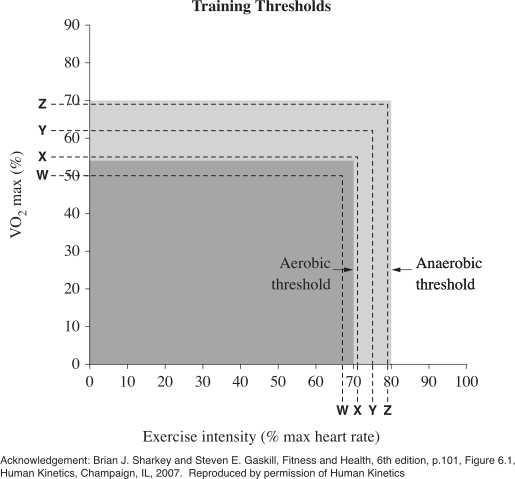
The graph shows training thresholds for aerobic and anaerobic conditioning.
 

Which exercise intensity indicates the greatest potential for gain in aerobic conditioning?

  1. W
  2. X
  3. Y
  4. Z
Show Answers Only

\(D\)

Show Worked Solution
  • D is correct: Zone Z is just below anaerobic threshold providing maximum aerobic benefit.

Other Options:

  • A is incorrect: Zone W is below aerobic threshold with minimal conditioning benefit.
  • B is incorrect: Zone X is at aerobic threshold but not optimal intensity.
  • C is incorrect: Zone Y provides some benefit but not maximum aerobic gain.

♦♦♦♦♦ Mean mark 13%.

Filed Under: Principles of training Tagged With: Band 6, smc-5460-10-Thresholds

HMS, HIC 2015 HSC 33b

Explain the characteristics of an effective and sustainable health promotion strategy.   (12 marks)

--- 28 WORK AREA LINES (style=lined) ---

Show Answers Only
  • An effective and sustainable health promotion strategy requires specific characteristics that ensure long-term success and positive health outcomes for target populations. The reason for this is that health promotion must address multiple factors to create lasting change in communities and achieve meaningful improvements.
  • Firstly, working with target groups in program design and implementation is essential because communities understand their own health needs better than outsiders and can identify relevant priorities. This occurs when health professionals collaborate directly with community members to identify priority health issues and develop appropriate solutions together. For instance, Aboriginal Community Controlled Health Organisations involve local communities in planning health services which results in culturally appropriate care that people trust and use regularly.
  • Consequently, cultural relevance and appropriateness ensures health promotion strategies respect community values and beliefs while acknowledging diverse backgrounds. This leads to greater community acceptance and participation because people feel their culture is valued rather than ignored or criticised by health programs.
  • Therefore, focusing on skills, education and prevention enables communities to develop health literacy and make informed decisions about their wellbeing independently. As a result, programs that teach practical skills like nutrition education or smoking cessation techniques create sustainable behaviour change because they address individual knowledge gaps and build personal capacity.
  • Furthermore, supporting whole populations while directing extra resources to high-risk groups achieves equity in health outcomes across diverse communities. This demonstrates how universal programs combined with targeted interventions address both general health improvement and specific community needs simultaneously without creating division.
  • Finally, intersectorial collaboration between health sectors, governments, industry, local authorities, media and voluntary organisations ensures comprehensive approaches that avoid duplication of resources and expertise. This occurs because all sectors within the community share responsibility for health promotion, which creates coordinated efforts that maximise program effectiveness across multiple areas of influence.
Show Worked Solution
  • An effective and sustainable health promotion strategy requires specific characteristics that ensure long-term success and positive health outcomes for target populations. The reason for this is that health promotion must address multiple factors to create lasting change in communities and achieve meaningful improvements.
  • Firstly, working with target groups in program design and implementation is essential because communities understand their own health needs better than outsiders and can identify relevant priorities. This occurs when health professionals collaborate directly with community members to identify priority health issues and develop appropriate solutions together. For instance, Aboriginal Community Controlled Health Organisations involve local communities in planning health services which results in culturally appropriate care that people trust and use regularly.
  • Consequently, cultural relevance and appropriateness ensures health promotion strategies respect community values and beliefs while acknowledging diverse backgrounds. This leads to greater community acceptance and participation because people feel their culture is valued rather than ignored or criticised by health programs.
  • Therefore, focusing on skills, education and prevention enables communities to develop health literacy and make informed decisions about their wellbeing independently. As a result, programs that teach practical skills like nutrition education or smoking cessation techniques create sustainable behaviour change because they address individual knowledge gaps and build personal capacity.
  • Furthermore, supporting whole populations while directing extra resources to high-risk groups achieves equity in health outcomes across diverse communities. This demonstrates how universal programs combined with targeted interventions address both general health improvement and specific community needs simultaneously without creating division.
  • Finally, intersectorial collaboration between health sectors, governments, industry, local authorities, media and voluntary organisations ensures comprehensive approaches that avoid duplication of resources and expertise. This occurs because all sectors within the community share responsibility for health promotion, which creates coordinated efforts that maximise program effectiveness across multiple areas of influence.

♦♦♦♦ Mean mark 32%.

Filed Under: Models of health promotion Tagged With: Band 5, Band 6, smc-5515-25-Health approaches

HMS, BM 2015 HSC 28

Why is it important for an athlete to develop the elements of performance?   (8 marks)

--- 24 WORK AREA LINES (style=lined) ---

Show Answers Only

Overview Statement

  • Developing performance elements enables athletes to maximise their competitive potential through enhanced decision-making capabilities and strategic awareness that directly influence sporting success.

Decision-Making Development

  • Athletes must develop sophisticated decision-making skills because modern sports require split-second choices under intense competitive pressure.
  • This leads to improved game awareness where players can quickly assess complex situations and select the best possible responses from multiple available options.
  • For instance, a basketball player develops the ability to choose between shooting, passing or driving based on defensive positioning and teammate movement patterns.
  • Consequently, enhanced decision-making results in more effective performance during critical moments when automatic responses prove insufficient for competitive success.

Strategic and Tactical Excellence

  • The underlying reason is that strategic and tactical development allows athletes to understand their specific role within team systems and systematically exploit opponent weaknesses.
  • This occurs because athletes learn to adapt their approach based on constantly changing game conditions and evolving opponent strategies throughout competition.
  • Therefore, tactical awareness enables athletes to anticipate play patterns and position themselves advantageously before situations develop.
  • As a result, this comprehensive understanding creates significant competitive advantages that separate elite performers from recreational participants through superior game intelligence and situational awareness.

Performance Integration

  • This demonstrates why combining decision-making with tactical knowledge produces well-rounded athletes capable of sustained excellence across varying competitive situations.
Show Worked Solution

Overview Statement

  • Developing performance elements enables athletes to maximise their competitive potential through enhanced decision-making capabilities and strategic awareness that directly influence sporting success.

Decision-Making Development

  • Athletes must develop sophisticated decision-making skills because modern sports require split-second choices under intense competitive pressure.
  • This leads to improved game awareness where players can quickly assess complex situations and select the best possible responses from multiple available options.
  • For instance, a basketball player develops the ability to choose between shooting, passing or driving based on defensive positioning and teammate movement patterns.
  • Consequently, enhanced decision-making results in more effective performance during critical moments when automatic responses prove insufficient for competitive success.

Strategic and Tactical Excellence

  • The underlying reason is that strategic and tactical development allows athletes to understand their specific role within team systems and systematically exploit opponent weaknesses.
  • This occurs because athletes learn to adapt their approach based on constantly changing game conditions and evolving opponent strategies throughout competition.
  • Therefore, tactical awareness enables athletes to anticipate play patterns and position themselves advantageously before situations develop.
  • As a result, this comprehensive understanding creates significant competitive advantages that separate elite performers from recreational participants through superior game intelligence and situational awareness.

Performance Integration

  • This demonstrates why combining decision-making with tactical knowledge produces well-rounded athletes capable of sustained excellence across varying competitive situations.

♦♦♦♦ Mean mark 28%.

Filed Under: Performance elements Tagged With: Band 6, smc-5925-10-Decision making, smc-5925-20-Strategy/Tactics

HMS, TIP 2017 HSC 19 MC

In which activity would creatine supplementation be most likely to enhance an athlete's performance?

  1. An ultra-marathon
  2. A long jump event
  3. A 100-metre sprint final
  4. A 2-kilometre ocean swim
Show Answers Only

\(B\)

Show Worked Solution
  • B is correct: Long jump requires explosive power from ATP-PCr system enhanced by creatine.

Other Options:

  • A is incorrect: Ultra-marathon relies on aerobic system, not creatine phosphate stores.
  • C is incorrect: 100m sprint duration exceeds optimal creatine supplementation benefits.
  • D is incorrect: 2km swim uses aerobic system predominantly, not phosphocreatine stores.

♦♦♦♦ Mean mark 19%.

Filed Under: Supplementation and performance Tagged With: Band 6, smc-5468-20-Caffeine/creatine

HMS, HAG 2018 HSC 15 MC

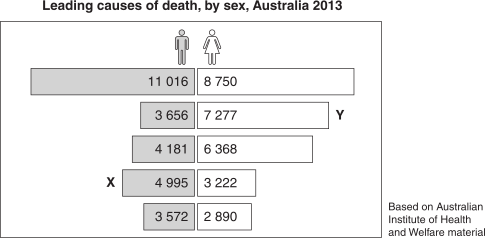
The table shows the data related to leading causes of death, by sex, in Australia in 2013.
 

What are the causes labelled by X and Y?
 

  X Y
A.   Coronary heart disease Cerebrovascular disease
B. Cerebrovascular disease Coronary heart disease
C. Dementia/Alzheimer’s disease Lung cancer
D. Lung cancer Dementia/Alzheimer’s disease
Show Answers Only

\(D\)

Show Worked Solution

  • D is correct: X represents lung cancer (higher in males), Y represents dementia (higher in females).

Other Options:

  • A is incorrect: Coronary heart disease typically has higher male rates, not matching Y pattern.
  • B is incorrect: Pattern doesn’t match cerebrovascular disease gender distribution for these positions.
  • C is incorrect: Reverses the correct gender patterns for these conditions.

♦♦ Mean mark 29%.

Filed Under: Current Health Status Tagged With: Band 6, smc-5474-05-Major causes, smc-5474-20-Data interpretation

HMS, HAG 2019 HSC 19 MC

Which row of the table shows the risk factors and protective factors for the second-highest leading cause of cancer deaths for females in Australia in 2016?

  Risk factors Protective factors
A.   Constipation, high-fat diet Not smoking, consume foods high in
fibre
B. Alcohol consumption, family history Regular physical activity, avoid
weight gain
C. Excessive exposure to sunlight, fair
skin
Apply sunscreen, wear SPF clothing
D. Smoking, exposure to occupational
radiation
Not smoking, wear personal
protective equipment
Show Answers Only

\(B\)

Show Worked Solution

  • B is correct: Breast cancer is second-highest female cancer death; alcohol and family history are key risks.

Other Options:

  • A is incorrect: These factors relate to colorectal cancer, not second-highest cause.
  • C is incorrect: Skin cancer factors don’t match second-highest female cancer mortality.
  • D is incorrect: Lung cancer factors match highest, not second-highest female cancer deaths.

♦♦ Mean mark 29%.

Filed Under: Chronic Conditions, Diseases and Injury Tagged With: Band 6, smc-5477-10-Cancer trends

HMS, HIC 2019 HSC 18 MC

Which of the following identifies epidemiology trends in Australia over the past ten years?

  Increased Decreased No change
A.   Adults who smoke daily Immunisation rates for
children
Lung cancer incidence
B. Immunisation rates for
children
Incidence of heart
attacks
Lung cancer incidence
C. Incidence of heart
attacks
Elective surgery waiting
time
Life expectancy
D. Life expectancy Adults who smoke daily Immunisation rates for
children
Show Answers Only

\(B\)

Show Worked Solution

  • B is correct: Immunisation rates increased, heart attacks decreased, lung cancer incidence unchanged.

Other Options:

  • A is incorrect: Immunisation rates have increased, not decreased over ten years.
  • C is incorrect: Heart attacks have decreased, not increased in recent years.
  • D is incorrect: Life expectancy has increased, not remained unchanged over time.

♦♦♦♦♦ Mean mark 25%.

Filed Under: Health status of Australians Tagged With: Band 6, smc-5504-05-Epidemiology

HMS, HAG 2019 HSC 15 MC

Which of the following identifies a responsibility of each level of government in Australia's health care system?

  Commonwealth State/Territory Local
A.   Administering Medicare Delivering cancer
screening
Managing environmental
health services
B. Administering Medicare Regulating private
health insurance
Delivering home-based
health services
C. Delivering immunisation
programs
Funding ambulance
services
Monitoring health policy
implementation
D. Funding primary health
care
Managing public
hospitals
Delivering immunisation
programs
Show Only

\(A\)

Show Worked Solution

  • A is correct: Commonwealth administers Medicare, states deliver screening programs, local councils manage environmental health.

Other Options:

  • B is incorrect: Commonwealth regulates private health insurance, not state governments.
  • C is incorrect: Commonwealth delivers immunisation programs, not local government.
  • D is incorrect: Local government doesn’t deliver immunisation programs, this is state responsibility.

♦♦♦ Mean mark 29%.

Filed Under: Govt and Non-Govt responsibilities Tagged With: Band 6, smc-5480-05-Government roles

HMS, TIP 2020 HSC 11 MC

An athlete is competing in an endurance event.

What is the best nutritional intake for this athlete three hours prior to this event?

  1. A simple carbohydrate meal that is high in fat and low in fibre
  2. A complex carbohydrate meal that is low in fat and low in fibre
  3. A simple carbohydrate meal that is low in protein and high in fibre
  4. A complex carbohydrate meal that is high in protein and high in fibre
Show Answers Only

\(B\)

Show Worked Solution
  • B is correct: Complex carbohydrates provide sustained energy, low fat/fibre aids digestion.

Other Options:

  • A is incorrect: High fat slows digestion and simple carbs burn quickly.
  • C is incorrect: High fibre causes digestive issues during competition.
  • D is incorrect: High protein and fibre difficult to digest before competition.

♦♦♦♦ Mean mark 18%.

Filed Under: Dietary requirements and fluid intake Tagged With: Band 6, smc-5466-10-Macros

PHYSICS, M3 EQ-Bank 8 MC

A 0.2 kg block of ice at 0\(^{\circ}\)C is dropped into 400 mL of water at 50\(^{\circ}\)C. Assuming no heat is lost to the surroundings and the latent heat of fusion of ice is \(3.3 \times 10^5\) J/kg, what will be the final state of the system?

  1. Some ice remains, and water is at 0\(^{\circ}\)C
  2. Ice melts completely, and final temperature is between 0\(^{\circ}\)C and 50\(^{\circ}\)C
  3. All the water freezes
  4. Ice melts completely and final temperature is 0\(^{\circ}\)C
Show Answers Only

\(B\)

Show Worked Solution
  • Energy required to melt the ice:
  •    \(Q = mL = 0.2 \times 3.3 \times 10^5 = 66\,000\ \text{J}\)
  • Energy available from cooling the water:
  •    \(Q = mc\Delta t = 0.4 \times 4200 \times 50 = 84\,000\ \text{J}\)
  • The water has enough energy to melt the ice and heat the result above \(0^{\circ}\).

\(\Rightarrow B\)

Filed Under: Thermodynamics Tagged With: Band 6, smc-4282-30-Q=mcΔt, smc-4282-35-Quantitative calcs

HMS, HIC 2022 HSC 27b

To what extent can a young person's health be affected by developmental aspects?   (12 marks)

--- 30 WORK AREA LINES (style=lined) ---

Show Answers Only

Judgment Statement

  • Developmental aspects significantly affect young people’s health, with the development of individual strengthening skills creating both opportunities and challenges that fundamentally shape health outcomes throughout adolescence.

Development of Individual Strengthening Skills

  • Young people’s developing self-efficacy creates confidence in their ability to make healthy choices and manage challenging situations.
  • Health literacy development enables better understanding of health information and decision-making about personal wellbeing. However, limited health literacy can result in poor choices regarding nutrition, exercise and substance use.
  • Help-seeking behaviours develop gradually as young people learn to access appropriate support systems.
  • Problem-solving skills strengthen during adolescence, allowing young people to navigate complex health challenges more effectively.
  • This cognitive development demonstrates how individual strengthening skills directly impact health outcomes.

Resilience and Coping Development

  • Growth of resilience enables young people to “bounce back” from adversity and maintain mental health during stressful periods. Coping strategies evolve as adolescents learn to manage emotions, stress, and peer pressure more effectively.
  • Sense of purpose development provides direction and motivation for healthy lifestyle choices and future planning.
  • Ethical behaviour formation influences decision-making about risky activities including substance use and sexual behaviour.
  • Building connectedness creates supportive relationships that protect against mental health issues and promote positive health behaviours. However, lack of connectedness can lead to social isolation and increased vulnerability to mental health problems.

Integration of Developmental Skills

  • These individual strengthening skills interact to create comprehensive health protection mechanisms. Self-efficacy combined with health literacy enables informed decision-making, whilst resilience paired with effective coping strategies provides emotional stability during challenging developmental transitions.

Reaffirmation

  • Evidence confirms that developmental aspects substantially affect young people’s health through the acquisition of individual strengthening skills. The development of self-efficacy, health literacy, resilience, and connectedness creates both significant opportunities and challenges requiring supportive environments.

Show Worked Solution

Judgment Statement

  • Developmental aspects significantly affect young people’s health, with the development of individual strengthening skills creating both opportunities and challenges that fundamentally shape health outcomes throughout adolescence.

Development of Individual Strengthening Skills

  • Young people’s developing self-efficacy creates confidence in their ability to make healthy choices and manage challenging situations.
  • Health literacy development enables better understanding of health information and decision-making about personal wellbeing. However, limited health literacy can result in poor choices regarding nutrition, exercise and substance use.
  • Help-seeking behaviours develop gradually as young people learn to access appropriate support systems.
  • Problem-solving skills strengthen during adolescence, allowing young people to navigate complex health challenges more effectively.
  • This cognitive development demonstrates how individual strengthening skills directly impact health outcomes.

Resilience and Coping Development

  • Growth of resilience enables young people to “bounce back” from adversity and maintain mental health during stressful periods. Coping strategies evolve as adolescents learn to manage emotions, stress, and peer pressure more effectively.
  • Sense of purpose development provides direction and motivation for healthy lifestyle choices and future planning.
  • Ethical behaviour formation influences decision-making about risky activities including substance use and sexual behaviour.
  • Building connectedness creates supportive relationships that protect against mental health issues and promote positive health behaviours. However, lack of connectedness can lead to social isolation and increased vulnerability to mental health problems.

Integration of Developmental Skills

  • These individual strengthening skills interact to create comprehensive health protection mechanisms. Self-efficacy combined with health literacy enables informed decision-making, whilst resilience paired with effective coping strategies provides emotional stability during challenging developmental transitions.

Reaffirmation

  • Evidence confirms that developmental aspects substantially affect young people’s health through the acquisition of individual strengthening skills. The development of self-efficacy, health literacy, resilience, and connectedness creates both significant opportunities and challenges requiring supportive environments.

♦♦ Mean mark 27%.

Filed Under: Strengthening, protecting and enhancing health Tagged With: Band 6, smc-5511-40-Skills application/impact

v1 Measurement, STD2 M1 2023 HSC 9 MC

The length and width of a rectangular pool are measured to be 13 m and 7.5 m respectively, correct to the nearest metre and nearest 0.1 metre.

What are the lower and upper bounds for the area of the pool?

  1. `text{94.25 m}^2\ text{and 101.25 m}^2`
  2. `text{93.125 m}^2\ text{and 101.925 m}^2`
  3. `text{92.5 m}^2\ text{and 102.5 m}^2`
  4. `text{93.75 m}^2\ text{and 100.75 m}^2`
Show Answers Only

`B`

Show Worked Solution
♦ Mean mark 35%.

`text{Length absolute error} = 1/2 xx 1 = 0.5\ \text{m}`

`text{Width absolute error} = 1/2 xx 0.1 = 0.05\ \text{m}`

`text{Length bounds: } 13 ± 0.5 = [12.5,\ 13.5]\ \text{m}`

`text{Width bounds: } 7.5 ± 0.05 = [7.45,\ 7.55]\ \text{m}`

`text{Lower bound area} = 12.5 xx 7.45 = 93.125\ \text{m}^2`

`text{Upper bound area} = 13.5 xx 7.55 = 101.925\ \text{m}^2`

`⇒ B`

Filed Under: Units and Measurement Error (Std2-X) Tagged With: Band 6, smc-797-10-Measurement Error

v1 Measurement, STD2 M1 2009 HSC 12 MC

How many square millimetres are in 0.004 square metres?

  1. 4
  2. 40
  3. 4000
  4. 40000
Show Answers Only

`D`

Show Worked Solution
`text{Since 1 m}^2` `= 1000\ text{mm} xx 1000\ text{mm}`
  `= 1\ 000\ 000\ \text{mm}^2`

♦♦ Mean mark 27%.
`:. 0.004\ \text{m}^2` `= 0.004 xx 1\ 000\ 000`
  `= 4000`
  `= 4000\ \text{mm}^2`

`⇒ D`

Filed Under: MM1 - Units of Measurement, Units and Measurement Error (Std2-X) Tagged With: Band 6, smc-1120-40-Other unit conversion, smc-797-40-Other unit conversion

PHYSICS, M4 EQ-Bank 8

A student is investigating the magnetic field produced by a solenoid. The solenoid consists of tightly wound loops of wire carrying a current \(I\). A small piece of soft unmagnetised iron is placed inside the solenoid, and a bar magnet is placed outside the solenoid near one end.

  1. Describe the effect of placing the soft iron inside the solenoid on the magnetic field, and explain this effect in terms of ferromagnetic behaviour.   (3 marks)

--- 8 WORK AREA LINES (style=lined) ---

  1. Compare and contrast the magnetic field produced by a solenoid with the magnetic field produced by a bar magnet. Explain two similarities and two differences.   (4 marks)

--- 810 WORK AREA LINES (style=lined) ---

Show Answers Only

a.    Effect of placing a soft iron core inside a solenoid:

  • The strength and concentration of the magnetic field within the solenoid increases significantly.
  • This occurs because soft iron is a ferromagnetic material with a high magnetic permeability, meaning it allows magnetic field lines to pass through it more easily than air.
  • Ferromagnetic materials are made up of regions called magnetic domains. In an unmagnetised state, these domains are randomly oriented, so their individual magnetic fields cancel out.
  • However, when a soft iron core is placed inside the solenoid, the external magnetic field produced by the current causes the domains to align with the field, creating a net magnetic field that reinforces the original one.
  • Because soft iron is easily magnetised and demagnetised, it is ideal for use in electromagnets, where a strong, controllable, and reversible magnetic field is needed.

b.    Similarities:

  • Field Pattern: Both produce magnetic fields with a similar dipole shape — field lines emerge from the north pole, curve around, and enter at the south pole, forming closed loops. Internally, the field lines run from south to north, creating a uniform field inside both the solenoid and the bar magnet.
  • Effect on Magnetic Materials: Both fields can attract ferromagnetic materials (like iron) and influence their magnetic domains. A compass needle or small magnetic object placed near either field will align with the field lines.

Differences:

  • Source of the Magnetic Field: A bar magnet’s field is generated by the alignment of permanent magnetic domains in the material. In contrast, a solenoid’s field is produced by electric current flowing through the wire coils, and can be turned on or off.
  • Controllability: The magnetic field of a solenoid is adjustable, it can be increased by raising the current or number of turns and its direction reversed by changing current direction. A bar magnet’s field is fixed in strength and polarity unless the material is physically altered or demagnetised.
Show Worked Solution

a.    Effect of placing a soft iron core inside a solenoid:

  • The strength and concentration of the magnetic field within the solenoid increases significantly.
  • This occurs because soft iron is a ferromagnetic material with a high magnetic permeability, meaning it allows magnetic field lines to pass through it more easily than air.
  • Ferromagnetic materials are made up of regions called magnetic domains. In an unmagnetised state, these domains are randomly oriented, so their individual magnetic fields cancel out.
  • However, when a soft iron core is placed inside the solenoid, the external magnetic field produced by the current causes the domains to align with the field, creating a net magnetic field that reinforces the original one.
  • Because soft iron is easily magnetised and demagnetised, it is ideal for use in electromagnets, where a strong, controllable, and reversible magnetic field is needed.

b.    Similarities:

  • Field Pattern: Both produce magnetic fields with a similar dipole shape — field lines emerge from the north pole, curve around, and enter at the south pole, forming closed loops. Internally, the field lines run from south to north, creating a uniform field inside both the solenoid and the bar magnet.
  • Effect on Magnetic Materials: Both fields can attract ferromagnetic materials (like iron) and influence their magnetic domains. A compass needle or small magnetic object placed near either field will align with the field lines.

Differences:

  • Source of the Magnetic Field: A bar magnet’s field is generated by the alignment of permanent magnetic domains in the material. In contrast, a solenoid’s field is produced by electric current flowing through the wire coils, and can be turned on or off.
  • Controllability: The magnetic field of a solenoid is adjustable, it can be increased by raising the current or number of turns and its direction reversed by changing current direction. A bar magnet’s field is fixed in strength and polarity unless the material is physically altered or demagnetised.

Filed Under: Magnetism Tagged With: Band 5, Band 6, smc-4285-20-Fields around wires/solenoids, smc-4285-40-Properties of magnetic fields, smc-4285-50-Properties of magnets

PHYSICS, M4 EQ-Bank 8

A battery powers a circuit containing three identical light bulbs: \(\text{A}\), \(\text{B}\), and \(\text{C}\). Refer to the diagram.
 

Predict and explain the effect on the brightness of bulbs \(\text{A}\) and \(\text{B}\) when the switch is closed. Support your answer using appropriate physics concepts.   (4 marks)

--- 8 WORK AREA LINES (style=lined) ---

Show Answers Only

Given brightness is directly related to the power dissipated in each bulb:

  • When the switch is closed, the circuit configuration changes — bulbs B and C become a parallel branch. This decreases the overall resistance of the circuit, which causes the total current from the battery to increase.
  • According to the power formula  \(P= I^2R\), bulb A, which is still in series with the rest of the circuit, now receives a greater current and increases in brightness.
  • For bulb B, once the switch is closed, it shares current with bulb C in a parallel arrangement. Since each of these two bulbs (B and C) has half the current that B previously received on its own (before the switch was closed), the current through bulb B decreases.
  • Consequently, the power dissipated in B decreases, and it becomes dimmer.
Show Worked Solution

Given brightness is directly related to the power dissipated in each bulb:

  • When the switch is closed, the circuit configuration changes — bulbs B and C become a parallel branch. This decreases the overall resistance of the circuit, which causes the total current from the battery to increase.
  • According to the power formula  \(P= I^2R\), bulb A, which is still in series with the rest of the circuit, now receives a greater current and increases in brightness.
  • For bulb B, once the switch is closed, it shares current with bulb C in a parallel arrangement. Since each of these two bulbs (B and C) has half the current that B previously received on its own (before the switch was closed), the current through bulb B decreases.
  • Consequently, the power dissipated in B decreases, and it becomes dimmer.

Filed Under: Electric Circuits Tagged With: Band 5, Band 6, smc-4284-30-Power

PHYSICS, M4 EQ-Bank 7 MC

Consider the circuit below.
 

The readings on the meters are \(I_1\), \(I_2\), \(V_1\) and \(V_2\). Which of the following pairs of inequalities are correct.

  1. \(I_1 > I_2\) and \(V_1 > V_2\)
  2. \(I_1 > I_2\) and \(V_1 < V_2\)
  3. \(I_1 < I_2\) and \(V_1 > V_2\)
  4. \(I_1 < I_2\) and \(V_1 < V_2\)
Show Answers Only

\(A\)

Show Worked Solution
  • Let the supplied voltage to the circuit be 25 V.
  • The total resistance of the 4 \(\Omega\) and 8 \(\Omega\) resistors are:
\(\dfrac{1}{R_{T_1}}\) \(= \dfrac{1}{8} + \dfrac{1}{4} = \dfrac{3}{8}\)  
\(R_{T_1}\) \(=\dfrac{8}{3}\ \Omega\)  
  •  Similarly, the total resistance of the 3 \(\Omega\) and 3 \(\Omega\) resistors are:
\(\dfrac{1}{R_{T_2}}\) \(= \dfrac{1}{3} + \dfrac{1}{3} = \dfrac{2}{3}\)
\(R_{T_2}\) \(=\dfrac{3}{2}\ \Omega\)
  •  The total resistance of the circuit is \(\dfrac{8}{3} + \dfrac{3}{2} = \dfrac{25}{6}\ \Omega\)
  • The total current running through circuit is:
  •    \(I = \dfrac{V}{R} = \dfrac{25}{\frac{25}{6}} = 6\ \text{A}\)
  • The voltage drop across the first two resistors \(=R_{T_1} \times I = \dfrac{8}{3} \times 6 = 16\ \text{V}\)
  • Therefore the voltage drop across the second two resistors \(=25-16 = 9\ \text{V}\)
  • As the voltage across each branch of a parallel circuit is the same and equal to the total voltage drop, \(V_1 > V_2\)
  • The current in each branch of a parallel circuit is split depending on the resistance of each branch. 
  •    \(I_1 = \dfrac{V}{R} = \dfrac{16}{4} = 4\ \text{A}\)
  •    \(I_2 = \dfrac{V}{R} = \dfrac{9}{3} = 3\ \text{A}\)

\(\therefore I_1 > I_2\)

\(\Rightarrow A\)

Filed Under: Electric Circuits Tagged With: Band 6, smc-4284-10-V=IR, smc-4284-50-Parallel Circuits, smc-4284-60-Voltmeters/Ammeters

HMS, BM EQ-Bank 986

Explain the immediate physiological responses that occur during anaerobic interval training, including changes to heart rate, lactate levels, and ventilation rate.   (8 marks)

--- 28 WORK AREA LINES (style=lined) ---

Show Answers Only

Sample Answer 

  • Heart rate increases rapidly during anaerobic interval training. The increase occurs because the cardiovascular system must deliver oxygen at maximum capacity.
  • Sprint intervals cause heart rate to rise from resting to near-maximum levels. The increase happens within seconds of starting high-intensity work.
  • The rapid elevation results from immediate metabolic demands exceeding oxygen supply. Therefore, the heart compensates by beating faster to deliver available oxygen.
  • Ventilation rate escalates dramatically during intense intervals. Respiratory adjustments occur because muscles demand more oxygen while producing excess carbon dioxide.
  • Breathing frequency increases substantially with deeper breaths enhancing gas exchange. As a result, more oxygen enters while metabolic waste exits efficiently.
  • The dramatic increase happens due to chemoreceptors detecting rising carbon dioxide levels. Consequently, the respiratory centre drives increased ventilation to maintain blood gas balance.
  • Blood lactate accumulates rapidly during anaerobic intervals. Accumulation happens when energy demands exceed oxygen availability for aerobic metabolism.
  • Lactate rises from minimal resting levels to very high concentrations. The accumulation occurs because glycolytic metabolism produces lactate faster than clearance.
  • Therefore, muscles rely increasingly on anaerobic pathways for ATP production. Such metabolic shifts cause the characteristic burning sensation limiting performance duration.
  • These responses interact to support interval performance. Together they enable brief maximal efforts despite oxygen deficit conditions.
  • Recovery periods between intervals allow partial restoration. Brief rest periods allow repeated high-intensity efforts within a training session.
  • Overall, the coordinated response demonstrates the body’s remarkable capacity to meet extreme demands. Such integration enables anaerobic interval training effectiveness.
Show Worked Solution

Sample Answer 

  • Heart rate increases rapidly during anaerobic interval training. The increase occurs because the cardiovascular system must deliver oxygen at maximum capacity.
  • Sprint intervals cause heart rate to rise from resting to near-maximum levels. The increase happens within seconds of starting high-intensity work.
  • The rapid elevation results from immediate metabolic demands exceeding oxygen supply. Therefore, the heart compensates by beating faster to deliver available oxygen.
  • Ventilation rate escalates dramatically during intense intervals. Respiratory adjustments occur because muscles demand more oxygen while producing excess carbon dioxide.
  • Breathing frequency increases substantially with deeper breaths enhancing gas exchange. As a result, more oxygen enters while metabolic waste exits efficiently.
  • The dramatic increase happens due to chemoreceptors detecting rising carbon dioxide levels. Consequently, the respiratory centre drives increased ventilation to maintain blood gas balance.
  • Blood lactate accumulates rapidly during anaerobic intervals. Accumulation happens when energy demands exceed oxygen availability for aerobic metabolism.
  • Lactate rises from minimal resting levels to very high concentrations. The accumulation occurs because glycolytic metabolism produces lactate faster than clearance.
  • Therefore, muscles rely increasingly on anaerobic pathways for ATP production. Such metabolic shifts cause the characteristic burning sensation limiting performance duration.
  • These responses interact to support interval performance. Together they enable brief maximal efforts despite oxygen deficit conditions.
  • Recovery periods between intervals allow partial restoration. Brief rest periods allow repeated high-intensity efforts within a training session.
  • Overall, the coordinated response demonstrates the body’s remarkable capacity to meet extreme demands. Such integration enables anaerobic interval training effectiveness.

Filed Under: Responses to training Tagged With: Band 5, Band 6, smc-5532-08-Heart rate, smc-5532-12-Ventilation rate, smc-5532-17-Lactate levels

HMS, BM EQ-Bank 985

Analyse different anaerobic interval training methods for individual sports versus team sports, including examples of contemporary training approaches.   (8 marks)

--- 24 WORK AREA LINES (style=lined) ---

Show Answers Only

Sample Answer

Overview Statement:

  • Anaerobic interval training methods differ significantly between individual and team sports.
  • Work intervals, recovery periods, and contemporary approaches interact with sport demands.
  • These relationships determine optimal performance outcomes.

Component Relationship 1: Work-Rest Patterns

  • Individual sports use longer intervals (60-90 seconds) with complete recovery (3-5 minutes).
  • This connects to the need for maximum quality in each effort.
  • A 100m sprinter performs 6 x 60m sprints at 95% intensity because each sprint must replicate race speed.
  • Complete recovery enables consistent technique maintenance.
  • This pattern reveals that individual sports prioritise movement quality over quantity.

Component Relationship 2: Recovery Demands

  • Team sports employ shorter intervals (20-30 seconds) with incomplete rest.
  • These patterns influence the development of repeated sprint ability.
  • Soccer players perform 8 x 30-second efforts with 45-second recovery which mirrors game demands.
  • Incomplete recovery causes players to adapt to performing under fatigue.
  • The significance is team sports require sustained performance despite tiredness.

Contemporary Methods and Implications:

  • Sprint Interval Training (SIT) combines maximal efforts with extended recovery.
  • High Intensity Interval Training (HIIT) offers flexible work-to-rest ratios.
  • SIT protocols of 4-6 x 30-second all-out efforts lead to improved power across both sport types.
  • HIIT adapts to specific needs: 30:30 for teams, 4min:2min for endurance events.
  • Therefore, contemporary methods provide time-efficient training for diverse sporting demands.
Show Worked Solution

Sample Answer 

Overview Statement:

  • Anaerobic interval training methods differ significantly between individual and team sports.
  • Work intervals, recovery periods, and contemporary approaches interact with sport demands.
  • These relationships determine optimal performance outcomes.

Component Relationship 1: Work-Rest Patterns

  • Individual sports use longer intervals (60-90 seconds) with complete recovery (3-5 minutes).
  • This connects to the need for maximum quality in each effort.
  • A 100m sprinter performs 6 x 60m sprints at 95% intensity because each sprint must replicate race speed.
  • Complete recovery enables consistent technique maintenance.
  • This pattern reveals that individual sports prioritise movement quality over quantity.

Component Relationship 2: Recovery Demands

  • Team sports employ shorter intervals (20-30 seconds) with incomplete rest.
  • These patterns influence the development of repeated sprint ability.
  • Soccer players perform 8 x 30-second efforts with 45-second recovery which mirrors game demands.
  • Incomplete recovery causes players to adapt to performing under fatigue.
  • The significance is team sports require sustained performance despite tiredness.

Contemporary Methods and Implications:

  • Sprint Interval Training (SIT) combines maximal efforts with extended recovery.
  • High Intensity Interval Training (HIIT) offers flexible work-to-rest ratios.
  • SIT protocols of 4-6 x 30-second all-out efforts lead to improved power across both sport types.
  • HIIT adapts to specific needs: 30:30 for teams, 4min:2min for endurance events.
  • Therefore, contemporary methods provide time-efficient training for diverse sporting demands.

Filed Under: Aerobic vs Anaerobic training Tagged With: Band 5, Band 6, smc-5530-15-Anaerobic, smc-5530-40-Contemporary training methods

HMS, BM EQ-Bank 984

Analyse how different anaerobic interval training methods could be implemented and periodised across a competitive season for a 200 metre sprinter. In your response, consider energy system specificity, training variables, and progression principles.   (9 marks)

--- 24 WORK AREA LINES (style=lined) ---

Show Answers Only

Sample Answer

  • Early general preparation phase (3 – 4 months pre-competition) should incorporate longer intervals (150 – 300m) at submaximal intensity (80 – 85%) with longer recovery periods (3 – 4 minutes) to develop basic anaerobic capacity without excessive physiological stress.
  • Mid preparation phase (2 – 3 months pre-competition) should progress to medium length intervals (60 – 150m) at higher intensities (85 – 90%) with moderate recovery (2 – 3 minutes) to enhance glycolytic system capacity and lactate tolerance.
  • Specific preparation phase (1 – 2 months pre-competition) should introduce shorter, more intense intervals (30 – 80m) at near-maximal effort (0 – 95%) with longer recovery (3 – 5 minutes) to develop ATP-PCr power and alactic capacity essential for 200m performance.
  • Competition phase should incorporate highly specific interval training including race-pace 200m runs with full recovery (8 – 10 minutes) to simulate competition demands while minimising fatigue accumulation.
  • Work-to-rest ratios should progress from approximately \(1:3\) in early phases to \(1:8\) – \(1:10\) in competition phases to reflect the increasing intensity and the need for quality over quantity.
  • Volume (total distance covered in intervals) should periodically decrease as intensity increases, respecting the inverse relationship between these variables to prevent overtraining.
  • Technique-focused elements should be incorporated throughout all phases but especially during higher-intensity intervals to ensure mechanical efficiency is maintained under fatigue conditions.
  • Training should transition from more glycolytic-dominant intervals (150 – 300m) early in the season to more ATP-PCr dominant intervals (30 – 80m) closer to competition, reflecting the proportional contribution of energy systems to 200m performance.
  • Recovery between anaerobic interval sessions should increase from 48 hours in early phases to 72+ hours near competition to ensure complete adaptation and prevent accumulated fatigue.
Show Worked Solution

Sample Answer 

  • Early general preparation phase (3 – 4 months pre-competition) should incorporate longer intervals (150 – 300m) at submaximal intensity (80 – 85%) with longer recovery periods (3 – 4 minutes) to develop basic anaerobic capacity without excessive physiological stress.
  • Mid preparation phase (2 – 3 months pre-competition) should progress to medium length intervals (60 – 150m) at higher intensities (85 – 90%) with moderate recovery (2 – 3 minutes) to enhance glycolytic system capacity and lactate tolerance.
  • Specific preparation phase (1 – 2 months pre-competition) should introduce shorter, more intense intervals (30 – 80m) at near-maximal effort (0 – 95%) with longer recovery (3 – 5 minutes) to develop ATP-PCr power and alactic capacity essential for 200m performance.
  • Competition phase should incorporate highly specific interval training including race-pace 200m runs with full recovery (8 – 10 minutes) to simulate competition demands while minimising fatigue accumulation.
  • Work-to-rest ratios should progress from approximately \(1:3\) in early phases to \(1:8\) – \(1:10\) in competition phases to reflect the increasing intensity and the need for quality over quantity.
  • Volume (total distance covered in intervals) should periodically decrease as intensity increases, respecting the inverse relationship between these variables to prevent overtraining.
  • Technique-focused elements should be incorporated throughout all phases but especially during higher-intensity intervals to ensure mechanical efficiency is maintained under fatigue conditions.
  • Training should transition from more glycolytic-dominant intervals (150 – 300m) early in the season to more ATP-PCr dominant intervals (30 – 80m) closer to competition, reflecting the proportional contribution of energy systems to 200m performance.
  • Recovery between anaerobic interval sessions should increase from 48 hours in early phases to 72+ hours near competition to ensure complete adaptation and prevent accumulated fatigue.

Filed Under: Aerobic vs Anaerobic training (EO-X) Tagged With: Band 5, Band 6, smc-5530-15-Anaerobic, smc-5530-40-Contemporary training methods

Vectors, EXT1 V1 EQ-Bank 2

A particle is projected from the origin at an angle \(\theta\) to the horizontal and an initial speed of \(V\) metres per second.

It passes through a point 37.5 metres above and 75 metres horizontally from its point of projection, as shown in the diagram.
 

Find the initial speed, \(V\), and angle of projection, \(\theta\), of the particle and determine the expression of the position vector of the particle, \(\underset{\sim}{r}(t)\), where \(t\) is the time after projection (use  \(g=10\ \text{ms}^{-2}\)).   (5 marks)

--- 10 WORK AREA LINES (style=lined) ---

Show Answers Only

\(\underset{\sim}{r}(t)=5 \sqrt{30} t \underset{\sim}{i}+\left(5 \sqrt{30} t-5 t^2\right) \underset{\sim}{j}\)

Show Worked Solution

\begin{array}{ll}
\dot{x}=V \cos \theta & \quad \dot{y}=V \sin \theta-10 t \\
x=V t \, \cos \theta & \quad y=V t \, \sin \theta-5 t^2
\end{array}

\(\text {Find} \ t \ \text{when}\ \ \dot{y}=0:\)

\(V \sin \theta-10 t=0 \ \  \Rightarrow \ \  t=\dfrac{V \sin \theta}{10}\)

\(\text{At max height,} \ \ \dot{y}=0 \ \ \text {and} \ \ x=\dfrac{1}{2} \times \ \text {range = 75 m}\)

\(\Rightarrow \ \text{At} \ \ t=\dfrac{V \sin \theta}{10}, x=75, y=37.5:\)

\(\dfrac{x}{y}\) \(=\dfrac{V t \cos \theta}{V t \sin \theta-5 t^2}\)  
\(\dfrac{75}{37.5}\) \(=\dfrac{V \cdot \dfrac{V \sin \theta}{10} \cdot \cos \theta}{V \cdot \dfrac{V \sin \theta}{10} \cdot \sin \theta-5\left(\dfrac{V \sin \theta}{10}\right)^2}\)  
\(2\) \(=\dfrac{V^2 \sin \theta \cos \theta}{10} \ ÷ \  \left(\dfrac{V^2 \sin ^2 \theta}{10}-\dfrac{V^2 \sin ^2 \theta}{20}\right)\)  
\(2\) \(=\dfrac{V^2 \sin \theta \cos \theta}{10} \times \dfrac{20}{V^2 \sin ^2 \theta}\)  
\(2\) \(=2 \cot \theta\)  
\(\theta\) \(=\tan ^{-1}(1)\)  
  \(=45^{\circ}\)  

 
 \(\text{Since} \ \ x=75 \ \ \text{when} \ \ t=\dfrac{V \sin 45°}{10}=\dfrac{V}{10 \sqrt{2}}:\)

\(75=V \cdot \dfrac{V}{10 \sqrt{2}} \cdot \dfrac{1}{\sqrt{2}}\)

\(V^2=1500\)

\(V=10 \sqrt{15} \quad(v>0)\)

\(\therefore \underset{\sim}{r}(t)\) \(=\dfrac{10 \sqrt{15}}{\sqrt{2}} t \underset{\sim}{i}+\left(\dfrac{10 \sqrt{15}}{\sqrt{2}} t-5 t^2\right) \underset{\sim}{j}\)
  \(=5 \sqrt{30} t \underset{\sim}{i}+\left(5 \sqrt{30} t-5 t^2\right) \underset{\sim}{j}\)

Filed Under: Vectors and Projectile Motion Tagged With: Band 5, Band 6, smc-1087-40-Initial Angle

HMS, BM EQ-Bank 980

To what extent can biomechanical principles of force application be optimised for different sporting contexts and equipment types?   (8 marks)

--- 26 WORK AREA LINES (style=lined) ---

Show Answers Only

Judgment Statement

  • Force application principles can be significantly optimised across sporting contexts through technique modifications and equipment design, though physical limits exist.

Sport-Specific Optimisation

  • Different sports extensively benefit from tailored force application strategies. Each sport’s unique demands allow specific technique adjustments for maximum effectiveness.
  • Tennis players adjust grip pressure and swing paths for 40% more power on serves versus drops. Golfers modify stance and swing for different clubs, achieving 20-30 metre distance variations.
  • Evidence demonstrates sport-specific training improves force application by 25-35%. This proves principles adapt successfully to varied contexts.

Equipment Enhancement

  • Modern equipment substantially improves force optimisation through better design and materials. Technology enhances how athletes transfer body forces to sporting implements.
  • Carbon fibre racquets increase force transfer by 30% over wood. Specialised running shoes improve ground force application by 15% on different surfaces.
  • Research shows equipment advances contribute 20% performance gains, confirming technology significantly extends optimisation potential.

Physical Limitations

  • However, optimisation faces unchangeable constraints from body size and physics laws. Athletes cannot exceed personal force limits regardless of technique or equipment.
  • Smaller athletes generate 40% less maximum force than larger competitors. Newton’s laws create fixed relationships between force, mass and acceleration.
  • Despite optimisation, these barriers remain absolute. Individual capacity and physics set firm boundaries.

Reaffirmation

  • Biomechanical principles achieve significant optimisation across sports and equipment, with proven 20-35% improvements possible. Main evidence includes technique adaptations and technology advances.
  • While physical limits exist, optimisation within these boundaries remains highly valuable. Therefore, understanding force principles proves essential for maximising individual potential.
Show Worked Solution

Judgment Statement

  • Force application principles can be significantly optimised across sporting contexts through technique modifications and equipment design, though physical limits exist.

Sport-Specific Optimisation

  • Different sports extensively benefit from tailored force application strategies. Each sport’s unique demands allow specific technique adjustments for maximum effectiveness.
  • Tennis players adjust grip pressure and swing paths for 40% more power on serves versus drops. Golfers modify stance and swing for different clubs, achieving 20-30 metre distance variations.
  • Evidence demonstrates sport-specific training improves force application by 25-35%. This proves principles adapt successfully to varied contexts.

Equipment Enhancement

  • Modern equipment substantially improves force optimisation through better design and materials. Technology enhances how athletes transfer body forces to sporting implements.
  • Carbon fibre racquets increase force transfer by 30% over wood. Specialised running shoes improve ground force application by 15% on different surfaces.
  • Research shows equipment advances contribute 20% performance gains, confirming technology significantly extends optimisation potential.

Physical Limitations

  • However, optimisation faces unchangeable constraints from body size and physics laws. Athletes cannot exceed personal force limits regardless of technique or equipment.
  • Smaller athletes generate 40% less maximum force than larger competitors. Newton’s laws create fixed relationships between force, mass and acceleration.
  • Despite optimisation, these barriers remain absolute. Individual capacity and physics set firm boundaries.

Reaffirmation

  • Biomechanical principles achieve significant optimisation across sports and equipment, with proven 20-35% improvements possible. Main evidence includes technique adaptations and technology advances.
  • While physical limits exist, optimisation within these boundaries remains highly valuable. Therefore, understanding force principles proves essential for maximising individual potential.

Filed Under: Fluid Mechanics and Force Tagged With: Band 5, Band 6, smc-5879-60-Force on an object

HMS, BM EQ-Bank 979

To what extent do proper force absorption techniques contribute to both performance enhancement and injury prevention in sport?   (8 marks)

--- 22 WORK AREA LINES (style=lined) ---

Show Answers Only

Sample Answer

Judgment Statement

  • Proper force absorption techniques significantly contribute to both performance and injury prevention, though effectiveness varies with fatigue and competition demands.

Performance Enhancement Evidence

  • Force absorption substantially improves athletic performance by enabling smooth movement transitions. Athletes who absorb forces well maintain control and quickly generate subsequent movements.
  • Basketball players absorbing landing forces correctly transition immediately into explosive rebounds. Gymnasts mastering absorption maintain balance for higher scores.
  • Studies indicate 30% faster movement transitions with proper absorption technique. This proves force absorption directly enhances competitive performance across sports.

Injury Prevention Benefits

  • Absorption techniques greatly reduce injury risk by spreading impact forces throughout the body. Proper joint bending and muscle engagement prevent stress concentration on vulnerable structures.
  • Long jumpers bending knees during landing reduce joint stress by 60%. Martial artists using absorption techniques safely receive impacts without damage.
  • Research demonstrates 45% fewer injuries when athletes apply correct absorption. This confirms the protective value extends across all impact sports.

Contextual Limitations

  • However, effectiveness decreases under fatigue and unexpected situations. Athletes struggle maintaining technique when tired or facing uncontrolled forces.
  • Contact sport players cannot control incoming force directions, limiting optimal absorption. Fatigue reduces muscle control affecting technique quality.
  • Despite these constraints, benefits remain substantial when athletes train absorption under varied conditions.

Reaffirmation

  • Force absorption techniques significantly contribute to performance and safety, with proven benefits outweighing limitations. Evidence supporting this includes transition speed improvements and injury reduction statistics.
  • Although situational factors affect application, proper training maximises benefits. Therefore, force absorption remains essential for athletic success and longevity.
Show Worked Solution

Sample Answer

Judgment Statement

  • Proper force absorption techniques significantly contribute to both performance and injury prevention, though effectiveness varies with fatigue and competition demands.

Performance Enhancement Evidence

  • Force absorption substantially improves athletic performance by enabling smooth movement transitions. Athletes who absorb forces well maintain control and quickly generate subsequent movements.
  • Basketball players absorbing landing forces correctly transition immediately into explosive rebounds. Gymnasts mastering absorption maintain balance for higher scores.
  • Studies indicate 30% faster movement transitions with proper absorption technique. This proves force absorption directly enhances competitive performance across sports.

Injury Prevention Benefits

  • Absorption techniques greatly reduce injury risk by spreading impact forces throughout the body. Proper joint bending and muscle engagement prevent stress concentration on vulnerable structures.
  • Long jumpers bending knees during landing reduce joint stress by 60%. Martial artists using absorption techniques safely receive impacts without damage.
  • Research demonstrates 45% fewer injuries when athletes apply correct absorption. This confirms the protective value extends across all impact sports.

Contextual Limitations

  • However, effectiveness decreases under fatigue and unexpected situations. Athletes struggle maintaining technique when tired or facing uncontrolled forces.
  • Contact sport players cannot control incoming force directions, limiting optimal absorption. Fatigue reduces muscle control affecting technique quality.
  • Despite these constraints, benefits remain substantial when athletes train absorption under varied conditions.

Reaffirmation

  • Force absorption techniques significantly contribute to performance and safety, with proven benefits outweighing limitations. Evidence supporting this includes transition speed improvements and injury reduction statistics.
  • Although situational factors affect application, proper training maximises benefits. Therefore, force absorption remains essential for athletic success and longevity.

Filed Under: Fluid Mechanics and Force Tagged With: Band 5, Band 6, smc-5879-50-Body absorbing force

HMS, BM EQ-Bank 978

To what extent does understanding force application principles improve athletic performance and reduce injury risk?   (8 marks)

--- 24 WORK AREA LINES (style=lined) ---

Show Answers Only

Sample Answer

Judgment Statement

  • Understanding force application principles significantly improves athletic performance and injury prevention, with evidence supporting major benefits when properly implemented.

Performance Enhancement

  • Athletes who understand force principles substantially increase power output through better technique. Knowledge of action-reaction forces enables optimised positioning and timing.
  • Sprinters improve horizontal push by understanding ground forces, achieving 15-20% better acceleration. Weightlifters position correctly to lift 10-15% more safely.
  • Evidence strongly supports that understanding combined with practice creates measurable gains. Elite athletes demonstrate superior force application compared to novices.

Injury Risk Reduction

  • Force knowledge greatly reduces injury likelihood by promoting safer movement patterns. Athletes learn to spread forces across joints rather than concentrating stress.
  • Basketball players understanding landing forces reduce knee injuries by 50% through proper technique. Tennis players prevent shoulder problems by adjusting serve mechanics.
  • Research confirms injury rates drop significantly with biomechanical knowledge application. This demonstrates the protective value of force understanding.

Implementation Limitations

  • However, benefits depend on practical application with expert guidance. Theory alone provides limited improvement without translating into automatic movements.
  • Many athletes know principles but cannot apply under pressure. Individual differences require customised approaches.
  • Despite limitations, overall impact remains highly positive with quality coaching.

Reaffirmation

  • Force principles understanding significantly enhances performance and safety, though application determines benefits. Main supporting factors include proven gains and injury reduction.
  • While challenges exist, advantages outweigh limitations. Therefore, force knowledge proves essential for athletic development.
Show Worked Solution

Judgment Statement

  • Understanding force application principles significantly improves athletic performance and injury prevention, with evidence supporting major benefits when properly implemented.

Performance Enhancement

  • Athletes who understand force principles substantially increase power output through better technique. Knowledge of action-reaction forces enables optimised positioning and timing.
  • Sprinters improve horizontal push by understanding ground forces, achieving 15-20% better acceleration. Weightlifters position correctly to lift 10-15% more safely.
  • Evidence strongly supports that understanding combined with practice creates measurable gains. Elite athletes demonstrate superior force application compared to novices.

Injury Risk Reduction

  • Force knowledge greatly reduces injury likelihood by promoting safer movement patterns. Athletes learn to spread forces across joints rather than concentrating stress.
  • Basketball players understanding landing forces reduce knee injuries by 50% through proper technique. Tennis players prevent shoulder problems by adjusting serve mechanics.
  • Research confirms injury rates drop significantly with biomechanical knowledge application. This demonstrates the protective value of force understanding.

Implementation Limitations

  • However, benefits depend on practical application with expert guidance. Theory alone provides limited improvement without translating into automatic movements.
  • Many athletes know principles but cannot apply under pressure. Individual differences require customised approaches.
  • Despite limitations, overall impact remains highly positive with quality coaching.

Reaffirmation

  • Force principles understanding significantly enhances performance and safety, though application determines benefits. Main supporting factors include proven gains and injury reduction.
  • While challenges exist, advantages outweigh limitations. Therefore, force knowledge proves essential for athletic development.

Filed Under: Fluid Mechanics and Force Tagged With: Band 5, Band 6, smc-5879-40-Body applying force

HMS, BM EQ-Bank 972

Analyse the relationship between fluid resistance forces and swimming efficiency in competitive performance.   (8 marks)

--- 22 WORK AREA LINES (style=lined) ---

Show Answers Only

Sample Answer

Overview Statement

  • Fluid resistance forces interact with swimming technique and body position to determine competitive efficiency. Key relationships include drag-speed interactions, technique adaptations, and performance trade-offs that affect energy expenditure and race outcomes.

Drag-Speed Relationship

  • Water resistance increases exponentially as swimming velocity rises, directly affecting energy demands. This force opposes forward motion by acting parallel to water flow against the swimmer.
  • Streamlined positions reduce resistance by up to 40% compared to poor alignment. This pattern shows elite swimmers maintain higher speeds with lower energy costs.
  • Evidence indicates that doubling speed quadruples drag forces. Therefore, small improvements in body position create significant efficiency gains during races.

Technique and Propulsion

  • Skilled swimmers transform resistance forces into forward propulsion through hand and body movements. Proper technique converts water pressure into useful thrust rather than just overcoming drag.
  • High elbow catches and body rotation redirect water flow to create forward push. Elite swimmers achieve 85% stroke efficiency while beginners manage only 60%.
  • This reveals how technical skill determines whether resistance hinders or helps performance. The trend indicates mastery of water manipulation separates elite from average swimmers.

Performance Trade-offs

  • Different events require balancing competing demands between reducing drag and maximising propulsion. Swimmers must choose between streamlining for low resistance or powerful strokes for speed.
  • Sprinters often accept higher resistance to generate maximum power, while distance swimmers prioritise efficiency over force. This demonstrates event-specific approaches to resistance management.
  • These patterns show no single solution exists for all swimming events.

Implications and Synthesis

  • Fluid resistance fundamentally shapes competitive swimming through complex interactions with technique, speed, and event demands. Swimmers who understand these relationships optimise their individual approach.
  • Consequently, training must address both resistance reduction and propulsion enhancement. The significance is that efficiency improvements through resistance management often exceed gains from fitness alone.
Show Worked Solution

Sample Answer

Overview Statement

  • Fluid resistance forces interact with swimming technique and body position to determine competitive efficiency. Key relationships include drag-speed interactions, technique adaptations, and performance trade-offs that affect energy expenditure and race outcomes.

Drag-Speed Relationship

  • Water resistance increases exponentially as swimming velocity rises, directly affecting energy demands. This force opposes forward motion by acting parallel to water flow against the swimmer.
  • Streamlined positions reduce resistance by up to 40% compared to poor alignment. This pattern shows elite swimmers maintain higher speeds with lower energy costs.
  • Evidence indicates that doubling speed quadruples drag forces. Therefore, small improvements in body position create significant efficiency gains during races.

Technique and Propulsion

  • Skilled swimmers transform resistance forces into forward propulsion through hand and body movements. Proper technique converts water pressure into useful thrust rather than just overcoming drag.
  • High elbow catches and body rotation redirect water flow to create forward push. Elite swimmers achieve 85% stroke efficiency while beginners manage only 60%.
  • This reveals how technical skill determines whether resistance hinders or helps performance. The trend indicates mastery of water manipulation separates elite from average swimmers.

Performance Trade-offs

  • Different events require balancing competing demands between reducing drag and maximising propulsion. Swimmers must choose between streamlining for low resistance or powerful strokes for speed.
  • Sprinters often accept higher resistance to generate maximum power, while distance swimmers prioritise efficiency over force. This demonstrates event-specific approaches to resistance management.
  • These patterns show no single solution exists for all swimming events.

Implications and Synthesis

  • Fluid resistance fundamentally shapes competitive swimming through complex interactions with technique, speed, and event demands. Swimmers who understand these relationships optimise their individual approach.
  • Consequently, training must address both resistance reduction and propulsion enhancement. The significance is that efficiency improvements through resistance management often exceed gains from fitness alone.

Filed Under: Fluid Mechanics and Force Tagged With: Band 5, Band 6, smc-5879-20-Fluid resistance

HMS, BM EQ-Bank 969

Evaluate the biomechanical principles that enable swimmers to maintain effective flotation during competitive performance.   (8 marks)

--- 24 WORK AREA LINES (style=lined) ---

Show Answers Only

Sample Answer

Evaluation Statement

  • Biomechanical principles are highly effective for maintaining competitive flotation. Three criteria determine effectiveness: body alignment, muscular control, and individual adaptability.

Body Alignment

  • Centre of gravity and buoyancy alignment strongly meets flotation requirements. Vertical alignment achieves horizontal positioning with minimal effort.
  • Elite swimmers demonstrate optimal alignment maintaining flat positions throughout races. This reduces drag by 40% compared to misalignment.
  • Evidence proves this principle fundamental – without alignment, other techniques fail. The principle achieves significant performance benefits.

Muscular Control

  • Core engagement adequately fulfils position maintenance needs. Abdominal contraction keeps hips elevated despite fatigue.
  • Demonstrates high effectiveness preventing leg drop that increases drag 25%. Sprinters show superior core strength at race speeds.
  • Conscious control allows adjustment based on conditions, proving highly valuable for success.

Individual Adaptability

  • Principles partially address body composition variations through technique modifications. Dense swimmers adjust kick patterns compensating for reduced buoyancy.
  • While somewhat effective, adaptations require extra energy. Sprinters with 8% body fat work harder than distance swimmers with 15%.
  • Shows limitations – physics cannot be overcome completely. Strategies achieve moderate success managing disadvantages.

Final Evaluation

  • Biomechanical principles prove highly effective when criteria work together. Alignment and control strongly support performance while adaptations adequately manage variations.
  • Strengths outweigh limitations as technique overcomes most disadvantages. Understanding these principles remains essential for competitive success.
Show Worked Solution

Sample Answer

Evaluation Statement

  • Biomechanical principles are highly effective for maintaining competitive flotation. Three criteria determine effectiveness: body alignment, muscular control, and individual adaptability.

Body Alignment

  • Centre of gravity and buoyancy alignment strongly meets flotation requirements. Vertical alignment achieves horizontal positioning with minimal effort.
  • Elite swimmers demonstrate optimal alignment maintaining flat positions throughout races. This reduces drag by 40% compared to misalignment.
  • Evidence proves this principle fundamental – without alignment, other techniques fail. The principle achieves significant performance benefits.

Muscular Control

  • Core engagement adequately fulfils position maintenance needs. Abdominal contraction keeps hips elevated despite fatigue.
  • Demonstrates high effectiveness preventing leg drop that increases drag 25%. Sprinters show superior core strength at race speeds.
  • Conscious control allows adjustment based on conditions, proving highly valuable for success.

Individual Adaptability

  • Principles partially address body composition variations through technique modifications. Dense swimmers adjust kick patterns compensating for reduced buoyancy.
  • While somewhat effective, adaptations require extra energy. Sprinters with 8% body fat work harder than distance swimmers with 15%.
  • Shows limitations – physics cannot be overcome completely. Strategies achieve moderate success managing disadvantages.

Final Evaluation

  • Biomechanical principles prove highly effective when criteria work together. Alignment and control strongly support performance while adaptations adequately manage variations.
  • Strengths outweigh limitations as technique overcomes most disadvantages. Understanding these principles remains essential for competitive success.

Filed Under: Fluid Mechanics and Force Tagged With: Band 5, Band 6, smc-5879-10-Flotation/Centre of Buoyancy

PHYSICS, M3 EQ-Bank 8

A frozen water bottle is removed from a cooler at -5\(^{\circ}\)C and placed on a desk in a room where the air temperature is 22\(^{\circ}\)C. A graph of the water bottle’s temperature over time is shown below.
 

  1. Explain the shape of the graph during the following time intervals:
  2.  i. From  \(t=0\)  to  \(t=t_1\) seconds.   (1 mark) 

    --- 3 WORK AREA LINES (style=lined) ---

  3. ii. From  \(t=t_1\)  to  \(t=t_2\) seconds.   (1 mark)

    --- 3 WORK AREA LINES (style=lined) ---

  1. On the graph provided, draw the expected temperature curve of the water bottle from \(t=t_2\) until \(t= 22\).   (2 marks)

    --- 0 WORK AREA LINES (style=lined) ---

Show Answers Only

a.i.  \(t=0\)  to  \(t=t_1:\)

  • The heat energy added to the bottle increases the kinetic energy of the ice molecules, raising its temperature.
  • The graph shows a positive linear slope, indicating a steady increase in temperature over time.

a.ii.  \(t=1\)  to  \(t=t_2:\)

  • In this interval, the ice is undergoing a phase change from solid to liquid (melting).
  • Even though heat is still being added, the temperature stays constant at 0\(^{\circ}\)C, because the energy is being used to break intermolecular bonds rather than raise temperature.

b.    
       

Show Worked Solution

a.i.  \(t=0\)  to  \(t=t_1:\)

  • The heat energy added to the bottle increases the kinetic energy of the ice molecules, raising its temperature.
  • The graph shows a positive linear slope, indicating a steady increase in temperature over time.

a.ii.  \(t=1\)  to  \(t=t_2:\)

  • In this interval, the ice is undergoing a phase change from solid to liquid (melting).
  • Even though heat is still being added, the temperature stays constant at 0\(^{\circ}\)C, because the energy is being used to break intermolecular bonds rather than raise temperature.

b.    
       

Filed Under: Thermodynamics Tagged With: Band 4, Band 6, smc-4282-50-Latent heat

HMS, HIC EQ-Bank 448

Evaluate the potential effectiveness of using multiple SDGs to address the complex health needs of young people in Australian communities.   (8 marks)

--- 22 WORK AREA LINES (style=lined) ---

Show Answers Only

Evaluation Statement

  • Using multiple SDGs is highly effective for addressing complex youth health needs in Australian communities.
  • This evaluation examines a comprehensive coverage of health determinants and practical implementation capacity.

Comprehensive Coverage of Health Determinants

  • Multiple SDGs effectively meet the need for addressing interconnected youth health factors.
  • Evidence supporting this includes combining healthcare (SDG 3), education (SDG 4), and sustainable communities (SDG 11). Furthermore, the NDIS demonstrates superior outcomes by integrating healthcare, educational support, and community engagement.
  • Positive Behaviour for Learning shows how education improvements increase Aboriginal youth healthcare engagement.
  • Overall, a critical strength is addressing root causes rather than symptoms alone.
  • This comprehensive approach achieves significant improvements compared to single-issue interventions.

Practical Implementation Capacity

  • Local communities partially fulfil requirements for coordinating multiple SDGs effectively.
  • Communities must navigate complex funding across federal, state, and local government levels.
  • Evidence indicates many communities lack sophisticated planning frameworks needed for integration.
  • While strong in major cities, rural areas show limited capacity for multi-SDG coordination.
  • Voluntary participation creates inconsistent service coverage across regions. Although effective for well-resourced communities, the voluntary nature of many SDG providers proves less suitable for disadvantaged areas.

Final Evaluation

  • Weighing these factors shows multiple SDGs offer a highly valuable framework for youth health.
  • The strengths in comprehensive health improvement outweigh implementation challenges.
  • Although coordination proves difficult, integrated approaches deliver better long-term outcomes.
  • In summary, the evaluation demonstrates a need for simplified coordination tools and increased community support.
  • Implications suggest communities need better training and resources to fully benefit from integrated SDG approaches.
Show Worked Solution

Evaluation Statement

  • Using multiple SDGs is highly effective for addressing complex youth health needs in Australian communities.
  • This evaluation examines a comprehensive coverage of health determinants and practical implementation capacity.

Comprehensive Coverage of Health Determinants

  • Multiple SDGs effectively meet the need for addressing interconnected youth health factors.
  • Evidence supporting this includes combining healthcare (SDG 3), education (SDG 4), and sustainable communities (SDG 11). Furthermore, the NDIS demonstrates superior outcomes by integrating healthcare, educational support, and community engagement.
  • Positive Behaviour for Learning shows how education improvements increase Aboriginal youth healthcare engagement.
  • Overall, a critical strength is addressing root causes rather than symptoms alone.
  • This comprehensive approach achieves significant improvements compared to single-issue interventions.

Practical Implementation Capacity

  • Local communities partially fulfil requirements for coordinating multiple SDGs effectively.
  • Communities must navigate complex funding across federal, state, and local government levels.
  • Evidence indicates many communities lack sophisticated planning frameworks needed for integration.
  • While strong in major cities, rural areas show limited capacity for multi-SDG coordination.
  • Voluntary participation creates inconsistent service coverage across regions. Although effective for well-resourced communities, the voluntary nature of many SDG providers proves less suitable for disadvantaged areas.

Final Evaluation

  • Weighing these factors shows multiple SDGs offer a highly valuable framework for youth health.
  • The strengths in comprehensive health improvement outweigh implementation challenges.
  • Although coordination proves difficult, integrated approaches deliver better long-term outcomes.
  • In summary, the evaluation demonstrates a need for simplified coordination tools and increased community support.
  • Implications suggest communities need better training and resources to fully benefit from integrated SDG approaches.

Filed Under: Improved health through SDGs Tagged With: Band 5, Band 6, smc-5516-40-SDGs & youth health

HMS, HIC EQ-Bank 447

Assess how effectively different sectors in Australia are collaborating to achieve the SDGs.   (8 marks)

--- 22 WORK AREA LINES (style=lined) ---

Show Answers Only

Judgment Statement

  • Australian sectors demonstrate moderately successful collaboration in achieving SDGs.
  • This assessment is based on individual sector progress and the effectiveness of inter-sector coordination.

Individual Sector Progress

  • Government shows considerable commitment through policy integration and SDG alignment.
  • Evidence supporting this includes agencies incorporating SDGs into reporting despite data fragmentation challenges.
  • The business sector is demonstrating strong voluntary participation through workplace wellness programs.
  • Companies are also active in providing safe environments, living wages and reviewing their supply chains.
  • Universities achieve significant multiplier effects by training future SDG implementers.
  • Overall, collaboration within sectors is demonstrating high effectiveness in building long-term capacity to achieve SDG’s.

Inter-sector Coordination

  • Coordination between sectors shows limited effectiveness for integrated transformation.
  • Complex challenges require shared measurement frameworks that currently don’t exist.
  • Local initiatives like “We’re All in this Together” produce promising results. However, scaling these programs nationally faces major coordination barriers.
  • The results indicate weak accountability systems between sectors.
  • Different sectors find it much easier to address SDG’s in isolation rather than collaborative partnerships.
  • This minimal coordination impact prevents achieving transformative outcomes.

Overall Assessment

  • When all factors are considered, Australia shows moderate SDG collaboration success.
  • Individual sectors perform well independently but fail to integrate efforts effectively.
  • On balance, this proves sufficient for incremental progress but insufficient for transformation.
  • The assessment reveals urgent need for formal coordination mechanisms and shared accountability.
  • Implications suggest establishing national frameworks to connect sector initiatives for greater impact.
Show Worked Solution

Judgment Statement

  • Australian sectors demonstrate moderately successful collaboration in achieving SDGs.
  • This assessment is based on individual sector progress and the effectiveness of inter-sector coordination.

Individual Sector Progress

  • Government shows considerable commitment through policy integration and SDG alignment.
  • Evidence supporting this includes agencies incorporating SDGs into reporting despite data fragmentation challenges.
  • The business sector is demonstrating strong voluntary participation through workplace wellness programs.
  • Companies are also active in providing safe environments, living wages and reviewing their supply chains.
  • Universities achieve significant multiplier effects by training future SDG implementers.
  • Overall, collaboration within sectors is demonstrating high effectiveness in building long-term capacity to achieve SDG’s.

Inter-sector Coordination

  • Coordination between sectors shows limited effectiveness for integrated transformation.
  • Complex challenges require shared measurement frameworks that currently don’t exist.
  • Local initiatives like “We’re All in this Together” produce promising results. However, scaling these programs nationally faces major coordination barriers.
  • The results indicate weak accountability systems between sectors.
  • Different sectors find it much easier to address SDG’s in isolation rather than collaborative partnerships.
  • This minimal coordination impact prevents achieving transformative outcomes.

Overall Assessment

  • When all factors are considered, Australia shows moderate SDG collaboration success.
  • Individual sectors perform well independently but fail to integrate efforts effectively.
  • On balance, this proves sufficient for incremental progress but insufficient for transformation.
  • The assessment reveals urgent need for formal coordination mechanisms and shared accountability.
  • Implications suggest establishing national frameworks to connect sector initiatives for greater impact.

Filed Under: Improved health through SDGs Tagged With: Band 5, Band 6, smc-5516-30-Australia's focus

HMS, HIC EQ-Bank 446

Evaluate the effectiveness of WHO's health lens approach in achieving comprehensive health outcomes through the SDGs.   (8 marks)

--- 22 WORK AREA LINES (style=lined) ---

Show Answers Only

Evaluation Statement

  • WHO’s health lens approach is partially effective in achieving comprehensive health outcomes through SDGs.
  • This evaluation is based on multi-sector integration success and implementation feasibility challenges.

Multi-sector Integration Success

  • WHO’s health lens approach views health not just as a medical issue but as an outcome influenced by all sectors of society that requires coordinated action.
  • The approach strongly meets the need for addressing health’s root causes through collaboration.
  • Comprehensive health outcomes require healthcare (SDG 3), education (SDG 4), workplaces (SDG 8) and urban planning (SDG 11) working together. For example, coronary heart disease prevention shows superior outcomes when all sectors contribute simultaneously.
  • Likewise, healthcare connects with SDG 6 (clean water) to reduce waterborne diseases and integrated approaches that address poverty reduction (SDG 1) produce significantly better health outcomes.

Implementation Feasibility

  • Getting different sectors to work together only partly meets real-world needs.
  • Health, education and other sectors work on different schedules when implementing SDGs.
  • It’s hard to measure how non-health programs actually improve health. Results take years to show up, making partners lose patience.
  • The highly integrated approach works well on paper but struggles particularly in resource poor countries.
  • In fact, high costs prevent all countries from implementing all 17 SDGs effectively.

Final Evaluation

  • Weighing these factors shows WHO’s health lens achieves moderate effectiveness.
  • WHO’s approach shows strengths in comprehensive improvement which mitigates coordination difficulties.
  • Although effective for well-resourced nations pursuing multiple SDGs, it is less suitable for developing nations.
  • Implications suggest countries should adjust the approach to match their resources while still keeping different sectors working together on SDGs.
Show Worked Solution

Evaluation Statement

  • WHO’s health lens approach is partially effective in achieving comprehensive health outcomes through SDGs.
  • This evaluation is based on multi-sector integration success and implementation feasibility challenges.

Multi-sector Integration Success

  • WHO’s health lens approach views health not just as a medical issue but as an outcome influenced by all sectors of society that requires coordinated action.
  • The approach strongly meets the need for addressing health’s root causes through collaboration.
  • Comprehensive health outcomes require healthcare (SDG 3), education (SDG 4), workplaces (SDG 8) and urban planning (SDG 11) working together. For example, coronary heart disease prevention shows superior outcomes when all sectors contribute simultaneously.
  • Likewise, healthcare connects with SDG 6 (clean water) to reduce waterborne diseases and integrated approaches that address poverty reduction (SDG 1) produce significantly better health outcomes.

Implementation Feasibility

  • Getting different sectors to work together only partly meets real-world needs.
  • Health, education and other sectors work on different schedules when implementing SDGs.
  • It’s hard to measure how non-health programs actually improve health. Results take years to show up, making partners lose patience.
  • The highly integrated approach works well on paper but struggles particularly in resource poor countries.
  • In fact, high costs prevent all countries from implementing all 17 SDGs effectively.

Final Evaluation

  • Weighing these factors shows WHO’s health lens achieves moderate effectiveness.
  • WHO’s approach shows strengths in comprehensive improvement which mitigates coordination difficulties.
  • Although effective for well-resourced nations pursuing multiple SDGs, it is less suitable for developing nations.
  • Implications suggest countries should adjust the approach to match their resources while still keeping different sectors working together on SDGs.

Filed Under: Improved health through SDGs Tagged With: Band 5, Band 6, smc-5516-20-WHO health lens

HMS, HIC EQ-Bank 445

Assess the significance of the SDGs as a framework for addressing global challenges by 2030.   (8 marks)

--- 22 WORK AREA LINES (style=lined) ---

Show Answers Only

*Recommended words/phrases for answering “Assess” questions are bolded in the answer below.

Judgment Statement

  • The SDGs demonstrate substantial effectiveness as a global framework but face significant implementation challenges.
  • This assessment is based on universal participation scope and practical achievement barriers.

Universal Participation and Scope

  • The framework achieves unprecedented global consensus with all 193 UN Member States committed.
  • The framework design shows that the 17 goals ain to address the interconnected challenges from poverty to climate action.
  • This demonstrates strong effectiveness in creating universal accountability for both developed and developing nations.
  • The holistic approach covering People, Planet, Prosperity, Peace, and Partnership illustrates a comprehensive design.
  • This framework is a significant advancement over previous fragmented development efforts.
  • Furthermore, it produces measurable coordination where education improvements simultaneously advance poverty reduction and gender equality.

Implementation Challenges

  • The ambitious 2030 timeline shows limited practicality given current progress rates.
  • Countries struggle with measuring complex indicators across 17 diverse goals.
  • Evidence indicates competing national priorities divert resources during economic downturns, thereby demonstrating only moderate success in attracting sustained political commitment.
  • Also, coordination requirements exceed many nations’ administrative capacities.
  • The results highlight a strong framework design but weak execution mechanisms.
  • A key concern is limited funding availability which undermines the framework’s ability to achieving long lasting change.

Overall Assessment

  • When all factors are considered, the SDGs prove highly valuable as a conceptual framework.
  • The substantial quality of universal agreement outweighs implementation difficulties.
  • On balance, this framework represents humanity’s best coordinated attempt at addressing global challenges. However, achieving 2030 targets requires urgent acceleration of efforts.
  • Implications of this assessment suggest the need for simplified indicators and increased financial support.
Show Worked Solution

*Recommended words/phrases for answering “Assess” questions are bolded in the answer below.

Judgment Statement

  • The SDGs demonstrate substantial effectiveness as a global framework but face significant implementation challenges.
  • This assessment is based on universal participation scope and practical achievement barriers.

Universal Participation and Scope

  • The framework achieves unprecedented global consensus with all 193 UN Member States committed.
  • The framework design shows that the 17 goals ain to address the interconnected challenges from poverty to climate action.
  • This demonstrates strong effectiveness in creating universal accountability for both developed and developing nations.
  • The holistic approach covering People, Planet, Prosperity, Peace, and Partnership illustrates a comprehensive design.
  • This framework is a significant advancement over previous fragmented development efforts.
  • Furthermore, it produces measurable coordination where education improvements simultaneously advance poverty reduction and gender equality.

Implementation Challenges

  • The ambitious 2030 timeline shows limited practicality given current progress rates.
  • Countries struggle with measuring complex indicators across 17 diverse goals.
  • Evidence indicates competing national priorities divert resources during economic downturns, thereby demonstrating only moderate success in attracting sustained political commitment.
  • Also, coordination requirements exceed many nations’ administrative capacities.
  • The results highlight a strong framework design but weak execution mechanisms.
  • A key concern is limited funding availability which undermines the framework’s ability to achieving long lasting change.

Overall Assessment

  • When all factors are considered, the SDGs prove highly valuable as a conceptual framework.
  • The substantial quality of universal agreement outweighs implementation difficulties.
  • On balance, this framework represents humanity’s best coordinated attempt at addressing global challenges. However, achieving 2030 targets requires urgent acceleration of efforts.
  • Implications of this assessment suggest the need for simplified indicators and increased financial support.

Filed Under: Improved health through SDGs Tagged With: Band 5, Band 6, smc-5516-10-What are SDGs

HMS, HIC EQ-Bank 444

Analyse how cultural identity and traditional practices protect and promote the mental health and wellbeing of Aboriginal and Torres Strait Islander young people.   (8 marks)

--- 22 WORK AREA LINES (style=lined) ---

Show Answers Only

*Recommended words/phrases to convey relationships and implications are bolded.

Overview Statement

  • Cultural identity and traditional practices strengthen mental health through three key pathways: creating belonging, providing healing methods, and fostering community connections.
  • These factors create holistic wellbeing systems for Aboriginal and Torres Strait Islander (ATSI) young people.

Cultural Identity and Belonging 

  • Strong cultural identity promotes strong mental health in an individual by providing purpose and cultural connection.
  • When young people participate in ceremonies and learn traditional languages, this prevents the isolation that leads to mental health challenges
  • Research reveals Aboriginal youth engaged in cultural activities exhibit much higher self-esteem than disconnected peers.
  • This indicates that cultural grounding functions as protective armour against psychological distress.
  • Therefore, identity directly influences resilience by creating unshakeable foundations of self-worth.
  • This pattern shows that culture acts as a primary prevention for mental health issues.

Traditional Healing and Community Support

  • Traditional practices complement Western mental health services by providing culturally authentic healing methods.
  • Smoking ceremonies and Elder mentorship enable trauma processing that resonates with Indigenous worldviews.
  • Young people accessing both traditional and contemporary support demonstrate better recovery rates.
  • Consequently, dual approaches are important as they create healthcare that addresses both spiritual and psychological needs.

Implications and Synthesis

  • These interconnected relationships create a protective framework that is unique to Indigenous cultures.
  • This analysis indicates mental health programs are most effective when they incorporate cultural elements.
  • The significance is that strengthening cultural connections results in measurable mental health improvements.
  • Supporting traditional practices therefore represents essential public health strategy for Indigenous youth wellbeing.
Show Worked Solution

*Recommended words/phrases to convey relationships and implications are bolded.

Overview Statement

  • Cultural identity and traditional practices strengthen mental health through three key pathways: creating belonging, providing healing methods, and fostering community connections.
  • These factors create holistic wellbeing systems for Aboriginal and Torres Strait Islander (ATSI) young people.

Cultural Identity and Belonging 

  • Strong cultural identity promotes strong mental health in an individual by providing purpose and cultural connection.
  • When young people participate in ceremonies and learn traditional languages, this prevents the isolation that leads to mental health challenges
  • Research reveals Aboriginal youth engaged in cultural activities exhibit much higher self-esteem than disconnected peers.
  • This indicates that cultural grounding functions as protective armour against psychological distress.
  • Therefore, identity directly influences resilience by creating unshakeable foundations of self-worth.
  • This pattern shows that culture acts as a primary prevention for mental health issues.

Traditional Healing and Community Support

  • Traditional practices complement Western mental health services by providing culturally authentic healing methods.
  • Smoking ceremonies and Elder mentorship enable trauma processing that resonates with Indigenous worldviews.
  • Young people accessing both traditional and contemporary support demonstrate better recovery rates.
  • Consequently, dual approaches are important as they create healthcare that addresses both spiritual and psychological needs.

Implications and Synthesis

  • These interconnected relationships create a protective framework that is unique to Indigenous cultures.
  • This analysis indicates mental health programs are most effective when they incorporate cultural elements.
  • The significance is that strengthening cultural connections results in measurable mental health improvements.
  • Supporting traditional practices therefore represents essential public health strategy for Indigenous youth wellbeing.

Filed Under: Strengthening, protecting and enhancing health Tagged With: Band 5, Band 6, smc-5511-40-Skills application/impact

PHYSICS, M3 EQ-Bank 8

Two guitar strings are played together, producing a fluctuating loud–soft sound pattern (beats). The first string is known to vibrate at 300 Hz, and the second string is slightly out of tune.

  1. If the beat frequency heard is 6 Hz, calculate the two possible frequencies the second string could be vibrating at.   (2 marks)

--- 4 WORK AREA LINES (style=lined) ---

  1. Describe the phenomenon of beats in terms of the superposition of sound waves and wave interference.   (3 marks)

--- 6 WORK AREA LINES (style=lined) ---

Show Answers Only

a.    \(f_{\text{beat}} = \abs{300-f_1} = 6\).

  • The absolute difference between the two frequencies is equal to \(6\). 
  •   \(f_1 = 300 \pm 6\ \ \Rightarrow \ \ f_1 = 306\ \text{or } 294\).

b.    Description of “beats”:

  • Beats are caused by the superposition of two sound waves with slightly different frequencies.
  • As the two waves interfere, they produce constructive interference (louder sound) when their compressions and rarefactions align, and destructive interference (softer sound) when they are out of phase.
  • This interference results in a periodic fluctuation in volume, called a beat, with a frequency equal to the difference between the two original frequencies.
  • This demonstrates the wave nature of sound, where sound behaves as a longitudinal wave capable of interference and superposition.
Show Worked Solution

a.    \(f_{\text{beat}} = \abs{300-f_1} = 6\).

  • The absolute difference between the two frequencies is equal to \(6\). 
  •   \(f_1 = 300 \pm 6\ \ \Rightarrow \ \ f_1 = 306\ \text{or } 294\).

b.    Description of “beats”:

  • Beats are caused by the superposition of two sound waves with slightly different frequencies.
  • As the two waves interfere, they produce constructive interference (louder sound) when their compressions and rarefactions align, and destructive interference (softer sound) when they are out of phase.
  • This interference results in a periodic fluctuation in volume, called a beat, with a frequency equal to the difference between the two original frequencies.
  • This demonstrates the wave nature of sound, where sound behaves as a longitudinal wave capable of interference and superposition.

Filed Under: Sound Waves Tagged With: Band 5, Band 6, smc-4280-30-Sound wave behaviour

PHYSICS, M3 EQ-Bank 7

Two loudspeakers emit continuous sound waves with frequencies of 830 Hz and 4000 Hz, respectively. The sounds travel toward a gap in a wall that is 40 cm wide. Assume the speed of sound in air is 340 m/s.

Describe how each sound wave spreads out after passing through the gap. In your answer, relate the amount of diffraction to the wavelength and gap size.   (3 marks)

Show Answers Only
  • Using \(\lambda = \dfrac{v}{f}\) to find the wavelength of each wave.
  •    830 Hz wave:  \(\lambda = \dfrac{340}{830} = 0.41\ \text{m}\)
  •    4000 Hz wave:  \(\lambda = \dfrac{340}{4000} = 0.085\ \text{m}\)
  • The width of the gap \(=\dfrac{40}{100} = 0.4\ \text{m}\).
  • The 850 Hz wave has a wavelength equal to the gap size, so it undergoes significant diffraction, spreading out widely after passing through the gap.
  • The 4000 Hz wave has a much shorter wavelength than the gap, so it undergoes minimal diffraction and continues in a narrow beam-like path.
Show Worked Solution
  • Using \(\lambda = \dfrac{v}{f}\) to find the wavelength of each wave.
  •    830 Hz wave:  \(\lambda = \dfrac{340}{830} = 0.41\ \text{m}\)
  •    4000 Hz wave:  \(\lambda = \dfrac{340}{4000} = 0.085\ \text{m}\)
  • The width of the gap \(=\dfrac{40}{100} = 0.4\ \text{m}\).
  • The 850 Hz wave has a wavelength equal to the gap size, so it undergoes significant diffraction, spreading out widely after passing through the gap.
  • The 4000 Hz wave has a much shorter wavelength than the gap, so it undergoes minimal diffraction and continues in a narrow beam-like path.

Filed Under: Sound Waves Tagged With: Band 6, smc-4280-30-Sound wave behaviour

HMS, HIC EQ-Bank 128

Alex is a 17-year-old living in a rural town who has been experiencing depression and anxiety following family breakdown. The nearest mental health professional is 200km away, and Alex's family cannot afford private treatment. The local school has basic counselling services, but Alex feels uncomfortable accessing them due to stigma in the small community.

Discuss the effectiveness of ways in which the government, non-government organisations and the community could advocate for Alex's health needs.   (8 marks)

--- 22 WORK AREA LINES (style=lined) ---

Show Answers Only

*PEEL – Solution is structured using separate PEEL methods for each side of the argument; [P] Identify the point, [E] expand on the point with a link to question asked, [Ev] apply evidence/examples, [L] linking sentence back to question.

Effective Government Advocacy:

  • [P] Government advocacy effectively addresses Alex’s access barriers through systematic solutions.
  • [E] Legislative power is able to create telehealth funding and mobile mental health services for rural areas.
  • [Ev] Medicare subsidies for online consultations eliminate 200km travel barriers.
  • [L] Government creates comprehensive, funded solutions to rural mental health inequities.

Limitations of Government Advocacy:

  • [P] Government advocacy fails to provide immediate crisis intervention.
  • [E] Bureaucratic red tape can create lengthy implementation delays.
  • [Ev] Policy changes requiring approval cannot address Alex’s urgent depression symptoms.
  • [L] Government solutions lack immediacy needed for mental health crises.

Effective NGO Advocacy:

  • [P] NGOs provide most effective immediate support for Alex’s circumstances.
  • [E] Independent operation enables rapid crisis response with youth-focused services.
  • [Ev] For example, NGO’s such as headspace offer 24/7 support, online counselling, addressing stigma concerns.
  • [L] In this way, NGOs fill critical gaps through immediate, accessible mental health intervention.

Limitations of NGO Advocacy:

  • [P] NGO advocacy limited by resource constraints and sustainability issues.
  • [E] Donation-dependent funding creates uncertainty.
  • [Ev] Cannot establish permanent rural infrastructure or guarantee ongoing availability.
  • [L] Resource limitations compromise long-term comprehensive support.

Effective Community Advocacy:

  • [P] Community advocacy can effectively address local stigma and social support needs.
  • [E] Local understanding enables culturally appropriate mental health initiatives.
  • [Ev] Peer support groups can normalise help-seeking behaviour in a rural context and direct Alex to government and NGO health services.
  • [L] Community can transform local attitudes supporting Alex’s recovery.

Limitations of Community Advocacy:

  • [P] Community advocacy cannot replace professional clinical intervention.
  • [E] Community members lack specialised mental health training and expertise.
  • [Ev] They also cannot assess Alex or prescribe drugs or treatment for his depression.
  • [L] Community support is valuable but insufficient, by itself, for Alex’s clinical needs. When it complements other governmental and NGO health services, the best outcomes are achievable.
Show Worked Solution

*PEEL – Solution is structured using separate PEEL methods for each side of the argument; [P] Identify the point, [E] expand on the point with a link to question asked, [Ev] apply evidence/examples, [L] linking sentence back to question.

Effective Government Advocacy

  • [P] Government advocacy effectively addresses Alex’s access barriers through systematic solutions.
  • [E] Legislative power is able to create telehealth funding and mobile mental health services for rural areas.
  • [Ev] Medicare subsidies for online consultations eliminate 200km travel barriers.
  • [L] Government creates comprehensive, funded solutions to rural mental health inequities.

Limitations of Government Advocacy

  • [P] Government advocacy fails to provide immediate crisis intervention.
  • [E] Bureaucratic red tape can create lengthy implementation delays.
  • [Ev] Policy changes requiring approval cannot address Alex’s urgent depression symptoms.
  • [L] Government solutions lack immediacy needed for mental health crises.

Effective NGO Advocacy

  • [P] NGOs provide most effective immediate support for Alex’s circumstances.
  • [E] Independent operation enables rapid crisis response with youth-focused services.
  • [Ev] For example, NGO’s such as headspace offer 24/7 support, online counselling, addressing stigma concerns.
  • [L] In this way, NGOs fill critical gaps through immediate, accessible mental health intervention.

Limitations of NGO Advocacy

  • [P] NGO advocacy limited by resource constraints and sustainability issues.
  • [E] Donation-dependent funding creates uncertainty.
  • [Ev] Cannot establish permanent rural infrastructure or guarantee ongoing availability.
  • [L] Resource limitations compromise long-term comprehensive support.

Effective Community Advocacy

  • [P] Community advocacy can effectively address local stigma and social support needs.
  • [E] Local understanding enables culturally appropriate mental health initiatives.
  • [Ev] Peer support groups can normalise help-seeking behaviour in a rural context and direct Alex to government and NGO health services.
  • [L] Community can transform local attitudes supporting Alex’s recovery.

Limitations of Community Advocacy

  • [P] Community advocacy cannot replace professional clinical intervention.
  • [E] Community members lack specialised mental health training and expertise.
  • [Ev] They also cannot assess Alex or prescribe drugs or treatment for his depression.
  • [L] Community support is valuable but insufficient, by itself, for Alex’s clinical needs. When it complements other governmental and NGO health services, the best outcomes are achievable.

Filed Under: Individual, organisational and community advocacy Tagged With: Band 4, Band 5, Band 6, smc-5512-20-Government, smc-5512-40-NGOs, smc-5512-50-Other organisations

Trigonometry, 2ADV T1 SM-Bank 30

A student is vaping behind a wall in a school assembly room.

A teacher is walking up a corridor as shown in the diagram. The wall at the end is covered by a large mirror.


The line of sight off a mirror follows the law of reflection as follows:
 

Determine the distance, \(d\) metres, at which the teacher will first be able to see the student vaping.   (4 marks)

--- 8 WORK AREA LINES (style=lined) ---

Show Answers Only

\(d=4.0 \ \text{metres}\)

Show Worked Solution

\(\text{Label alternate angles at } d_{\text{min}}:\)

\(\tan \theta=\dfrac{x}{2} \ \  \text{(bottom left \(\Delta\))}\)

\(\tan \theta=\dfrac{1-x}{1}\ \  \text{\((\Delta\) with side  \(1-x\))}\)

\(\dfrac{x}{2}=1-x\)

\(x=2-2 x\)

\(x=\dfrac{2}{3}\)

\(\text{Consider top left triangle:}\)

\(\tan \theta\) \(=\dfrac{\frac{4}{3}}{d}\)
\(\dfrac{1}{3}\) \(=\dfrac{4}{3 d}\)
\(d\) \(=4.0 \ \text{metres}\)

Filed Under: Trig Ratios, Sine and Cosine Rules, Trig Ratios, Sine and Cosine Rules Tagged With: Band 6, smc-6392-20-Trig Ratios, smc-980-20-Trig Ratios

HMS, HIC EQ-Bank 413

To what extent can protective factors prevent substance misuse among young Australians.   (12 marks)

--- 30 WORK AREA LINES (style=lined) ---

Show Answers Only

Judgment Statement

  • Protective factors can significantly prevent substance misuse among young Australians.
  • Evidence shows family connections, personal skills, and community engagement substantially reduce risk.

Family and Personal Protective Factors:

  • Research has consistently shown that strong family relationships significantly reduce the risk of any individual becoming a drug addict.
  • Young people with parents who model responsible attitudes and communicate openly about risks show markedly lower substance use rates.
  • Clear family expectations create boundaries that guide decision-making during peer pressure situations.
  • One major reason why these factors work is that they establish healthy normative beliefs before exposure to substances.
  • Additionally, self-regulation skills provide crucial alternatives to substance use when facing stress.
  • Youth who learn mindfulness and healthy coping mechanisms show resilience in stressful situations that increase the risk for substance use.
  • These combined family and personal factors form powerful prevention barriers.

Community and School Connections

  • Community engagement through sports, arts, and volunteering creates protective social networks.
  • These activities provide identity, purpose, and recognition that reduce needs for substances as social tools.
  • School connectedness adds another protective layer through adult supervision and future goal orientation.
  • However, it is important to consider that some youth lack access to these protective environments.
  • Socioeconomic and cultural barriers can limit participation in activities or create family stress that undermines protection.
  • Despite this, protective factors remain the stronger influence on young Australians.

Reaffirmation

  • The evidence demonstrates protective factors significantly prevent youth substance misuse.
  • Multiple protective layers working together create resilience stronger than individual risk factors.
  • Implications suggest that investing in family support, personal skill development and community programs will further increase the most influential protective factors for young people.
Show Worked Solution

Judgment Statement

  • Protective factors can significantly prevent substance misuse among young Australians.
  • Evidence shows family connections, personal skills, and community engagement substantially reduce risk.

Family and Personal Protective Factors:

  • Research has consistently shown that strong family relationships significantly reduce the risk of any individual becoming a drug addict.
  • Young people with parents who model responsible attitudes and communicate openly about risks show markedly lower substance use rates.
  • Clear family expectations create boundaries that guide decision-making during peer pressure situations.
  • One major reason why these factors work is that they establish healthy normative beliefs before exposure to substances.
  • Additionally, self-regulation skills provide crucial alternatives to substance use when facing stress.
  • Youth who learn mindfulness and healthy coping mechanisms show resilience in stressful situations that increase the risk for substance use.
  • These combined family and personal factors form powerful prevention barriers.

Community and School Connections

  • Community engagement through sports, arts, and volunteering creates protective social networks.
  • These activities provide identity, purpose, and recognition that reduce needs for substances as social tools.
  • School connectedness adds another protective layer through adult supervision and future goal orientation.
  • However, it is important to consider that some youth lack access to these protective environments.
  • Socioeconomic and cultural barriers can limit participation in activities or create family stress that undermines protection.
  • Despite this, protective factors remain the stronger influence on young Australians.

Reaffirmation

  • The evidence demonstrates protective factors significantly prevent youth substance misuse.
  • Multiple protective layers working together create resilience stronger than individual risk factors.
  • Implications suggest that investing in family support, personal skill development and community programs will further increase the most influential protective factors for young people.

Filed Under: Research and Health Related Issues Tagged With: Band 4, Band 5, Band 6, smc-5800-15-Protective/risk factors

HMS, HIC EQ-Bank 411

Assess how youth violence affects the physical, social and mental wellbeing of young people in Australia.   (8 marks)

--- 22 WORK AREA LINES (style=lined) ---

Show Answers Only

Judgment Statement

  • Youth violence has substantial negative impact on young Australians’ overall wellbeing.
  • This assessment is based on its severity of health consequences and widespread occurrence across populations.

Physical and Mental Health Impact

  • Violence causes severe adverse effects on young people’s physical and mental health.
  • Evidence shows one in four Australian students experience weekly bullying resulting in physical injuries like bruising, fractures, and head trauma.
  • Mental health consequences include depression, anxiety and suicidal thoughts that persist into adulthood.
  • These effects further act to disrupt education and sport participation and can be a major contributor to measurable long-term health deterioration.
  • The combination of immediate physical harm and lasting psychological damage indicates major health impacts.

Social Wellbeing and Community Connection

  • Violence achieves considerable disruption to social relationships and community participation.
  • Victims experience social isolation, trust issues and withdrawal from protective activities like team sports.
  • Studies indicate a strong correlation between a young person’s exposure to violence and school disengagement.
  • Further, this research shows violence creates social anxiety preventing healthy peer relationships.
  • When all factors are considered, violence substantially undermines social support systems.

Overall Assessment

  • On the whole, youth violence proves highly damaging across all wellbeing dimensions. The substantial quantity of evidence confirms violence as a major public health concern.
  • Physical injuries, mental health disorders, and social disconnection combine to create comprehensive harm.
  • Implications of this assessment suggest the urgent implementation of prevention strategies and support services is required.
  • Creating safer environments requires policy reforms addressing this significant threat to young Australians’ wellbeing.
Show Worked Solution

Judgment Statement

  • Youth violence has substantial negative impact on young Australians’ overall wellbeing.
  • This assessment is based on its severity of health consequences and widespread occurrence across populations.

Physical and Mental Health Impact

  • Violence causes severe adverse effects on young people’s physical and mental health.
  • Evidence shows one in four Australian students experience weekly bullying resulting in physical injuries like bruising, fractures, and head trauma.
  • Mental health consequences include depression, anxiety and suicidal thoughts that persist into adulthood.
  • These effects further act to disrupt education and sport participation and can be a major contributor to measurable long-term health deterioration.
  • The combination of immediate physical harm and lasting psychological damage indicates major health impacts.

Social Wellbeing and Community Connection

  • Violence achieves considerable disruption to social relationships and community participation.
  • Victims experience social isolation, trust issues and withdrawal from protective activities like team sports.
  • Studies indicate a strong correlation between a young person’s exposure to violence and school disengagement.
  • Further, this research shows violence creates social anxiety preventing healthy peer relationships.
  • When all factors are considered, violence substantially undermines social support systems.

Overall Assessment

  • On the whole, youth violence proves highly damaging across all wellbeing dimensions. The substantial quantity of evidence confirms violence as a major public health concern.
  • Physical injuries, mental health disorders, and social disconnection combine to create comprehensive harm.
  • Implications of this assessment suggest the urgent implementation of prevention strategies and support services is required.
  • Creating safer environments requires policy reforms addressing this significant threat to young Australians’ wellbeing.

Filed Under: Research and Health Related Issues Tagged With: Band 5, Band 6, smc-5800-10-Youth health issue

HMS, HIC EQ-Bank 409

Analyse how socioeconomic factors influence the food choices and nutritional health of young people.   (8 marks)

--- 22 WORK AREA LINES (style=lined) ---

Show Answers Only
  • Lower socioeconomic status directly impacts food security, with the Australian Institute of Health and Welfare reporting that young people from disadvantaged backgrounds have limited access to fresh, nutritious foods due to cost barriers and geographic food deserts.
  • Educational disparity affects nutritional literacy, as young people from higher socioeconomic backgrounds typically receive more comprehensive education about nutrition at home and school, enhancing their ability to make informed food choices.
  • Time poverty in lower-income families often results in greater reliance on convenience and fast foods, as parents working multiple jobs have less time for meal preparation, resulting in higher consumption of processed foods high in salt, sugar and unhealthy fats.
  • Cultural food practices intersect with socioeconomic status, influencing dietary patterns and nutritional intake across different communities, with some traditional diets offering protective health benefits despite economic challenges.
  • Food marketing disproportionately targets lower socioeconomic areas with unhealthy options, with research showing higher densities of fast food advertising in disadvantaged neighbourhoods, influencing young people’s food preferences and consumption patterns.
  • Government initiatives like school breakfast programs and subsidised healthy canteens can help minimise socioeconomic differences in nutrition, though implementation varies significantly across different communities and school districts.
Show Worked Solution
  • Lower socioeconomic status directly impacts food security, with the Australian Institute of Health and Welfare reporting that young people from disadvantaged backgrounds have limited access to fresh, nutritious foods due to cost barriers and geographic food deserts.
  • Educational disparity affects nutritional literacy, as young people from higher socioeconomic backgrounds typically receive more comprehensive education about nutrition at home and school, enhancing their ability to make informed food choices.
  • Time poverty in lower-income families often results in greater reliance on convenience and fast foods, as parents working multiple jobs have less time for meal preparation, resulting in higher consumption of processed foods high in salt, sugar and unhealthy fats.
  • Cultural food practices intersect with socioeconomic status, influencing dietary patterns and nutritional intake across different communities, with some traditional diets offering protective health benefits despite economic challenges.
  • Food marketing disproportionately targets lower socioeconomic areas with unhealthy options, with research showing higher densities of fast food advertising in disadvantaged neighbourhoods, influencing young people’s food preferences and consumption patterns.
  • Government initiatives like school breakfast programs and subsidised healthy canteens can help minimise socioeconomic differences in nutrition, though implementation varies significantly across different communities and school districts.

Filed Under: Research and Health Related Issues Tagged With: Band 5, Band 6, smc-5800-10-Youth health issue

PHYSICS, M3 EQ-Bank 7

A group of students conducted an investigation of waves using a slinky. They generated a transverse wave pulse with an amplitude of 10 cm in a slinky under tension \(T_1\). They measured the time taken for the pulse to travel the 3.0 m length of the slinky as 0.75 seconds.

They then increased the tension to \(T_2\) where  \(T_2 = 2.25T_1\) and found that the same amplitude pulse took 0.5 seconds to travel the same distance.

  1. Calculate the wave speed for both tension values \(T_1\) and \(T_2\).   (2 marks)

--- 4 WORK AREA LINES (style=lined) ---

  1. Determine the proportionality between wave speed and tension in the slinky. Use your calculations to support your answer.   (2 marks)

--- 4 WORK AREA LINES (style=lined) ---

Show Answers Only

a.    The speed of \(T_1 = \dfrac{3}{0.75} = 4\ \text{ms}^{-1}\).

The speed of \(T_2 = \dfrac{3}{0.5} = 6\ \text{ms}^{-1}\).

b.     \(v \propto \sqrt{T}\).

Show Worked Solution

a.    The speed of the wave can be calculated using \(v=\dfrac{d}{t}\).

  • The speed of \(T_1 = \dfrac{3}{0.75} = 4\ \text{ms}^{-1}\).
  • The speed of \(T_2 = \dfrac{3}{0.5} = 6\ \text{ms}^{-1}\).

b.    \(\dfrac{v_2}{v_1}= \dfrac{6}{4} = 1.5\).

\(\dfrac{T_2}{T_1} = \dfrac{2.25T_1}{T_1} = 2.25\).

  • Noting, \(\sqrt{\dfrac{T_2}{T_1}} = \sqrt{2.25} = 1.5 \ \Rightarrow \ \dfrac{v_2}{v_1} = \sqrt{\dfrac{T_2}{T_1}}\).
  • Hence  \(v \propto \sqrt{T}\).

Filed Under: Wave Properties and Behaviour Tagged With: Band 3, Band 6, smc-4278-20-Wave calculations, smc-4278-35-Mechanical Waves

HMS, HIC EQ-Bank 112

Analyse how socioeconomic determinants contribute to health inequities experienced by young Australians.   (8 marks)

--- 22 WORK AREA LINES (style=lined) ---

Show Answers Only

*PEEL – Solution is structured using an adjusted PEEL method; [P] Identify components and their relationship, [E] explain the interaction/influence between them, [Ev] provide evidence showing the relationship in action, [L] linking sentence back to question.

  • [P] Education quality and parental income operate together to shape health outcomes.
  • [E] The relationship between school resources and family wealth shows disadvantaged students receive less health education due to this combination of factors.
  • [Ev] Low-income schools lack nutrition programs and sports facilities, resulting in higher obesity rates.
  • [L] This interaction demonstrates how education systematically compounds existing socioeconomic health gaps.
     
  • [P] Employment instability connects directly to mental health challenges and physical wellbeing.
  • [E] Casual work is associated with increased stress due to unpredictable work schedules, income insecurity and limited sick leave.
  • [Ev] Young people in this type of work report anxiety at double the rate of permanent employees and frequently delay medical appointments.
  • [L] This establishes a cause-effect pattern linking casual work to deteriorating psychological and physical health.
     
  • [P] Housing affordability influences an individual’s physical environment and other social health determinants.
  • [E] The interplay between rental stress and living conditions shows young people sacrifice health necessities for shelter.
  • [Ev] 40% of young renters live in overcrowded, mouldy housing, causing respiratory issues and social isolation.
  • [L] These elements combine to produce environment-driven health inequities affecting multiple dimensions.
     
  • [P] Digital access functions through the interaction of income, location and education.
  • [E] This component can influence health information access, telehealth participation and social connections.
  • [Ev] Rural youth without reliable internet miss 50% more mental health appointments than urban peers.
  • [L] The broader impact shows technology barriers compound existing disadvantages, creating deeper health divides.
Show Worked Solution

*PEEL – Solution is structured using an adjusted PEEL method; [P] Identify components and their relationship, [E] explain the interaction/influence between them, [Ev] provide evidence showing the relationship in action, [L] linking sentence back to question.

  • [P] Education quality and parental income operate together to shape health outcomes.
  • [E] The relationship between school resources and family wealth shows disadvantaged students receive less health education due to this combination of factors.
  • [Ev] Low-income schools lack nutrition programs and sports facilities, resulting in higher obesity rates.
  • [L] This interaction demonstrates how education systematically compounds existing socioeconomic health gaps.
     
  • [P] Employment instability connects directly to mental health challenges and physical wellbeing.
  • [E] Casual work is associated with increased stress due to unpredictable work schedules, income insecurity and limited sick leave.
  • [Ev] Young people in this type of work report anxiety at double the rate of permanent employees and frequently delay medical appointments.
  • [L] This establishes a cause-effect pattern linking casual work to deteriorating psychological and physical health.
     
  • [P] Housing affordability influences an individual’s physical environment and other social health determinants.
  • [E] The interplay between rental stress and living conditions shows young people sacrifice health necessities for shelter.
  • [Ev] 40% of young renters live in overcrowded, mouldy housing, causing respiratory issues and social isolation.
  • [L] These elements combine to produce environment-driven health inequities affecting multiple dimensions.
     
  • [P] Digital access functions through the interaction of income, location and education.
  • [E] This component can influence health information access, telehealth participation and social connections.
  • [Ev] Rural youth without reliable internet miss 50% more mental health appointments than urban peers.
  • [L] The broader impact shows technology barriers compound existing disadvantages, creating deeper health divides.

Filed Under: Socioeconomic Tagged With: Band 4, Band 5, Band 6, smc-5805-10-Education, smc-5805-20-Employment, smc-5805-50-Interconnection, smc-5805-80-Inequities

  • « Previous Page
  • 1
  • 2
  • 3
  • 4
  • 5
  • …
  • 29
  • Next Page »

Copyright © 2014–2026 SmarterEd.com.au · Log in