SmarterEd

Aussie Maths & Science Teachers: Save your time with SmarterEd

  • Login
  • Get Help
  • About

v1 Measurement, STD2 M7 2019 HSC 18

Dana, Eden and Flynn are the first three players in the school basketball team. In a recent game, Dana scored 24 points, Eden scored 18 points and Flynn scored 30 points.

  1. What is the ratio of Dana's to Eden's to Flynn's points scored, in simplest form?   (2 marks)

    --- 4 WORK AREA LINES (style=lined) ---
  2. In this game, the ratio of the total number of points scored by Dana, Eden and Flynn to the total number of points scored by the whole team is `9:20`.
  3. How many points were scored by the whole team?   (2 marks)

    --- 4 WORK AREA LINES (style=lined) ---
Show Answers Only
  1. `4:3:5`
  2. `160\ text(points)`
Show Worked Solution
a.     `D:E:F` `= 24:18:30`
    `= 4:3:5`


b.     `text(Total points by)\ D,E,F` `= 24 + 18 + 30`
    `= 72`


`text(Let)\ P` `=\ text(team points)`
`P/72` `= 20/9`
`:. P` `= (20 xx 72)/9`
  `= 160\ text(points)`

Filed Under: Ratios (Std2-X) Tagged With: Band 3, Band 4, smc-1187-10-Ratio (2 part), smc-1187-20-Ratio (3 part)

v1 Algebra, STD2 A4 2021 HSC 24

A population of Tasmanian devils, `D`, is to be modelled using the function  `D = 650 (0.8)^t`, where `t` is the time in years.

  1. What is the initial population?   (1 mark)

    --- 2 WORK AREA LINES (style=lined) ---

  2. Find the population after 2 years.   (1 mark)

    --- 2 WORK AREA LINES (style=lined) ---

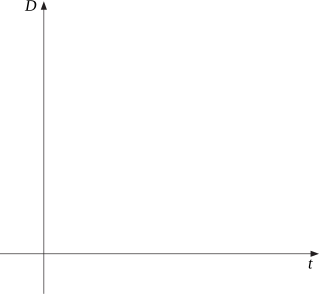
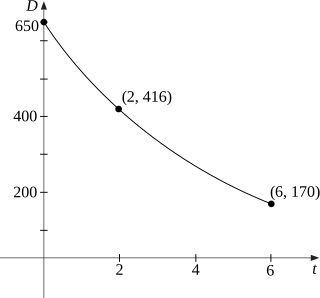
  3. On the axes below, draw the graph of the population against time, in the period  `t = 0`  to  `t = 6`.   (2 marks)
      

    --- 0 WORK AREA LINES (style=lined) ---

Show Answers Only

a.   `650`

b.   `416`

c.   `text{See Worked Solutions}`

Show Worked Solution

a.   `text{Initial population occurs when}\ \  t = 0:`

`D=650(0.8)^0=650 xx 1= 650`
 

b.    `text{Find} \ D \ text{when} \ \ t = 2: `

`D= 650 (0.8)^2= 416`

♦ Mean mark (c) 48%.

 
c. 
 `\text{At}\ t=6:`

`D=650(0.8)^6=170.39…`
 

Filed Under: Exponential Functions (Y12-X), Non-Linear: Exponential/Quadratics (Std 2-X) Tagged With: Band 3, Band 4, Band 5, smc-7719-10-\(y=ka^{x}\), smc-7719-40-Draw Graph

CHEMISTRY, M1 EQ-Bank 2 MC

The table below contains data with reference to four common metals.

\begin{array} {|l|c|c|c|c|}
\hline \text{Metal} & \ce{Al} & \ce{Zn} & \ce{Sn} & \ce{Pb} \\
\hline \text{Z} & 13 & 30 & 50 & 82\\
\hline \text{A} & 26.98 & 65.38 & 118.7 & 207.2 \\
\hline \text{Melting point } (^{\circ}\text{C}) & 660 & 420 & 232 & 327 \\
\hline \text{Boiling point } (^{\circ}\text{C}) & 2470 & 907 & 2602 & 1749 \\
\hline
\end{array}

Which element remains a liquid over the greatest temperature range?

  1. \(\ce{Al}\)
  2. \(\ce{Zn}\)
  3. \(\ce{Sn}\)
  4. \(\ce{Pb} \)
Show Answers Only

\(C\)

Show Worked Solution
  • Range \(=\) Boiling point \(-\) Melting point

\(\ce{Al}: \ 2470-660= 1810^{\circ}\text{C}\)

\(\ce{Zn}: \ 907-420= 487^{\circ}\text{C}\)

\(\ce{Sn}: \ 2602-232= 2370^{\circ}\text{C}\)

\(\ce{Pb}: \ 1749-327= 1422^{\circ}\text{C}\)

\(\Rightarrow C\)

Filed Under: Bonding Tagged With: Band 3, smc-4258-45-Physical Properties

v1 Measurement, STD2 M7 2019 HSC 2 MC

Rice is sold in four different sized packets. Which is the best buy?

  1. 250 g for $1.10 
  2. 500 g for $2.00 
  3. 1 kg for $3.80 
  4. 2 kg for $7.40 
Show Answers Only

`D`

Show Worked Solution

\(\text{Price per kilogram}\)

\(\text{250 g:}\  1.10 \times 4 = $4.40 \)

\(\text{500 g:}\ 2.00 \times 2 = $4.00 \)

\(\text{1 kg:}\ $3.80 \)

\(\text{2 kg:}\ 7.40\ ÷\ 2 = $3.70 \)

\(\text{Best buy is 2 kg at \$3.70/kg.}\) 

\(\Rightarrow D\) 

Filed Under: Rates (Std2-X) Tagged With: Band 3, smc-805-50-Best Buys

v2 Measurement, STD2 M7 2016 HSC 9 MC

An old air conditioner uses 2.8 kW of electricity per hour. A new air conditioner uses 1.2 kW per hour. How much electricity is saved each year if the air conditioner runs for 5 hours per day for 200 days using the new model?

  1. 1200 kWh
  2. 1600 kWh
  3. 2400 kWh
  4. 2800 kWh
Show Answers Only

\(B\)

Show Worked Solution

\(\text{Electricity used by old air conditioner}\ = 2.8 \times 5 \times 200 = 2800\ \text{kWh}\)

\(\text{Electricity used by new air conditioner}\ = 1.2 \times 5 \times 200 = 1200\ \text{kWh}\)

\(\therefore\ \text{Electricity saved} = 2800-1200 = 1600\ \text{kWh}\)

\(\Rightarrow B\)

Filed Under: Rates (Std2-X) Tagged With: Band 3, smc-1104-15-General rate problems, smc-805-60-Other rate problems

v1 Measurement, STD2 M7 2016 HSC 9 MC

An old dishwasher uses 45 L of water per cycle. A new dishwasher uses 15 L per cycle. How much water is saved each year if three cycles are run each week using the new dishwasher?

  1. 2340 L
  2. 3640 L
  3. 4680 L
  4. 7020 L
Show Answers Only

\(C\)

Show Worked Solution

\(\text{Water used by old dishwasher}\ = 45 \times 3 \times 52 = 7020\ \text{L}\)

\(\text{Water used by new dishwasher}\ = 15 \times 3 \times 52 = 2340\ \text{L}\)

\(\text{Water saved}\ = 7020-2340 = 4680\ \text{L}\)

\(\Rightarrow C\)

Filed Under: Rates (Std2-X) Tagged With: Band 3, smc-1104-15-General rate problems, smc-805-60-Other rate problems

HMS, TIP EQ-Bank 414 MC

A fitness professional designs different programs for two clients with similar fitness goals but different assessment results. One client shows strong upper body strength but poor cardiovascular endurance, while the other demonstrates good aerobic capacity but limited muscular strength. This approach primarily demonstrates which principle of assessment-based program development?

  1. Standardised program design ensures consistent outcomes across all client populations regardless of individual differences
  2. Assessment data enables targeted program customisation that addresses individual strengths and weaknesses effectively
  3. Similar goals require identical training approaches to maintain professional standards and program consistency
  4. Program complexity should increase proportionally with client fitness levels to ensure appropriate challenge progression
Show Answers Only

\(B\)

Show Worked Solution
  • B is correct: Assessment data enables targeted customisation by addressing each client’s specific strengths and weaknesses for optimal program effectiveness.

Other Options:

  • A is incorrect: The scenario demonstrates individualised rather than standardised program design based on assessment differences.
  • C is incorrect: Similar goals don’t require identical approaches when assessment data reveals different individual capabilities and needs.
  • D is incorrect: Program complexity relates to individual needs rather than fitness levels, and doesn’t address the customisation principle shown.

Filed Under: Assessment and developing training programs Tagged With: Band 3, smc-5458-20-Program customisation

HMS, TIP EQ-Bank 405

Why is personalisation essential when developing training programs for recreational participants?    (3 marks)

--- 6 WORK AREA LINES (style=lined) ---

Show Answers Only
  • Personalisation ensures programs match individual fitness levels, preventing excessive challenge that leads to injury risk and dropout.
  • Individual preferences require specific adaptations to enhance motivation. This results in sustained participation and fitness success.
  • Assessment data reveals unique strengths and weaknesses needing targeted attention. This causes more effective development.
  • Personal goals demand tailored program design to achieve specific outcomes. This creates meaningful progress toward aspirations.
Show Worked Solution
  • Personalisation ensures programs match individual fitness levels, preventing excessive challenge that leads to injury risk and dropout.
  • Individual preferences require specific adaptations to enhance motivation. This results in sustained participation and fitness success.
  • Assessment data reveals unique strengths and weaknesses needing targeted attention. This causes more effective development.
  • Personal goals demand tailored program design to achieve specific outcomes. This creates meaningful progress toward aspirations.

Filed Under: Assessment and developing training programs Tagged With: Band 3, smc-5458-10-Recreational program dev

HMS, TIP EQ-Bank 402 MC

A recreational client wants to improve cardiovascular fitness but expresses strong dislike for running. Based on exercise assessment principles, which approach would be most appropriate for program development?

  1. Start with short running intervals to gradually build tolerance and positive associations with the activity
  2. Program alternative activities like cycling and swimming to achieve cardiovascular goals while respecting preferences
  3. Include running as a minor component alongside preferred activities to ensure comprehensive cardiovascular development
  4. Focus on high-intensity interval training using bodyweight exercises to maximise cardiovascular benefits efficiently
Show Answers Only

\(B\)

Show Worked Solution
  • B is correct: Personalisation principles involve using preferred activities to achieve fitness goals, enhancing motivation and program adherence.

Other Options:

  • A is incorrect: While gradual exposure seems logical, forcing disliked activities reduces long-term adherence and motivation in recreational settings.
  • C is incorrect: Including disliked activities even minimally can negatively impact overall program enjoyment and compliance rates.
    D is incorrect: While HIIT is effective, it doesn’t address the personalisation aspect of respecting client preferences for sustainable programming.

Filed Under: Assessment and developing training programs Tagged With: Band 3, smc-5458-10-Recreational program dev

HMS, TIP EQ-Bank 094

Describe how equipment innovations in assistive technology enhance performance for athletes with disability. In your answer, give two specific examples.   (4 marks)

--- 10 WORK AREA LINES (style=lined) ---

Show Answers Only
  • Racing wheelchairs: Made from lightweight carbon fibre with angled wheels for stability. Custom-fitted seats match athlete’s body shape for maximum power transfer. These features allow wheelchair racers to reach speeds over 30km/h.
  • Audible balls in blind cricket: Ball contains ball bearings that rattle when bowled or hit. Players with vision impairment hear the ball’s speed and direction. This enables accurate batting, bowling and fielding responses.
  • Performance benefits – Both technologies allow athletes to compete at elite levels. They maximise athletes’ abilities rather than focusing on disability.
Show Worked Solution
  • Racing wheelchairs: Made from lightweight carbon fibre with angled wheels for stability. Custom-fitted seats match athlete’s body shape for maximum power transfer. These features allow wheelchair racers to reach speeds over 30km/h.
  • Audible balls in blind cricket: Ball contains ball bearings that rattle when bowled or hit. Players with vision impairment hear the ball’s speed and direction. This enables accurate batting, bowling and fielding responses.
  • Performance benefits – Both technologies allow athletes to compete at elite levels. They maximise athletes’ abilities rather than focusing on disability.

Filed Under: Technology and performance Tagged With: Band 3, Band 4, smc-5471-10-Equipment advances

HMS, TIP EQ-Bank 092

Outline how wearable technology enhances performance monitoring for endurance athletes.   (3 marks)

--- 8 WORK AREA LINES (style=lined) ---

Show Answers Only
  • Real-time data tracking – Monitors heart rate, pace and distance during training. Athletes can adjust intensity immediately to stay in target zones.
  • Recovery monitoring – Tracks sleep quality and heart rate variability. Helps athletes know when to train hard or rest.
  • Performance trends – Records data over weeks and months. Shows improvements in fitness and identifies when athletes might be overtraining.
Show Worked Solution
  • Real-time data tracking – Monitors heart rate, pace and distance during training. Athletes can adjust intensity immediately to stay in target zones.
  • Recovery monitoring – Tracks sleep quality and heart rate variability. Helps athletes know when to train hard or rest.
  • Performance trends – Records data over weeks and months. Shows improvements in fitness and identifies when athletes might be overtraining.

Filed Under: Technology and performance Tagged With: Band 3, smc-5471-20-Monitoring

HMS, TIP EQ-Bank 399

Describe the key components involved in conducting a comprehensive exercise assessment.   (3 marks)

--- 9 WORK AREA LINES (style=lined) ---

Show Answers Only
  • Health screening identifies potential risk factors and medical considerations affecting exercise safety. Pre-exercise questionnaires gather essential health history information.
  • Performance testing evaluates current physical capabilities across relevant fitness components. Tests measure baseline levels in cardiovascular endurance and muscular strength.
  • Goal identification clarifies individual objectives such as weight loss or performance improvement. This ensures programs align with personal aspirations.
  • Data integration combines all assessment information to create individualised training foundations for safe program design.
Show Worked Solution
  • Health screening identifies potential risk factors and medical considerations affecting exercise safety. Pre-exercise questionnaires gather essential health history information.
  • Performance testing evaluates current physical capabilities across relevant fitness components. Tests measure baseline levels in cardiovascular endurance and muscular strength.
  • Goal identification clarifies individual objectives such as weight loss or performance improvement. This ensures programs align with personal aspirations.
  • Data integration combines all assessment information to create individualised training foundations for safe program design.

Filed Under: Assessment and developing training programs Tagged With: Band 3, smc-5458-05-Assessment foundations

HMS, TIP EQ-Bank 396 MC

A fitness professional conducts a Rockport 1.6-kilometre walk test with a sedentary client before designing their exercise program. This assessment primarily serves which fundamental purpose?

  1. Establishing a baseline fitness level to ensure appropriate program intensity and reduce injury risk
  2. Determining the client's maximum exercise capacity for high-intensity training prescription
  3. Identifying specific sport skills that need improvement for competitive performance goals
  4. Measuring advanced fitness parameters required for elite athletic training programs
Show Answers Only

\(A\)

Show Worked Solution
  • A is correct: The Rockport walk test establishes baseline aerobic capacity, ensuring programs are appropriately challenging while reducing injury risk.

Other Options:

  • B is incorrect: The walk test assesses moderate fitness levels rather than determining maximum exercise capacity for high-intensity work.
  • C is incorrect: This test measures general aerobic fitness rather than identifying specific sport skills for competition.
  • D is incorrect: The Rockport test is designed for general fitness assessment rather than advanced elite athletic parameters.

Filed Under: Assessment and developing training programs Tagged With: Band 3, smc-5458-05-Assessment foundations

HMS, TIP EQ-Bank 104 MC

What is the primary purpose of GPS technology in sport performance?

  1. Reducing shoe weight to enhance speed
  2. Monitoring an athlete's location
  3. Monitoring hydration and nutrition that flags over training
  4. Tracking distance, speed and movement intensity
Show Answers Only

\(D\)

Show Worked Solution
  • D is correct: GPS technology tracks distance, speed and movement intensity, giving athletes and coaches data to manage workload, performance and recovery.

Other options:

  • A is incorrect: Shoe weight reduction relates to equipment innovation, not GPS.
  • B is incorrect: While GPS involves location data, its purpose in sport is broader performance monitoring.
  • C is incorrect: Hydration and nutrition monitoring are achieved through apps and biometric sensors, not GPS.

Filed Under: Technology and performance Tagged With: Band 3, smc-5471-10-Equipment advances

HMS, TIP EQ-Bank 103 MC

Which of the following best describes the role of virtual reality (VR) in athlete training?

  1. Monitors heart rate and breathing patterns during exercise
  2. Creates simulated environments for practising skills and tactics
  3. Records movement data for post-training analysis
  4. Provides feedback on muscle activation patterns
Show Answers Only

\(A\)

Show Worked Solution
  • B is correct: VR creates simulated environments where athletes can practise skills and tactics, enhancing decision-making and performance in realistic conditions without physical strain.

Other options:

  • A is incorrect: Monitoring heart rate and breathing is the role of wearable devices, not VR.
  • C is incorrect: Recording movement data is the purpose of video or motion analysis tools.
  • D is incorrect: Muscle activation feedback comes from biomechanics or EMG systems, not VR.

Filed Under: Technology and performance Tagged With: Band 3

HMS, TIP EQ-Bank 086

A marathon runner completes a 42km race in hot conditions. Outline TWO physiological recovery strategies that would be most beneficial for this athlete immediately post-race.   (3 marks)

--- 8 WORK AREA LINES (style=lined) ---

Show Answers Only

Recovery 1: Cool-down (10-15 minutes)

  • Gradual walking/light jogging reduces heart rate and removes lactic acid preventing muscle stiffness.
  • Static stretching helps lengthen tight muscles and prevents blood pooling and dizziness.

Cold water immersion (10-15°C for 10-15 minutes)

  • Reduces blood flow to damaged muscles which decreases inflammation and swelling.
  • Speeds up recovery from muscle soreness which helps remove metabolic waste products.
Show Worked Solution

Recovery 1: Cool-down (10-15 minutes)

  • Gradual walking/light jogging reduces heart rate and removes lactic acid preventing muscle stiffness.
  • Static stretching helps lengthen tight muscles and prevents blood pooling and dizziness.

Cold water immersion (10-15°C for 10-15 minutes)

  • Reduces blood flow to damaged muscles which decreases inflammation and swelling.
  • Speeds up recovery from muscle soreness which helps remove metabolic waste products.

Filed Under: Recovery strategies Tagged With: Band 3, smc-5470-05-Physiological

HMS, TIP EQ-Bank 389

Describe the key features of a games-centred approach to tactical development in team sports.   (3 marks)

--- 9 WORK AREA LINES (style=lined) ---

Show Answers Only
  • Games-centred approach replicates performance-like situations in training environments. Athletes experience competitive pressure that tests tactical integrity under realistic conditions.
  • Small-sided games reduce complexity while maintaining essential tactical elements. Examples include 3v3 situations that simulate game pressure with fewer players.
  • Problem-solving opportunities develop decision-making skills through modified competitive scenarios. Players learn tactical responses through direct experience rather than instruction alone.
  • Performance pressure preparation allows athletes to test strategies before actual competition. Training situations expose tactical weaknesses requiring improvement.
Show Worked Solution
  • Games-centred approach replicates performance-like situations in training environments. Athletes experience competitive pressure that tests tactical integrity under realistic conditions.
  • Small-sided games reduce complexity while maintaining essential tactical elements. Examples include 3v3 situations that simulate game pressure with fewer players.
  • Problem-solving opportunities develop decision-making skills through modified competitive scenarios. Players learn tactical responses through direct experience rather than instruction alone.
  • Performance pressure preparation allows athletes to test strategies before actual competition. Training situations expose tactical weaknesses requiring improvement.

Filed Under: Application of strategies and tactics Tagged With: Band 3, smc-5465-15-Tactical dev

HMS, TIP EQ-Bank 386 MC

A basketball coach uses 3-on-3 half-court games during training to develop tactical awareness. This approach demonstrates which key principle of tactical development?

  1. Replicating full game conditions with complete team structures and official rules
  2. Creating performance-like pressure situations with reduced complexity for skill focus
  3. Eliminating competitive elements to allow pure technique development without pressure
  4. Maximising player rest periods by reducing the number of active participants
Show Answers Only

\(B\)

Show Worked Solution
  • B is correct: Small-sided games create performance pressure while reducing complexity, allowing focused tactical development.

Other Options:

  • A is incorrect: Small-sided games deliberately modify full game conditions rather than replicating them completely.
  • C is incorrect: The approach maintains competitive elements and pressure rather than eliminating them entirely.
  • D is incorrect: The focus is tactical development rather than rest management for players.

Filed Under: Application of strategies and tactics Tagged With: Band 3, smc-5465-15-Tactical dev

HMS, TIP EQ-Bank 380 MC

A netball team has several tall players but lacks speed and agility. Which tactical approach would best utilise their strengths while minimising their weaknesses?

  1. Focus on fast break attacks and quick transitions between defence and attack
  2. Emphasise lob passes and high ball strategies while avoiding ground-level play
  3. Use short, quick passes at ground level to exploit speed advantages
  4. Implement full-court pressing defence to utilise agility and mobility
Show Answers Only

\(B\)

Show Worked Solution
  • B is correct: Lob passes and high ball strategies utilise height advantage while avoiding ground-level play that requires agility.

Other Options:

  • A is incorrect: Fast breaks require speed and agility, which are identified weaknesses for this team.
  • C is incorrect: Quick ground passes don’t utilise height advantages and require agility the team lacks.
  • D is incorrect: Full-court pressing requires speed and mobility, which are team weaknesses rather than strengths.

Filed Under: Application of strategies and tactics Tagged With: Band 3, smc-5465-10-Group strengths/weakness

HMS, TIP EQ-Bank 377

Describe how wind conditions can affect strategies and tactics in both individual and group sports.   (3 marks)

--- 6 WORK AREA LINES (style=lined) ---

Show Answers Only
  • Wind creates resistance affecting ball flight and athlete energy expenditure during competition. Runners must consider windbreak effects when positioning during races.
  • Group sports experience modified passing accuracy due to unpredictable ball movement. Teams adjust by using shorter passes and ground-based play.
  • Athletes adapt timing and technique methods to account for wind assistance or resistance. Strategic positioning becomes crucial for competitive advantage.
Show Worked Solution
  • Wind creates resistance affecting ball flight and athlete energy expenditure during competition. Runners must consider windbreak effects when positioning during races.
  • Group sports experience modified passing accuracy due to unpredictable ball movement. Teams adjust by using shorter passes and ground-based play.
  • Athletes adapt timing and technique methods to account for wind assistance or resistance. Strategic positioning becomes crucial for competitive advantage.

Filed Under: Application of strategies and tactics Tagged With: Band 3, smc-5465-05-Environmental

HMS, TIP EQ-Bank 374 MC

A cyclist competing in wet conditions decides to take corners slower than usual. This strategic adjustment demonstrates which principle of environmental adaptation?

  1. Ignoring weather conditions to maintain competitive advantage
  2. Modifying tactics to prevent injury and maintain performance safety
  3. Increasing speed to compensate for difficult road conditions
  4. Using equipment changes rather than tactical modifications
Show Answers Only

\(B\)

Show Worked Solution
  • B is correct: Tactical modifications for safety prevent injury while maintaining performance, which is essential environmental adaptation.

Other Options:

  • A is incorrect: Ignoring dangerous conditions increases injury risk rather than demonstrating smart strategic adaptation.
  • C is incorrect: Increasing speed in wet conditions would create greater danger and reduce performance safety.
  • D is incorrect: The scenario describes tactical speed changes rather than equipment modifications for conditions.

Filed Under: Application of strategies and tactics Tagged With: Band 3, smc-5465-05-Environmental

HMS, TIP EQ-Bank 098 MC

Which of the following best explains the main purpose of a cool-down after vigorous exercise?

  1. To replace lost fluids and electrolytes
  2. To gradually return physiological processes to pre-exercise levels
  3. To increase flexibility through dynamic stretching only
  4. To reduce oxygen delivery to working muscles
Show Answers Only

\(B\)

Show Worked Solution
  • B is correct: A cool-down gradually lowers heart rate, ventilation and metabolism, returning the body to pre-exercise levels and supporting waste product removal.

Other options:

  • A is incorrect: Replacing fluids is part of hydration, not the physiological role of a cool-down.
  • C is incorrect: Cool-downs may include stretching, but their main purpose is broader than just flexibility gains.
  • D is incorrect: Oxygen delivery is maintained, not reduced; circulation assists recovery rather than limiting it.

Filed Under: Recovery strategies Tagged With: Band 3, smc-5470-05-Physiological

HMS, TIP EQ-Bank 368

Compare how individual and group sport athletes can manage anxiety to improve their performance.   (6 marks)

--- 18 WORK AREA LINES (style=lined) ---

Show Answers Only

Similarities

  • Both individual and group sport athletes benefit from relaxation techniques to control physical anxiety symptoms. Progressive muscle relaxation and controlled breathing help reduce tension and nervousness before competition.
  • Mental rehearsal strategies work effectively for athletes in both sporting contexts. Visualising successful performance outcomes builds confidence and reduces pre-competition anxiety levels.
  • Goal setting provides focus and direction for managing anxiety in individual and group sports equally. SMART goals help athletes concentrate on achievable targets rather than worrying about potential failures.

Differences

  • Individual sport athletes must develop complete self-reliance for anxiety management during competition without external support. Tennis players and swimmers cannot receive coaching guidance during performance requiring independent coping strategies.
  • Group sport athletes can utilise team support systems and shared anxiety management approaches. Basketball teams benefit from group relaxation sessions and collective mental preparation before important matches.
  • Individual athletes personalise anxiety control techniques entirely to their specific needs and competition demands. Group sport athletes must balance personal anxiety management with team dynamics and collective preparation requirements.
Show Worked Solution

Similarities

  • Both individual and group sport athletes benefit from relaxation techniques to control physical anxiety symptoms. Progressive muscle relaxation and controlled breathing help reduce tension and nervousness before competition.
  • Mental rehearsal strategies work effectively for athletes in both sporting contexts. Visualising successful performance outcomes builds confidence and reduces pre-competition anxiety levels.
  • Goal setting provides focus and direction for managing anxiety in individual and group sports equally. SMART goals help athletes concentrate on achievable targets rather than worrying about potential failures.

Differences

  • Individual sport athletes must develop complete self-reliance for anxiety management during competition without external support. Tennis players and swimmers cannot receive coaching guidance during performance requiring independent coping strategies.
  • Group sport athletes can utilise team support systems and shared anxiety management approaches. Basketball teams benefit from group relaxation sessions and collective mental preparation before important matches.
  • Individual athletes personalise anxiety control techniques entirely to their specific needs and competition demands. Group sport athletes must balance personal anxiety management with team dynamics and collective preparation requirements.

Filed Under: Psychological strategies Tagged With: Band 3, Band 4, smc-5464-25-Anxiety control

HMS, TIP EQ-Bank 366 MC

Which scenario best demonstrates state anxiety rather than trait anxiety in sport?

  1. A footballer who experiences intense worry only during grand final matches but remains calm in regular games
  2. A gymnast who feels nervous before every training session and competition throughout the season
  3. A swimmer who consistently feels anxious about their technique regardless of the competition level
  4. A tennis player who always struggles with pre-match nerves due to their naturally anxious personality
Show Answers Only

\(A\)

Show Worked Solution
  • A is correct: State anxiety depends on the situation and occurs in response to specific high-stress events like grand finals.

Other Options:

  • B is incorrect: Feeling nervous before every session suggests trait anxiety as a consistent personality characteristic.
  • C is incorrect: Consistent anxiety regardless of situation indicates trait anxiety rather than situational state anxiety.
  • D is incorrect: Pre-match nerves due to personality traits demonstrates trait anxiety not situational state responses.

Filed Under: Psychological strategies Tagged With: Band 3, smc-5464-25-Anxiety control

HMS, TIP EQ-Bank 363

Describe the importance of stress management for athletes in both individual and group sports.   (3 marks)

--- 9 WORK AREA LINES (style=lined) ---

Show Answers Only
  • Stress management prevents performance decline by maintaining optimal arousal levels during competition. Athletes demonstrate better skill execution under pressure.
  • Effective stress control maintains confidence and positive thinking patterns throughout challenging situations. This supports consistent decision-making abilities.
  • Managing stress reduces harmful physical symptoms including muscle tension and excessive adrenaline production. Athletes achieve better physiological control.
  • Stress management skills enable athletes to cope with pressure sources from coaches, spectators and personal expectations.
Show Worked Solution
  • Stress management prevents performance decline by maintaining optimal arousal levels during competition. Athletes demonstrate better skill execution under pressure.
  • Effective stress control maintains confidence and positive thinking patterns throughout challenging situations. This supports consistent decision-making abilities.
  • Managing stress reduces harmful physical symptoms including muscle tension and excessive adrenaline production. Athletes achieve better physiological control.
  • Stress management skills enable athletes to cope with pressure sources from coaches, spectators and personal expectations.

Filed Under: Psychological strategies Tagged With: Band 3, smc-5464-20-Stress management

HMS, TIP EQ-Bank 360 MC

Which physiological response is most commonly associated with stress in athletic performance?

  1. Increased blood supply to skeletal muscles and heightened glucose production
  2. Decreased heart rate and reduced oxygen uptake to conserve energy
  3. Lowered adrenaline levels and relaxed muscle tension throughout the body
  4. Reduced sweat production and decreased alertness before competition
Show Answers Only

\(A\)

Show Worked Solution
  • A is correct: Stress triggers increased blood flow to muscles and glucose production to prepare the body for action.

Other Options:

  • B is incorrect: Stress typically increases heart rate and oxygen demand rather than decreasing these responses.
  • C is incorrect: Stress elevates adrenaline levels and increases muscle tension as part of fight-or-flight response.
  • D is incorrect: Stress increases sweat production and alertness to prepare the body for physical demands.

Filed Under: Psychological strategies Tagged With: Band 3, smc-5464-20-Stress management

HMS, TIP EQ-Bank 353

Why do athletes use psychological strategies in both individual and group sports?   (3 marks)

--- 9 WORK AREA LINES (style=lined) ---

Show Answers Only
  • Psychological strategies help athletes manage performance-related stress and anxiety. This results in improved focus and concentration during competition.
  • Mental preparation enables athletes to build confidence through visualisation and goal setting. This leads to enhanced performance outcomes and participation enjoyment.
  • Strategy application allows athletes to control arousal levels for optimal performance states. This causes better execution of skills under competitive pressure.
  • Psychological techniques support athletes in maintaining motivation during challenging training periods. This creates sustained commitment to performance improvement goals.
Show Worked Solution
  • Psychological strategies help athletes manage performance-related stress and anxiety. This results in improved focus and concentration during competition.
  • Mental preparation enables athletes to build confidence through visualisation and goal setting. This leads to enhanced performance outcomes and participation enjoyment.
  • Strategy application allows athletes to control arousal levels for optimal performance states. This causes better execution of skills under competitive pressure.
  • Psychological techniques support athletes in maintaining motivation during challenging training periods. This creates sustained commitment to performance improvement goals.

Filed Under: Psychological strategies Tagged With: Band 3, smc-5464-10-Psychological strategies

HMS, TIP EQ-Bank 349

Why are sport-specific attributes important during the late pre-season phase of training.   (3 marks)

--- 9 WORK AREA LINES (style=lined) ---

Show Answers Only
  • General preparation establishes fundamental fitness levels during early pre-season. This enables safe conversion to sport-specific demands without injury risk.
  • Sport-specific training develops the exact energy systems and movement patterns required. This results in athletes being prepared for competitive demands rather than general fitness.
  • Technical skills require sport-specific fitness as a foundation for effective execution. This causes coaches to sequence general fitness before specific skill development.
  • Converting base fitness into competition-specific attributes maximises training effectiveness. This leads to peak performance capability when competition season begins.
Show Worked Solution
  • General preparation establishes fundamental fitness levels during early pre-season. This enables safe conversion to sport-specific demands without injury risk.
  • Sport-specific training develops the exact energy systems and movement patterns required. This results in athletes being prepared for competitive demands rather than general fitness.
  • Technical skills require sport-specific fitness as a foundation for effective execution. This causes coaches to sequence general fitness before specific skill development.
  • Converting base fitness into competition-specific attributes maximises training effectiveness. This leads to peak performance capability when competition season begins.

Filed Under: Individual vs group programs Tagged With: Band 3, smc-5463-20-Sports specific

HMS, TIP EQ-Bank 345 MC

A football goalkeeper and a centre midfielder from the same team require different sport-specific training approaches during pre-season preparation.

Which statement best explains this differentiation?

  1. Both players need identical fitness and skill development as they play the same sport
  2. Individual positions demand specific fitness components and skill requirements within the team structure
  3. Only the goalkeeper requires sport-specific training as midfielders use general fitness
  4. Position-specific training is unnecessary as team tactics are more important than individual attributes
Show Answers Only

\(B\)

Show Worked Solution
  • B is correct: Individual positions within group sports have different demands requiring specific fitness components and skills. For example, goalkeepers need reaction time whilst midfielders require greater aerobic capacity.

Other Options:

  • A is incorrect: Same sport does not mean identical requirements – different positions have varying physical and technical demands.
  • C is incorrect: All players require sport-specific training tailored to their positional demands, not just goalkeepers.
  • D is incorrect: Position-specific attributes are essential for effective team performance alongside tactical understanding.

Filed Under: Individual vs group programs Tagged With: Band 3, smc-5463-20-Sports specific

HMS, TIP EQ-Bank 342

Why do coaches use subphases when developing yearly training programs for athletes?   (3 marks)

--- 9 WORK AREA LINES (style=lined) ---

Show Answers Only

Manageable planning blocks:

  • Subphases divide the training year into smaller sections, resulting in more systematic progression and organisation.

Specific targeting:

  • Each subphase allows focused objectives such as strength development, leading to more effective skill refinement.

Progress monitoring:

  • Shorter timeframes enable regular evaluation of athlete development, causing coaches to adjust programs more effectively.

Reduced injury risk:

  • Structured subphases prevent overtraining by incorporating recovery periods, therefore reducing the likelihood of athlete burnout.
Show Worked Solution

Manageable planning blocks:

  • Subphases divide the training year into smaller sections, resulting in more systematic progression and organisation.

Specific targeting:

  • Each subphase allows focused objectives such as strength development, leading to more effective skill refinement.

Progress monitoring:

  • Shorter timeframes enable regular evaluation of athlete development, causing coaches to adjust programs more effectively.

Reduced injury risk:

  • Structured subphases prevent overtraining by incorporating recovery periods, therefore reducing the likelihood of athlete burnout.

Filed Under: Individual vs group programs Tagged With: Band 3, smc-5463-15-Sub-phases

HMS, TIP EQ-Bank 334 MC

What is the primary purpose of tapering in athletic training programs?

  1. To allow the body to recover from training fatigue whilst maintaining fitness for peak performance
  2. To increase training volume significantly before major competitions to maximise fitness gains
  3. To introduce new skills and techniques immediately before competitive events begin
  4. To focus exclusively on strength development during the final weeks of preparation
Show Answers Only

\(A\)

Show Worked Solution
  • A is correct: The key to tapering is to trust the process and let the body recover from training fatigue whilst maintaining fitness for peak performance.

Other options:

  • B is incorrect: Tapering involves reducing volume and frequency, not increasing them before competition.
  • C is incorrect: New skills should be introduced during pre-season, not in the tapering phase close to competition.
  • D is incorrect: Tapering focuses on recovery and maintaining fitness rather than exclusively developing strength.

Filed Under: Individual vs group programs Tagged With: Band 3, smc-5463-10-Peaking/tapering

HMS, TIP EQ-Bank 333

Why might the pre-season requirements be different for individuals within a group sport compared to individual sport athletes?   (4 marks)

--- 12 WORK AREA LINES (style=lined) ---

Show Answers Only
  • Group sport athletes require team-oriented training that includes positional play, communication and coordination with teammates during preparation.
  • Individual differences within teams necessitate varied training focus as each position has different physical and skill demands.
  • For example, a football goalkeeper needs different preparation compared to a centre midfielder who requires enhanced aerobic fitness.
  • Individual sport athletes focus on personal technique refinement and addressing individual weaknesses whilst capitalising on personal strengths.
  • Team sport preparation involves integrating individual skills within team strategies, whilst individual athletes concentrate on self-directed performance optimisation.
  • Therefore group sport pre-season requires balancing individual needs with collective team preparation demands.
Show Worked Solution
  • Group sport athletes require team-oriented training that includes positional play, communication and coordination with teammates during preparation.
  • Individual differences within teams necessitate varied training focus as each position has different physical and skill demands.
  • For example, a football goalkeeper needs different preparation compared to a centre midfielder who requires enhanced aerobic fitness.
  • Individual sport athletes focus on personal technique refinement and addressing individual weaknesses whilst capitalising on personal strengths.
  • Team sport preparation involves integrating individual skills within team strategies, whilst individual athletes concentrate on self-directed performance optimisation.
  • Therefore group sport pre-season requires balancing individual needs with collective team preparation demands.

Filed Under: Individual vs group programs Tagged With: Band 3, smc-5463-05-Competition phases

HMS, TIP EQ-Bank 329 MC

What is the primary focus during the pre-season phase for both individual and group sports?

  1. Maintaining fitness levels developed during the previous competitive season
  2. Developing fitness components, technique and introducing strategies for the upcoming season
  3. Perfecting skill execution and gaining competitive experience against opponents
  4. Reducing training volume while increasing intensity to peak for major competitions
Show Answers Only

\(B\)

Show Worked Solution
  • B is correct: The pre-season phase focuses on developing fitness components required for the season ahead, developing technique, and introducing strategies.

Other options:

  • A is incorrect: Maintaining fitness is the focus of in-season training, not pre-season development.
  • C is incorrect: Perfecting skill execution and gaining competitive experience are in-season phase objectives.
  • D is incorrect: Reducing volume while increasing intensity describes tapering strategies, not pre-season training.

Filed Under: Individual vs group programs Tagged With: Band 3, smc-5463-05-Competition phases

HMS, TIP EQ-Bank 326

Outline three benefits of including athlete reflection at the end of training sessions for both individual and group sports.   (3 marks)

--- 6 WORK AREA LINES (style=lined) ---

Show Answers Only

Any 3 of the following:

  • Athlete reflection provides valuable feedback about training effectiveness and personal performance during the session.
  • Reflection helps athletes identify areas for improvement and recognise successful techniques or strategies practiced.
  • The process allows athletes to communicate concerns or suggestions directly to coaches for future training modifications.
  • Reflection encourages athletes to take ownership of their learning and development through self-assessment.
  • Regular reflection helps inform future training decisions and session planning based on athlete experiences.
Show Worked Solution

Any 3 of the following:

  • Athlete reflection provides valuable feedback about training effectiveness and personal performance during the session.
  • Reflection helps athletes identify areas for improvement and recognise successful techniques or strategies practiced.
  • The process allows athletes to communicate concerns or suggestions directly to coaches for future training modifications.
  • Reflection encourages athletes to take ownership of their learning and development through self-assessment.
  • Regular reflection helps inform future training decisions and session planning based on athlete experiences.

Filed Under: Designing training sessions Tagged With: Band 3, smc-5462-20-Reflection and evaluation

HMS, TIP EQ-Bank 323 MC

What is the primary purpose of athlete reflection following training sessions?

  1. To identify the most enjoyable activities from the training session
  2. To provide valuable feedback that can inform future training decisions
  3. To compare individual performance against other team members
  4. To determine the total time spent on each training component
Show Answers Only

\(B\)

Show Worked Solution
  • B is correct: Athlete reflection helps inform future training and provide valuable feedback for ongoing development.

Other options:

  • A is incorrect: While enjoyment matters, reflection focuses on learning and improvement rather than entertainment value.
  • C is incorrect: Reflection emphasises personal development and learning rather than competitive comparison with others.
  • D is incorrect: Time allocation is a structural consideration rather than the reflective learning purpose of athlete feedback.

Filed Under: Designing training sessions Tagged With: Band 3, smc-5462-20-Reflection and evaluation

HMS, TIP EQ-Bank 320

Explain why strategies and tactics are important components to include in training sessions for both individual and group sports.   (4 marks)

--- 12 WORK AREA LINES (style=lined) ---

Show Answers Only
  • Strategies and tactics provide the overall method athletes use to achieve performance goals during competition.
  • Training practice enables athletes to develop familiarity with strategic approaches before competitive situations arise.
  • This preparation allows individuals to understand their specific role within the overall strategy for effective implementation.
  • Regular tactical training results in improved decision-making and execution under competitive pressure and time constraints.
  • Including strategies in training sessions helps athletes gain advantages over opposition through practiced implementation.
  • Therefore strategic and tactical training prepares athletes for successful competitive performance through systematic skill development.
Show Worked Solution
  • Strategies and tactics provide the overall method athletes use to achieve performance goals during competition.
  • Training practice enables athletes to develop familiarity with strategic approaches before competitive situations arise.
  • This preparation allows individuals to understand their specific role within the overall strategy for effective implementation.
  • Regular tactical training results in improved decision-making and execution under competitive pressure and time constraints.
  • Including strategies in training sessions helps athletes gain advantages over opposition through practiced implementation.
  • Therefore strategic and tactical training prepares athletes for successful competitive performance through systematic skill development.

Filed Under: Designing training sessions Tagged With: Band 3, smc-5462-15-Strategies and tactics

HMS, TIP EQ-Bank 317 MC

What is the primary difference between strategies and tactics in sport?

  1. Strategies focus on individual skills while tactics address team coordination
  2. Strategies are the overall method to achieve a goal while tactics gain advantage over opposition
  3. Strategies are used during competition while tactics are only for training sessions
  4. Strategies involve physical preparation while tactics involve mental preparation
Show Answers Only

\(B\)

Show Worked Solution
  • B is correct: A strategy is the overall method used to achieve a goal and tactics are about how you implement the strategy and gain an advantage over the opposition.

Other options:

  • A is incorrect: Both strategies and tactics can involve individual and team elements depending on the sport.
  • C is incorrect: Both strategies and tactics are used in both training sessions and competitive situations.
  • D is incorrect: Both strategies and tactics involve mental and physical elements rather than being exclusively one type.

Filed Under: Designing training sessions Tagged With: Band 3, smc-5462-15-Strategies and tactics

HMS, TIP EQ-Bank 314

Outline the key characteristics that effective skill instruction should demonstrate during training sessions for both individual and group sports.   (3 marks)

--- 9 WORK AREA LINES (style=lined) ---

Show Answers Only
  • Effective skill instruction should be clear with no misunderstanding about information communicated by the coach.
  • Instructions must be informative, relating specifically to information that players need to know for skill development.
  • Demonstrable instruction should be supported by visual aids such as demonstrations to provide clear pictures of skills and techniques.
  • Instruction should progress from known skills and drills to introduce new activities systematically.
  • The skill instruction component typically takes the majority of training session time for optimal development.
Show Worked Solution
  • Effective skill instruction should be clear with no misunderstanding about information communicated by the coach.
  • Instructions must be informative, relating specifically to information that players need to know for skill development.
  • Demonstrable instruction should be supported by visual aids such as demonstrations to provide clear pictures of skills and techniques.
  • Instruction should progress from known skills and drills to introduce new activities systematically.
  • The skill instruction component typically takes the majority of training session time for optimal development.

Filed Under: Designing training sessions Tagged With: Band 3, smc-5462-10-Skill and conditioning

HMS, TIP EQ-Bank 311 MC

In a 90-minute training session, what is the recommended time allocation for skill instruction and practice activities?

  1. 15 minutes to focus on tactical development
  2. 25 minutes for basic skill repetition only
  3. 35 minutes including both new and known skills
  4. 45 minutes covering skill drills and new activities
Show Answers Only

\(D\)

Show Worked Solution
  • D is correct: Skill instruction and practice should take 45 minutes in a 90-minute training session, covering both skill drills and new activities.

Other options:

  • A is incorrect: 15 minutes is allocated for strategies and tactics, not skill instruction and practice.
  • B is incorrect: 25 minutes is insufficient for comprehensive skill development including new activities and drills.
  • C is incorrect: 35 minutes doesn’t align with recommended training session structure for optimal skill development.

Filed Under: Designing training sessions Tagged With: Band 3, smc-5462-10-Skill and conditioning

HMS, TIP EQ-Bank 308

Explain how proper warm-up and cool-down procedures help prevent injury in both individual and group sports training sessions.   (4 marks)

--- 15 WORK AREA LINES (style=lined) ---

Show Answers Only
  • Warm-up procedures prepare the body physically and mentally for training by gradually elevating heart rate and muscle temperature.
  • This preparation reduces injury risk through improved blood circulation and increased muscle elasticity before intense exercise.
  • Dynamic stretching during warm-up promotes joint mobility and helps prevent muscle strains and tears.
  • Cool-down activities assist recovery by gradually reducing heart rate and preventing blood pooling in muscles.
  • The cool-down process helps remove metabolic waste products and reduces muscle stiffness post-training.
  • Therefore proper warm-up and cool-down procedures minimise injury risk whilst supporting optimal performance preparation and recovery.
Show Worked Solution
  • Warm-up procedures prepare the body physically and mentally for training by gradually elevating heart rate and muscle temperature.
  • This preparation reduces injury risk through improved blood circulation and increased muscle elasticity before intense exercise.
  • Dynamic stretching during warm-up promotes joint mobility and helps prevent muscle strains and tears.
  • Cool-down activities assist recovery by gradually reducing heart rate and preventing blood pooling in muscles.
  • The cool-down process helps remove metabolic waste products and reduces muscle stiffness post-training.
  • Therefore proper warm-up and cool-down procedures minimise injury risk whilst supporting optimal performance preparation and recovery.

Filed Under: Designing training sessions Tagged With: Band 3, smc-5462-05-Safety and structure

HMS, TIP EQ-Bank 305 MC

Which health and safety consideration is most important for both individual and group sports during training sessions?

  1. Adequate warm-up and cool-down to prevent injury
  2. Ensuring all protective equipment meets current safety standards
  3. Regular equipment inspection to identify wear and damage
  4. Maintaining appropriate supervision during training activities
Show Answers Only

\(A\)

Show Worked Solution
  • A is correct: Both individual and group sports athletes need adequate warm-up and cool-down to prevent injury through proper preparation.

Other options:

  • B is incorrect: While important, protective equipment standards are sport-specific and not universal to all training.
  • C is incorrect: Equipment inspection is crucial but doesn’t apply equally to all sports or training situations.
  • D is incorrect: Supervision requirements vary significantly between individual and group sports training contexts.

Filed Under: Designing training sessions Tagged With: Band 3, smc-5462-05-Safety and structure

HMS, TIP EQ-Bank 303 MC

Which performance benefit is primarily associated with caffeine supplementation for endurance athletes?

  1. Increased alertness and reduced perception of fatigue
  2. Enhanced muscle hypertrophy and strength development
  3. Improved oxygen delivery to working muscles
  4. Greater creatine phosphate storage in skeletal muscle
Show Answers Only

\(A\)

Show Worked Solution
  • A is correct: The main benefit of caffeine for performance is increased alertness, reduced perception of fatigue and reduced perception of effort.

Other options:

  • B is incorrect: Muscle hypertrophy and strength development are benefits associated with creatine supplementation, not caffeine.
  • C is incorrect: Improved oxygen delivery is associated with iron and vitamin B12 supplementation, not caffeine.
  • D is incorrect: Creatine phosphate storage enhancement is the primary mechanism of creatine supplementation, not caffeine.

Filed Under: Supplementation and performance Tagged With: Band 3, smc-5468-20-Caffeine/creatine

HMS, TIP EQ-Bank 300

Explain why protein supplements may be particularly beneficial for weightlifters and bodybuilders compared to other types of athletes.   (4 marks)

--- 12 WORK AREA LINES (style=lined) ---

Show Answers Only
  • Weightlifters and bodybuilders focus on muscle building and strength development as their primary training goals.
  • This training emphasis creates higher protein requirements for muscle recovery and repair after intense resistance sessions.
  • Protein supplements enable convenient delivery of adequate protein to support exercise adaptations and muscle growth.
  • The concentrated protein sources result in enhanced muscle protein synthesis essential for hypertrophy development.
  • These athletes benefit because supplements provide additional protein beyond whole food sources when dietary intake is insufficient.
  • Therefore protein supplementation supports the specific muscle-building demands of strength-based athletic training.
Show Worked Solution
  • Weightlifters and bodybuilders focus on muscle building and strength development as their primary training goals.
  • This training emphasis creates higher protein requirements for muscle recovery and repair after intense resistance sessions.
  • Protein supplements enable convenient delivery of adequate protein to support exercise adaptations and muscle growth.
  • The concentrated protein sources result in enhanced muscle protein synthesis essential for hypertrophy development.
  • These athletes benefit because supplements provide additional protein beyond whole food sources when dietary intake is insufficient.
  • Therefore protein supplementation supports the specific muscle-building demands of strength-based athletic training.

Filed Under: Supplementation and performance Tagged With: Band 3, smc-5468-15-Protein

HMS, TIP EQ-Bank 298 MC

What is the recommended daily protein intake range for athletes to support exercise adaptations and muscle recovery?

  1. 0.8-1.0 grams per kilogram of body mass
  2. 1.2-1.6 grams per kilogram of body mass
  3. 1.8-2.2 grams per kilogram of body mass
  4. 2.5-3.0 grams per kilogram of body mass
Show Answers Only

\(B\)

Show Worked Solution
  • B is correct: Athletes need 1.2-1.6 grams of protein per kilogram of body mass to support exercise adaptations and recovery.

Other options:

  • A is incorrect: 0.8-1.0 g/kg is the general population recommendation, insufficient for athletic demands.
  • C is incorrect: This range exceeds evidence-based recommendations and may lead to unnecessary protein consumption.
  • D is incorrect: This excessive intake may cause side effects including dehydration, fatigue and nausea.

Filed Under: Supplementation and performance Tagged With: Band 3, smc-5468-15-Protein

HMS, TIP EQ-Bank 295

Outline THREE specific situations where supplements may help athletes receive the nutrients their body needs for optimal performance.   (3 marks)

--- 6 WORK AREA LINES (style=lined) ---

Show Answers Only

Any 3 of the following:

  • Athletes deficient in particular nutrients such as protein or iron may require supplementation to meet dietary requirements.
  • Travelling for competition where food availability is limited makes supplements necessary for maintaining nutritional intake.
  • Athletes with food allergies or intolerances to certain foods like dairy or gluten need supplements to replace restricted nutrients.
  • Dietary preferences including vegetarian or vegan diets may require iron, protein or creatine supplements.
  • Athletes unable to consume enough food for their nutrient needs benefit from protein supplementation.
Show Worked Solution

Any 3 of the following:

  • Athletes deficient in particular nutrients such as protein or iron may require supplementation to meet dietary requirements.
  • Travelling for competition where food availability is limited makes supplements necessary for maintaining nutritional intake.
  • Athletes with food allergies or intolerances to certain foods like dairy or gluten need supplements to replace restricted nutrients.
  • Dietary preferences including vegetarian or vegan diets may require iron, protein or creatine supplements.
  • Athletes unable to consume enough food for their nutrient needs benefit from protein supplementation.

Filed Under: Supplementation and performance Tagged With: Band 3, smc-5468-10-Supplements

HMS, TIP EQ-Bank 293 MC

Which situation would most likely require supplement use for high-performance athletes according to sports nutrition guidelines?

  1. Athletes wanting to gain a competitive advantage over opponents
  2. Athletes with demanding training schedules who cannot consume adequate whole foods
  3. Athletes seeking to reduce their overall food costs and meal preparation time
  4. Athletes following popular trends promoted by social media influencers
Show Answers Only

\(B\)

Show Worked Solution
  • B is correct: High-performance athletes with demanding training and competition schedules may require supplement intake when whole food consumption is inadequate.

Other options:

  • A is incorrect: Competitive advantage alone doesn’t justify supplementation; nutritional deficiency or inadequate intake does.
  • C is incorrect: Cost reduction and convenience are not valid reasons for supplement use over whole foods.
  • D is incorrect: Social media trends are unreliable sources; supplements should be based on evidence and professional guidance.

Filed Under: Supplementation and performance Tagged With: Band 3, smc-5468-10-Supplements

HMS, TIP EQ-Bank 291

Explain why iron supplementation may be particularly beneficial for female athletes and how it supports their athletic performance.   (4 marks)

--- 12 WORK AREA LINES (style=lined) ---

Show Answers Only
  • Iron deficiency affects female athletes more commonly due to losses during menstruation reducing iron levels.
  • This deficiency leads to inadequate haemoglobin production in red blood cells responsible for oxygen transport.
  • Iron supplementation enables enhanced haemoglobin formation, improving oxygen delivery to working muscles during exercise.
  • Better oxygen transport results in reduced fatigue and enhanced endurance performance capacity.
  • Female athletes benefit because supplementation addresses their higher iron requirements and prevents performance decline.
  • Therefore iron supplements support optimal athletic performance by maintaining adequate oxygen delivery systems.
Show Worked Solution
  • Iron deficiency affects female athletes more commonly due to losses during menstruation reducing iron levels.
  • This deficiency leads to inadequate haemoglobin production in red blood cells responsible for oxygen transport.
  • Iron supplementation enables enhanced haemoglobin formation, improving oxygen delivery to working muscles during exercise.
  • Better oxygen transport results in reduced fatigue and enhanced endurance performance capacity.
  • Female athletes benefit because supplementation addresses their higher iron requirements and prevents performance decline.
  • Therefore iron supplements support optimal athletic performance by maintaining adequate oxygen delivery systems.

Filed Under: Supplementation and performance Tagged With: Band 3, smc-5468-05-Vitamins/minerals

HMS, TIP EQ-Bank 290 MC

Which micronutrient is particularly important for endurance athletes because it assists in producing red blood cells to transport oxygen to working muscles?

  1. Vitamin B12
  2. Calcium
  3. Iron
  4. Vitamin D
Show Answers Only

\(A\)

Show Worked Solution
  • A is correct: Vitamin B12 assists in producing red blood cells to transport oxygen to working muscles, making it especially important for endurance athletes.

Other options:

  • B is incorrect: Calcium plays a role in muscle contraction and nerve impulses, not red blood cell production.
  • C is incorrect: Iron makes haemoglobin within red blood cells but doesn’t produce the actual blood cells.
  • D is incorrect: Vitamin D supports bone health and immune function, not red blood cell production.

Filed Under: Supplementation and performance Tagged With: Band 3, smc-5468-05-Vitamins/minerals

HMS, TIP EQ-Bank 286 MC

Which component is most important for establishing an effective pre-sleep routine for athletes?

  1. Consuming large meals within one hour of bedtime
  2. Using screens to review game footage before sleep
  3. Creating relaxation activities like stretching and breathing exercises
  4. Scheduling intense training sessions in the evening
Show Answers Only

\(C\)

Show Worked Solution
  • C is correct: Pre-sleep routines should include relaxation activities like stretching, breathing exercises and meditation.

Other options:

  • A is incorrect: Large meals before bed can interfere with sleep quality.
  • B is incorrect: Screens should be avoided one hour before bedtime as blue light suppresses melatonin.
  • D is incorrect: Intense evening training can elevate heart rate and interfere with sleep.

Filed Under: Sleep, nutrition and hydration Tagged With: Band 3, smc-5467-15-Routines

HMS, TIP EQ-Bank 284 MC

Why is planning crucial for athletes to meet their sleep, nutrition and hydration needs alongside training commitments?

  1. To ensure guidelines are met despite demanding schedules
  2. To reduce the cost of sports nutrition supplements
  3. To eliminate the need for professional dietary advice
  4. To guarantee improved performance in all competitions
Show Answers Only

\(A\)

Show Worked Solution
  • A is correct: Planning ensures sleep, nutrition and hydration guidelines are met alongside demanding training schedules.

Other options:

  • B is incorrect: Planning focuses on meeting nutritional needs, not reducing supplement costs.
  • C is incorrect: Planning often involves working with professionals, not eliminating their advice.
  • D is incorrect: Planning supports performance but cannot guarantee improvements in all competitions.

Filed Under: Sleep, nutrition and hydration Tagged With: Band 3, smc-5467-10-Planning

HMS, TIP EQ-Bank 282 MC

According to sleep guidelines for athletes, what is the recommended sleep duration per night to allow for optimal rest and recovery?

  1. 6-7 hours per night
  2. 7-8 hours per night
  3. 8-10 hours per night
  4. 10-12 hours per night
Show Answers Only

\(C\)

Show Worked Solution
  • C is correct: Athletes should aim for 8-10 hours of sleep per night for optimal recovery from training demands.

Other options:

  • A is incorrect: 6-7 hours is insufficient for athletes’ higher recovery needs.
  • B is incorrect: 7-8 hours may suit general population but athletes need more.
  • D is incorrect: 10-12 hours exceeds recommended guidelines and may indicate oversleeping issues.

Filed Under: Sleep, nutrition and hydration Tagged With: Band 3, smc-5467-05-Guidelines

HMS, TIP EQ-Bank 279

Explain how athletes can use monitoring tools and techniques to track their sleep, nutrition and hydration status for improved performance outcomes.   (4 marks)

--- 12 WORK AREA LINES (style=lined) ---

Show Answers Only
  • Athletes can use sleep monitors to track training performance, fatigue levels and recovery status for better understanding.
  • This monitoring enables assessment of how sleep quality affects overall performance and energy levels during training.
  • Nutrition apps allow athletes to track nutrient intake and help identify whether daily energy requirements are being met.
  • Hydration monitoring involves using water bottles to measure fluid intake by millilitres and setting reminders through apps.
  • Urine colour assessment provides immediate feedback, with lighter colours indicating better hydration status.
  • Therefore systematic monitoring allows athletes to collaborate with sports dietitians to identify performance factors and make necessary adjustments.
Show Worked Solution
  • Athletes can use sleep monitors to track training performance, fatigue levels and recovery status for better understanding.
  • This monitoring enables assessment of how sleep quality affects overall performance and energy levels during training.
  • Nutrition apps allow athletes to track nutrient intake and help identify whether daily energy requirements are being met.
  • Hydration monitoring involves using water bottles to measure fluid intake by millilitres and setting reminders through apps.
  • Urine colour assessment provides immediate feedback, with lighter colours indicating better hydration status.
  • Therefore systematic monitoring allows athletes to collaborate with sports dietitians to identify performance factors and make necessary adjustments.

Filed Under: Sleep, nutrition and hydration Tagged With: Band 3, smc-5467-20-Monitoring

HMS, TIP EQ-Bank 277

Explain how establishing nutritional routines can help athletes maintain consistent energy levels and support muscle recovery between training sessions.   (4 marks)

--- 12 WORK AREA LINES (style=lined) ---

Show Answers Only
  • Nutritional routines involve scheduling 3-4 meals per day with snacks to keep glycogen stores optimised for energy maintenance.
  • This routine ensures meals rich in carbohydrates and protein before and after training to replenish glycogen stores and repair muscles.
  • Regular meal timing prevents energy depletion that can lead to fatigue and compromised training quality.
  • The structured approach enables consistent macronutrient delivery when the body needs fuel for training demands.
  • Post-training nutrition routines result in enhanced muscle protein synthesis and faster recovery between sessions.
  • Therefore established nutritional routines maintain optimal energy availability while supporting muscle repair and adaptation processes.
Show Worked Solution
  • Nutritional routines involve scheduling 3-4 meals per day with snacks to keep glycogen stores optimised for energy maintenance.
  • This routine ensures meals rich in carbohydrates and protein before and after training to replenish glycogen stores and repair muscles.
  • Regular meal timing prevents energy depletion that can lead to fatigue and compromised training quality.
  • The structured approach enables consistent macronutrient delivery when the body needs fuel for training demands.
  • Post-training nutrition routines result in enhanced muscle protein synthesis and faster recovery between sessions.
  • Therefore established nutritional routines maintain optimal energy availability while supporting muscle repair and adaptation processes.

Filed Under: Sleep, nutrition and hydration Tagged With: Band 3, smc-5467-15-Routines

HMS, TIP EQ-Bank 274

Explain how athletes can plan their nutrition and hydration strategies to account for environmental conditions and competition scheduling.   (4 marks)

--- 12 WORK AREA LINES (style=lined) ---

Show Answers Only
  • Athletes must plan increased water intake depending on weather conditions, particularly requiring more fluids in hot environments.
  • Environmental planning involves scheduling sports drinks containing carbohydrates and electrolytes for endurance events in challenging conditions.
  • Competition scheduling requires athletes to plan meals the day before to ensure daily energy intake provides optimal nutrition.
  • Planning enables athletes to prepare pre-performance, during-performance and post-performance hydration routines with appropriate fluid types and amounts.
  • Strategic planning allows coordination of meal timing with competition schedules to avoid digestive issues during performance.
  • Therefore effective planning optimises nutrition and hydration delivery despite environmental and scheduling challenges.
Show Worked Solution
  • Athletes must plan increased water intake depending on weather conditions, particularly requiring more fluids in hot environments.
  • Environmental planning involves scheduling sports drinks containing carbohydrates and electrolytes for endurance events in challenging conditions.
  • Competition scheduling requires athletes to plan meals the day before to ensure daily energy intake provides optimal nutrition.
  • Planning enables athletes to prepare pre-performance, during-performance and post-performance hydration routines with appropriate fluid types and amounts.
  • Strategic planning allows coordination of meal timing with competition schedules to avoid digestive issues during performance.
  • Therefore effective planning optimises nutrition and hydration delivery despite environmental and scheduling challenges.

Filed Under: Sleep, nutrition and hydration Tagged With: Band 3, smc-5467-10-Planning

HMS, TIP EQ-Bank 271

Explain how following nutritional guidelines can help athletes reduce fatigue and optimise movement during training and competition.   (4 marks)

--- 12 WORK AREA LINES (style=lined) ---

Show Answers Only
  • Nutritional guidelines recommend a balanced intake of 45-65% carbohydrates, 15-25% protein and 20-35% fat for optimal energy provision.
  • Following these guidelines ensures adequate carbohydrate intake to maintain glycogen stores and prevent energy depletion during exercise.
  • Proper nutrition prevents fatigue caused by insufficient macronutrients and micronutrients, particularly carbohydrates and iron deficiency.
  • The guidelines enable athletes to schedule 3-4 meals per day with snacks to maintain consistent energy levels.
  • This nutritional structure results in optimised movement quality and reduced risk of injuries caused by fatigue and poor coordination.
  • Therefore adherence to nutritional guidelines maintains energy availability for sustained athletic performance.
Show Worked Solution
  • Nutritional guidelines recommend a balanced intake of 45-65% carbohydrates, 15-25% protein and 20-35% fat for optimal energy provision.
  • Following these guidelines ensures adequate carbohydrate intake to maintain glycogen stores and prevent energy depletion during exercise.
  • Proper nutrition prevents fatigue caused by insufficient macronutrients and micronutrients, particularly carbohydrates and iron deficiency.
  • The guidelines enable athletes to schedule 3-4 meals per day with snacks to maintain consistent energy levels.
  • This nutritional structure results in optimised movement quality and reduced risk of injuries caused by fatigue and poor coordination.
  • Therefore adherence to nutritional guidelines maintains energy availability for sustained athletic performance.

Filed Under: Sleep, nutrition and hydration Tagged With: Band 3, smc-5467-05-Guidelines

HMS, TIP EQ-Bank 268

Explain how environmental conditions and individual factors influence an athlete's fluid replacement needs during training and competition.   (4 marks)

--- 12 WORK AREA LINES (style=lined) ---

Show Answers Only
  • Environmental conditions impact fluid requirements as hotter temperatures increase sweat rate and fluid loss during exercise.
  • Humidity levels influence the body’s ability to cool through evaporation, requiring higher fluid intake in humid conditions.
  • Individual sweat rates vary between athletes, meaning personalised hydration strategies are essential for optimal performance.
  • Clothing type affects heat retention and sweat production, influencing total fluid replacement needs during activity.
  • Exercise intensity and duration determine the extent of fluid loss through increased metabolic heat production.
  • Therefore athletes must tailor fluid intake to individual needs and environmental factors rather than following generic recommendations.
Show Worked Solution
  • Environmental conditions impact fluid requirements as hotter temperatures increase sweat rate and fluid loss during exercise.
  • Humidity levels influence the body’s ability to cool through evaporation, requiring higher fluid intake in humid conditions.
  • Individual sweat rates vary between athletes, meaning personalised hydration strategies are essential for optimal performance.
  • Clothing type affects heat retention and sweat production, influencing total fluid replacement needs during activity.
  • Exercise intensity and duration determine the extent of fluid loss through increased metabolic heat production.
  • Therefore athletes must tailor fluid intake to individual needs and environmental factors rather than following generic recommendations.

Filed Under: Dietary requirements and fluid intake Tagged With: Band 3, smc-5466-20-Fluids

HMS, TIP EQ-Bank 263

Explain how insufficient carbohydrate intake can affect an athlete's energy levels, movement quality and injury risk during training and competition.   (4 marks)

--- 12 WORK AREA LINES (style=lined) ---

Show Answers Only
  • Insufficient carbohydrate intake leads to low glycogen stores in muscles and liver for energy production.
  • This causes fatigue and low energy levels as the body lacks adequate fuel for training demands.
  • Low glycogen availability results in poor movement quality and reduced coordination during exercise performance.
  • The decreased energy causes athletes to experience higher risk of injuries due to compromised movement patterns.
  • Inadequate carbohydrates result in the body being unable to sustain performance intensity during training and competition.
  • Therefore proper carbohydrate intake prevents energy depletion and maintains optimal movement quality while reducing injury susceptibility.
Show Worked Solution
  • Insufficient carbohydrate intake leads to low glycogen stores in muscles and liver for energy production.
  • This causes fatigue and low energy levels as the body lacks adequate fuel for training demands.
  • Low glycogen availability results in poor movement quality and reduced coordination during exercise performance.
  • The decreased energy causes athletes to experience higher risk of injuries due to compromised movement patterns.
  • Inadequate carbohydrates result in the body being unable to sustain performance intensity during training and competition.
  • Therefore proper carbohydrate intake prevents energy depletion and maintains optimal movement quality while reducing injury susceptibility.

Filed Under: Dietary requirements and fluid intake Tagged With: Band 3, smc-5466-10-Macros

HMS, TIP EQ-Bank 259

Explain how the dietary requirements for AFL players differ from triathlon athletes in terms of pre-performance and during-performance nutrition needs.   (4 marks)

--- 12 WORK AREA LINES (style=lined) ---

Show Answers Only
  • AFL players require a small increase in carbohydrates in the 24 hours prior to competition with their last meal 3-4 hours before competition.
  • This enables optimal glycogen storage for the intermittent high-intensity demands of Australian football.
  • AFL players can top up glucose levels during the game via sports drinks, gels, fruit or crackers during longer breaks.
  • Triathlon athletes need pre-event meals 1-2 hours prior to competition focusing on low GI carbohydrates like cereal and porridge.
  • During events lasting 40-75 minutes, triathletes only require small amounts of carbohydrate at 20-30 grams per hour.
  • For longer triathlons, athletes should consume 30-60 grams of carbohydrate per hour through sports gels, drinks and bananas.
Show Worked Solution
  • AFL players require a small increase in carbohydrates in the 24 hours prior to competition with their last meal 3-4 hours before competition.
  • This enables optimal glycogen storage for the intermittent high-intensity demands of Australian football.
  • AFL players can top up glucose levels during the game via sports drinks, gels, fruit or crackers during longer breaks.
  • Triathlon athletes need pre-event meals 1-2 hours prior to competition focusing on low GI carbohydrates like cereal and porridge.
  • During events lasting 40-75 minutes, triathletes only require small amounts of carbohydrate at 20-30 grams per hour.
  • For longer triathlons, athletes should consume 30-60 grams of carbohydrate per hour through sports gels, drinks and bananas.

Filed Under: Dietary requirements and fluid intake Tagged With: Band 3, smc-5466-05-Dietary requirements

HMS, TIP EQ-Bank 255

Explain how the principle of progressive overload stimulates muscle hypertrophy and the role of warm-up and cool-down in supporting this adaptation process.   (4 marks)

--- 12 WORK AREA LINES (style=lined) ---

Show Answers Only
  • Progressive overload involves gradually increasing workout intensity by increasing resistance, repetitions or training volume over time.
  • This consistent overload causes structural changes in muscle including increased actin and myosin filaments, myofibrils and connective tissues.
  • The challenge beyond normal capacity results in muscle fibres adapting and growing larger to handle increased demands.
  • Warm-up increases blood flow to muscles and prepares them for training intensity while reducing injury risk.
  • Cool-down helps remove waste products from muscles and aids recovery between sessions.
  • Therefore progressive overload with proper warm-up and cool-down supports optimal muscle hypertrophy development.
Show Worked Solution
  • Progressive overload involves gradually increasing workout intensity by increasing resistance, repetitions or training volume over time.
  • This consistent overload causes structural changes in muscle including increased actin and myosin filaments, myofibrils and connective tissues.
  • The challenge beyond normal capacity results in muscle fibres adapting and growing larger to handle increased demands.
  • Warm-up increases blood flow to muscles and prepares them for training intensity while reducing injury risk.
  • Cool-down helps remove waste products from muscles and aids recovery between sessions.
  • Therefore progressive overload with proper warm-up and cool-down supports optimal muscle hypertrophy development.

Filed Under: Physiological adaptations and improved performance Tagged With: Band 3, smc-5461-30-Muscular adaptations

HMS, TIP EQ-Bank 254

Explain how different types of training lead to specific adaptations in slow twitch and fast twitch muscle fibres that improve athletic performance.   (4 marks)

--- 12 WORK AREA LINES (style=lined) ---

Show Answers Only
  • Aerobic training targets slow twitch fibres by providing sustained, moderate-intensity exercise stimulus.
  • This training causes increased mitochondrial number and size, enhancing the muscle’s oxygen utilisation capacity.
  • Enhanced capillary density develops around slow twitch fibres, improving oxygen and nutrient delivery during endurance activities.
  • Anaerobic training stimulates fast twitch fibres through high-intensity, explosive exercise demands.
  • This results in muscle hypertrophy and enhanced glycolytic enzyme activity for rapid energy production.
  • Therefore specific training adaptations optimise each fibre type’s contribution to different athletic performance requirements.
Show Worked Solution
  • Aerobic training targets slow twitch fibres by providing sustained, moderate-intensity exercise stimulus.
  • This training causes increased mitochondrial number and size, enhancing the muscle’s oxygen utilisation capacity.
  • Enhanced capillary density develops around slow twitch fibres, improving oxygen and nutrient delivery during endurance activities.
  • Anaerobic training stimulates fast twitch fibres through high-intensity, explosive exercise demands.
  • This results in muscle hypertrophy and enhanced glycolytic enzyme activity for rapid energy production.
  • Therefore specific training adaptations optimise each fibre type’s contribution to different athletic performance requirements.

Filed Under: Physiological adaptations and improved performance Tagged With: Band 3, smc-5461-30-Muscular adaptations

  • « Previous Page
  • 1
  • …
  • 5
  • 6
  • 7
  • 8
  • 9
  • …
  • 61
  • Next Page »

Copyright © 2014–2026 SmarterEd.com.au · Log in