Which expression is equivalent to \(\sin ^2\left(\dfrac{\pi}{2}-\theta\right) \tan \theta\) ?
- \(\cos ^2 \theta \, \sin \theta\)
- \(\dfrac{\sin ^3 \theta}{\cos \theta}\)
- \(\sin ^2 \theta \, \cot \theta\)
- \(\dfrac{1}{2} \sin (2 \theta)\)
Aussie Maths & Science Teachers: Save your time with SmarterEd
Which expression is equivalent to \(\sin ^2\left(\dfrac{\pi}{2}-\theta\right) \tan \theta\) ?
Given that \(f(x)=x^2+1\) and \(g(x)=x+2\), determine \(f(g(x))\) and its range. (2 marks)
--- 5 WORK AREA LINES (style=lined) ---
Given \(\tan \theta=\dfrac{1}{2}\) and \(0°<\theta<90°\),
find the value of \(\dfrac{1-\sin (180-\theta)}{\cos (180+\theta)}\). (3 marks)
--- 7 WORK AREA LINES (style=lined) ---
\(\text{Since} \ \ \tan \theta=\dfrac{1}{2}: \)
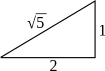
| \(\dfrac{1-\sin (180-\theta)}{\cos (180+\theta)}\) | \(=\dfrac{1-\sin \theta}{-\cos \theta}\) |
| \(=\dfrac{\sin \theta-1}{\cos \theta}\) | |
| \(=\dfrac{\frac{1}{\sqrt{5}}-1}{\frac{2}{\sqrt{5}}} \times \dfrac{\sqrt{5}}{\sqrt{5}}\) | |
| \(=\dfrac{1-\sqrt{5}}{2}\) |
Given \(\tan \theta=\cfrac{1}{3}\) and \(0°<\theta<90°\),
find the value of \(\dfrac{1-\sin (180+\theta)}{\cos (90-\theta)}\).
\(\text {Since} \ \ \tan \theta=\dfrac{1}{3}:\)
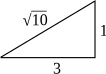
| \(\dfrac{1-\sin (180+\theta)}{\cos (90-\theta)}\) | \(=\dfrac{1+\sin \theta}{\sin \theta}\) |
| \(=\dfrac{1+\frac{1}{\sqrt{10}}}{\frac{1}{\sqrt{10}}} \times \dfrac{\sqrt{10}}{\sqrt{10}}\) | |
| \(=\sqrt{10}+1\) |
\(\Rightarrow A\)
What is \(\displaystyle \int x\left(4x^2+2\right)^3 dx\)
Arnold has a manbag that contains three coins.
Two are fair coins where \(P(\text{tails})=P(\text{heads})\).
The third coin is biased where \(P(\text{tails})=\dfrac{2}{3}\).
Initially, Arnold tosses all 3 coins.
--- 4 WORK AREA LINES (style=lined) ---
Arnold then randomly selects one coin and tosses it.
--- 4 WORK AREA LINES (style=lined) ---
--- 5 WORK AREA LINES (style=lined) ---
a. \(\text{Biased coin} \ \ \Rightarrow \ P(H)=\dfrac{1}{3}\)
| \(P(\text{at least} \ 1 \ T)\) | \(=1-P(\text{All heads})\) |
| \(=1-\left[\dfrac{1}{2} \times \dfrac{1}{2} \times \dfrac{1}{3}\right]\) | |
| \(=\dfrac{11}{12}\) |
b. \(\text{1 coin tossed only:}\)
\(P(H)=\dfrac{1}{3} \times \dfrac{1}{2}+\dfrac{1}{3} \times \dfrac{1}{2}+\dfrac{1}{3} \times \dfrac{1}{3}=\dfrac{4}{9}\)
c.
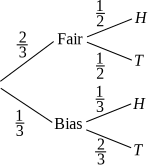
\(P(T)=1-\dfrac{4}{9}=\dfrac{5}{9}\)
| \(P\left(T_{\text {bias}} \big | T\right)\) | \(=\dfrac{P\left(T_{\text {bias}}\right) \cap P(T)}{P(T)}\) |
| \(=\dfrac{\frac{1}{3} \times \frac{2}{3}}{\frac{5}{9}}\) | |
| \(=\dfrac{2}{5}\) |
Explain how Sweden's National Mental Health Strategy could be adapted to improve mental health outcomes in Australia. (5 marks)
--- 15 WORK AREA LINES (style=lined) ---
Explain how Australia's health system performance compares to other OECD countries in terms of equity and access to healthcare services. (5 marks)
--- 15 WORK AREA LINES (style=lined) ---
Describe one opportunity and one challenge digital health creates for individuals. (4 marks)
--- 10 WORK AREA LINES (style=lined) ---
Explain how digital health can improve communication between patients and healthcare providers. (5 marks)
--- 15 WORK AREA LINES (style=lined) ---
Describe how the my health app supports individuals in managing their health. (4 marks)
--- 11 WORK AREA LINES (style=lined) ---
Outline three services included in Australia’s digital health system. (3 marks)
--- 7 WORK AREA LINES (style=lined) ---
Recent epidemiological data shows that Australian life expectancy decreased for the first time since the mid-1900s during 2020-2022, while simultaneously showing that males experience higher total disease burden than females across most age groups.
Explain how this data reflects current challenges in Australian population health. (5 marks)
--- 15 WORK AREA LINES (style=lined) ---
Explain how targeted healthcare interventions could reduce health inequities experienced by Australian males. (5 marks)
--- 15 WORK AREA LINES (style=lined) ---
Which of the following represents the most serious challenge for the operational efficiency of Australia's digital health system?
A patient using the 'my health' app notices their pathology results show abnormal values. What is the most appropriate next step according to best practice in digital health?
The Australian Digital Health Agency was established to:
Data shows that most Australians have a My Health Record, but only a minority have ever viewed their own record.
What does this most likely indicate about the success of digital health in connecting health information?
A 75-year-old patient is admitted to the emergency department unconscious. Which feature of My Health Record would be most valuable to the treating physician?
Explain how chronic conditions have become the dominant cause of disease burden in Australia, replacing infectious diseases as the primary health concern. (5 marks)
--- 15 WORK AREA LINES (style=lined) ---
Governments can address the future needs of an ageing population through urban planning by:
The trend showing Australia's population aged 65 and over steadily increasing in both absolute numbers and as a proportion of the total population indicates that:
The government prioritises healthy ageing as a national research priority because:
Older adults who lack technology skills face health inequities primarily because:
Which factor demonstrates how intersectionality compounds health inequities for vulnerable groups?
The decline in cardiovascular disease mortality rates in Australia is attributed to improvements in both prevention and treatment, including:
Based on Australia's Health data trends, which pattern is observed for chronic conditions in Australia?
Describe how TWO new technologies in healthcare can address the sociological causes of risky health behaviours. (4 marks)
--- 12 WORK AREA LINES (style=lined) ---
Discuss the benefits and challenges of using health apps to improve the health status of young Australians. (6 marks)
--- 18 WORK AREA LINES (style=lined) ---
Outline three ways in which artificial intelligence (AI) can improve health outcomes in Australia. (3 marks)
--- 7 WORK AREA LINES (style=lined) ---
Analyse how artificial intelligence in healthcare can address health inequities identified in Australia's health status data. (8 marks)
--- 22 WORK AREA LINES (style=lined) ---
Which of the following best shows how assistive technology fosters participation and inclusion?
The Australian government's commitment of $537 billion between 2022-26 demonstrates:
The ageing population will impact healthcare sustainability because:
The argument for increased prevention funding based on "containment of increasing costs" suggests that:
A local hospital sees a sudden rise in asthma cases. AI detects this trend and directs more asthma medication to that area. Which benefit of AI is shown?
A mother is using Feed Safe to guide her alcohol consumption when breastfeeding. Which health benefit does this best demonstrate?
The organisational structure for regulation and monitoring of health premises and personnel is primarily the responsibility of:
A patient requiring breast cancer treatment would likely interact with which combination of health system sectors?
Private sector healthcare services in Australia are approved by which organisation?
The Australian government's direct responsibility for health services includes programs specifically for which groups?
Australia's healthcare governance involves multiple levels of government with distinct responsibilities. Which arrangement describes the division of responsibilities between federal and state governments?
Health apps such as Headspace and Calm have become popular complementary healthcare products. What distinguishes these digital services from conventional medical treatments?
The FoodSwitch app represents a technological approach to preventative healthcare through complementary medicine. How does this application function as a preventative measure?
A cancer patient undergoes conventional chemotherapy treatment whilst also consulting a naturopath to develop a holistic treatment plan combining pharmaceutical and herbal medicines. This scenario demonstrates complementary healthcare functioning as:
Traditional western medicine practitioners are increasingly recognising the value of complementary healthcare approaches. Which statement describes this integrative trend?
When evaluating the effectiveness of Australia's healthcare system, which combination of indicators provides the MOST comprehensive assessment?
Describe TWO advantages of precision surgery over traditional surgical techniques, giving examples of each. (4 marks)
--- 10 WORK AREA LINES (style=lined) ---
Wearable devices and portable technologies are changing the way health is measured.
Analyse how these innovations have shifted health assessment beyond hospitals and clinics, and discuss the consequences of this shift for both healthcare professionals and individuals managing their own health. (8 marks)
--- 22 WORK AREA LINES (style=lined) ---
Discuss how precision surgery technologies contribute to both patient outcomes and healthcare system efficiency. In your answer include references to at least two relevant technologies. (6 marks)
--- 18 WORK AREA LINES (style=lined) ---
Explain how remote monitoring technology reduces the burden on Australia's healthcare system. (5 marks)
--- 15 WORK AREA LINES (style=lined) ---
Zinc reacts with hydrochloric acid according to the equation:
\(\ce{Zn (s) + 2HCl (aq) -> ZnCl2 (aq) + H2 (g)}\)
--- 6 WORK AREA LINES (style=lined) ---
--- 2 WORK AREA LINES (style=lined) ---
--- 4 WORK AREA LINES (style=lined) ---
Aluminium oxide can be formed when aluminium metal reacts with oxygen gas according to the equation:
\(\ce{4Al(s) + 3O2(g) \rightarrow 2Al2O3(s)}\)
In an experiment, 2.70 g of aluminium is heated strongly in oxygen.
--- 2 WORK AREA LINES (style=lined) ---
--- 4 WORK AREA LINES (style=lined) ---
--- 4 WORK AREA LINES (style=lined) ---
Explain how early diagnosis technologies can improve health outcomes. In your answer, give examples of TWO relevant technologies. (5 marks)
--- 15 WORK AREA LINES (style=lined) ---
Describe how precision surgery technology improves surgical outcomes for patients, using specific examples. (4 marks)
--- 10 WORK AREA LINES (style=lined) ---
Rural and remote communities in Australia face unique healthcare challenges. Which emerging opportunity could significantly improve healthcare access for these populations?
Australia's healthcare system performs multiple interconnected functions. Which combination of roles demonstrates the system's comprehensive approach to population health?
Which of the following is an example of precision surgery?
What is the primary advantage of robotic-assisted surgery in improving patient outcomes?
How do 3D holographic models most effectively improve cardiac diagnosis?