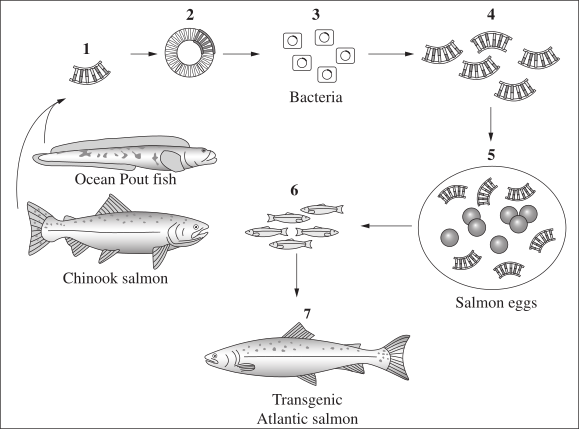
Genetically engineered Atlantic salmon have been produced and approved for aquaculture in the US. These salmon have a transgene that includes a protein-coding sequence from a Chinook salmon's growth hormone gene and the promoter region of an Ocean Pout's antifreeze protein gene. The following diagram provides an overview of the production of the transgenic salmon.
Transgenic fish can reproduce and pass on the dominant transgene (T).
Reproduction for aquaculture is strictly controlled using a variety of techniques in order to protect and preserve biodiversity.
Some of these techniques are outlined below.
1. Homozygous (TT) female (XX) breeding stock are kept in quarantine.
2. The female fish undergo hormone treatment that results in sex reversal and the development of male sex organs and sperm.
3. The sperm produced is collected and used to fertilise eggs obtained from wild-type, non-transgenic salmon.
4. The eggs are treated with pressure shock to prevent the completion of meiosis II. As a result, offspring are triploid (three copies of each chromosome).
All offspring are transgenic female fish and have XXX (XXX fish cannot develop sex organs).
5. Offspring are transported to inland aquaculture tanks to be grown to market size.
Analyse how these techniques protect and preserve biodiversity. (9 marks)
--- 21 WORK AREA LINES (style=lined) ---